The look of it
Apart From You is a 1933 Japanese silent drama written and directed by Mikio Naruse, set in the geisha districts of interwar Tokyo. It attempts to portray the quiet erosion of dignity within a profession bound by custom and economic necessity, focusing not on spectacle or moral judgement but on the unspoken tensions between generations, gender roles, and social expectation. The film works within the constraints of silent cinema — intertitles, expressive gesture, and compositional restraint — to trace how shame, loyalty, and quiet sacrifice circulate between three people: an ageing geisha, her estranged son, and a younger colleague who occupies a liminal space between solidarity and complicity. Naruse does not frame the geisha world as exotic or decadent, nor does he offer redemption through romance or escape. Instead, he treats it as a social ecosystem with its own logic, pressures, and internal hierarchies — one where survival demands compromise, and understanding arrives too late to reverse course. The film’s ambition lies in its refusal to simplify.
How it holds space
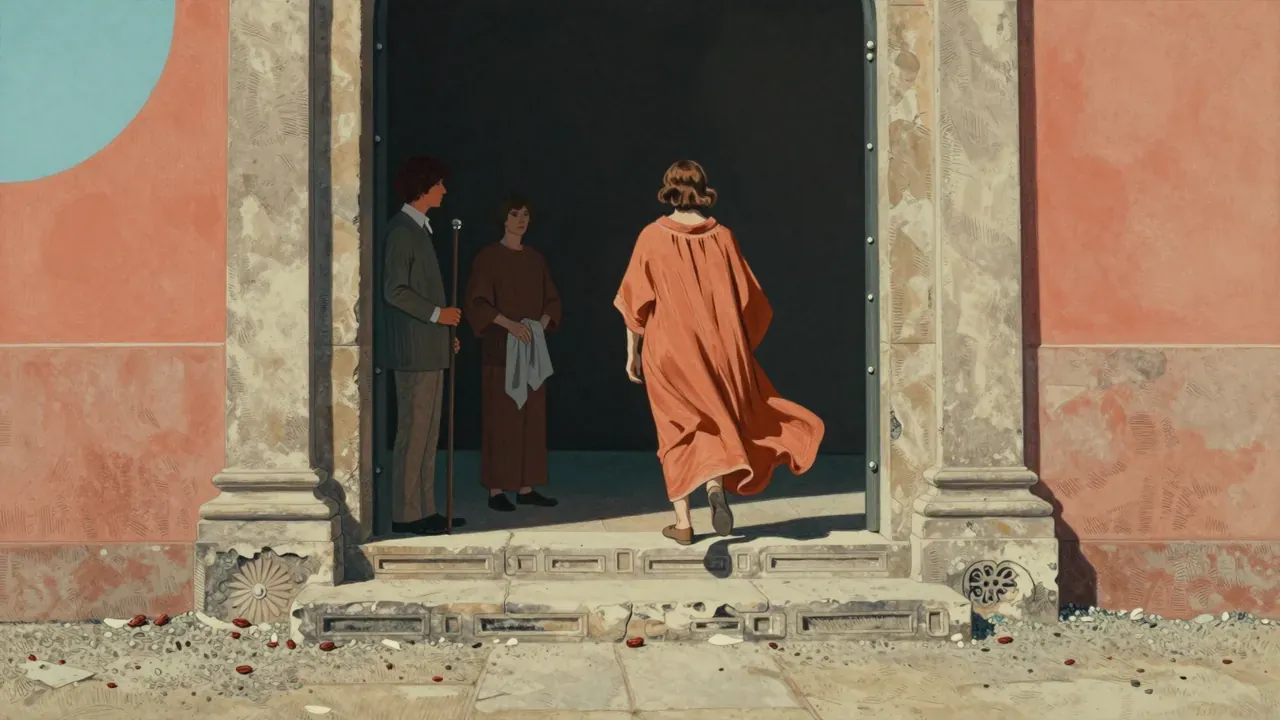
The story unfolds through tightly calibrated domestic spaces: a geisha house, a fisherman’s cottage, a schoolyard, a gang’s meeting place. Naruse structures scenes around withheld information — a glance cut short, a door left ajar, a letter unseen — and uses editing to compress time without eliding consequence. Mitsuko Yoshikawa’s Kikue moves with contained weight; her gestures are minimal but never inert, her face registering fatigue before despair. Sumiko Mizukubo’s Terugiku balances warmth and resolve, her physical presence anchoring several key sequences, including the confrontation with her father and the knife attack aftermath. Akio Isono’s Yoshio avoids caricature: his sullenness reads as defensive rather than rebellious, his shifts in allegiance gradual and unexplained by dialogue alone. Naruse’s camera remains close but never intrusive; he favours medium shots that hold multiple figures in relation, often using doorways or curtains to frame partial views. Superimpositions appear sparingly, always tied to subjective states — memory, hesitation, longing — not decorative flourish. The intertitles are functional, avoiding poetic abstraction in favour of direct, sometimes blunt, exposition.
What stays with you
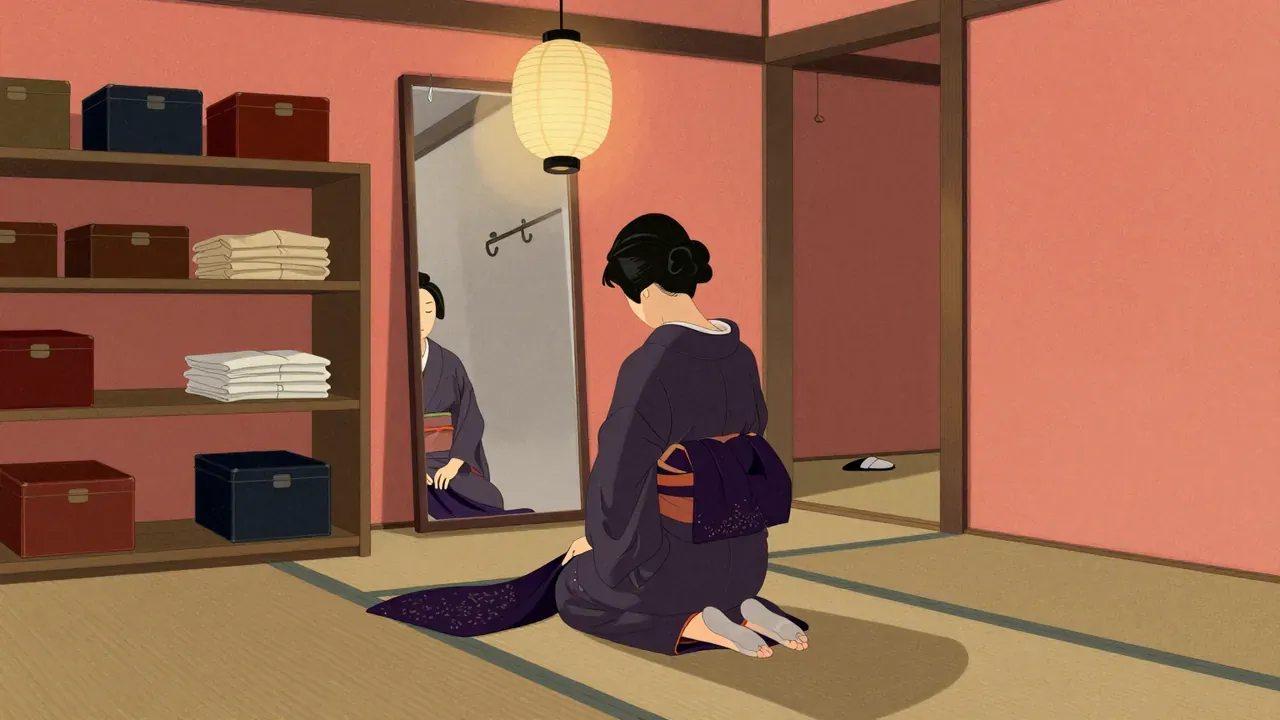
What lands most firmly is the film’s emotional economy: the way small actions carry disproportionate weight. A son refusing to meet his mother’s eyes while she serves tea; Terugiku’s hand resting briefly on Yoshio’s shoulder before withdrawing; Kikue’s posture shifting from upright to slumped after learning of the knife attack — these register with cumulative force because they are neither overplayed nor underlined. The fishermen’s village sequence works precisely because it refuses pastoral idealism: the setting is damp, cramped, and tense, the family conflict rooted in material desperation rather than abstract principle. Naruse’s handling of Terugiku’s departure — no farewell, no explanation, only a distant shot of her walking away — lands with quiet finality. The film’s restraint becomes its authority: it trusts the viewer to infer motive, consequence, and grief without prompting. Even the suicide suggestion is handled obliquely — a folded kimono left on a tatami mat, a pause before the next intertitle — making the emotional impact accrue through implication rather than declaration.
Where it pulls apart
What does not land consistently is the gang subplot. Yoshio’s affiliation feels undermotivated and abruptly severed; the violence against him and Terugiku arrives without sufficient build-up in tone or character logic. The hoodlums lack individuation, functioning more as narrative pressure than social reality, and their sudden brutality contrasts uneasily with the film’s otherwise grounded register. Similarly, the resolution — Yoshio returning to study — feels narratively tidy but emotionally thin, arriving without the psychological groundwork needed to make it feel earned. Terugiku’s final occupation is named only in the encyclopedia context, not in the film itself, leaving her exit ambiguous in a way that reads less like ambiguity and more like omission. The intertitles occasionally falter in rhythm, delivering exposition where gesture or silence would serve better. And while Naruse’s stylistic confidence is evident, some superimpositions — particularly those layered over static interiors — feel technically assured but thematically redundant, adding texture without deepening meaning.
What it is really about
The themes that matter are filial shame as structural constraint, not personal failing; the gendered labour of emotional maintenance in marginalised professions; and the quiet calculus of sacrifice across generations. Kikue’s ageing is not framed as decline but as accumulated cost — each client, each concession, each suppressed feeling tallied in posture and silence. Terugiku’s choice to leave the city is not framed as defeat but as strategic withdrawal: she trades one form of exploitation for another, preserving Misako at the expense of her own integrity. The film treats geisha work not as performance but as vocation — skilled, precarious, socially sanctioned yet morally contested. It insists on the specificity of female experience within this world: how Kikue navigates patronage without intimacy, how Terugiku negotiates kinship without inheritance, how Misako’s future is bartered before she speaks. There is no utopian alternative offered, no critique that points elsewhere — only the persistent, unsentimental observation of how people move within walls they did not build but cannot ignore.
Who it is for
This film is for viewers who value precision over propulsion, who find emotional resonance in withheld glances and weighted pauses, and who approach silent cinema not as historical curiosity but as a distinct language with its own grammar of restraint. It rewards attention to composition, gesture, and pacing, and assumes familiarity with the conventions of 1930s Japanese silent film — particularly the use of benshi narration (though absent here, its ghost informs the intertitle rhythm). It is not for viewers seeking narrative clarity, psychological exposition, or cathartic release. Those who expect character arcs to resolve neatly or thematic questions to be answered outright will find the film withholding, even evasive. Nor is it suited to those unfamiliar with the material conditions of pre-war Japanese urban life: the film presumes knowledge of geisha house hierarchies, schooling norms, and the limited mobility available to young women. Its power depends on what is left unsaid — a demand that some audiences rightly resist.
Whether it earns your time
Yes, it is worth your evening — provided you watch it on terms it sets, not ones you bring. Ninety minutes spent with Apart From You is time spent observing how dignity persists in compromised circumstances, how love operates without reciprocity, and how social roles calcify long before they crack. It is not ‘enjoyable’ in the conventional sense, but it is absorbing, coherent, and formally assured. Those who find its pacing slow or its resolutions muted may prefer Naruse’s later sound films, where dialogue carries more of the burden. But for anyone interested in how cinema can articulate social constraint without melodrama, or how a director develops a voice across successive silents, this film repays attention. Its value lies not in what it solves but in how faithfully it traces the lines of pressure — economic, generational, gendered — that shape ordinary lives. To dismiss it as ‘dated’ or ‘distant’ mistakes its method for its limitation.