No Tramp, No Joke
A Woman of Paris is Charlie Chaplin’s deliberate departure from comedy: a silent drama conceived as a serious study in character, circumstance, and emotional consequence. It does not seek to entertain through rhythm or physical invention, but to observe — with restraint and precision — how small decisions, withheld explanations, and social constraint shape a woman’s life across time. Chaplin wrote, produced, and co-directed it not as a vehicle for himself, but to test whether Edna Purviance could carry a film alone, and whether American audiences would accept a narrative unmoored from the Tramp’s moral clarity or comic relief. The film’s stated ambition, per Chaplin’s own framing, was to render ‘psychology by subtle action’, avoiding exposition in favour of gesture, setting, and editing. It is also a structural experiment: a fate-driven narrative where cause and effect are neither punished nor rewarded, but simply followed, without judgment. Its title subtitle — A Drama of Fate — signals its refusal of moral causality. This is not a cautionary tale, nor a romance with redemption; it is an anatomy of drift.
The look of it
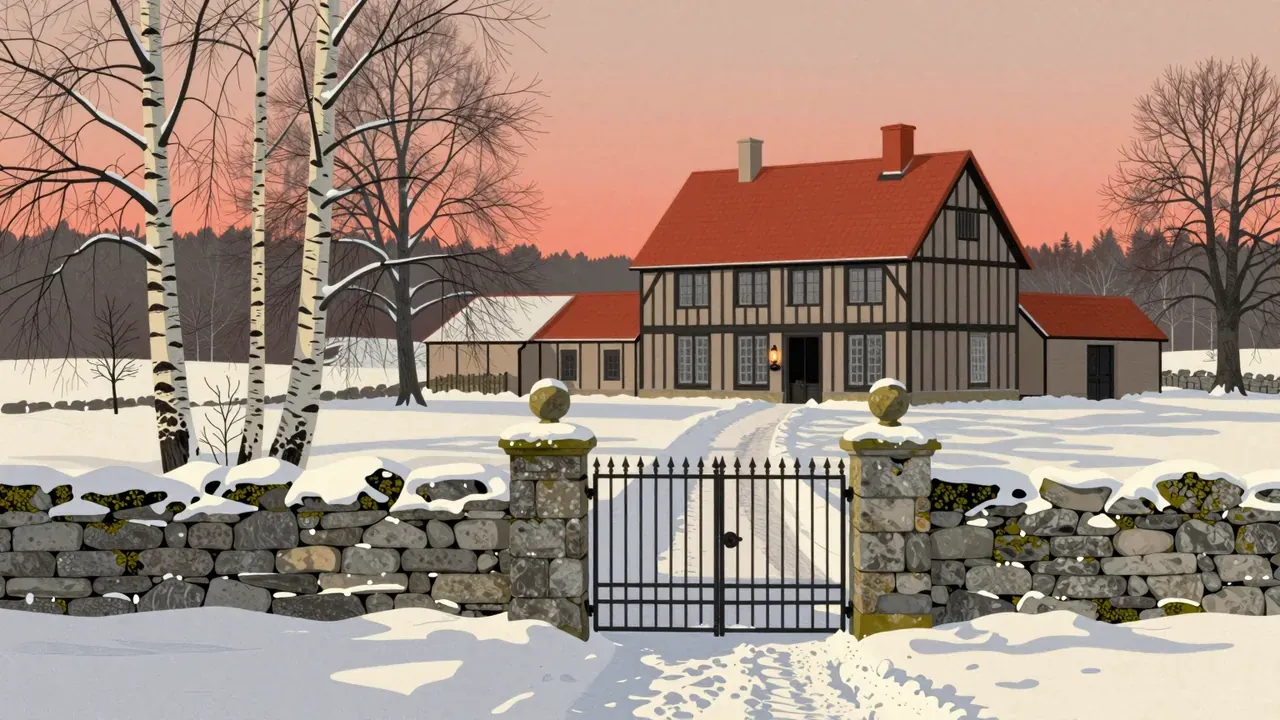
The story unfolds in clean, unhurried episodes: a missed train, a year’s silence, a mistaken doorway, a portrait painted in remembered simplicity, a proposal overheard out of context, a suicide in a restaurant foyer. Performances avoid theatrical emphasis: Adolphe Menjou’s Pierre Revel moves with polished indifference; Betty Morrissey’s Marie (not Purviance — see correction below) registers grief and resolve in stillness, not tears. Roland Totheroh’s cinematography keeps faces half in shadow, avoids close-ups unless they serve psychological weight, and holds on empty rooms after characters leave. Monta Bell’s editing links scenes through parallel objects — a handkerchief, a black armband, a train platform — rather than dialogue or intertitles. Chaplin’s score, composed later but shaped to the film’s pacing, underlines absence more than action. There are no set pieces, no gags, no music-hall timing. Even the porter cameo — Chaplin’s sole on-screen appearance — is cut from the 1977 reissue and goes uncredited in the original release. Every choice serves the film’s quiet insistence on consequence over climax.
What lingers
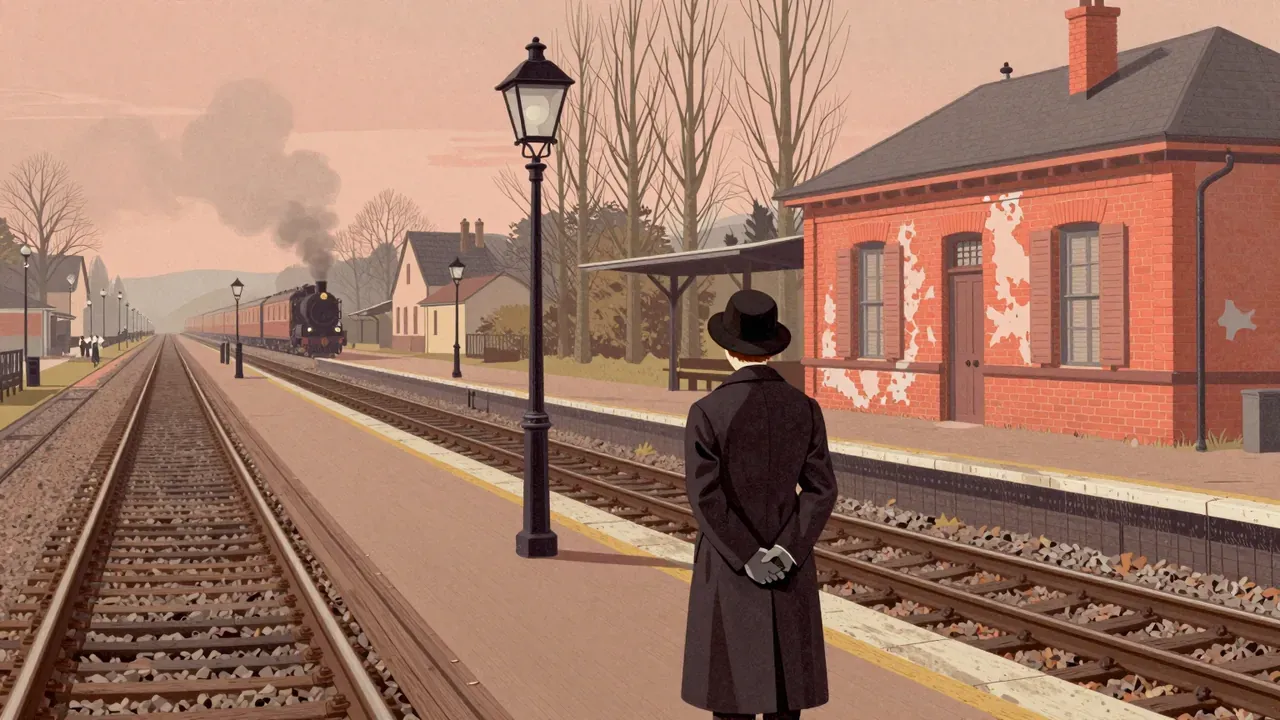
What lands is the cumulative weight of unspoken things. The moment Marie stands alone on the station platform, watching the train pull away without Jean, carries no swelling strings or dramatic pause — just a long take, her back to camera, then a slow turn toward the empty track. Later, when she sees Jean wearing mourning black and asks why, his answer — delivered flat, without eye contact — lands because it arrives without preparation or sentiment. The film’s restraint makes its emotional pivots feel earned, not imposed. The final sequence, where Marie and Jean’s mother walk down a country lane beside a horse-drawn wagon while Pierre’s automobile passes in the opposite direction, works precisely because it refuses resolution: the two vehicles do not meet, do not slow, do not acknowledge each other. This visual parallelism — not symbolism, but simple juxtaposition — conveys estrangement more surely than any monologue. The film trusts the audience to hold contradiction: Marie’s grief is real, her agency limited, her dignity intact. That balance, sustained across 84 minutes, remains uncommon even now.
Where it slips
What does not land is the central performance as originally intended. Though the fact sheet lists Betty Morrissey, the Wikipedia context confirms Edna Purviance played Marie St. Clair — and her performance, while sincere, lacks the granular specificity the script demands. Her reactions sometimes read as generically sorrowful rather than psychologically precise; her shifts in allegiance — from Jean to Pierre, back to Jean, then away again — rely too heavily on plot mechanics rather than inner logic made visible. Chaplin’s direction suppresses overt expression, but Purviance’s line readings (in intertitles) and physical choices do not consistently anchor the ambiguity he seeks. The film’s structure also strains at points: the jump from provincial France to Parisian luxury feels abrupt, not atmospheric; the Latin Quarter party scene introduces tonal dissonance without sufficient grounding. And while the ending’s quiet resignation is thematically coherent, it risks feeling like withdrawal rather than resolution — a choice some viewers may read as evasion, not economy.
What it’s really about
The themes that matter are fate as environment, not destiny; class as architecture, not backdrop; and emotional consequence as something that accumulates, not explodes. Chaplin treats marriage not as institution but as social contract with uneven terms — Marie’s options narrow not because she sins, but because she is a woman without independent means or reputation. Pierre’s wealth insulates him from consequence; Jean’s poverty makes his grief visible, then fatal. The film’s most persistent motif is the door: locked, opened, misread, left ajar — always a threshold between intention and outcome. Objects bear weight without explanation: the black armband, the handkerchief removed from a drawer, the simple dress worn for the portrait. These are not symbols to be decoded, but traces of lived time. Chaplin’s interest lies in how people inhabit space — a cramped apartment, a grand salon, a railway platform — and how those spaces dictate what can be said, done, or forgiven. There is no villain, no sermon, no uplift. Only the steady pressure of circumstance, applied evenly.
Who it’s for
This film is for viewers who value narrative economy, visual precision, and emotional restraint — particularly those familiar with silent-era conventions and willing to sit with ambiguity rather than seek closure. It rewards attention to composition, editing rhythm, and the weight of silence. It is not for viewers who require clear moral frameworks, character arcs with redemption, or performances that telegraph internal states. Those expecting Chaplin’s comic timing or physical virtuosity will find little here to recognise. Nor is it suited to casual viewing: its power depends on sustained attention to gesture and setting, not plot momentum. A viewer who prefers exposition over implication, or catharsis over accumulation, will likely find it withholding. Its 1923 idiom — intertitles, pacing, acting style — demands adjustment. But for those open to it, the film offers a rare early example of cinema treating adult psychology with unflinching directness. Its limitations are formal, not moral — and its virtues remain legible, if not always comfortable.
Is it worth your evening
Yes, it is worth your evening — provided you approach it as a study in craft, not a story to be consumed. Its 84 minutes unfold with the gravity of a short novel, each scene calibrated to advance mood and meaning without redundancy. You will not laugh, nor gasp, nor weep on cue — but you may feel the slow settling of recognition: how much of life is lived in the space between intention and outcome. Its value lies in its discipline, not its entertainment. Some critics argue its influence outweighs its immediate impact — that it paved the way for Ophüls, Renoir, and later European realism — and that verdict holds. Others find its austerity alienating, especially given Chaplin’s later, warmer work. But judged on its own terms — as a drama of fate, not morality — it succeeds. To dismiss it as ‘cold’ mistakes its purpose. To call it ‘dated’ ignores how little its concerns have aged. It earns its place not as a relic, but as a working model of cinematic restraint.