The shape of the circle
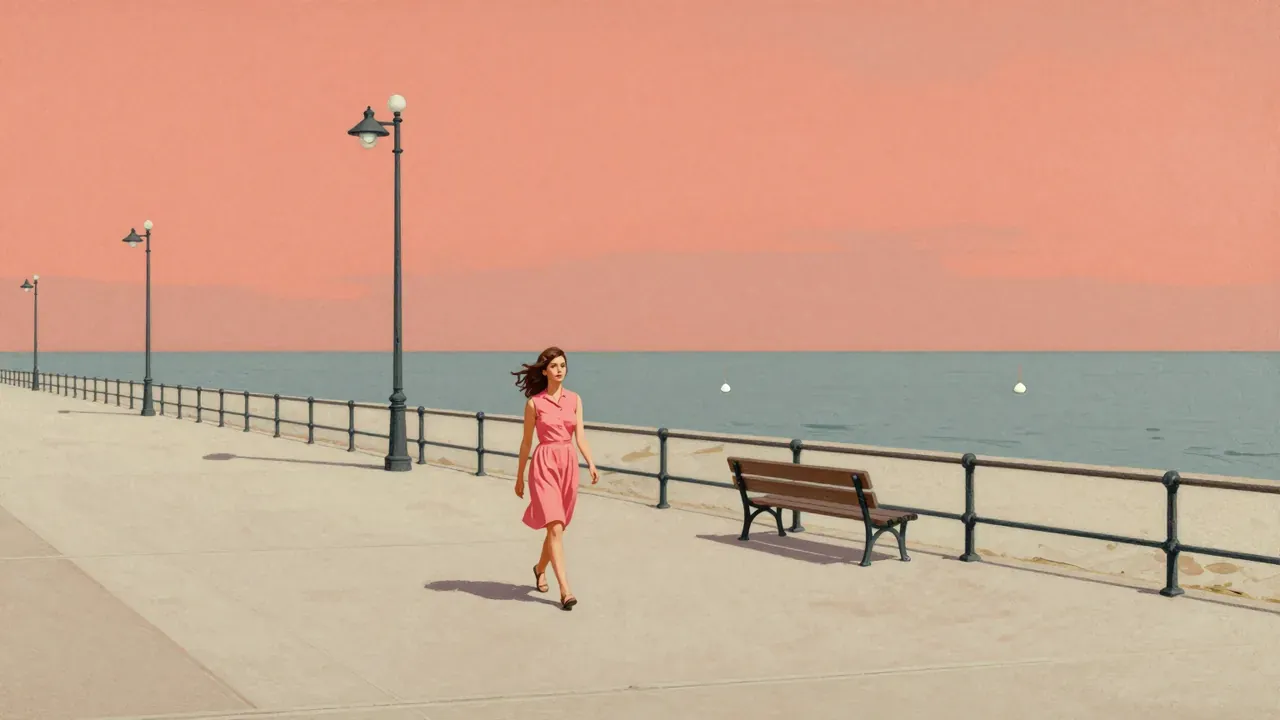
A Report on the Party and Guests is a Czechoslovak allegorical drama made at Barrandov Studios in 1966, written by Jan Němec and Ester Krumbachová. It does not depict a real party or a literal regime, but constructs a self-contained logic of power through ritual, language, and spatial control. The film’s aim is not to satirise one government but to isolate how consent forms under conditions of arbitrary authority: how people rehearse obedience before coercion begins, how they police each other’s dissent, and how collective memory contracts around what is convenient to forget. Its method is structural rather than expositional — it shows hierarchy emerging from nothing more than a man stepping into a clearing, a line drawn in dirt, and the group’s immediate acceptance of its perimeter. It treats political submission as a choreographic problem, solved not by force alone but by the quiet redistribution of responsibility among the governed. The film was banned upon release for this clarity, not for its heat. It does not shout; it watches.
The alphabetisation
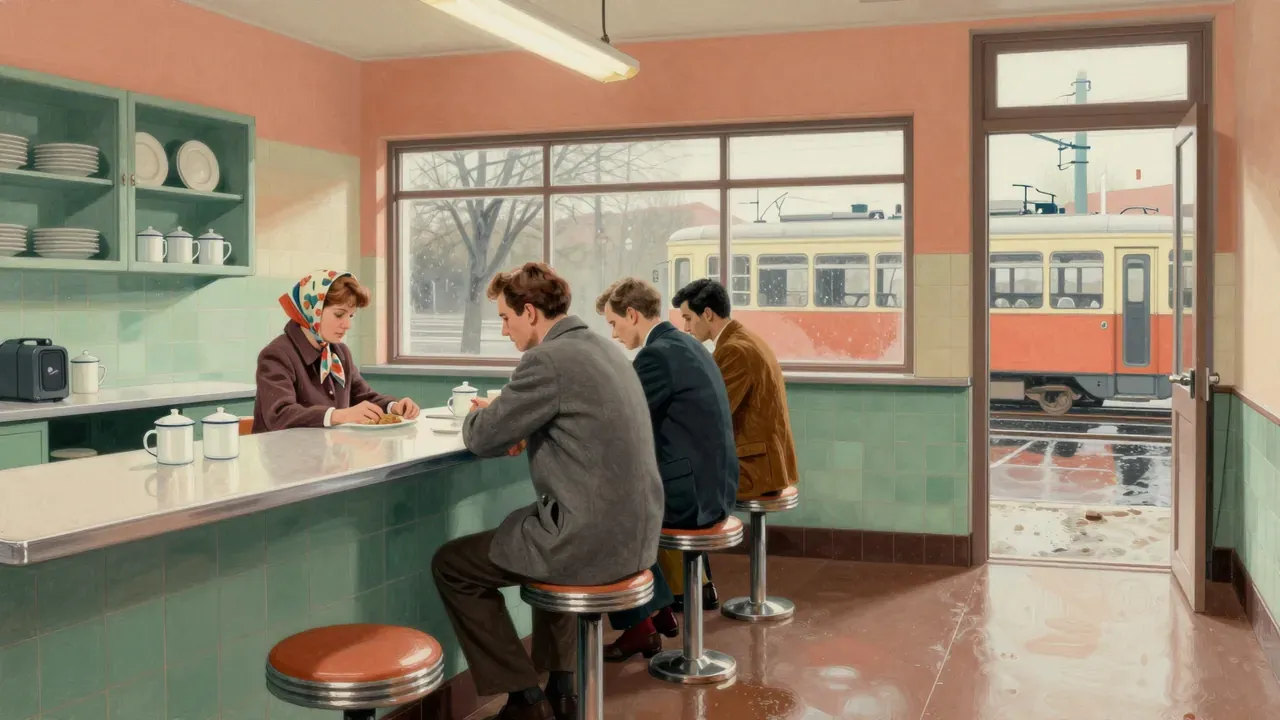
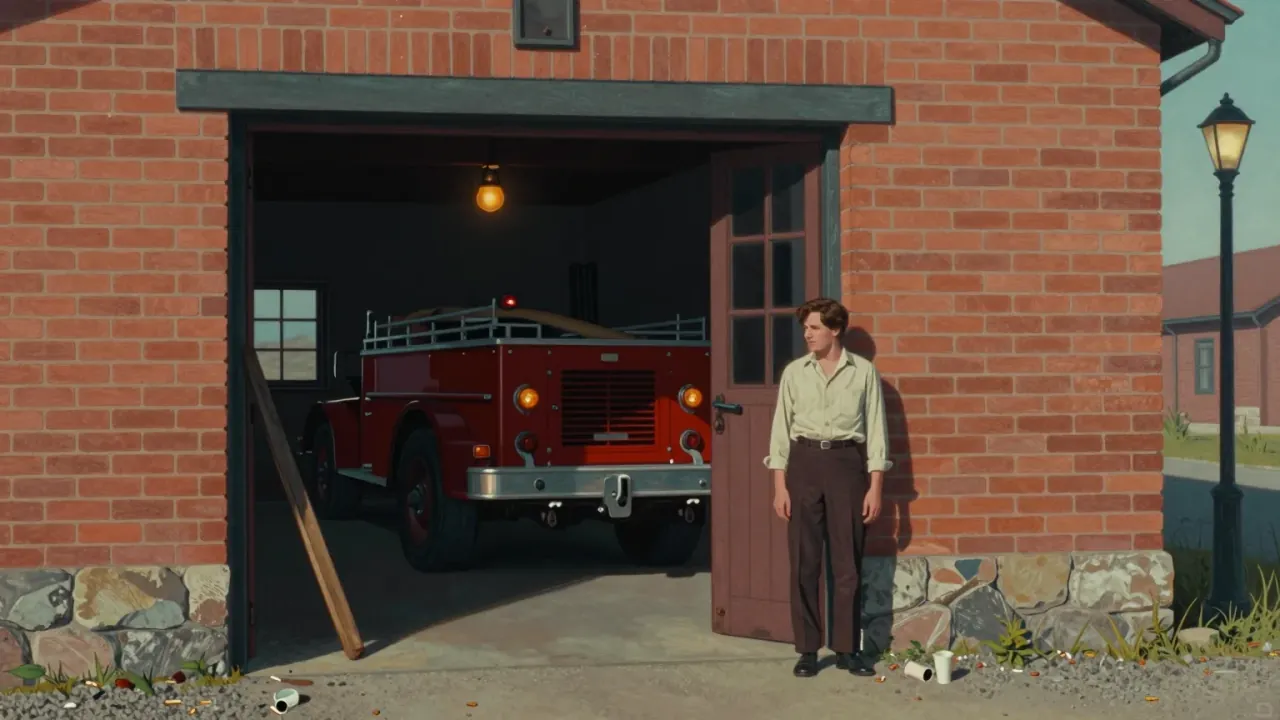
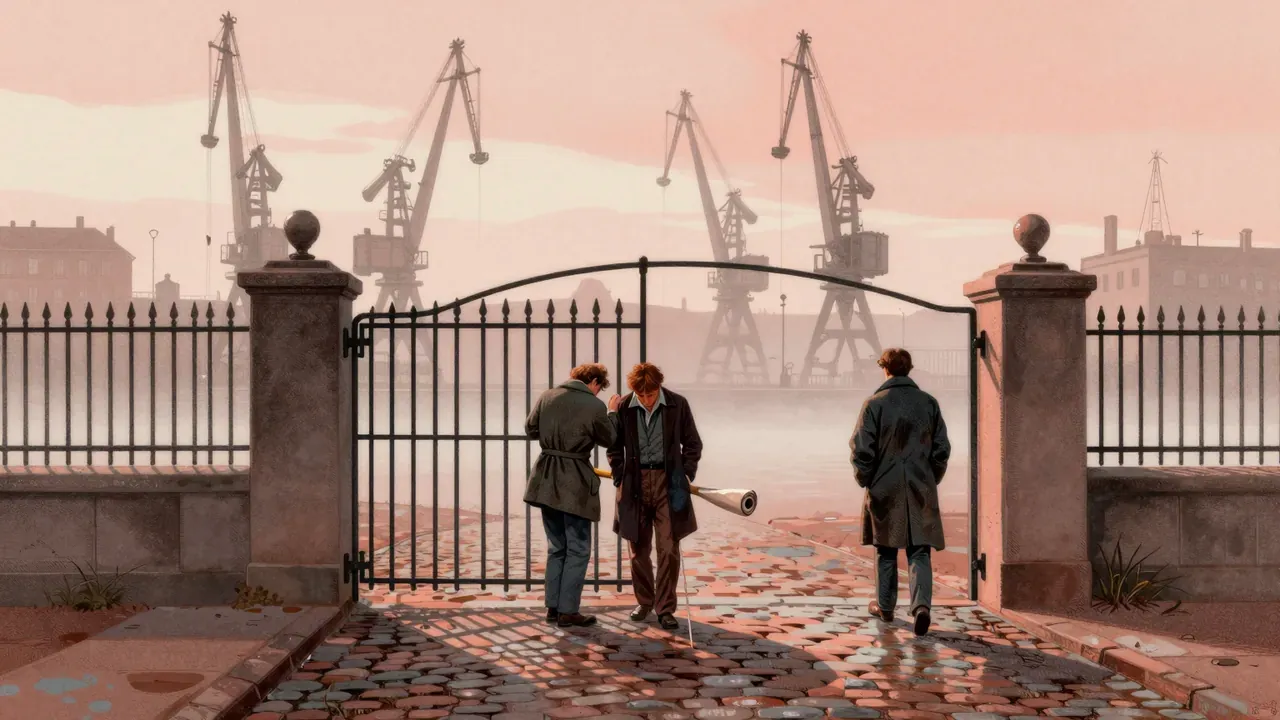
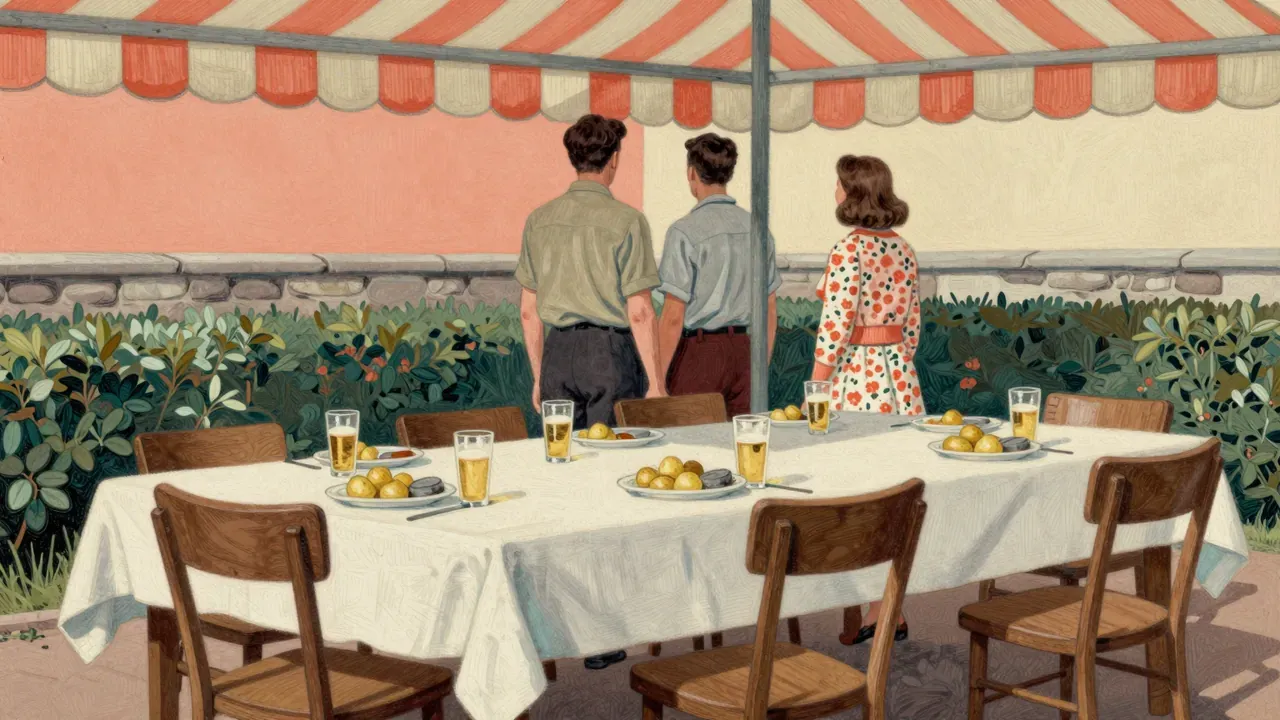
The story unfolds in two sustained movements: the picnic’s dissolution into enforced order, then the party’s slow collapse into recursive anxiety over one missing guest. Jaromír Šofr’s cinematography keeps the woods shallow and sunlit, denying depth or escape; the camera stays at shoulder height, refusing elevation or irony. Performances are muted but precise — Jan Klusák’s Rudolf smiles without warmth, Jiří Němec’s Josef modulates his diplomacy like a tuning fork, and Evald Schorm’s Husband departs without gesture, making his absence louder than any speech. Karel Mareš’s score uses sparse piano motifs and sudden silences, never underscoring but punctuating shifts in group tension. Miroslav Hájek’s editing avoids reaction shots; when someone speaks, the cut lands on the listener’s stillness, not their response. There are no flashbacks, no exposition, no names beyond those needed to assign seats. Every prop — the white tablecloths, the pushed-under chair, the barking dog — functions as a grammatical marker in a sentence about compliance.
The necessity to forget
What lands is the film’s unblinking fidelity to its own internal grammar. The moment the picnickers alphabetise themselves without instruction, or when they collectively reassign seats at dinner as if fulfilling a prior contract, feels less like absurdism and more like recognition — a mirror held up to how readily social groups codify hierarchy when given minimal scaffolding. The wife’s reply — that she stayed because she did not want to leave the celebration — lands with quiet force, not as irony but as documentary truth about attachment to form over substance. The final image — candles blown out while the dog barks — works because it refuses resolution: the search continues off-screen, the party dissolves into darkness, and no character questions the premise of the hunt. This restraint gives the film its weight. It does not argue that power is irrational; it shows how rationality adapts to serve power’s requirements, step by calibrated step.
The missing chair
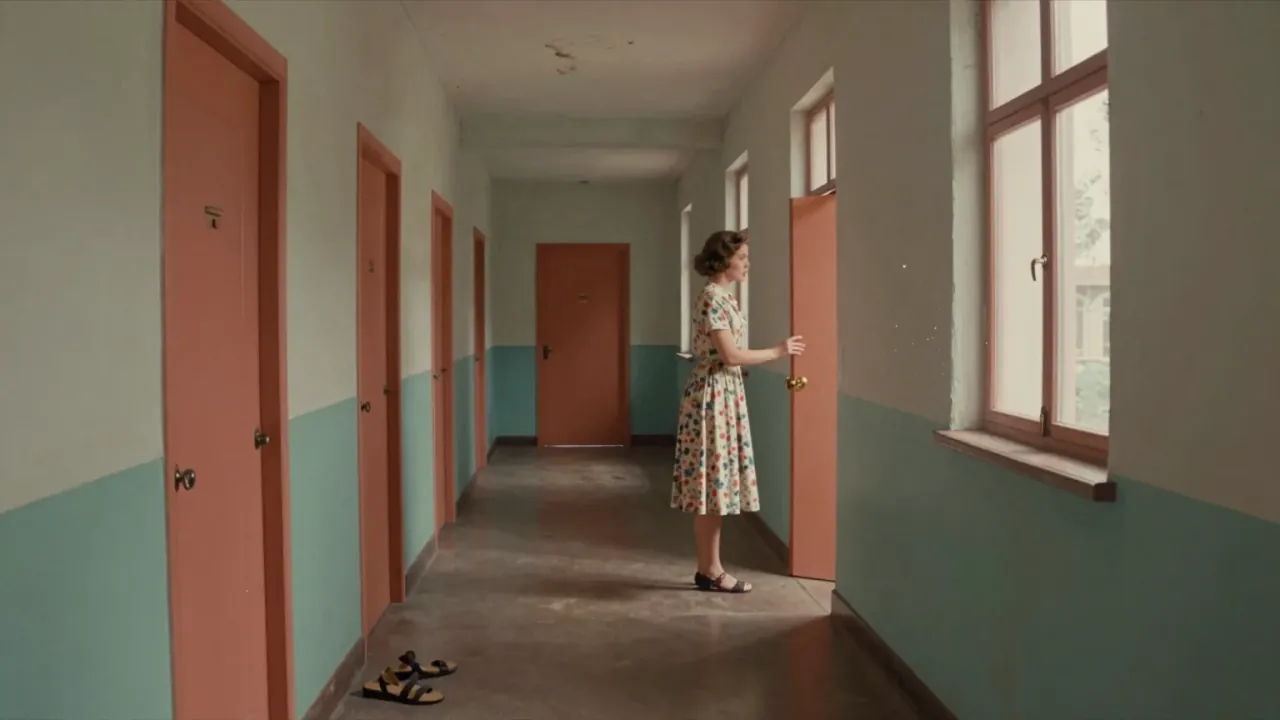
What does not land is the film’s reliance on a single tonal register. Its austerity becomes monotonous in the second half, particularly during the dinner sequence, where repetition of phrase and gesture — ‘we must forget’, ‘where is the chair?’ — risks flattening psychological nuance into schematic illustration. Some viewers will find the husband’s departure under-motivated not because it is unclear, but because the film declines to anchor it in interiority: we see no hesitation, no glance back, no tremor in the hand. This is a choice, not a failure, but it narrows the emotional bandwidth. The allegory holds firm, yet the human scale occasionally recedes too far — the picnickers remain types longer than they become individuals. A viewer seeking moral ambiguity in the host, or pathos in Rudolf’s adoption, will find neither. The film refuses to psychologise authority or resistance; it maps their architecture instead. That rigour is its strength and its limit.
The dog and the hunt
The themes that matter are not freedom versus control, but the domestication of dissent, the choreography of consensus, and the labour of forgetting. The film treats ideology not as belief but as habit — the way Josef organises the group alphabetically before being asked, or how the picnickers blame Karel for provoking Rudolf even as they accept the circle. It examines how institutions sustain themselves not through constant enforcement but through the delegation of surveillance: each guest polices the others’ adherence to the unspoken rules of the celebration. Memory here is functional, not archival — what is remembered is only what serves continuity. The missing husband is not mourned but managed; his absence is a logistical problem, not a moral one. The film’s coldness is deliberate: it asks what happens when ethics are outsourced to procedure, and when belonging depends on performing amnesia as fluently as obedience.
The blown-out candles
This film is for viewers who treat allegory as a tool of precision, not evasion — those who value formal rigour over emotional exposition, and who can sit with unresolved tension without demanding catharsis. It suits readers of Kafka or viewers of early Godard who follow syntax before sentiment. It is not for those who require psychological realism, narrative payoff, or moral signposting. A viewer expecting satire with punchlines or historical specificity will find it withholding. Those who associate political cinema with urgency or polemic may read its stillness as detachment. Its value changes if seen alongside other Czech New Wave films — context restores its immediacy — but on its own, its power depends on patience with abstraction. Without that, it reads as cold, not clear.
The barking in the dark
Yes, it is worth your evening — provided you watch it as a diagram, not a drama. Its seventy-one minutes accumulate weight not through incident but through the steady accretion of behavioural logic: each decision the picnickers make tightens the frame around their own complicity. It repays attention because its economy is absolute — no shot, no line, no silence is decorative. You do not need to know Czechoslovak history to feel the chill of the circle in the clearing, but you do need to accept that meaning resides in structure, not subtext. Those who dislike it tend to mistake its restraint for emptiness; its admirers recognise that every withheld explanation is a deliberate invitation to map the machinery of consent yourself. It is not easy, but it is exacting — and exactitude, in this case, is the point.