The itinerary
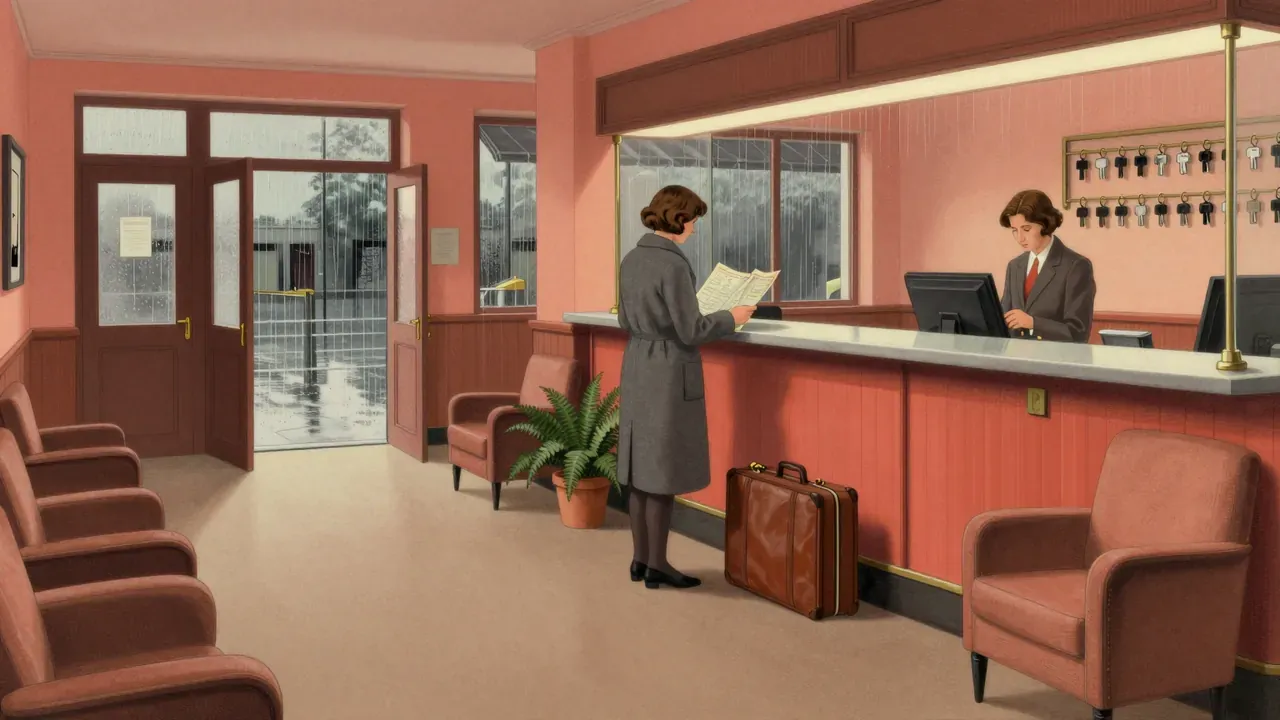
Anna’s Meetings is a film about movement without arrival, contact without connection, and speech without resolution. Chantal Akerman sets it in the transit zones of late-1970s Western Europe — hotel lobbies, train platforms, rented flats, anonymous streets — and follows Anne Silver, a Belgian filmmaker promoting her own work while avoiding the emotional labour her relationships demand. The film does not seek narrative propulsion or character transformation. Instead, it sustains a deliberate, observational rhythm to register how isolation persists even amid constant encounter: with lovers, colleagues, family, strangers. Its ambition is structural and ethical — to hold space for silence between sentences, for hesitation before a door opens, for the weight of a suitcase left unzipped. It treats time not as something to be spent but as something to be inhabited, unevenly and without promise of relief. This is not a story about making meaning; it is an account of meaning’s slow erosion under the pressure of routine, travel, and unspoken expectation. Akerman refuses the consolations of closure or catharsis, anchoring the film instead in duration, repetition, and the quiet accumulation of refusal. (158 words)
The look of it
The story unfolds across fragmented meetings, each shot with consistent medium framing and minimal camera movement. Jean Penzer’s cinematography avoids dramatic lighting or expressive angles: interiors are evenly lit but drained of warmth, exteriors flattened by overcast light. Aurore Clément plays Anne with a stillness that borders on vacancy — not as absence of feeling, but as exhaustion of response. Her line readings are flat, often trailing off; pauses are neither pregnant nor strategic, just there. Supporting performances follow suit: Magali Noël’s Ida speaks with weary familiarity, Helmut Griem’s Heinrich offers polite disengagement, Lea Massari’s mother delivers her lines about Anne’s love for an Italian woman without emphasis or judgment. Francine Sandberg’s editing sustains this tempo — cuts land on breaths, on objects left behind, on doors closing after someone has gone. There is no score beyond diegetic sound: distant traffic, muffled radio, the hum of a fridge. The craft does not serve psychology or revelation. It serves attention — to how a body occupies space when it has no wish to be seen, and how language functions when it is no longer trusted to bridge distance. (159 words)
The weight of pauses
What lands is the cumulative effect of sustained attention to the unspectacular. The film makes visible the architecture of avoidance: how Anne chooses the wrong seat in a café, how she misplaces her keys twice in one scene, how she answers questions with monosyllables then looks away. These are not slips or flaws — they are repetitions that accrue meaning. The sequence where Anne’s mother recounts her own youth in Italy, speaking of love and loss without naming either, carries a gravity no dialogue elsewhere matches. The final stretch — Anne alone in her apartment, listening to unanswered messages — works because the film has spent 126 minutes preparing us for that silence. It does not ask us to empathise, only to witness. The decision to end not with a gesture or decision but with the mechanical click of an answering machine rewinding is earned. That moment lands not as despair but as recognition: this is how loneliness settles, not with a cry but with the soft, repeated sound of a tape spooling back. Nothing here feels forced or symbolic. It feels observed, remembered, withheld. (157 words)
The edges of clarity
What does not land is the film’s occasional drift into abstraction without sufficient grounding. Some encounters — particularly with Daniel (Jean-Pierre Cassel) and Hans (Hanns Zischler) — lack enough contextual texture to distinguish them from one another, becoming variations on the same low-key estrangement rather than distinct relational histories. The film assumes a familiarity with Akerman’s earlier work, especially Jeanne Dielman, and suffers slightly when viewed outside that frame: its formal restraint risks reading as inertia if the viewer does not register the precision behind each held shot or each cut to an empty chair. The West German locations, though deliberately generic, sometimes flatten into interchangeable grey backdrops without enough visual or sonic differentiation to anchor geography. And while the refusal of exposition is consistent, it occasionally tips into opacity — not the productive kind that invites interpretation, but the kind that leaves motivation unmoored. A viewer expecting psychological cause or narrative consequence will find little purchase. That is a choice, not a failure — but it is a choice that excludes some viewers by design. (159 words)
The shape of withdrawal
The themes that matter are those embedded in routine: the labour of self-presentation, the gendered expectation of availability, the way travel erodes identity without replacing it with anything firmer. Anna’s Meetings treats mobility as both privilege and punishment — she moves freely across borders, yet cannot locate herself within any single relationship or place. The film registers how language frays under repetition: phrases recur, questions go unanswered, declarations are made without follow-through. This is not alienation as spectacle, but as habit — the quiet attrition of saying ‘I’ll call you’ without intending to, or ‘I’m fine’ without believing it. The LGBTQ-related dimension is present but unemphatic: Anne’s love for a woman is stated plainly, discussed without scandal or celebration, absorbed into the film’s wider concern with how intimacy survives (or fails to survive) under conditions of professional demand and personal withdrawal. The film’s central tension is between autonomy and obligation — not as political slogans, but as daily choices measured in seconds saved or wasted, calls returned or ignored. (158 words)
Who sits with it
This film is for viewers who value sustained attention over narrative payoff, who find resonance in stillness, and who recognise loneliness not as a crisis but as a condition. It rewards patience, tolerance for ambiguity, and familiarity with avant-garde European cinema of the 1970s. It is not for those who require clear motivation, emotional escalation, or resolution — viewers who expect characters to change, conflicts to resolve, or silences to signify something specific will likely feel adrift. Those who associate ‘LGBTQ-related’ with visibility or advocacy may find its approach too muted; those seeking historical context about West Germany in 1978 will find none. A critic who values stylistic radicalism above all — like those who praised Jeanne Dielman — might judge this a retreat. But that verdict rests on a different criterion: this film does not aim to rupture, but to persist. Its value lies in what it refuses to do, not what it achieves. (159 words)
The last message
Yes, it is worth your evening — but only if you accept its terms. It asks for ninety minutes of undivided attention, not as a test, but as a condition of entry. You will not leave with answers, but with a recalibrated sense of how time passes when nothing happens — and how much happens in that nothing. It is not entertainment, nor therapy, nor instruction. It is a record of endurance: of being present while wishing to be elsewhere, of speaking while withholding, of moving while staying fixed. Some will call it cold; others, exact. Those who dislike it tend to do so on grounds of pace or purpose — not because it is poorly made, but because it rejects conventional measures of success. Change the verdict? Only if the film abandoned its commitment to duration, or softened its refusal of catharsis. As it stands, it holds its ground — and that is its achievement. (159 words)