The time and place
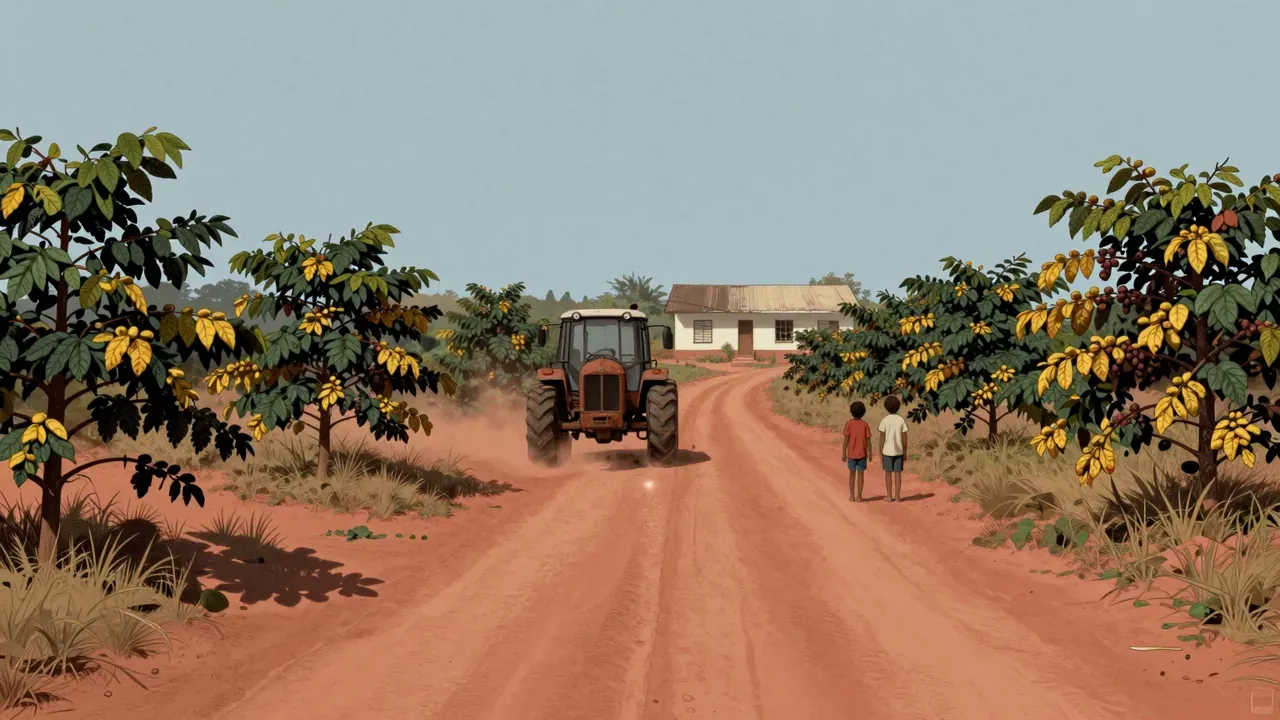
Mister Johnson is a 1990 American drama adapting Joyce Cary’s 1939 novel, set in colonial Nigeria in 1929. It follows a Nigerian clerk who internalises British imperial manners and values to the point of self-erasure, believing assimilation will grant him status, dignity, and belonging within the colonial structure. The film attempts something precise: not a broad anti-colonial polemic, but a tightly observed study of how ideology becomes embodied habit — how mimicry curdles into complicity, and loyalty to an abstract idea of England corrodes practical judgement, kinship, and survival. It does not ask whether colonialism is unjust — that is ambient, structural, unargued — but how one man negotiates its grammar with sincerity, energy, and fatal misreading. Its ambition lies in restraint: no voiceover exposition, no didactic framing, no heroic resistance. Instead, it watches Johnson recite English poetry at a rain-soaked party, wear ill-fitting boots on red earth, and beg for a bullet as mercy — all without irony or editorialising. It is a film about the cost of taking empire’s promises literally. (158 words)
The look of it
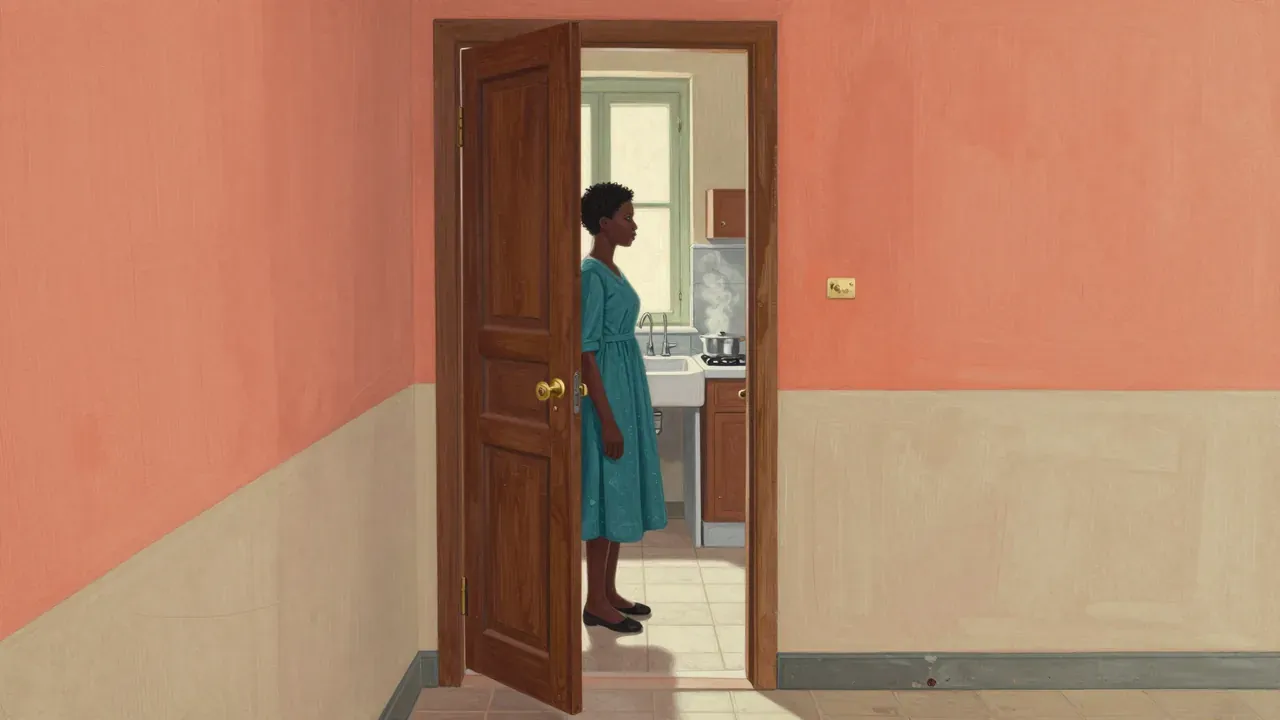
The story unfolds chronologically, anchored by Maynard Eziashi’s performance: physically buoyant, verbally rhythmic, emotionally porous, never winking at the audience. Pierce Brosnan’s Rudbeck is measured, weary, quietly compromised — not a caricature of authority but a functionary who mistakes administrative order for moral clarity. Edward Woodward’s Sargy Gollup is blunt, volatile, economically grounded; Denis Quilley’s Bulteen offers dry bureaucratic counterpoint. Peter James’ cinematography avoids exoticism: light is flat and humid, compositions are functional, landscapes are worked, not picturesque. Georges Delerue’s score uses woodwind motifs and sparse piano phrases — melodic but never sentimental. William Boyd’s script tightens Cary’s episodic novel without flattening its ambiguities; key scenes — the road-building incentives, the store brawl, the final jailhouse plea — land through accumulation of small, credible choices rather than dramatic crescendos. Editing is unhurried but never slack; cuts follow action or shift focus only when Johnson’s attention shifts. There are no visual metaphors imposed from outside — meaning resides in what Johnson does, says, wears, and misplaces. (159 words)
What sticks
What lands is the cumulative weight of Johnson’s optimism as both strategy and delusion. His insistence on English forms — Christian marriage, ledger-keeping, formal address — feels less like parody than a sincere, exhausting performance of competence in a system rigged against his success. The road-building sequence works because productivity rises not from coercion but from Johnson’s improvised incentive scheme, which briefly aligns colonial infrastructure with local agency — until Rudbeck reasserts control. The scene where Johnson invites villagers into Sargy’s store during rain is absurd, tactless, and utterly human: a man trying to host, to be generous, to enact the role he imagines an Englishman would play. Eziashi’s physicality — the way he adjusts his collar, stands at attention before Rudbeck, sings off-key in jail — makes Johnson legible across cultural distance without simplifying him. The film’s quietest moments land hardest: Johnson handing over his shoes before execution, not as surrender but as a final, futile gesture of civility. These are not triumphs of character but recognitions of pattern — how belief persists even as evidence mounts against it. (157 words)
What slips
What does not land is the film’s handling of Nigerian interiority beyond Johnson. Bamu remains defined almost entirely by her withdrawal and return; her motivations are implied but not dramatised. Waziri functions as plot catalyst and antagonist without psychological texture — his resentment reads as narrative necessity rather than lived grievance. The supporting Nigerian cast, though drawn from local communities and shot on location in Toro, are largely reactive: extras in Johnson’s orbit rather than co-architects of the world. This is not a failure of casting — Hubert Ogunde’s Brimah has gravitas — but of screenplay architecture: the story’s centre of gravity never shifts from Johnson’s perspective, and the script does not build parallel lines of inquiry into how others navigate or resist the same structures. Some reviewers found Eziashi’s performance tonally monolithic — a charge that gains force in the second half, where Johnson’s repeated reversals risk blurring moral distinction into mere impulsiveness. The film’s refusal to explain or judge leaves room for ambiguity, but also for misreading: without clearer signposting of Johnson’s internal logic in key turns — why he steals letters, why he charges the road fee — his actions can feel arbitrary rather than tragically consistent. (159 words)
What it’s really about
The themes that matter are assimilation as self-betrayal, the violence of administrative benevolence, and the asymmetry of moral accountability under empire. Johnson’s tragedy is not that he is deceived by the British, but that he believes their language, laws, and rituals possess inherent virtue — a belief the film treats as neither foolish nor noble, but structurally inevitable given the tools available to him. Rudbeck’s authority rests not on force alone but on his ability to define what counts as ‘proper’ conduct, ‘correct’ accounting, ‘civilised’ marriage — categories Johnson adopts with total commitment. The road is the central motif: built to serve trade, justified by progress, maintained by unpaid labour, sabotaged by bookkeeping. It embodies colonial infrastructure as both promise and trap. The film also examines the limits of compassion: Rudbeck’s final act is framed as personal mercy, yet it erases legal process, silences witnesses, and preserves colonial hierarchy. There is no redemption arc, no awakening — only the slow, logical exhaustion of a worldview that cannot accommodate contradiction. The film’s moral weight lies in its refusal to offer alternatives, only consequences. (156 words)
Who it’s for
This film is for viewers who value precision over propulsion, who watch for how a character holds a pen or chooses a hat, who trust silence more than speeches. It rewards patience with layered performances and unsentimental craft. It is not for those who require clear heroes or villains, narrative momentum, or thematic resolution — Johnson’s fate is certain long before the rifle is raised, and the film declines to moralise the certainty. Some critics, including Tom Tunney, argue the portrayal risks reinforcing colonial tropes through its focus on Johnson’s ‘grinning’ persistence; others, like Neil Sinyard, see in that very persistence a subversive humanity. A viewer who finds Eziashi’s performance flattening rather than focused may reject the film outright — its entire architecture depends on sustaining belief in Johnson’s sincerity. That verdict would change only if the script gave more narrative space to counterpoints: Bamu’s voice, Waziri’s calculation, the workers’ collective response to the road fee. As it stands, it asks for attention, not allegiance. (158 words)
Is it worth your time?
Yes, it is worth your evening — provided you approach it as a study in tone, rhythm, and quiet consequence rather than a conventional drama. Its ninety-seven minutes unfold with the deliberation of a ledger being balanced: each scene accrues meaning through repetition, contrast, and slight deviation. You will not leave energised, but you may leave unsettled by how familiar Johnson’s logic feels — his faith in procedure, his investment in appearances, his belief that playing by the rules guarantees safety. Those who disliked it, like Owen Gleiberman, found the performance too opaque, the politics too muted; they would prefer sharper satire or clearer indictment. But the film’s power lies in its refusal to choose between critique and empathy. It does not ask whether Johnson is right, only how he got there — and how easily any of us might follow. To skip it is to miss a rare, unsparing portrait of ideology made flesh, shot in real mud, real sun, real silence. (157 words)