What it is
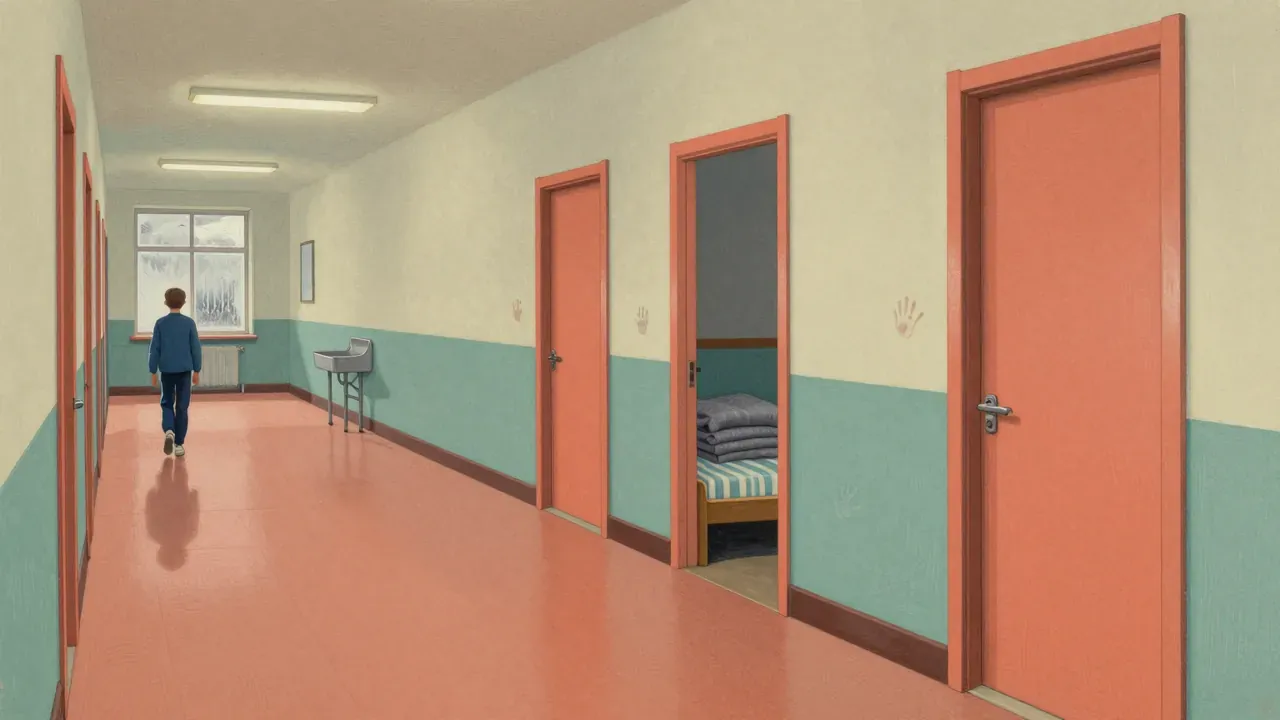
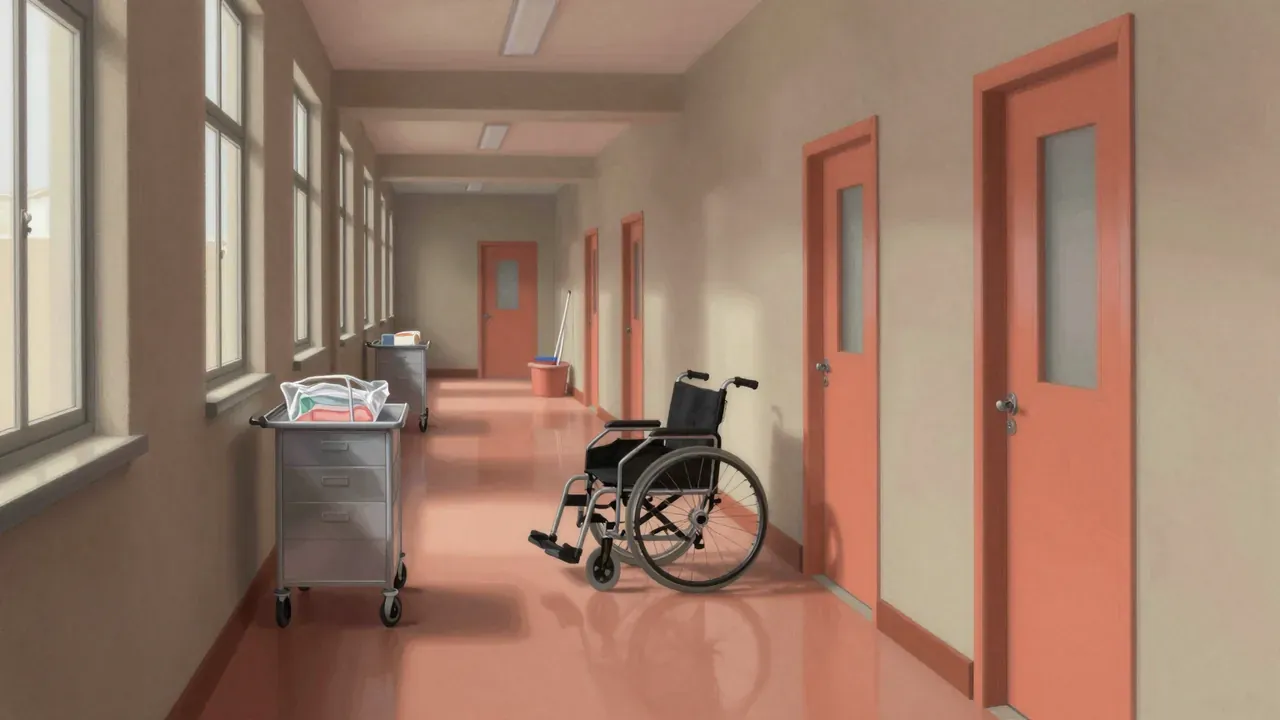
Memory for Max, Claire, Ida and Company is a Canadian documentary film directed by Allan King, released in 2005. It observes residents living with dementia at Baycrest Health Sciences, a long-term care facility in Toronto. The film does not seek to diagnose, explain, or advocate; it declines voiceover, interviews with staff or family, or explanatory text. Instead, it holds steady on daily rhythms — meals, walks, group activities, moments of confusion or lucidity — without framing them as symptoms or setbacks. Its aim is neither clinical nor sentimental: it treats presence as its own condition, not a diminished version of something else. King’s approach avoids narrative arcs or biographical exposition; no resident’s past life is reconstructed, no medical prognosis offered. What matters is what remains visible in gesture, repetition, resistance, or quiet attention. The film asks the viewer to adjust their temporal and perceptual expectations — not to wait for revelation, but to notice how meaning persists in fragments, how identity endures in tone of voice or habit of hand. It is observational, unadorned, and ethically restrained.
How it looks and listens
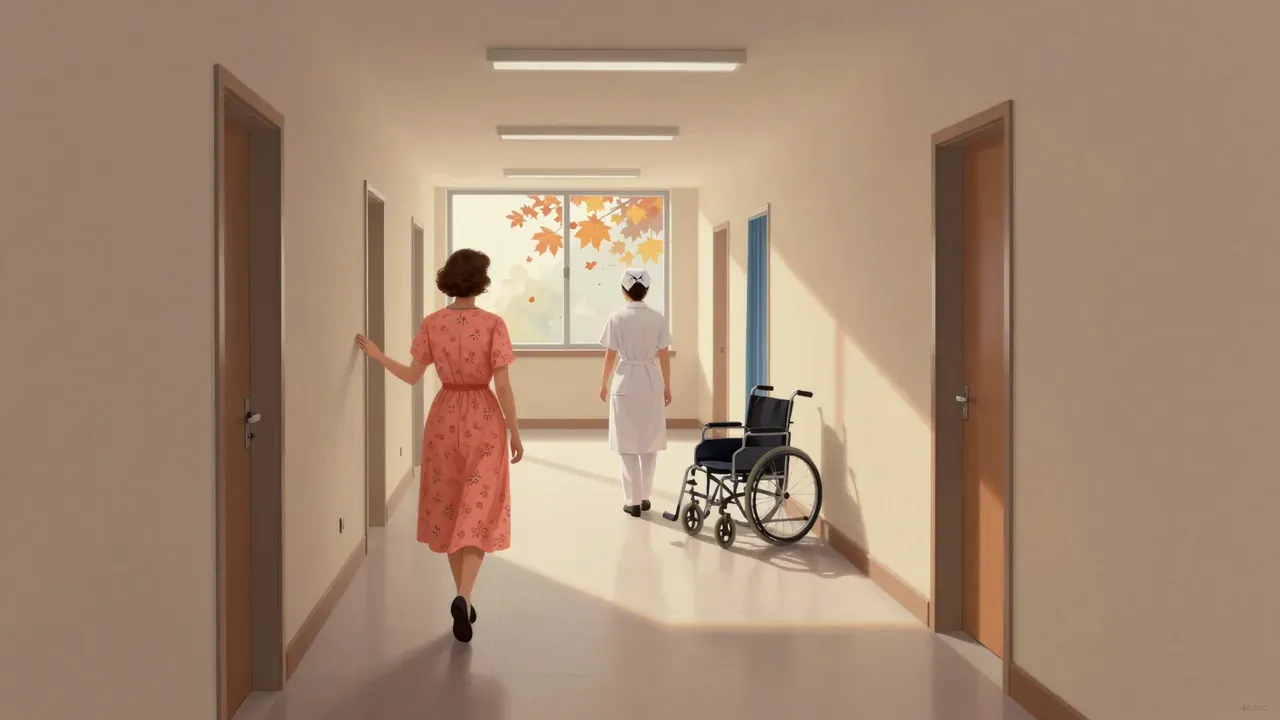
The film works through sustained, unobtrusive observation. Allan King uses long takes, mostly static or gently repositioning camerawork, and natural lighting within Baycrest’s interiors. There is no score, no sound design beyond ambient room tone and unscripted speech — muffled announcements, overlapping conversations, the scrape of chairs, distant piano practice. Editing is unhurried: scenes run longer than conventional documentary pacing allows, often holding past the point where a ‘moment’ might conventionally resolve. Performances are not performed: the residents are themselves, responding to their environment and each other without direction or prompting. King does not cut away from discomfort or ambiguity; he lets silences settle, lets repetitions recur, lets misunderstandings linger without correction. The craft serves restraint: Gordon Willis is not involved; the cinematographer is unnamed in the fact sheet, so no attribution is made. What emerges is not portraiture in the traditional sense, but a collective portrait built from accumulation — not of facts, but of duration, texture, and relational rhythm. There are no close-ups for emphasis, no slow motion for gravity — just time passing, witnessed.
Where it holds steady
What lands is the cumulative weight of ordinary endurance. Over repeated scenes — Max trying to recall a name, Claire humming a half-remembered tune while folding laundry, Ida insisting she must leave ‘today’, though she has lived at Baycrest for years — a quiet dignity accumulates. The film refuses to reduce its subjects to pathology; instead, it registers how agency persists in small assertions: choosing a chair, refusing soup, correcting a nurse’s mispronunciation, tapping a foot to music only they hear. These are not triumphs, but acts of continuity. The camera’s patience allows the viewer to recalibrate attention: to notice how a glance holds meaning even when language frays, how touch communicates before words do, how rhythm outlives memory. The absence of commentary means nothing is interpreted for us — and that silence becomes the film’s most persuasive device. It does not ask for pity or admiration, but for recognition: these are people whose inner lives remain inaccessible yet undeniably present, and the film honours that opacity without evasion.
Where it blurs edges
What does not land is any sense of structural purpose beyond accumulation. The film’s refusal of narrative or thematic scaffolding — no chronological markers, no staff interviews, no contextualising statistics — risks flattening variation into uniformity. Without external reference points, differences in cognitive capacity, personality, or care needs blur into a single, undifferentiated atmosphere of gentle decline. Some sequences feel unresolved not because they are open-ended, but because they lack internal logic: a scene may begin mid-action with no spatial or situational orientation, and end without transition, leaving the viewer disoriented in a way that feels accidental rather than intentional. The absence of explanation also means certain behaviours — agitation, withdrawal, repetitive questioning — remain unmoored from their possible triggers or alleviations, which may frustrate viewers seeking insight into care practices or disease progression. This is not a flaw in ethics, but in utility: the film prioritises phenomenological fidelity over pedagogical clarity, and that choice excludes those who need functional understanding.
What it keeps returning to
The themes that matter are memory not as archive but as residue; time not as linear progression but as layered recurrence; personhood not as fixed identity but as ongoing negotiation between self, others, and environment. The film treats dementia not as erasure but as redistribution — of attention, of intention, of emotional weight across fragments. It questions assumptions about coherence, asking whether continuity requires verbal consistency or can reside in gesture, habit, or affective response. Ageing appears not as decline but as transformation of relational grammar: how dependence reshapes reciprocity, how care becomes a shared activity rather than a transaction, how recognition operates outside language. There is no nostalgia for lost faculties; instead, the film attends to what remains operative — humour, irritation, curiosity, stubbornness — as evidence of unbroken subjectivity. These are not abstract ideas illustrated by case studies, but embodied conditions, revealed through the granular detail of daily life at Baycrest.
Who it meets, and who it passes by
This film is for viewers prepared to sit with uncertainty, discomfort, and unresolved duration — particularly clinicians, caregivers, students of gerontology or medical humanities, and anyone who has lived alongside cognitive change. It rewards attention calibrated to slowness, and offers no shortcuts to empathy. It is not for those needing explanation, resolution, or uplift; its refusal of catharsis or advocacy will frustrate viewers expecting documentary to clarify, persuade, or comfort. Those seeking practical guidance on dementia care will find little here — no strategies, no expert commentary, no comparative analysis of interventions. Nor is it for viewers who require narrative propulsion or emotional payoff: the film’s power lies in its resistance to both. A viewer who values diagnostic precision over phenomenological honesty, or who equates value with utility, would reasonably reject it — and that rejection would be valid, not a failure of perception. The film’s worth is conditional on willingness to relinquish interpretive control.
What stays after the screen goes dark
Yes, it is worth your evening — provided you arrive without expectation of summary, solution, or sentiment. Its ninety-minute duration does not feel like investment but immersion: time spent not watching people with dementia, but sharing temporal space with them, on terms they inhabit. That experience recalibrates attention, slows habitual judgment, and resists the impulse to translate behaviour into diagnosis. It is not ‘difficult’ in a punishing way, but demanding in its stillness — like listening closely to rain, knowing no conclusion is coming, only more rain. Someone who watches it once and feels unrewarded likely expected narrative return or emotional release; they would need a second viewing, without agenda, to register how the film’s structure mirrors its subject — repetition with variation, familiarity without certainty. Its value is not in what it says, but in how it trains the eye and ear to attend differently. That shift lasts longer than the credits.