The shape of the day
Medicine for Melancholy is a low-budget, single-day drama set in San Francisco, written and directed by Barry Jenkins as his first feature. It follows Micah and Jo — two Black twenty-somethings who meet at a party, spend a night together, then reconvene the next day — as they move through museums, housing meetings, and music venues while debating race, belonging, and assimilation. The film aims to articulate a specific tension: how Black identity is negotiated within spaces where Black people are statistically scarce and culturally marginalised, particularly within the city’s self-consciously ‘indie’ or ‘hipster’ milieu. Jenkins does not frame this as a love story with resolution, nor as social realism with policy prescriptions; instead, he treats the day as a charged, provisional arena where ideology and intimacy collide. The film’s formal restraint — its narrow runtime, limited cast, and deliberate visual desaturation — reflects its ambition: to hold a sustained, unflinching conversation about visibility, erasure, and self-definition without recourse to exposition or narrative payoff.
The look of it
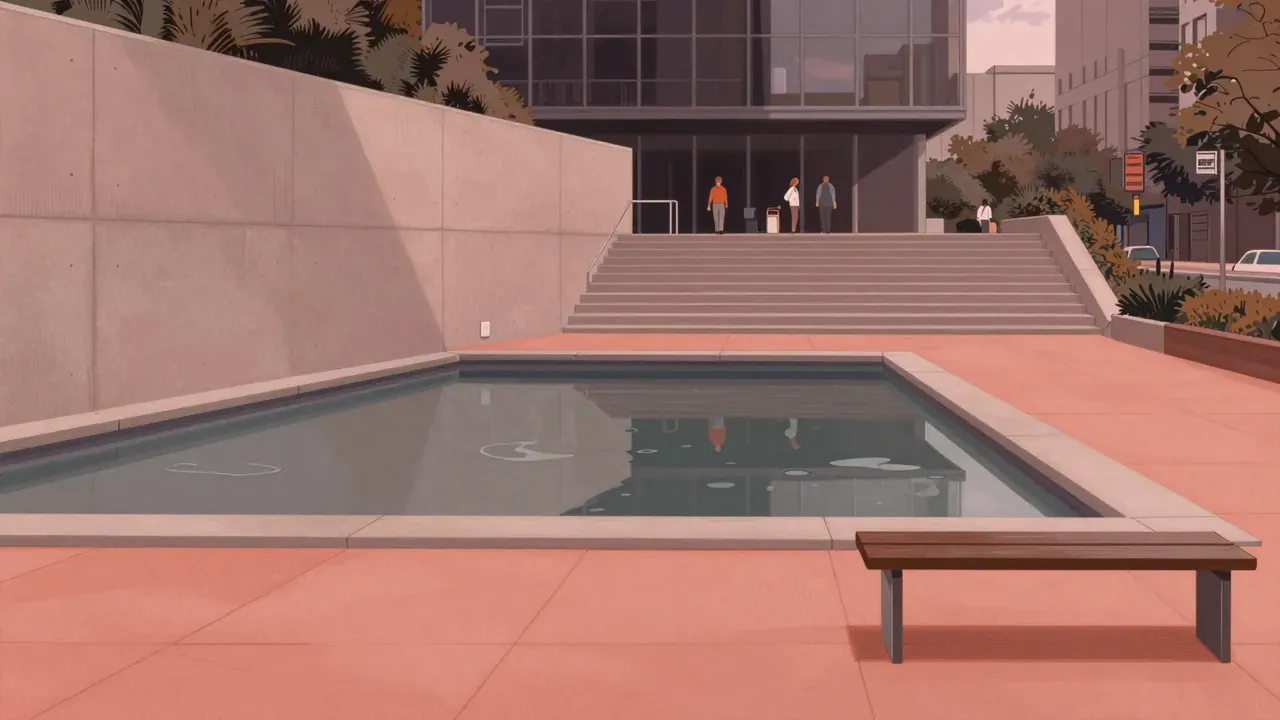
The film works through tight control of duration and tone. James Laxton’s cinematography keeps the image deliberately drained of colour, with saturation returning only in fleeting moments — a sunlit street corner, a stage light catching Jo’s shoulder — suggesting emotional or ideological release from racial preoccupation. Nat Sanders’ editing sustains a quiet, unhurried rhythm: scenes bleed into one another without emphasis, avoiding crescendos or punctuation. Wyatt Cenac and Tracey Heggins perform with minimal inflection, their dialogue delivered as if thinking aloud rather than performing argument. There are no monologues, no climactic confrontations; even the Museum of the African Diaspora sequence unfolds without voiceover or didactic framing. The craft serves the film’s central proposition: that identity is not declared but inhabited, tested, and revised in real time. The camera stays close but never intrusive; sound design is sparse and diegetic, favouring ambient city noise over score. This is not naturalism as mimicry, but naturalism as method — a way of holding space for uncertainty.
What lingers
What lands is the film’s fidelity to ambivalence. Micah’s suspicion of Jo’s relationship with a white gallery owner never hardens into caricature; Jo’s defensiveness never collapses into dismissal. Their exchanges avoid rhetorical victory, lingering instead on the discomfort of being seen — and misread — by someone who shares your skin but not your assumptions. The San Francisco setting functions precisely: its steep hills, fog-draped architecture, and visibly uneven demographics ground the abstraction of ‘identity politics’ in tangible geography. The desaturated palette works not as gimmick but as grammar — each return of colour feels earned, like breath after submersion. Even minor encounters — the housing coalition meeting, the impromptu concert — land because they are observed, not explained. Jenkins refuses to tell us what to feel about gentrification or interracial dating; he shows us two people trying, haltingly, to name what it costs them to inhabit the same city, the same room, the same silence. That restraint makes the film’s quietest moments — Jo adjusting her coat on a bus, Micah staring at a mural — carry cumulative weight.
Where it thins
What does not land is the film’s structural thinness when held against its thematic weight. With only two characters and no narrative engine beyond their reconnection, the day begins to feel less like lived duration and more like a series of calibrated stations on an ideological itinerary. Some sequences — particularly the museum visit — risk flattening complex history into backdrop, their significance implied but not dramatised. The absence of other Black voices beyond brief background figures reinforces the very isolation the film critiques, but without sufficient counterpoint, it edges toward solipsism. Jo’s long-distance relationship remains under-imagined: we see her glance at her phone, hear Micah’s critique, but never witness the relationship’s texture or stakes. The film’s refusal to resolve or even fully contextualise its debates means some viewers will find it evasive rather than open-ended — a choice that reads as discipline to some, evasion to others. Its minimalism demands patience; without it, the film can feel like notes toward a larger work, not the work itself.
The air in the room
The themes that matter are not race in the abstract, but race as infrastructure — as the unseen force shaping where people live, whom they date, how they speak in rooms full of strangers. Gentrification here is not a backdrop but a condition of possibility: it explains why Micah and Jo meet in a borrowed flat, why the Museum of the African Diaspora feels both necessary and alienating, why affordable housing meetings draw sparse, weary attendance. Class operates alongside race, not beneath it — Micah’s casual wear and Jo’s curated wardrobe signal different relationships to capital, not just taste. The film also treats ‘Blackness’ as contested terrain: Micah’s insistence on racial consciousness clashes with Jo’s belief that over-naming race limits agency. Neither position is granted authority; the film’s moral centre lies in the friction between them. Crucially, it avoids framing San Francisco as exceptional — rather, the city becomes a lens for examining how urban space organises identity, memory, and exclusion across the United States. The melancholy in the title is not personal sadness, but the ache of recognition: seeing yourself everywhere and nowhere at once.
Who it meets
This film is for viewers who value dialogue as process rather than delivery, who find resonance in unresolved conversations and visual restraint. It suits those familiar with the textures of contemporary Black urban life — not as spectacle, but as daily negotiation — and those attuned to the politics of place. It is not for viewers who require narrative propulsion, character arcs, or clear thematic resolution; its pacing and ambiguity will frustrate anyone seeking conventional romance or social critique with answers. Those expecting a broader ensemble, historical context, or satirical edge — like the work of Spike Lee or Ava DuVernay — may find its focus too narrow. A viewer who values strong plot mechanics or emotionally cathartic performances would likely leave dissatisfied. What would change the verdict? A second act that deepened Jo’s interiority, or a third voice that challenged both protagonists’ positions — not to settle the debate, but to widen its terms.
The weight of the hour
Yes, it is worth your evening — provided you approach it as a carefully composed tone poem rather than a narrative engine. Its eighty-eight minutes pass without hurry, yet accumulate a quiet density few debut features achieve. You do not watch it for plot twists or performance fireworks, but for the precision with which it renders hesitation, doubt, and the weight of unspoken assumptions. It rewards attention to gesture, framing, and silence — qualities easily missed if viewed distractedly or on a small screen without proper contrast. Those who dislike films that withhold closure or resist emotional signposting may find it unrewarding. But for viewers willing to sit with its questions — about how identity is performed, policed, and quietly revised in public space — it offers something rare: a film that thinks aloud, in real time, without pretending to know the answer. Its value lies not in what it resolves, but in how faithfully it holds the question.