The premise
Maîtresse is a French erotic drama from 1975 that treats domination and submission not as spectacle or transgression but as vocational routine and emotional terrain. Barbet Schroeder co-wrote and directed it with deliberate flatness: no moral framing, no psychological exposition, no tonal escalation. It aims to depict the daily texture of a dominatrix’s work — the plumbing repairs, the bank deposits, the client intake forms — alongside the unremarkable intimacy of a live-in relationship built across that same professional boundary. The film refuses allegory; it does not argue for liberation, critique patriarchy, or diagnose pathology. Its ambition is narrower and rarer: to hold steady on a set of behaviours usually flattened by scandal or titillation, and to treat them with the same neutral attention one might give a baker kneading dough or a tailor pressing seams. This is not provocation as strategy, but provocation as side effect of fidelity — to setting, to rhythm, to the uninflected gaze of Néstor Almendros’s camera.
The look of it
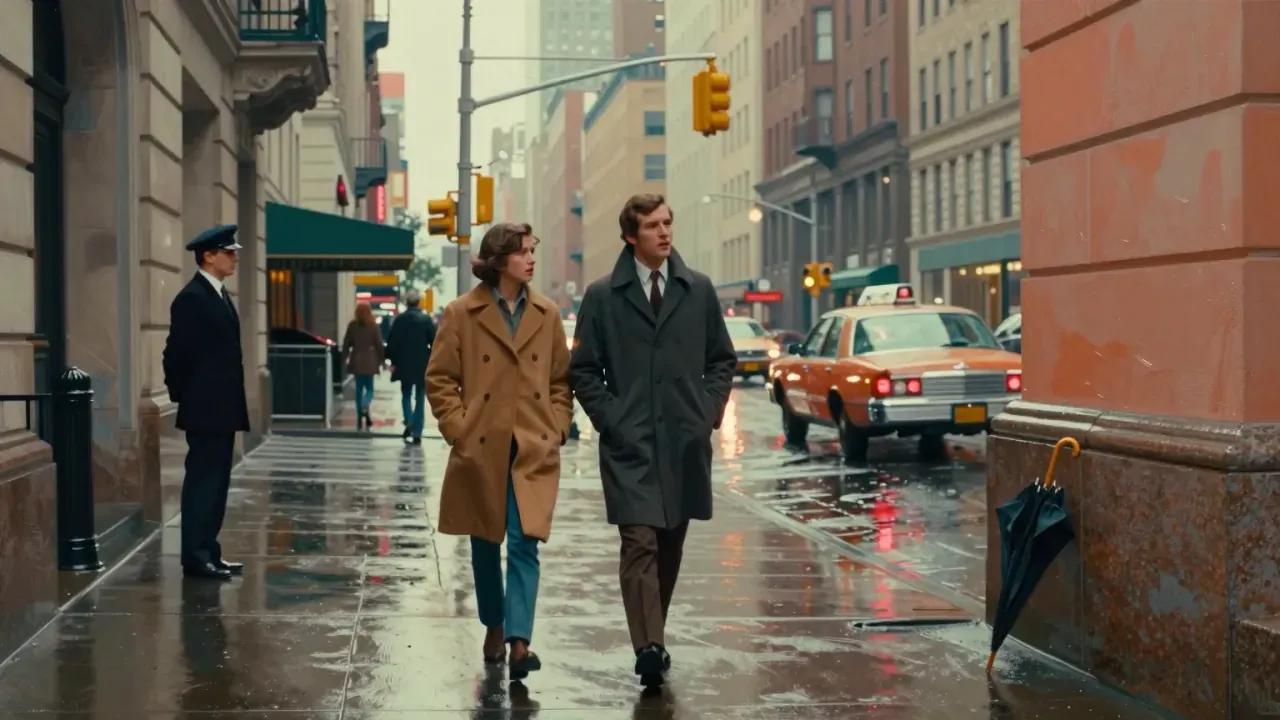
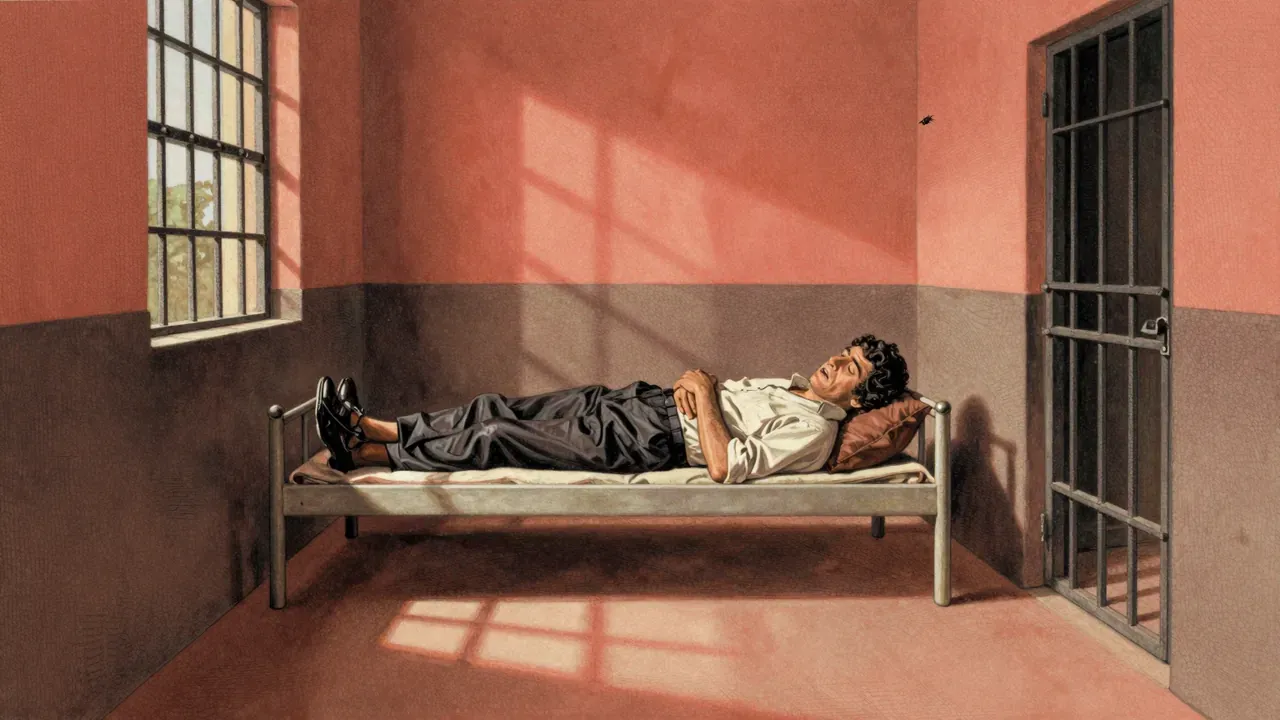
The story follows Olivier’s slow absorption into Ariane’s world, structured less by plot turns than by repetitions: visits to the dungeon, meals in cafés, trips to the countryside, arguments in hallways. Gérard Depardieu plays Olivier with physical immediacy but little interiority — his face registers confusion more often than desire, his body reacts before his mind catches up. Bulle Ogier’s Ariane is even more withholding: her authority is procedural, not performative; she gives instructions, checks watches, adjusts cuffs. Almendros shoots interiors in natural light, favouring medium shots and shallow focus that keep both characters at arm’s length. Carlos d’Alessio’s score is sparse, mostly piano motifs that recur without variation. Denise de Casabianca edits with a steady pulse — no jump cuts, no montages, no emphasis on reaction. Even the sex scenes are lit and framed like domestic chores: functional, unglamorous, unedited in real time. There is no music under the whipping scene, no close-up on the belt’s impact, no cut away to Olivier’s face as he complies.
The rhythm
What lands is the film’s refusal to dramatise what it shows. The power dynamic between Olivier and Ariane never resolves into romance, rebellion, or redemption — it simply persists, uneven and unexplained. The scene where Ariane suffers a panic attack mid-session, then walks upstairs to be held silently by Olivier, lands because it breaks no rules of the film’s own logic: vulnerability is not a rupture but a shift in posture, a change in breathing. The final car crash — absurd, violent, laughing — works precisely because it arrives without buildup or irony; it feels inevitable only in retrospect, like a gear slipping after too much strain. The film’s restraint makes its few deviations — the sudden slap, the unmasked client, the motorcycle ride — land with physical weight, not symbolic force. These moments do not explain anything, but they register as pressure points in a surface otherwise kept deliberately smooth.
The missteps
What does not land is the attempt to anchor Olivier’s jealousy in coherent motivation. His confrontation with Gautier reads less as character-driven rage than as narrative obligation — a late-act pivot that the script neither prepares nor justifies. The subplot with Mario evaporates without consequence, leaving his betrayal unexamined and his exit unmourned. The countryside château sequence, where Olivier whips a woman in front of wealthy onlookers, feels detached from the rest of the film’s grain: the lighting changes, the sound design thickens, the pacing slows — as if the film momentarily forgets its own method. These are not flaws in execution but ruptures in conception: moments where Schroeder seems to reach for thematic weight or social commentary, only to find the film’s internal logic too tight to accommodate them. The result is not confusion but a slight slackening — a pause where the film’s discipline briefly falters.
The substance
The themes that matter are labour, habit, and the quiet violence of mutual dependence. Ariane’s dominatrix work is presented as skilled craft: she negotiates fees, maintains equipment, manages schedules, enforces boundaries. Olivier’s role is not lover or apprentice but assistant — fetching towels, answering phones, opening bank accounts. Their relationship is less about desire than about shared space and overlapping routines. The film treats sexuality not as identity but as activity — something done, not declared. Class surfaces obliquely: Olivier’s provincial accent, his discomfort in cafés, his eagerness to handle cash; Ariane’s fluency in multiple registers, her ease with wealth and silence. But these are textures, not arguments. The film avoids psychology, so there is no ‘why’ behind Ariane’s profession or Olivier’s compliance — only the repeated fact of their doing. What endures is the sense that power is not seized or surrendered, but negotiated daily, in small increments, often over breakfast.
The audience
It is for viewers who tolerate long takes, uninflected performances, and ethical ambiguity without requiring resolution. It suits those accustomed to arthouse pacing and unembellished realism — fans of Rohmer’s conversational restraint or Bresson’s asceticism. It is not for viewers who expect narrative payoff, psychological clarity, or moral framing around sexual content. Those who need context, explanation, or condemnation of BDSM will find the film withholding to the point of indifference. Those who associate erotic cinema with lushness, suspense, or catharsis will likely feel stranded. A viewer who values craft over commentary, or who finds tension in stillness rather than escalation, may find it absorbing. Someone who watches for plot momentum or emotional signposting will not. Nothing in the film changes that divide — it makes no concessions, offers no guidebook, and assumes no prior agreement on what cinema owes its audience.
The verdict
Yes, it is worth your evening — but only if you accept its terms. It asks for patience, not admiration; attention, not empathy. At 112 minutes, it moves slowly but never drags, because its rhythm is consistent and its gaze unwavering. You will not leave understanding Olivier or Ariane better, but you may leave with a sharper sense of how films construct reality through omission as much as inclusion. Those who dislike it tend to cite its emotional distance or perceived coldness — a fair objection, but one the film makes no effort to answer. Its value lies not in what it reveals but in how steadily it observes. If you watch to be moved, instructed, or thrilled, this will disappoint. If you watch to see how a specific world holds itself together — in light, in gesture, in silence — then it repays attention fully. There is no middle ground, and the film does not seek one.