Two strangers waking up as each other
Your Name follows Mitsuha, a teenage girl in the fictional mountain town of Itomori, and Taki, a boy in Tokyo, who begin intermittently waking up in each other’s bodies without warning or explanation. Makoto Shinkai, who wrote, directed, shot and edited the film, conceived it after visiting the fishing village of Yuriage in 2011 following the earthquake and tsunami that devastated it, later saying the sight made him think the same thing could have happened to his own town. That visit sits behind a film that presents itself, for its first half, as a body-swap comedy about two teenagers managing each other’s lives through notes and phone diaries, while withholding the reason the swaps are happening at all.
A romance built entirely on absence
The relationship the two build develops entirely through absence: they never meet as themselves, only encountering each other through the days they lose control of and the messages left behind to explain what happened while they were away. It is a romance conducted almost entirely at a remove, closer to correspondence than courtship, which makes the eventual attempt to actually meet, once the swaps mysteriously stop, carry more weight than a conventional meet-cute would. Ryunosuke Kamiki and Mone Kamishiraishi voice Taki and Mitsuha, and the film depends on their performances registering as convincingly each other during the swap scenes, playing one character through two different voices.
A structural twist that reframes everything before it
A midpoint revelation, which the film earns rather than simply announces, recontextualises everything that came before it: the swaps are not happening in the same present, and the town of Itomori is not in the state the audience has been shown it in. This is the point where a story that read as a light supernatural romance turns into something closer to a race against a specific, dated catastrophe, and Shinkai’s tsunami-visit origin becomes legible in the plot mechanics themselves rather than only in interviews about the film’s inspiration. It is a genuinely well-built structural turn, the kind that changes how a viewer would watch the first half on a second viewing.
Visuals doing work the dialogue does not
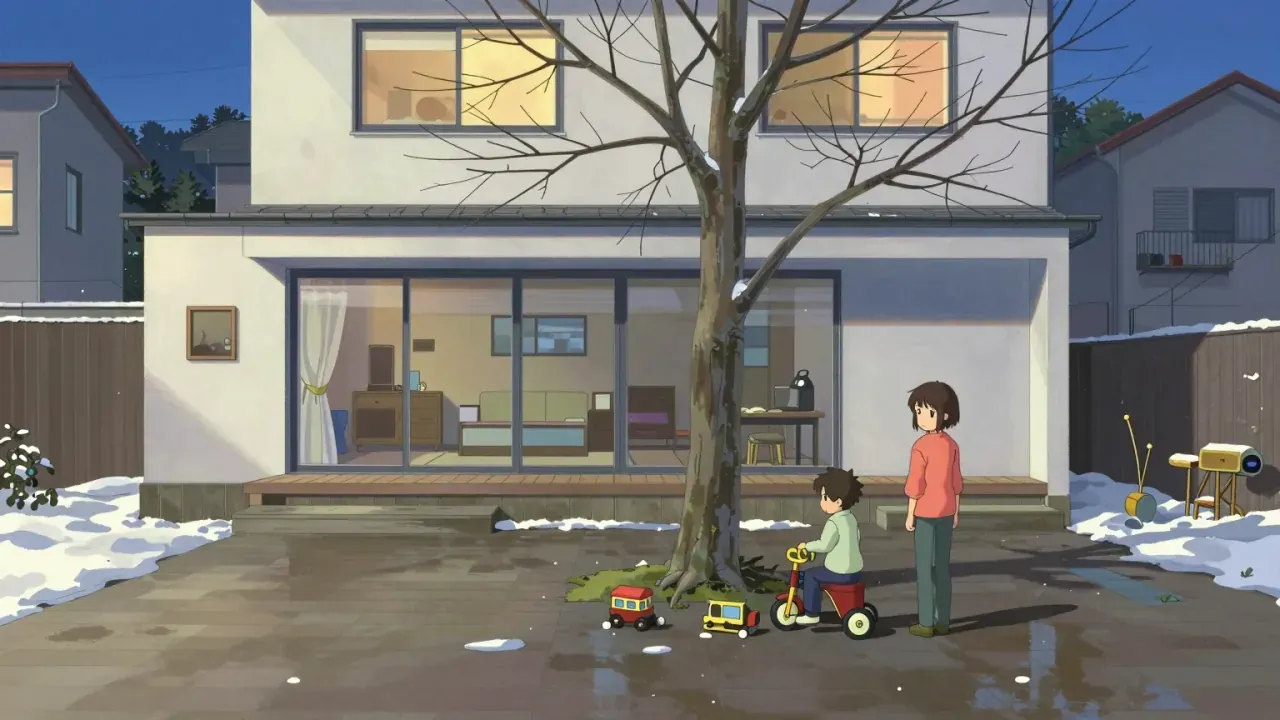
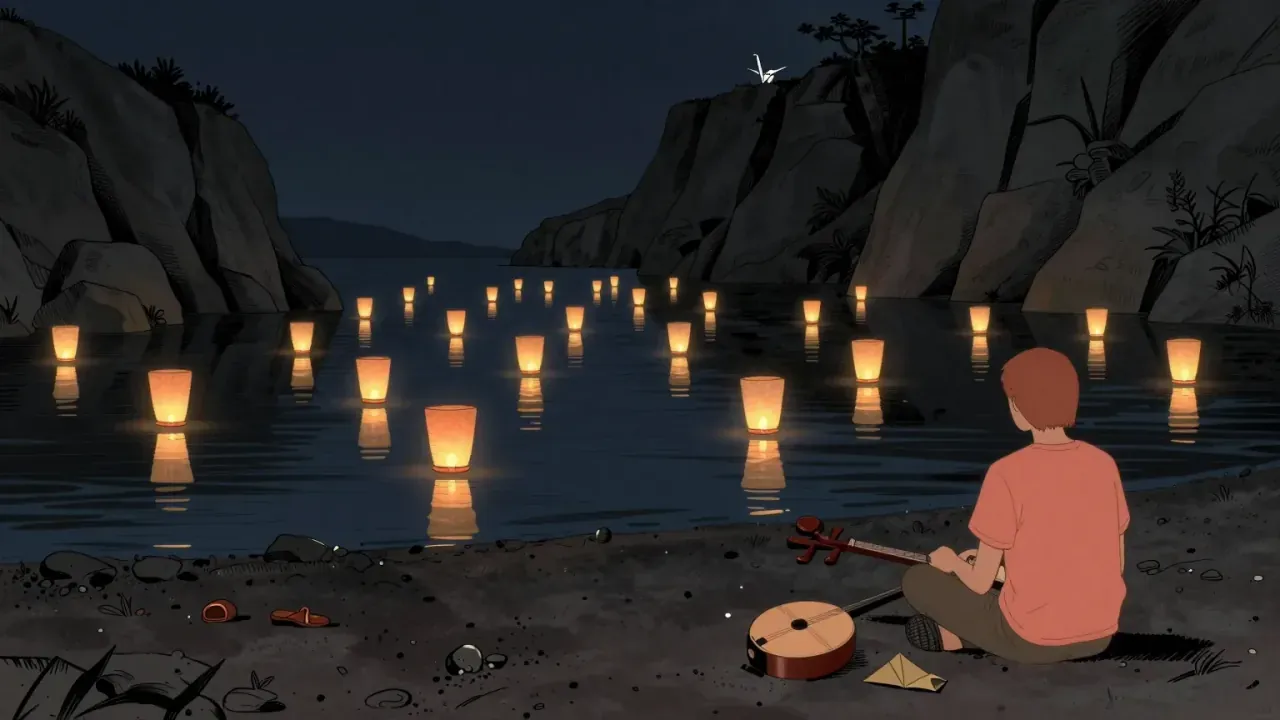
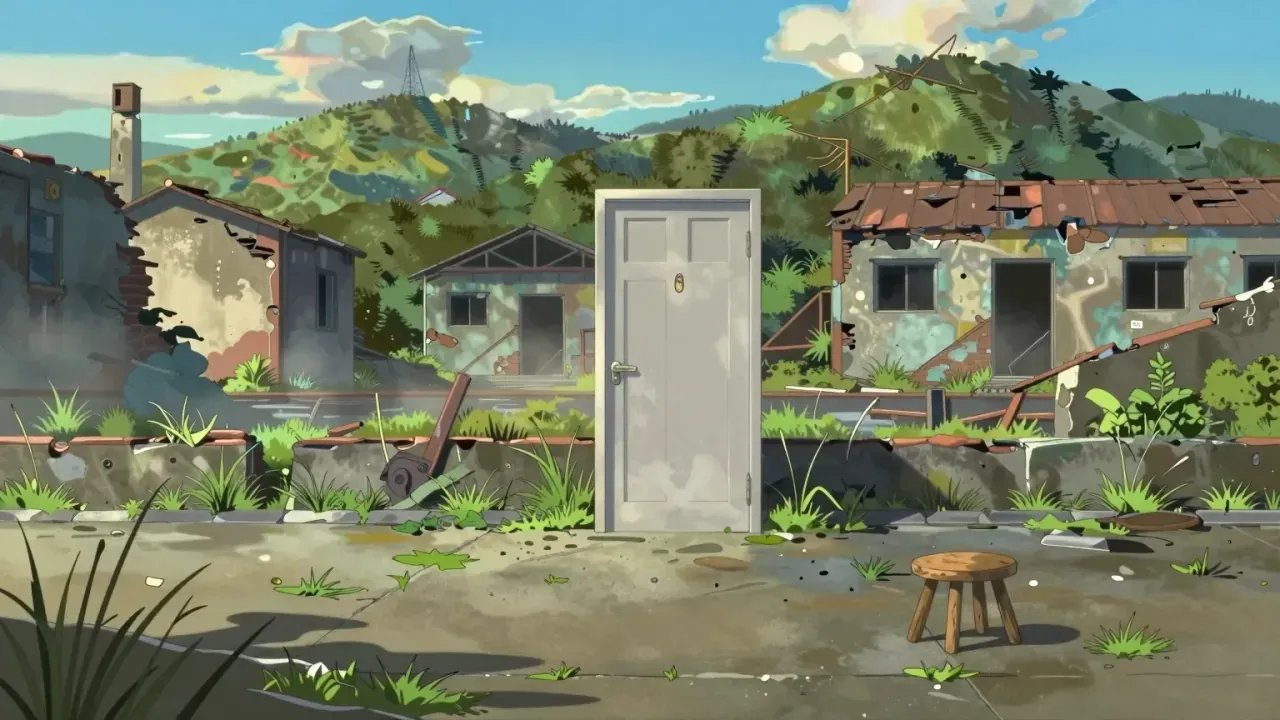
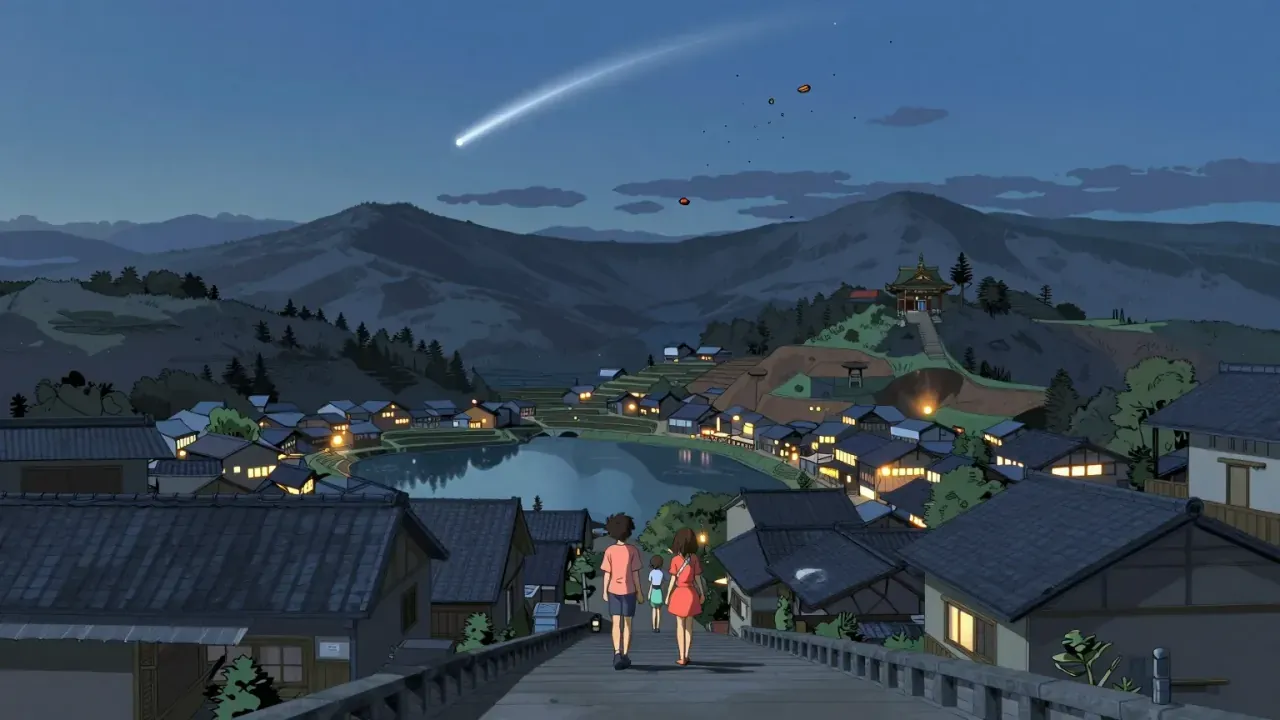
Shinkai shot the film himself and it shows in backgrounds built with a near-photographic density of detail, skies and train interiors and rural shrines rendered with more specificity than the character animation over them, which is a deliberate choice rather than an imbalance. Radwimps, the rock band that scored the film, contributes both instrumental cues and four vocal songs that carry emotional beats the fairly sparse dialogue leaves unstated, particularly in the stretches building toward the reveal. The visual and musical registers are doing narrative work here, not just mood-setting, and a viewer paying attention to only the dialogue will miss a good portion of what the film is actually communicating.
Where the mechanics ask for trust rather than logic
The time-slip mechanism, once its rules become explicit in the back half, does not hold up especially well to close logical scrutiny, and the film is aware enough of this to lean on feeling over consistency at the moments it most needs momentum. This is a common trade in Shinkai’s work and in the genre generally, but Your Name asks for more suspension of disbelief in its climax than its careful first-half plotting had trained the audience to expect, and viewers who want their time-travel internally coherent may find the ending’s mechanics thinner than its emotional payoff.
A film that reads differently once the disaster lands
Approached simply as a teen romance, the film delivers one, and that is enough reason to watch it without any further context. But knowing Shinkai’s stated inspiration, a real 2011 disaster and a real destroyed town standing behind Itomori’s fictional one, changes how the film’s back half reads, turning what could seem like a supernatural contrivance into something closer to a wish fulfilled after the fact. It suits viewers willing to sit with that weight as well as those who simply want the romance, though the latter group may find the ending’s stakes heavier than the opening act signalled.
A hundred and six minutes that outgrossed nearly everything else in its market
Your Name grossed over three hundred million dollars on release, becoming the highest-grossing Japanese film of all time until Demon Slayer’s feature overtook it in 2020, and aggregate critical scores were similarly strong across the board. At a hundred and six minutes it does not pad its two timelines with excess incident, and the structural ambition, the visual craft, and the way Shinkai routes a national trauma through a teenage romance rather than around it, justify the commercial reception rather than merely accounting for it. It is worth the evening on the strength of what it is trying to do, not only on how well it sold tickets.