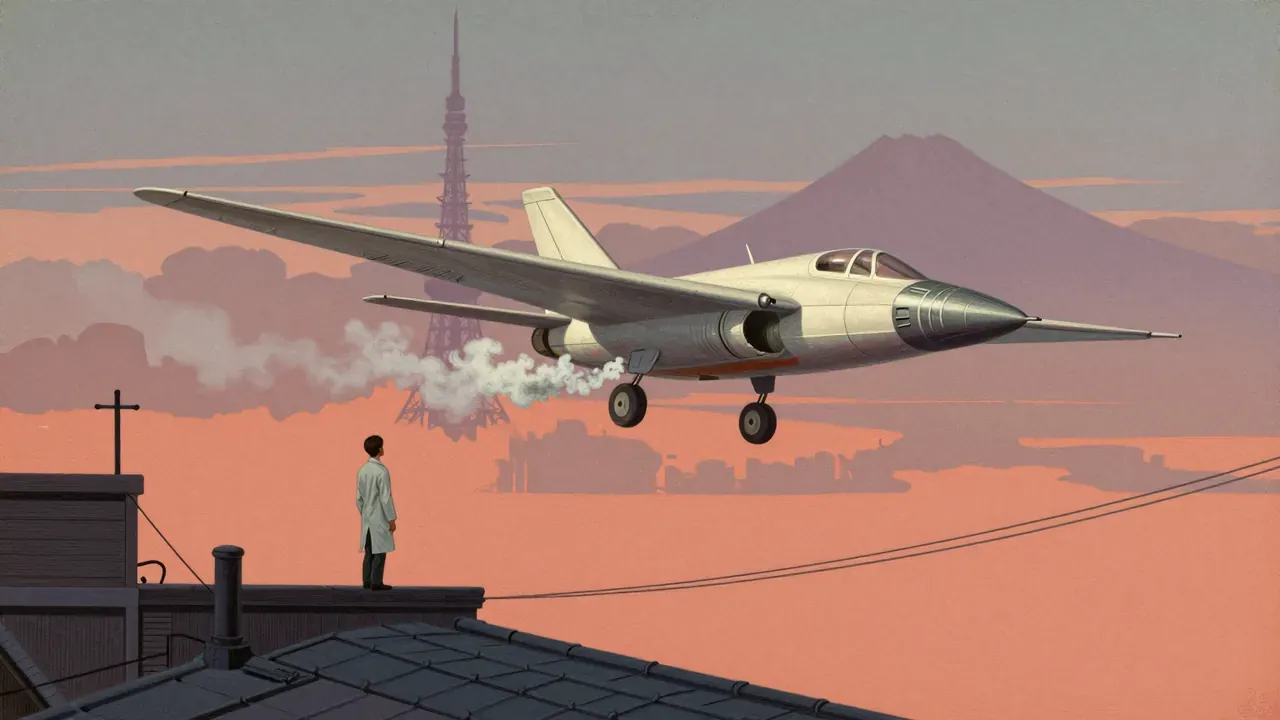
The first try
The Worst Person in the World is a Norwegian drama about Julie, a woman in her late twenties navigating shifting ambitions, relationships, and self-perception across several years in Oslo. It is the third film in Joachim Trier’s Oslo trilogy, following Reprise and Oslo, August 31st, and functions as both a character study and a structural experiment in tonal elasticity — moving between realism, subjective fantasy, and near-satirical vignette without narrative rupture. The film does not aim for psychological completeness or moral resolution but instead sustains a sustained inquiry into how identity forms and fractures under the weight of choice, expectation, and time. Its title, drawn from a common Norwegian self-deprecating phrase, signals its interest less in judgment than in the habitual, almost reflexive, ways people name their own inadequacy. It is not a romance that resolves, nor a coming-of-age that concludes; it is a portrait held at arm’s length, attentive to gesture, hesitation, and the quiet accumulation of unspoken things. The film tries to hold contradiction without reconciling it: Julie is neither condemned nor absolved, neither fixed nor fully free.
The look of it
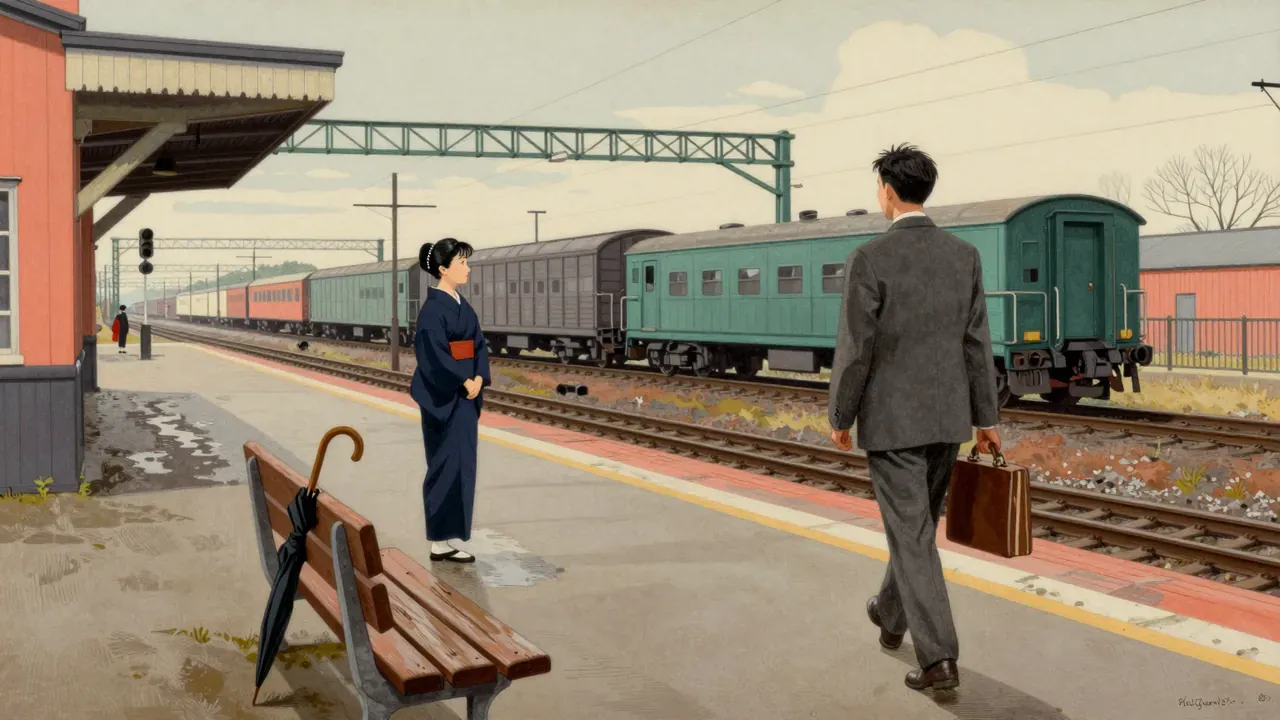
The story unfolds in twelve chapters plus a prologue and epilogue, each marked by a title card and a distinct emotional register — from the wry detachment of Julie’s medical school dropout to the surreal, slow-motion wedding crash that introduces Eivind. Renate Reinsve carries the film with physical specificity: her posture shifts with each relationship, her voice tightens when deflecting, softens when listening. Anders Danielsen Lie gives Aksel a grounded warmth that makes his illness land without melodrama. Kasper Andersen’s cinematography favours natural light and shallow focus, keeping faces legible even in dim rooms or crowded streets; Olivier Bugge Coutté’s editing stitches time with precision — cuts often land on breaths, glances, or the space after a sentence ends. Ola Fløttum’s score avoids thematic repetition, using sparse piano and ambient textures that recede rather than declare. The craft serves restraint: no scene overextends, no performance overstates, no visual motif repeats without variation. Even the fantasy sequence — Julie freezing time mid-street — feels earned, not indulgent, because it emerges from her exhaustion, not the script’s need for flourish.
The frozen street
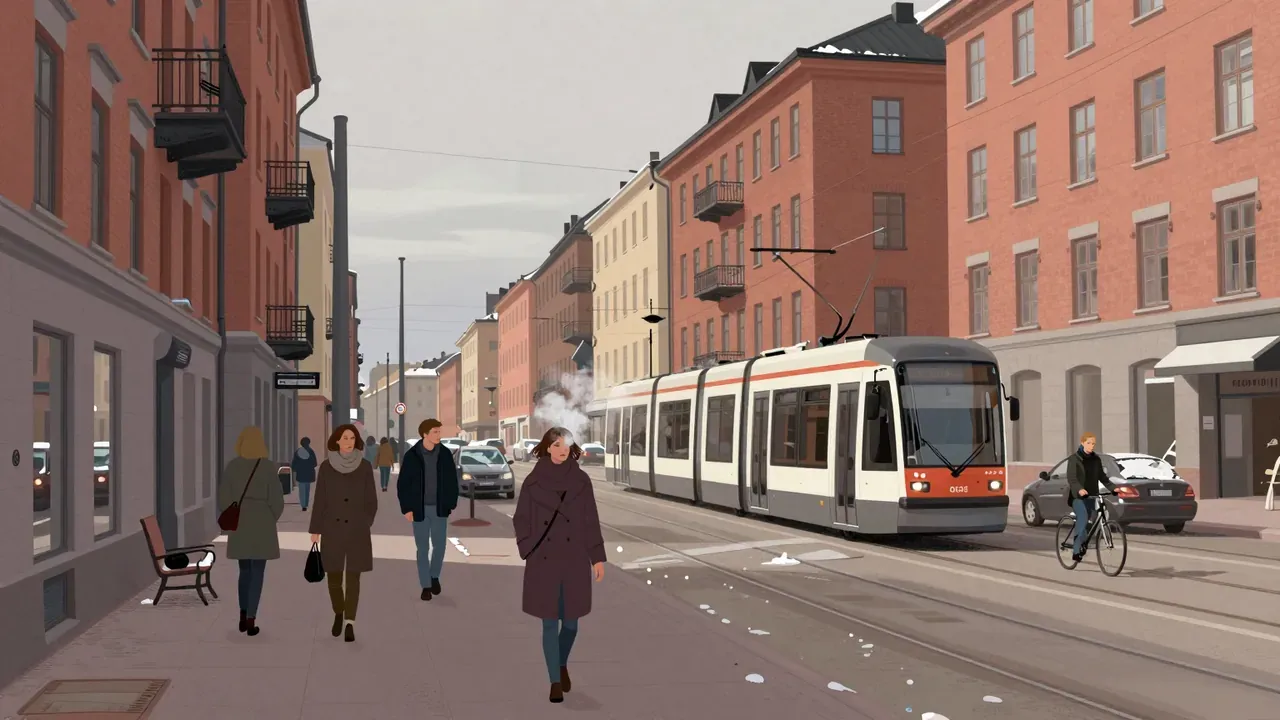
What lands most firmly is the film’s fidelity to ambivalence. Julie’s indecision about career, motherhood, love, and loyalty never curdles into flakiness because the film refuses to assign motive where she has none — her choices are presented as felt, not reasoned. The hospital scenes with Aksel avoid sentimentality by anchoring emotion in small details: the way he adjusts his blanket, how Julie photographs him not as a dying man but as a person still inhabiting his body. The miscarriage sequence is handled without music or close-ups, just sound design — water, breath, silence — and a single long take in the shower that trusts the viewer to sit with discomfort. Reinsve’s performance lands because it rejects archetypal coherence: Julie is funny and evasive, generous and selfish, present and absent, all at once, and the film never asks her to choose between them. The Oslo locations — bookshops, apartments, tram stops — feel lived-in, not picturesque, reinforcing the sense that this is not a fable but a record of ordinary, unremarkable, deeply consequential days.
The hospital light
What does not land is the film’s occasional drift into schematic symmetry. The chapter structure, while elegant, sometimes imposes rhythm where life offers only ragged edges — particularly in the second half, where Julie’s pregnancy and Aksel’s decline unfold with a tidiness that strains credulity. The political dimension remains underdeveloped: Aksel’s comic Bobcat is cited as transgressive, yet the film never shows its content or impact beyond his frustration with its adaptation, leaving his artistic stakes vague. Eivind’s break-up with Sunniva hinges on ideological incompatibility, but her character exists only as a set of positions — climate anxiety, social justice vigilance — never as a person with contradictions or history. The film’s refusal to judge Julie can blur into refusal to examine her: her privilege as a white, educated Norwegian woman goes uninterrogated, even as the script treats her uncertainty as universal. Some viewers will find this omission not neutral but evasive — a limitation of perspective disguised as generosity.
The shower
The themes that matter are time, self-naming, and the quiet violence of expectation. Time here is not linear but elastic: Julie experiences years in minutes and minutes in years, especially during the frozen-street fantasy, which expresses not magical thinking but the neurological lag between decision and consequence. Self-naming — ‘the worst person’ — functions as both shield and cage: it pre-empts criticism but also forecloses growth, turning moral panic into habit. The film treats this phrase not as confession but as linguistic reflex, something spoken before thought catches up. Expectation operates on multiple levels: Aksel expects fatherhood, Eivind expects alignment, Julie’s father expects attendance, her mother expects stability — none of these demands are malicious, but their cumulative weight shapes her retreat into ambiguity. The film’s deepest concern is not whether Julie chooses right or wrong, but how thoroughly her environment has trained her to believe that choosing at all is evidence of failure. Mortality, feminism, and creative labour orbit these core concerns but do not dominate them.
The last frame
This film is for viewers who value psychological texture over plot propulsion, who find resonance in unresolved endings and trust performances that resist explanation. It suits those familiar with European arthouse pacing and comfortable with long takes, muted colour palettes, and dialogue that pauses more than it explains. It is not for viewers who require narrative closure, clear moral framing, or protagonists whose motivations are explicitly articulated. Those who read character indecision as weakness, or who expect social critique to be direct rather than embedded in behaviour and setting, will likely find it thin. Viewers seeking robust engagement with class, race, or systemic power may leave unsatisfied — the film’s world is deliberately narrow, focused on a specific cultural and economic stratum. Its appeal rests on subtlety, not scope. Anyone expecting a romantic comedy in the genre’s conventional sense will misread its tone entirely.
The worst person
Yes, it is worth your evening — provided you arrive without demand for resolution or instruction. Its 121 minutes pass with unhurried clarity, anchored by Reinsve’s performance and Andersen’s restrained camerawork. It rewards attention to gesture, silence, and the weight of unspoken things. Those who dislike films that withhold explanation or refuse to moralise Julie’s choices may find it frustrating, and viewers who prefer tightly plotted narratives or explicit thematic argument will likely disengage. The verdict would change if the film attempted broader sociological reach — had it examined Julie’s privilege more directly, or shown Aksel’s work beyond anecdote, or let Eivind exist outside his relationship to her — but that is not its project. Its value lies precisely in its narrow, unwavering focus on one woman’s interior weather, observed without condescension or reverence.