The look of it
The Trial is Orson Welles’s 1962 adaptation of Franz Kafka’s unfinished 1925 novel, made in France with an English-language script and a multinational cast. It attempts to translate Kafka’s metaphysical parable — a man arrested without charge, subjected to opaque procedures, and undone by systems he cannot name or navigate — into cinematic form. Welles does not aim for fidelity to the novel’s structure but for its affect: disorientation as method, bureaucracy as atmosphere, guilt as ambient condition. He opens with Kafka’s ‘Before the Law’ parable rendered in Alexandre Alexeieff and Claire Parker’s pin-screen animation, establishing the film’s governing logic before a single human face appears. The production was shaped by constraint: no access to Prague, no studio budget for sets, so Welles used the cavernous, derelict Gare d’Orsay in Paris, Zagreb exposition halls, and Dubrovnik courtyards as found architecture. This was not stylisation by choice but necessity turned principle — the scale of the spaces is not symbolic decoration but the physical residue of what could be secured. Welles stated it was his best film; that claim rests on its sustained refusal of comfort, coherence or catharsis. (158 words)
The shape of the acting
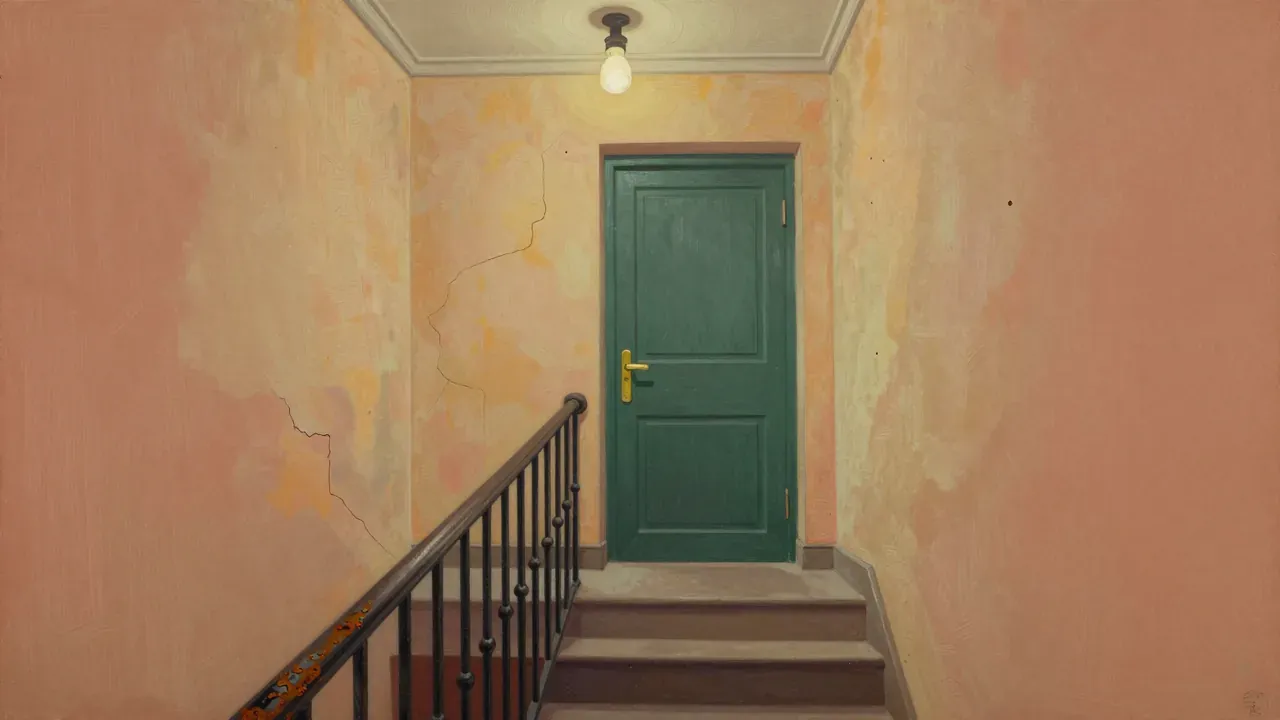
The story follows Josef K., played by Anthony Perkins, through a sequence of encounters that rearrange Kafka’s chapters into a new order — 1, 4, 2, 5, 6, 3, 8, 7, 9, 10 — omitting some material and adding others, including a computer scientist subplot later cut. Perkins performs with tightly coiled restraint, his gestures minimal, his voice often flat or abruptly loud, embodying repression rather than neurosis. Welles himself appears as the Advocate, a figure whose authority is undercut by his physical frailty and moral evasiveness. Edmond Richard’s cinematography uses wide-angle lenses, low ceilings, skewed horizons and deep focus to produce spatial unease; camera movements are deliberate but rarely fluid, often halting mid-tracking shot. Jean Ledrut’s score is sparse, mostly piano and strings, deployed like punctuation rather than commentary. Welles dubbed dialogue for eleven actors, including parts of Perkins’s lines — a layer of vocal authorship that blurs performance and direction. The set design treats architecture as antagonist: corridors recede too far, doors open onto blank walls, staircases lead nowhere visible. There is no natural light in any interior; all illumination feels sourced, artificial, withholding. (159 words)
What holds still
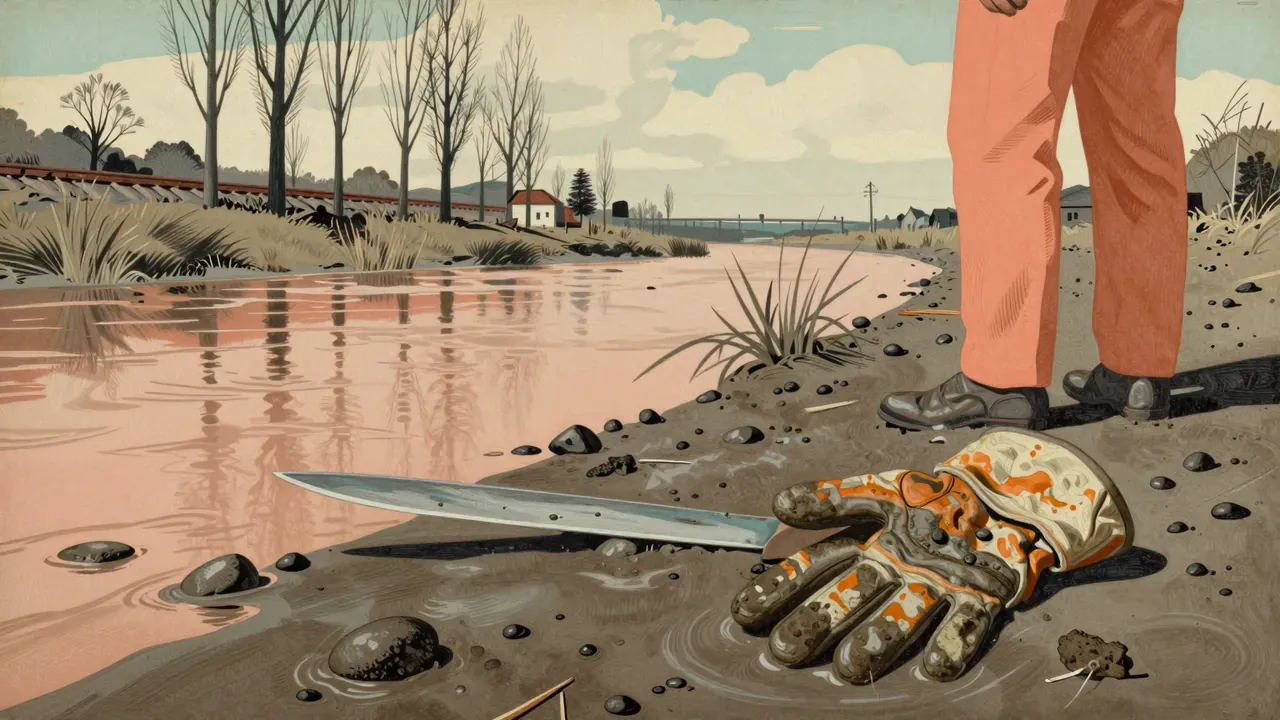
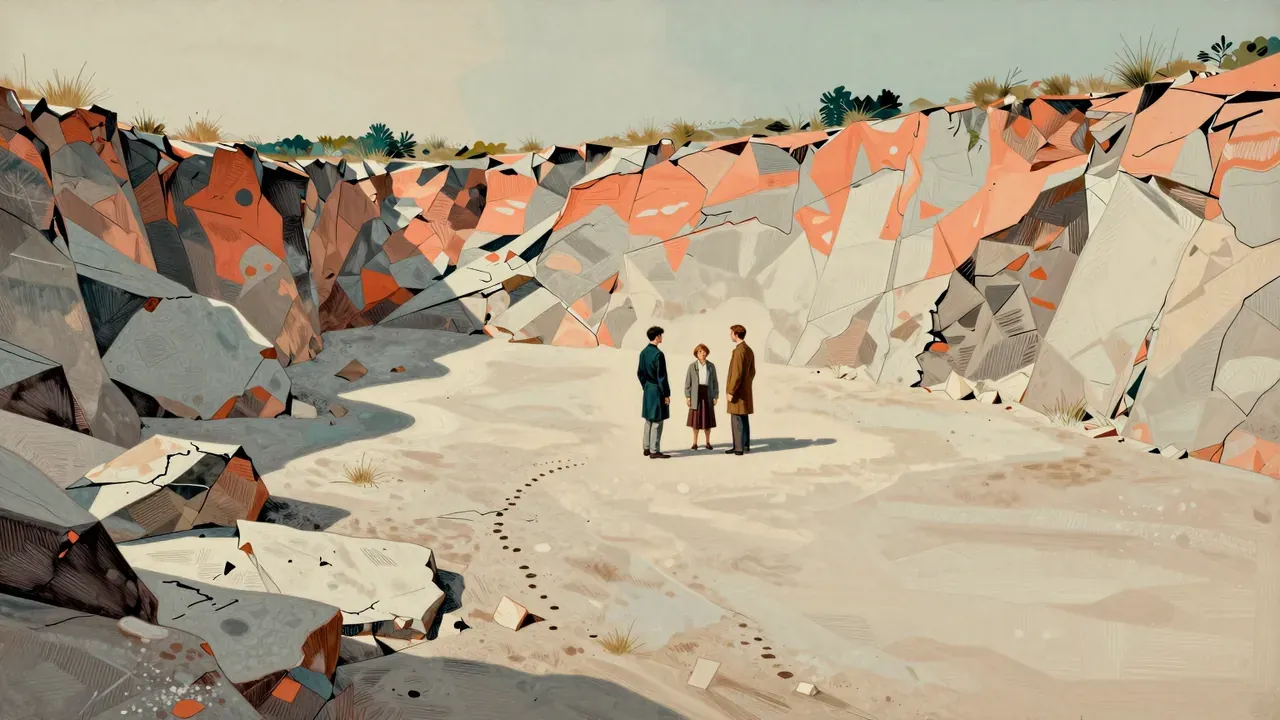
What lands is the film’s tonal consistency: every frame sustains a mood of procedural dread without slipping into parody or melodrama. The Gare d’Orsay interiors work precisely because their emptiness and scale resist psychological reading — they are not metaphors but facts, and their sheer physical presence forces the viewer into Josef K.’s perspective: dwarfed, unmoored, perpetually awaiting instruction. Jeanne Moreau, Romy Schneider and Elsa Martinelli each occupy distinct registers of ambiguous agency — not seductresses but emissaries of systems Josef cannot decode. Their scenes avoid eroticism and instead generate discomfort through asymmetry: one character touches while another recoils without explanation; dialogue begins mid-sentence, ends mid-thought. The pin-screen prologue remains unmatched in its economy — ten seconds of shifting shadows convey more about legal limbo than twenty minutes of exposition could. Welles’s narration over the credits — dry, unhurried, faintly ironic — closes the film not with resolution but with a quiet, final punctuation mark. The execution scene avoids spectacle: no music, no close-ups, just three figures in a quarry, a shouted line, then silence. That restraint makes it land harder than any grander staging could. (157 words)
Where the edges fray
What does not land is the attempt at black comedy. Though Anthony Perkins recalled Welles describing the film as such, the tonal cues are absent: there is no timing, no release, no irony that breaks surface tension. The humour, if intended, stays buried beneath layers of gravity, making the designation feel retrospective rather than functional. The modernisations — computers, cabaret performers — do not integrate; they sit as period anomalies rather than critical updates, drawing attention to their own anachronism without clarifying why they matter. Some performances falter under the weight of abstraction: Arnoldo Foà’s Inspector lacks menace, becoming merely weary; Maurice Teynac’s Clerk feels under-motivated, his bureaucratic lethargy indistinguishable from inaction. The dubbing, while technically seamless, introduces a subtle disjunction — voices sometimes arrive a fraction late or carry a different timbre than the lips suggest — which undermines immersion without adding meaning. The film’s refusal of exposition also misfires in places: characters enter and exit without introduction or return, leaving relationships unresolved not as mystery but as omission. A viewer unfamiliar with Kafka may mistake opacity for negligence, not design. (158 words)
The air it breathes
The themes that matter are not justice or innocence but the phenomenology of power: how it operates without declaration, how it colonises perception, how it renders resistance indistinguishable from compliance. The trial is never about guilt or evidence but about the subject’s internalisation of process — Josef K. stops asking ‘why’ and begins rehearsing answers he has not been asked to give. The film treats law not as code but as weather: ambient, inescapable, indifferent. Gender functions not as narrative driver but as another vector of control — the women are not foils or love interests but nodes in a system that demands response without offering reciprocity. Their physical proximity to Josef K. intensifies his paralysis, not his desire. The mushroom cloud at the end is not nuclear allegory but formal punctuation: a visual echo of the pin-screen smoke, closing the loop between the opening fable and the final erasure. Absence is the dominant motif — of explanation, of motive, of closure — and Welles insists the viewer sit with that absence rather than fill it. The film’s enduring relevance lies in its depiction of institutional logic as self-replicating, self-justifying, and ultimately unanswerable. (159 words)
Who it lets in
This film is for viewers who tolerate ambiguity as substance, who find rigour in repetition, and who read architecture as text. It rewards patience with texture: the grain of concrete, the echo in vaulted ceilings, the slight tremor in Perkins’s left hand during courtroom scenes. It is not for those who require narrative propulsion, emotional payoff or psychological clarity. Anyone expecting a courtroom drama or psychological thriller will find it inert; anyone seeking satire will miss its deadpan delivery. Roger Ebert called it a masterpiece, but his reading presumes a certain fluency in modernist estrangement — a fluency not all viewers possess or wish to acquire. Those who reject its pacing or resist its refusal of catharsis are not wrong; they are responding honestly to its terms. A change in verdict would require either a tighter integration of its anachronisms or a more consistent deployment of its comic register — neither of which Welles attempted. Its value is structural, not experiential. (159 words)
Why it lasts
Yes, it is worth your evening — but only if you approach it as you would a building site: not for completion, but for the logic of its scaffolding. It repays slow, attentive viewing, not passive consumption. Its 118 minutes unfold with the weight of inevitability, not urgency, and its power accumulates in increments: a glance held too long, a corridor that seems longer on the second pass, a line of dialogue repeated with altered emphasis. It is not entertainment in the conventional sense, nor is it didactic; it is an object of sustained attention, calibrated to unsettle rather than explain. Those who dislike it tend to cite its pace or opacity — valid objections, but objections to its method, not its failure. To dismiss it as ‘cold’ or ‘distant’ is to misunderstand its intent: it is meant to be distant, because distance is the condition it dramatises. Its endurance lies not in accessibility but in its unwavering commitment to a single, difficult idea. (159 words)