The school as system
Torment is a Swedish school drama from 1944, written by Ingmar Bergman and directed by Alf Sjöberg, that uses the microcosm of a Stockholm secondary school to examine institutional cruelty, adolescent vulnerability, and the moral failure of authority. It is not a naturalistic portrait of education but a tightly wound allegory: the Latin teacher Caligula rules his classroom with sadistic precision, and his abuse extends beyond pedagogy into psychological and sexual domination. The film’s aim is neither exposé nor reformist pamphlet, but structural critique — it treats the school as a closed system where power circulates without accountability, and where personal transgression is enabled by collective silence. Its urgency comes from its timing: released in wartime Sweden, it avoids political allegory yet insists on the domestic violence of hierarchy. Bergman’s script frames adolescence not as transition but as exposure — to arbitrary rule, to compromised adults, to consequences that arrive before understanding. The film does not ask whether schools can be improved; it asks whether they can be endured without damage.
The look of it
The story unfolds in tight, unembellished sequences: Jan-Erik’s descent from dutiful student to outcast, Bertha’s precarious autonomy, Caligula’s escalating control, and the principal’s belated, ineffectual intervention. Stig Järrel plays Caligula with physical stillness and vocal restraint — no ranting, no caricature, just a low, deliberate menace that makes his authority feel inevitable. Alf Kjellin’s Jan-Erik carries the weight of adolescent confusion without theatricality; his silences are more articulate than his lines. Martin Bodin’s cinematography avoids expressionist distortion: interiors are lit with flat, functional light, corridors are narrow and unadorned, classrooms are shot at eye level, reinforcing the sense of entrapment rather than spectacle. Hilding Rosenberg’s score is sparing — strings used for tension, not commentary — and Oscar Rosander’s editing maintains a steady, almost bureaucratic rhythm, refusing to linger on suffering or underline moral points. There are no flashbacks, no voiceover, no symbolic objects: the film trusts its structure and performances to convey consequence.
What stays with you
What lands is the suffocating realism of institutional indifference. The school is never named, its curriculum never detailed, yet its routines — bell rings, roll calls, corridor queues — feel instantly familiar and quietly oppressive. Caligula’s power works because it is mundane: he humiliates not with grand gestures but with timed silences, withheld marks, and the quiet threat of academic erasure. The scene where Jan-Erik discovers Bertha’s body is not filmed for shock but for procedural numbness — he enters, sees, reacts minimally, then walks away to fetch the police, his movements drained of urgency. The final exterior sequence, shot by Bergman himself, lands precisely because it refuses catharsis: dawn light falls evenly on Jan-Erik’s face as he walks, not toward resolution but into an indifferent city. That image endures not for its beauty but for its refusal to offer comfort or clarity. The film’s restraint — in performance, framing, pacing — becomes its moral grammar: it treats trauma as something absorbed, not performed.
Where it falters
What does not land is the principal’s late intervention. His visit to Bertha’s apartment feels narratively necessary but emotionally unearned: he arrives with platitudes and paternal concern, yet has done nothing to prevent the events that led there. Olof Winnerstrand plays him with decency, but the script gives him no history of resistance, no prior friction with Caligula, no visible doubt — only belated sorrow. This weakens the film’s critique: if the system’s highest representative is merely kind but inert, the indictment becomes diffuse. Similarly, Bertha’s character remains underdeveloped as agency rather than catalyst. Mai Zetterling brings warmth and weariness to the role, but the script offers her no interior life beyond her relationship to men — her fears, her choices, her economic precarity are implied but never dramatised. The film assumes her vulnerability without granting her perspective. These omissions do not undermine the central dynamic, but they limit the scope of its empathy: it observes male power and male suffering closely, while treating female experience as atmospheric context.
What it means
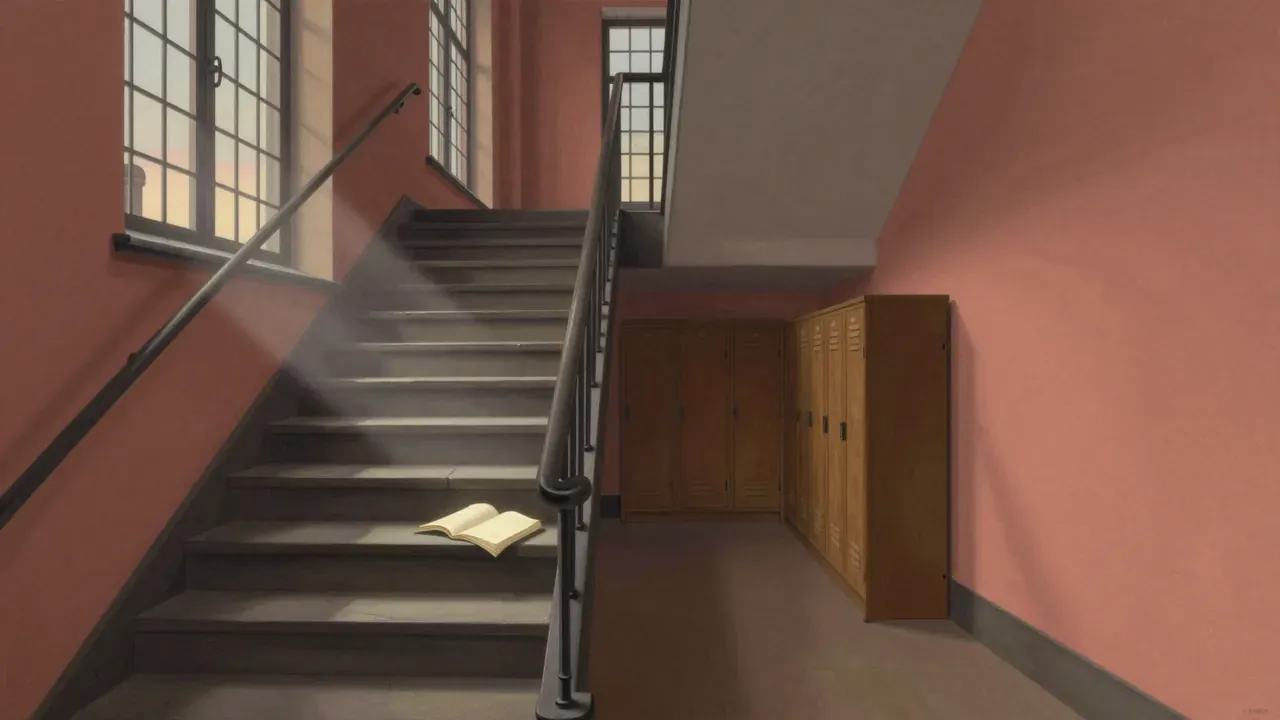
The themes that matter are the banality of abuse within sanctioned structures, the invisibility of adolescent interiority to authority, and the impossibility of clean restitution after violation. Torment treats education not as enlightenment but as enclosure — a place where language (Latin) is weaponised, where discipline masks desire, and where moral failure is bureaucratically smoothed over. It is less about individual evil than about systems that reward compliance and punish deviation without reflection. The film’s most persistent motif is the staircase: Caligula descends it to confront Jan-Erik; Jan-Erik ascends it to find Bertha’s body; Caligula stumbles down it at the end, screaming — a vertical space that measures both power and collapse. Time is also thematic: the film moves through school terms, exam cycles, seasonal shifts, yet none of this progression brings growth or change. Instead, time becomes a measure of endurance. The film’s enduring relevance lies in this: it shows how institutions absorb crisis without reform, and how individuals survive not by winning, but by walking away — into light that offers no answers, only air.
Who it’s for
This film is for viewers who value precision over persuasion, who find moral force in understatement, and who are willing to sit with discomfort without narrative reward. It suits those familiar with mid-century Scandinavian cinema’s tonal economy, or with Bergman’s later work — though it lacks the metaphysical layering of his mature films, it shares their distrust of easy redemption. It is not for viewers seeking plot propulsion, psychological exposition, or emotional release. Those who require clear villains, resolved arcs, or even coherent motivation for Caligula’s behaviour will find the film withholding. Some critics have argued its austerity borders on detachment — a charge that holds if one expects the film to advocate, rather than anatomise. But its restraint is deliberate: it refuses to explain what it believes the audience should already recognise — that cruelty flourishes where scrutiny ends and routine begins.
Why it lasts
Yes, it is worth your evening — not as entertainment but as calibration. At 101 minutes, it occupies time without filling it; it demands attention but offers no distraction. Its value lies in its refusal to flatter the viewer with insight or catharsis: it presents a world where harm is ordinary, resistance is small, and survival is quiet. Anyone who has sat through a class, filed a complaint, or waited for an apology that never came will recognise its textures. It is not universally accessible — its pacing, its lack of exposition, its muted performances assume a certain patience with ambiguity — but that very quality makes it durable. A modern remake would likely over-clarify, over-score, or over-dramatise; this version trusts silence, duration, and the weight of a glance. To watch it is to experience how much can be said without raising a voice — and how little changes when it is raised.