The shape of the search
A Very Long Engagement is a French war drama built around a single act of stubborn love: Mathilde’s refusal to accept that her fiancé Manech died in the trenches of the First World War. It adapts Sébastien Japrisot’s 1991 novel not as historical reconstruction but as a tightly wound procedural fable, where grief becomes detective work and memory a contested terrain. Jean-Pierre Jeunet and co-writers Guillaume Laurant and Japrisot shape the film as a dual narrative — one anchored in the quiet persistence of a woman in interwar Brittany and Paris, the other in fragmented, often brutal flashbacks from the front. Its aim is neither to anatomise military bureaucracy nor to offer pacifist polemic, but to hold a candle to individual endurance against systems designed to erase individuals. The film treats the war not as backdrop but as a rupture so violent it fractures time itself — past and present bleed into each other through letters, bell inscriptions, and the slow unspooling of testimony. It is a drama of retrieval, not resolution; of asking ‘what happened?’ long after official records have closed the file. (158 words)
The eye of the investigator
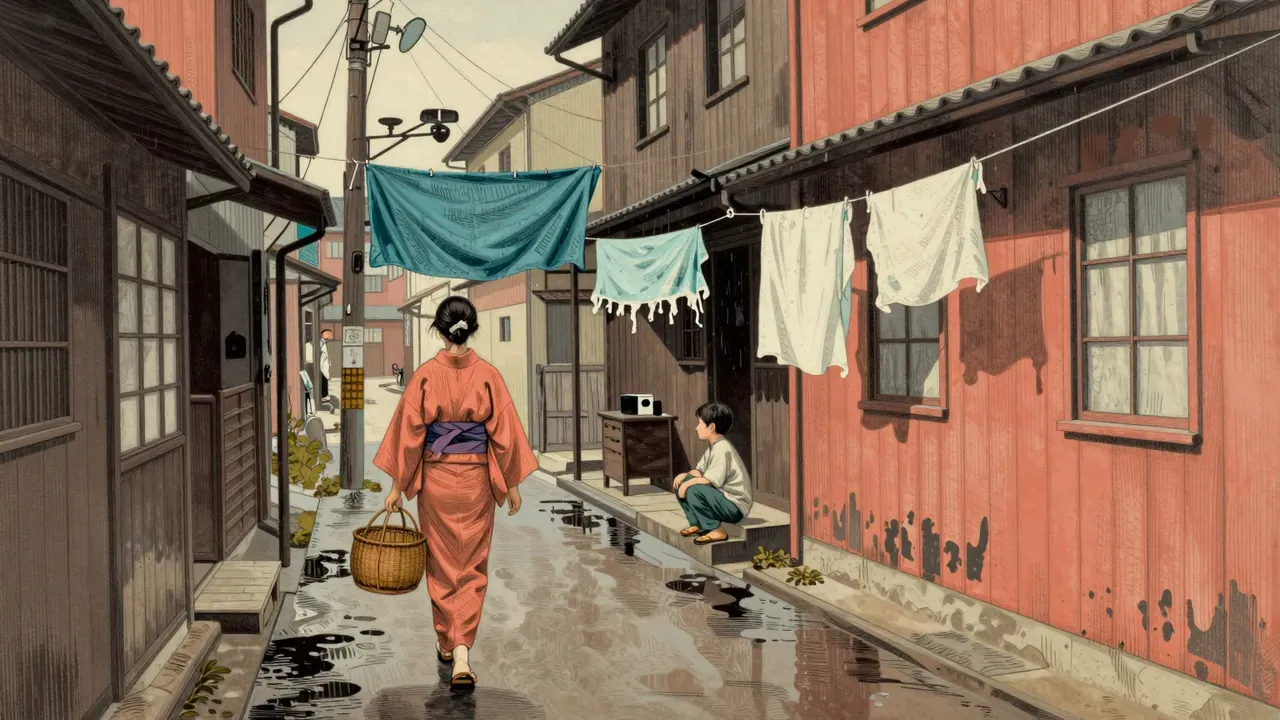
The story moves by accumulation: Mathilde interviews witnesses, traces paper trails, and pieces together the fates of five soldiers condemned to no man’s land. Audrey Tautou grounds this with physical precision — her Mathilde walks with a limp, speaks with deliberate slowness, and listens with her whole body. Gaspard Ulliel’s Manech appears mostly in memory, his presence sustained by gesture and absence rather than exposition. Bruno Delbonnel’s cinematography avoids battlefield grandeur; instead, he renders mud as viscous, light as thin and cold, and interiors as cramped and amber-lit. Angelo Badalamenti’s score leans into melancholy strings but never swells to underscore emotion — it lingers like smoke. Hervé Schneid’s editing stitches past and present without fanfare, using match cuts on objects — a bell, a hand, a letter — to bind timelines. The production design, awarded a European Film Award, builds a tactile 1920s France: wool coats, ink-stained fingers, steam rising off wet cobblestones. Every craft choice serves legibility over spectacle. (159 words)
The weight of small things
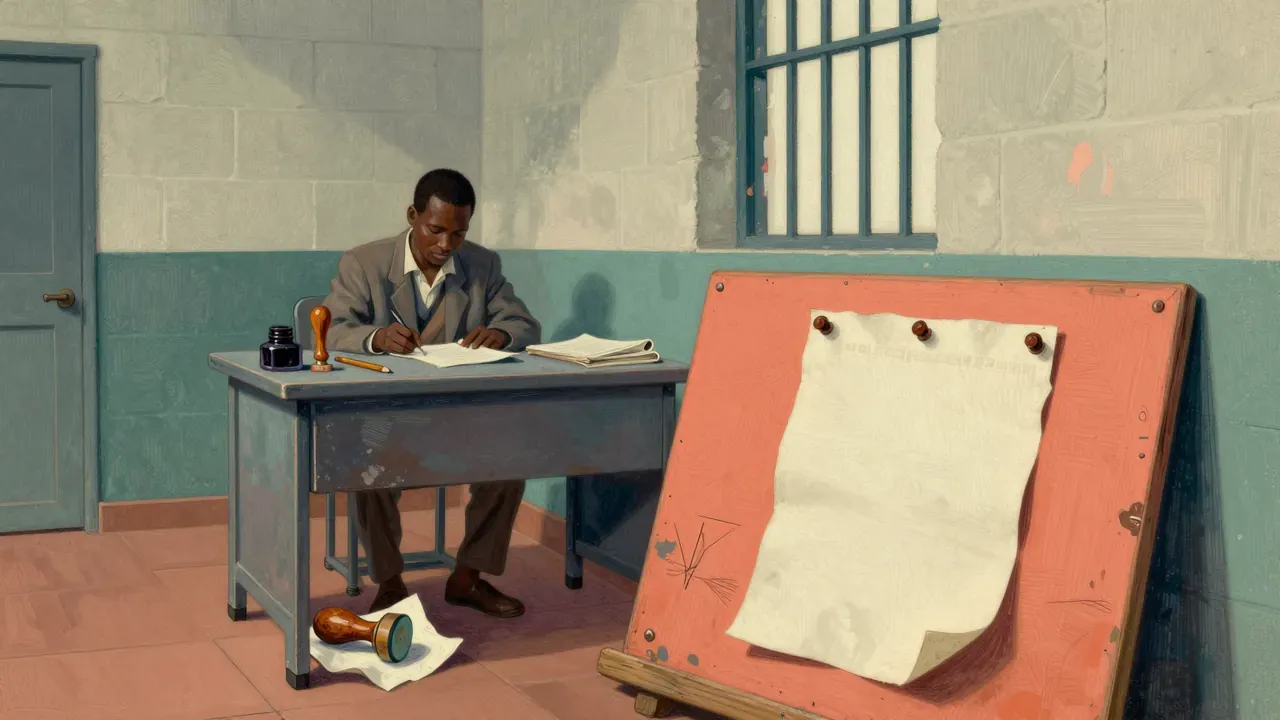
What lands is Mathilde’s quiet authority. Her investigation feels earned, not heroic — she bribes clerks, waits for hours, rewrites letters until they yield answers. The film’s restraint with sentiment makes its emotional payoffs land without manipulation: a folded photograph passed between hands, a bell’s faint chime heard across decades, the way Mathilde sits still when she finally sees Manech, letting tears fall without sound. The supporting ensemble — Dominique Pinon’s weary investigator, Marion Cotillard’s sharp-tongued nurse, Albert Dupontel’s broken veteran — are drawn with economy and specificity. The wartime sequences avoid combat choreography; instead, they fix on small, humiliating details — boots sinking, teeth chattering, men counting bullets like prayers. The film’s visual grammar sustains this: Delbonnel keeps faces half in shadow, Schneid holds shots just past comfort, and Jeunet refuses to let the camera linger on suffering for its own sake. Even the whimsy — a pigeon delivering a message, a child’s chalk drawing — feels tethered to Mathilde’s worldview, not imposed as stylistic flourish. (157 words)
The distance of the front
What does not land is the structural weight of the five condemned soldiers’ stories. Their vignettes — the smuggler, the deserter, the mute conscript — are vivid but unevenly integrated; some feel like digressions rather than counterpoints to Mathilde’s focus. The film’s commitment to Mathilde’s perspective means the war remains deliberately distant, which works emotionally but blunts its political edge. A viewer expecting critique of French military justice may find the system sketched in broad strokes, its corruption implied more than interrogated. Jodie Foster’s brief role as an American widow adds little beyond name recognition and feels tonally adrift. The pacing sags in the middle third, where procedural repetition — another interview, another archive visit — risks monotony without sufficient variation in tone or texture. Some will argue the film’s visual polish softens its subject: the mud is too richly textured, the suffering too elegantly framed. Others may find the ending’s quietness unsatisfying — no grand reunion, no restored memory, only a woman watching a man who does not know her, holding space for what cannot yet be said. (159 words)
The work of remembering
The themes that matter are memory as labour, love as evidence, and silence as both weapon and refuge. Mathilde does not grieve passively; she treats remembrance as duty, testimony as material, and absence as data to be cross-referenced. The film questions how history is made — not in generals’ memoirs but in laundry lists, pension files, and the smudged ink of a soldier’s last letter. It treats amnesia not as metaphor but as literal consequence: when Manech forgets, the film asks what remains when names, dates, and even love dissolve — and finds the answer in habit, in touch, in the body’s unspoken knowledge. The bell inscription ‘Manech aime Mathilde’ functions as both cipher and compass: a linguistic pun that outlives language itself, a private code that survives official erasure. The film also dwells on endurance as non-linear — Mathilde’s limp is not healed, her search does not end in certainty, and the war’s damage persists in posture, speech, and silence. These are not themes declared but worn, like a coat too heavy for the season. (156 words)
The tempo of endurance
This film is for viewers who value patience over pace, texture over exposition, and emotional precision over catharsis. It suits those drawn to mid-century French literature, to films where a glance carries more weight than a monologue, and to anyone who finds resonance in quiet acts of resistance. It is not for those who require clear moral binaries, rapid plot propulsion, or battlefield spectacle — the war here is felt in paperwork and pauses, not explosions and orders. Some will reject its aestheticised restraint as evasion; others may find Tautou’s stillness unreadable rather than deliberate. A viewer expecting the kinetic charm of Jeunet’s Amélie may misread the slower cadence here as drift. But the film’s rigour lies in its refusal to simplify: its world is bureaucratically dense, emotionally guarded, and visually exacting. To dismiss it as ‘too pretty’ or ‘too slow’ is to mistake its method for its message — it is neither decorative nor inert, but insistently, meticulously attentive. (158 words)
The garden chair
Yes, it is worth your evening — if you are willing to meet it on its terms: unhurried, unsentimental, and anchored in the granular reality of one woman’s resolve. It repays attention not with revelations but with accumulations — a detail recalled, a face recognised, a bell’s echo returning. Its power lies in what it withholds: no tidy justice, no restored memory, no triumphant return. Instead, it offers the dignity of continuing — of sitting in a garden chair, watching, waiting, smiling through tears. Those who demand narrative closure or visceral immediacy may leave dissatisfied. But for viewers attuned to the weight of silence, the politics of care, and the quiet stamina of love as practice, the film delivers something rare: a war story told entirely from the periphery, where the real battle is not for territory but for trace. Its value is not in scale but in fidelity — to character, to period, to feeling held in check until it can be spoken. (159 words)