A novel bought for $10,000 and a real execution behind it
Paths of Glory is Stanley Kubrick’s 1957 anti-war film, adapting Humphrey Cobb’s 1935 novel, itself based on the real Souain corporals affair, in which four French soldiers were executed in 1915 on the orders of a general seeking to punish a wider failure and were only exonerated decades later. Kirk Douglas plays Colonel Dax, who leads his regiment on an attack he knows is doomed against an impregnable German position and then, after the assault collapses, must defend three of his own men, selected essentially at random, against a court-martial for cowardice. Kubrick bought the rights from Cobb’s widow for $10,000 after remembering the book’s impact on him as a teenager, and produced it through a partnership between his own company with James B. Harris and Kirk Douglas’s Bryna Productions.
A budget built on Douglas’s own salary
Douglas secured a roughly $1 million budget from United Artists on the strength of an early Kubrick and Calder Willingham script, more than a third of which went to his own salary; Jim Thompson had written earlier drafts, and a Writers Guild arbitration later credited all three men, in that order, after a dispute over who had actually written the dialogue. Because its depiction of the French army was considered too damaging, the film could not be shot in France and was made instead in Bavaria, largely at the Schleissheim Palace near Munich; France itself would not allow the film to be shown there until 1972. Kubrick originally shot a version with the condemned men reprieved at the last minute, a change he and Thompson made to soften the ending for commercial reasons.
A trench assault filmed at ground level
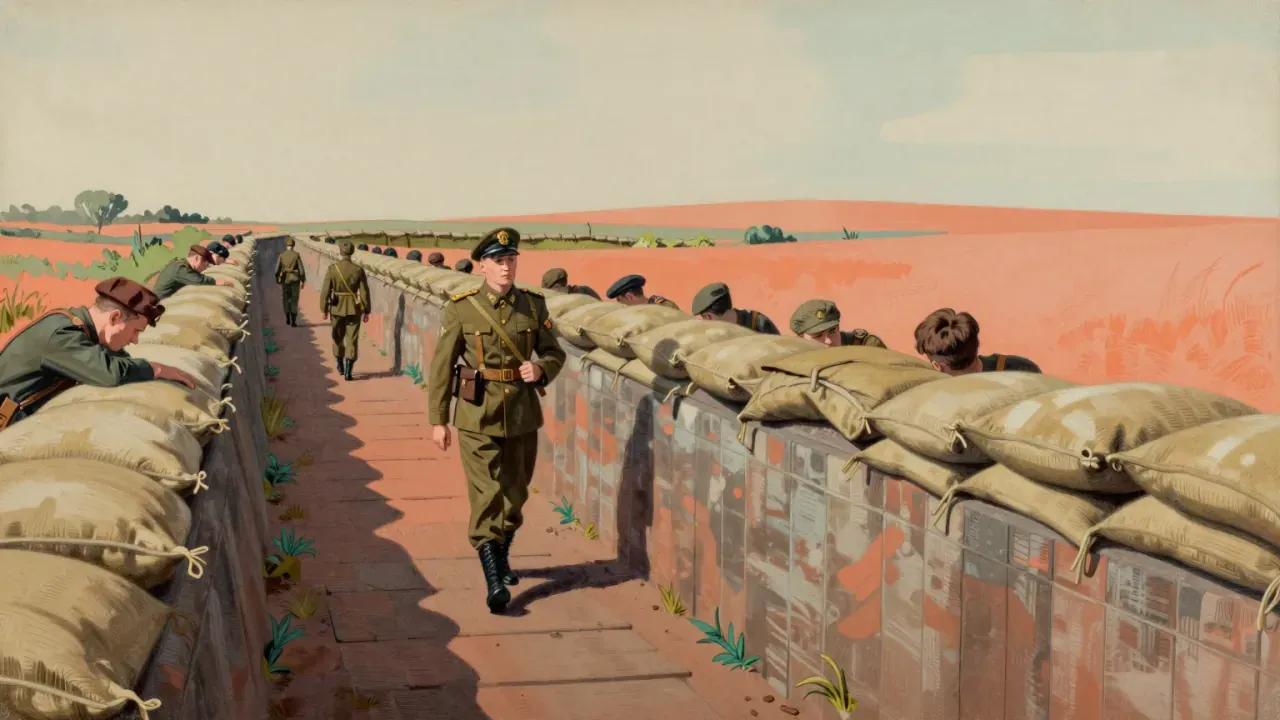
The trench assault, filmed with the camera tracking alongside Dax at ground level as shells land around him, gives the attack a physical dread that most 1950s war films avoided, and it earns the argument the rest of the film makes about the gap between a general’s map and a soldier’s actual experience of it. Adolphe Menjou, as the general who orders the executions to save face, plays the role with an unhurried, self-satisfied calm that is more chilling than open cruelty would have been. Douglas restored the film’s original ending after a serious argument with Kubrick, insisting the men be executed as the novel had it, and that reversal is what gives the final scenes their force.
A single soldier standing in for several
The film’s compression of the novel’s several central characters into Colonel Dax alone, a change Kubrick made deliberately, simplifies the moral argument at some cost to the ordinary soldiers whose fates the story is nominally about; the three condemned men remain thinly sketched compared with the officers arguing over their lives. Some of the courtroom dialogue, adapted closely from Cobb’s prose, reads a touch more literary than spoken, a friction more noticeable in the trial scenes than in the combat sequences. Wayne Morris, playing a self-serving fellow officer, is given comparatively little to do once the plot’s central conflict, between Dax and General Mireau, takes over the film.
Justice that follows every rule and still convicts
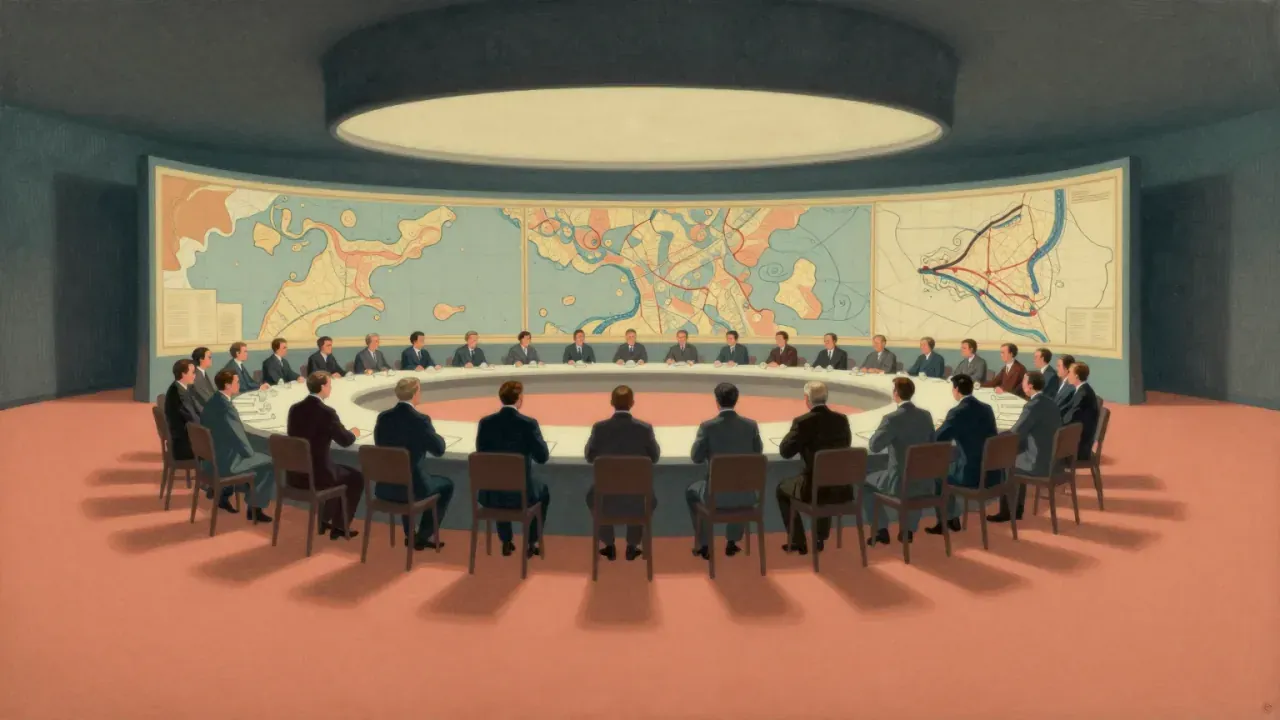
Justice in the film is entirely procedural rather than moral: the court-martial follows every correct form while arriving at a verdict decided before it begins, and Kubrick uses that gap to argue that institutions can be scrupulously fair in process while being monstrous in outcome. Power runs one direction only, from Menjou’s calculating general down through Dax to the condemned men, and the film never grants the ordinary soldiers any real leverage against it, not even Dax’s efforts on their behalf. War itself is treated less as combat than as a hothouse, in Kubrick’s own phrase, for revealing what people will do to each other once ordinary social restraints are suspended by the emergency.
Who the bleak ending is for
This suits viewers drawn to war films built around moral argument rather than action, admirers of Douglas at his most restrained, and anyone interested in a rare instance where a film’s political content directly barred it from its own country for over a decade. It is less suited to viewers expecting a conventional combat film, since the trench assault, however effective, occupies only a small portion of a story mostly set in offices, chateaux and a courtroom. Viewers uncomfortable with a genuinely bleak ending, restored against the studio’s original commercial instincts, should also know the film does not soften its conclusion.
An ending restored against the studio’s own instincts
Aggregated scores sit close to unanimous: a 96 percent Tomatometer score, a 90 Metascore, and an average viewer rating above 8 out of 10, figures that have if anything climbed since the film’s belated French release finally let its full reputation form. At 88 minutes it does not waste a scene reaching its verdict, and the ending Douglas fought to keep gives the film a weight that a softer version would have lost entirely. It is worth an evening for anyone willing to watch institutional cruelty proceed entirely by the book, which is the film’s real subject far more than the war around it.