What it is
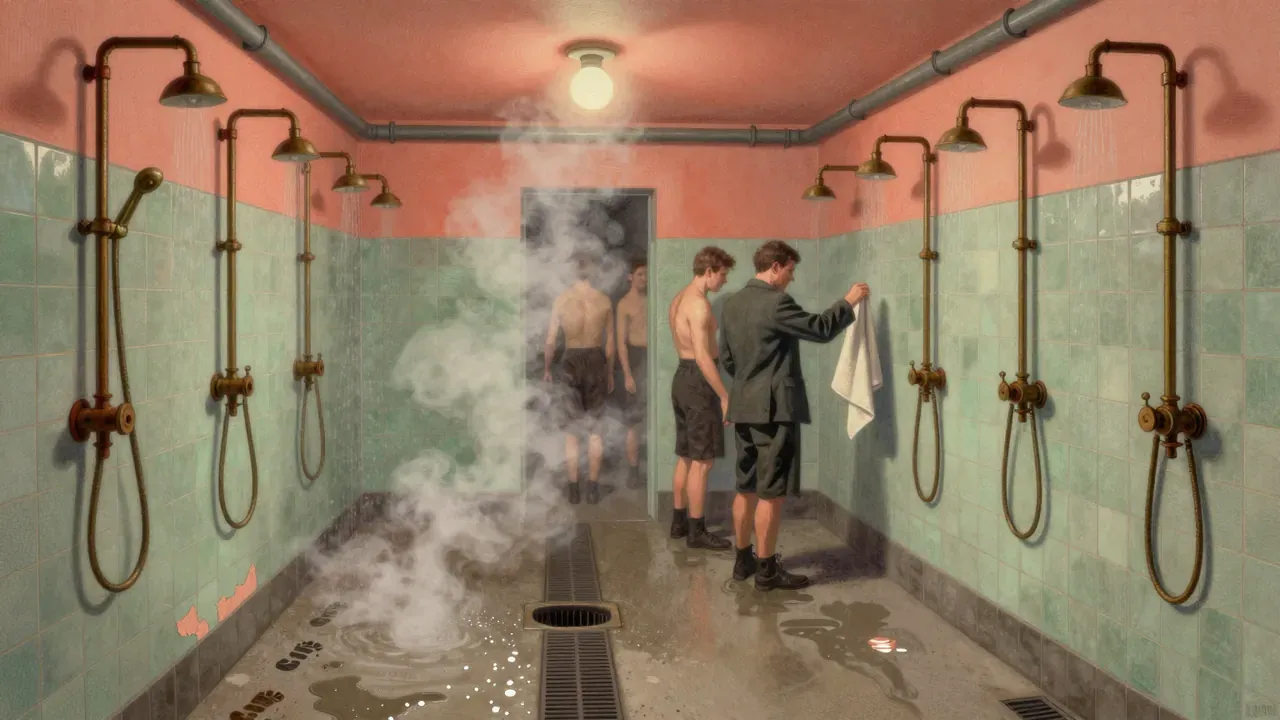
Europa Europa is a 1990 historical war drama adapted from Solomon Perel’s 1989 autobiography, tracing his survival as a German-Jewish teenager who passes as a Volksdeutscher and joins the Hitler Youth. It attempts something precise: to render the Holocaust not as monolithic horror but as a series of contingent, absurd, and morally unstable choices made under erasure — where identity is not fixed but performed, revoked, and reassembled in real time. The film does not seek to explain the genocide, nor to memorialise it decorously; instead, it follows one boy’s navigation of shifting front lines, languages, uniforms, and ideologies, treating survival as an act of sustained improvisation rather than heroism or faith. Its ambition lies in structural fidelity: each scene pivots on a lie that holds only until the next inspection, the next bath, the next roll call. It refuses the consolations of retrospective clarity, keeping the protagonist — and the viewer — inside the fog of daily deception, where moral certainty is a luxury no one can afford. The film’s central wager is that this claustrophobic, moment-to-moment tension carries more historical weight than any sweeping narration could.
How it works
The story unfolds in tight, episodic chapters — Łódź, Grodno, the Eastern Front, Braunschweig — each governed by its own logic of surveillance and concealment. Marco Hofschneider carries the role with watchful stillness, never emoting beyond what the situation permits; his face registers calculation, fatigue, and fleeting warmth, never catharsis. Julie Delpy and Hanns Zischler appear in sharply defined, brief roles — Leni’s infatuation, Robert’s quiet solidarity — both anchored in physical detail rather than symbolic weight. Jacek Petrycki’s cinematography avoids period gloss: interiors are flatly lit, exteriors often overcast, compositions favour medium shots that keep Solek hemmed in by walls, uniforms, or crowds. Zbigniew Preisner’s score is sparse, recurring motifs tethered to memory rather than mood. Ewa Smal’s editing sustains rhythm without flourish — cuts land cleanly, often on silence or a withheld reaction. The German-language script, co-written by Holland and Paul Hengge, treats dialogue as functional: exposition is buried in bureaucratic exchanges, romance in glances and shared cigarettes, terror in the length of a pause before a uniform is unbuttoned.
What lands
What lands most firmly is the film’s refusal to let Solek become either martyr or trickster. His survival is neither triumphant nor shameful, but procedural — a sequence of adaptations so ordinary they feel inevitable. The scenes where he must avoid undressing in front of others, or where he hesitates before signing a document requiring racial verification, land with quiet, cumulative force because they are rendered without commentary or musical cue. The black comedy emerges not from jokes but from structural irony: a Jewish boy reciting Nazi doctrine to pass inspection; Soviet soldiers interrogating him as a traitor while he tries to convince them he is Jewish. These moments work because the film treats them as matter-of-fact — not punchlines, but logical outcomes of the world it has built. The final image — Solomon Perel singing Psalm 133 in present-day — lands not as resolution but as quiet continuity: the voice persists, unadorned, after everything else has been stripped away. That restraint, across performance, writing, and pacing, gives the film its durable gravity.
What does not
What does not land is the film’s occasional drift into schematic abstraction. Some transitions — particularly between Soviet orphanage and German frontline — feel compressed to the point of narrative ellipsis, leaving emotional cause-and-effect underdeveloped. The character of Inna, Solek’s Komsomol instructor, remains a function of ideological contrast rather than psychological presence; her defence of him feels narratively necessary but emotionally unearned. Similarly, Leni’s pregnancy and the Lebensborn subplot arrive with little groundwork, making her mother’s sudden empathy toward Solek’s confession feel abrupt rather than earned. The film’s commitment to understatement occasionally crosses into opacity: there are stretches where Solek’s interior life recedes so far behind his performance of identity that the viewer loses purchase on his stakes. A few supporting characters — Gerd, the Gestapo official — verge on caricature, their motivations flattened by the need to serve plot mechanics. These are not failures of craft but of calibration: the film’s rigour sometimes outpaces its capacity for emotional anchoring.
What it’s really about
The themes that matter are not those of good versus evil, but of language as identity, uniform as ontology, and survival as grammatical tense. The film treats German not as a mother tongue but as a weapon, a shield, and a disguise — spoken with fluency, it grants access; mispronounced, it risks death. Uniforms do more than conceal: they confer temporary citizenship, dictate posture, regulate gaze. The Hitler Youth insignia is less a symbol than a set of behavioural instructions. The film also insists on the banality of complicity: Solek does not resist the system so much as inhabit its cracks, and in doing so, becomes complicit in its machinery — translating for interrogators, identifying Stalin’s son, attending lectures on racial purity. His conscience is not absent but deferred, held in abeyance like his circumcision. The film’s deepest concern is with what happens when ethics cannot be voiced, only postponed — when morality becomes a series of micro-decisions made in the space between one breath and the next, with no audience and no record.
Who it’s for
This film is for viewers who value precision over catharsis, structure over sentiment, and ambiguity over affirmation. It suits those accustomed to arthouse pacing and willing to sit with unresolved tension — people who find moral complexity more compelling than moral clarity. It is not for those seeking narrative comfort, emotional release, or historical exposition; its refusal to explain, contextualise, or judge may frustrate viewers expecting either documentary authority or melodramatic payoff. Those who require protagonists to grow, change, or achieve insight will find Solek’s arc stubbornly static — he survives, but does not transform. Critics who found the film emotionally distant — like Desson Howe — would likely disagree with this verdict, arguing that its restraint borders on detachment. A stronger through-line of familial memory or a deeper exploration of Solek’s post-war reckoning would shift the balance toward greater resonance, but the film makes no such bid. It offers observation, not explanation — and that is its deliberate, unyielding choice.
Is it worth your evening?
Yes, it is worth your evening — provided you approach it as a tightly calibrated historical artefact rather than an immersive experience. Its 109 minutes unfold with unhurried deliberation, each scene calibrated to advance both plot and principle. It rewards attention to gesture, syntax, and silence more than to plot twists or emotional crescendos. Those who prefer films that declare their meaning or resolve their tensions will find it withholding; those who trust cinema to hold contradiction without resolving it will find it rigorous and rare. Its power lies not in what it says about the Holocaust, but in how it enacts the conditions of living inside it — moment by moment, lie by lie, breath by breath. It does not ask for tears or outrage, but for sustained, sober attention. To watch it is to accept its terms: no distance, no summary, no relief — just the steady, unsettling pressure of one boy’s impossible, ordinary survival. That is enough.