The premise, stripped
Dishonored is a pre-Code espionage drama made by Paramount Pictures in early 1931, conceived as a vehicle for Marlene Dietrich following the success of The Blue Angel and Morocco. Josef von Sternberg directed, edited, and co-wrote it — though studio executives overruled his preferred title and shaped its commercial framing. The film attempts to fuse romantic fatalism with wartime intrigue, using the figure of a female spy not as a cipher for patriotism but as a vessel for stoic self-determination. It draws loosely on Mata Hari’s biography but resists biographical fidelity: Marie Kolverer is not a historical reconstruction but a mythic archetype — a woman whose loyalty is tested, then weaponised, then punished not for betrayal but for choosing love over duty. Sternberg’s aim is neither realism nor thriller mechanics, but a stylised parable about agency under surveillance, where every gesture is measured, every silence weighted, and every act of defiance occurs in stillness rather than motion. The film tries to hold contradiction: that honour may reside in disobedience, and dignity in execution.
The look of it
The story moves with deliberate, almost ritualistic pacing: Marie’s recruitment, her double entanglement with Hindau and Kranau, her infiltration of Russian headquarters, her capture and escape, and finally her trial and execution. Victor McLaglen plays the Austrian chief with dry authority; Gustav von Seyffertitz and Warner Oland lend gravity as antagonists; Barry Norton and George Irving appear in smaller but precisely calibrated roles. Lee Garmes’ cinematography favours high-contrast lighting and deep focus, particularly in interiors — corridors stretch into shadow, faces emerge from near-blackness, and Dietrich’s features are sculpted by light like a Rembrandt etching. Travis Banton’s costumes define character before dialogue begins: Marie’s black cat, her tailored coats, her final return to worn civilian dress. Sternberg’s editing avoids cross-cutting suspense in favour of sustained takes and abrupt cuts — a pause before a pistol is drawn, a long look after a kiss. Karl Hajos’ score is sparse, underscoring silence more than action.
What stays with you
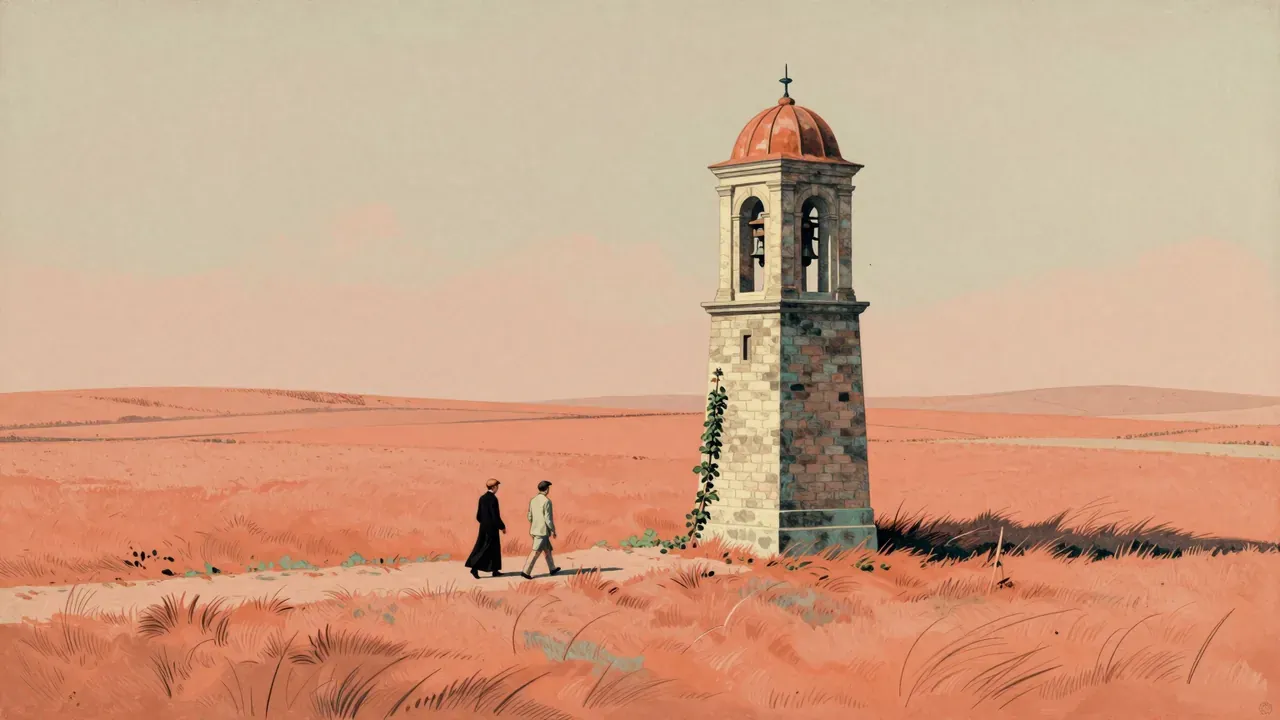
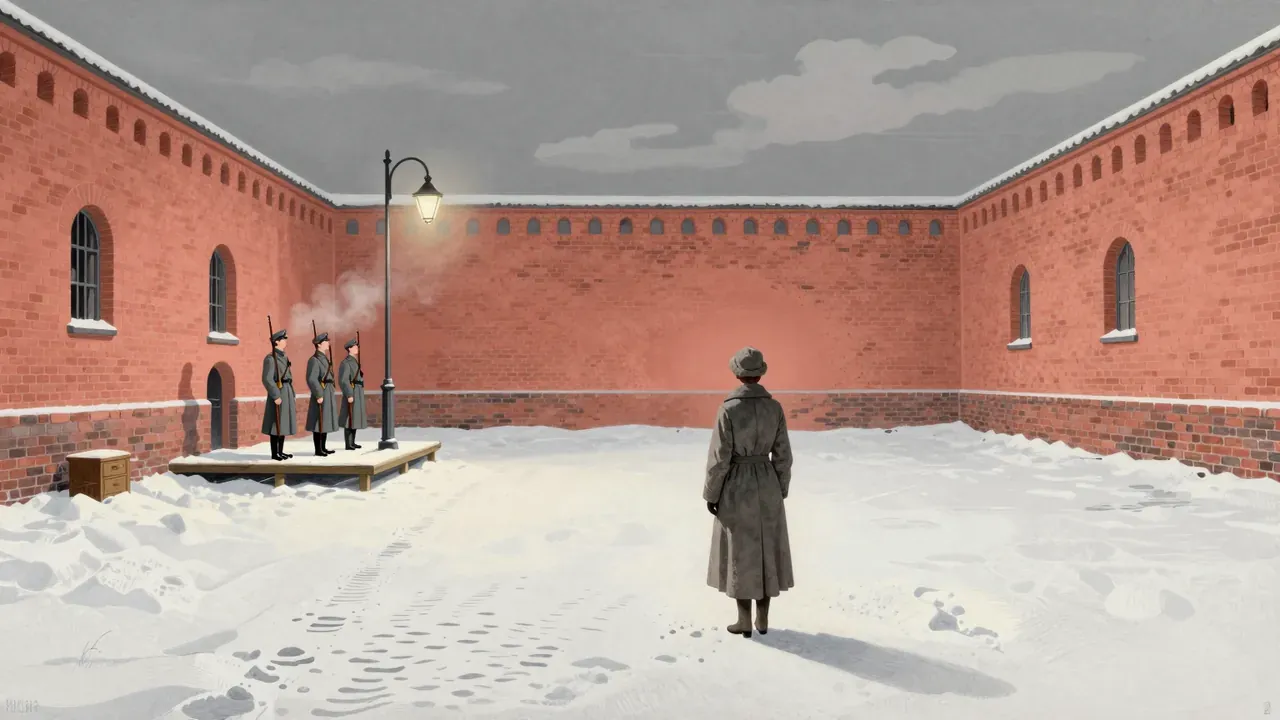
What lands most firmly is Dietrich’s performance: not as seductress or spy but as a woman who absorbs consequence without flinching. Her stillness in the final scene — applying lipstick before the firing squad, refusing the blindfold — carries the film’s moral weight. The visual grammar also holds: Garmes’ lighting isolates figures within oppressive architecture, reinforcing themes of entrapment and observation. The recurring motif of the black cat — stalking hallways, ignored by soldiers, present at moments of revelation — functions as both omen and silent witness, never explained but consistently resonant. Sternberg’s refusal to moralise Marie’s choices gives the ending its force: she is condemned not for failing her country, but for succeeding on her own terms. The courtroom sequence, brief and unadorned, lands because it treats her treason as self-evident, not debatable. Even the monk’s visit feels earned — not as spiritual intervention but as bureaucratic concession, making her final request for piano and old clothes feel like the last assertion of personhood before erasure.
Where the scaffolding shows
What does not land is the plot’s structural haste. Mordaunt Hall’s contemporary critique remains valid: the narrative pivots — Hindau’s suicide, Kranau’s sudden appearance, the coded sheet music — arrive without sufficient groundwork. The logic of espionage is subordinated to symbolic necessity, and while that serves Sternberg’s style, it weakens the stakes for viewers expecting procedural coherence. McLaglen’s chief lacks interiority beyond function; his motives and methods remain opaque, reducing him to a plot device rather than a counterweight to Marie. The Russian officers’ quarters feel like a stage set rather than a lived-in space, and Kovrin’s seduction is sketched rather than inhabited. Some supporting performances — particularly Lew Cody and Wilfred Lucas — are underwritten and underlit, their presence registering as texture rather than character. The film’s resistance to exposition becomes a liability in scenes requiring tactical clarity: how X-27 decodes the music, why Kranau trusts her long enough to play it, how she memorises it — all hinge on assumption, not dramatisation.
What it’s really about
The themes that matter are loyalty as performance, identity as costume, and death as culmination rather than failure. Marie’s transformation from pianist to prostitute to agent to traitor to condemned woman is not a descent but a series of masks she wears with increasing certainty. Sternberg treats espionage as theatre: uniforms, aliases, scripted encounters — all rehearsed, all provisional. The firing squad is not punishment but recognition: the state acknowledges her power by ending it. The film interrogates gendered expectations of sacrifice — men die in battle; women die for choosing. It also probes the limits of control: Marie manipulates Kranau through intimacy, yet he escapes twice; she outwits the Russians, only to be undone by her own compassion. There is no redemption arc, no last-minute reprieve — only consistency of character. The black cat embodies this: it watches, it waits, it survives. The film’s quietest theme is endurance without reward — the persistence of self amid systems designed to erase it.
Who it’s for
This film is for viewers who value composition over complication, restraint over exposition, and moral ambiguity over resolution. It rewards attention to gesture, lighting, and rhythm rather than plot mechanics. Those who require clear cause-and-effect, psychological exposition, or narrative closure will find it frustrating — the film assumes familiarity with Sternberg’s syntax and with pre-Code tonal shifts. It is not for viewers seeking historical accuracy, action set-pieces, or character backstories: none are supplied. A viewer expecting a conventional spy thriller will misread its pace as slackness, its silences as gaps. But someone attuned to Dietrich’s physical expressiveness, Garmes’ chiaroscuro, or Sternberg’s use of architecture as psychological pressure will find it richly sustained. Its demands are stylistic, not intellectual: you must accept its tempo, its ellipses, its refusal to explain.
Is it worth your time?
Yes, it is worth your evening — provided you watch it as a work of visual and performative discipline, not as a puzzle to solve. At 85 minutes, it moves deliberately but never drags; its brevity sharpens its impact. It is not ‘entertaining’ in the sense of diversion, but it is absorbing in its concentration: every frame serves its central question — what does integrity cost when institutions demand obedience? Those who dislike slow-burn films or find Dietrich’s aloofness alienating may leave unsatisfied, and viewers expecting the kinetic energy of later espionage films will feel adrift. But its power lies in accumulation: the weight of Marie’s choices grows with each rewatch. It is not diminished by age — if anything, its formal rigour reads more clearly now, freed from the noise of its era’s marketing. To dismiss it as dated is to mistake austerity for emptiness.