The look of it
Top Gun is a studio action film built to showcase naval aviation as spectacle, not realism. It uses the United States Navy’s Fighter Weapons School as a backdrop for a character arc about competitive masculinity, professional pride, and controlled risk — all filtered through the lens of mid-1980s American confidence. The film does not aim to interrogate military policy, depict training with documentary fidelity, or develop psychological interiority in its characters. Instead, it treats flight as choreography, rivalry as ritual, and emotion as gesture: clenched jaw, mirrored sunglasses, a glance held too long. Its ambitions are formal and tonal — to make speed legible, sound visceral, and hierarchy visible through costume, call sign, and cockpit framing. It assumes audience familiarity with Cold War iconography but offers no exposition on geopolitics, doctrine, or naval structure. The script’s debt to Ehud Yonay’s California magazine article is structural only: the real-world setting provides texture, not argument. What drives the film is rhythm — of editing, music, and repetition — not revelation. It is less about what happens than how it feels to watch it happen, again and again, at full throttle. (158 words)
The shape of the story
The story follows Lieutenant Pete ‘Maverick’ Mitchell through Top Gun’s six-week course, where his instinctive flying draws both admiration and friction, especially from rival Tom ‘Iceman’ Kazansky. Anthony Edwards gives Goose quiet warmth and grounding presence; Val Kilmer’s Iceman is all clipped diction and withheld judgment, his performance sharpened by visible reluctance to inhabit the role — which ironically lends authenticity to the character’s reserve. Tom Cruise commits fully to Maverick’s swagger, though the script gives him little beyond bravado and a late turn toward humility. Kelly McGillis, as civilian instructor Charlotte ‘Charlie’ Blackwood, navigates the film’s awkward pivot from military procedural to romance with minimal dialogue and maximum spatial framing — often shot from below or behind, her authority visually deferred. Jeffrey L. Kimball’s cinematography favours tight cockpit shots, low angles on runways, and sun-drenched exteriors; the Super 35 format accommodates the F-14’s cramped confines but sacrifices depth. Editing by Chris Lebenzon and Billy Weber privileges momentum over continuity, stitching aerial footage into narrative beats with rhythmic precision. Harold Faltermeyer and Giorgio Moroder’s score is inseparable from the film’s pulse — synth basslines and sax solos function as emotional punctuation, not accompaniment. (159 words)
What sticks
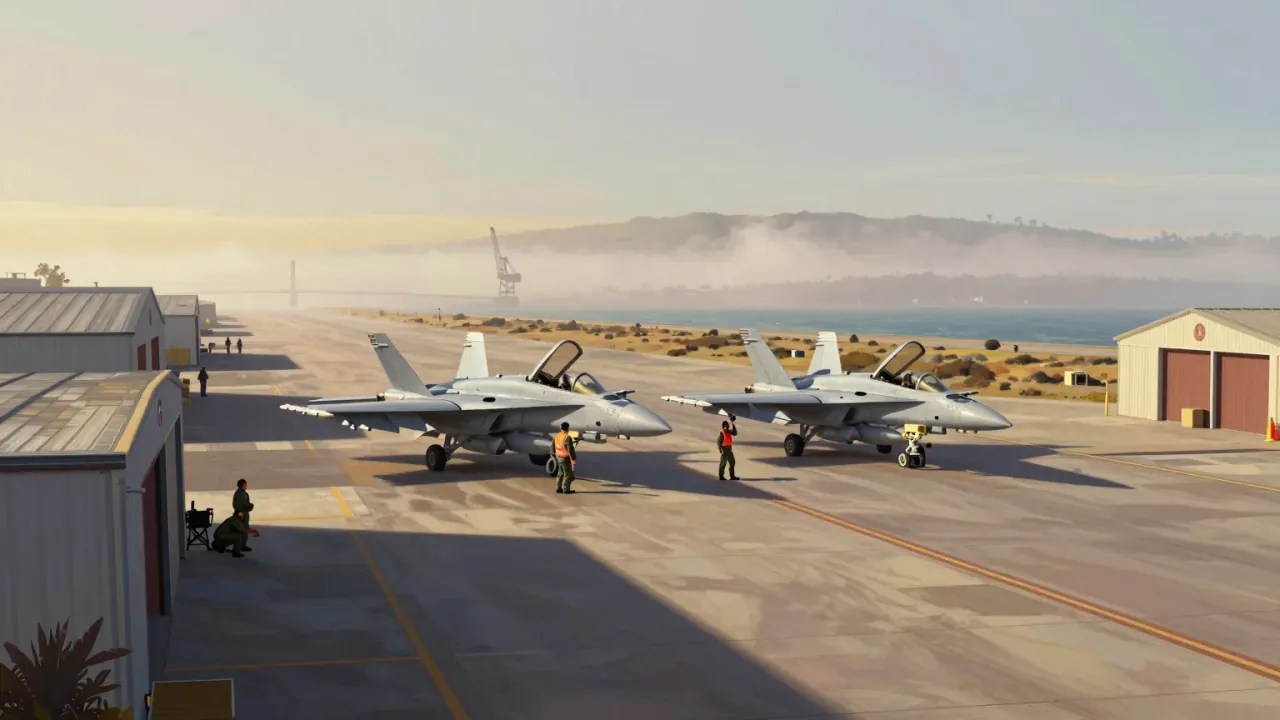
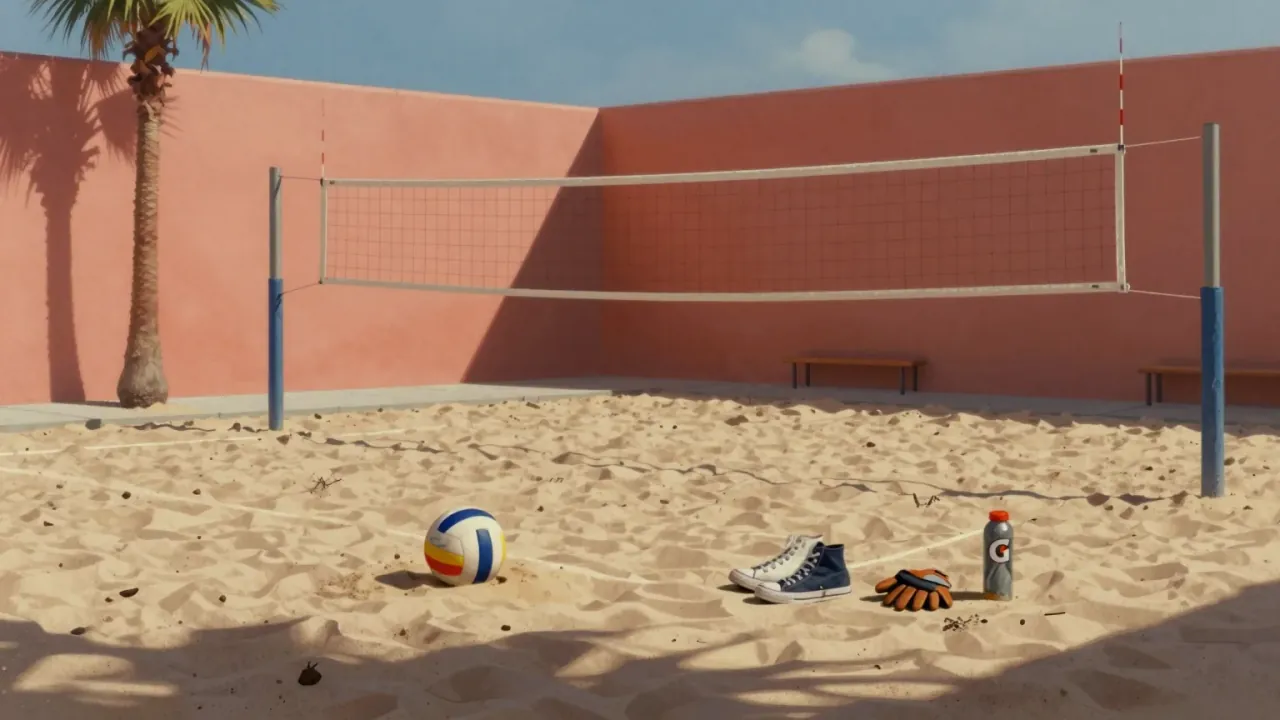
What lands is the physical grammar of flight: the weight of G-force implied by camera tilt, the intimacy of shared oxygen masks, the way sunlight fractures across canopy glass. The dogfight sequences hold up because they were filmed with real pilots in real aircraft — VF-51’s Scott Altman, VF-111’s Marcus Williams, and others — not composites or CGI. Their movements have inertia, hesitation, consequence. The opening sequence — two F-14s chasing enemy MiG-28s (Northrop F-5s in disguise) over the Pacific — works not as combat but as ballet: precise, silent except for radio crackle and engine roar, edited to match the beat of ‘Danger Zone’. The volleyball scene functions similarly: bodies in motion, sweat, muscle, unspoken competition — a non-verbal language of dominance and deference. Even the classroom scenes land when treated as arena rather than exposition: instructors speak in clipped imperatives, students respond with posture, not monologue. The film’s most durable moments are those that bypass psychology for physiology — breath, blink, grip, gaze. They require no backstory, only attention. That consistency of tone — visual, sonic, kinetic — sustains engagement across repeated viewings, particularly for viewers attuned to craft over character. (157 words)
What slips
What does not land is the attempt to anchor the film in human stakes beyond the cockpit. Maverick’s grief over Goose’s death arrives abruptly, resolved in under two minutes with a single line and a slow-motion walk away from the crash site — no mourning, no aftermath, no institutional reckoning. Charlie’s character exists to be looked at, spoken to, and briefly kissed; her expertise in maritime air superiority is mentioned once and never revisited. The Navy’s involvement in script approval left the film politically neutered: no critique of hierarchy, no ambiguity about mission ethics, no sense of cost beyond personal loss. Dialogue often defaults to slogan — ‘I feel the need — the need for speed’ — delivered without irony or subtext, making it impossible to read whether the film endorses or parodies its own rhetoric. Supporting characters like Viper (Tom Skerritt) or Jester (James Tolkan) are archetypes without evolution; their authority is asserted, not earned. The romantic subplot lacks tension because neither character changes in response to the other — their relationship is a prop, not a driver. Even the final dogfight against Iceman is emotionally inert: victory is announced, not felt. The film mistakes volume for intensity, repetition for resonance. (159 words)
What it believes
The themes that matter are competence as identity, visibility as power, and control as virtue. Top Gun treats skill not as learned but as innate — Maverick’s talent is preordained, his failures temporary deviations from destiny. Rank is worn, not earned; call signs replace surnames, reducing individuals to function and reputation. The film’s visual language reinforces this: characters are frequently framed through glass, grilles, or helmet visors — seen but not fully known, present but mediated. Uniforms are immaculate, haircuts exact, even in heat — discipline as aesthetic. There is no depiction of maintenance, bureaucracy, fatigue, or doubt; the Navy is presented as a frictionless meritocracy where excellence is self-evident and reward immediate. This is not a Cold War film so much as a Cold War fantasy: one where threat is external, clear, and vanquished through individual brilliance rather than strategy or sacrifice. The absence of women beyond Charlie — no female pilots, no officers, no technicians — is not incidental but structural: the world it imagines is exclusively male, hierarchical, and performative. Its enduring appeal lies less in nostalgia than in the reassurance of unambiguous mastery — a vision increasingly at odds with contemporary understandings of expertise, collaboration, and institutional complexity. (156 words)
Who it’s for
It is for viewers who value kinetic clarity over psychological nuance, who find satisfaction in choreographed movement, and who respond to music as narrative architecture. It rewards attention to framing, timing, and texture — the way light catches a jet’s wingtip, the syncopation of radio chatter over engine noise, the deliberate slowness of a salute after a win. It is not for viewers seeking moral ambiguity, historical critique, or character-driven development; those will find its emotional shorthand reductive and its politics unexamined. Critics who rate it poorly — such as those contributing to the Metacritic 50 or Rotten Tomatoes 59% — tend to judge it against dramatic standards it does not claim: depth of motivation, plausibility of resolution, coherence of theme. To ask Top Gun to be more than it is — a high-gloss, high-velocity surface — misreads its contract. Change the verdict? Only if you accept that some films succeed precisely by refusing interiority, and measure worth not in insight but in execution. (154 words)
Is it worth your evening
Yes, it is worth your evening — provided you approach it as a designed object, not a lived experience. Its 105 minutes pass with the efficiency of a well-timed afterburner kick: no dead air, no digressions, no wasted frame. It demands nothing but attention to rhythm and form, and repays that attention with visceral consistency. You do not need to care about naval aviation to feel the lift of a climb, the compression of a turn, the release of a dive. Its pleasures are physical and musical first, intellectual second — if at all. Those who dismiss it as shallow mistake surface for substance: its surfaces are its substance. A viewer who expects realism, moral complexity, or social commentary will leave unsatisfied. But one who values craft as expression — editing as breath, music as heartbeat, cinematography as perspective — will find it unusually coherent. Its endurance is not accidental: it was built to last not as story, but as sensation. That intention holds. It remains, thirty-eight years on, a working machine — polished, precise, and unapologetically loud. (152 words)