What it is trying to do
Ivan’s Childhood is a Soviet war film that sets out to show war not as heroism or historical necessity but as a rupture in the natural order, measured against the obliterated innocence of a child. It adapts Vladimir Bogomolov’s 1957 short story ‘Ivan’, narrowing its focus to a twelve-year-old orphan who serves as a reconnaissance scout for the Red Army after his family is killed by German forces. Andrei Tarkovsky, directing his first feature, frames this not as a coming-of-age narrative but as a collision: between childhood’s sensory immediacy—light on water, wind in reeds, bare feet on sand—and the administrative brutality of war. The film’s stated aim, per Tarkovsky’s later writings, was to convey ‘all [his] hatred of war’, using childhood precisely because it offers no ideological buffer: it cannot rationalise, strategise or glorify. This is not a film about resistance as virtue, nor sacrifice as meaning; it is about how war consumes time itself—erasing past, suspending present, foreclosing future. Its structure, built on recurring dream sequences and abrupt shifts between swamp, trench and sunlit shore, treats memory and trauma as physical terrain, not psychological abstraction. (158 words)
How it works
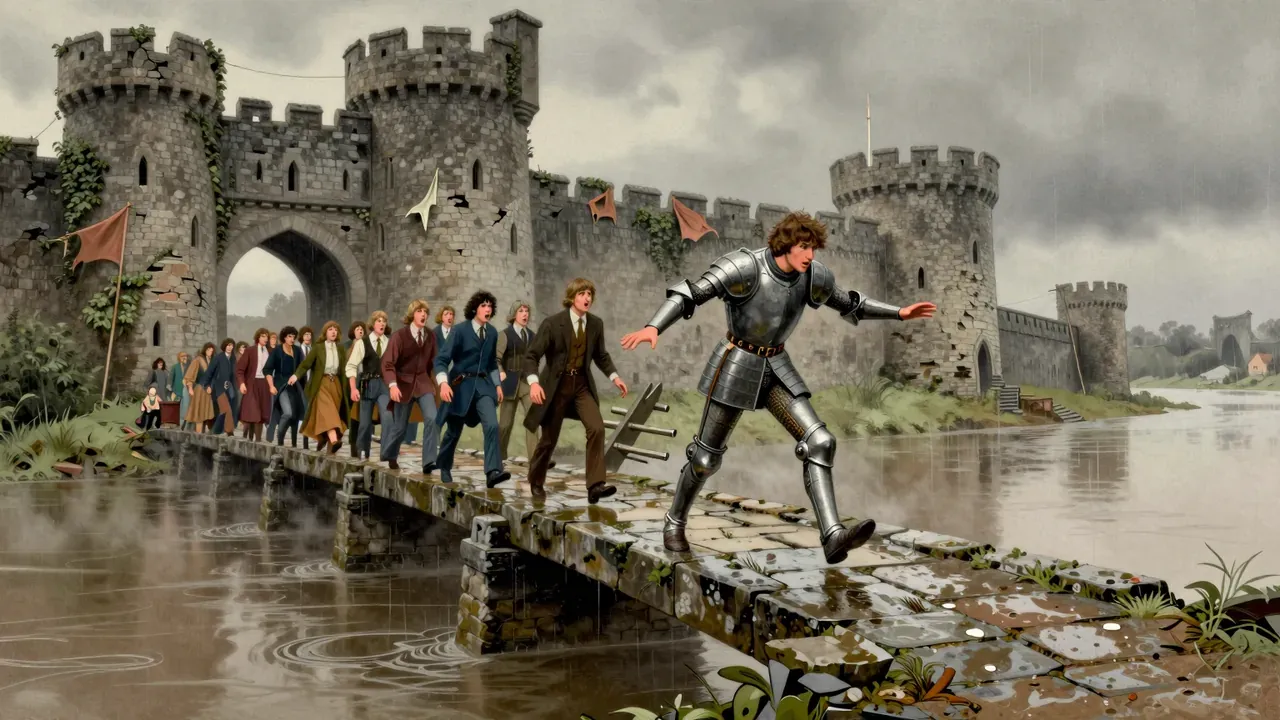
The story moves through three interlocking registers: Ivan’s missions across flooded marshland, the officers’ tense, weary conversations in cramped command posts, and his dreams—of his mother, of a seaside holiday, of birds in flight. Vadim Yusov’s cinematography keeps the wartime scenes low-contrast and shallow-focus, with long takes that follow movement rather than cut to reaction; light falls unevenly on faces, and interiors feel damp and airless. Nikolai Burlyayev, then twelve, performs without affectation: his Ivan is watchful, physically precise, emotionally sealed. Valentin Zubkov and Yevgeny Zharikov play officers whose paternal concern curdles into helplessness; their dialogue is terse, uninflected, grounded in military routine rather than rhetoric. Vyacheslav Ovchinnikov’s score is sparse—piano motifs recur like half-remembered lullabies, never swelling into theme. The editing avoids emphasis: a hanging body is shown once, without close-up or music; Ivan’s final crossing is filmed from mid-distance, the camera holding as he vanishes into reeds. There are no flashbacks to battle, no speeches about duty—only the accumulation of small, irreversible losses. (159 words)
What lands
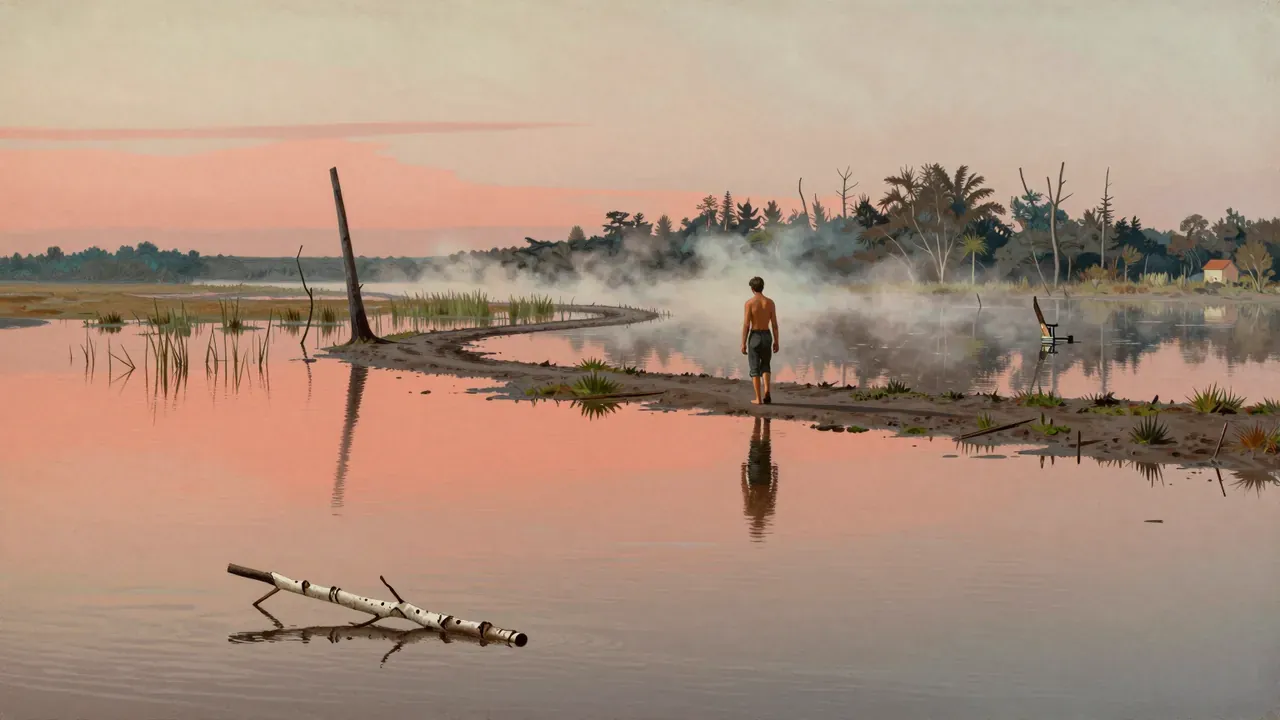
What lands is the film’s tactile sense of place—the weight of wet wool, the sound of boots sinking into mud, the way mist clings to the Dnieper’s surface at dawn. These are not atmospheric flourishes but structural elements: nature is neither backdrop nor metaphor but a third presence, equally subject to violence and equally indifferent to human intent. The dream sequences do not soften the horror; they sharpen it, because their clarity makes the waking world’s degradation more palpable. When Ivan runs across the beach in the final flashback, the image does not offer solace—it underscores the irrevocability of what has been taken. The film’s restraint works because it refuses to assign meaning to suffering: there is no redemption arc, no moral resolution, no post-war reconciliation. Even the ending—a dead tree on an empty shore—is not symbolic but factual, a last visual fact stripped of interpretation. This refusal to console is what gives the film its quiet authority. It does not ask for empathy as an emotion but as an act of attention: to look, to remember, to hold space for what cannot be undone. (156 words)
What does not
What does not land is the film’s occasional drift into schematic contrast—childhood versus war, dream versus duty—as if the opposition were self-evident rather than earned. Some exchanges between officers feel underwritten, relying on subtext that remains submerged rather than clarified: Gryaznov’s motives for keeping Ivan close, Kholin’s bitterness, Galtsev’s growing unease—all register as mood rather than motivation. The adaptation tightens Bogomolov’s source but also flattens its moral ambiguity: the original story leaves Ivan’s fate unresolved; the film confirms his execution, making grief tidier than the text intended. Tarkovsky’s own dissatisfaction, noted in Sculpting in Time, points to specific cuts he later regretted—moments where pacing or emphasis diluted emotional continuity. The film’s austerity can read as distance: its refusal to explain, justify or even name certain horrors (Maly Trostenets is mentioned once, without context) may leave some viewers adrift, not provoked. And while the poetic framing of nature is central to its design, it risks aestheticising devastation when the camera holds too long on ruined trees or still water reflecting smoke—beauty becoming a kind of evasion. (157 words)
The themes that matter
The themes that matter are not those of war cinema—courage, loyalty, victory—but of erasure: of childhood as a condition, of memory as continuity, of time as linear progression. The film treats trauma not as something to be processed but as something that rewrites perception: Ivan sees the world in terms of cover, concealment, vantage points—not because he is hardened, but because safety has become unthinkable. Nature recurs not as symbol but as witness and casualty: forests are felled, rivers dammed, swamps drained for trenches. The recurring motif of water—crossed, waded, dreamed in—functions less as cleansing than as boundary: between life and death, past and present, agency and abandonment. The officers’ inability to protect Ivan exposes the limits of institutional care; their affection is real but functionally useless. This is a film about how systems fail children not through malice but through their own logic—how bureaucracy, hierarchy and even compassion become instruments of disposal when the frame is war. There is no villain beyond circumstance; no redemption beyond the act of witnessing itself. (155 words)
Who should watch it, and who should not
This film is for viewers who accept that a war film need not depict combat to convey war’s totality—who can sit with silence, tolerate ambiguity, and find emotional weight in composition over exposition. It suits those familiar with mid-century Eastern European art cinema, or with literature that treats trauma as syntax rather than subject. It is not for viewers who require narrative propulsion, character arcs, or moral clarity—those who expect Ivan’s journey to yield insight, instruction or catharsis will find only absence. It resists the consolations of genre: no suspense is resolved, no justice delivered, no lesson extracted. Those who prefer historical context embedded in dialogue, or who rely on music or editing to signal emotional tone, may feel stranded. A viewer expecting the visceral immediacy of Come and See or the procedural rigour of Das Boot will find Ivan’s Childhood oblique, even withholding. Its power depends on patience with ellipsis—and that patience is not neutral. It presumes a viewer already attuned to the grammar of loss. (158 words)
Is it worth your evening
Yes, it is worth your evening—if you approach it as a sustained act of attention, not consumption. Its ninety-five minutes unfold with the gravity of a ritual: each shot calibrated, each silence weighted, each cut deliberate. It repays slow viewing, not repeated viewing; its impact lies in the cumulative effect of texture, rhythm and restraint. Those who dislike it tend to cite its pace, its lack of exposition, or its refusal to resolve Ivan’s fate narratively—though the film resolves it unequivocally, just not in words. A different verdict would follow if the film offered explanation instead of immersion, or if it prioritised plot over perception. But its value is precisely in its unwavering commitment to a single, unadorned proposition: that childhood, once destroyed, cannot be mourned—it can only be remembered, imperfectly, in fragments of light and water and wind. To watch it is to accept that some truths are held not in speech but in stillness. (159 words)