filmbriefs
Topic

Identity

Who someone is taken to be, and who gets a say.

86
in film
13:00
average
1118 min
in total
138
across the network
Identity across the network →
All briefs86
13:00

3 Women

Robert Altman · 1977

Robert Altman’s 1977 film 3 Women follows the uncanny merging of identities among a timid young woman, her garrulous roommate and a silent, pregnant artist in a sun-scorched California town. Built from a dream and shot with deliberate, unhurried precision, it uses repetition, reflection and improvisation to explore how selves are borrowed, performed and abandoned.

13:00

After Life

Hirokazu Koreeda · 1998

After Life (1998) is Hirokazu Koreeda’s gently speculative film set in a way station between life and death, where the newly deceased must choose one memory to carry into eternity. Shot on grainy 16 mm and 8 mm film, it blends scripted scenes with real interviews, treating memory not as fixed truth but as subjective, evolving reconstruction. With understated performances and deliberate pacing, it explores how identity forms through fragments — a dress, a breeze, a letter — and how meaning accrues in quiet, relational moments rather than grand events.

13:00

Being John Malkovich

Spike Jonze · 1999

Being John Malkovich (1999) is a surrealist comedy-drama written by Charlie Kaufman and directed by Spike Jonze. A down-on-his-luck puppeteer discovers a portal into actor John Malkovich’s mind, sparking a chain of ethical and existential complications among his wife, co-worker, and employer. With precise writing, restrained performances, and a singular conceptual rigour, it explores identity, desire, and control without resorting to explanation or sentiment.

13:00

Black is... Black Ain't

Marlon Riggs · 1994

Marlon Riggs’s final film is a sprawling, urgent essay on Black identity in America, built from hundreds of unmediated testimonies, performances by Bill T. Jones and Essex Hemphill, and commentary from Angela Davis, bell hooks, and Cornel West. Framed by Riggs’s own illness and unfinished work, it treats Blackness not as a fixed category but as a contested, embodied, intersectional practice—resisting homogenisation, patriarchy, homophobia, and colourism while insisting on solidarity without uniformity.

13:00

Chan Is Missing

Wayne Wang · 1982

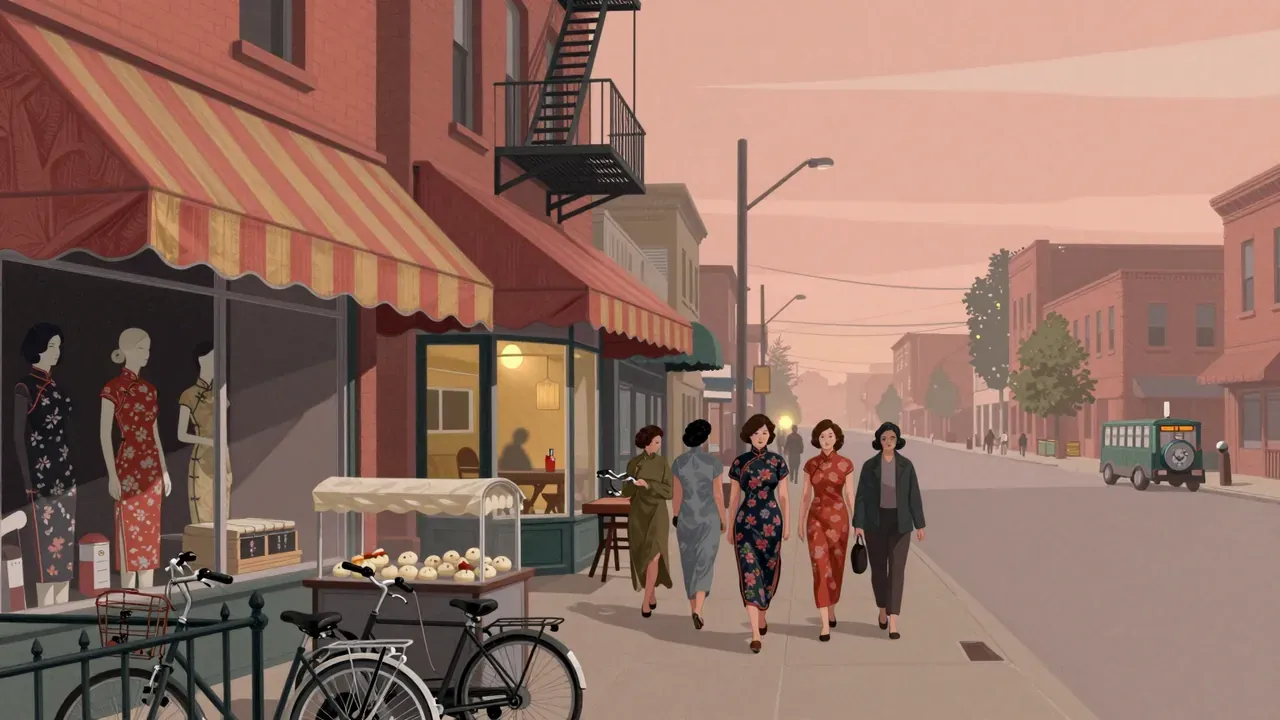
Wayne Wang’s 1982 debut is a black-and-white arthouse comedy-drama structured as a search for a missing Chinatown taxi broker. As two men interview locals, each offers a contradictory portrait of him — revealing not Chan, but the fractured, polyglot reality of Chinese American life. Shot on location with non-professionals, it privileges ambiguity over exposition, sound over subtitle, and absence over answer.

13:00

Close-Up

Abbas Kiarostami · 1990

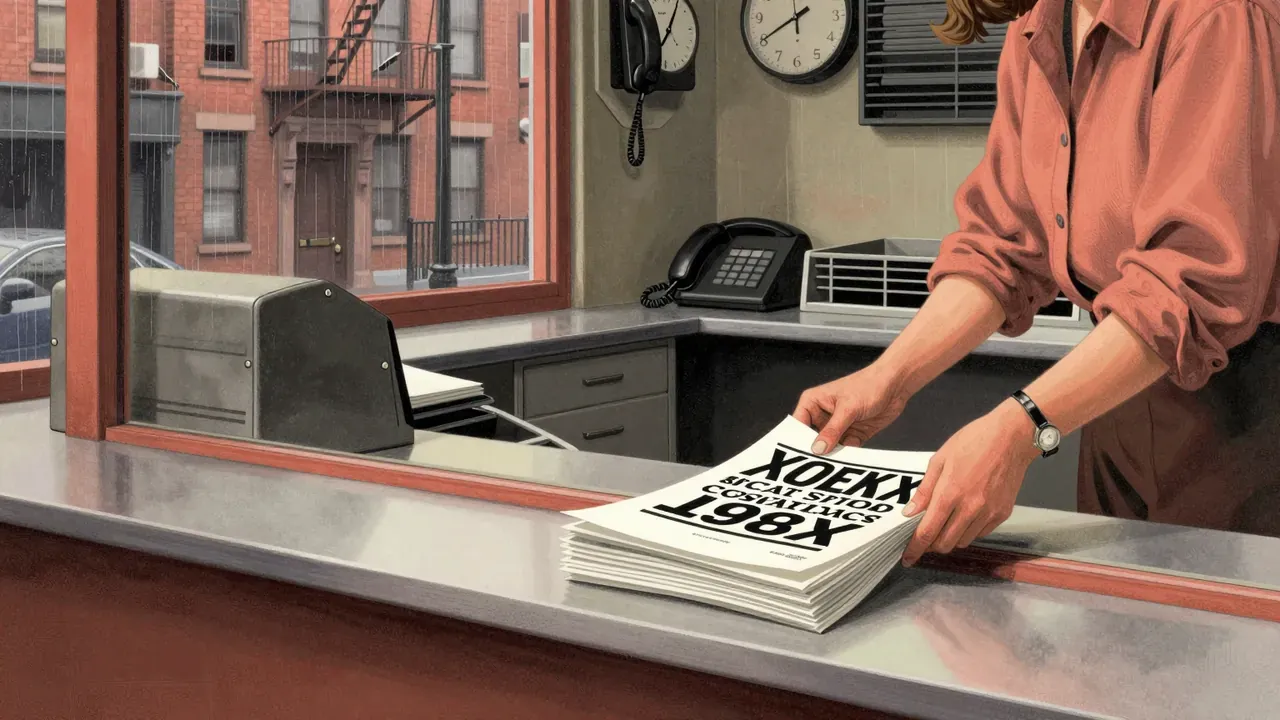
Close-Up (1990) is Abbas Kiarostami’s reconstruction of a real 1980s Tehran fraud case: Hossein Sabzian, a print-shop worker, posed as filmmaker Mohsen Makhmalbaf to gain entry into a family’s home, promising them roles in a film. With full participation from Sabzian, the Ahankhah family, the journalist who exposed him, the judge, and Makhmalbaf himself, Kiarostami films their trial and re-enactments of key events — all playing themselves. The film treats identity, cinema, and justice not as abstractions but as lived, contingent acts of attention and consent.

13:00

Dead Ringers

David Cronenberg · 1988

David Cronenberg’s 1988 film follows identical twin gynecologists Elliot and Beverly Mantle as their shared professional and personal life fractures under drug dependency, ethical collapse, and blurred identity. Jeremy Irons plays both roles with uncanny precision, supported by Peter Suschitzky’s austere cinematography and Howard Shore’s unnerving score. Based loosely on the Marcus twins and adapted from Bari Wood’s novel, it is a tightly controlled psychological drama that prioritises behavioural realism over exposition, clinical space over emotional catharsis, and structural inevitability over narrative surprise.

13:00

Dheepan

Jacques Audiard · 2015

A former Tamil Tiger soldier assumes a dead man’s identity to claim asylum in France, posing as husband and father to two strangers. As caretaker of a troubled Paris banlieue, he finds himself drawn back into combat — not on a battlefield, but in stairwells and flats. Jacques Audiard’s Palme d’Or winner treats migration as embodied habit, not political argument.

13:00

Europa Europa

Agnieszka Holland · 1990

Europa Europa (1990), directed by Agnieszka Holland, adapts Solomon Perel’s memoir of surviving the Holocaust by posing as a German nationalist and joining the Hitler Youth. Shot in German by a French-Polish-German co-production, it follows Solek’s constant recalibration of identity across shifting front lines, languages, and ideologies — avoiding sentiment, exposition, or moral summation in favour of procedural tension and quiet precision.

13:00

Farewell Amor

Ekwa Msangi · 2020

Farewell Amor follows an Angolan family reuniting in Brooklyn after a 17-year separation. Told in three interwoven chapters — from the perspectives of father Walter, mother Esther, and teenage daughter Sylvia — the film observes their tentative, often wordless reconnection in a cramped apartment. Directed by Ekwa Msangi, it prioritises behavioural detail over exposition, using subtle performance, naturalistic lighting, and precise editing to explore migration, memory, and the quiet labour of rebuilding intimacy.

13:00

Homicide

David Mamet · 1991

David Mamet’s 1991 crime drama follows a Jewish homicide detective pulled from a high-profile manhunt into the investigation of an elderly woman’s killing — a case that unravels his assumptions about identity, loyalty, and belonging. With Joe Mantegna, William H. Macy, and Ving Rhames, and shot by Roger Deakins, it trades procedural clarity for psychological precision, using police work as scaffolding for a stark, unsentimental study of assimilation, moral drift, and the cost of choosing between competing claims on the self.

13:00

Identification of a Woman

Michelangelo Antonioni · 1982

Michelangelo Antonioni’s Identification of a Woman (1982) follows a divorced film director in Rome and Venice as he navigates two relationships — one elusive, one immediate — while under an ambiguous surveillance. Shot by Carlo Di Palma, scored by John Foxx, and edited by Antonioni himself, it trades the formal rigour of his 1960s work for a quieter, more provisional tone. Its concerns — perception, identity, ageing, class — are embedded in atmosphere and gesture, not exposition. Reception was mixed on release, with later critics noting its autumnal modesty. It is a film of lingering glances, unresolved absences, and the quiet weight of what remains unseen.

13:00

Infernal Affairs

Andrew Lau, Alan Mak · 2002

A Hong Kong police officer and a triad mole spend ten years living each other’s lives, bound by secrecy and surveillance. Directed by Andrew Lau and Alan Mak, the 2002 crime drama uses tight structure, restrained performances, and precise craft to explore identity as performance — not moral failure, but institutional inevitability.

13:00

Infernal Affairs III

Andrew Lau, Alan Mak · 2003

Infernal Affairs III closes the Hong Kong crime trilogy by abandoning narrative resolution for psychological recursion. Interweaving timelines before and after Chan Wing-Yan’s death, it charts Senior Inspector Lau Kin-Ming’s irreversible dissociation as his criminal past overtakes his present self. Anchored by Andy Lau’s physically precise performance and Andrew Lau and Ng Man-Ching’s muted, interior-heavy cinematography, the film renders guilt as somatic decay—not moral failure but neurological saturation. Its power lies in accumulation, not climax: Morse code taps, repeated corridors, overlapping voices. It is the trilogy’s most demanding and least forgiving chapter.

13:00

Mahjong

Edward Yang · 1996

Edward Yang’s 1996 Mahjong is a Taipei-set ensemble comedy about a drifting youth gang, a French woman searching for an interior designer, and a soothsayer whose predictions come true only because others act on them. Conducted almost entirely in English, it treats crime, romance, and superstition as interchangeable social scripts — less a satire of greed than a demonstration of how greed, once ambient, ceases to be legible as motive.

13:00

Medicine for Melancholy

Barry Jenkins · 2008

Barry Jenkins’ 2008 debut follows Micah and Jo, two Black San Franciscans, over one day of conversation, wandering, and quiet confrontation. Shot in desaturated tones by James Laxton and edited by Nat Sanders, it uses minimal narrative scaffolding to explore identity, gentrification, and the unspoken tensions of interracial dating and cultural assimilation in a city where Black residents make up just seven percent of the population.

13:00

Pariah

Dee Rees · 2011

Dee Rees’s 2011 debut feature follows Alike, a 17-year-old Black lesbian in Brooklyn, as she navigates family tension, friendship, first intimacy and self-assertion. Shot by Bradford Young and anchored by Adepero Oduye’s restrained, luminous performance, the film treats identity as embodied practice—not crisis or climax—but as accumulation of small, consequential choices. It premiered at Sundance, won the John Cassavetes and NAACP Image Awards, and was added to the National Film Registry in 2022.

13:00

Performance

Donald Cammell, Nicolas Roeg · 1970

A violent East London gang enforcer, on the run after killing a rival, hides in the Notting Hill home of a reclusive rock star. What follows is less a thriller than a psychological and formal investigation into performance, identity, and the porous line between role and self. Directed by Donald Cammell and Nicolas Roeg, and starring James Fox and Mick Jagger, the 1970 British film uses fractured editing, dissonant sound, and deliberate ambiguity to unsettle narrative expectation and challenge assumptions about masculinity, class, and authenticity.

13:00

Personal Shopper

Olivier Assayas · 2016

Olivier Assayas’s Personal Shopper stars Kristen Stewart as Maureen, an American personal shopper in Paris awaiting a sign from her deceased twin. As texts arrive from an unknown number and spectral events unfold, the film sustains deliberate ambiguity: is she contacting the dead, being manipulated by the living, or unravelling under grief? Shot by Yorick Le Saux and edited by Marion Monnier, it favours restraint over exposition, making uncertainty its central subject.

13:00

Phoenix

Christian Petzold · 2014

Set in ruined Berlin in 1945, Phoenix follows Nelly Lenz, a Jewish Holocaust survivor with a reconstructed face, as she seeks out her husband Johnny — who fails to recognise her. When he asks her to impersonate his presumed-dead wife to claim her inheritance, she agrees, becoming ‘Esther’. Under his direction, she rehearses her old self: voice, mannerisms, songs. But as the charade deepens, so does the tension between resemblance and reality, memory and convenience, love and complicity. Christian Petzold’s tightly controlled drama rests on Nina Hoss’s physically precise performance and a script that treats identity as surface, history as burden, and recognition as moral choice.

13:00

Purple Noon

René Clément · 1960

René Clément’s 1960 crime thriller adapts Patricia Highsmith’s The Talented Mr. Ripley with surgical precision: Alain Delon’s Tom Ripley murders and assumes the identity of wealthy playboy Philippe Greenleaf (Maurice Ronet) during a sun-drenched Italian summer. Shot by Henri Decaë and written by Clément and Paul Gégauff, the film treats identity as forgery, class as costume, and murder as logistics—not morality. Its power lies in restraint, rhythm, and the unnerving ease of its central deception.

13:00

Saving Face

Alice Wu · 2004

Alice Wu’s 2004 debut follows Wilhelmina Pang, a Chinese American surgeon in New York, as she navigates her closeted relationship with dancer Vivian Shing and her mother Hwei-Lan’s unexpected pregnancy. Filmed on location in Flushing, Queens, and performed in English and Mandarin, it treats intergenerational tension, queer identity, and cultural expectation with lightness and precision. Though criticised for underdeveloped professional detail and predictable structure, its strength lies in understated performances, authentic bilingualism, and a vision of change that accumulates in glances, pauses, and small, unheralded choices.

13:00

Seconds

John Frankenheimer · 1966

John Frankenheimer’s 1966 film follows a disillusioned banker who undergoes surgical transformation to become a younger artist—only to find his new life as hollow as the old. Shot in stark black-and-white by James Wong Howe, with a dissonant score by Jerry Goldsmith, it uses speculative premise to examine alienation, memory, and the cost of reinvention in mid-century America.

13:00

Smithereens

Susan Seidelman · 1982

Susan Seidelman’s 1982 debut follows Wren, a young woman from New Jersey adrift in New York’s fading punk scene, as she prints fliers, mugs strangers, and cycles through men in pursuit of a life she cannot name. Shot in stark black-and-white, it observes her not with judgement or irony, but with forensic calm — treating identity as a series of transactions, not revelations.

13:00

The Breakfast Club

John Hughes · 1985

John Hughes’ 1985 drama confines five high school students to a single library for a Saturday detention. With no subplots, no flashbacks, and minimal camera movement, it builds intimacy through duration, silence, and incremental confession. Thomas Del Ruth’s flat lighting and Dede Allen’s patient editing keep focus on performance and gesture. Its power lies in specificity — not universality — and its endurance rests on emotional precision, not narrative momentum.

13:00

The Crying Game

Neil Jordan · 1992

Neil Jordan’s 1992 drama follows an IRA volunteer who, after a killing he cannot undo, flees to London and falls for the lover of the man he failed to save. Its famous revelation reshapes everything that comes before—not as twist, but as recalibration. Shot with restraint by Ian Wilson and performed with quiet precision by Stephen Rea and Jaye Davidson, it remains a study in how ethics emerge from proximity, not principle.

13:00

The Face of Another

Hiroshi Teshigahara · 1966

Hiroshi Teshigahara’s 1966 adaptation of Kōbō Abe’s novel follows an engineer who, disfigured by industrial accident, receives a lifelike prosthetic mask. As he lives a double life — one masked, one bandaged — his sense of self fractures. Interwoven is a parallel story of a woman scarred by war. With Tōru Takemitsu’s sparse score, Hiroshi Segawa’s austere cinematography, and Arata Isozaki’s glass-walled sets, the film explores identity as social contract, not essence. It is a rigorous, unsettling inquiry into visibility, recognition, and the violence of normalcy.

13:00

The Watermelon Woman

Cheryl Dunye · 1996

Cheryl Dunye’s 1996 debut is a mockumentary about a Black lesbian filmmaker researching a fictional 1930s Black actress — ‘The Watermelon Woman’ — erased from film history. Blending interviews, staged archive photos by Zoe Leonard, and autobiographical elements, it exposes how race, sexuality and institutional power shape what gets preserved — and what must be invented to survive.

13:00

The Worst Person in the World

Joachim Trier · 2021

Joachim Trier’s 2021 Oslo-set drama follows Julie, a woman in her late twenties drifting between careers and relationships, as she navigates love, loss, pregnancy, and grief. Anchored by Renate Reinsve’s layered performance and Kasper Andersen’s naturalistic cinematography, the film uses a chaptered structure and subtle tonal shifts to explore self-perception, time, and the weight of expectation — without moralising, resolving, or explaining.

13:00

Who Are You, Polly Maggoo?

William Klein · 1966

William Klein’s 1966 French film is a satirical mockumentary following Polly Maggoo, an American model pursued by a television crew in Paris. Using fragmented editing, stylised photography, and deadpan performance, it dissects how media constructs identity through repetition, framing, and erasure — never resolving who Polly is, because the system it critiques has no use for her answer.

13:00

Face/Off

John Woo · 1997

John Woo’s 1997 action thriller Face/Off stars John Travolta and Nicolas Cage as an FBI agent and terrorist who swap faces via experimental surgery. Built on operatic violence, precise choreography, and dual performances of startling commitment, it uses identity exchange as narrative engine rather than philosophical probe. Shot by Oliver Wood and scored by John Powell, it balances absurd premise with rigorous craft — delivering coherent, emotionally charged set pieces across 133 minutes. Though thin on thematic depth and scientific rigour, its confidence, control, and clarity make it a durable artefact of late-20th-century studio action cinema.

13:00

A Brighter Summer Day

Edward Yang · 1991

Edward Yang’s 1991 epic follows a Taipei teenager’s slow drift into violence against the backdrop of 1950s–60s Taiwan: a society shaped by the 1949 Nationalist retreat, political suspicion, and the hollow echo of American pop culture. At 237 minutes, it unfolds with patient, unsentimental precision — observing family life, school routines, gang rituals and state surveillance not as separate domains but as layers of the same suffocating reality. Chang Chen stars in his debut as Si’r, a boy whose fatal act feels less like choice than conclusion.

13:00

Anomalisa

Charlie Kaufman, Duke Johnson · 2015

A middle-aged man perceives everyone as identical—same face, same voice—except one woman he meets in a Cincinnati hotel. Adapted from Charlie Kaufman’s 2005 audio play, this stop-motion feature renders alienation as tactile, acoustic and temporal experience, using painstaking puppetry and vocal repetition to explore perception, loneliness and the fragile mechanics of connection.

13:00

At Land

Maya Deren · 1944

Maya Deren’s 1944 silent short At Land is a fifteen-minute experimental film in which Deren, playing a solitary woman, traverses a series of uncanny locations — beach, dining room, forest, covered interior — encountering doubles and shifting figures. Shot on Long Island, it uses precise editing, physical performance and repetition to explore identity not as essence but as embodied action. There is no dialogue, no score, no exposition — only movement, recurrence and resistance.

13:00

Good Men, Good Women

Hou Hsiao-Hsien · 1995

Hou Hsiao-hsien’s 1995 drama interweaves the true story of resistance activist Chiang Bi-yu with the contemporary rehearsal process of an actress playing her. Shot in Taiwanese Hokkien with restrained cinematography and elliptical editing, it explores memory, gender, and political erasure across three temporal layers — not to resolve history, but to inhabit its lingering weight.

13:00

I'm Thinking of Ending Things

Charlie Kaufman · 2020

Charlie Kaufman’s 2020 adaptation of Iain Reid’s novel follows a woman whose identity unravels during a visit to her boyfriend’s parents’ remote farm. Intercut with scenes of a school janitor’s routine, the film builds a recursive, psychologically dense world where time bends, memory mutates, and reality frays. Shot in tight 4:3 by Łukasz Żal and anchored by restrained performances from Jessie Buckley and Jesse Plemons, it sustains a tone of quiet dread and existential fatigue across 134 minutes. Its final moments offer not answers but a saturated blue field—and the sound of an approaching snowplough.

13:00

Laurence Anyways

Xavier Dolan · 2012

Laurence Anyways (2012) is Xavier Dolan’s 168-minute French-language drama following Laurence Alia’s gender transition and her enduring, turbulent bond with Fred Bellair across twelve years in Montreal. Shot by Yves Bélanger and edited by Dolan, it balances intimate performance — Melvil Poupaud and Suzanne Clément anchor the film — with formal rigour and emotional restraint. It won Best Canadian Film at TIFF and the Queer Palm at Cannes.

13:00

The Double Life of Véronique

Krzysztof Kieślowski · 1991

Krzysztof Kieślowski’s 1991 metaphysical portrait follows two women—Weronika in Poland and Véronique in France—who share a face, a voice, and an unexplained emotional tether. Shot by Sławomir Idziak with diffused, saturated light and scored by Zbigniew Preisner under the fictional name Van den Budenmayer, it builds meaning through recurrence, texture, and silence rather than exposition. Irène Jacob gives a performance of extraordinary subtlety, registering shifts in feeling before thought catches up. The film refuses to explain its central mystery, treating doubleness not as plot device but as perceptual condition.

13:00

Akira

Katsuhiro Otomo · 1988

Akira is Katsuhiro Otomo's 1988 adaptation of his own unfinished manga, following biker-gang leader Kaneda as he tries to stop his friend Tetsuo, whose collision with an escaped psychic child leaves him with telekinetic power that threatens to destroy Neo-Tokyo. A landmark of Japanese animation on its original release, it has grown into one of the most influential science-fiction films of its era.

13:00

Alice in Wonderland

Clyde Geronimi, Wilfred Jackson, Hamilton Luske · 1951

A bored young girl follows a white rabbit down a hole into a nonsensical kingdom ruled by a short-tempered Queen of Hearts, encountering a parade of self-absorbed creatures along the way. Disney first considered adapting Lewis Carroll's books in the early 1930s and spent nearly two decades discarding drafts — a live-action hybrid with Mary Pickford, a literal script judged too grotesque, a version written by Aldous Huxley — before settling on the fully animated, more comic take released in 1951 to a muted box office and mixed reviews that only later warmed.

13:00

Arrietty

Hiromasa Yonebayashi · 2010

A tiny Borrower named Arrietty risks everything her family fears by letting herself be seen by a sickly human boy. Hiromasa Yonebayashi's 2010 directorial debut, based on Mary Norton's novel, trades Ghibli's usual scale for something quieter and more contained.
13:00

Blade Runner

Ridley Scott · 1982

Ridley Scott's 1982 science fiction film, adapted from Philip K. Dick's novel, sends former police officer Rick Deckard after a group of fugitive synthetic humans, or replicants, hiding in a decaying future Los Angeles. Shot by Jordan Cronenweth with a score by Vangelis, it underperformed on release and split critics over its pacing, only to be reissued in seven different versions and become one of the defining works of neo-noir and cyberpunk cinema.

13:00

Blade Runner 2049

Denis Villeneuve · 2017

Thirty-five years after Ridley Scott's original, Denis Villeneuve's sequel sends replicant blade runner K into a discovery that threatens the order between humans and the synthetics who serve them, with Harrison Ford's Deckard drawn back into the search. Visually enormous and emotionally patient, it won over critics but not, relative to its cost, box offices.

13:00

Encanto

Jared Bush, Byron Howard, Charise Castro Smith · 2021

In a hidden Colombian valley, the Madrigal family's magic house grants every grandchild a power except Mirabel, who sets out to learn why the magic is failing. Directors Jared Bush and Byron Howard built the story from a research trip through Colombia, with Lin-Manuel Miranda's songs doing the work of introducing a dozen major characters.

13:00

Eraserhead

David Lynch · 1977

David Lynch spent roughly five years shooting his AFI student project in disused stables and a soundproofed studio he built himself, financed along the way by donations from friends including Sissy Spacek. The result follows Henry Spencer, left to care for a grotesquely deformed baby in an industrial wasteland, shot in stark black and white with sound design as unsettling as anything on screen. It became a midnight-movie staple and launched Lynch's career from almost nothing.

13:00

Everything Everywhere All at Once

Dan Kwan, Daniel Scheinert · 2022

Michelle Yeoh plays a laundromat owner dragged into a battle across parallel universes while her actual life — a failing business, a strained daughter, a tax audit — keeps intruding on the spectacle. Written for Jackie Chan before Kwan and Scheinert rebuilt it around a mother and daughter, the film pairs handmade, in-house visual effects with a script that keeps returning to a marriage and a laundromat no matter how far the story wanders.

13:00

Fight Club

David Fincher · 1999

David Fincher's 1999 adaptation of Chuck Palahniuk's novel follows an unnamed, insomniac office worker who starts an underground bare-knuckle club with a charismatic soap-maker, Tyler Durden, only for the club to grow into something far more dangerous. Edward Norton and Brad Pitt lead a film built around a structural twist Fincher fought to keep, on a 63 million dollar budget that returned a modest sum before turning, on home video, into one of the decade's defining cult titles.

13:00

Frozen

Chris Buck, Jennifer Lee · 2013

Two royal sisters are separated by one sister's uncontrollable ice powers, and the younger one sets out to bring her home rather than defeat her. Chris Buck and Jennifer Lee's 2013 film reworks Hans Christian Andersen's Snow Queen into a story about repair between siblings rather than romance.

13:00

Get Out

Jordan Peele · 2017

A young Black photographer visits his white girlfriend's family for a weekend that curdles from awkward hospitality into captivity, in Jordan Peele's directorial debut and Oscar-winning screenplay.

13:00

Ghost in the Shell

Mamoru Oshii · 1995

Ghost in the Shell follows Major Motoko Kusanagi, a cyborg security agent, as she pursues a mysterious hacker called the Puppet Master through a near-future city modelled on Hong Kong, a case that increasingly unsettles her sense of what makes her identity her own. Mamoru Oshii directed the adaptation of Masamune Shirow's manga for Production I.G, using a hybrid digital animation process and a score by Kenji Kawai built around classical Japanese vocals. Initially considered a box-office disappointment, it became a defining cult film, influencing The Matrix and drawing praise from James Cameron as one of animation's first truly adult works.

13:00

Her

Spike Jonze · 2013

In a comfortable near-future Los Angeles, a lonely letter-writer buys an artificially intelligent operating system and falls for the voice that answers back, in Spike Jonze's Oscar-winning screenplay.

13:00

Klaus

Sergio Pablos · 2019

A spoiled postal cadet exiled to a feuding Arctic town discovers that a reclusive toymaker's handmade gifts can be used to bribe warring children into good behaviour, and the scheme he runs to hit his delivery quota accidentally invents Christmas as it is now understood. Sergio Pablos, directing after years animating for Disney's hand-drawn era, built Klaus specifically to argue that traditional animation, sidelined industry-wide since the 1990s, still had a commercial future.

13:00

Lilo & Stitch

Chris Sanders, Dean DeBlois · 2002

Lilo & Stitch follows an orphaned Hawaiian girl who adopts what she thinks is a stray dog, not realizing he's an escaped, genetically engineered weapon being hunted across the galaxy. Directed by Chris Sanders and Dean DeBlois, the film cost $80 million, grossed $273 million worldwide, and won an Annie Award, building its story around the Hawaiian concept of extended family rather than a generic redemption arc.

13:00

Lost Highway

David Lynch · 1997

David Lynch's first film after Twin Peaks follows Bill Pullman's jazz musician, arrested for a murder he cannot account for, who inexplicably becomes a different young man midway through. Written with novelist Barry Gifford and shot by Peter Deming in near-total darkness, it was a box-office failure on release that has since built a devoted following willing to sit with a story that refuses to resolve.

13:00

Mulan

Barry Cook, Tony Bancroft · 1998

Mulan follows a young woman who takes her ailing father's place in an Imperial army conscription by posing as a man, running that story through the machinery of a late-90s Disney musical. Directed by Barry Cook and Tony Bancroft and produced largely at Disney's Florida studio, it paired a $90 million budget with $304 million in worldwide takings and the Annie Award for Best Animated Feature.

13:00

Mulholland Drive

David Lynch · 2001

Rejected by ABC as a television pilot, Mulholland Drive was rebuilt by David Lynch into a feature with new financing, new footage, and an ending that recontextualises everything before it. Naomi Watts's performance carries the film from bright optimism to something far darker, across a Los Angeles built out of borrowed names and unresolved threads.

13:00

Nimona

Nick Bruno, Troy Quane · 2023

Framed for the Queen's murder, disgraced knight Ballister teams up with Nimona, a shapeshifter with no interest in explaining herself, to clear his name in a medieval-futuristic kingdom. Originally a Blue Sky Studios production cancelled when Disney shut the studio down in 2021, the film was revived by Annapurna and Netflix and completed by a new creative team.

13:00

North by Northwest

Alfred Hitchcock · 1959

An advertising executive mistaken for a nonexistent spy is chased across the United States toward a crop-duster in an empty field and a climax on the carved faces of Mount Rushmore. Built by Hitchcock and Ernest Lehman around set pieces conceived before the plot that justifies them, it is Cary Grant at his most physically tested and Hitchcock's biggest production to date.

13:00

Paprika

Satoshi Kon · 2006

A stolen dream-sharing device lets a psychologist's alter ego, the detective Paprika, chase a saboteur through other people's nightmares. Satoshi Kon's 2006 feature, adapted from Yasutaka Tsutsui's novel, folds one dream into another until the seams between them disappear.

13:00

Parasite

Bong Joon-ho · 2019

Bong Joon-ho's 2019 film follows the Kim family, unemployed and living in a semi-basement flat, as they scheme their way one by one into staff jobs inside a wealthy household run by the oblivious Park family, until a discovery beneath the Parks' house upends both families' arrangements. Built from a stage idea Bong developed after his own experience tutoring a rich family's son, and shot on a purpose-built house designed around the Parks' fictional architect, the film became the first non-English-language film to win the Academy Award for Best Picture after also winning the Palme d'Or at Cannes.

13:00

Perfect Blue

Satoshi Kon · 1997

Perfect Blue follows Mima Kirigoe, a retiring pop idol turned actress, as an obsessive fan's stalking and a string of murders around her erode her ability to distinguish memory from fabrication. Satoshi Kon directed his first feature from Sadayuki Murai's screenplay, reworking an inherited splatter-horror premise into a study of the victim's collapsing perspective rather than the stalker's psychology. Made on a budget of roughly $830,000, it under-performed commercially before building a lasting reputation as one of animation's most influential psychological thrillers, cited as an inspiration by Darren Aronofsky.

13:00

Persepolis

Marjane Satrapi, Vincent Paronnaud · 2007

Adapted from her own graphic novel, Marjane Satrapi and Vincent Paronnaud's 2007 film follows a girl growing up through the Iranian Revolution, the war with Iraq, and years of exile in Vienna. Hand-drawn black and white carries most of the film's argument about who this story belongs to.

13:00

Persona

Ingmar Bergman · 1966

Ingmar Bergman's 1966 film pairs Elisabet Vogler, an actress who has gone entirely silent for reasons the film never states, with Alma, the nurse assigned to care for her at a remote coastal cottage, and lets the imbalance between one woman's silence and the other's compulsive talking gradually erode the line between them. Shot by Sven Nykvist, scored sparingly by Lars Johan Werle, and running just 84 minutes, it opens with a self-conscious montage of film equipment and unrelated images before settling into the two-hander at its centre, and it has since become one of the most closely analysed films in the medium's history.

13:00

Pinocchio

Ben Sharpsteen, Hamilton Luske, Norm Ferguson, T. Hee · 1940

A woodcarver's puppet is brought to life and told he must prove himself brave, truthful and unselfish before he can become a real boy, guided — imperfectly — by a cricket appointed as his conscience. Made for $2.5 million as Disney's second feature, the film pushed effects animation further than Snow White had, rendering water, smoke and lightning with a level of realism the studio hadn't attempted before, even as it lost money on first release when the war cut off its overseas markets.

13:00

Psycho

Alfred Hitchcock · 1960

Hitchcock financed Psycho himself after Paramount balked at the material, shooting it fast, cheap and in black and white with his television crew. Anthony Perkins's Norman Bates, Bernard Herrmann's string score and a mid-film murder that removes the film's ostensible heroine turned a low-budget genre picture into the template for the modern horror thriller.

13:00

Puss in Boots: The Last Wish

Joel Crawford · 2022

Down to his last of nine lives, Puss in Boots teams up with Kitty Softpaws and an unflappably cheerful dog named Perrito to chase the Wishing Star's last wish, while a wolf who is actually Death hunts him across a string of fairy-tale locations. Director Joel Crawford borrowed the painterly, Spider-Verse-influenced visual style DreamWorks had just built for The Bad Guys.

13:00

Rango

Gore Verbinski · 2011

A pet chameleon stranded in the desert invents a tough-guy persona to survive a lawless town, and the fiction becomes real enough to matter. Gore Verbinski's 2011 animated Western leans on genre homage and an unusually cinematic visual approach for an animated film.

13:00

Shrek

Andrew Adamson, Vicky Jenson · 2001

Shrek expands William Steig's picture book into a feature that spends most of its runtime mocking the Disney fairy-tale formula it also structurally depends on, following an ogre who strikes a deal to rescue a princess in exchange for getting his swamp back. Directed by Andrew Adamson and Vicky Jenson for DreamWorks, it grossed $484 million against a $60 million budget and became the first film to win the Academy Award for Best Animated Feature.

13:00

Soul

Pete Docter · 2020

Joe Gardner, a middle-school band teacher on the verge of his first real break as a jazz pianist, falls into a coma and finds his soul on the way to the Great Beyond, prompting a scramble to get back to his body paired with an unwilling mentee soul named 22 who has never wanted to be born. Pete Docter's Pixar feature, co-written and co-directed by Kemp Powers, spends four years of production building an afterlife bureaucracy in order to undercut the very idea, common to Docter's own earlier films, that a person needs a defining passion to justify their existence.

13:00

Spider-Man: Across the Spider-Verse

Joaquim Dos Santos, Kemp Powers, Justin K. Thompson · 2022

Miles Morales crosses into a multiverse-spanning Spider-Society alongside Gwen Stacy, only to find that the group's leader believes certain tragedies must happen exactly on schedule to hold reality together. Built with roughly a thousand crew members and six visually distinct animated universes, it became the highest-grossing film Sony Pictures Animation has released.
13:00

Spider-Man: Into the Spider-Verse

Peter Ramsey, Rodney Rothman, Bob Persichetti · 2018

After a radioactive spider bite and Peter Parker's death at the hands of Kingpin, Brooklyn teenager Miles Morales is thrown together with five other Spider-People pulled in from parallel universes to stop a machine that threatens to destroy them all. Phil Lord and Christopher Miller's screenplay, directed by Bob Persichetti, Peter Ramsey and Rodney Rothman, pairs a six-Spider-Man ensemble with a hand-drawn comic-book visual technique built specifically to make computer animation look like it was inked and printed.
13:00

Spirited Away

Hayao Miyazaki · 2001

Spirited Away follows ten-year-old Chihiro, whose parents are turned into pigs after wandering into a spirit world, as she takes a job in the witch Yubaba's bathhouse to survive and undo the curse. Hayao Miyazaki wrote and directed the film for Studio Ghibli after designing it specifically for the young daughters of family friends, and it became the highest-grossing film in Japanese history at the time, winning the Golden Bear and the Academy Award for Best Animated Feature.
13:00

The Incredibles

Brad Bird · 2004

The Incredibles follows a superhero family forced into hiding by government mandate, focusing on a father stuck in a soul-crushing insurance job until a secret assignment pulls him back into hero work and endangers his family. Written and directed solely by Brad Bird for Pixar, with an all-human cast the studio had never animated before, the film grossed $631 million against a $92 million budget and won two competitive Academy Awards plus the first Hugo Award given to an entirely animated film.

13:00

The Lego Movie

Christopher Miller, Phil Lord · 2014

An ordinary Lego minifigure is mistaken for the chosen one destined to stop a tyrant from gluing the universe into permanent order. Phil Lord and Christopher Miller's 2014 film uses digital animation built to mimic stop motion and turns a marketing premise into a genuine argument about creativity.

13:00

The Lives of Others

Florian Henckel von Donnersmarck · 2006

Ulrich Mühe plays Stasi Captain Gerd Wiesler, assigned to bug the apartment of a celebrated East German playwright in 1984 whose real offence is that a government minister covets his girlfriend. As Wiesler listens in, he begins quietly protecting the couple from the surveillance he was sent to conduct, an act of conscience that Florian Henckel von Donnersmarck's 2006 debut treats as fiction the director openly acknowledges the real Stasi never produced.

13:00

The Matrix Revolutions

Lilly Wachowski · 2003

The Wachowskis' 2003 conclusion to the Matrix trilogy sends Neo into the machine city to end humanity's war with the machines while Zion faces a final assault and Agent Smith threatens to overwrite both worlds. Shot back to back with The Matrix Reloaded and released the same year, it opened to the widest simultaneous release of its time and grossed $427.3 million, but drew a marked drop in critical reception, with reviewers praising the visual effects while faulting the film's characterisation and climax.

13:00

The Mitchells vs. The Machines

Mike Rianda, Jeff Rowe · 2021

Katie Mitchell, days from leaving for film school and still at odds with her earnest, technology-suspicious father, is stuck on a cross-country family road trip when a smartphone-assistant uprising begins rounding up humanity. Mike Rianda and Jeff Rowe's Sony Pictures Animation feature, produced by Phil Lord and Christopher Miller, pairs a hand-painted visual style adapted from Into the Spider-Verse's animation technology with a script built from Rianda's own family history and childhood fascination with robots.

13:00

The Nightmare Before Christmas

Henry Selick · 1993

The Nightmare Before Christmas follows Jack Skellington, Halloween Town's bored king, as he discovers Christmas Town and decides, badly, that he can run the holiday himself. Henry Selick directed the stop-motion musical from a story and poem by Tim Burton, with songs and score by Danny Elfman, who also voices Jack's singing parts. Released under Disney's Touchstone label rather than the studio's own name, it grossed $75.1 million and earned an Academy Award nomination for Best Visual Effects, a first for an animated film.

13:00

The Thing

John Carpenter · 1982

A helicopter pilot and a research crew at a remote Antarctic base find a shape-shifting alien freed from a Norwegian camp, and John Carpenter turns the ensuing hunt for the impostor into a study of paranoia as much as a monster film. Poorly received and a box-office loss on release, it has since been reassessed as one of the strongest science-fiction horror films made.

13:00

The Truman Show

Peter Weir · 1998

Jim Carrey plays a man raised from birth inside a soundstage as the unwitting star of a round-the-clock broadcast, gradually noticing the cracks in a world built entirely around him.

13:00

The Wild Robot

Chris Sanders · 2024

Shipwrecked on an uninhabited island, service robot Roz has to learn to survive among wildlife that first treats her as a monster, and ends up raising an orphaned gosling as her own. Chris Sanders adapted Peter Brown's 2016 novel with a hand-painted, watercolour visual style built to resemble Bambi filtered through Hayao Miyazaki.

13:00

Toy Story

John Lasseter · 1995

Toy Story follows Woody, a cowboy doll who becomes territorial once space ranger toy Buzz Lightyear replaces him as a boy's favourite. John Lasseter directed the first entirely computer-animated feature and the first film produced by the newly founded Pixar, working from a script substantially rewritten after Disney rejected early story reels as too flat. Made on a $30 million budget under a deal that gave Disney full ownership of the characters, the film earned $373.6 million and became the first animated feature nominated for the Academy Award for Best Original Screenplay.

13:00

Toy Story 3

Lee Unkrich · 2010

Andy leaves for college and his toys are accidentally donated to a daycare centre ruled by a resentful stuffed bear. Lee Unkrich's 2010 conclusion to the Toy Story trilogy pushes the franchise's premise, toys who fear abandonment, to its most literal extreme.

13:00

Toy Story 4

Josh Cooley, John Lasseter · 2019

Woody, no longer Bonnie's favourite toy, follows a homemade spork named Forky on a road trip and is reunited with the long-lost Bo Peep, who has built an independent life as a lost toy rather than an owned one. Josh Cooley, who replaced original director John Lasseter partway through a lengthy development process, uses that reunion to reopen a question Toy Story 3 seemed to have already settled: what a toy is actually for once being loved by a child stops being guaranteed.

13:00

Vertigo

Alfred Hitchcock · 1958

Alfred Hitchcock's 1958 film follows Scottie Ferguson, a retired police detective with a crippling fear of heights, hired to trail a friend's wife who believes she is possessed by a dead ancestor. What begins as surveillance turns into obsession, and after a death he could not prevent, Scottie tries to remake a second woman into the image of the first. Shot by Robert Burks with a spiralling title-sequence effect and scored by Bernard Herrmann, it earned back roughly three times its $2.5 million budget on release and has since climbed steadily in critical standing, unseating Citizen Kane at the top of one long-running critics' poll.

13:00

Wolfwalkers

Tomm Moore, Ross Stewart · 2020

Robyn, an English hunter's daughter in occupied Ireland, is sent to help exterminate the last wolf pack outside Kilkenny and instead befriends Mebh, a girl from a wolf-linked tribe whose spirit runs as a wolf by night, discovering along the way that a bite has made her one of them too. Tomm Moore and Ross Stewart's Cartoon Saloon feature, the third in Moore's Irish folklore trilogy, builds its visual design and its politics from the same conflict, an authoritarian Lord Protector's rule against nature versus everything the forest represents.