The weight of waiting
A Brighter Summer Day is a 237-minute Taiwanese drama set in Taipei between 1959 and 1961, tracing the slow dissolution of a teenage boy’s moral and emotional bearings amid political tension, familial strain, and gang rivalry. Edward Yang does not aim to dramatise a crime so much as to reconstruct the ambient pressure that makes one inevitable: the weight of displaced mainland Chinese identity, the silence around political suspicion, the hollow echo of American pop culture in a society still sorting its own voice. The film treats the murder at its centre not as climax but as terminus — the last logical step in a chain of misrecognition, deferred authority, and unmoored belonging. It is structured less like a narrative arc than a sociological diagram made visible through behaviour: how fathers speak in clipped tones, how classrooms hum with suppressed aggression, how radio broadcasts punctuate domestic scenes like official verdicts. Yang’s ambition is forensic and historical, not psychological or sensational — to map how ideology settles into posture, how fear becomes routine, how adolescence contracts under the gaze of a state that cannot name its own anxieties. (158 words)
The look of it
The story unfolds across overlapping social spheres — school, family apartment, street corners, film studios, police stations — held together by Chang Chen’s quiet, watchful performance as Si’r, whose gradual hardening is registered in micro-shifts of gaze and posture rather than outbursts. Elaine Jin and Chang Kuo-chu ground the domestic scenes in weary restraint; their arguments are muffled, their affections rationed. Yang’s direction avoids emphasis: no close-ups announce importance, no score swells to cue feeling. Gordon Willis was not involved; the cinematography is by Yang’s regular collaborator Liao Pen-jung, who uses natural light and deep focus to keep interiors dim but legible, streets crowded but never chaotic. Editing is patient, often holding on empty rooms or distant figures long after dialogue ends. Sound design favours diegetic murmur — radio static, rain on zinc roofs, distant arguments — over exposition. The film’s craft lies in its refusal to prioritise: every character, however briefly seen, occupies space with equal claim, and every scene accumulates meaning only in relation to others, not by itself. (159 words)
How it gathers
What lands is the cumulative texture of a world where nothing is named outright but everything is felt: the chill of a father’s disapproval when Si’r fails an exam, the awkward intimacy of teenagers mimicking adult romance while lacking its vocabulary, the way political fear leaks into domestic life as silence, not speeches. The intertitles — stating plainly that millions fled to Taiwan in 1949 — do not explain; they anchor. The film’s power resides in its refusal to interpret its characters’ motives, leaving room for ambiguity that feels true rather than evasive. Chang Chen’s performance lands because it refuses precocity: he is neither wise nor foolish, only observant and increasingly isolated. The gang rivalries land not as action set-pieces but as rituals of belonging — clumsy, repetitive, vulnerable to sudden collapse. Even the Elvis Presley motif — heard once, faintly, on a transistor radio — lands not as irony but as cultural displacement: a song about loneliness drifting through a city full of people who have no language for their own. The final murder lands not with shock but with exhausted inevitability, the last note in a chord sustained too long. (157 words)
What it leaves out
What does not land is the film’s structural patience when viewed without context — its refusal to signpost cause or motive can read as opacity rather than discipline. Some viewers will find the pacing indistinguishable from stasis, particularly in the middle stretch where Si’r drifts between gangs without clear allegiance or consequence. The political backdrop, though stated in intertitles, remains abstract: we see arrests and demotions but rarely grasp the logic or stakes of the secret police’s interest in Professor Hsia or Si’r’s father. The film assumes familiarity with mid-century Taiwanese history — not just the 1949 exodus, but the White Terror’s reach into schools and civil service — and offers no exposition beyond what appears on screen. Characters like Sly or Horsecart remain sketches, their motivations implied but not developed. The shorter 127-minute version reportedly tightens these gaps, but the full cut asks the viewer to sit with uncertainty as a condition, not a problem to be solved — a demand some will reject as evasion rather than rigour. (156 words)
The air it breathes
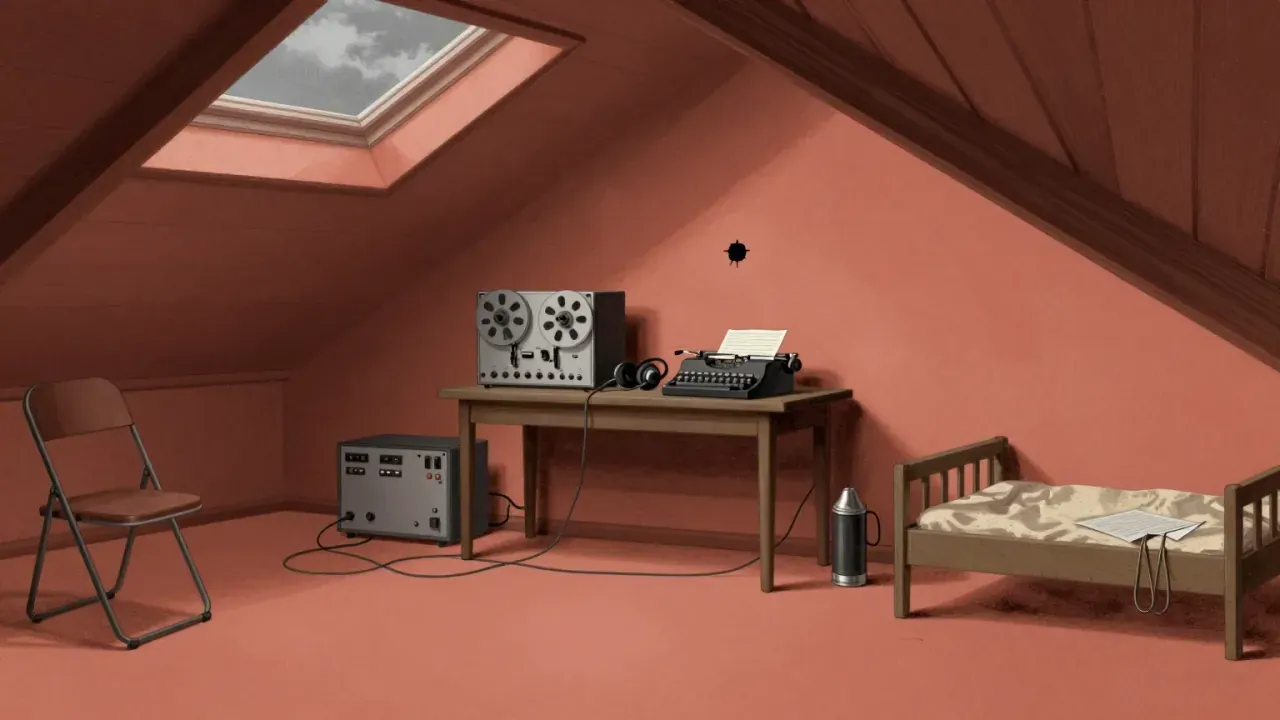
The themes that matter are displacement as inheritance, authority as absence, and identity as performance. The children of mainland refugees live inside a political fiction — told they are temporary residents awaiting return, yet raised in a place where their parents’ pasts are suspect and their futures undefined. This produces a generation that forms gangs not for profit or power but for grammar: rules, ranks, rituals that give shape to otherwise formless days. Family functions as another unstable institution: Si’r’s father is a civil servant whose career depends on silence, his mother absorbs stress into domestic routine, his siblings orbit him without real contact. Romantic relationships become sites of projection — Ming is treated as both salvation and symptom, Jade as consolation prize, Crazy as grief made visible. The film treats violence not as rupture but as continuity: the Japanese swords Ma finds in his attic are literal relics, but the impulse to wield them — to assert control where none exists — is inherited. Even the title, borrowed from an Elvis lyric, points to longing for brightness that arrives only in quotation, never in fact. (159 words)
Who it presumes
This film is for viewers who treat duration as material, not obstacle — those accustomed to Hou Hsiao-hsien or Yasujirō Ozu, or to literary realism where plot emerges slowly from accumulated detail. It rewards attention to gesture, silence, and spatial composition. It is not for viewers who require narrative propulsion, psychological exposition, or moral resolution. Those who expect crime drama to clarify motive or punish transgression will find it withholding; those who need emotional cues from music or editing will find it austere. A viewer who values clarity over complexity, or catharsis over accumulation, would reasonably reject it — not as flawed, but as mismatched to their expectations. Its length is not indulgence but necessity: the 237 minutes are the time it takes for a world to settle into its characters’ bones. Shorten it, and you lose the weight of repetition, the rhythm of daily life that makes the final rupture feel earned. That verdict holds whether you admire Yang’s method or find it alienating. (159 words)
The length of its claim
Yes, it is worth your evening — but only if you reserve the whole evening, not just part of it. Its value lies in immersion, not extraction: you cannot skim it, pause it, or absorb it in fragments. It demands presence, not consumption. Those who watch it on a screen smaller than a laptop, or with notifications enabled, will miss the texture of its light, the gradation of its silences, the way a single shot of a corridor holds three generations of unspoken history. It is not ‘difficult’ in the sense of being obscure, but demanding in the sense of requiring alignment — between viewer and film, time and attention, expectation and form. Anyone who has sat through a Béla Tarr or Apichatpong Weerasethakul film and felt the hours cohere into meaning will recognise this rhythm. Those who prefer narrative efficiency, immediate stakes, or emotional signposting will not. Nothing changes that verdict except changing your relationship to time itself. (159 words)