A break arriving right as a life ends
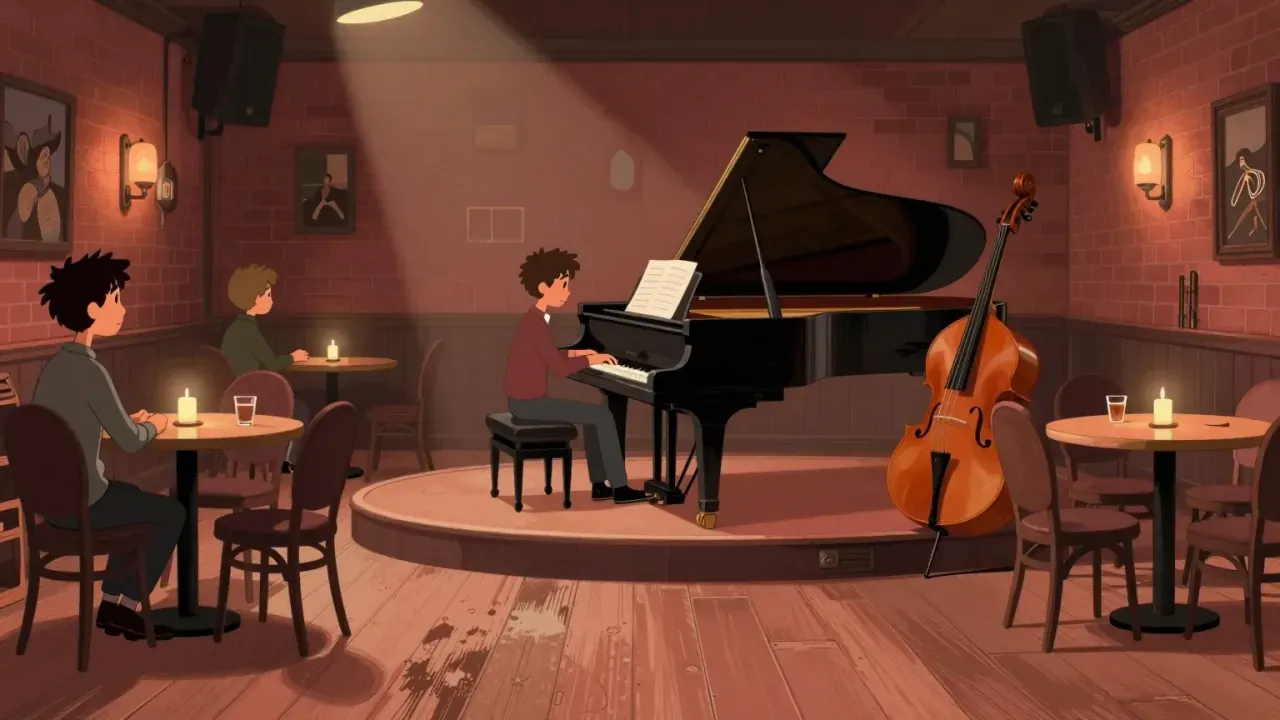
Soul opens with Joe Gardner, a middle-school band teacher who has spent years chasing a real career as a jazz pianist, finally landing the gig that could change everything on the same day he falls down a manhole and slips into a coma. His soul, rather than returning to his body, finds itself on an escalator toward the Great Beyond, and Pete Docter, conceiving the project in 2016 around questions of personality and determinism, uses that near-death premise to interrupt Joe’s story at the exact moment it should be paying off, denying him the reward the film’s first act has spent its whole runtime building toward.
A reluctant escort assigned to a soul who refuses to exist
Escaping into the Great Before instead, the waystation where souls are assembled before birth, Joe is mistaken for a mentor and assigned to 22, a soul who has resisted being born for centuries and has no interest in acquiring the spark, a defining passion, that Joe assumes must be found before a soul can leave. Their arrangement, Joe helping 22 find a spark in exchange for a badge that will let him return to Earth, structures the film’s middle section, and Tina Fey’s voice work as 22 keeps the character’s cynicism from curdling into simple comic relief.
A production built around avoiding a familiar failure
Soul is Pixar’s first film with a black lead, and the studio built an internal Cultural Trust of black employees alongside outside consultants including Herbie Hancock, Quincy Jones and Jon Batiste specifically to guard against the caricatured depictions of black characters with a long history in animation. Animators used motion-capture and lighting reference from real musicians’ sessions, tracked exact MIDI data from Batiste’s piano performances to animate playing accurately, and consulted cinematographer Bradford Young on how light should read across different skin tones, work aimed at specificity rather than generic representation.
A cat-body detour that risks becoming its own film
A substantial stretch of the film finds Joe’s soul lodged inside the body of a therapy cat, a plot device that originated from co-writer Mike Jones and gave the filmmakers a way for Joe to observe his own life from outside it. The sequence generates real comedy and physical business, cat and soul occupying the same body awkwardly, but it also runs long enough to pull focus from the philosophical argument the film has been building, and a viewer tracking that argument closely may feel the detour outlasts its usefulness before the plot returns to more central matters.
A film arguing against its own director’s earlier premise
The film’s real target is an idea Docter’s own earlier work at Pixar helped popularise: that a life is organised and validated by finding and pursuing a single defining passion. Soul argues instead, largely through 22’s growing appreciation for ordinary sensory pleasures, a falling leaf, a slice of pizza, that fixating on a spark or a calling can itself crowd out the smaller, unremarkable experiences that constitute most of an actual life, a more discomforting and adult argument than the tidier lesson a film like Inside Out was built to deliver.
Built for adults wrestling with purpose, watchable by children regardless
Children will follow the chase between the Great Before and Earth, and enjoy the slapstick generated by a jazz musician’s soul stuck inside a cat’s body, without needing the underlying argument about vocation and self-worth to register. That argument is aimed much more directly at adults, particularly those measuring their own careers and unfulfilled ambitions against Joe’s, and the film does not soften its address to make the philosophical stakes legible to its youngest possible viewers, which is a deliberate choice rather than an oversight, and one that separates it from most of the studio’s other family-pitched work.
A hundred and one minutes that landed on a streaming service instead of in theatres
Soul was diverted from its planned theatrical release to a Christmas Day debut on Disney+ during the pandemic, and a later, delayed theatrical run in 2024 grossed only around $122 million against a reported $150 million budget, a disappointment set against the acclaim the film received on release. It won two Academy Awards including Best Animated Feature, and at a hundred and one minutes it earns that recognition on craft and ambition, even if the communal theatrical audience its ideas about shared, small pleasures might have benefited from never fully arrived.