A lizard with no name until he invents one
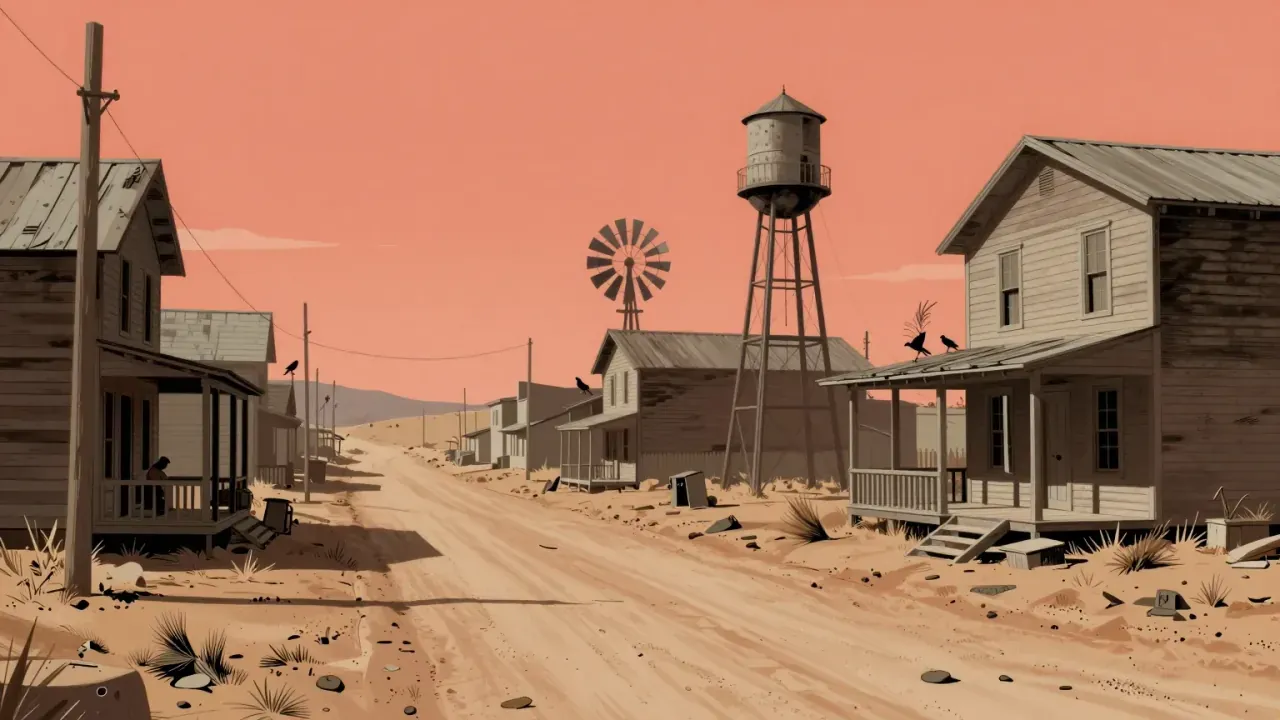
Rango, directed by Gore Verbinski and released in 2011, follows a pet chameleon with no fixed identity or even a name who ends up stranded in the Mojave Desert after his terrarium falls out of a moving car, and who subsequently talks his way into becoming the sheriff of a lawless, drought-stricken animal frontier town called Dirt. Verbinski, coming directly off the large-scale Pirates of the Caribbean trilogy, has said he specifically wanted to make something smaller and stranger next, though he later admitted in interviews that he had seriously underestimated how expensive and painstaking animated filmmaking actually turns out to be in practice.
A cast that acted the whole film out loud
The chameleon’s ongoing performance of toughness, adopting the name Rango on the spot and inventing an entire backstory as he goes along, is played by Johnny Depp, who along with the rest of the cast performed their scenes live on real physical sets while in costume, a process the production called emotion capture, so that animators would have genuine, physical, in-character performances to reference rather than working solely from isolated voice recording sessions in a booth. Because Depp could only spare twenty days to shoot, much of the supporting cast had to film around his schedule rather than the other way around.
A Western built from other Westerns
The film is dense with direct references to Western cinema, quoting A Fistful of Dollars, The Good, the Bad and the Ugly, Once Upon a Time in the West and Cat Ballou, alongside nods to non-Western films including Chinatown, Raising Arizona and Fear and Loathing in Las Vegas, plus a callback to Star Wars from Industrial Light and Magic’s own earlier effects work. This density genuinely rewards viewers who recognise the sources being quoted, since individual scenes are frequently built as direct homage rather than incidental stylistic flourish, and Verbinski has separately cited the surreal Mexican film El Topo as another influence on the town’s tone.
A studio’s visual effects house choosing the smaller job
Industrial Light and Magic, the visual effects house that animated the entire film, had actually turned down early effects work on Avatar in order to take this job instead, and the studio ultimately rendered Rango in conventional 2D rather than stereoscopic 3D, a deliberate choice Verbinski defended publicly by saying he would rather skip 3D altogether than attempt it poorly given the budget realistically available to the production at the time, at a moment when most competing studio animation was moving toward 3D as a matter of course, a stance he articulated openly when discussing the film’s release.
A drought that is really about who controls water, and who controls a story
Beneath its dense genre pastiche, the film is genuinely concerned with how identity gets constructed through performance and sheer repetition over time, since Rango’s heroism starts out as a complete act and only becomes functionally real through the town’s growing belief in it, right up until the plot’s central crime, a corrupt mayor secretly manipulating the town’s water supply for his own ends, exposes just how convincingly staged any form of authority can actually be to those willing to believe in it without asking too many questions. Rango’s arc ends with him staying on as sheriff regardless, which suggests the town needed the performance more than it needed the truth.
Who should watch it
This suits older children and adults with some existing grounding in Western cinema, since a large share of the film’s humour and visual wit depends directly on recognising the genre being referenced, quoted and occasionally gently subverted throughout. Younger viewers without that particular context can still follow the underlying adventure plot well enough, but they will miss much of what actually makes individual scenes distinctive and rewarding on repeat viewing later in life. It is best approached as a film for adults that happens to feature a cartoon lizard rather than a children’s film first.
A hundred and seven minutes of genuine ambition
At 107 minutes, with a score by Hans Zimmer featuring contributions from Los Lobos and songwriter Rick Garcia, Rango won the Academy Award for Best Animated Feature and grossed $245.7 million worldwide against a $135 million production budget. It stands as a genuinely odd, ambitious entry in mainstream studio animation, and that ambition is worth the evening even in the stretches where the references clearly outpace the underlying plot mechanics. Its success also led directly to the formation of Paramount Animation as a standalone division, giving it a legacy beyond its own box office return.