The length of it
Laurence Anyways is a three-hour French-language Canadian drama about a transgender woman’s transition and the long, uneven dissolution and rekindling of her relationship with her former partner. It attempts to hold two things at once: an intimate, emotionally granular portrait of gender self-realisation, and an operatic, time-spanning romance in which love persists across rupture, silence, and social consequence. Xavier Dolan writes, directs and edits the film, framing it as both a personal tribute — dedicated to Luce Baillairgé, whose life partly inspired it — and a formal experiment in sustained emotional duration. The film does not seek neutrality. It leans into heightened gesture, saturated colour, extended takes and lyrical voiceover to sustain feeling over exposition. Its ambition is structural as much as thematic: to make time itself feel elastic, resistant to summary, so that the weight of five years’ separation or a single unspoken glance carries physical heft. It asks the viewer to sit inside contradiction — devotion and betrayal, tenderness and cruelty, visibility and erasure — without resolving them.
The look of it
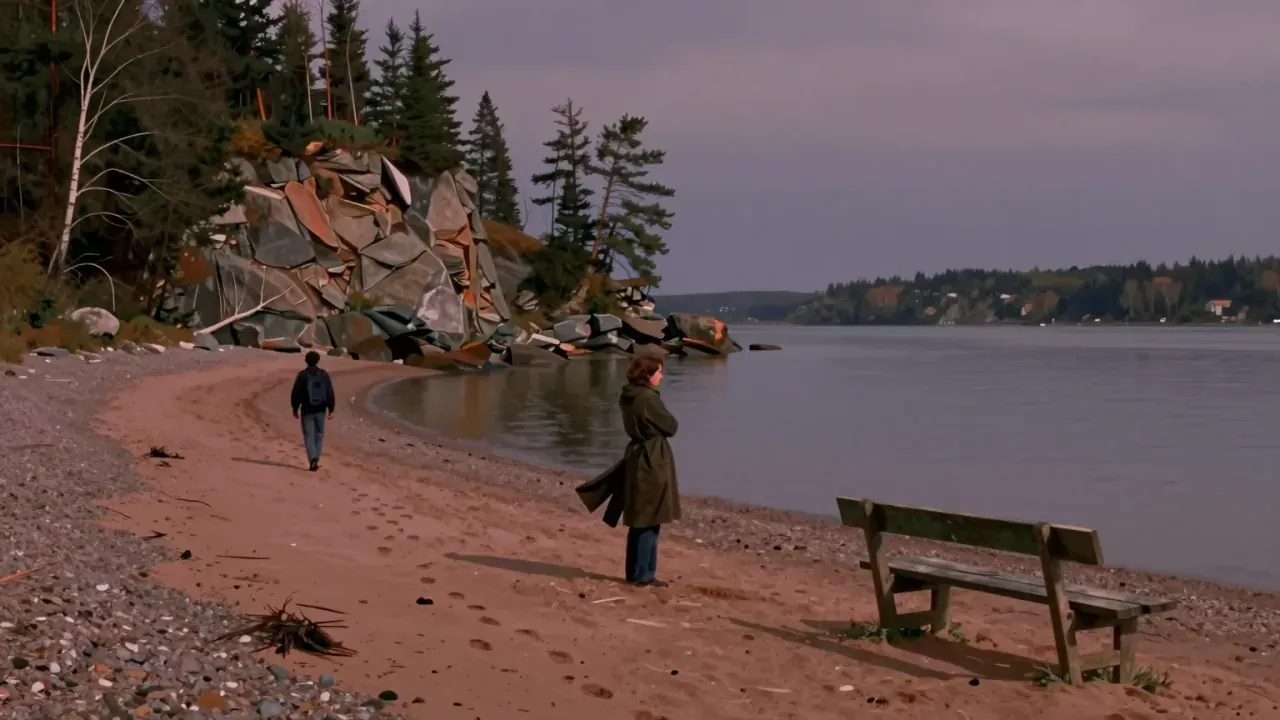
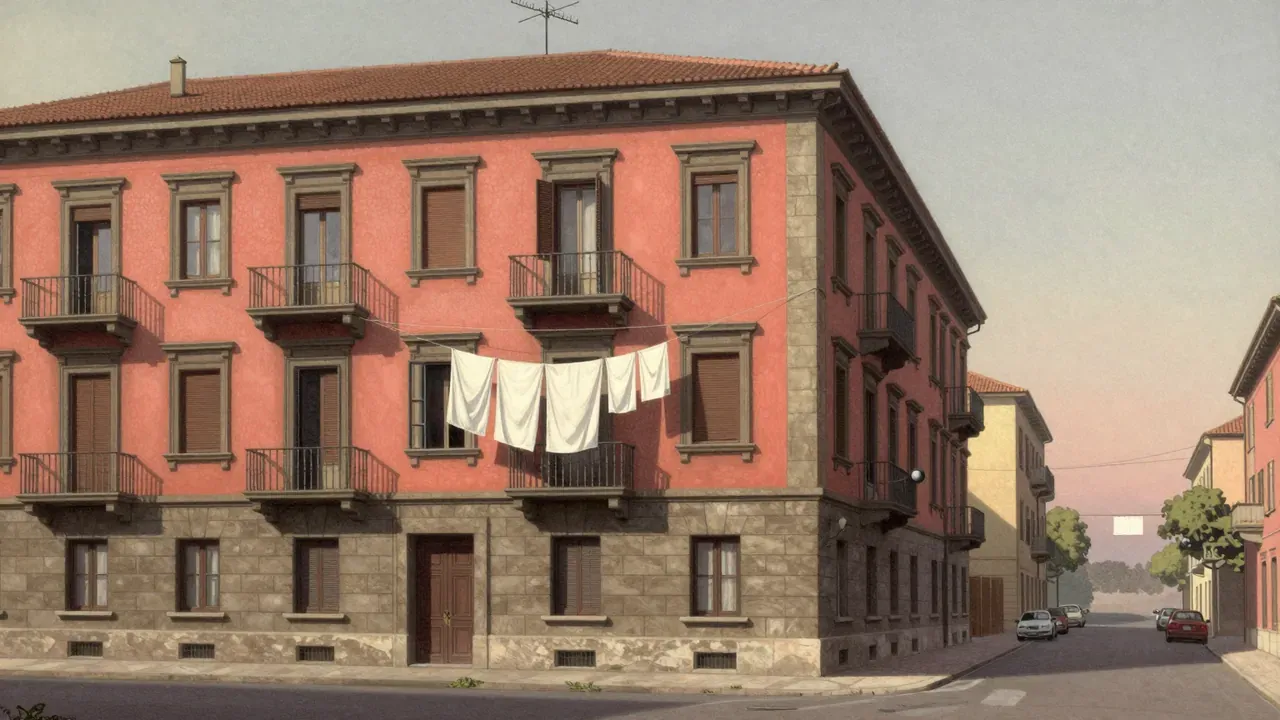
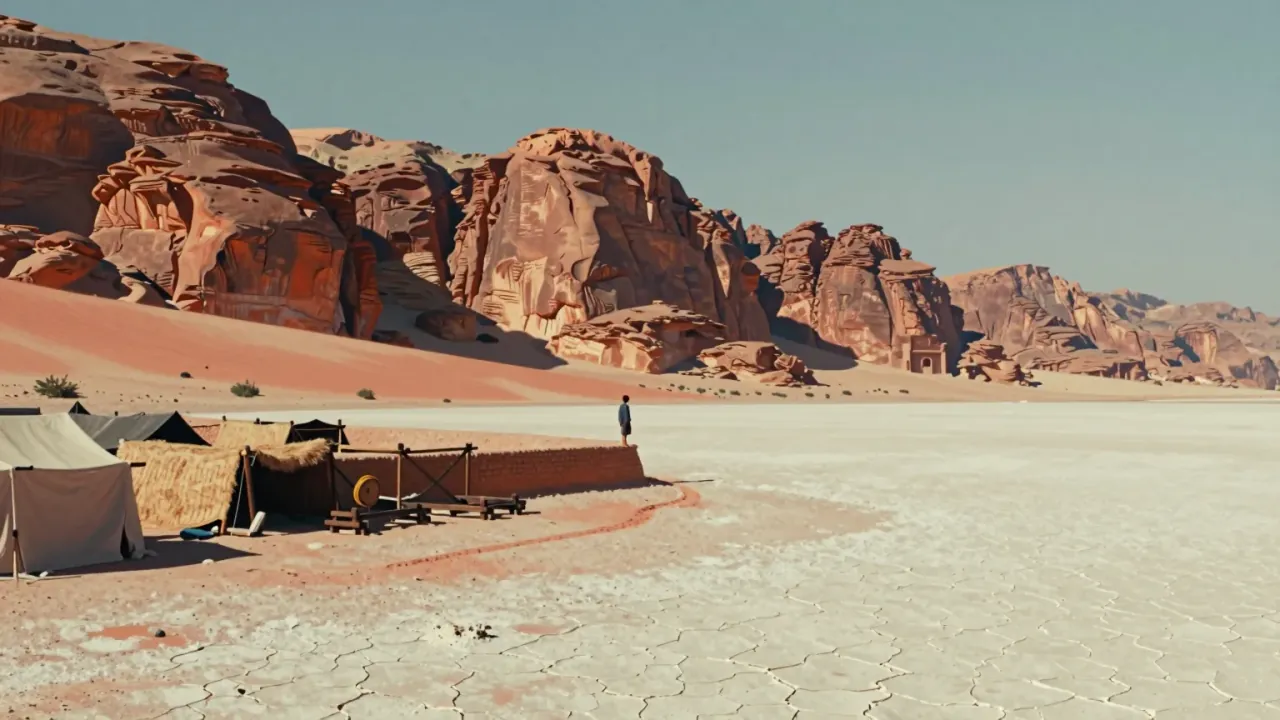
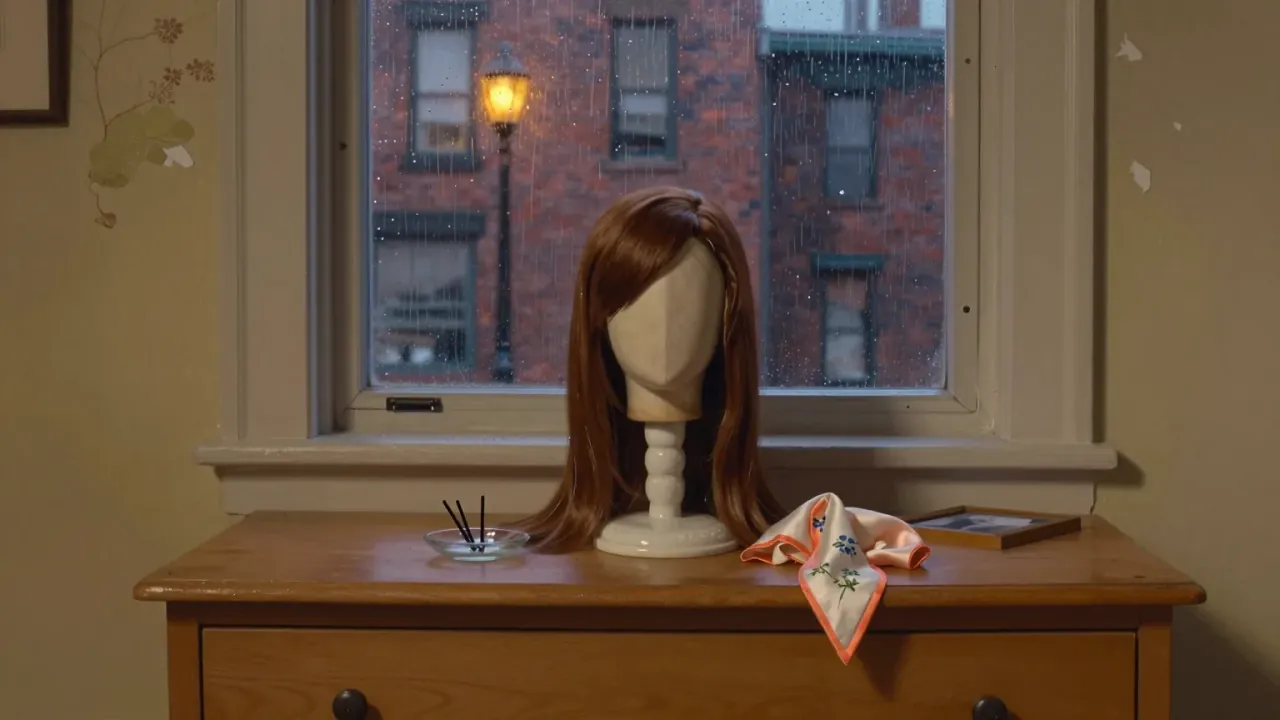
The story unfolds across twelve chapters, each marked by a year and a change in Laurence’s appearance or circumstance. Melvil Poupaud performs Laurence with restrained physicality, his posture shifting gradually from contained masculinity to grounded femininity; Suzanne Clément gives Fred a volatile, unsentimental energy, her face often tight with thought rather than reaction. Yves Bélanger’s cinematography favours shallow focus and warm, grainy textures, especially in interior scenes, while exterior shots — Montreal streets, the Isle of Black — are composed with a painterly stillness. Dolan’s editing avoids conventional continuity, using dissolves and abrupt cuts to signal psychological rupture rather than narrative progression. Costume and hair design carry narrative weight: Laurence’s first dress, Fred’s shift from bold prints to muted tones, the wig’s increasing naturalism. Dialogue is sparse in places, replaced by music — mostly 1990s French pop and ambient piano — that swells without cueing emotion, leaving space for the actors’ silences to settle. The pacing is deliberate, sometimes withholding, never hurried.
The silence in it
What lands most firmly is the film’s refusal to treat transition as a singular event. Laurence’s journey is shown as cumulative — in small choices, repeated gestures, quiet corrections of pronouns, the way she holds her shoulders when alone versus when observed. The school firing scene works not because it dramatises injustice, but because it shows how institutional response collapses complexity into a single, reductive label. Fred’s abortion is handled without moral framing, its emotional aftermath conveyed through Clément’s exhaustion, not dialogue. The Isle of Black sequence lands because its deterioration feels earned: the argument isn’t about ideology but accumulated grief, miscommunication, and the impossibility of returning to what was lost. Dolan avoids caricature even in minor roles — Nathalie Baye’s mother, Denise Filiatrault’s aunt — giving them texture without exposition. The final flashback, showing Laurence and Fred’s first meeting on a commercial set, lands precisely because it offers no resolution, only a quiet echo: their connection existed before language, before identity, before the story began.
The shape of it
What does not land is the film’s structural insistence on symmetry. The twelve-year arc strains under its own weight, particularly in the middle stretch where Laurence’s life with Charlotte feels narratively thin — less a parallel relationship than a placeholder for absence. Some transitions between time periods lack emotional logic; the jump from Fred’s pregnancy to her marriage to Albert arrives without sufficient grounding in her interior state. The biographical interview framing device, introduced late, adds little beyond exposition and feels tacked on rather than integrated. A few performances — notably Monia Chokri’s Charlotte — remain underwritten, their motivations opaque. The film’s visual lushness occasionally tips into mannerism: a slow-motion walk down a corridor, a lingering close-up on a teacup, can feel like punctuation where none is needed. At 168 minutes, it demands patience not as a virtue but as a condition — and some sequences, particularly in the second hour, test that condition without clear return.
The body in it
The themes that matter are not those of identity politics as debate, but of identity as endurance. Gender here is not a declaration but a daily practice — in clothing, voice, posture, the way one occupies space. The film treats love as a force that outlives coherence: Fred stays, leaves, returns, abandons, reappears, all without apology or explanation. Time is treated as non-linear — memory bleeds into present action, past decisions haunt current choices. The film also explores the cost of visibility: Laurence gains authenticity but loses profession, stability, social ease; Fred gains agency but pays in isolation and suppressed grief. There is no redemption arc, no tidy reconciliation — only the quiet insistence on continuing. The dedication to Baillairgé anchors this: the film is not about ‘trans stories’ as category, but about one person’s life as irreducible fact, worthy of duration, attention, and aesthetic seriousness.
The love in it
This film is for viewers who value emotional precision over plot propulsion, who find resonance in sustained mood and character-driven rhythm rather than narrative economy. It suits those familiar with Dolan’s earlier work or with arthouse traditions that privilege duration and ambiguity — say, Claire Denis or early Todd Haynes. It is not for viewers who require clear cause-and-effect, rapid pacing, or closure. Those who dislike extended interior monologue, elliptical editing, or films where major emotional shifts happen off-screen will find it frustrating. It is not a primer on trans experience, nor does it aim to educate; its assumptions are specific, its references local (Montreal, 1990s French pop, Quebecois social codes). Someone seeking affirmation or uplift may leave unsettled — the film honours difficulty without softening it. A viewer who values craft over clarity, or who trusts silence as meaning, will find it generous. One who needs narrative signposting will not.
The end of it
Yes, it is worth your evening — but only if you arrive prepared to meet it on its terms: unhurried, unexplained, emotionally exact. Its length is not indulgence but method: it asks you to inhabit time as Laurence does — not as a line but as a texture. You will not leave with answers, but with a deeper sense of how love and selfhood persist amid fracture. Those who find three hours excessive should know the film earns its duration in detail — in the way Poupaud adjusts a sleeve, the way Clément blinks twice before speaking, the way light falls on a kitchen wall in 1999 versus 2004. It is not for everyone, and that is part of its integrity. A viewer expecting conventional romance or social realism will be disappointed. But one open to a film that treats transition as lived rhythm rather than turning point, and love as recurrence rather than resolution, will find it rare and resonant.