A surveillance job built on a lie
The Lives of Others is Florian Henckel von Donnersmarck’s 2006 debut feature, built around a Stasi officer ordered to spy on a prominent East German playwright in 1984 and the moral drift that follows once he realises the surveillance has nothing to do with state security. Ulrich Mühe plays Captain Gerd Wiesler, whose superior assigns him to bug the apartment of Georg Dreyman not because of any evidence of disloyalty, but because a government minister wants Dreyman’s girlfriend, the actress Christa-Maria Sieland, for himself. Donnersmarck wrote the screenplay in isolation at his uncle’s monastery and has said the idea began with an image of a listener, headphones on, unexpectedly moved by the humanity of the person he is meant to be reporting on.
Mühe, a grey palette and a debut director’s long gestation
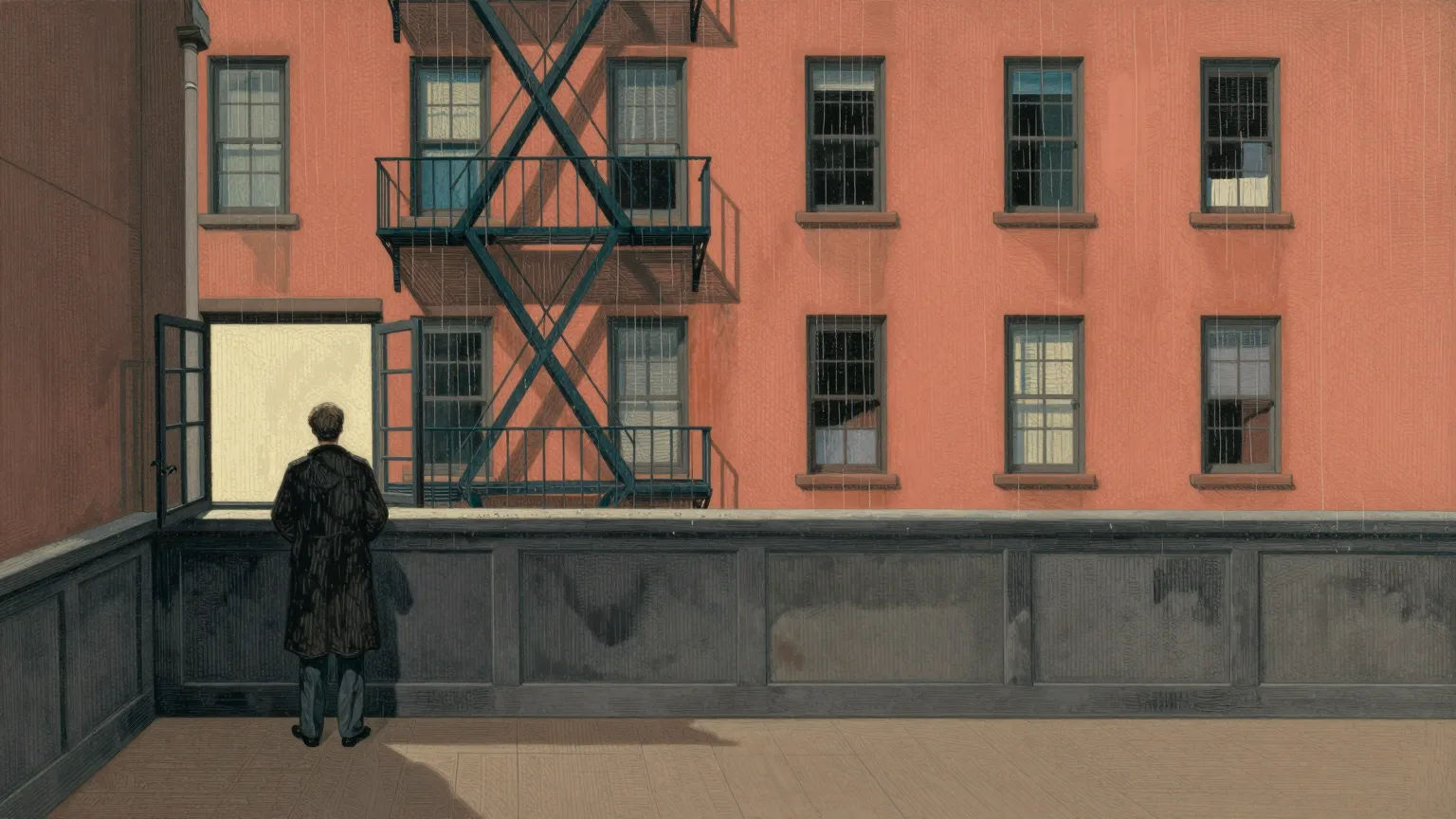
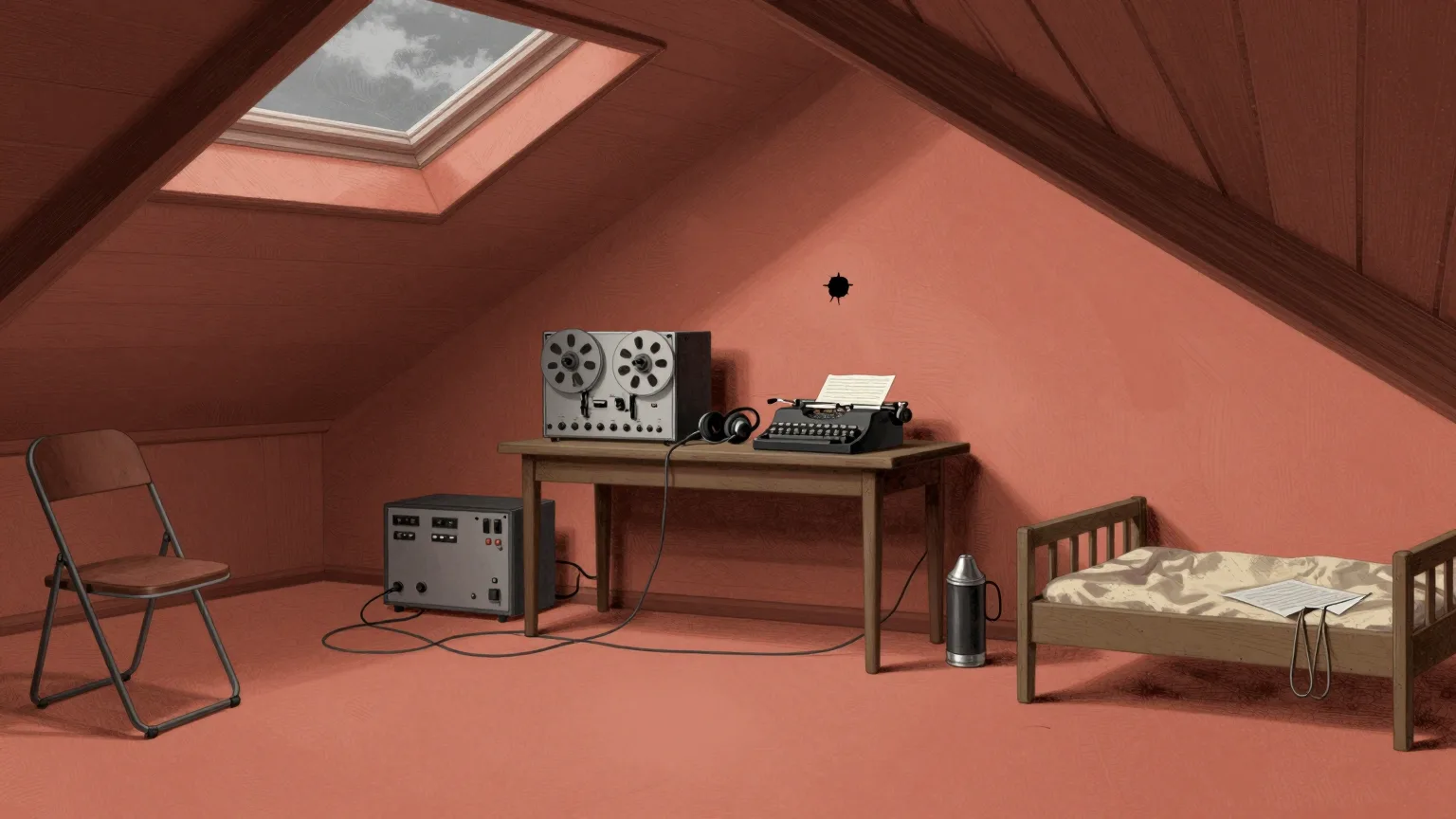
As Wiesler monitors Dreyman’s apartment, he watches the writer navigate his girlfriend’s coerced relationship with the minister, the suicide of a blacklisted friend, and eventually the composition of an anonymous magazine article exposing the GDR’s concealed suicide statistics, written on an untraceable West German typewriter smuggled in for the purpose. Wiesler, rather than reporting any of this, begins quietly protecting the couple, most decisively by removing the typewriter before a second Stasi search can find it. Cinematographer Hagen Bogdanski shoots East Berlin in a deliberately grey, interior-heavy palette, reflecting his account of a city where, as he put it, everything happened indoors, and Donnersmarck was refused permission to film at the real Hohenschönhausen prison after its memorial director objected to what he saw as the film making a hero out of a Stasi officer.
A red-ribboned typewriter and a hidden article
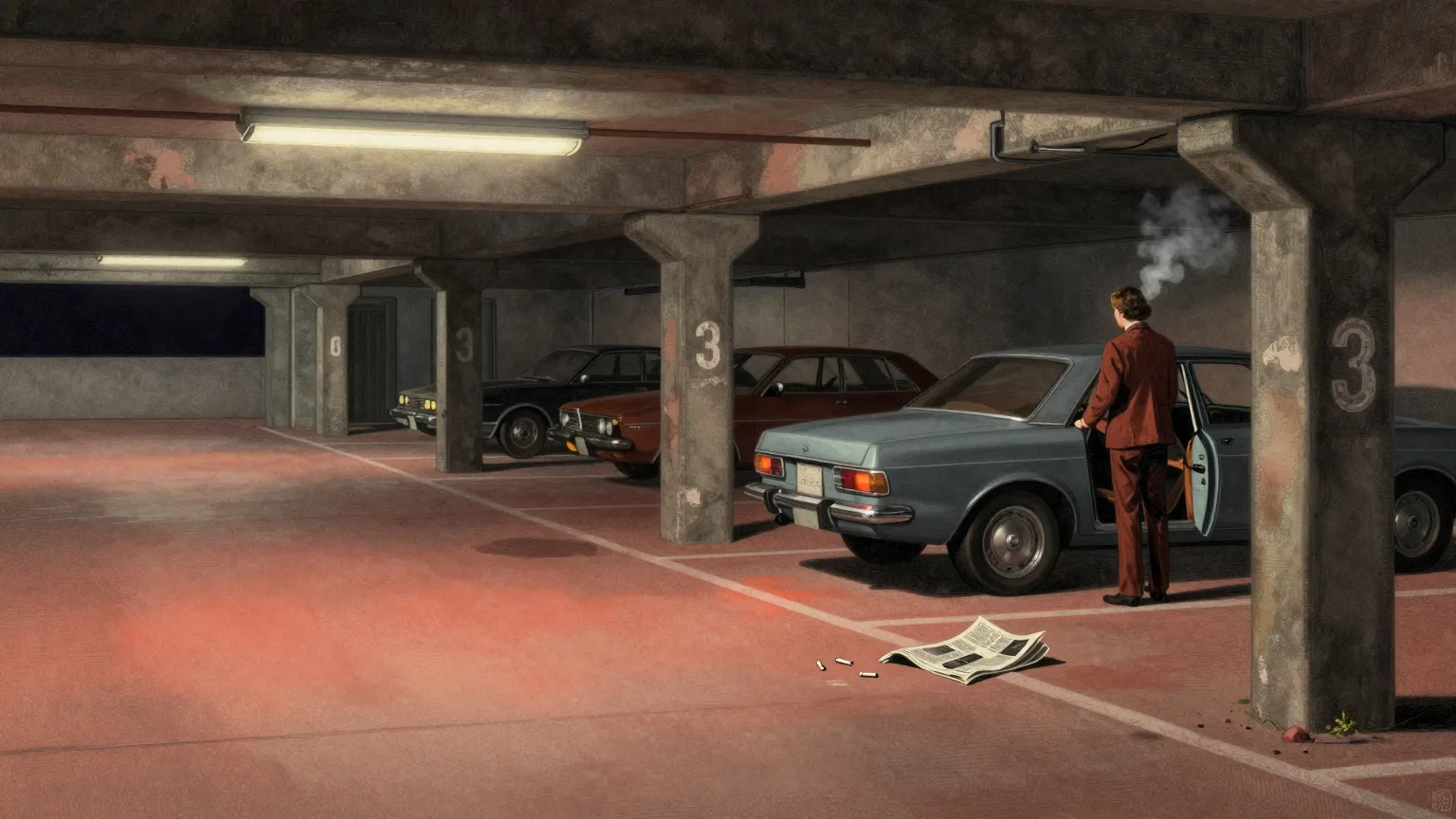
The film’s strongest achievement is procedural rather than dramatic: it shows, in exact and patient detail, how the machinery of a surveillance state actually operates — the paperwork, the transcription, the internal politics of who gets watched and why — and lets Wiesler’s small deviations from that machinery accumulate into genuine risk. Mühe’s performance, largely wordless and controlled, carries the film’s tension almost entirely through posture and expression, and the decision to delay the revelation of Wiesler’s protection until after reunification, discovered by Dreyman reading his own file years later, gives the ending unusual restraint rather than a conventional confrontation.
A confession that arrives two decades late
The film’s central premise — a Stasi officer’s conscience overriding his training — has been challenged by historians and by the director of the Hohenschönhausen memorial himself, who argued bluntly that no such Wiesler existed in the historical record, and viewers looking for a strictly accurate portrait of Stasi conduct should treat the film as a moral fable rather than a documentary account. The middle section’s slow accumulation of surveillance detail, essential to the film’s method, moves at a pace that will test viewers expecting more overt incident. Grubitz, Wiesler’s superior, also thins out somewhat in the back half, functioning more as an instrument of institutional menace than as a character whose own choices are examined with the same care given to Wiesler and Dreyman.
Listening as a form of intimacy the state never intended
The film is most interested in what sustained, intimate listening does to the listener rather than the listened-to: Wiesler’s exposure to Dreyman’s private grief, love and small defiances erodes the ideological certainty that made him effective at his job in the first place. It is also a quiet study of complicity and cowardice, since Christa-Maria’s forced betrayal of Dreyman under interrogation is treated with as much sympathy as Wiesler’s eventual protection of him, refusing to sort its characters neatly into heroes and traitors. The image that reportedly started the whole project, a bored listener unexpectedly touched by classical music through his headphones, remains the clearest statement of that theme, dramatised directly when Dreyman plays Wiesler’s namesake sonata after his friend’s suicide.
Who should watch it
This suits viewers with an interest in Cold War and East German history, fans of slow-burn character studies built on procedural detail, and anyone drawn to stories about moral change under authoritarian pressure. It is a poor fit for viewers who want pace and incident over accumulation, or who find a hopeful arc for a secret-police officer hard to accept regardless of the film’s craft. Anyone approaching it expecting a spy thriller in the conventional sense, with chases or physical danger, should recalibrate: its tension is administrative and psychological rather than kinetic, closer in spirit to a character study than to genre suspense.
Is 137 minutes worth it
At 137 minutes, the film takes its time establishing the surveillance apparatus before letting its human stakes surface, and that patience is central to why its ending works as well as it does. It is not a light evening’s viewing, but it rewards sustained attention with one of the more quietly devastating final scenes in recent Cold War cinema. Its unusually clean sweep of Germany’s own Deutscher Filmpreis, alongside the Academy Award it went on to win, suggests this is not merely a critic’s favourite but a film built to hold up under close, repeated scrutiny, which is fitting for a story so much about the ethics of close, repeated scrutiny.