The look of it
Identification of a Woman is Michelangelo Antonioni’s 1982 return to Italian soil after nearly two decades, a film that sets out not to resolve but to hold in suspension the fraying edges of perception, desire and surveillance in late modernity. It follows Niccolò, a film director adrift after divorce, as he moves through Rome and Venice in pursuit of two women — one aristocratic and elusive, the other grounded and present — while under an unnamed, unconfirmed watch. The film does not aim for narrative closure or psychological exposition; instead, it rehearses Antonioni’s long-standing preoccupations — the opacity of identity, the architecture of alienation, the slippage between image and intention — with a quieter, less insistent rhythm than his 1960s work. Its ambition lies in atmosphere over argument: in the weight of a glance held too long, the unease of a corridor lit just so, the silence between sentences that never quite land. It is a film about looking, misreading, and the exhaustion of looking again — made by a director who no longer assumes the viewer needs to be led, only allowed to linger. (158 words)
The rhythm of it
The story unfolds in deliberate, uncluttered episodes: Niccolò’s affair with Mavi, her disappearance, his uneasy entanglement with Ida, and the unresolved drift toward Venice. Tomas Milian carries the role with restrained fatigue, his face registering doubt more readily than decision; Christine Boisson’s Mavi is all withheld gesture and ambiguous retreat; Lara Wendel and Veronica Lazăr appear in brief, charged vignettes that deepen the film’s sense of fractured intimacy. Carlo Di Palma’s cinematography avoids Antonioni’s earlier high-contrast austerity, favouring soft focus, diffused light and shallow depth — interiors feel airless, exteriors hazy with Roman heat or Venetian mist. John Foxx’s electronic score is spare and tonal, underscoring absence rather than emotion. Editing, overseen by Antonioni himself, favours duration over punctuation: scenes breathe, then stall, then end without transition. There are no flashbacks, no voiceover, no explanatory cutaways — only what is seen, and what remains unseen just beyond frame. The craft serves reticence, not revelation. (159 words)
The texture of it
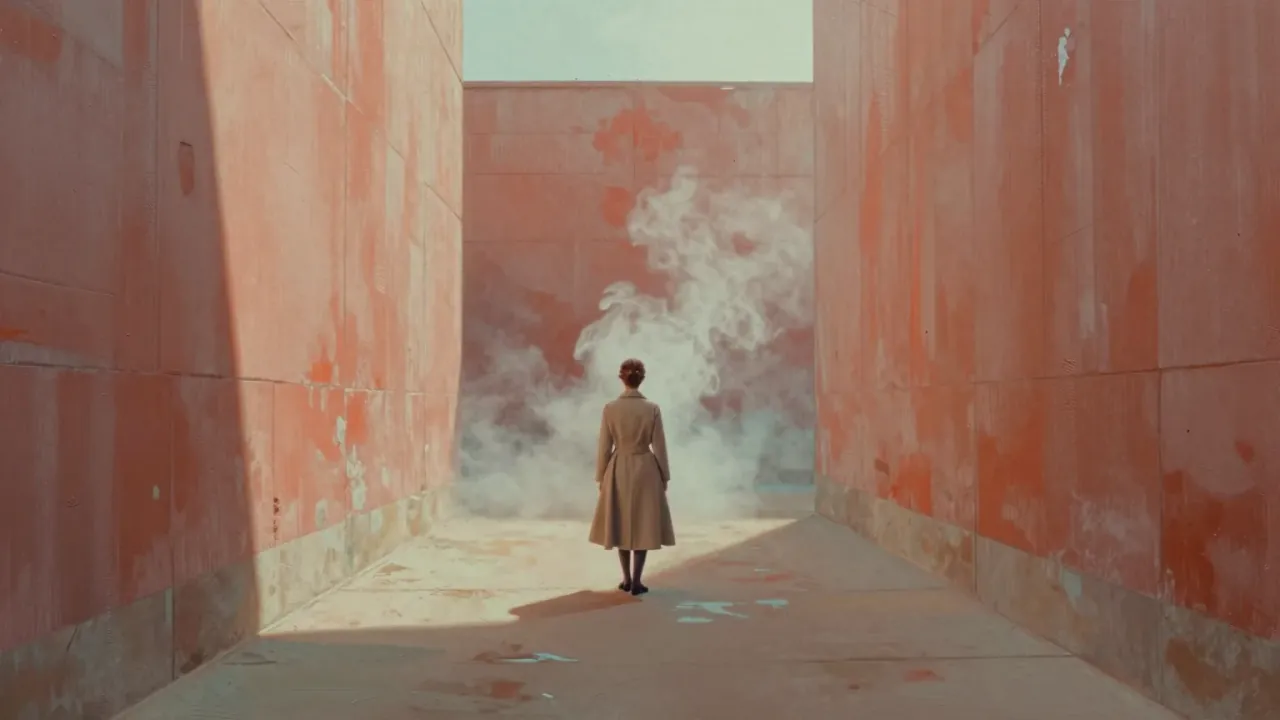
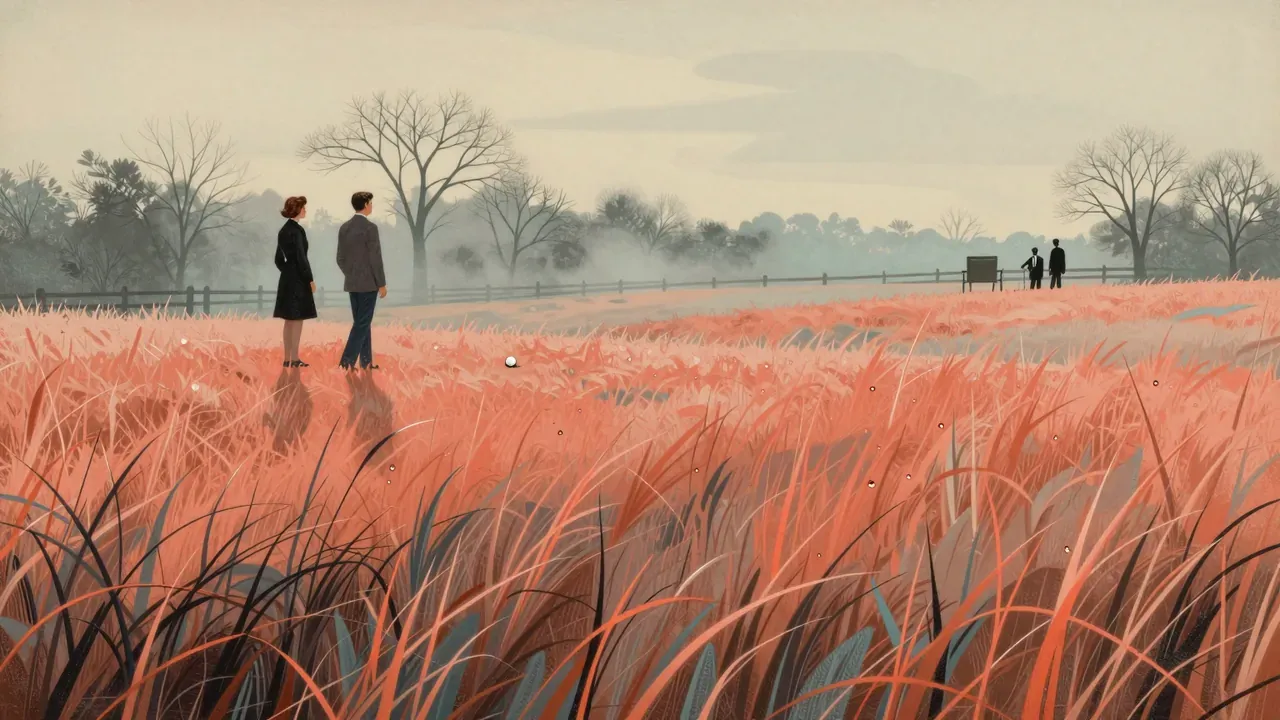
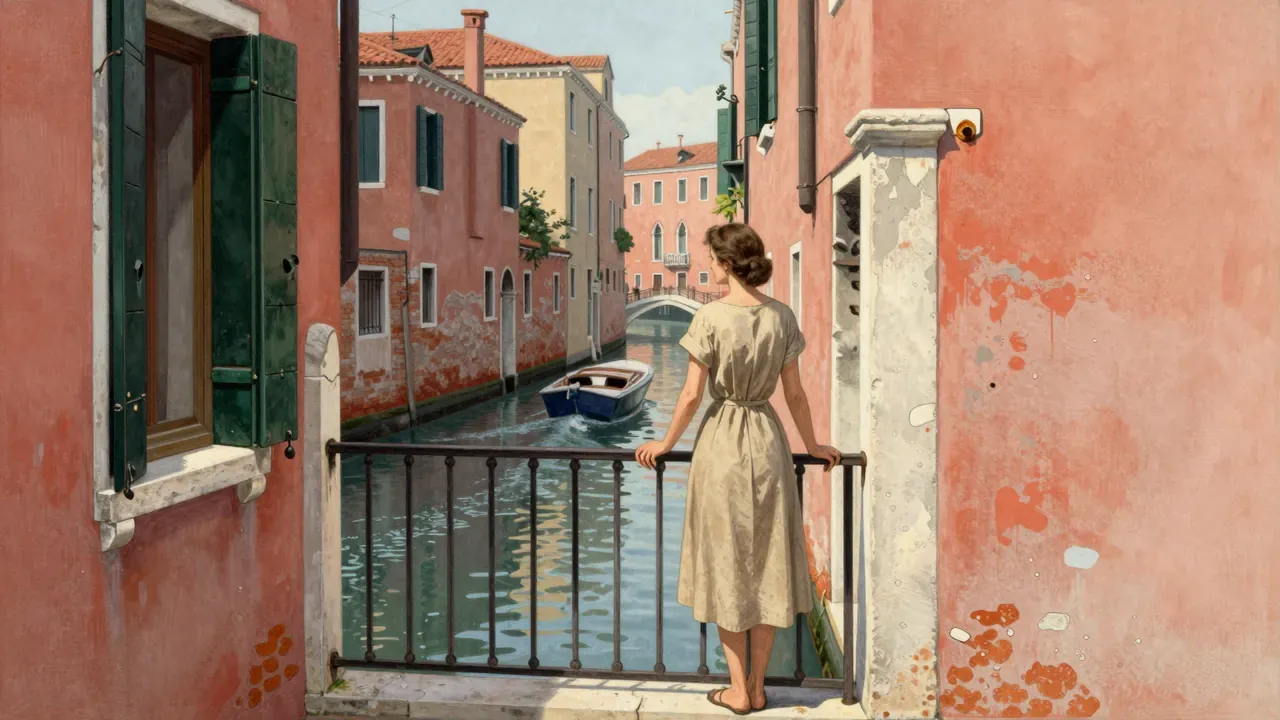
What lands is the texture of disorientation — the way a fogged windshield blurs the road ahead, how a hallway’s echo makes footsteps sound like pursuit, how a woman’s laugh can carry both warmth and warning in the same breath. The film’s physical world feels lived-in and slightly worn: peeling plaster in Roman apartments, the damp stone of Venetian alleys, the hollow acoustics of empty rehearsal rooms. These details accumulate without commentary, building a quiet pressure that mirrors Niccolò’s own uncertainty. The performances avoid emphasis, which makes their small shifts — a hesitation before answering, a hand withdrawn from a touch — register with disproportionate weight. The final sequence in Venice, where Ida’s pregnancy news arrives not as crisis but as quiet pivot, lands with particular gravity because it refuses melodrama. Even the spaceship daydream — a rare moment of speculative imagery — works not as metaphor but as counterpoint: vast, distant, impersonal, against the cramped immediacy of Niccolò’s emotional life. The film earns its stillness by making stillness feel consequential. (157 words)
The gap in it
What does not land is the central conceit of surveillance. The threat is named but never visualised, the blackmailer never glimpsed, the mechanism of observation left vague to the point of abstraction. This ambiguity may be intentional, but it drains the plot of tangible stakes — Niccolò’s fear feels internalised to the point of solipsism, and the audience has no shared point of reference to anchor it. Similarly, Mavi’s vanishing lacks narrative or psychological logic; her departure reads less like choice than narrative erasure, leaving her character unresolved rather than enigmatic. The film’s refusal to clarify also extends to class: her aristocratic background is invoked but never dramatised, and Niccolò’s resentment of it remains gestural, not grounded. Some viewers will find this restraint elegant; others will read it as evasion. The film’s pacing, too, tests patience without always earning the test — long takes that suggest contemplation risk settling into inertia, especially in the middle stretch between Rome and Venice. It assumes a level of tolerance for ambiguity that not all viewers bring. (159 words)
The weight of it
The themes that matter are those of perception under erosion: how identity dissolves when looked at, looked for, or looked away from; how intimacy becomes a series of misalignments between expectation and presence; how modern life offers ever more ways to be watched, yet fewer ways to be truly seen. Ageing is present not as decline but as recalibration — Niccolò is not frail, but recalibrating desire, responsibility and creative impulse in a world that no longer feels legible to him. The film treats memory not as archive but as interference: his nephew’s question about the sun echoes forward and backward, framing knowledge as unfinished, curiosity as persistent, understanding as perpetually deferred. Class surfaces not in dialogue but in space — the contrast between Mavi’s palazzo and Ida’s modest flat is visual, not expository — and sexuality appears as orientation, not spectacle, woven into character without explanation. These are not themes argued but inhabited: they reside in the grain of the image, the rhythm of the edit, the silence between characters who speak past each other. (158 words)
The audience for it
This film is for viewers who value mood over momentum, who find resonance in ellipsis and are comfortable holding uncertainty without resolution. It suits those familiar with Antonioni’s earlier work and willing to meet him on altered terms — less declarative, more provisional. It will reward patience with texture, not plot. It is not for viewers who require narrative propulsion, clear motivation or emotional payoff; those seeking psychological clarity or dramatic consequence will likely find it withholding to the point of indifference. Some critics have called it autumnal — a description that fits, but one that misleads if taken to mean gentle. It is unsentimental, even austere, in its refusal to comfort. A viewer who values formal control and atmospheric precision over story will find it rich; one who measures cinema by incident or catharsis will find it thin. Its modesty is real, not apologetic — and that modesty is precisely what some will reject as diminished ambition. (159 words)
The time for it
Yes, it is worth your evening — provided you approach it as a study in tonal persistence, not a puzzle to solve. Its 128 minutes unfold with the unhurried gravity of a late-season walk: attentive, reflective, occasionally heavy-footed, but never careless. You will not leave with answers, but you may leave with a sharpened awareness of how light falls across a room, how silence accumulates meaning, how a face changes when it thinks it is unobserved. Those who expect narrative efficiency or emotional release will feel short-changed; those open to sustained ambiguity, to the weight of the unsaid, will find it quietly resonant. It does not demand attention — it invites absorption. And absorption, in this case, is not passive: it asks you to notice what is withheld, to sit with the discomfort of not knowing, and to accept that some questions — about love, identity, surveillance, time — remain open not by accident, but by design. (159 words)