filmbriefs
Topic

The interwar years

Twenty years of unfinished business between two wars.

92
in film
12:58
average
1193 min
in total
135
across the network
The interwar years across the network →
All briefs92
13:00

A Day in the Country

Jean Renoir · 1946

Jean Renoir’s 1946 featurette, shot in 1936 and adapted from Maupassant, captures a summer day in 1860 when a Paris shopkeeper’s daughter is briefly drawn from her world by a riverbank encounter. Forty minutes long, it relies on atmosphere, restraint, and precise visual storytelling rather than exposition or resolution. Claude Renoir’s cinematography, Joseph Kosma’s score, and Marguerite Renoir’s editing sustain a mood of quiet inevitability. Though some structural choices feel tentative, its emotional accuracy and formal discipline make it a benchmark of poetic realism.
13:00

A Woman of Paris

Charlie Chaplin, A. Edward Sutherland · 1923

A Woman of Paris (1923) is Charlie Chaplin’s sole silent drama without the Tramp, starring Edna Purviance as Marie St. Clair — a woman whose life unravels not through vice, but through miscommunication, social constraint, and quiet consequence. Directed with surgical restraint, it uses décor, editing, and understated performance to trace fate as environment rather than destiny. Though its contemporary reception was mixed and its lead performance uneven, its influence on narrative realism endures.

13:00

A Woman's Face

Gustaf Molander · 1938

A disfigured Swedish woman, Anna Holm, joins a blackmail ring out of social exile. After a botched break-in, she is taken in by a plastic surgeon who repairs her face — not to make her beautiful, but to restore her ability to move unseen in the world. As she assumes a new identity to infiltrate a wealthy family, she begins to protect the very child she was meant to kill. Gustaf Molander’s 1938 drama traces moral change not through epiphany but through repeated, quiet choices — about care, labour, and who gets to belong.

13:00

Ådalen 31

Bo Widerberg · 1969

Bo Widerberg’s 1969 Swedish drama Ådalen 31 reconstructs the 1931 Ådalen shootings through the daily life of the working-class Andersson family. Anchored by Peter Schildt and Roland Hedlund, it traces springtime tensions between strikers and strikebreakers in northern Sweden, culminating in a military massacre that kills five. Shot by Jörgen Persson with deliberate restraint, it avoids polemic in favour of tactile realism — fishing, jazz, French lessons, abortion, grief — making ideology legible through habit, not speech. It won the Cannes Grand Prix and remains a landmark of socially engaged arthouse cinema.

13:00

Blonde Venus

Josef von Sternberg · 1932

Blonde Venus (1932), directed by Josef von Sternberg and starring Marlene Dietrich, follows a chemist’s wife who returns to the cabaret stage to fund her husband’s life-saving treatment, then descends into flight, poverty, and arrest before a fragile reconciliation. Its power lies not in plot but in Dietrich’s commanding presence, Bert Glennon’s high-contrast cinematography, and a formal insistence on dignity amid degradation — all within the constrained moral universe of pre-Code Hollywood.

13:00

Borderline

Kenneth Macpherson · 1930

Borderline (1930), written and directed by Kenneth Macpherson, is a silent British-Swiss drama starring Paul and Eslanda Robeson and H.D. Set in a Swiss guesthouse, it traces an interracial love triangle amid local hostility, using Eisensteinian montage and Pabst-influenced psychological framing. Restored in 2006 and again in 2010 with new soundtracks, it remains a demanding, formally rigorous work — less concerned with storytelling than with how cinema constructs meaning around race, gender, and social boundary-making.

13:00

Boudu Saved from Drowning

Jean Renoir · 1932

Jean Renoir’s 1932 Boudu Saved from Drowning follows a Paris bookseller who rescues a suicidal tramp and tries to assimilate him into middle-class life. Starring Michel Simon, the film uses precise staging, behavioural realism and dry wit to dissect the contradictions of respectability — not by arguing against it, but by letting its rituals collapse under the weight of an unassimilable presence.

13:00

Brief Encounter

David Lean · 1945

David Lean’s 1945 adaptation of Noël Coward’s Still Life follows Laura Jesson and Alec Harvey, two married strangers whose brief, chaste affair unfolds over Thursdays in a Lancashire railway station. Shot in stark black-and-white by Robert Krasker, scored with Rachmaninoff’s Second Piano Concerto, and performed with extraordinary restraint by Celia Johnson and Trevor Howard, it renders love not as liberation but as quiet crisis — a collision of feeling and duty that resolves not in triumph or tragedy, but in return.

13:00

César

Marcel Pagnol · 1936

Marcel Pagnol’s 1936 César closes his Marseille Trilogy with Raimu, Pierre Fresnay, and Orane Demazis returning as César, Marius, and Fanny. Twenty years after Marius sailed away, his son Césariot learns the truth of his paternity — and sets in motion a slow, socially intricate reckoning. Set entirely in and around Marseille, the film favours conversational rhythm over plot mechanics, regional texture over spectacle, and moral ambiguity over resolution. Its 168-minute runtime demands patience, but repays it with layered performances and a deeply felt sense of place and consequence.

13:00

Children of Paradise

Marcel Carné · 1945

Marcel Carné’s 1945 French romantic drama, written by Jacques Prévert and shot under Nazi occupation, follows courtesan Garance and the four men — mime, actor, criminal, aristocrat — who love her in 1830s Paris. Its 190-minute span balances theatrical grandeur with psychological restraint, using deep-focus cinematography, meticulous production design, and Arletty’s commanding stillness to explore love as asymmetry, art as resistance, and performance as identity.

13:00

Confessions of a Cheat

Sacha Guitry · 1936

Sacha Guitry’s 1936 Confessions of a Cheat tells the life story of a man who cheats his way through childhood, war, love and gambling — all narrated in voiceover by Guitry himself, who speaks every line of dialogue. Structured as a café-bound memoir, it uses formal restraint to examine dishonesty as habit, not sin. Adapted from Guitry’s own novel, it privileges narrative control over emotional display, and ends not with repentance but with quiet professional reinvention.

13:00

Design for Living

Ernst Lubitsch, Ben Hecht · 1933

Ernst Lubitsch and Ben Hecht’s 1933 romantic comedy adapts Noël Coward’s play into a buoyant, Depression-era farce about a woman living with two men who love her. Starring Fredric March, Gary Cooper and Miriam Hopkins, it trades Coward’s epigrams for physical charm and situational humour, using swift editing, uncluttered cinematography and effortless performances to sustain its risqué premise without scandal. Though structurally loose and verbally thin, it remains a rare, coherent vision of non-monogamy as joyful improvisation — not transgression.

13:00

Désiré

Sacha Guitry · 1937

Sacha Guitry’s 1937 Désiré is a tightly wound Parisian comedy in which an actress’s growing fixation on her valet destabilises her relationship with a government minister. Set almost entirely in three interior spaces, it relies on precise dialogue, restrained performances — especially by Arletty and Jacqueline Delubac — and a still, observational camera. It explores class, service, and the erotic charge of being truly seen, without recourse to plot twists or moralising.

13:00

Diary of a Chambermaid

Luis Buñuel · 1964

Luis Buñuel’s 1964 Diary of a Chambermaid adapts Octave Mirbeau’s novel with Jean-Claude Carrière, following Jeanne Moreau’s Célestine as she navigates a decaying provincial household in late-1920s France. Rejecting surrealism for restrained realism, the film traces how power, prejudice and violence settle into routine — through glances, footwear, leaflets and wills. Roger Fellous’ cinematography treats interiors like crime scenes; Moreau’s performance hinges on withheld reaction. It ends not with justice but consolidation: the system endures, reshaped but intact.

13:00

Dishonored

Josef von Sternberg · 1931

A 1931 Paramount drama directed by Josef von Sternberg, starring Marlene Dietrich as Marie Kolverer, a Viennese pianist turned secret agent whose loyalty, love, and eventual execution unfold with stark visual discipline and minimal exposition. Lee Garmes’ cinematography and Travis Banton’s costumes anchor a film less concerned with espionage mechanics than with dignity in extremis.

13:00

Dragnet Girl

Yasujirō Ozu · 1933

Yasujirō Ozu’s 1933 silent crime film Dragnet Girl follows Tokiko, girlfriend of a small-time gangster, as she slowly withdraws from complicity and steers both herself and him toward surrender. With restrained performances, unemphatic pacing, and Hideo Shigehara’s naturalistic cinematography, it treats moral change as incremental, not dramatic — a film less about breaking the law than about noticing the weight of a choice, a glance, a pause.

13:00

Everlasting Moments

Jan Troell · 2008

Set in early-20th-century Malmö, Everlasting Moments follows Maria Larsson, a Finnish immigrant who wins a camera in a lottery and begins taking photographs — of her children, the dead, monarchs — as a slow, unspoken assertion of self. Directed by Jan Troell with deliberate, grainy 16 mm imagery and restrained performances, it treats time, class and visibility as physical presences, not abstractions. Based loosely on a true story, it avoids biography in favour of accumulated detail, finding resonance in silence, gesture and the chemical patience of early photography.

13:00

Fanny

Marc Allégret · 1932

A 1932 French drama directed by Marc Allégret from Marcel Pagnol’s play, Fanny is the second part of the Marseille Trilogy. Set in the port city, it follows Fanny’s pragmatic marriage to the kindly widower Panisse after becoming pregnant by her childhood love Marius — and the quiet, collective decision to raise their son as Panisse’s heir. Anchored by Raimu’s commanding presence and Orane Demazis’s restrained performance, the film favours moral ambiguity over resolution, and lived-in realism over theatrical flourish.

13:00

Foreign Correspondent

Alfred Hitchcock · 1940

Alfred Hitchcock’s 1940 thriller follows an American reporter uncovering a fascist conspiracy in pre-war Europe. Made under urgent political conditions and reshaped mid-production to mirror real-world events, it prioritises procedural tension and moral clarity over psychological depth or historical fidelity. Its strengths lie in set-piece choreography, studio-crafted suspense, and a prescient final sequence set in a besieged radio station.

13:00

Heaven Can Wait

Ernst Lubitsch · 1943

Ernst Lubitsch’s 1943 Heaven Can Wait follows Henry Van Cleve, a New York heir who, upon arriving at the reception area of Hell, recounts his life to prove he belongs there. Framed as a wry, non-chronological character study, the film uses fantasy not for spectacle but for structure—tracing seventy years of privilege, marriage, and quiet moral drift with precision, irony, and deep affection for its characters’ limitations.

13:00

Hell's Angels

Howard Hughes, James Whale, Edmund Goulding · 1930

A 1930 American war film directed by Howard Hughes, James Whale, and Edmund Goulding, Hell’s Angels follows two British brothers in the Royal Flying Corps during the First World War. Originally shot silent, it was converted to sound mid-production, replacing lead actress Greta Nissen with Jean Harlow. Its aerial combat sequences — filmed with over 130 pilots, multiple fatalities, and Hughes’s own crash — remain landmark achievements in early sound and stunt coordination. Though narratively uneven and thematically thin, its technical ambition and material history make it a singular artifact of Hollywood’s transitional decade.

13:00

Holiday

George Cukor · 1938

George Cukor’s 1938 Holiday adapts Philip Barry’s play into a precise, unhurried romantic comedy about Johnny Case, a self-made banker who plans to retire at thirty, and Linda Seton, the restless daughter of a banking dynasty. Set in a gilded Park Avenue mansion, it tests whether personal integrity can survive assimilation into inherited privilege. Katharine Hepburn and Cary Grant anchor a literate, understated performance style; Franz Planer’s cinematography and Otto Meyer’s editing sustain quiet rhythm over speed. Though rooted in the stage, it resists theatrical artifice, trusting dialogue and gesture over exposition. Nominated for Best Art Direction, it holds a 100% Tomatometer score but was not a box-office success — a film that rewards attention, not immersion.

13:00

Hôtel du Nord

Marcel Carné · 1938

Marcel Carné’s 1938 Hôtel du Nord is a cornerstone of poetic realism: a slow-burning drama set in a working-class Paris hotel, where suicide, romance, and criminal threat unfold amid Bastille Day revelry. Anchored by Arletty and Louis Jouvet, and shaped by Jean Aurenche and Henri Jeanson’s dialogue, it privileges mood, texture, and moral ambiguity over exposition or resolution.

13:00

June Nights

Per Lindberg · 1940

Per Lindberg’s June Nights (1940) follows Kerstin Nordbäck (Ingrid Bergman), a woman shot by her sailor lover and subsequently branded a ‘tramp’ by the press. She relocates to Stockholm to rebuild her life, only for the journalists to follow. Written by Ragnar Hyltén-Cavallius and shot by Åke Dahlqvist, the film is a restrained, psychologically precise drama about reputation, labour, and the asymmetry of visibility in a world governed by headlines.

13:00

King of Jazz

John Murray Anderson, Paul Fejos · 1930

King of Jazz (1930) is a studio-made musical revue starring Paul Whiteman and his orchestra, filmed in early two-colour Technicolor. With no plot, it strings together musical numbers, blackout sketches, and novelty acts—including the first Technicolor animated segment, featuring Oswald the Lucky Rabbit. Though technically ambitious and historically significant (selected for the US National Film Registry in 2013), its static camerawork, dated humour, and promotional framing make it a demanding watch. Its value lies in preservation: as a record of early sound-film craft, Whiteman’s curated jazz, and the industrial logic of Hollywood’s transition to colour.

13:00

La Bête Humaine

Jean Renoir · 1938

Jean Renoir’s 1938 adaptation of Zola’s La Bête humaine follows railway driver Lantier, whose inherited violent impulses collide with a web of guilt, desire, and industrial routine. Shot by Curt Courant and scored by Joseph Kosma, it uses the railway as both setting and structural principle — a world governed by timetables, steam, and inescapable consequence.

13:00

La Chienne

Jean Renoir · 1931

Jean Renoir’s 1931 La Chienne adapts Georges de La Fouchardière’s story into a stark, unsentimental portrait of moral erosion. Michel Simon plays Maurice Legrand, a timid cashier whose infatuation with a prostitute (Janie Marèse) sets off a chain of theft, deception and murder — all rendered with clinical precision by Renoir and cinematographer Theodor Sparkuhl. The film’s power lies in its restraint: no music swells, no camera lingers, no character explains themselves. It is a study in how dignity dissolves not in catastrophe, but in the quiet transfer of a signature, a painting, a name.

13:00

La Grande Illusion

Jean Renoir · 1937

La Grande Illusion (1937), directed by Jean Renoir, follows French officers imprisoned in German camps during the First World War. Through restrained performances, unadorned cinematography, and a structure built on observation rather than action, it explores how class, nationality, and personal dignity persist — and sometimes collapse — under pressure. Its enduring power lies not in grand statements but in quiet, specific moments: a shared meal, a sung anthem, a winter refuge, a final, reluctant shot.

13:00

La Tête d'un homme

Julien Duvivier · 1933

Julien Duvivier’s 1933 adaptation of Simenon’s A Battle of Nerves follows Inspector Maigret (Harry Baur) as he untangles a murder set in motion by a gambler’s careless remark, a desperate burglar’s stumble, and a dying émigré’s bitter calculation. Shot in subdued tones by Thirard and Pierre, with a sparse score by Belasco and editing by Poncin, it trades thrills for psychological weight — building tension through silence, spatial constraint, and moral ambiguity. Its power lies in what it withholds: no grand confessions, no triumphant deductions, only the quiet, cumulative force of cause and effect in interwar Paris.

13:00

L'Atalante

Jean Vigo · 1934

Jean Vigo’s 1934 French drama follows a newlywed couple living aboard the barge L’Atalante as it navigates France’s canals. With Dita Parlo, Jean Dasté, and Michel Simon, and shot by Boris Kaufman, it builds emotion through texture, silence, and precise observation rather than exposition. Though incomplete at Vigo’s death from tuberculosis, its poetic realism and commitment to sensory truth have secured its place as a landmark of arthouse cinema.

13:00

Le Jour Se Lève

Marcel Carné · 1939

Marcel Carné’s 1939 French drama Le Jour Se Lève follows François, a foundry worker who kills a rival and barricades himself in his apartment, besieged by police. Through a sustained flashback, the film traces his doomed love for Françoise, manipulation by Valentin, and fraught relationship with Clara — all leading inevitably to his suicide. Built on Jacques Prévert’s script and Alexandre Trauner’s claustrophobic set, it is a landmark of poetic realism: restrained, atmospheric, and structurally audacious.

13:00

Le mariage de Chiffon

Claude Autant-Lara · 1942

Le mariage de Chiffon (1942), directed by Claude Autant-Lara and adapted by Jean Aurenche from Sibylle Riqueti de Mirabeau’s 1894 novel, is a restrained historical comedy set in the Bourbon Restoration. Odette Joyeux stars as Chiffon, a young woman navigating an arranged marriage to the ageing Duc d’Aubières (André Luguet) while drawn to the more compatible Marc de Bray (Jacques Dumesnil). Shot in occupied Paris, the film avoids overt politics, instead focusing on social nuance, verbal precision, and the quiet assertion of self within rigid convention. Jacques Krauss designed the deliberately theatrical sets. With no credited score and a measured 103-minute runtime, it relies on performance, timing, and textual fidelity rather than spectacle or sentiment.

13:00

Le Million

René Clair · 1931

René Clair’s 1931 French musical comedy Le Million follows an artist racing to recover a lottery ticket sewn into a jacket that has passed through criminals, opera singers and dancers. With Georges Périnal’s crisp cinematography, Armand Bernard’s recurring score and René Le Hénaff’s precise editing, it treats sound, movement and narrative as interlocking rhythms — not as storytelling tools, but as the film’s governing logic.

13:00

Love Letters

Claude Autant-Lara · 1942

Made in occupied Paris in 1942, Love Letters is a comedy-drama set in Napoleon III’s France, centring on romantic confusion caused by intercepted correspondence. Directed by Claude Autant-Lara and scripted by Jean Aurenche, it features Odette Joyeux, François Périer, and Julien Carette in performances calibrated to polite farce. Shot at Boulogne Studios, its art direction (Robert Dumesnil, Jacques Krauss) and costumes (Christian Dior) reinforce its theatrical, surface-conscious world. The film avoids historical engagement or emotional extremity, sustaining instead a steady, wry tone rooted in manners and miscommunication.

13:00

Lumière d'été

Jean Grémillon · 1943

Made in 1943 under German occupation, Jean Grémillon’s Lumière d’été is a restrained French drama set in a rural Limousin house over a summer. Written by Jacques Prévert and starring Madeleine Renaud, Pierre Brasseur and Madeleine Robinson, it observes quiet tensions among a group of relatives and guests. Shot at Victorine Studios and on location in Soursac, with sets by André Barsacq and cinematography by Louis Page, the film relies on subtlety of gesture, layered sound design and deliberate pacing to explore inheritance, memory and unspoken desire.

13:00

Marius

Alexander Korda · 1931

Marius (1931), directed by Alexander Korda from Marcel Pagnol’s play, is the first film of the Marseille Trilogy. Set in a waterfront bar in pre-war Marseille, it traces Marius’s conflict between love for Fanny and longing for the sea. With restrained performances, naturalistic lighting by Theodore J. Pahle, and dialogue rooted in subtext, it prioritises emotional authenticity over plot mechanics. Though structurally dependent on coincidence, its power lies in specificity: gesture, silence, and the quiet gravity of ordinary choice.

13:00

Mayerling

Anatole Litvak · 1936

Anatole Litvak’s 1936 Mayerling is a French historical drama starring Charles Boyer and Danielle Darrieux, adapted from Claude Anet’s novel Idyll’s End. Set in late-19th-century Vienna, it traces Crown Prince Rudolf’s estrangement from duty and his fatal relationship with Baroness Marie Vetsera. Shot in restrained, underlit interiors by Armand Thirard and scored by Honegger, Jaubert and Tchaikovsky, the film avoids melodrama in favour of cumulative emotional weight. Though criticised in 1936 for its muted politics and ambiguous ending, its coherence, precision and formal discipline make it a distinctive artefact of interwar European arthouse cinema.

13:00

Merrily We Go to Hell

Dorothy Arzner · 1932

Dorothy Arzner’s 1932 Paramount drama follows a Chicago reporter’s descent into alcoholism and infidelity, and his wife’s measured, devastating response. Fredric March and Sylvia Sidney anchor a tightly paced narrative where every glance and pause carries weight, and the title’s irony is sustained to the final frame.

13:00

Monte Carlo

Ernst Lubitsch · 1930

Ernst Lubitsch’s 1930 Monte Carlo stars Jeanette MacDonald and Jack Buchanan in a romantic musical comedy set in the French Riviera. A countess flees her arranged marriage and checks into a luxury hotel with little money; a count disguises himself as a hairdresser to win her affection. Built around the hit song 'Beyond the Blue Horizon' and a self-referential opera sequence, the film prioritises tonal control, musical integration, and elegant artifice over psychological realism or social critique.

13:00

Mr. Thank You

Hiroshi Shimizu · 1936

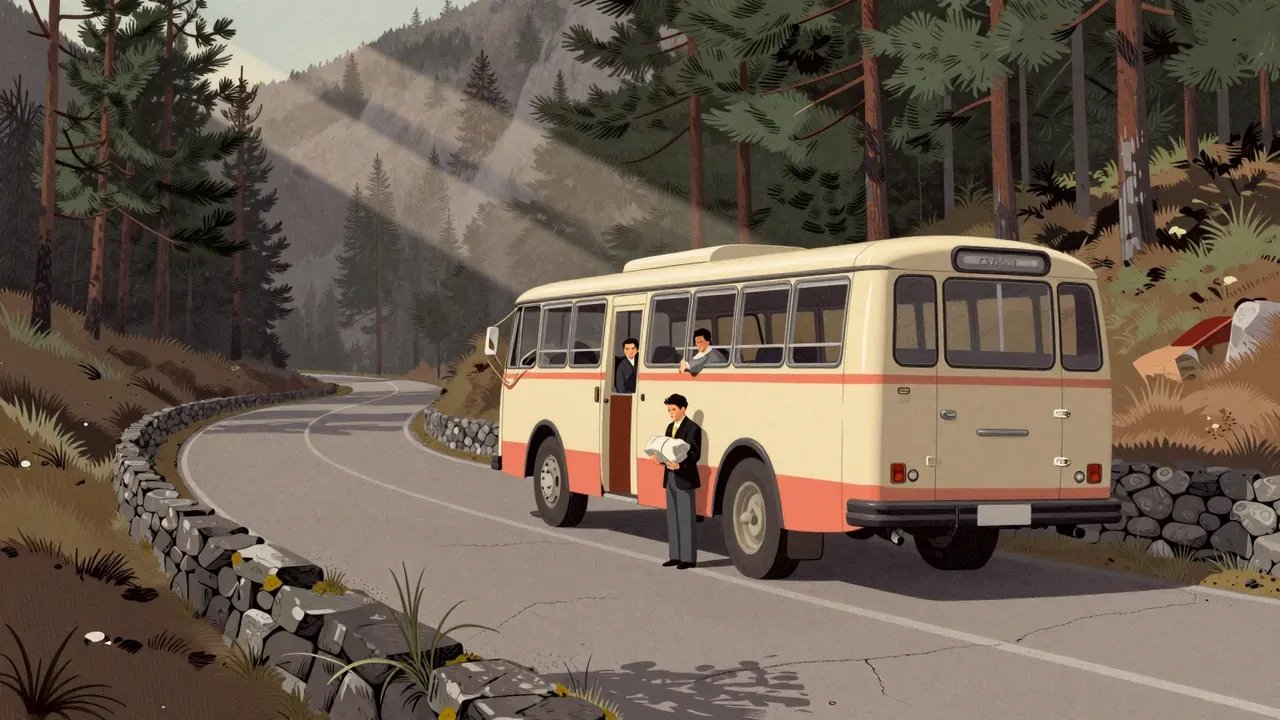
Hiroshi Shimizu’s 1936 film follows a bus driver nicknamed Mr. Thank You on a journey from rural Izu to Tokyo. Along the way, passengers reveal fragments of their lives — a mother preparing to sell her daughter, a Korean woman arranging her father’s funeral, migrants returning from the city. Shot on location with restrained performances and unadorned cinematography by Isamu Aoki, the film observes poverty, mobility, and quiet endurance without moralising or resolving. Based on a Yasunari Kawabata short story, it expands the source into a broader, though uneven, social portrait.

13:00

Night Train to Munich

Carol Reed, Edward Black, Sidney Gilliat, Frank Launder · 1940

Night Train to Munich (1940) is a British spy thriller directed by Carol Reed, written by Sidney Gilliat and Frank Launder. It follows a British agent’s mission to rescue a Czech scientist and his daughter from Nazi custody, culminating in a tense train journey to Munich and a daring escape across the Alps. Starring Margaret Lockwood and Rex Harrison, it balances suspense with wry humour and prioritises plot logic over psychological depth or historical detail.

13:00

No Blood Relation

Mikio Naruse · 1932

Mikio Naruse’s 1932 silent drama No Blood Relation follows actress Tamae’s return to Japan after five years abroad, hoping to reclaim her daughter Shigeko from the stepmother Masako, with whom the child has formed a deeper bond through shared hardship. Built on restraint and repetition rather than exposition or climax, it examines kinship as practice, not biology — a foundational work of Japanese realism whose quiet authority grows with attention.

13:00

One Hour with You

Ernst Lubitsch, George Cukor · 1932

One Hour with You (1932) is a Paramount romantic musical comedy directed by Ernst Lubitsch with George Cukor, starring Maurice Chevalier and Jeanette MacDonald. Adapted from Lothar Schmidt’s play and Lubitsch’s own 1924 film, it follows a Parisian doctor whose marital calm is gently disrupted by his wife’s flirtatious friend. With Oscar Straus’s score and Samson Raphaelson’s script, it prioritises wit, timing, and surface elegance over psychological depth — a polished, pre-Code exercise in controlled charm.

13:00

Pandora's Box

Georg Wilhelm Pabst · 1929

Georg Wilhelm Pabst’s 1929 silent adaptation of Wedekind’s Lulu plays stars Louise Brooks as a woman whose unmediated presence unravels men, laws, and institutions. Shot in Berlin with precise, unsentimental craft, it treats desire as social force rather than personal failing. Though dismissed on release and heavily censored abroad, it is now regarded as a cornerstone of Weimar cinema — austere, unsparing, and formally exact.

13:00

Pearls of the Crown

Sacha Guitry, Christian-Jaque · 1937

Pearls of the Crown (1937) is a French historical comedy co-directed by Sacha Guitry and Christian-Jaque, tracing the fictional journey of seven pearls across four centuries and three languages. Guitry plays four roles, and much of the cast doubles or triples up, reinforcing the film’s theme of history as repetition. Shot at Billancourt Studios and on location—including Royaumont Abbey and the S.S. Normandie—it balances theatrical artifice with tangible settings. Jean Françaix’s score and Jules Kruger’s cinematography support a light, neoclassical tone. Though structurally inventive and intellectually agile, its pacing and linguistic layering may alienate some viewers. It is arthouse comedy with scholarly poise, not populist appeal.

13:00

People on Sunday

Curt Siodmak, Robert Siodmak, Edgar G. Ulmer, Fred Zinnemann · 1930

A 1930 German silent film shot on location over several Sundays, People on Sunday follows five Berliners — a wine seller, a taxi driver, a record clerk, a film extra, and a model — through a weekend of minor encounters, quiet arguments, and lakeside leisure. Made by a collective of young filmmakers including Billy Wilder and the Siodmak brothers, it uses non-professional actors playing versions of themselves, and relies on observation rather than plot. Its power lies in its unadorned realism, its rhythmic editing, and its poignant, unsentimental view of ordinary life in the final years of the Weimar Republic.

13:00

Pépé le Moko

Julien Duvivier · 1937

Julien Duvivier’s 1937 French crime film follows Jean Gabin as Pépé le Moko, a celebrated thief holed up in Algiers’ Casbah, where he rules a labyrinthine enclave but cannot step beyond it. When a glamorous Parisian visitor arrives, his carefully maintained stasis unravels. Built on a studio set and defined by its moody, shadow-drenched cinematography, the film is a landmark of poetic realism — less a thriller than a slow, fatal meditation on exile, desire and the illusion of control.

13:00

Port of Shadows

Marcel Carné · 1938

Marcel Carné’s 1938 French drama Port of Shadows follows a deserter and a runaway girl in Le Havre, where love and escape are undermined by circumstance, jealousy, and inevitability. With Jean Gabin, Michèle Morgan, and Michel Simon, and written by Jacques Prévert, it exemplifies poetic realism through restrained performances, Schüfftan’s low-lit cinematography, and a fatalistic structure that privileges mood over momentum.

13:00

Quadrille

Sacha Guitry · 1938

A 1938 French comedy written and directed by Sacha Guitry, Quadrille follows a Paris newspaper editor whose carefully balanced domestic life unravels when an American film star arrives at his hotel. Staged with clockwork timing and performed with understated wit, it treats romance and professional life as interchangeable roles in a refined, self-contained dance.

13:00

Street Without End

Mikio Naruse · 1934

Street Without End (1934), Mikio Naruse’s final silent film, follows Tokyo waitress Sugiko as she navigates competing paths — marriage into wealth, stardom in film, or return to work — all shaped by rigid class boundaries and unspoken expectations. With restrained performances and precise, shallow-focus cinematography, it observes rather than judges, finding tension in stillness and consequence in repetition.

13:00

The Count of the Old Town

Sigurd Wallén, Edvin Adolphson · 1935

The Count of the Old Town (1935) is a Swedish studio comedy directed by Sigurd Wallén and Edvin Adolphson, adapted by Arthur Natorp from his stage play. Starring Valdemar Dalquist as a penniless artist mistaken for nobility, it unfolds in Stockholm’s Gamla Stan with light farce, ensemble timing, and Jules Sylvain’s waltz-led score. Ingrid Bergman appears in her first speaking film role, though her part is brief and underdeveloped. The film prioritises rhythm and social observation over plot or psychology.

13:00

The Devil Is a Woman

Josef von Sternberg · 1935

Josef von Sternberg’s 1935 final collaboration with Marlene Dietrich is a formally rigorous, emotionally detached fable set during Seville’s Carnival. Adapted from Pierre Louÿs’s novel, it follows the destructive allure of Concha Pérez, whose indifference to devotion becomes a structural principle. With deliberate artifice, stylised lighting, and rhythmic austerity, it examines self-deception as inevitable, not tragic. Not a romance but a parable of asymmetry—cold, precise, and unforgettable.

13:00

The Docks of New York

Josef von Sternberg · 1928

Josef von Sternberg’s 1928 romance, set on the New York waterfront, follows a stoker and a prostitute whose brief, impulsive marriage unfolds in a saloon, a flophouse, and a night court. Made at the end of the silent era, it relies on Harold Rosson’s chiaroscuro cinematography, Hans Dreier’s evocative sets, and Jules Furthman’s pared-down script to convey emotional complexity without exposition. Its power lies in restraint: in what is withheld, what is implied, and what is felt in the space between gestures.

13:00

The Drum

Zoltan Korda · 1938

The Drum (1938), directed by Zoltan Korda, is a British Technicolor adventure set on the North-West Frontier during the Raj. It follows Prince Azim’s flight after his uncle’s coup, his alliance with British officer Carruthers, and his climactic warning on the Sacred Drum. Filmed partly on location in Chitral and North Wales, it foregrounds military detail and imperial certainty — making it a revealing artefact of pre-war British cinema, not a neutral period piece.

13:00

The Lady Vanishes

Alfred Hitchcock · 1938

Alfred Hitchcock’s 1938 *The Lady Vanishes* follows a young woman who discovers her fellow passenger has vanished — and that no one else remembers her. Set aboard a train crossing a fictional Balkan country, the film uses wit, tight plotting and psychological precision to explore trust, testimony and the fragility of shared reality. Produced by Edward Black for Gainsborough Pictures, it remains a benchmark of British suspense.

13:00

The Life and Death of Colonel Blimp

Michael Powell, Emeric Pressburger · 1943

A British Home Guard general is captured during a training exercise, triggering a decades-spanning flashback that charts his evolution from Boer War hero to wartime relic. Directed by Powell and Pressburger in 1943, it uses Technicolor, layered performance and deliberate pacing to examine honour, time and institutional inertia — not as abstractions, but as lived, embodied conditions.

13:00

The Living Magoroku

Keisuke Kinoshita · 1943

Keisuke Kinoshita’s 1943 film The Living Magoroku is a tightly controlled drama set in a traditional swordsmith’s workshop during wartime Japan. With no credited cast or composer, it relies on gesture, duration, and compositional restraint to explore transmission, duty, and the ethics of making. Its power lies in what it omits—psychological exposition, overt politics, dramatic climax—as much as in what it shows: the physical labour of preserving form under constraint.

13:00

The Love Parade

Ernst Lubitsch · 1929

Ernst Lubitsch’s 1929 debut sound film stars Maurice Chevalier and Jeanette MacDonald as a queen and her reluctant consort in the fictional kingdom of Sylvania. Built on a French stage farce, it uses operetta conventions, witty dialogue, and Victor Schertzinger’s songs to explore power, gender, and the performance of authority. Though technically inventive and tonally assured, its satire is limited by its hollow setting and reliance on archetype over depth. A landmark of early Hollywood musical craftsmanship — elegant, intelligent, and knowingly artificial.

13:00

The Magnificent Ambersons

Orson Welles · 1942

Orson Welles’s 1942 adaptation of Booth Tarkington’s novel traces the slow collapse of a wealthy Midwestern family amid industrial change. Though RKO cut over forty minutes and reshot the ending — destroying the excised footage — the surviving film remains a landmark of restrained, atmospheric storytelling, anchored by Agnes Moorehead’s performance and Stanley Cortez’s cinematography. Its power lies in what it implies, not what it states.

13:00

The Man Who Knew Too Much

Alfred Hitchcock · 1934

Alfred Hitchcock’s 1934 British thriller follows a couple who uncover an assassination plot while on holiday in Switzerland, then race to stop it in London — all without police help. Built on tight pacing, precise editing, and Arthur Benjamin’s Storm Clouds Cantata, it prioritises cause-and-effect over psychology, domestic stakes over geopolitical spectacle. Though leaner and less polished than Hitchcock’s later work, its structural rigour and unwavering focus make it a masterclass in economical suspense.

13:00

The Masseurs and a Woman

Hiroshi Shimizu · 1938

Hiroshi Shimizu’s 1938 film follows blind masseurs arriving at a rural spa town, where fleeting encounters — with a mysterious woman, a guest named Shintarō, and the rhythms of temporary community — unfold with quiet precision. Made by Shochiku in its Ōfuna style, it prioritises observation over exposition, tactile detail over dialogue, and duration over plot.

13:00

The Most Dangerous Game

Irving Pichel, Ernest B. Schoedsack · 1932

The Most Dangerous Game (1932) adapts Richard Connell’s short story with surgical fidelity: a shipwrecked hunter becomes prey to a Russian aristocrat who hunts humans for sport. Shot on the same jungle sets as King Kong, it uses tight pacing, Max Steiner’s leitmotif-driven score, and Leslie Banks’s chillingly controlled performance to sustain dread without gore or exposition. Its themes — predation, civilisation’s fragility, and the boredom of mastery — land through structure, not speech. At 63 minutes, it is lean, logical, and enduring.

13:00

The Private Life of Henry VIII

Alexander Korda · 1933

The Private Life of Henry VIII (1933) is a British biographical drama directed by Alexander Korda and starring Charles Laughton as the ageing king. Structured as a series of vignettes covering five of his six marriages, it avoids religious and political context in favour of intimate, darkly comic portraiture. Shot by Georges Périnal and written by Arthur Wimperis and Lajos Bíró, it won Laughton the Academy Award for Best Actor — the first foreign winner in that category. Though historically selective and stylistically restrained, it endures as a masterclass in performance-led storytelling.

13:00

The Red Head

Julien Duvivier · 1932

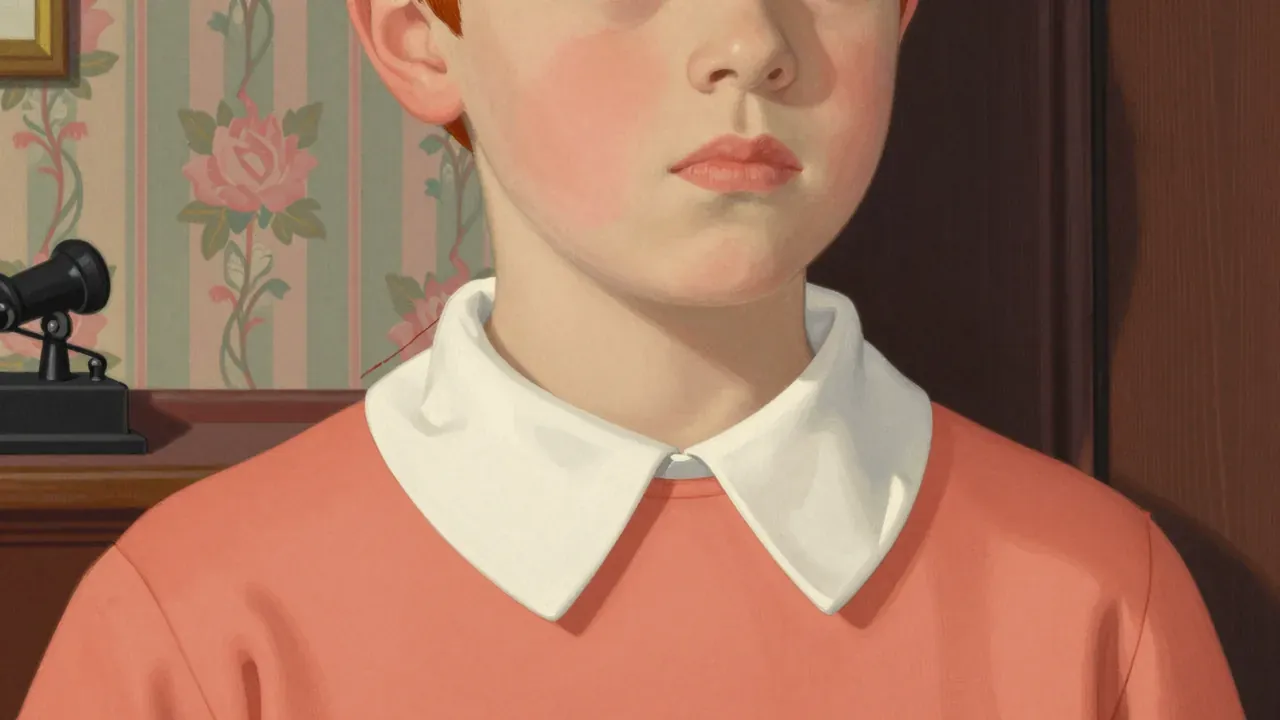
Julien Duvivier’s 1932 adaptation of Jules Renard’s Poil de carotte is a restrained, psychologically precise portrait of a red-haired boy navigating emotional neglect in a rigid bourgeois household. Robert Lynen’s performance anchors the film, supported by Harry Baur and Catherine Fonteney as his emotionally distant parents. Maurice Monniot’s cinematography and Alexandre Tansman’s sparse score serve the film’s commitment to understatement. Though occasionally undermined by didactic framing and technical limitations of early sound, it remains a masterclass in showing rather than telling — and in treating childhood as lived duration, not narrative arc.

13:00

The Serpent's Egg

Ingmar Bergman · 1977

Set in 1923 Berlin, Ingmar Bergman’s The Serpent’s Egg follows Abel Rosenberg, a broken trapeze artist drawn into a world of medical experimentation, prostitution, and state surveillance. Shot in Munich with Sven Nykvist, it is a deliberately oppressive drama about the moral erosion preceding fascism — technically assured but narratively opaque, admired by some for its austerity, dismissed by others as shapeless and detached.

13:00

The Smiling Lieutenant

Ernst Lubitsch · 1931

Ernst Lubitsch’s 1931 musical comedy follows an Austrian lieutenant whose ill-timed wink sparks a royal marriage, a broken engagement, and a surprisingly tender act of sabotage. Built on Oscar Straus’s operetta and sharpened by Samson Raphaelson’s script, it balances Chevalier’s charm, Colbert’s poise, and Hopkins’s vulnerability within tightly controlled studio spaces. Technically assured for its time, it privileges tonal precision over psychological realism — and ends not with reconciliation, but with a satin-clad, cigarette-puffing princess and a wink that closes the door on easy answers.

13:00

The Testament of Dr. Mabuse

Fritz Lang · 1933

Fritz Lang’s 1933 crime-thriller, made weeks before Hitler’s rise and banned by Goebbels on release, follows Inspector Lohmann as he traces a wave of violence back to the asylum-bound Dr. Mabuse — whose written plans are carried out by others who don’t know they’re obeying. Shot in German and French simultaneously, with stark lighting, deliberate pacing and Hans Erdmann’s sparse score, it treats criminal conspiracy as ideological contagion. Though weakened by a dispensable romance and a rushed finale, its formal control and political prescience make it essential viewing — not as escapism, but as diagnosis.

13:00

The Threepenny Opera

Georg Wilhelm Pabst · 1931

Georg Wilhelm Pabst’s 1931 adaptation of The Threepenny Opera strips Brecht and Weill’s satire to its structural bones: crime, policing, charity and banking are shown as functionally identical. Shot in Berlin with Fritz Arno Wagner’s restrained cinematography and edited by Jean Oser to withhold emphasis, it replaces theatrical provocation with quiet, cumulative equivalence. Though legally contested and later banned by the Nazis, its reconstructed German version remains a precise, unsentimental study of power as routine.

13:00

The Woman Who Dared

Jean Grémillon · 1944

Jean Grémillon’s 1944 drama follows Thérèse Gauthier, a mechanic’s wife displaced by airport expansion, who gradually reclaims agency — first as a dealership manager, then as a pilot. Madeleine Renaud and Charles Vanel anchor a film that privileges procedural realism over psychological exposition, showing aspiration as re-attunement to one’s own capacities rather than rupture from circumstance.

13:00

Things to Come

William Cameron Menzies · 1936

Things to Come (1936) is a British science fiction film directed by William Cameron Menzies, produced by Alexander Korda, and scripted by H. G. Wells and Lajos Bíró. Set across three eras — 1940, 1970, and 2036 — it charts humanity’s collapse into post-war barbarism and subsequent rebirth under a global technocracy. Starring Raymond Massey and Ralph Richardson, it foregrounds Vincent Korda’s production design and Arthur Bliss’s score, treating cinema as a medium for philosophical demonstration rather than dramatic immersion. Its enduring significance lies in its uncompromising visual logic and its articulation of interwar rationalist utopianism.

13:00

This Happy Breed

David Lean · 1944

David Lean’s 1944 debut follows the Gibbons family across twenty years of peace and gathering storm in suburban London. Anchored by Robert Newton and Celia Johnson, it charts domestic life against national events — the General Strike, the rise of fascism, the abdication — not through speeches or spectacle, but through wallpaper, radio sets, and the weight of unspoken grief. Shot in muted Technicolor and edited with Lean’s signature temporal bleed, it is a film of accumulation: small details, repeated gestures, returning spaces. Its power lies in endurance, not revelation.

13:00

Trouble in Paradise

Ernst Lubitsch · 1932

Ernst Lubitsch’s 1932 romantic comedy follows a gentleman thief and a lady pickpocket who con a perfume magnate — only to find themselves entangled in genuine feeling. With Herbert Marshall, Miriam Hopkins, and Kay Francis, it sustains a tone of poised, knowing irony, using Art Deco design, precise editing, and understated performance to explore class, consent, and value as performance. Made before strict enforcement of the Production Code, it relies on implication over exposition and rewards attention to gesture, timing, and spatial relationships.

13:00

Two Girls on the Street

André de Toth · 1939

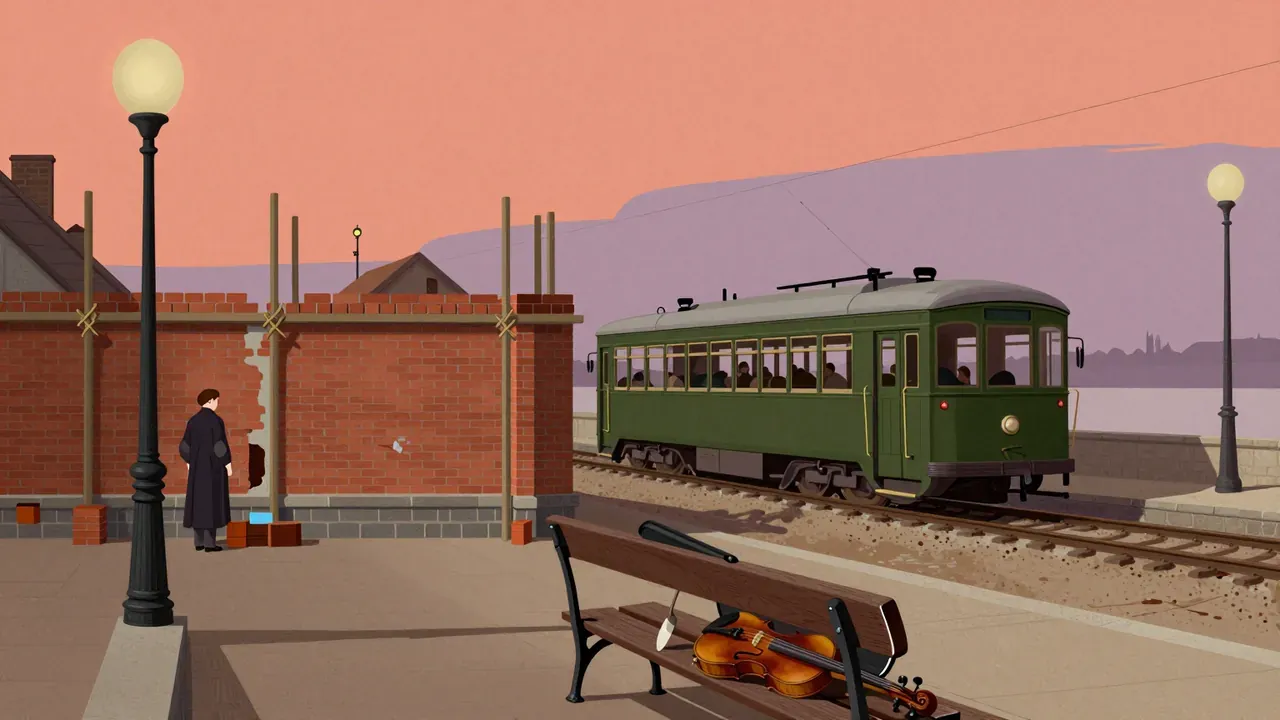
Two Girls on the Street (1939) follows two young women — a violinist and a bricklayer — as they navigate work, friendship, and love in Budapest after leaving their village. Directed by André de Toth in his first feature, it adapts a stage play with unshowy craft, grounding its comedy in occupational detail and urban texture. Restored by Cinémathèque de Bologne and released by Criterion in 2022, it rewards attention to the ordinary: how people move, speak, build, and play in a city on the cusp of change.

13:00

Un carnet de bal

Julien Duvivier · 1937

Un carnet de bal (1937), directed by Julien Duvivier, follows Christine, a recently widowed woman who revisits the men who signed her debut ball dance card twenty years earlier. Through a series of vignettes, the film traces how youthful promise dissolved into varied, often diminished, adult lives—without judgement or hierarchy. Shot in France with Philippe Agostini’s restrained cinematography and Maurice Jaubert’s subtle score, it prioritises observation over exposition, stillness over motion, and moral neutrality over moralising. Its power lies in cumulative effect, not plot, and its endurance rests on its refusal to simplify time, regret, or human consequence.

13:00

Walk Cheerfully

Yasujirō Ozu · 1930

Yasujirō Ozu’s 1930 silent film Walk Cheerfully follows a young man’s fall into petty crime and tentative return to social life in interwar Tokyo. With restrained performances, frontal compositions, and a deliberate, unhurried pace, it builds meaning through repetition, posture, and spatial arrangement rather than exposition or drama. Shot by Hideo Shigehara and written by Hiroshi Shimizu and Tadao Ikeda, it reflects Shochiku’s ‘new tendency’ realism — attentive to class, work, and urban routine, but resistant to moral simplification or emotional display.

13:00

Walpurgis Night

Gustaf Edgren · 1935

A 1935 Swedish drama set over one Walpurgis Night in Stockholm, Walpurgis Night observes a civil servant’s household as long-held tensions surface amid guests, family, and fading light. Directed by Gustaf Edgren and written by Oscar Rydqvist, it features early performances by Ingrid Bergman and Victor Sjöström, with restrained craft across cinematography, editing, and performance. Its strength lies in behavioural nuance and temporal precision; its weakness, occasional narrative vagueness and underdeveloped subplots.

13:00

Westfront 1918

Georg Wilhelm Pabst · 1930

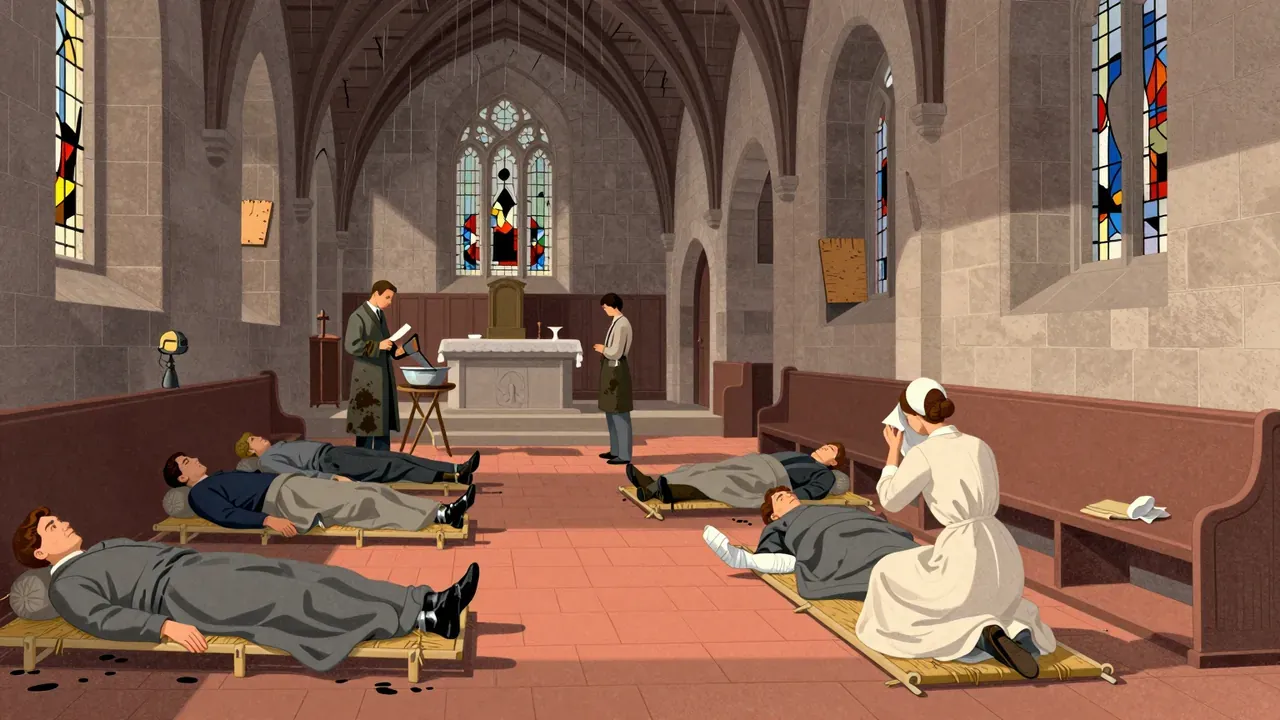
Georg Wilhelm Pabst’s 1930 German sound film Westfront 1918 follows four infantrymen on the Western Front in the final months of the First World War. Shot with documentary restraint and pioneering live trench audio, it depicts war as cumulative exhaustion rather than heroic action. Its power lies in physical detail — mud, collapsed trenches, field hospitals in ruined churches — not plot or character revelation. Banned by the Nazis as 'cowardly defeatism', it remains a key work of Weimar realism.
13:00

Yoyo

Pierre Étaix · 1965

Pierre Étaix’s 1965 comedy Yoyo follows a French millionaire’s fall from wealth into circus life, and his son’s parallel rise from clown to film star. Structured as a series of precisely timed visual gags and period tableaux, it uses physical comedy to explore inheritance, class, and performance across the 1920s to the 1960s. Shot by Jean Boffety with restrained elegance, it favours rhythm over exposition and texture over psychology.

9:51

The Roaring Twenties

Raoul Walsh · 1939

The Roaring Twenties (1939) is a studio-crafted gangster film that uses the interwar years as architecture—not archive. It honours early-1930s genre conventions while narrowing the decade to a single masculine trajectory: rise, rule, ruin. Its specificity (1919–1933, Hellinger source, Walsh direction) makes it a useful artifact—not of the twenties, but of how Hollywood repackaged them on the cusp of war.

13:00

Howards End

James Ivory · 1992

James Ivory’s 1992 adaptation of E. M. Forster’s novel traces class, inheritance, and quiet moral reckoning across Edwardian Britain. Emma Thompson, Anthony Hopkins, and Vanessa Redgrave anchor a precisely observed world where property, language, and silence carry equal weight. Tony Pierce-Roberts’ cinematography and Luciana Arrighi’s production design ground the film in tactile reality, while Richard Robbins’ score underscores its restraint. Though some subplots lack depth and its pacing demands patience, the film rewards close attention with cumulative emotional and intellectual resonance.

13:00

Joyless Street

Georg Wilhelm Pabst · 1925

Georg Wilhelm Pabst’s 1925 silent film Joyless Street observes life in a Viennese alley during hyperinflation, following Marie, Grete, and Else as they navigate hunger, exploitation, and eroded dignity. Adapted from Hugo Bettauer by Willy Haas, it rejects expressionist exaggeration for a flatter, denser realism—studio sets by Erdmann and Sohnle, cinematography by Seeber, Oertel and Lach, editing by Mark Sorkin. Its power lies in accumulation, not climax: small choices, shared spaces, systemic pressure. Restored in the 1990s, it remains a key work of New Objectivity—and a demanding, unsentimental record of societal breakdown.

13:00

Jules and Jim

François Truffaut · 1962

François Truffaut’s 1962 romance follows Frenchman Jim, Austrian Jules, and the enigmatic Catherine across pre-war Paris, wartime separation, and uneasy post-war cohabitation. Shot by Raoul Coutard with lyrical looseness and scored by Georges Delerue, it treats love not as choice or conquest but as atmosphere — pervasive, shifting, and ultimately ungovernable.

13:00

The Rules of the Game

Jean Renoir · 1939

Jean Renoir’s 1939 ensemble drama follows aristocrats and servants over two days at a French château, using deep-focus cinematography, fluid camera movement, and layered sound to trace intersecting deceptions on the eve of war. Its formal rigour and moral clarity have made it a touchstone of arthouse cinema — though its deliberate pace and unexplained social codes demand patience and contextual awareness.

13:00

Bed and Sofa

Abram Room · 1927

A 1927 Soviet silent film set in cramped Moscow housing during the NEP, Bed and Sofa follows three people — two men and a woman — sharing one room, one bed, and one sofa. Directed by Abram Room with script by Viktor Shklovsky, it observes, without comment, how scarcity, gendered labour, and unspoken desire reshape intimacy. Its realism is architectural, psychological, and unsentimental.

13:00

Fritz Lang

Gordian Maugg · 2016

Gordian Maugg’s 2016 biographical film Fritz Lang follows the director in the months before and after his 1933 departure from Weimar Germany. Starring Heino Ferch, it avoids hagiography or melodrama, instead focusing on procedural tensions — studio politics, bureaucratic pressure, and unspoken allegiances — with deliberate pacing and muted visuals. The film presumes familiarity with Lang’s work and the historical context, offering ambiguity where others might supply certainty.

13:00

The 39 Steps

Alfred Hitchcock · 1935

Alfred Hitchcock’s 1935 adaptation of John Buchan’s novel is a foundational British spy thriller: Robert Donat plays Richard Hannay, a man falsely accused who flees across England and Scotland pursued by spies and police alike. Shot by Bernard Knowles and edited by Derek Twist, it relies on geography, rhythm and understated performance rather than exposition or spectacle. Though it departs significantly from the source, it established core Hitchcock tropes — the innocent man on the run, the MacGuffin, the public-space climax — and remains a masterclass in classical suspense construction.

13:00

The Cabinet of Dr. Caligari

Robert Wiene · 1920

A 1920 German silent film directed by Robert Wiene, written by Hans Janowitz and Carl Mayer, and designed by Hermann Warm, Walter Reimann and Walter Röhrig. It tells of a hypnotist and his somnambulist through a fractured frame story, using radically distorted sets, high-contrast lighting and stylised performance to argue against irrational authority. Made at Babelsberg Studio, it remains foundational to expressionist cinema, horror and arthouse film.
13:00

The End of St. Petersburg
Vsevolod Pudovkin, Mikhail Doller · 1927

The End of St. Petersburg (1927), directed by Vsevolod Pudovkin and Mikhail Doller, traces a peasant boy’s journey from rural innocence to revolutionary clarity across four years of upheaval in pre-Soviet Russia. Shot in stark, rhythmic montage by Anatoli Golovnya and edited by Oleksandr Dovzhenko, it avoids individual psychology in favour of systemic analysis — linking factory exploitation, imperial war, and bread riots to the fall of Tsarism and rise of the Bolsheviks. Commissioned for the October Revolution’s tenth anniversary, it is a didactic, formally rigorous work of political cinema.

13:00

The Great Ziegfeld

Robert Z. Leonard · 1936

The Great Ziegfeld (1936) is MGM’s lavish biographical musical about Florenz Ziegfeld Jr., starring William Powell, Luise Rainer and Myrna Loy. Directed by Robert Z. Leonard and produced by Hunt Stromberg, it prioritises spectacle over accuracy — staging extravagant musical numbers, deploying hundreds of costumers and technicians, and constructing monumental sets like the 100-ton ‘Melody’ staircase. Though factually loose and dramatically thin, its unwavering commitment to scale, craft and ceremonial grandeur makes it a defining artefact of studio-era ambition.

13:00

The Passionate Friends

David Lean · 1949

David Lean’s 1949 adaptation of H. G. Wells’s novel follows Mary Justin, a woman caught between her husband Howard and her former lover Steven, as memory and present collide during a Swiss hotel stay. Anchored by Ann Todd’s restrained performance and Guy Green’s understated cinematography, it examines autonomy, loyalty, and the quiet erosion of self in bourgeois romance — not through drama, but through accumulation of small, unspoken truths.

13:00

The Remains of the Day

James Ivory · 1993

James Ivory’s 1993 adaptation of Kazuo Ishiguro’s novel follows Anthony Hopkins’ butler Stevens on a 1958 road trip to revisit his former housekeeper, Emma Thompson’s Miss Kenton. Interwoven flashbacks reveal their years serving Lord Darlington — a man whose misguided appeasement of Nazism corrodes both his reputation and Stevens’ sense of self. With muted cinematography, sparse music, and performances rooted in restraint, the film renders emotional life as gesture, memory as omission, and class as embodied discipline.

13:00

Vampyr

Carl Theodor Dreyer · 1932

Carl Theodor Dreyer’s 1932 Vampyr is a Gothic horror film shot on location in France, starring amateur actor Nicolas de Gunzburg as Allan Gray, a student of the occult who enters a cursed village. With minimal dialogue, gauze-diffused cinematography by Rudolph Maté, and a sparse score by Wolfgang Zeller, it builds dread through atmosphere, not exposition. Adapted loosely from Sheridan Le Fanu, it treats vampirism as a perceptual condition — blurring boundaries between dream and wakefulness, self and other, presence and absence.