filmbriefs
9:51in productionCh. 1 · Not History. Genre./ 9:51 · ceiling 15 min
Crime

The Roaring Twenties

It didn’t document the 1920s—it buried them under three-act gangster logic.

The Roaring Twenties (1939) is a studio-crafted gangster film that uses the interwar years as architecture—not archive. It honours early-1930s genre conventions while narrowing the decade to a single masculine trajectory: rise, rule, ruin. Its specificity (1919–1933, Hellinger source, Walsh direction) makes it a useful artifact—not of the twenties, but of how Hollywood repackaged them on the cusp of war.

Chapters & takeaways4
  1. 0:58
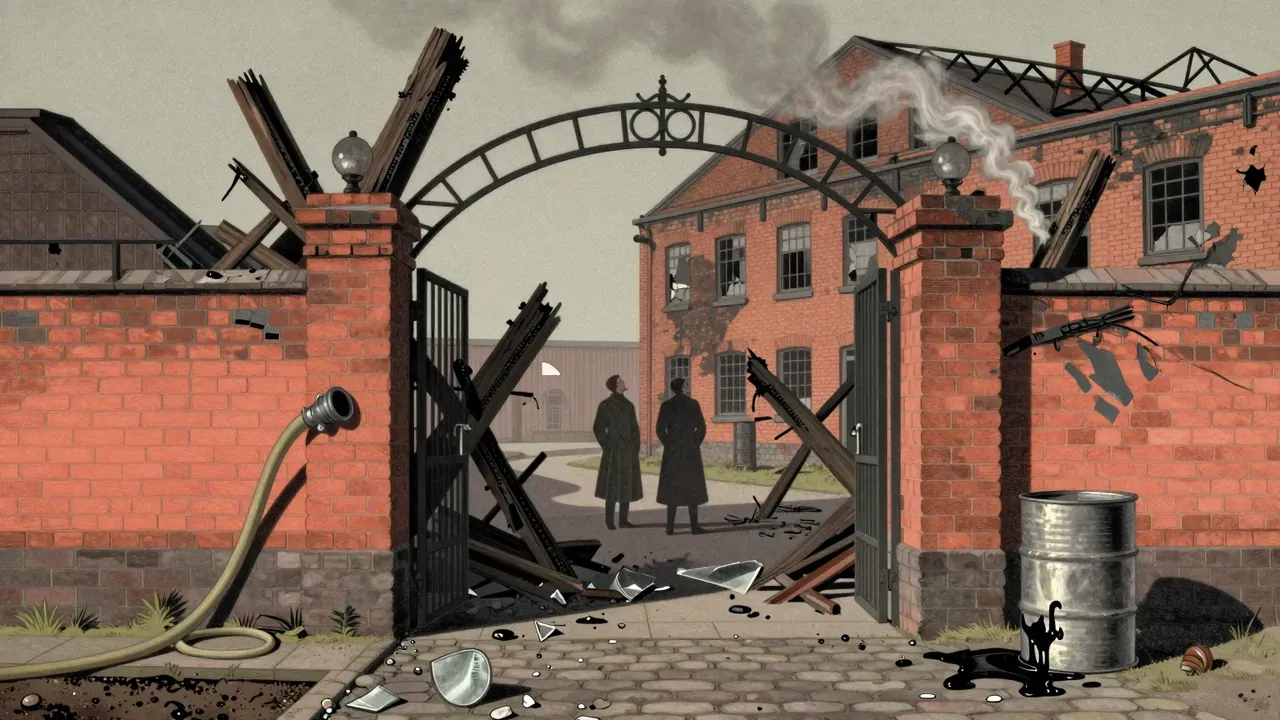
    Not History. Genre.

    It is a 1939 American gangster film—not a documentary, not a period piece, but a studio-built genre object.

  2. 2:40
    Fourteen Years, Not Ten

    Its 1919–1933 timeline is unusually precise for a Hollywood gangster film—and serves as its only historical anchor.

  3. 4:00
    From Columnist to Screenwriter

    Mark Hellinger’s short story gave it source material—but also a journalistic veneer it never earns on screen.

  4. 5:29
    Homage, Not Innovation

    It calls itself an homage—so its clichés are deliberate, not accidental.

Worth your time?

Yes. Watch the whole thing.

3.5/ 5
What works
  • adaptation
  • screenwriting
  • crime
What does not
  • great-depression
  • first-world-war
  • jazz
Watch it if
  • film-students
  • genre-historians
  • screenwriting-students
Skip it if
  • historians-of-the-1920s
  • social-chroniclers
The written brief1 min read

What the thing is

A 1939 American gangster film directed by Raoul Walsh, starring James Cagney, Priscilla Lane, Humphrey Bogart, and Gladys George.

Where it came from

It originated as a Warner Bros. production based on Mark Hellinger’s short story ‘The World Moves On’, written after Hellinger was hired by Jack L. Warner to write screenplays.

What it gets right

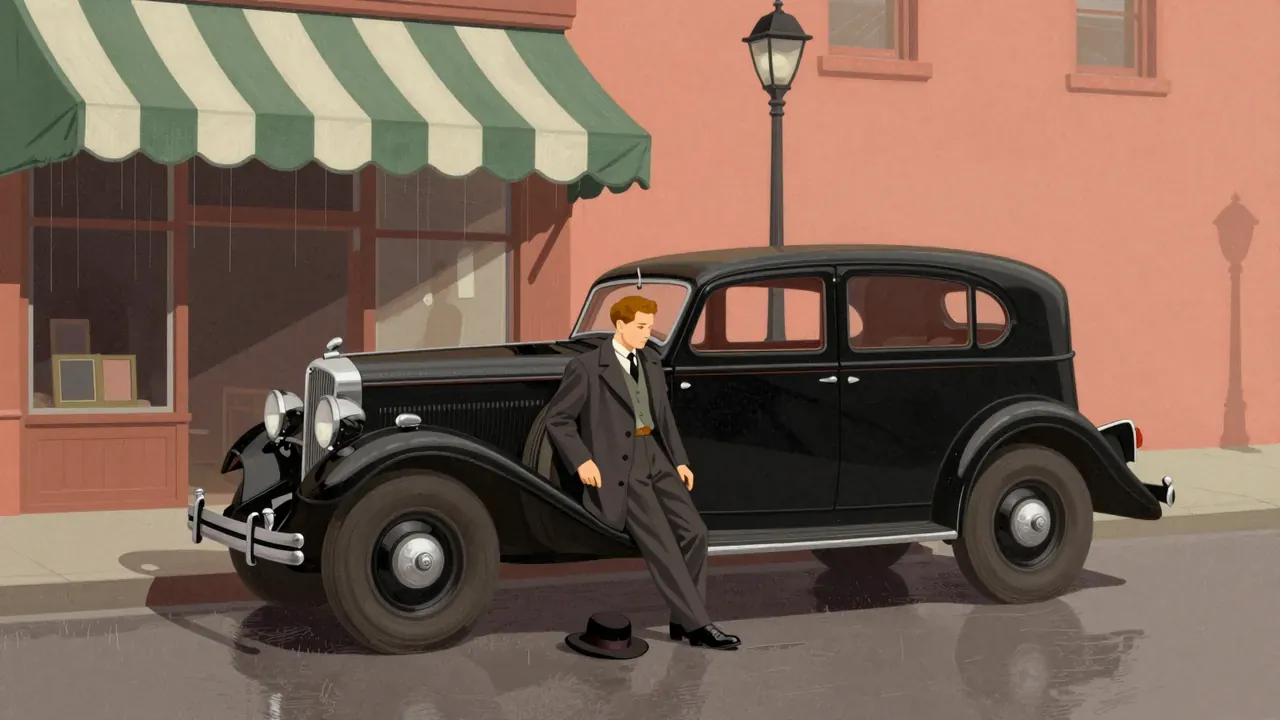
It captures the arc of Prohibition-era criminal ascent and collapse with structural clarity: war veteran to bootlegger to kingpin to corpse. Its period span (1919–1933) anchors the genre in real chronology, not just costume.

What it gets wrong

It flattens the interwar years into a backdrop for male ambition and betrayal. No women drive plot beyond romantic or maternal functions. The Depression arrives as set dressing, not lived crisis.

Why it matters now

It shows how Hollywood retroactively shaped the ‘Roaring Twenties’ label—not as cultural memory, but as a narrative engine for genre revival, two years before the US entered WWII.

Is it worth your time

Yes—if you want to see how late-1930s Hollywood codified the gangster mythos, not as history but as moral theatre with jazz-age scaffolding.
Same strand · Crime4 of 90
13:00
A Better TomorrowJohn Woo · 1986John Woo’s 1986 crime film redefined Hong Kong action cinema by fusing wuxia ethics with urban fatalism. Ti Lung, Leslie Cheung, and Chow Yun-fat play three men bound by blood, betrayal, and bullets. Its influence on 'heroic bloodshed' is foundational; its emotional logic remains uncompromising.
13:00
Bad LieutenantAbel Ferrara · 1992Abel Ferrara’s 1992 Bad Lieutenant follows a New York police officer over a single day of spiralling addiction, abuse of power, and spiritual erosion. With Harvey Keitel in a physically uncompromising performance, the film rejects redemption arcs and procedural logic in favour of sustained, unsparing immersion in ethical collapse. Shot on gritty 16mm by Ken Kelsch and scored sparsely by Joe Delia, it treats Catholic iconography and police authority as hollowed-out symbols. Not a thriller, but a forensic study of vacancy wearing a badge.
13:00
BlackhatMichael Mann · 2015Michael Mann’s 2015 thriller Blackhat follows a convicted hacker released to track a global cyberattack spanning nuclear plants, ports, and financial markets. Shot entirely digitally across Los Angeles, Hong Kong, Jakarta, and Kuala Lumpur, it prioritises procedural realism and atmospheric tension over conventional plotting or emotional exposition. Though critically divided and commercially unsuccessful, it stands as a formally rigorous, thematically coherent attempt to render networked threat as physical, geopolitical, and human-scaled.
13:00
DetourEdgar G. Ulmer · 1945A broke pianist hitchhikes west, accidentally kills a stranger, assumes his identity, and is then blackmailed by a woman who knew the dead man — all narrated in weary voiceover as if the outcome were settled before the first frame. Made in 1945 on a tight budget by Edgar G. Ulmer for PRC, it distils noir fatalism into stark, economical form: minimal sets, precise sound design, and performances that refuse empathy. Its power lies in repetition, inevitability, and the quiet horror of consequences that arrive not with fanfare but with the hum of a police siren.
Up next in Film

A Better Tomorrow

John Woo · 1986 · 13:00

A Better Tomorrow is not about hope — it is about the dignity of choosing your terms when the world has already decided yours.

13:00