What it sets out to show
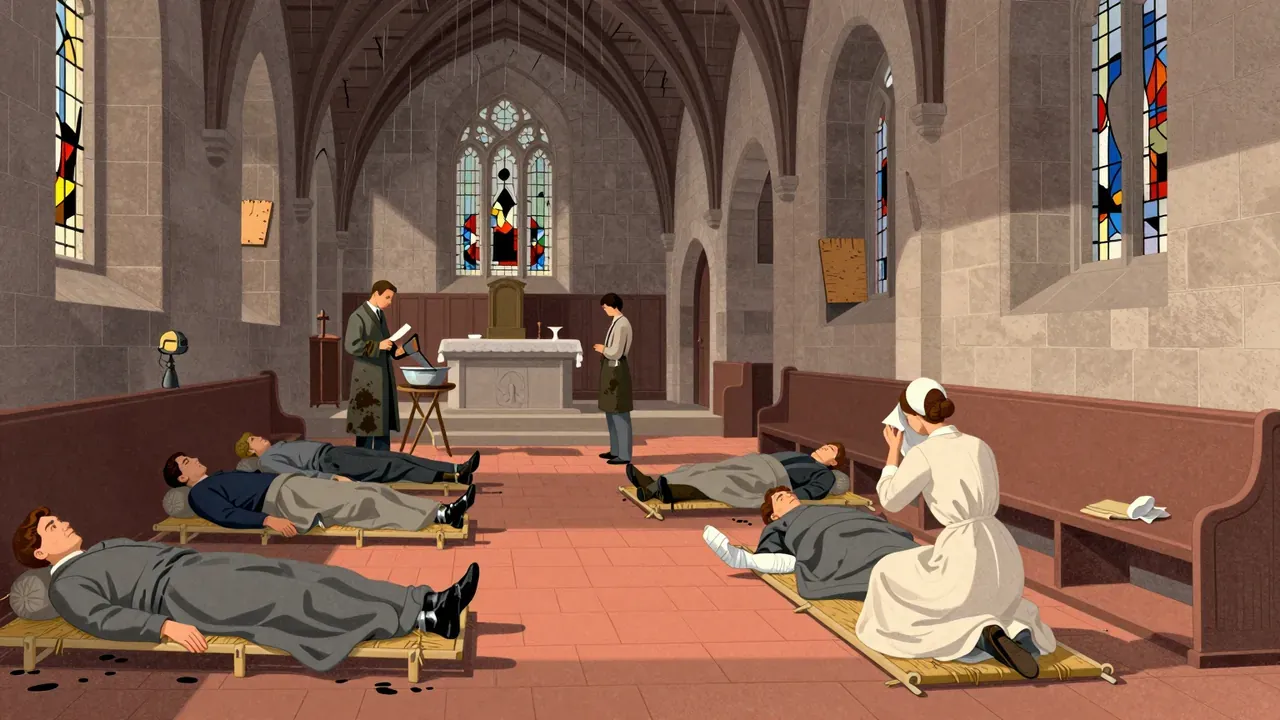
Joyless Street is a German silent film from 1925, directed by Georg Wilhelm Pabst and adapted by Willy Haas from Hugo Bettauer’s novel. It sets out to depict the moral and material collapse of postwar Vienna—not through allegory or abstraction, but as a tightly woven ensemble portrait of interlocking lives in the Melchiorgasse, a narrow alley in a poor quarter. Its ambition is sociological: to show how inflation, unemployment, and institutional failure corrode dignity, choice, and solidarity. It avoids melodramatic villains in favour of systemic pressure—speculators, civil servants, shopkeepers, sex workers, clerks—all caught in the same tightening vise. The film does not seek catharsis or resolution; its structure is cyclical, its endings abrupt or fatal, its tone unrelenting. It treats poverty not as backdrop but as physics: a force that bends behaviour, distorts relationships, and reshapes ethics in real time. This is New Objectivity in practice: no shadows cast for mood, no faces lit for beauty, only surfaces registered under studio light as evidence.
How it builds its world
The story unfolds across parallel threads—Marie’s descent into transactional survival, Grete’s slow erosion of professional and personal autonomy, Else’s pragmatic brutality—held together by shared geography and scarcity. Werner Krauss, Jaro Fürth, and Asta Nielsen deliver performances grounded in gesture and timing rather than expressionism; Greta Garbo, early in her career, conveys Marie’s volatility through physical recoil and sudden stillness. Guido Seeber, Curt Oertel, and Robert Lach photograph interiors with flat, even light, avoiding chiaroscuro flourish; Otto Erdmann and Hans Sohnle’s sets are cramped, cluttered, and deliberately unlovely—brickwork, peeling plaster, narrow stairwells. Mark Sorkin’s editing sustains rhythm without emphasis, cutting on action or silence rather than emotion. Max Deutsch’s score, though lost in most surviving prints, was conceived as counterpoint to realism, not reinforcement. There is no musical underscoring of pathos; the sound design implied by the images is one of muffled voices, distant shouting, clattering hooves, and the hollow thud of meat dropped onto a butcher’s block.
What carries the weight
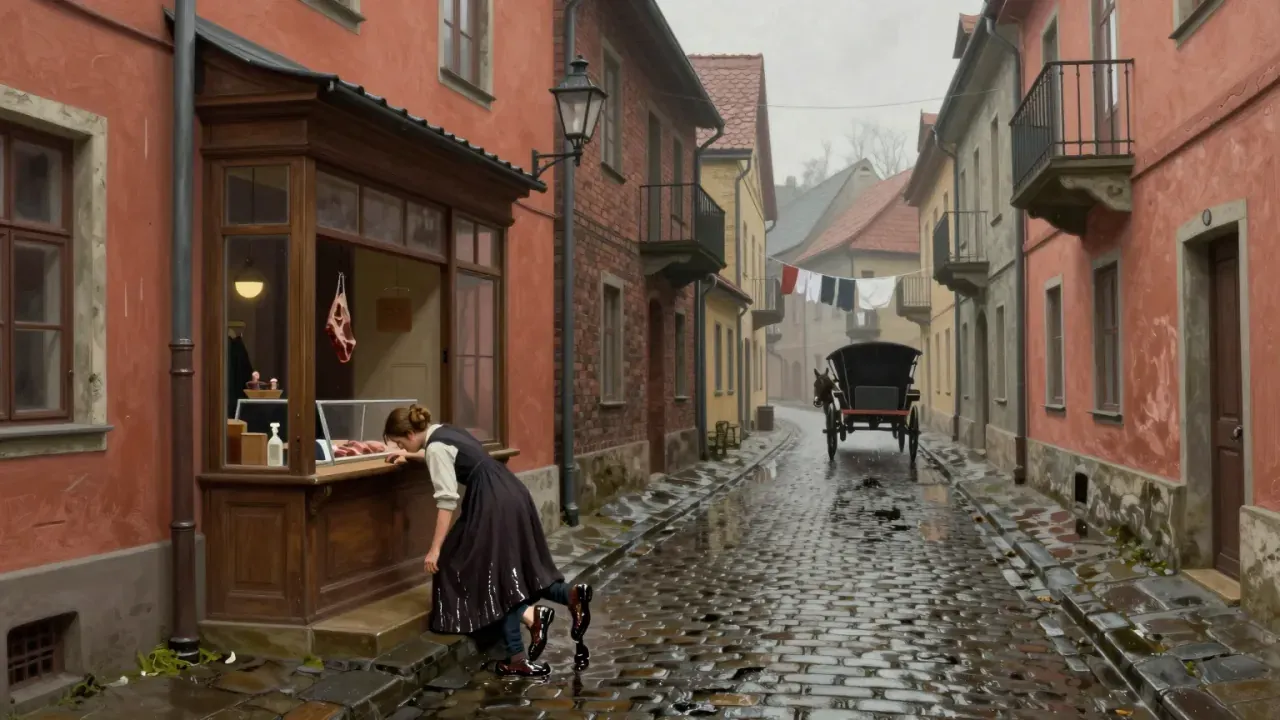
What lands is the cumulative weight of small, unvarnished choices: Grete fainting outside the butcher’s shop, not from weakness but from standing too long on empty stomach; Else accepting meat in exchange for sex, then offering half to Marie without pride or shame; Davy forgiving Grete only after learning her father’s pension vanished in Canez’s scheme. These moments register because they are shown, not explained. The film’s refusal to moralise gives them authority—the audience infers consequence rather than receives judgment. The street itself becomes legible: its rhythms, its hierarchies, its informal economies. Even the censored US version, stripped of Nielsen’s subplot, retained enough of this texture to disturb American critics in 1926. The Munich Film Archive’s 1995–98 restoration recovered much of the original pacing and spatial logic, allowing the intercutting between households to function as intended—not as montage, but as census. What endures is not spectacle, but density: the sense that every frame contains someone who has just eaten, or just lied, or just decided to stop trying.
Where the structure cracks
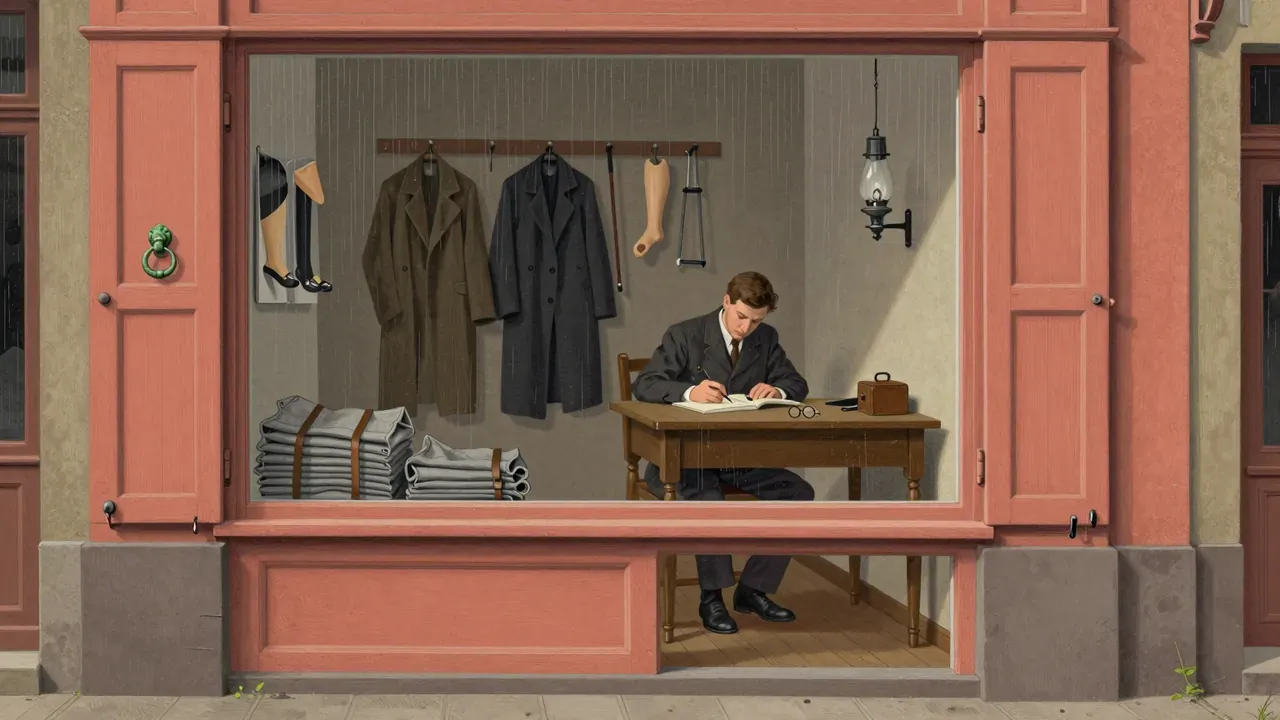
What does not land is the film’s attempt at narrative propulsion. Egon’s entanglement with high-society women feels schematic, his betrayal of Marie underwritten and unearned. The murder plot—Mrs. Leid’s strangulation, Marie’s false accusation, her later confession—functions less as thriller than as structural device, and its mechanics remain opaque. There is no forensic detail, no psychological build-up, only abrupt pivot and reversal. Similarly, Canez the speculator exists only as a name and a suit; his role in Rumfort’s financial ruin is stated, not dramatised. The film’s commitment to surface realism occasionally flattens motive into gesture: we see Grete reject her employer’s advances, but not what that refusal costs her beyond dismissal. Some scenes—particularly those involving Mrs. Greifer’s fashion boutique—feel like tableaux inserted to signal decadence rather than deepen character. Lotte Eisner’s 1955 criticism of ‘artificial, too condensed, too symbolically accentuated’ staging remains pertinent where the film strains to signify corruption without showing its infrastructure.
The ground it stands on
The themes that matter are inflation as lived experience, not economic theory; class as architecture, not ideology; and survival as labour, not virtue. The film treats money not as object but as medium—something that flows, congeals, vanishes, and corrupts contact. Food is never nourishment but currency, measurement, humiliation. The butcher’s shop is the film’s central institution: not a place of commerce but of rationing, surveillance, and sexual barter. Gender operates as constraint, not identity—Grete’s dismissal, Else’s transaction, Marie’s dependence on male patrons all stem from legal and economic exclusion, not personal failing. There is no nostalgia for pre-war order; the war veteran father is abusive, not tragic. The Red Cross officer Davy embodies benevolent imperialism: his charity is conditional, his forgiveness patronising. The film’s quietest theme is exhaustion—the way poverty depletes not just resources but the capacity for surprise, for risk, for hope. That exhaustion is visible in posture, in blink rate, in the way characters hold their shoulders when entering a room.
Who it asks to stay awhile
This film is for viewers who value precision over pace, social observation over individual arc, and historical texture over emotional payoff. It rewards attention to background action—what a maid does while two characters argue, how light falls across a doorway during a silent pause. It is not for those who require narrative closure, psychological exposition, or stylistic flourish. Anyone expecting the rhythmic intensity of Murnau or the symbolic density of Lang will find Joyless Street stubbornly literal. Those put off by silent-film conventions—intertitles as exposition, static framing, minimal close-ups—will struggle, though its restraint is deliberate, not deficient. A viewer who values Eisenstein’s dialectics or Vertov’s kineticism may find Pabst’s method too inert; a fan of contemporary social realism might find its lack of voiceover or direct address alienating. Its endurance depends on patience with accumulation rather than escalation.
Why it lasts
Yes, it is worth your evening—if you watch it as document, not drama. Its 148 minutes unfold like a municipal report made visible: housing stock, wage levels, food queues, police response times, all rendered in human scale. It repays slow viewing, repeated glances, note-taking on who eats what and when. It is not entertainment in the conventional sense, nor is it didactic; its power lies in refusing both. Those who dismiss it as ‘heavy going’, as Dave Kehr did in 1985, are not wrong—but their verdict assumes a contract the film never signs. To ask Joyless Street to move faster, explain more, or resolve cleanly is to misread its purpose. Its value increases with historical distance: the more removed we are from hyperinflation, the clearer its anatomy of crisis becomes. It is worth your evening if you treat it as primary source, not period piece.