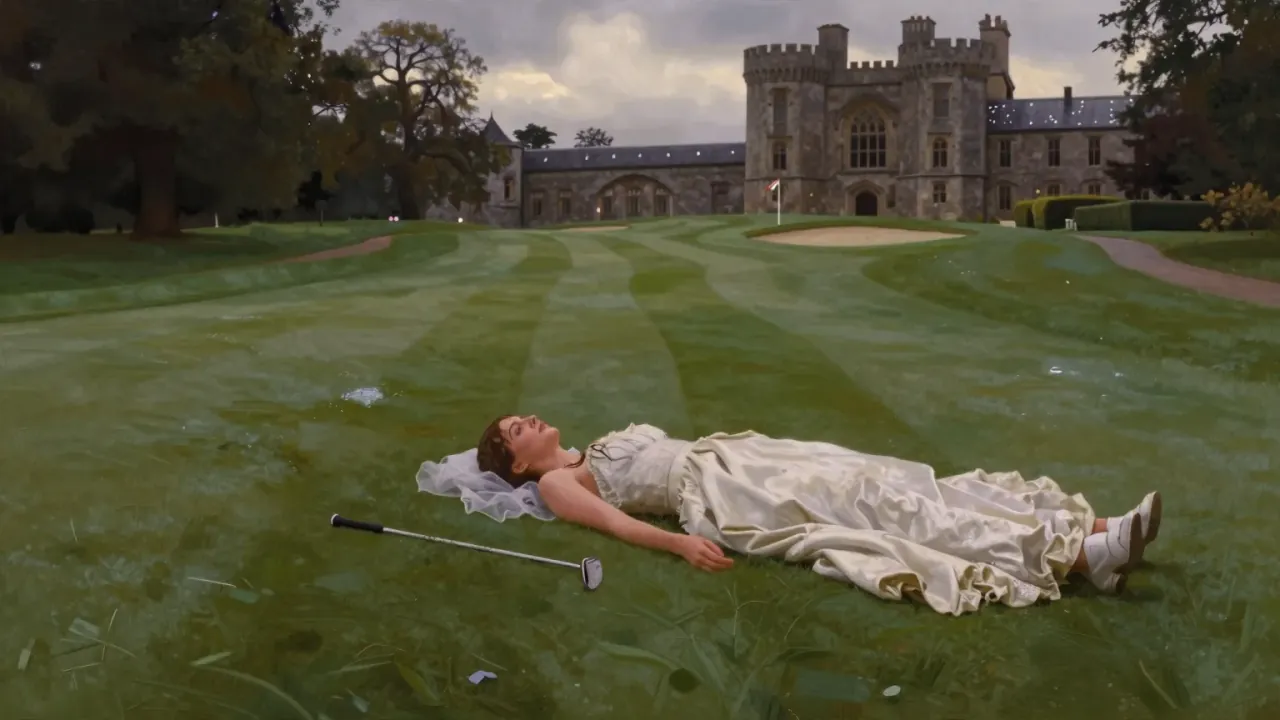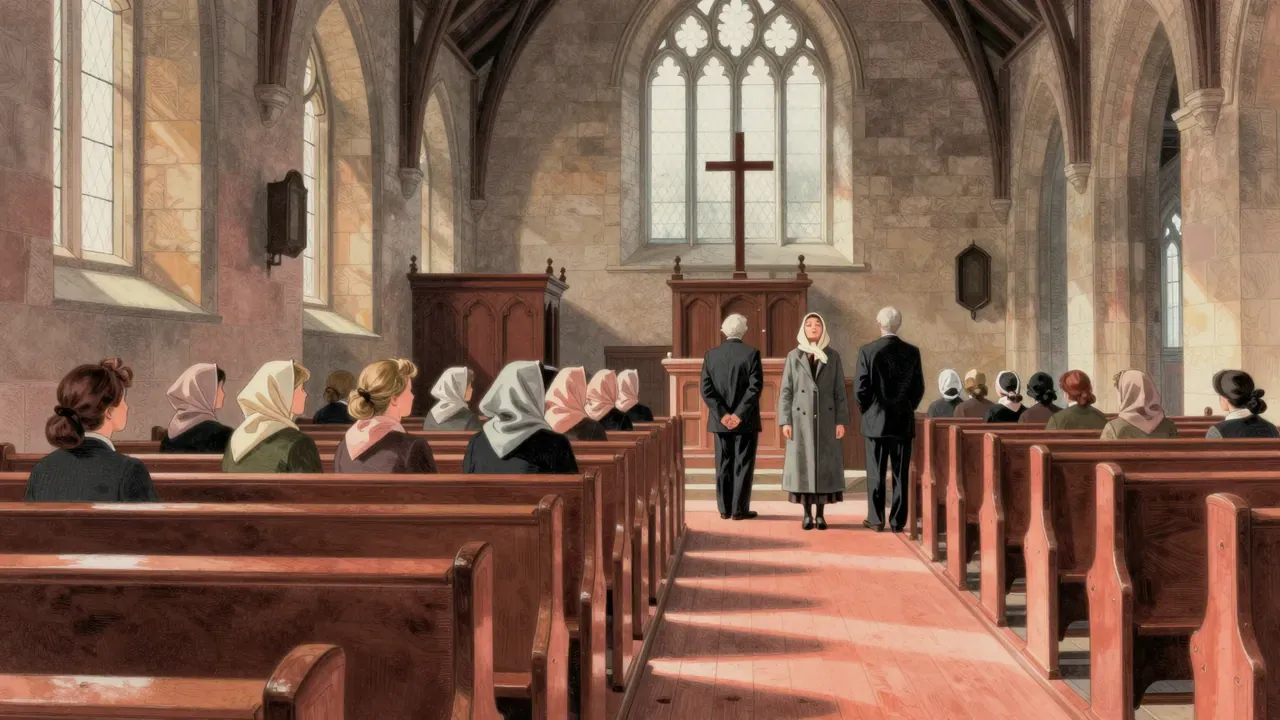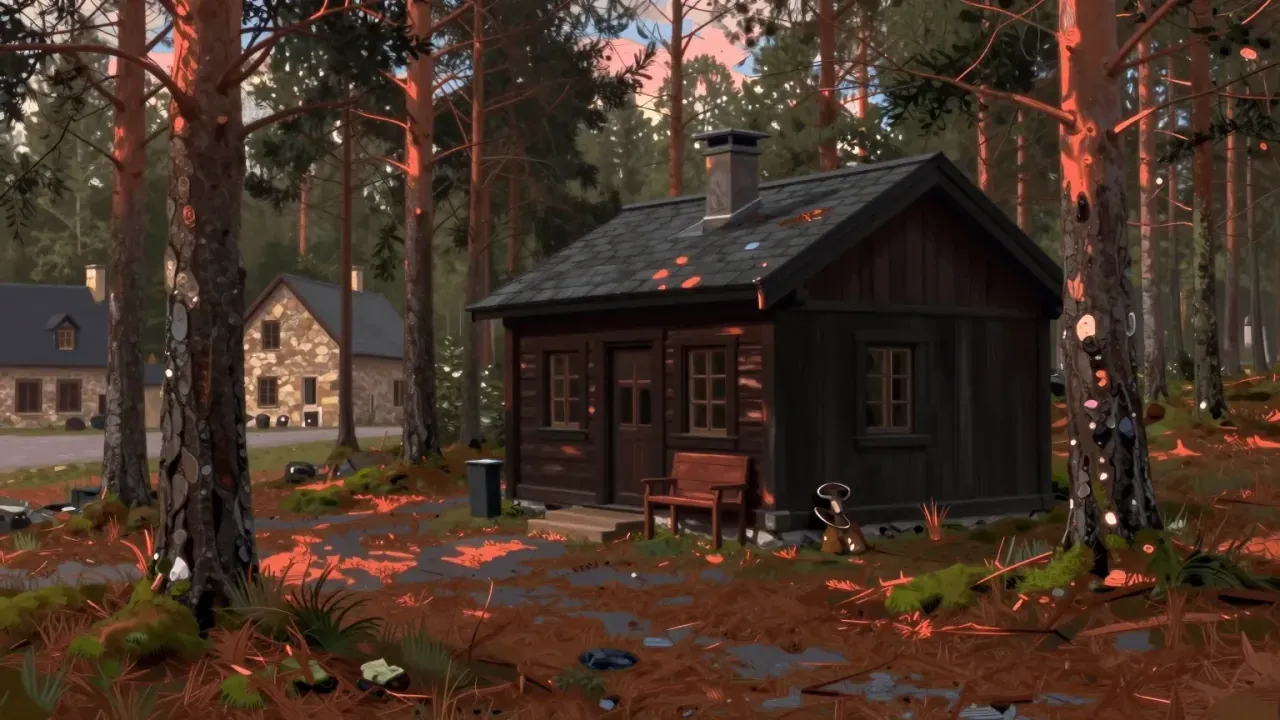
The look of it
Antichrist is a self-consciously philosophical horror-drama that attempts to stage clinical depression as metaphysical catastrophe. It does not simulate grief so much as weaponise it — turning mourning into a ritual of escalating violation, where the forest becomes both setting and antagonist, and theology serves less as belief than as scaffolding for collapse. Lars von Trier wrote the script in 2006 during hospitalisation for severe depression, and the film retains the syntax of that state: repetitive, obsessive, resistant to resolution. Its ambition is structural as well as thematic — dividing itself into prologue, four named chapters (Grief, Pain, Despair, Chaos Reigns), and epilogue, each functioning like a movement in a dissonant symphony. It treats horror not as genre convention but as diagnostic tool, borrowing from Strindberg’s Inferno and Tarkovsky’s symbolic density while rejecting their spiritual consolation. The film insists on its own extremity not for shock, but as fidelity to a logic where suffering is neither redemptive nor explicable — only recursive. It is less about what happens than how thought unravels when anchored to loss with no theological or psychological exit.
How it holds together
The story follows a therapist (Willem Dafoe) and his wife (Charlotte Gainsbourg) as they retreat to a remote cabin after their infant son’s death. What follows is a descent structured around her worsening panic attacks, his failed attempts at cognitive behavioural therapy, and the forest’s slow encroachment on their rationality. Anthony Dod Mantle’s cinematography alternates between clinical close-ups and lush, oppressive wide shots — the Red One digital capture lending a hyperreal sheen to decay, while the Phantom V4 slow-motion renders violence with unsettling lyricism. Åsa Mossberg and Anders Refn edit with rhythmic severity, cutting away from catharsis, holding on discomfort. Gainsbourg’s performance is physically total: her body registers anxiety not as symptom but as ontology; Dafoe grounds the film in quiet, watchful exhaustion rather than authority. The score by Kristian Eidnes Andersen avoids melody, favouring low drones and sudden silences. Every craft decision serves compression — no shot lingers without purpose, no sound enters without weight. Even the fox’s voice, supplied by Dafoe and heavily processed, functions less as character than as rupture in the film’s internal grammar.
What stays with you
What lands is the film’s unflinching commitment to its own terms. The opening sequence — a nine-minute silent montage of sex and death set to Handel’s Largo — establishes tone with brutal economy: intimacy and annihilation are inseparable. Gainsbourg’s physical performance remains indelible, particularly in the ‘Pain’ chapter, where her panic attack is rendered not as acting but as physiological event — breath, tremor, dilation — captured without editorial judgment. The forest sequences land because they refuse picturesque framing; instead, moss, rot, and insect life are lit with forensic attention, making nature feel sentient and hostile. The editing rhythm works precisely where it denies release: cuts to black punctuate trauma like slammed doors. The film’s dedication to Andrei Tarkovsky is legible not in homage but in shared austerity — long takes, minimal exposition, weight given to objects (a broken teacup, a rusted nail, a deer’s stillborn body). These choices cohere into something rare: a film whose formal rigour matches its emotional extremity, never softening its gaze even when the subject is unbearable.
Where it slips
What does not land is the film’s reliance on symbolic shorthand that collapses under scrutiny. The chapter titles — ‘Grief’, ‘Pain’, ‘Despair’, ‘Chaos Reigns’ — promise conceptual architecture but deliver repetition dressed as progression. The theological framing — Satan as creator, nature as hell — is introduced with portent but never developed beyond allegorical gesture. Characters remain functionally unnamed (‘He’, ‘She’) not as poetic restraint but as evasion: their psychology is subsumed by archetype, leaving little room for contradiction or growth. Some sequences — notably the genital mutilation — operate less as narrative consequence than as provocation divorced from dramatic necessity, their shock value unmoored from cumulative meaning. The fox’s monologue, though chilling in delivery, reads as exposition masquerading as revelation, its content too literal to sustain the film’s earlier ambiguity. The ending offers no synthesis, only escalation — which may be honest to depression’s logic, but risks mistaking stasis for profundity. Several critics noted this imbalance: the film’s craft is undeniable, but its ideas do not evolve at the same pace as its imagery.
What it’s really about
The themes that matter are not those announced in the title or chapter headings, but those embedded in texture and repetition: the failure of language to contain trauma, the way grief corrodes time perception, and the impossibility of therapeutic intervention when the patient has already internalised the diagnosis as identity. The forest is not metaphor but condition — a space where cause and effect dissolve, where memory loops, and pain loses its narrative function. The film interrogates masculinity not through action but through impotence: Dafoe’s character cannot fix, interpret, or even reliably witness what unfolds. Femininity is presented not as ideology but as site — of birth, rupture, knowledge, and unspeakable memory — though the film’s treatment of this remains contested, veering between radical embodiment and reductive essentialism. Underlying all this is a sustained meditation on agency: who gets to name reality, who bears witness, and what happens when the witness is also the instrument of harm. These are not abstract concerns but physiological ones — registered in pulse, posture, pupil dilation — making the film’s intellectual ambitions inseparable from its somatic register.
Who it’s for
This film is for viewers who approach cinema as a site of ethical and perceptual testing, not entertainment — those accustomed to Tarkovsky, early Cronenberg, or Chantal Akerman, and willing to sit with unresolved tension for over an hour. It rewards patience with formal intelligence and demands tolerance for sustained discomfort without catharsis. It is not for viewers seeking narrative coherence, psychological realism, or emotional safety; nor for those who find graphic depictions of self-harm, sexual violence, or animal distress incompatible with engagement. Some will reject it as misogynist spectacle, others as nihilist posturing — reasonable positions, given the film’s refusal to distance itself from its most extreme images. A viewer who values clarity of intention over ambiguity would likely find it hollow. A viewer who requires moral anchoring would leave unsettled. Its worth hinges on whether one believes extremity can be diagnostic — not illustrative — and whether discomfort, when rigorously sustained, constitutes argument.
Why it lasts
Yes, it is worth your evening — but only if you accept that the film’s duration is part of its method, not a flaw to be endured. Its 104 minutes are calibrated to induce fatigue, not suspense; its pacing forces attention to accumulate like pressure. It repays close viewing not because it yields answers, but because its construction — every cut, light cue, and sonic absence — is deliberate and defensible. Those who dismiss it as gratuitous have likely missed how tightly its form contains its fury. Others may find its commitment to despair aesthetically admirable but existentially exhausting — a verdict that says more about the viewer’s threshold than the film’s failure. It is not for casual viewing, nor for those needing resolution. But for those willing to meet it on its own uncompromising terms, it remains one of the few recent films to treat mental collapse not as plot device but as ontological condition — and to do so with technical precision no studio production dares match.