What the film is
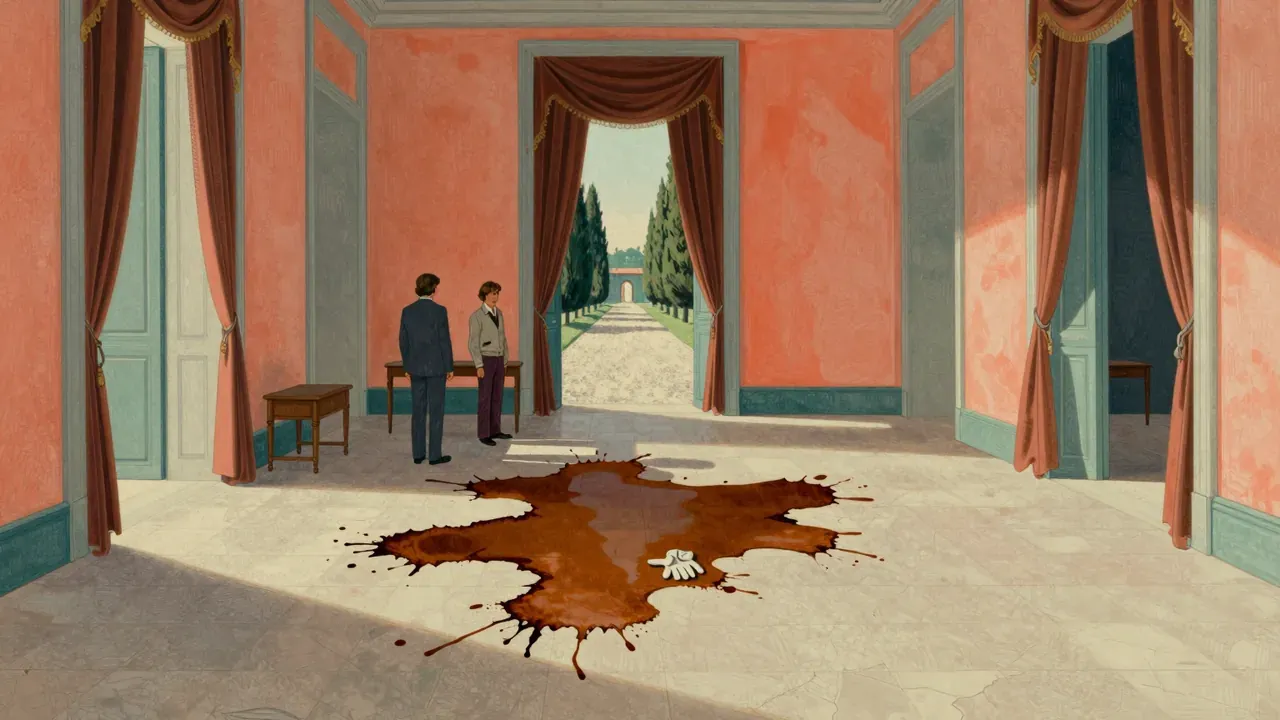
Epidemic is a self-reflexive Danish horror film that treats screenwriting as contagion. Lars von Trier and Niels Vørsel play themselves drafting a script about a plague while, in parallel, a real-seeming outbreak begins to infiltrate their lives — first as rumour, then as symptom, then as fatality. The film does not aim to frighten through suspense or gore but to stage the collapse of fiction’s boundary: the script they write does not merely describe disease but appears to summon it, turning narrative agency into epidemiological cause. It is the second part of von Trier’s Europa trilogy, and its formal ambition lies in binding process to product — the act of writing becomes indistinguishable from transmission, revision from incubation, pitch meeting from diagnosis. This is not allegory dressed as realism; it is realism made unstable by its own authorial premises. The film refuses to settle whether the epidemic is metaphysical, psychological or literal — and that refusal is structural, not evasive. It asks the viewer to hold three registers at once: documentary observation of two writers at work, genre fiction about a renegade doctor, and ontological slippage where the fictional world bleeds into the diegetic one. Word count: 152
How it works
The film works through strict division: five days, each marked by a title card, each layering reality and fiction more densely. Von Trier and Vørsel perform with dry, uninflected naturalism — no winking, no theatricality — which makes their gradual unease credible. Henning Bendtsen’s cinematography uses grainy 16mm for the ‘real’ scenes and slightly cleaner stock for the ‘scripted’ ones, but the distinction blurs as the film progresses, especially after the Cologne sequence, where archival footage and staged dialogue cohere into shared texture. Peter Bach’s score is sparse, mostly low drones and isolated piano notes, never cueing emotion but thickening silence. Editing by von Trier and Thomas Kragh alternates between long takes of conversation and abrupt cuts to clinical close-ups — a scalpel on skin, a fork held too long in trembling fingers. Udo Kier’s presence as himself, recounting wartime bombing, anchors the film in historical trauma without exposition. The craft does not serve spectacle but calibration: every choice tightens the loop between creation and consequence. Word count: 158
What lands
What lands is the cumulative pressure of the frame’s narrowing logic. The film’s central conceit — that storytelling can infect — gains weight not through shock but through repetition: each day introduces a new point of contact between script and life, and each contact feels less coincidental, more inevitable. The hospital scene, where Niels undergoes surgery while narrating the autopsy, lands with quiet precision because it avoids melodrama and trusts the viewer to register the shift from anecdote to symptom. The final dinner with the producer lands as both satire and warning: his dismissal of the script’s lack of violence and subplots is delivered with bureaucratic indifference, making the subsequent breakdown feel like an ethical reckoning rather than a plot twist. The suicide-by-fork is not grotesque but chillingly matter-of-fact — a gesture stripped of catharsis, leaving only residue. The film’s restraint, its refusal to underline or explain, is what gives its horror durability. It does not scare you once; it unsettles you twice — during viewing, then again when you recall how little it showed. Word count: 159
What does not
What does not land is the mid-section’s digression into Germany and the Allied bombing of Cologne. Though formally integrated — grain, sound design, pacing all match — it sits outside the film’s core mechanism: the recursive relationship between writing and outbreak. Its thematic resonance with trauma and historical memory is clear, but it interrupts the tightening rhythm of the five-day structure without folding back into the central conceit. Similarly, the hypnotist and the second woman’s death arrive abruptly, with insufficient groundwork in character or motive; their function is symbolic — vessels for the script’s return — but the film does not earn their visceral impact. The Criterion restoration clarifies these passages visually, but it cannot resolve their structural looseness. Some viewers may find the metafictional scaffolding too rigid, the performances too flat, the pacing too deliberate — and those are not flaws in execution but consequences of the film’s chosen austerity. It demands patience not as a virtue but as a condition of entry. Word count: 157
The themes that matter
The themes that matter are authorship as responsibility, fiction as vector, and medicine as metaphor. The film treats the screenplay not as blueprint but as pathogen — something that replicates, mutates, and spreads through proximity and attention. Dr. Mesmer’s rebellion against the Faculty of Medicine mirrors von Trier’s own position outside Danish commercial cinema: both operate on faith in unorthodox methods, both face institutional dismissal, both risk collateral damage. The disease has no name, no origin, no cure — it is not biological but systemic, emerging where authority fails to diagnose, where language fails to contain, where narrative fails to distinguish cause from effect. The film also interrogates collaboration: Vørsel and von Trier co-write, co-perform, co-edit — yet the script consumes them asymmetrically, claiming Vørsel first, then the women around them. This is not about ego but about the asymmetry of creative labour: who bears the cost when ideas take material form? The film’s horror is not supernatural but epistemological — the dread of realising your own syntax has become contagious. Word count: 158
Who should watch it
This film is for viewers who treat genre as grammar, not decoration — those who read horror as philosophy and arthouse as infrastructure. It rewards attention to texture, tolerance for unresolved ambiguity, and familiarity with von Trier’s early preoccupations: control, failure, and the ethics of representation. It is not for those who require narrative propulsion, emotional signposting, or closure. Anyone expecting the visceral immediacy of later von Trier films — the operatic cruelty of Antichrist or the procedural dread of The House That Jack Built — will find Epidemic frustratingly muted. Those who dislike metafiction, or who distrust films that refuse to separate writer from subject, will reject its premise outright. A viewer who values clarity over coherence, or catharsis over complicity, would be better served elsewhere. The film’s value lies in its rigour, not its accessibility — and that rigour is non-negotiable. Word count: 150
Is it worth your evening
Yes, it is worth your evening — but only if you watch it as a document of method, not as entertainment. Its 106 minutes unfold with the gravity of a controlled experiment: every cut, every pause, every line of dialogue serves the central proposition. It repays slow viewing, not because it hides meaning but because it insists on duration as evidence — the time it takes for a cough to become contagious, for a script page to become a symptom. Those who dismiss it as pretentious miss how plainly it states its terms: this is about writing, disease, and the moment those two verbs converge. Critics who gave it low scores on Rotten Tomatoes likely expected conventional horror or narrative payoff; those who praised it on Metacritic recognised its structural discipline. The verdict changes only if you demand that horror deliver fear before it delivers thought — and Epidemic refuses that hierarchy. Word count: 152