filmbriefs
Topic

The Cold War

Forty-five years of proxy wars and mutually assured restraint.

85
in film
13:00
average
1105 min
in total
160
across the network
The Cold War across the network →
All briefs85
13:00

4 Months, 3 Weeks and 2 Days

Cristian Mungiu · 2007

Set in Communist Romania in 1987, 4 Months, 3 Weeks and 2 Days follows two university students as they arrange an illegal abortion under Decree 770. Directed by Cristian Mungiu and shot by Oleg Mutu in long, unbroken takes, it avoids exposition, music and close-ups to render the physical and moral weight of the act with unsentimental precision. The film won the Palme d'Or at Cannes in 2007 and remains a benchmark of Romanian New Wave austerity.
13:00

A Report on the Party and the Guests

Jan Němec · 1966

A group of picnickers are intercepted in the woods and directed to a celebration, where arbitrary rules govern their conduct. When one guest disappears, the party mobilises to retrieve him — not out of concern, but to preserve the integrity of the event. Made by Jan Němec at Barrandov Studios, the film uses stark visual discipline and behavioural minimalism to trace how authority takes root in shared compliance.

13:00

All Night Long

Basil Dearden · 1962

Basil Dearden’s All Night Long transposes Shakespeare’s Othello to a single night at a Thames-side jazz party, starring Patrick McGoohan as a scheming drummer, Paul Harris as a bandleader, and Marti Stevens as his wife. With contributions from Dave Brubeck, Charles Mingus and John Dankworth, the film treats jazz not as ornament but as narrative grammar — its rhythms, improvisations and silences shaping character and consequence. Shot in black and white by Edward Scaife, written by blacklisted screenwriter Paul Jarrico, it is a study in mediation, mistrust and the cost of control.

13:00

Ashes and Diamonds

Andrzej Wajda · 1958

Andrzej Wajda’s 1958 drama Ashes and Diamonds compresses Poland’s postwar reckoning into a single rain-dampened day. Former Home Army soldier Maciek Chełmicki hesitates before carrying out an assassination order — not out of doubt about his cause, but from a growing awareness of time, mortality and connection. Shot in stark, intimate compositions by Jerzy Wójcik and anchored by Zbigniew Cybulski’s defining performance, it treats ideology as atmosphere rather than argument, and history as something felt in the body before it is understood in the mind.

13:00

Blind Chance

Krzysztof Kieślowski · 1987

Krzysztof Kieślowski’s 1987 film follows Witek (Bogusław Linda) through three divergent lives, each triggered by how he navigates a single encounter at Łódź Fabryczna station. In one, he joins the Communist Party; in another, he joins the anti-Communist resistance; in the third, he retreats into apolitical domesticity. Shot with procedural restraint by Krzysztof Pakulski and edited with mathematical parity by Elżbieta Kurkowska, the film treats political identity as emergent from physical circumstance — not philosophy, but timing, surface, and sequence.

13:00

Boat People

Ann Hui · 1982

Ann Hui’s 1982 docudrama, shot on Hainan Island with PRC permission, follows a Japanese photojournalist witnessing life in post-war Vietnam. Built from interviews with Vietnamese refugees, it renders systemic coercion through restrained performances, unvarnished cinematography, and a structure that contrasts staged propaganda with lived hardship. It won Best Film at the 1983 Hong Kong Film Awards and remains a landmark of Hong Kong New Wave realism.

13:00

Canoa: A Shameful Memory

Felipe Cazals · 1976

Felipe Cazals’s 1976 Mexican drama reconstructs the 1968 San Miguel Canoa massacre, where five university employees were lynched after a local priest branded them communists. Shot in documentary style in the actual town, with Alex Phillips Jr.’s restrained cinematography and Enrique Lucero’s chillingly calm performance as the priest, the film traces how fear, faith, and state rhetoric coalesce into mob violence — not as exception, but as logical outcome.

13:00

Carlos

Olivier Assayas · 2010

Olivier Assayas’s 2010 French drama Carlos traces the operational life of Ilich Ramírez Sánchez across three decades and multiple continents. Shot in English with multilingual dialogue, it avoids moral framing in favour of procedural fidelity: safe houses, intercepted signals, bureaucratic friction, and the slow decay of ideological certainty. Édgar Ramírez leads a large international cast; editing and cinematography privilege duration and texture over exposition. At 338 minutes, it demands sustained attention but repays it with historical granularity and structural rigour.

13:00

Che Part 2: Guerrilla

Steven Soderbergh · 2008

Che Part 2: Guerrilla follows Ernesto Guevara’s 1965–67 Bolivian campaign as a procedural collapse: dwindling supplies, failed communications, eroding morale, and mounting isolation. Directed by Steven Soderbergh and starring Benicio del Toro, it avoids mythmaking in favour of granular, unsentimental chronology — treating revolution as logistics, not legend.

13:00

Cold War

Paweł Pawlikowski · 2018

Set across Poland, East Berlin, Paris and Yugoslavia between the late 1940s and early 1960s, Cold War follows the obsessive, cyclical relationship between Wiktor, a composer, and Zula, a singer, as they repeatedly reunite and part under political and personal pressure. Shot in stark black-and-white by Łukasz Żal and directed by Paweł Pawlikowski, the film uses elliptical storytelling, restrained performances and a jazz-inflected score to explore love as compulsion, exile as identity, and endurance as quiet surrender.

13:00

Cruel Story of Youth

Nagisa Ōshima · 1960

Nagisa Ōshima’s 1960 debut Cruel Story of Youth follows two Tokyo teenagers whose relationship unravels through coercion, petty crime, and illegal abortion. Shot on location with hand-held cameras and stark, uninflected performances, it rejects moral framing in favour of structural realism — showing how class, gender, and political neglect shape intimacy. Though controversial on release, it helped define Japan’s New Wave and remains a rigorous, unsentimental study of youth as condition rather than stage.

13:00

Destroy All Monsters

Ishirō Honda · 1968

Destroy All Monsters (1968), directed by Ishirō Honda, assembles Toho’s entire kaiju roster under the control of the Kilaak aliens, using Monsterland as a narrative hub. With Akira Ifukube’s score and Sadamasa Arikawa’s practical effects, it stages a global monster mobilisation culminating in a choreographed battle at Mount Fuji. Structurally ambitious but emotionally sparse, it prioritises systemic logic over character depth — a Cold War parable rendered in rubber suits and balsa-wood spaceships.

13:00

Fail-Safe

Sidney Lumet · 1964

A US bomber squadron, accidentally released from fail-safe protocols, heads toward Moscow. With no way to recall them, the President must order the destruction of New York City to prove to the Soviets that the attack was accidental — not the opening move of a first strike. Sidney Lumet’s 1964 thriller unfolds in real time across war rooms and airborne command posts, using austere visuals, procedural dialogue, and Henry Fonda’s restrained performance to dramatise how rational systems produce irrational ends.

13:00

Fiend Without a Face

Arthur Crabtree · 1958

Fiend Without a Face (1958) is a British science fiction horror film directed by Arthur Crabtree, adapted from Amelia Reynolds Long’s short story 'The Thought Monster'. When a scientist’s experiments with thought projection intersect with nuclear-powered radar, invisible entities emerge — then materialise as flying brains with spinal cords and eyestalks. Made on a tight budget in England with stop-motion effects created in Munich, it builds slowly before delivering a memorably visceral climax. Though its first half drags and its setting feels generic, its commitment to anatomical horror and practical ingenuity has earned it enduring cult status.

13:00

Genocide

Kazui Nihonmatsu · 1968

Genocide (1968), directed by Kazui Nihonmatsu for Shochiku, is a science fiction horror film set on a fictional Japanese archipelago where weaponised insects emerge in the wake of a crashed H-bomb. Blending Cold War paranoia, post-nuclear trauma, and ecological unease, it follows biologist Dr. Nagumo, islander Yukari, and American soldiers as they confront biological invasion, espionage, and the looming threat of nuclear cover-up. Shot by Shizuo Hirase with a sparse score by Shunsuke Kikuchi, it is austere in execution and ambitious in theme — Shochiku’s final horror release, and a singularly uneasy artefact of its time.

13:00

Ghidorah, the Three-Headed Monster

Ishirō Honda · 1964

Ghidorah, the Three-Headed Monster (1964) is Toho’s fifth Godzilla film and the first to stage a three-monster alliance against an extraterrestrial threat. Directed by Ishirō Honda with special effects by Eiji Tsuburaya, it follows a Venusian prophetess who warns Earth of King Ghidorah’s arrival, prompting Godzilla, Rodan, and Mothra to set aside rivalry. Built on recycled suits, hand-crafted miniatures, and Akira Ifukube’s score, it privileges ritual over exposition and collective stance over individual heroism. Though human subplots are thin and Ghidorah’s suit proved technically taxing, its vision of reluctant solidarity remains singular in the franchise.

13:00

Godzilla

Ishirō Honda · 1954

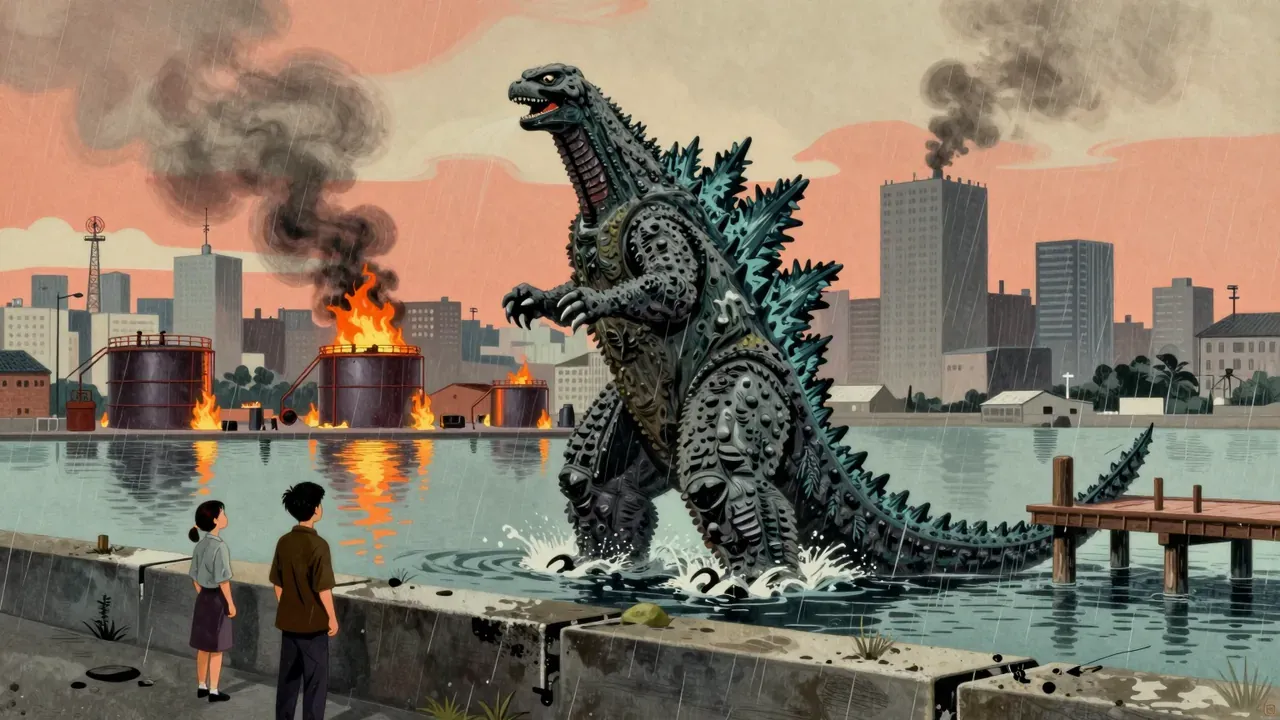
Godzilla (1954) is Toho’s foundational kaiju film, directed by Ishirō Honda and conceived after the Daigo Fukuryū Maru incident. It follows scientists and officials responding to a prehistoric creature mutated by hydrogen bomb tests. Shot in black-and-white with pioneering suitmation effects, its tone is sober, almost documentary-like. The film avoids monster-movie tropes in favour of bureaucratic realism, scientific debate, and quiet devastation. Though its pacing and formal restraint challenge modern expectations, its thematic urgency — on nuclear consequence, institutional failure, and irreversible change — remains undimmed.

13:00

Goke, Body Snatcher from Hell

Hajime Satō · 1968

Goke, Body Snatcher from Hell (1968), directed by Hajime Satō, follows survivors of a plane crash on a deserted island who are hunted by a vampiric alien entity. With minimal exposition and stark visuals, it charts their rapid moral collapse under pressure — betrayals, sacrifices and self-preservation escalate until only two remain, walking across a dead world beneath an orbital fleet. Shunsuke Kikuchi’s score and practical effects reinforce its clinical, allegorical tone.

13:00

Hearts and Minds

Peter Davis · 1974

Hearts and Minds (1974), directed by Peter Davis, is a fiercely focused documentary about the Vietnam War that builds its argument through juxtaposition rather than narration. Shot by Richard Pearce and edited by Lynzee Klingman, it assembles interviews with American officials, veterans, and Vietnamese civilians into a sustained critique of US assumptions about race, power, and civilisation. Winning the 1975 Academy Award for Best Documentary, it remains polarising: praised for its moral urgency and condemned for its selectivity. Its enduring significance lies not in balance, but in its unflinching exposure of how language enables violence—and how footage, once recorded, outlives intention.

13:00

Here's Your Life

Jan Troell · 1966

Jan Troell’s 1966 debut follows Olof Persson across a succession of working-class jobs in early-twentieth-century northern Sweden. Adapted from Eyvind Johnson’s semi-autobiographical novel, it charts his slow, unspectacular formation through labour, reading, politics and fleeting relationships—never through crisis or revelation, but through accumulation, repetition and quiet observation.

13:00

Hopscotch

Ronald Neame · 1980

Hopscotch (1980) is a low-key, Mozart-scored spy comedy starring Walter Matthau as Miles Kendig, a CIA veteran who retaliates against forced retirement by writing and publishing an explosive memoir — mailing chapters to rival intelligence agencies across Europe and the US. Directed by Ronald Neame and adapted by Bryan Forbes and Brian Garfield, it trades thrills for procedural wit, treating espionage as bureaucratic farce rather than mortal peril. Its pleasures lie in Matthau’s dry authority, Arthur Ibbetson’s unshowy camerawork, and Ian Fraser’s precisely deployed classical score.

13:00

I Am Cuba

Mikhail Kalatozov · 1964

I Am Cuba (1964) is a Soviet-Cuban co-production directed by Mikhail Kalatozov, presenting four interwoven stories of Cuban life before the Revolution. Shot in stark black and white with groundbreaking long takes and extreme wide-angle lenses by Sergey Urusevsky, it traces dispossession, resistance, and political awakening through the lives of a prostitute, a sugar farmer, student activists, and a reluctant rebel. Though initially dismissed in both Havana and Moscow for its perceived detachment and ideological ambiguity, it was rediscovered in the 1990s and acclaimed for its formal daring and political gravity.

13:00

I Live in Fear

Akira Kurosawa · 1955

Akira Kurosawa’s 1955 drama follows Kiichi Nakajima (Toshirō Mifune), an ageing foundry owner convinced that nuclear war is inevitable, and his desperate, legally contested plan to move his family to Brazil. Framed by a family arbitration and ending in psychiatric confinement, the film avoids sensationalism, using restrained performances, precise black-and-white cinematography by Asakazu Nakai, and Masaru Sato’s austere score to examine fear, competence, and the social cost of foresight in postwar Japan.

13:00

Insignificance

Nicolas Roeg · 1985

Nicolas Roeg’s 1985 Insignificance adapts Terry Johnson’s play into a tightly wound, non-linear encounter between four archetypal figures — a movie star, a physicist, a baseball player and a politician — over one night in a New York hotel. Starring Theresa Russell, Tony Curtis, Gary Busey and Michael Emil, it uses fragmentation, silence and precise physical performance to explore how public identity obscures private reality. Though uneven in its treatment of power and consequence, it remains a singular, unsentimental meditation on visibility, vulnerability and the cost of being known.

13:00

Invasion of Astro-Monster

Ishirō Honda · 1965

Invasion of Astro-Monster (1965), directed by Ishirō Honda and co-produced by Toho and UPA, sends Godzilla and Rodan to Planet X to battle King Ghidorah — only for the aliens to betray Earth and unleash all three monsters. Shot under tight budget and time constraints, it relies on recycled effects, economical sets, and a streamlined script. Nick Adams joins the cast for US appeal, and Akira Ifukube’s score anchors its escalating chaos. Though criticised for tonal inconsistency and thin plotting, its craft choices — from the dug-out rocket launch to nitrogen-generated mist — reveal a studio working resourcefully within limits.

13:00

Kings of the Road

Wim Wenders · 1976

Wim Wenders’ 1976 Kings of the Road follows a projection-equipment repairman driving along West Germany’s side of the inner-German border, fixing decaying cinemas and sharing his cab with a man recovering from emotional collapse. Shot in black and white by Robby Müller, with sparse dialogue and long, observational takes, it is less a story than a sustained mood — one of quiet endurance, technical care, and landscape-as-character. Its 168-minute runtime tests attention but rewards it with granular detail and unsentimental humanity.

13:00

Leningrad Cowboys Go America

Aki Kaurismäki · 1989

Leningrad Cowboys Go America (1989) is a 78-minute Finnish comedy directed by Aki Kaurismäki, following a fictional Soviet band’s deadpan journey from the tundra to a Mexican wedding via New York and the American South. Starring Matti Pellonpää and Kari Väänänen, with cameos by Jim Jarmusch and Duke Robillard, it deploys rigid framing, monotone delivery and metronomic editing to sustain a tone of bureaucratic absurdity. There are no arcs, no explanations, no emotional payoffs — only forward motion, repeated gestures, and the quiet insistence that this is all perfectly reasonable.

13:00

Leningrad Cowboys Meet Moses

Aki Kaurismäki · 1994

Leningrad Cowboys Meet Moses follows the Finnish rock band’s absurd trek from Mexico to Siberia, guided by a rebranded ex-manager who calls himself Moses and carries the Statue of Liberty’s nose. Along the way, a CIA agent becomes a convert, borders are crossed via distraction, and scripture and the Communist Manifesto are quoted with equal solemnity and vacancy. Directed by Aki Kaurismäki, the film sustains a rigorously flat tone — no exposition, no emotion, no explanation — treating pilgrimage, espionage, and faith as interchangeable administrative tasks.

13:00

Lola

Rainer Werner Fassbinder · 1981

Rainer Werner Fassbinder’s 1981 drama Lola, the second film in his BRD Trilogy, relocates Heinrich Mann’s Professor Unrat to 1957 Coburg. It follows building commissioner von Bohm’s doomed attempt to impose integrity on a town whose elite — mayor, banker, police chief — all profit from property developer Schuckert’s brothel, run by singer Lola. As von Bohm falls for her, uncovers systemic corruption, and ultimately marries her with Schuckert’s blessing, the film anatomises how moral authority is staged, delegated, and sold. Stylised, unsentimental, and rigorously structured, it treats reconstruction not as renewal but as rebranding.

13:00

Made in U.S.A

Jean-Luc Godard · 1966

Made in U.S.A (1966) is Jean-Luc Godard’s fractured, politically charged crime film starring Anna Karina as journalist Paula Nelson, investigating her ex-boyfriend’s death in a fictional French coastal town. Loosely adapted without permission from Richard Stark’s The Jugger, it deploys genre tropes—murder, conspiracy, double-cross—as scaffolding for linguistic play, political satire, and formal experimentation. Shot by Raoul Coutard and edited by Agnès Guillemot, it favours graphic colour, abrupt cuts, and disembodied voices over narrative coherence. Its themes pivot on naming, ideological exhaustion, and the impossibility of clean political action in a mediated world.

13:00

Man Is Not a Bird

Dušan Makavejev · 1965

Dušan Makavejev’s 1965 debut follows two parallel lives in industrial Yugoslavia: an engineer’s brief affair with a hairdresser, and a miner’s string of domestic and legal mishaps. Shot with unadorned realism by Tomislav Pinter and scored sparingly by Petar Bergamo, the film treats both stories with equal, unsentimental attention. Its power lies in restraint — in glances, silences, and the quiet friction between expectation and desire — not in plot or polemic.

13:00

Memories of Underdevelopment

Tomás Gutiérrez Alea · 1968

Tomás Gutiérrez Alea’s 1968 drama follows Sergio, a Havana intellectual who stays behind after the Revolution while his family flees. Narrated by Sergio himself, the film interweaves his relationships, memories, and political observations with documentary footage from the era. Shot economically and with formal rigour, it presents alienation not as existential angst but as the quiet persistence of privilege amid upheaval.

13:00

Missing

Costa-Gavras · 1982

Costa-Gavras’s 1982 film follows an American businessman and his daughter-in-law as they search for a journalist missing after the 1973 Chilean coup. Shot in Mexico and performed largely in Spanish, it traces their confrontation with U.S. diplomatic obstruction and their slow realisation of systemic complicity. Jack Lemmon and Sissy Spacek anchor a restrained, procedural portrait of grief and accountability.

13:00

Mothra vs. Godzilla

Ishirō Honda · 1964

Mothra vs. Godzilla is a 1964 Toho production directed by Ishirō Honda, pitting the two iconic kaiju in a story where human greed unleashes destruction, and sacred duty restores balance. With practical effects by Eiji Tsuburaya and music by Akira Ifukube, it balances mythic gravity and genre mechanics in 89 tightly composed minutes.

13:00

Mr. Freedom

William Klein · 1969

William Klein’s 1969 Mr. Freedom is a French-made English-language satirical comedy starring Albert Augier as a US vigilante sent to France to combat communism — and to enforce a ‘white wall of freedom’. With Delphine Seyrig, Donald Pleasence, and Daniel Cohn-Bendit, it deploys inflatable villains, supermarket embassies, and nuclear brinkmanship to dissect Cold War rhetoric, white nationalism, and the theatricality of power. Pierre Lhomme shot it; Michel Colombier scored it. It is abrasive, uncompromising, and deliberately exhausting — less a story than a sustained political provocation.

13:00

Night of the Living Dead

George A. Romero · 1968

Night of the Living Dead (1968) is a black-and-white American horror film directed by George A. Romero, shot on 35mm with a $114,000 budget. Nine people take refuge in a rural Pennsylvania farmhouse as flesh-eating ghouls close in. Duane Jones stars as Ben, the de facto leader whose authority is tested by both the dead outside and the living within. The film avoids exposition, embraces technical limitation, and treats social breakdown as an observable process. It entered the public domain due to a missing copyright notice, enabling wide distribution and lasting influence. Preserved in the National Film Registry in 1999.

13:00

Nineteen Eighty-Four

Michael Radford · 1984

Michael Radford’s 1984 is a literal, location-precise rendering of Orwell’s novel, filmed in London and Wiltshire during April–June 1984. With John Hurt as Winston Smith and Richard Burton’s final performance as O’Brien, it uses bleach bypass cinematography to create a desaturated, airless world. The film prioritises textual fidelity over interpretation, building dread through accumulation rather than spectacle. Though criticised for emotional reserve and ideological flatness, it remains a benchmark of disciplined adaptation.

13:00

Paris Belongs to Us

Jacques Rivette · 1961

Jacques Rivette’s 1961 debut is a slow-burning, enigmatic drama set among Parisian artists haunted by unexplained deaths and whispered conspiracies. Shot in natural light and real locations, it sustains a mood of existential and political unease without offering explanations — treating paranoia as ambient, collective, and structurally embedded.

13:00

Paul Robeson: Tribute to an Artist

Saul J. Turell · 1979

Saul J. Turell’s 1979 Oscar-winning short documentary focuses on Paul Robeson’s evolving performances of 'Ol’ Man River' across three decades, using archival footage and Sidney Poitier’s restrained narration to trace artistic and political transformation without biographical exposition. It is a precise, austere act of reclamation — less a life story than a sustained listening.

13:00

Riot in Cell Block 11

Don Siegel · 1954

Don Siegel’s 1954 drama, shot on location at Folsom State Prison, follows a meticulously planned inmate uprising against inhumane conditions. With Neville Brand and Emile Meyer leading a cast that includes real ex-convict Leo Gordon, the film sustains tension through procedural realism—not action, but negotiation, delay, and bureaucratic betrayal. Its downbeat ending refuses catharsis, insisting instead on the fragility of reform within entrenched systems.

13:00

Samurai Spy

Masahiro Shinoda · 1965

Masahiro Shinoda’s 1965 Samurai Spy follows ninja spy Sasuke Sarutobi amid the unstable truce after Sekigahara. Drawn reluctantly into a web of double agents working for Tokugawa and Toyotomi factions, Sasuke navigates shifting loyalties, unverifiable identities, and pervasive distrust. With restrained performances, Kazuo Miyagawa’s chiaroscuro cinematography, and Tōru Takemitsu’s sparse, haunting score, the film builds tension through ambiguity rather than action. It is less a tale of heroic infiltration than a study in exhaustion, institutional compromise, and the quiet collapse of certainty in the service of power.

13:00

Seconds

John Frankenheimer · 1966

John Frankenheimer’s 1966 film follows a disillusioned banker who undergoes surgical transformation to become a younger artist—only to find his new life as hollow as the old. Shot in stark black-and-white by James Wong Howe, with a dissonant score by Jerry Goldsmith, it uses speculative premise to examine alienation, memory, and the cost of reinvention in mid-century America.

13:00

Secret Honor

Robert Altman · 1984

Robert Altman’s 1984 film Secret Honor confines itself to one room and one performer: Philip Baker Hall as Richard Nixon, delivering a furious, fragmented, self-justifying monologue in the aftermath of resignation. Adapted from Donald Freed and Arnold M. Stone’s play, it rejects historical reconstruction in favour of psychological immersion — tracking how power, paranoia and self-deception reshape language and memory. Pierre Mignot’s restrained cinematography and George Burt’s minimal score serve Hall’s physically precise, verbally dense performance. It is arthouse drama of rare focus and endurance.

13:00

Shock Corridor

Samuel Fuller · 1963

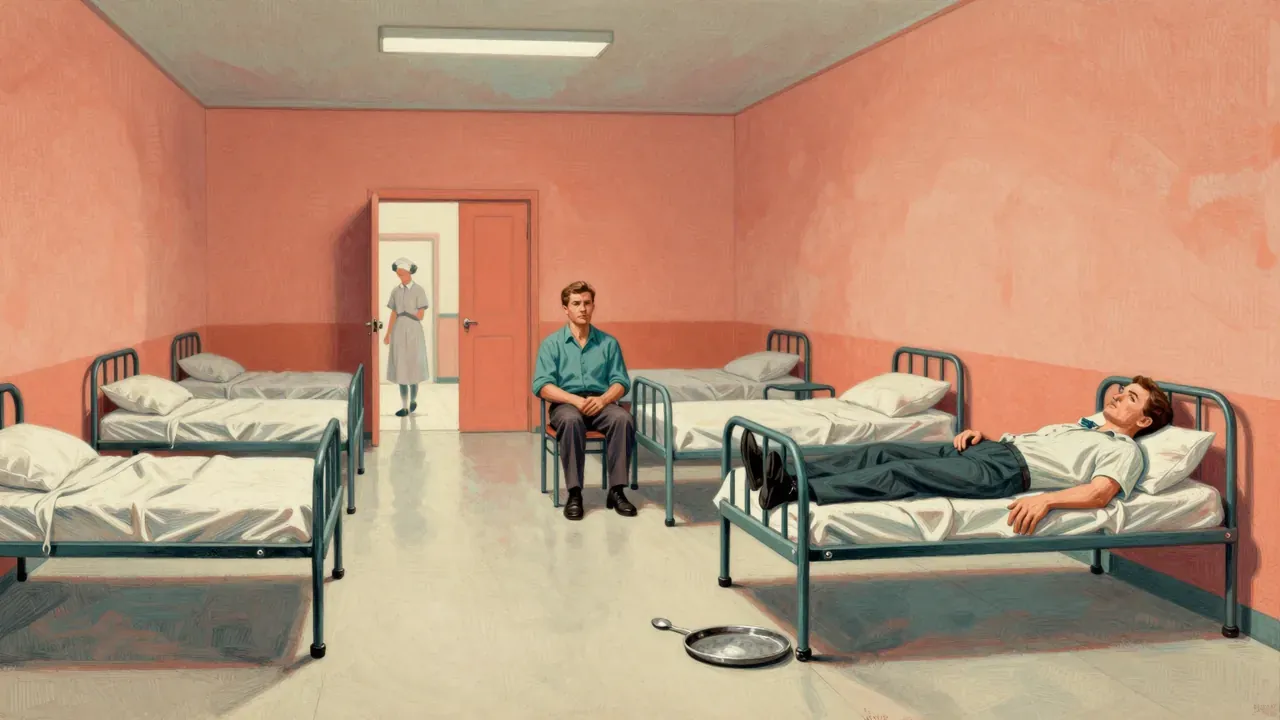
Samuel Fuller’s 1963 film noir follows a journalist who fakes insanity to investigate a murder inside a psychiatric hospital. Using stark cinematography, jagged editing and allegorical patient characters, it frames Cold War anxieties — racism, militarism, nuclear fear — as contagious pathologies. Though made on a shoestring budget and tight schedule, its formal rigour and political bite earned it preservation in the US National Film Registry.

13:00

State of Siege

Costa-Gavras · 1972

Costa-Gavras’s State of Siege (1972) dramatises the kidnapping and execution of a US official by Uruguayan guerrillas, using the real-life Dan Mitrione case as a framework to examine Cold War counterinsurgency, torture training, and the bureaucratic laundering of violence. Shot in Chile under Allende, it stars Yves Montand and employs rigorous structure, restrained performance, and precise craft to mount a sustained argument about power, language, and continuity.

13:00

Targets

Peter Bogdanovich · 1968

Peter Bogdanovich’s 1968 debut Targets pairs Boris Karloff’s retiring horror icon Byron Orlok with Tim O’Kelly’s motiveless killer Bobby Thompson. Shot guerilla-style in Los Angeles on a shoestring budget, it uses stark cinematography, restrained editing, and deliberate juxtaposition to ask how fiction holds up against televised atrocity — all without recourse to psychology, exposition, or catharsis.

13:00

Testament

Lynne Littman · 1983

Testament (1983) follows Carol Wetherly and her family in a Northern California suburb after a nuclear attack. With no special effects, no named antagonists and no grand speeches, it charts the erosion of domestic life — from school plays to backyard burials — as infrastructure fails and radiation sickness takes hold. Made for PBS and released theatrically by Paramount, it relies on Jane Alexander’s restrained performance, Steven Poster’s naturalistic cinematography and James Horner’s sparse score to anchor nuclear dread in intimate, unremarkable detail.

13:00

The American Soldier

Rainer Werner Fassbinder · 1970

Rainer Werner Fassbinder’s 1970 drama The American Soldier follows Ricky, a German-American Vietnam veteran turned contract killer working for renegade Munich police. Shot in stark, frontal compositions by Dietrich Lohmann and edited with metronomic restraint by Thea Eymèsz, the film strips away psychology and suspense to expose the administrative logic of violence. Its themes — complicity, procedural detachment, language as control — are enacted, not explained. A demanding, formally rigorous work from Fassbinder’s early arthouse period.

13:00

The Atomic Submarine

Spencer Gordon Bennet · 1959

The Atomic Submarine (1959) is a low-budget American sci-fi film following the USS Tigershark as it hunts an extraterrestrial underwater saucer near the North Pole. Directed by Spencer Gordon Bennet and written by Orville H. Hampton, it centres on a moral and tactical clash between a career submariner and a pacifist scientist, culminating in a biologically grounded alien threat and a technically inventive resolution. Shot in six days with stock footage and minimal sets, it prioritises conceptual cohesion over visual grandeur.

13:00

The Blob

Irvin Yeaworth · 1958

The Blob is a concise, location-bound science fiction horror film from 1958, directed by Irvin Yeaworth and starring Steve McQueen in his first leading role. It follows a gelatinous extraterrestrial organism that crashes to Earth near a Pennsylvania town, consumes people, grows larger, and is ultimately contained — not destroyed — by extreme cold. Made on a modest budget with practical effects and regional filming, it prioritises escalation, spatial logic, and collective response over psychology or allegory. Its enduring appeal lies in its structural rigour, tonal consistency, and refusal to over-explain.

13:00

The Confession

Costa-Gavras · 1970

Costa-Gavras’s 1970 film The Confession adapts Artur London’s memoir of imprisonment and coerced confession during the 1952 Slánský trial in Prague. Starring Yves Montand and Simone Signoret, it traces the systematic dismantling of a loyal communist official—not through brutality, but through isolation, sleep deprivation, scripted rehearsals, and bureaucratic theatre. Shot in northern France with Raoul Coutard’s restrained cinematography and edited with deliberate duration, it avoids melodrama in favour of procedural realism. Though its final act falters in integration, and its density tests attention, it remains a rigorous, unsentimental study of how power hollows out personhood from within.

13:00

The Joke

Jaromil Jireš · 1969

Jaromil Jireš’s 1969 film adapts Milan Kundera’s novel about Ludvík Jahn, expelled from the Communist Party for a sardonic postcard, then seeking revenge two decades later. Shot during the Prague Spring and banned for twenty years, it traces how political dogma reshapes love, memory, and moral choice — not through grand pronouncements but through glances, silences, and bureaucratic routines.

13:00

The League of Gentlemen

Basil Dearden · 1960

Basil Dearden’s 1960 heist film assembles seven disgraced former army officers to rob a London bank. Built on Bryan Forbes’ script and anchored by Jack Hawkins, it prizes procedural precision over psychological depth, dry irony over moral judgement, and ensemble cohesion over individual revelation. Its strengths lie in tightly orchestrated set-pieces and consistent tone; its limits in underdeveloped characters and withheld emotional stakes.

13:00

The Manchurian Candidate

John Frankenheimer · 1962

John Frankenheimer’s 1962 adaptation of Richard Condon’s novel follows Korean War veteran Raymond Shaw, a decorated hero secretly programmed as a communist assassin. Through meticulous craft — Lionel Lindon’s controlled cinematography, Ferris Webster’s taut editing, Angela Lansbury’s chilling performance — the film maps how ideology operates inside families, institutions and minds. It is less a warning about foreign threats than a demonstration of how obedience is taught, memory overwritten, and power disguised as normalcy.

13:00

The Parallax View

Alan J. Pakula · 1974

The Parallax View (1974) follows journalist Joe Frady as he investigates a string of deaths linked to the assassination of a US senator — only to find himself drawn into the recruitment pipeline of the shadowy Parallax Corporation. Directed by Alan J. Pakula and shot by Gordon Willis, it is a tightly wound, visually austere thriller whose power lies in its procedural rigour and refusal to grant its protagonist redemption or revelation.

13:00

The Right Stuff

Philip Kaufman · 1983

Philip Kaufman’s 1983 film adapts Tom Wolfe’s book into a sprawling, visually precise account of American test pilots and Mercury astronauts. Shot across California locations including Edwards Air Force Base and Hamilton AFB, it contrasts Chuck Yeager’s solitary mastery with the seven astronauts’ managed ascent into orbit. Caleb Deschanel’s cinematography, Bill Conti’s score, and Glenn Farr’s editing sustain its 184-minute runtime through texture and rhythm rather than plot velocity. Though criticised for historical compressions — particularly around Gus Grissom — it endures as a meditation on visibility, endurance, and the cost of turning courage into spectacle.

13:00

The Rock

Michael Bay · 1996

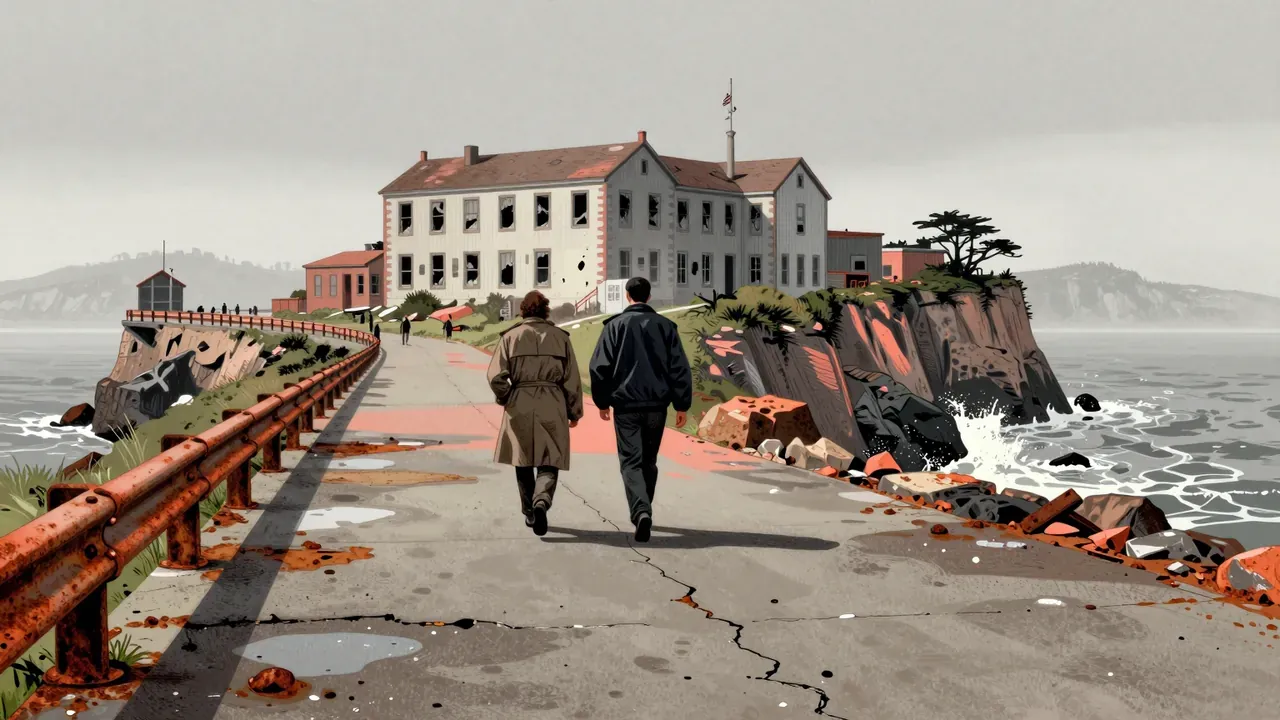
The Rock is a 1996 action thriller directed by Michael Bay, set on Alcatraz Island, where a rogue Marine general threatens San Francisco with VX gas. An FBI chemist and a retired SAS operative must infiltrate the prison to disarm the rockets. Anchored by Sean Connery and Nicolas Cage, it prioritises spatial logic, procedural detail and moral calibration over political complexity or stylistic experimentation.

13:00

The Secret Agent

Kleber Mendonça Filho · 2025

Kleber Mendonça Filho’s The Secret Agent is a Portuguese-language historical political thriller set in Recife during Brazil’s military dictatorship. Starring Wagner Moura as Armando, a former professor evading persecution, it traces his movements through carnival crowds, bureaucratic offices and dissident networks—all while a severed leg found in a shark becomes a media smokescreen for state violence. Shot on location with 1970s-inspired cinematography and edited for procedural realism, the film prioritises texture over exposition, embedding its politics in infrastructure, sound and silence.

13:00

The Spy Who Came in from the Cold

Martin Ritt, Paul Dehn, Guy Trosper · 1965

A 1965 British spy film adapted from John le Carré’s novel, following MI6 agent Alec Leamas as he stages a defection to East Germany. Directed by Martin Ritt and shot by Oswald Morris, it trades action for atmosphere, using restrained performances, deliberate pacing, and a muted palette to expose the hollowness of Cold War certainties. Richard Burton anchors a cast including Claire Bloom and Oskar Werner, while Sol Kaplan’s sparse score and Anthony Harvey’s unhurried editing deepen its sense of procedural dread.

13:00

The Steel Helmet

Samuel Fuller · 1951

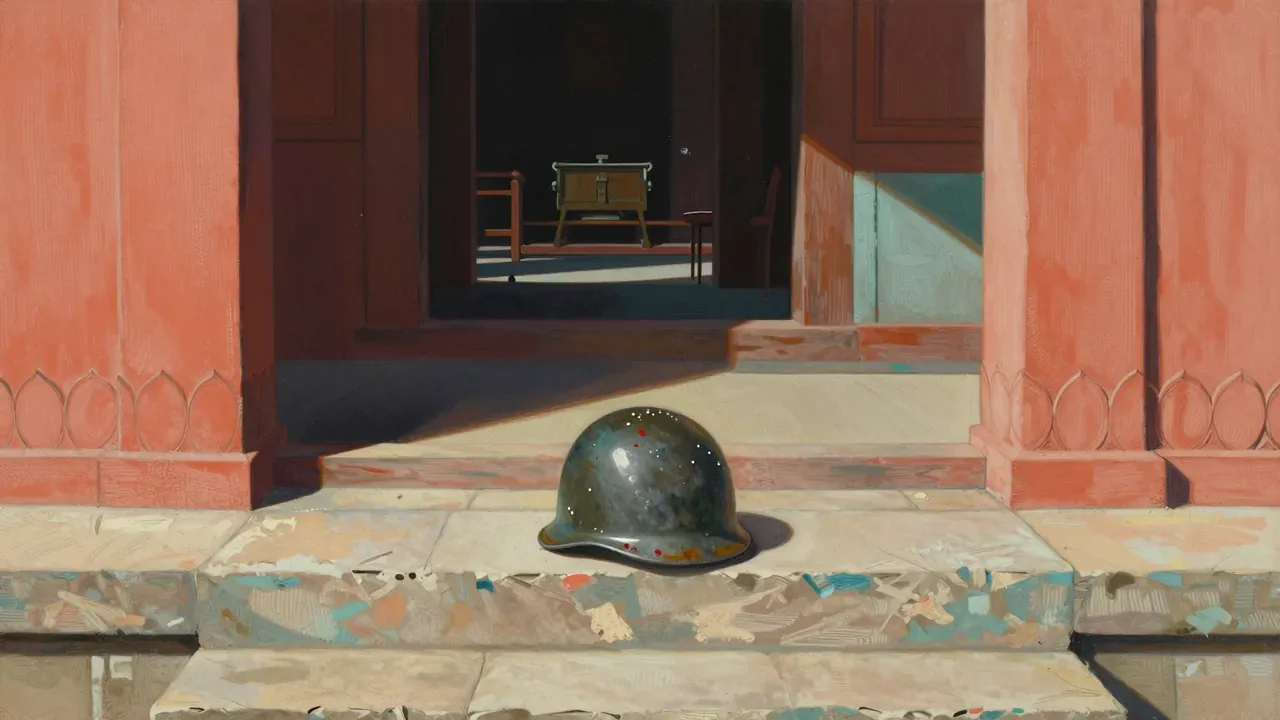
Samuel Fuller’s 1951 war film The Steel Helmet is the first American feature about the Korean War, made independently in ten days on a $104,000 budget. It follows a grizzled U.S. sergeant and a ragged patrol taking refuge in a Buddhist temple, confronting racism, command failure and moral compromise under fire. Ernest Miller’s cinematography and Fuller’s lean script prioritise psychological realism over spectacle. Though constrained by its production, the film remains a landmark for its immediacy, thematic rigour and refusal to flatter its subject — or its audience.

13:00

The Story of a Three-Day Pass

Melvin Van Peebles · 1967

Melvin Van Peebles’s debut feature follows Turner, a Black US soldier on a three-day pass in France, as he meets and falls for Miriam, a white French shop clerk. Shot in Paris with a small crew and budget, the film traces their brief, tender, and fraught connection against a backdrop of Cold War militarism and unspoken racial hierarchy. Its power lies in understatement: long takes, sparse dialogue, and psychologically charged silences convey more than exposition ever could.

13:00

The Unbearable Lightness of Being

Philip Kaufman · 1988

Philip Kaufman’s 1988 adaptation of Milan Kundera’s novel follows brain surgeon Tomas, his wife Tereza, and his lover Sabina across Prague, Geneva, and rural Czechoslovakia during and after the 1968 Soviet invasion. Shot in France with Sven Nykvist’s understated cinematography and scored largely with Janáček’s piano works, it explores eroticism, political constraint, and the paradoxes of freedom—not through exposition, but through gesture, silence, and weathered surfaces.

13:00

Total Balalaika Show

Aki Kaurismäki · 1994

Total Balalaika Show (1994) documents a 1993 Helsinki concert pairing the Leningrad Cowboys and the Alexandrov Ensemble. Directed, written and produced by Aki Kaurismäki, it presents thirteen live songs in static, natural-light takes, avoiding commentary or context. At 57 minutes, it treats the event as self-evident: a factual, unembellished record of cultural coexistence.

13:00

Two Prosecutors

Sergei Loznitsa · 2025

Sergei Loznitsa’s Two Prosecutors follows a young Soviet prosecutor in 1937 as he attempts to investigate the wrongful imprisonment of an Old Bolshevik during the Great Purge. Shot in a 1905 Riga prison and anchored by Aleksandr Kuznetsov’s restrained performance, the film unfolds with procedural exactness, refusing catharsis or moral simplification. Its power lies in accumulation: of silence, delay, and the quiet absorption of dissent into state machinery.

13:00

Visions of Eight

Claude Lelouch, Miloš Forman, Kon Ichikawa, Yuri Ozerov · 1973

Visions of Eight (1973) is a documentary composed of eight segments directed by international filmmakers, each interpreting a different aspect of the 1972 Munich Olympics. Commissioned by David L. Wolper, it prioritises stylistic divergence over narrative unity — from Penn’s slow-motion pole vault to Lelouch’s focus on defeat. Though awarded Best Documentary at the 1974 Golden Globes, its treatment of the Munich massacre remains fragmented and indirect. Available via Criterion, it functions best as a formal experiment in perspective, not as historical record.

13:00

Walker

Alex Cox · 1987

Alex Cox’s 1987 film Walker tells the story of American mercenary William Walker’s 1855–57 invasion of Nicaragua—but reframes it through deliberate, jarring anachronisms (helicopters, Diet Coke, modern rifles) to draw direct parallels with US policy during the Contra War. Starring Ed Harris and scored by Joe Strummer, it was shot in Granada with Sandinista cooperation and edited in situ. Uncompromising in its politics and formal rigour, it rejects historical realism in favour of structural critique.

13:00

Werckmeister Harmonies

Béla Tarr, Ágnes Hranitzky · 2000

Werckmeister Harmonies is a 2000 Hungarian arthouse drama directed by Béla Tarr and Ágnes Hranitzky, adapted from László Krasznahorkai’s novel. Shot in black-and-white across thirty-nine long takes, it follows János Valuska and his uncle György Eszter in a desolate winter town unsettled by a sinister circus and its rotting whale. The film explores entropy, failed idealism and mob psychology through atmosphere and duration rather than exposition or narrative drive.

13:00

When We Were Kings

Leon Gast · 1996

When We Were Kings (1996) is a documentary about the 1974 'Rumble in the Jungle' fight between Muhammad Ali and George Foreman in Kinshasa, Zaire. Directed by Leon Gast and edited over twenty-two years, it combines 1974 archival footage — of the fight, the Zaire 74 music festival, and Ali’s interactions with locals — with 1990s interviews by Norman Mailer, Spike Lee, George Plimpton and others. The film treats the event as a convergence of sport, race, postcolonial politics and personal reinvention, centring Ali’s agency and rhetorical power. It won the 1997 Academy Award for Best Documentary Feature.

13:00

Z

Costa-Gavras · 1969

A 1969 French-Algerian political thriller directed by Costa-Gavras, Z dramatises the assassination of a left-wing Greek politician and the subsequent judicial cover-up. Built from real events and adapted from Vassilis Vassilikos’s novel, it follows a magistrate’s methodical investigation as institutional resistance mounts. Shot by Raoul Coutard and scored by Mikis Theodorakis, it won the Academy Award for Best International Feature Film and Best Film Editing. Its epilogue traces the collapse of democracy into military dictatorship — and the banning of the letter 'Z' itself.

13:00

Rififi

Jules Dassin · 1955

Rififi (1955), directed by Jules Dassin, is a French crime film centred on a meticulously detailed, nearly silent jewellery heist in Paris. Made on a low budget after Dassin’s Hollywood blacklist, it strips away music, exposition, and glamour to focus on process, consequence, and the collapse of a thieves’ code. Its enduring power lies in its restraint: no score during the heist, no close-ups for emphasis, no redemption offered.

13:00

The Fireman's Ball

Miloš Forman · 1967

Miloš Forman’s 1967 Czechoslovak comedy follows a provincial fire brigade’s annual ball as it slowly derails under the weight of its own good intentions, indifference and procedural inertia. Shot at Barrandov Studios by Miroslav Ondříček and scored by Karel Mareš, it observes without judging, repeats without explaining, and ends without resolving — making its case for the quiet absurdity of communal life through restraint, not rhetoric.

13:00

Top Gun

Tony Scott · 1986

A 1986 Paramount action film directed by Tony Scott, Top Gun follows naval aviator Pete ‘Maverick’ Mitchell through the Navy’s elite fighter weapons school. Built around real F-14 flight footage and a synth-heavy score, it prioritises kinetic clarity and visual rhythm over psychological depth or political nuance. Though critically mixed on release, its formal coherence and cultural resonance have secured its status as a defining artefact of 1980s studio filmmaking.

13:00

A Brighter Summer Day

Edward Yang · 1991

Edward Yang’s 1991 epic follows a Taipei teenager’s slow drift into violence against the backdrop of 1950s–60s Taiwan: a society shaped by the 1949 Nationalist retreat, political suspicion, and the hollow echo of American pop culture. At 237 minutes, it unfolds with patient, unsentimental precision — observing family life, school routines, gang rituals and state surveillance not as separate domains but as layers of the same suffocating reality. Chang Chen stars in his debut as Si’r, a boy whose fatal act feels less like choice than conclusion.

13:00

Crimson Tide

Tony Scott · 1995

Crimson Tide is a 1995 action thriller directed by Tony Scott, starring Gene Hackman and Denzel Washington as rival officers aboard a U.S. nuclear submarine facing an ambiguous order to launch missiles. Set during a fictional Russian crisis, the film focuses on the ethical and procedural collision between experience and doctrine, played out in real time within the claustrophobic confines of the USS Alabama. With tight direction, restrained performances, and a score that pulses like a failing reactor, it sustains tension through dialogue, silence, and system failure — not spectacle.

13:00

Enemy of the State

Tony Scott · 1998

Enemy of the State (1998) is a Tony Scott-directed action thriller in which labour lawyer Robert Clayton Dean is targeted by rogue NSA agents after unwittingly acquiring evidence of a political assassination. With Gene Hackman as a reclusive ex-intelligence operative, the film charts Dean’s rapid erasure from normal life and his fight to expose the conspiracy. Though its plot leans on convenience and its politics remain broad, its execution — in pacing, performance, and sensory detail — delivers sustained tension and a potent, embodied sense of vulnerability to systemic power.

13:00

Hail, Caesar!

Ethan Coen, Joel Coen · 2016

Hail, Caesar! (2016) is a Coen brothers comedy set in 1951 Hollywood, following studio fixer Eddie Mannix (Josh Brolin) as he manages crises across five concurrent film productions. Shot on film by Roger Deakins and costumed with meticulous period detail, it treats the studio system as a functioning bureaucracy — not a golden age to mourn, but a machine to map. Its strength lies in structural fidelity, not character depth.

13:00

Kiss Me Deadly

Robert Aldrich · 1955

Robert Aldrich’s 1955 Kiss Me Deadly recasts Mickey Spillane’s Mike Hammer as a morally adrift private investigator drawn into a conspiracy centred on a mysterious, glowing suitcase. Shot on location in a decaying Los Angeles, with stark cinematography by Ernest Laszlo and a percussive score by Frank De Vol, the film rejects noir conventions of resolution and moral clarity. Its power lies in accumulation — of dread, ambiguity, and physical consequence — culminating in an ending that offers no salvation, only exposure.
13:00

Loves of a Blonde

Miloš Forman · 1965

Loves of a Blonde (1965), Miloš Forman’s second feature, follows Andula, an 18-year-old shoe-factory worker in provincial Czechoslovakia, as she navigates romance, loneliness and social expectation. Shot on location with mostly non-professional performers and extensive improvisation, it uses documentary-style techniques to build a restrained, unsentimental portrait of young adulthood under late socialism. Its power lies in duration, texture and behavioural authenticity rather than plot or exposition.

13:00

Pickup on South Street

Samuel Fuller · 1953

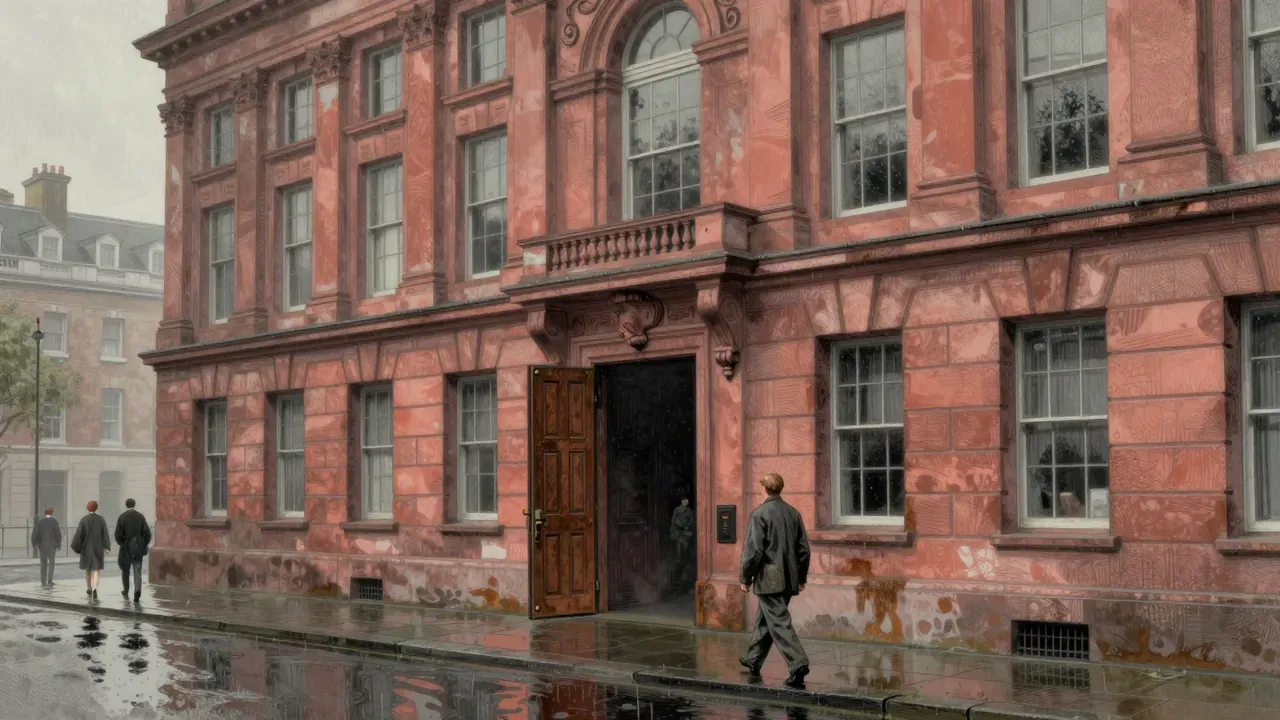
Samuel Fuller’s 1953 thriller follows a pickpocket who steals microfilm containing state secrets, dragging a disillusioned courier, a cynical informant, and weary detectives into a collision of Cold War paranoia and New York street logic. Shot with documentary restraint by Joseph MacDonald and driven by terse, unsentimental performances — especially Thelma Ritter’s Oscar-nominated turn — it treats ideology as incidental to survival, and patriotism as a negotiable commodity.
13:00

Swimming to Cambodia

Jonathan Demme · 1987

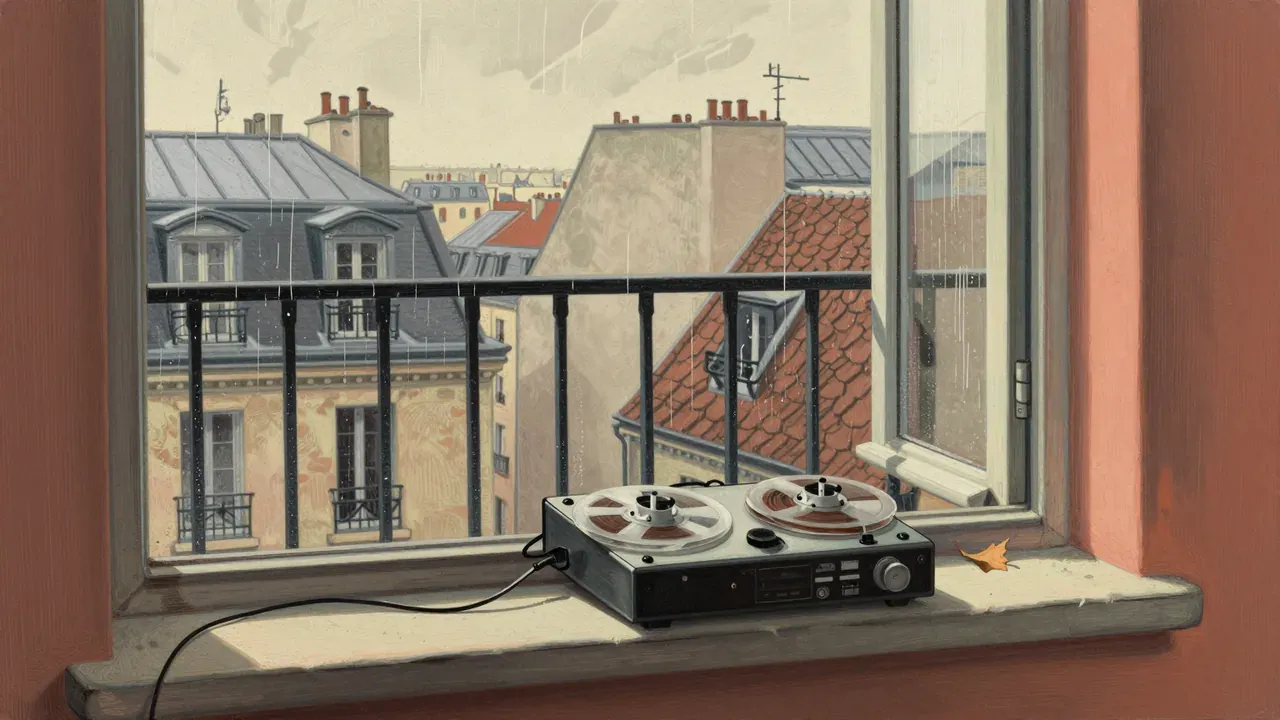
Spalding Gray sits alone at a table and speaks for eighty-five minutes about filming The Killing Fields, the Khmer Rouge’s rise, and his own search for meaning amid atrocity. Directed by Jonathan Demme and scored by Laurie Anderson, it is a formally austere essay-film built on voice, silence, and the moral weight of first-person recollection—neither documentary nor drama, but something stricter and stranger.
13:00

The Third Man

Carol Reed · 1949

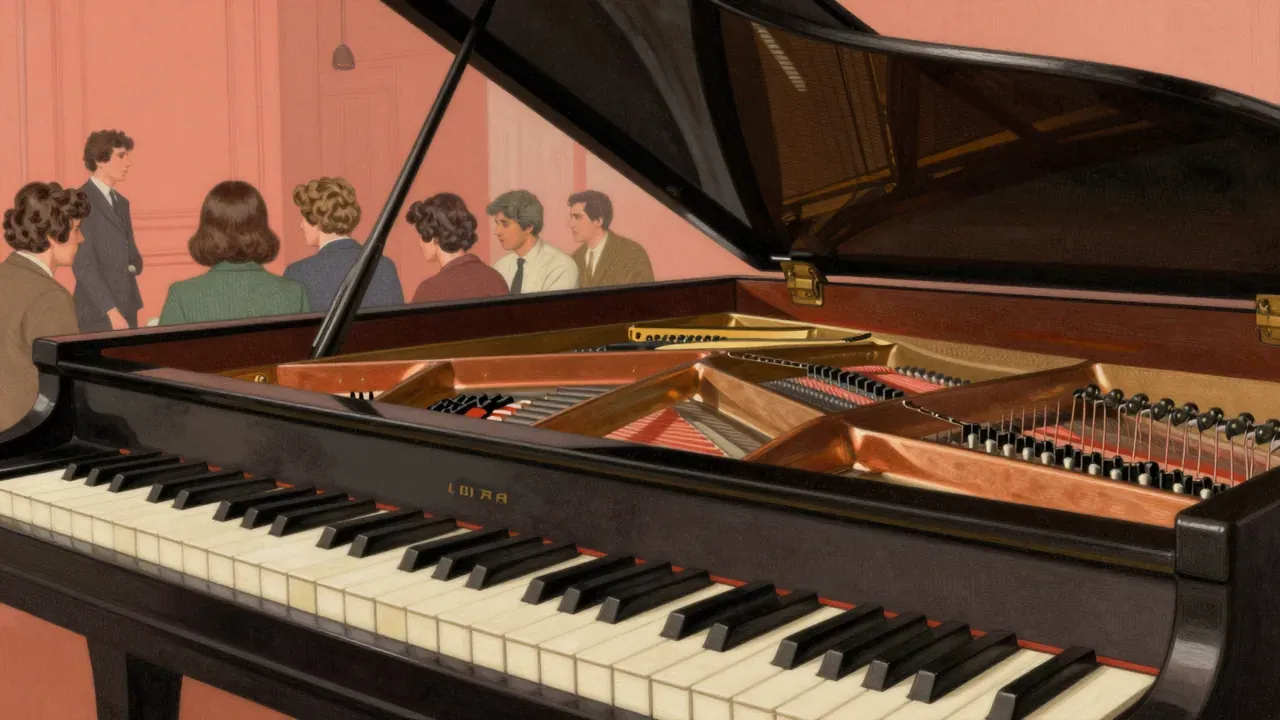
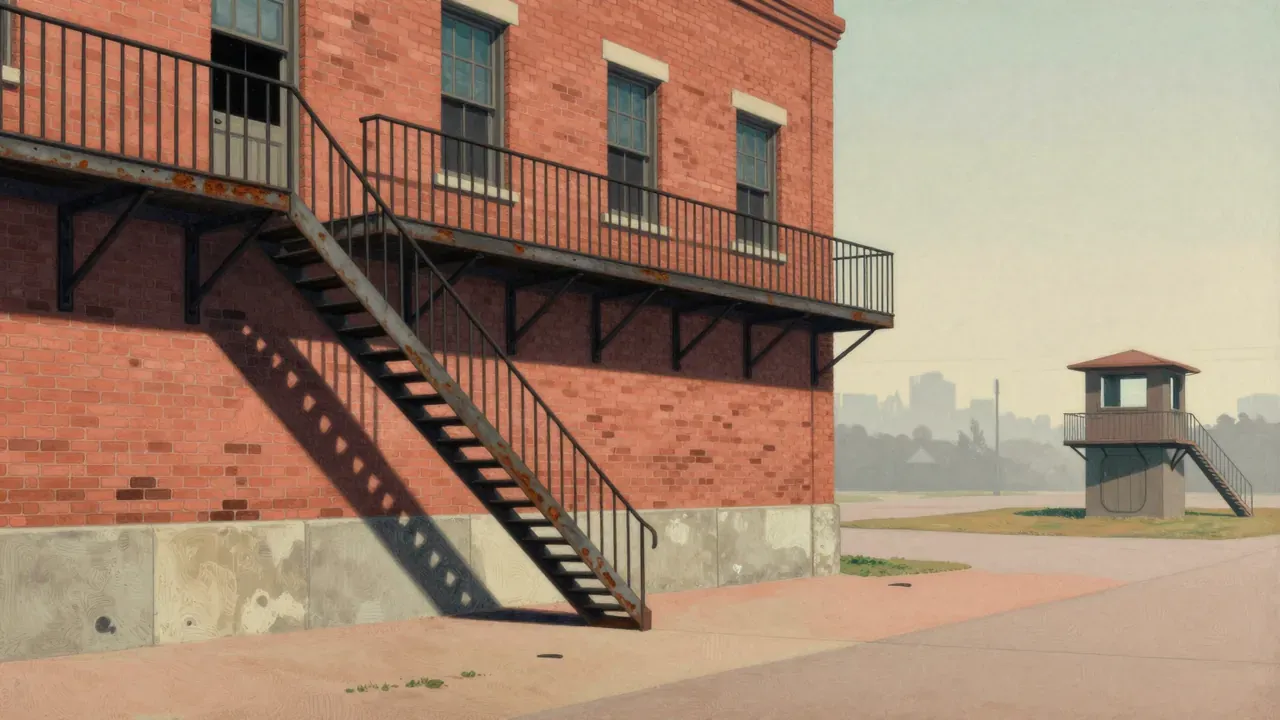
Set in ruined, four-zone Vienna, Carol Reed’s 1949 noir follows an American writer searching for his vanished friend, only to uncover layers of betrayal, black-market complicity, and compromised ideals. Shot on location with stark, expressionist-influenced cinematography by Robert Krasker and scored entirely on zither by Anton Karas, it sustains a mood of exhausted ambiguity. Its power lies in what it withholds: explanation, catharsis, closure.
13:00

Dr. Strangelove

Stanley Kubrick · 1964

Stanley Kubrick's 1964 black comedy, adapted from Peter George's thriller novel Red Alert, follows a rogue American general's order for a nuclear strike on the Soviet Union and the frantic, mostly useless efforts of the President, his aides and a visiting RAF officer, all three played by Peter Sellers, to call it back. Shot entirely at Shepperton Studios on Ken Adam's cavernous War Room set for $1.8 million, it grossed $9.4 million, won three BAFTAs, and is now ranked among the American Film Institute's greatest and funniest American films.

13:00

North by Northwest

Alfred Hitchcock · 1959

An advertising executive mistaken for a nonexistent spy is chased across the United States toward a crop-duster in an empty field and a climax on the carved faces of Mount Rushmore. Built by Hitchcock and Ernest Lehman around set pieces conceived before the plot that justifies them, it is Cary Grant at his most physically tested and Hitchcock's biggest production to date.

13:00

The Iron Giant

Brad Bird · 1999

The Iron Giant drops a fifty-foot alien robot into small-town Maine in 1957 and lets a lonely boy's friendship with it, rather than its destructive potential, carry the film. Brad Bird's feature debut, made by Warner Bros. on roughly half the budget and schedule of comparable animated films, was a box-office failure on release but has since become a byword for a cult classic.

13:00

The Lives of Others

Florian Henckel von Donnersmarck · 2006

Ulrich Mühe plays Stasi Captain Gerd Wiesler, assigned to bug the apartment of a celebrated East German playwright in 1984 whose real offence is that a government minister covets his girlfriend. As Wiesler listens in, he begins quietly protecting the couple from the surveillance he was sent to conduct, an act of conscience that Florian Henckel von Donnersmarck's 2006 debut treats as fiction the director openly acknowledges the real Stasi never produced.