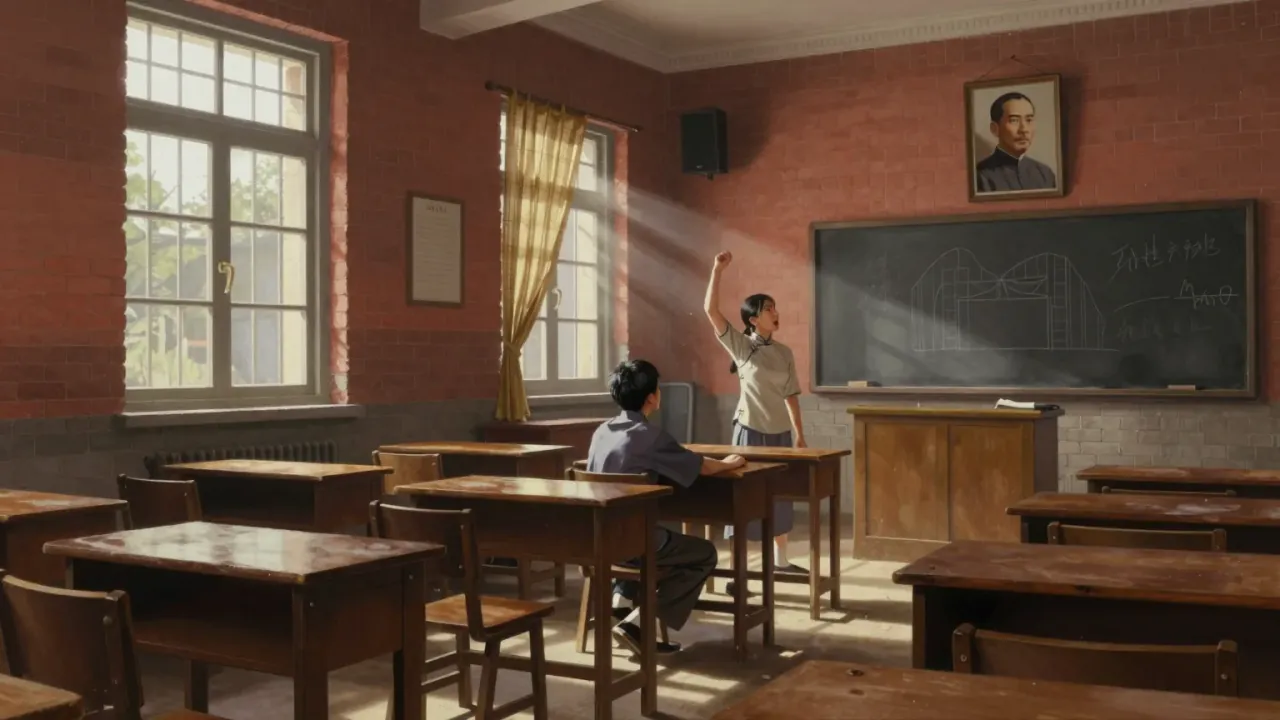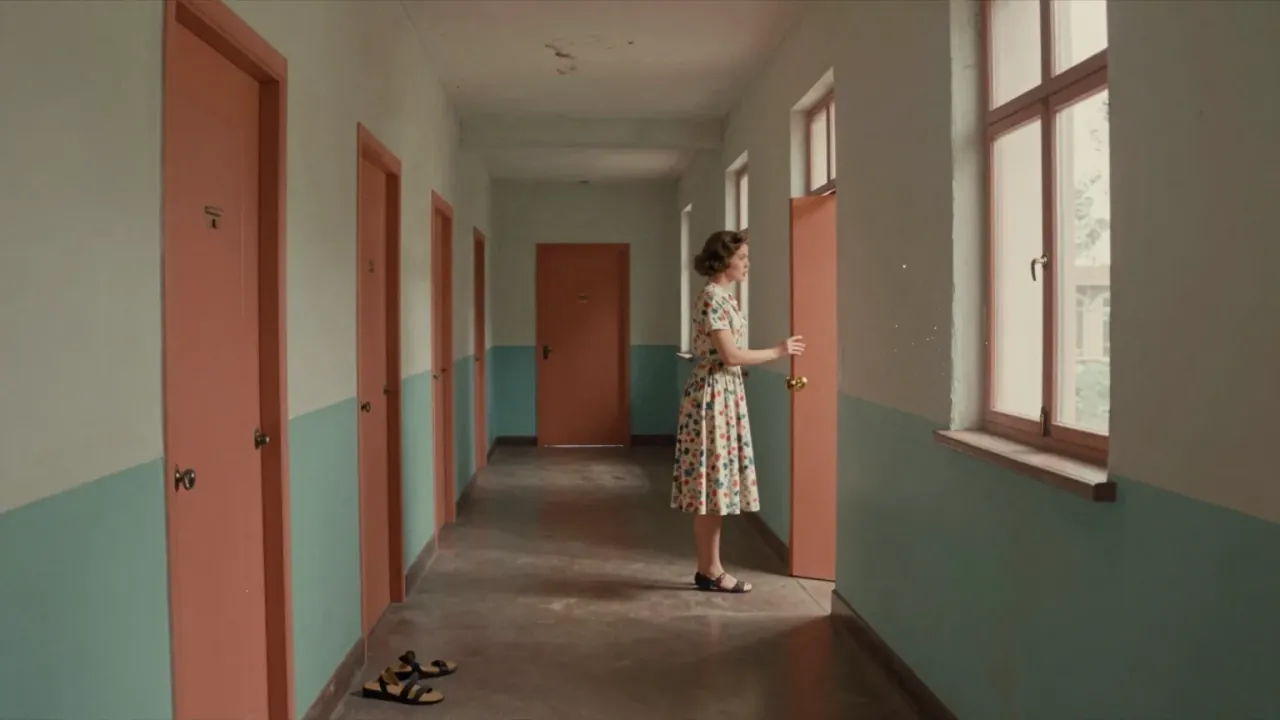
The look of it
Loves of a Blonde is a Czechoslovak drama set in a provincial shoe factory town, following Andula — an 18-year-old worker — as she navigates loneliness, romantic expectation and social inertia. It does not aim for plot density or narrative resolution but instead constructs a quiet, observational portrait of young adulthood under late socialism: unvarnished, unsentimental, attentive to the weight of routine and the fragility of hope. The film’s intention is structural as much as thematic: to dissolve the boundary between fiction and lived reality by filming on location with non-professional performers, using improvisation guided by tightly rehearsed scenarios rather than scripted lines. Its realism is not documentary mimicry but a calibrated aesthetic choice — one that treats banality as politically charged, and hesitation as dramatic material. It refuses symbolic uplift or moral framing, letting scenes settle without commentary, whether in a dormitory corridor, a billiards hall or a cramped flat where a piano stands unused. This is not a film about rebellion or escape, but about the quiet labour of staying present in a world that offers little scaffolding for personal desire.
How it works
The story unfolds in three loosely connected movements: Andula’s life at the factory and dormitory; her brief, awkward courtship with Milda, a pianist from Prague; and the aftermath of his departure, culminating in a long, static scene at her parents’ home where conversation stutters and stalls. Performances are anchored by Hana Brejchová’s unforced presence — her face registers shifts in mood without theatrical emphasis — while Vladimír Pucholt brings a hesitant, almost apologetic physicality to Milda. Vladimír Menšík, the sole professional among the central trio, provides subtle rhythmic control in group scenes. Miroslav Ondříček’s cinematography avoids flourish: he frames faces in tight medium shots, holds focus on hands and doorways, and lets light fall unevenly across walls and floors. Evžen Illín’s score is sparse, often absent — when it appears, it is diegetic, played on screen. Editing by Miroslav Hájek sustains duration without indulgence: pauses are left intact, repetitions uncut, silences unbroken. There is no voiceover, no musical cue to signal emotion, no camera movement to direct attention. The craft serves restraint, not spectacle.
What lands
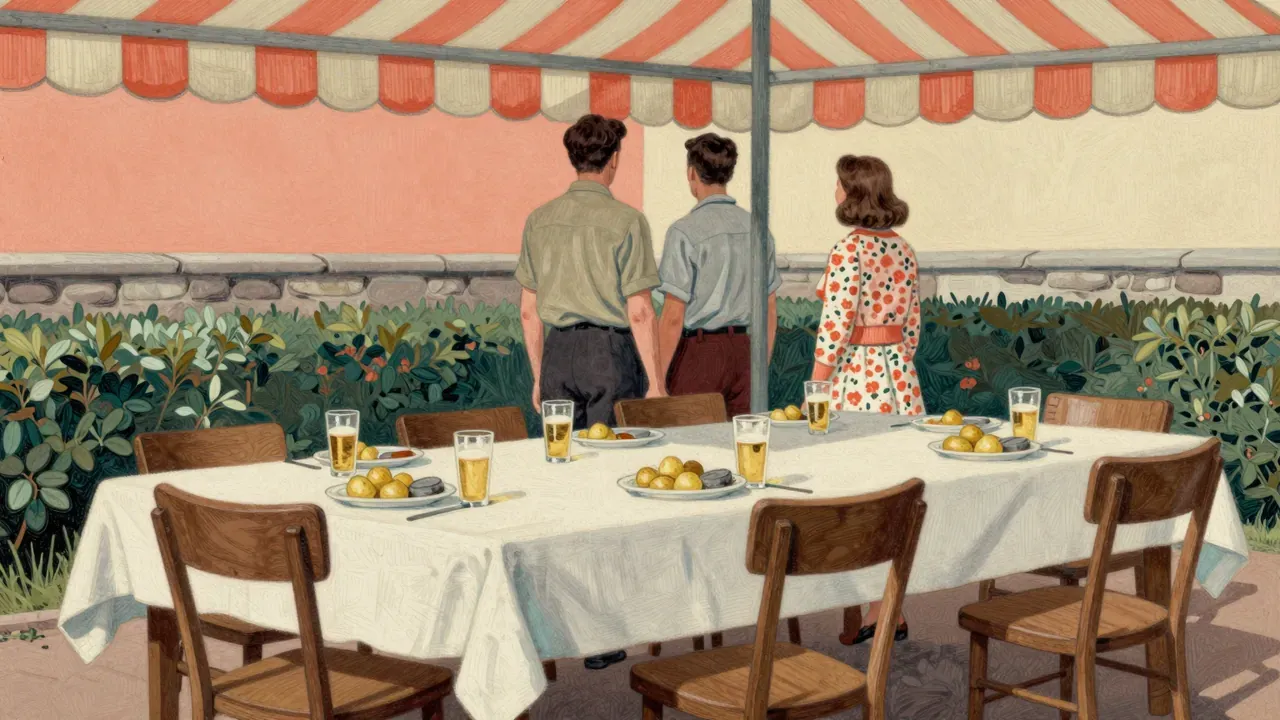
What lands is the cumulative weight of small, unremarkable moments: a girl adjusting her hair before a mirror, men fumbling with cigarettes in a hallway, a father offering tea while avoiding eye contact. The film’s power resides in its refusal to elevate any single gesture into significance — instead, meaning accrues through repetition, contrast and omission. The final sequence, lasting over twelve minutes in real time, is its most assured achievement: a family dinner dissolves into polite evasion, then silence, then exhausted resignation, all held in unbroken takes. No line is revelatory, yet the emotional architecture becomes unmistakable — not through dialogue but through posture, timing and the slow erosion of pretence. The casting works precisely because it avoids type: factory workers behave like factory workers, not actors playing them; reservists talk like men unused to being filmed. Even the humour — dry, situational, never punchline-driven — lands because it emerges from character, not setup. The film trusts its audience to notice what is withheld: the absence of ambition, the lack of exit routes, the way desire is both stifled and quietly persistent.
What does not
What does not land is the early factory sequence, which risks monotony without sufficient tonal variation or visual counterpoint. The dormitory scenes, though socially precise, occasionally flatten into sociological illustration rather than dramatic tension. Some improvisations — particularly among secondary non-professionals — drift into redundancy, their rhythms unshaped by editorial tightening or actorly discipline. A few exchanges feel less like lived speech and more like rehearsal fragments preserved for authenticity’s sake, losing clarity without gaining resonance. The film’s commitment to anti-theatricality sometimes blurs into neutrality: certain characters remain opaque not because they are enigmatic but because the script gives them no interior logic beyond function. The reservists’ subplot, while charming, lacks narrative gravity — their banter feels like warm-up rather than development. And while the film’s avoidance of melodrama is principled, it also means emotional stakes are rarely articulated, leaving some viewers adrift in ambiguity without enough textual or visual signposting to orient them.
The themes that matter
The themes that matter are not announced but embedded: the quiet violence of structural indifference, the gendered asymmetry of romantic expectation, and the exhaustion of maintaining dignity within narrow social scripts. The film treats class not as backdrop but as grammar — shaping how people speak, sit, hesitate, apologise. It observes how institutions (factory, dormitory, military reserve) distribute time, space and permission, and how individuals negotiate those constraints with minimal agency. Love here is not transformative but transactional, conditional, often deferred — less a feeling than a series of small concessions and misread signals. The film also traces the limits of empathy: characters see each other, but rarely understand; they offer kindness, but seldom connection. There is no villain, only sedimented habit — the kind that makes a man promise marriage and then vanish, or a mother advise her daughter to ‘be patient’ without naming what patience is for. These are not themes of protest but of endurance — the kind that wears down rather than ignites.
Who should watch it
This film is for viewers who value sustained observation over exposition, who find emotional truth in hesitation and silence, and who accept that realism need not mean realism of action but realism of duration and texture. It suits those familiar with mid-century Eastern European cinema or the broader Czech New Wave, but also those drawn to films where performance feels unmediated and editing feels invisible. It is not for viewers who require narrative propulsion, clear character arcs or psychological explanation. Those who expect irony to be signalled, or social critique to be articulated, may find it withholding. Viewers who rely on music, lighting or camera movement to guide emotional response will likely feel unmoored. The film assumes patience as a condition of engagement — not as a virtue, but as a prerequisite. Anyone expecting satire will be disappointed; anyone seeking warmth without condescension may find it. Its demands are modest but specific: attention, tolerance for ambiguity, and willingness to sit with unresolved feeling.
Is it worth your evening
Yes, it is worth your evening — provided you approach it as a study in restraint rather than a story with endpoints. Its 83 minutes pass without hurry, but never without purpose: every shot contributes to a cumulative portrait of ordinary life under constrained conditions. It rewards rewatching, not for hidden clues but for newly noticed gestures — a shift in gaze, a pause before speech, the way light falls across a linoleum floor. Those who dismiss it as slight mistake its economy for thinness; its apparent simplicity conceals careful calibration of tone, rhythm and implication. Critics who found it dull were likely expecting narrative machinery it deliberately avoids. A viewer who values formal coherence, behavioural authenticity and thematic subtlety will find it rich. Its endurance lies not in grand statements but in the quiet insistence that these lives — unexceptional, unheroic, unrecorded elsewhere — are worthy of sustained, unsentimental attention.