The length of it
Kings of the Road is a German road film from 1976 that follows Bruno Winter, a projection-equipment repairman, as he drives along the western side of the inner-German border in a van servicing decaying cinemas. It is not a narrative built on plot turns or character arcs but on duration, repetition, and quiet observation. Wim Wenders intended it as the third part of a thematic trilogy about movement, dislocation, and the search for coherence in post-war West Germany. The film avoids exposition, backstory, and psychological explanation; instead, it treats time and space as material — stretching scenes across minutes, holding shots until they settle into atmosphere rather than action. Its black-and-white cinematography, wide-screen framing, and deliberate pacing are not stylistic flourishes but structural choices: the film tries to register how people inhabit silence, how landscapes absorb absence, and how mechanical routine can become a form of resistance to meaninglessness. It is less about what happens than about how long it takes to happen, and what accumulates in the gaps between words. (158 words)
The look of it
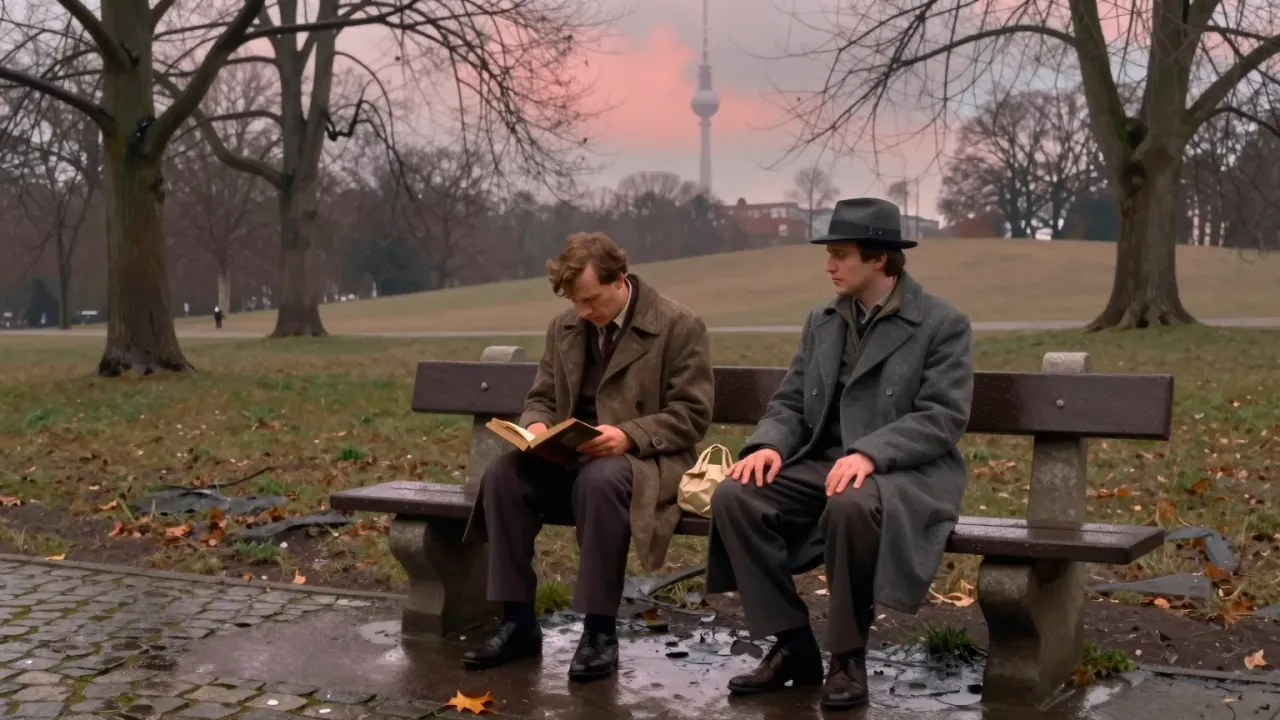
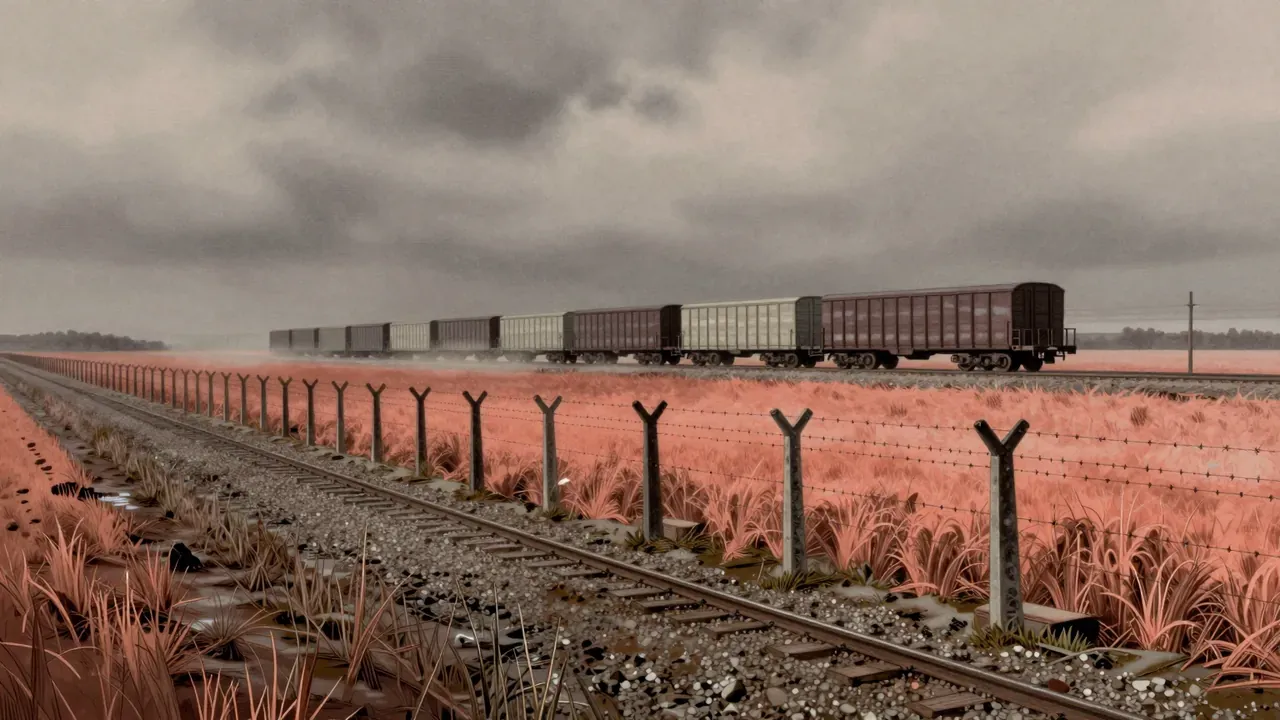
The story unfolds through loosely connected service calls: Bruno fixes projectors, meets strangers in states of withdrawal or exhaustion, and shares the cab with Robert Lander, a man adrift after marital collapse. There is no script beyond the first scene; dialogue is sparse, often functional or elliptical, and performances are restrained — Rüdiger Vogler’s Bruno moves with the economy of someone who has stopped expecting answers, while Hanns Zischler’s Robert carries grief without theatricalising it. Robby Müller’s cinematography uses natural light, deep focus, and long takes — outdoor defecation, a train crossing mist, a projector beam cutting darkness — to anchor abstraction in physical detail. Peter Przygodda’s editing sustains rhythm without urgency; scenes bleed into one another like weather fronts. The soundtrack mixes diegetic pop — Roger Miller, Heinz — with ambient, low-frequency textures from Improved Sound Limited, reinforcing the film’s interest in sound as environment, not illustration. Every craft decision serves duration over delivery: the camera does not seek expression but records presence. (159 words)
The weight of it
What lands is the accumulated weight of attention — the way a shot of a rusted cinema sign, held for thirty seconds, begins to feel like a diagnosis of cultural erosion. The film’s refusal to resolve or explain makes its moments of human contact land with quiet force: a shared cigarette, a glance exchanged across a repair bench, the way Bruno watches Robert sleep without comment. Its black-and-white texture avoids nostalgia; it feels documentary-adjacent, not stylised. The inner-German border functions not as political allegory but as a literal and metaphysical margin — a zone where institutions falter, infrastructure frays, and people drift just outside official narratives. Scenes involving decaying theatres resonate because they are specific: the clatter of a misaligned sprocket, the smell of old film stock, the owner who refuses to screen modern films not out of conservatism but exhaustion. These details do not build to a thesis, but they cohere into a portrait of late industrial quietude — a world where meaning is maintained not by grand statements but by showing up, fixing things, driving on. (157 words)
The stretch of it
What does not land is the assumption that length alone confers significance. At 168 minutes, the film tests thresholds of endurance without always justifying its scale. Some sequences — extended stretches of road, repeated shots of the truck’s dashboard, pauses longer than emotional need demands — risk monotony rather than meditation. The improvisational method, while lending authenticity, also produces passages where rhythm slackens without compensating texture: a conversation about film stock that circles without deepening, or a visit to Robert’s father that ends without pivot or release. The film’s resistance to psychology means characters remain opaque in ways that can feel withholding rather than respectful. Richard Eder’s objection — that it runs at least an hour too long — is not merely impatience; it points to a structural imbalance where atmosphere occasionally substitutes for progression. The film assumes the viewer shares its valuation of stillness, but stillness requires variation to sustain attention, and here variation is rationed. Not every long take earns its duration; some simply mark time. (159 words)
The edge of it
The themes that matter are those embedded in motion without destination: the erosion of communal spaces like cinemas, the quiet persistence of technical skill amid cultural obsolescence, and the border not as line on a map but as condition — a liminal state where identity, memory, and function blur. The film treats repair as both literal and metaphorical: Bruno fixes machines, but the act itself becomes a ritual against entropy. His route traces a country still physically divided, psychologically unmoored, and culturally uncertain — not dramatised through speeches or symbols, but through the wear on a theatre seat, the static in a speaker, the hesitation before a door opens. Time is neither linear nor redemptive; it is cyclical, worn thin, measured in reel changes and petrol stops. The film’s engagement with the Cold War is indirect: it shows the aftermath of division, not its ideology — the silence where politics used to be, the infrastructure that remains standing but no longer serves. Its existentialism is practical, not rhetorical: how do you keep going when there is no clear reason to? By doing the next small thing correctly. (158 words)
The terms of it
This film is for viewers who value sustained attention over narrative payoff, who find resonance in texture and tempo, and who accept that ambiguity may be the most honest response to historical dislocation. It suits those familiar with 1970s European art cinema, or with Wenders’ earlier work in the Road Movie trilogy, and those willing to sit with discomfort that is atmospheric rather than dramatic. It is not for viewers who require clear motivation, emotional escalation, or closure — nor for those who equate pace with engagement. Someone who found Two-Lane Blacktop inert or who prefers the compression of classical editing will likely disengage well before the final reel. A change in structure — tighter sequencing, fewer repetitions, or more variance in shot scale — would alter the verdict significantly. But as it stands, its demand is categorical: it asks for time not as a resource to be managed but as a medium to be inhabited. That is not a flaw; it is the condition of entry. (159 words)
The time of it
Yes, it is worth your evening — if you set aside the expectation that film must deliver insight through exposition or catharsis. Its value lies in the precision of its gaze: how Müller captures dust motes in projector light, how Przygodda holds a pause until it becomes a question, how Vogler’s posture communicates fatigue without gesture. It repays attention not with answers but with recalibration — a slower pulse, a heightened awareness of peripheral detail, a tolerance for unresolvedness. Those who dismiss it as ‘slow’ miss that its slowness is its argument: history does not move in climaxes but in increments, repairs, detours. Anyone who has ever driven a long road in silence, watched a machine fail and then run again, or felt the weight of a border they did not cross will recognise something here. It is not entertainment; it is immersion. And immersion, like repair, takes time. To ask whether it is ‘worth it’ is to misunderstand its terms. It is not transactional. It is cumulative. (159 words)