filmbriefs
Topic

Absurdism

Living with the gap between wanting sense and finding none.

84
in film
13:00
average
1092 min
in total
137
across the network
Absurdism across the network →
All briefs84
13:00

A Report on the Party and the Guests

Jan Němec · 1966

A group of picnickers are intercepted in the woods and directed to a celebration, where arbitrary rules govern their conduct. When one guest disappears, the party mobilises to retrieve him — not out of concern, but to preserve the integrity of the event. Made by Jan Němec at Barrandov Studios, the film uses stark visual discipline and behavioural minimalism to trace how authority takes root in shared compliance.
13:00

A Woman Is a Woman

Jean-Luc Godard · 1961

Jean-Luc Godard’s 1961 colour debut is a self-aware, formally restless romantic comedy starring Anna Karina as Angéla, an exotic dancer determined to have a child. Shot in Paris by Raoul Coutard and scored by Michel Legrand, it uses musical interludes, abrupt edits, and stylised dialogue to interrogate genre conventions, gender roles, and the language of desire — all without relinquishing its wit or warmth.

13:00

After Hours

Martin Scorsese · 1985

Martin Scorsese’s 1985 black comedy follows office worker Paul Hackett through a single, increasingly surreal night in SoHo. Stranded without money, misunderstood at every turn, and hunted by neighbours, he careens from one absurd crisis to the next — until the plaster hardens, the van doors fly open, and he crashes, barefoot and broken, into his office at dawn. Michael Ballhaus’s tight cinematography, Thelma Schoonmaker’s razor-sharp editing, and Howard Shore’s nervy score sustain a tone of escalating, inescapable farce.

13:00

And the Ship Sails On

Federico Fellini · 1983

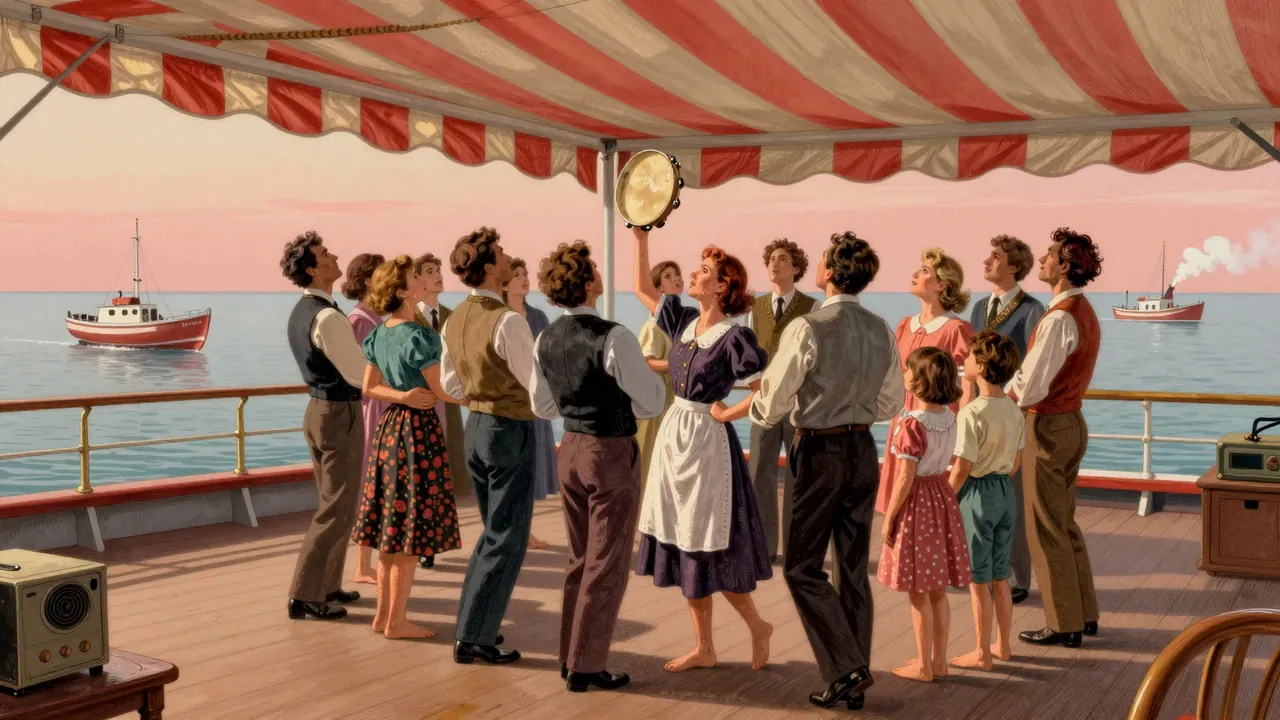
Set aboard the luxury liner Gloria N. in July 1914, Federico Fellini’s And the Ship Sails On follows a funeral voyage to scatter the ashes of a legendary opera singer. Through journalist Orlando’s wry narration, the film assembles a gallery of caricatured aristocrats, artists, and dignitaries — all performing grief, status, and obsession aboard a vessel that doubles as a stage, museum, and mausoleum. Giuseppe Rotunno’s cinematography and Dante Ferretti’s sets sustain a lush, theatrical artifice, while Gianfranco Plenizio’s score underscores the film’s blend of grandeur and gentle absurdity. The voyage ends not with resolution but with sinking — literal and metaphorical — as the ship founders amid cannon fire and butterflies.

13:00

As Long as You've Got Your Health

Pierre Étaix · 1966

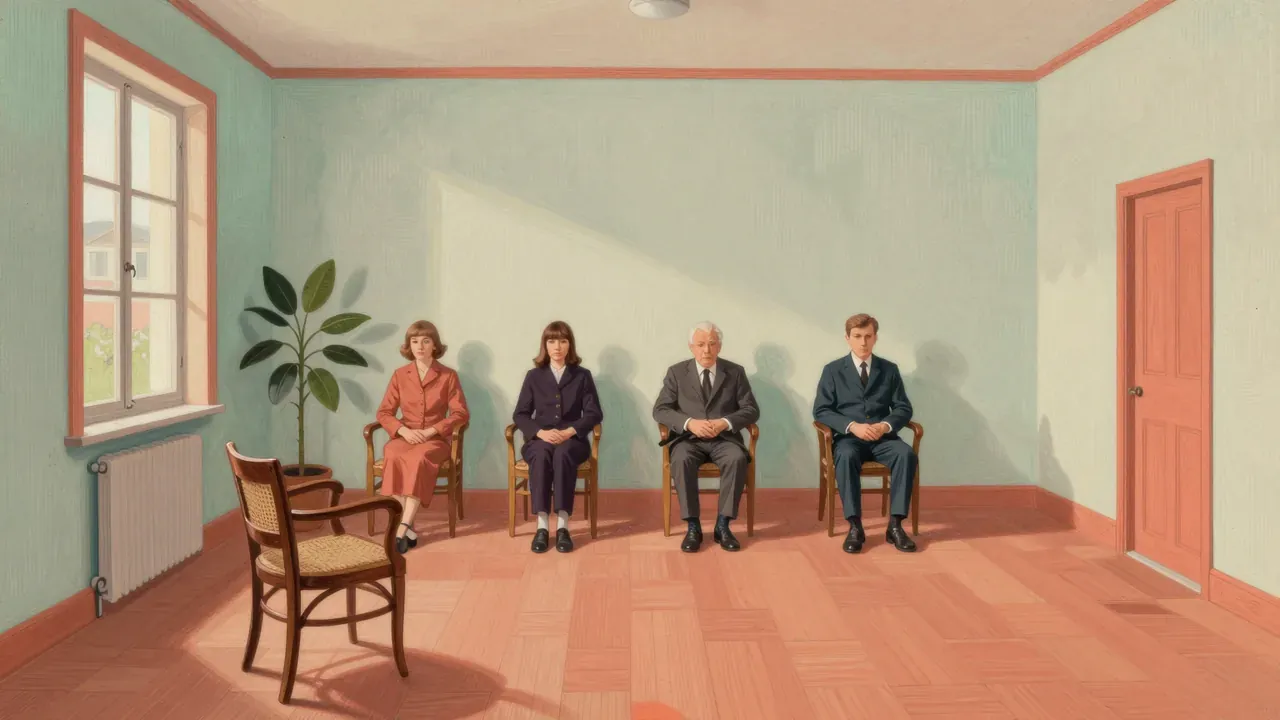
Pierre Étaix’s 1966 anthology comedy As Long as You’ve Got Your Health presents four self-contained sketches—on insomnia, cinema queues, psychiatric consultation, and forest visits—unified by deadpan timing, restrained performances, and Jean Boffety’s unobtrusive cinematography. Written by Jean-Claude Carrière and edited with surgical calm, it observes urban alienation and bureaucratic fatigue not through satire but through repetition and pause. Its humour is physical, its themes implicit, its pace deliberate.

13:00

Babo 73

Robert Downey Sr. · 1964

Babo 73 is a 1964 American underground comedy directed by Robert Downey Sr., presenting a surreal, non-narrative campaign for a fictional presidential candidate named Babo. Shot on 16mm in black and white, it uses repetition, deadpan delivery, and jagged editing to dissect the performative emptiness of political theatre. With no score, minimal dialogue, and no character development, it operates as a formal experiment in anti-rhetoric—less satire than structural diagnosis.

13:00

Being John Malkovich

Spike Jonze · 1999

Being John Malkovich (1999) is a surrealist comedy-drama written by Charlie Kaufman and directed by Spike Jonze. A down-on-his-luck puppeteer discovers a portal into actor John Malkovich’s mind, sparking a chain of ethical and existential complications among his wife, co-worker, and employer. With precise writing, restrained performances, and a singular conceptual rigour, it explores identity, desire, and control without resorting to explanation or sentiment.

13:00

Being There

Hal Ashby · 1979

Hal Ashby’s 1979 adaptation of Jerzy Kosiński’s novel follows Chauncey Gardiner, a sheltered gardener mistaken for a sage after stepping into Washington society. Peter Sellers delivers a performance of radical stillness, while the film’s craft — cinematography, editing, score — enforces a tone of calm, unblinking observation. It is satire without ridicule, comedy without punchlines, and a portrait of meaning-making as collective fiction.

13:00

Brazil

Terry Gilliam · 1985

A 1985 dystopian satire directed by Terry Gilliam, Brazil follows Sam Lowry, a low-ranking bureaucrat in a decaying, anachronistic state, as he navigates absurd administrative logic, misfiled arrest warrants, and increasingly unstable fantasies. With Jonathan Pryce, Robert De Niro, Katherine Helmond and Michael Palin, it uses retro-futurist design, black comedy and Kafkaesque structure to dissect technocracy, surveillance and institutional incompetence — not as future threats, but as present habits dressed in tweed and duct tape.

13:00

Chafed Elbows

Robert Downey Sr. · 1966

Robert Downey Sr.’s 1966 underground comedy Chafed Elbows uses still photography, post-dubbed dialogue, and radical role doubling to dismantle narrative cinema from within. Shot for $12,000, mostly on 35mm stills developed at Walgreens, it follows Walter Dinsmore’s hallucinatory day at the 1964 World’s Fair — a sequence of grotesque, satirical episodes held together by rhythm and repetition rather than logic. Though technically crude and structurally fractured, it remains a pivotal work of American experimental film: abrasive, intelligent, and deliberately unsustainable as entertainment.

13:00

Coup de Torchon

Bertrand Tavernier · 1981

Bertrand Tavernier’s 1981 adaptation of Jim Thompson’s Pop. 1280 relocates the story to French West Africa in 1938, following a lethargic, humiliated police chief who begins murdering local figures to assert control. Starring Philippe Noiret and Isabelle Huppert, it is a satirical neo-noir dark comedy that treats violence as bureaucratic procedure and colonialism as ambient condition — dry, exact, and morally unflinching.

13:00

Cul-de-sac

Roman Polanski · 1966

Roman Polanski’s 1966 Cul-de-sac follows two injured American gangsters who take refuge in a remote Northumberland castle owned by a brittle Englishman and his French wife. Trapped by the tide and their own unraveling composure, the four characters enact a series of increasingly absurd rituals — a beachside wake, a forced dinner party, a futile escape attempt — until all pretence collapses. Shot on location at Lindisfarne Castle, the film uses geography, silence, and precise performance to explore alienation, failed masculinity, and the fragility of domestic order. It won the Golden Bear at Berlin in 1966.

13:00

Death by Hanging

Nagisa Ōshima · 1968

Nagisa Ōshima’s 1968 film follows the botched hanging of an ethnic Korean man known only as R. When he survives but loses his memory, prison officials attempt to reconstruct his past — and his guilt — through increasingly absurd re-enactments. Using Brechtian techniques, stark staging and deliberate artifice, the film interrogates the death penalty not as a moral question but as a mechanism of racial and political control.

13:00

Desperate Living

John Waters · 1977

John Waters’ 1977 Desperate Living is the third and most formally controlled entry in his Trash Trilogy: a black comedy set in Mortville, a shantytown exile colony ruled by a fascist queen. Made without Divine and shot on scavenged sets in rural Maryland, it trades shock for sustained tone — using deadpan performances, flimsy production design, and bureaucratic absurdity to dissect power, gender, and class. Its cult status rests not on laughter, but on its unwavering commitment to a world where cruelty wears a clipboard and revolution smells of roasting pork.

13:00

Dillinger Is Dead

Marco Ferreri · 1969

Marco Ferreri’s 1969 Italian drama follows Glauco — a gas-mask designer played by Michel Piccoli — over one night in his Milan apartment. He cooks, watches films, cleans a revolver found in a 1934 newspaper, seduces the maid, rehearses suicide, and finally kills his sleeping wife before fleeing to Tahiti as a yacht chef. Shot by Mario Vulpiani with clinical detachment and scored sparingly by Teo Usuelli, the film treats bourgeois comfort as a sealed, suffocating environment. It is arthouse cinema at its most austere: refusing psychology, satire, or resolution, it renders alienation not as theme but as physical law.

13:00

Double Suicide: Japanese Summer

Nagisa Ōshima · 1967

Double Suicide: Japanese Summer (1967), directed by Nagisa Ōshima, is a stark, symbol-laden drama in which a young woman named Nejiko is imprisoned by yakuza after witnessing them unearth buried weapons. Stylised rather than realistic, it uses theatrical roles (Televi, Oni, Omocha), flat lighting by Yasuhiro Yoshioka, and a dissonant score by Hikaru Hayashi to examine coercion, gendered control, and the banality of violence. With no exposition or psychological backstory, it relies on repetition, gesture, and spatial constraint to make ideology visible — not as idea, but as practice.

13:00

Down by Law

Jim Jarmusch · 1986

Jim Jarmusch’s 1986 black-and-white arthouse film follows three mismatched convicts — a radio DJ, a pimp, and an Italian immigrant — who escape from a New Orleans prison into the Louisiana bayou. With minimal plot, deliberate pacing, and Robby Müller’s stark cinematography, it foregrounds texture, silence, and the quiet evolution of trust over conventional narrative drive. Starring Tom Waits, John Lurie, and Roberto Benigni, it is a study in tonal precision, linguistic friction, and the unforced poetry of ordinary endurance.

13:00

Eating Raoul

Paul Bartel · 1982

Eating Raoul (1982) is a low-budget black comedy about a prudish Los Angeles couple who kill affluent swingers to fund their dream restaurant. Directed by Paul Bartel and written with Richard Blackburn, it sustains a flat, deadpan tone throughout, treating homicide as routine logistics. Gary Thieltges’ unshowy cinematography and the cast’s understated performances reinforce its central irony: evil, here, is bureaucratic, not theatrical. Though its final act veers into broader farce, the film remains a precise, unsentimental study of aspiration, class, and the quiet erosion of principle.

13:00

Female Trouble

John Waters · 1974

John Waters’ 1974 comedy Female Trouble follows Divine as Dawn Davenport, a Baltimore delinquent whose life escalates from expulsion and teen pregnancy to criminal stardom and execution — all staged with deadpan precision, handmade production design, and zero psychological compromise. Shot on 16mm in Baltimore for $25,000, it treats celebrity, punishment, and beauty as interchangeable currencies in a world governed by spectacle, not sense.

13:00

Flesh for Frankenstein

Paul Morrissey, Antonio Margheriti, Andy Warhol · 1973

Flesh for Frankenstein (1973) is a Paul Morrissey-directed body horror film shot in Rome, starring Udo Kier as a Serbian-obsessed Baron who constructs living specimens from corpses. Its deadpan satire targets eugenics, authoritarianism and sexual repression through grotesque, tactile set-pieces and stilted dialogue. Though credited to Warhol and Margheriti, Morrissey shaped its vision, aided by Luigi Kuveiller’s flat, theatrical cinematography and Claudio Gizzi’s jagged score. It is neither pure parody nor sincere horror, but a conceptual object that demands attention to texture, logic and failure.

13:00

Gates of Heaven

Errol Morris · 1978

Errol Morris’s 1978 debut is an unnarrated documentary about pet cemeteries in California, built entirely from interviews with entrepreneurs, mourners and bystanders. Shot on a shoestring budget with three fired cinematographers before settling on Ned Burgess, it avoids irony, exposition and music, letting speech — hesitant, repetitive, earnest — carry philosophical weight. Its structure divides two competing businesses, revealing not satire or sentiment but a sustained inquiry into how people articulate meaning around death, care and failure.

13:00

Harold and Maude

Hal Ashby · 1971

Hal Ashby’s 1971 film follows Harold Chasen, a young man obsessed with staging his own death, and Maude, a 79-year-old woman who lives with irreverent joy in a railroad car. Their relationship unfolds across San Francisco locations — cemeteries, ruins, hospitals, and highways — to a soundtrack by Cat Stevens. Written by Colin Higgins, it balances black comedy, romance, and existential reflection without resolving its central tension. Initially unsuccessful, it gained cult status and was preserved in the National Film Registry in 1997.

13:00

Head

Bob Rafelson · 1968

A 1968 satirical musical directed by Bob Rafelson and written by Jack Nicholson, Head uses The Monkees as raw material to dissect celebrity, media construction, and narrative coherence. With non-linear editing, meta-commentary, and deliberate tonal rupture, it rejects conventional storytelling in favour of structural critique — exposing how pop culture manufactures meaning by assembling fragments. Shot across Los Angeles, Palm Springs, Alaska, and The Bahamas, its craft serves its argument: every cut, lyric, and cameo functions as evidence in a case against authorship, authenticity, and audience expectation.

13:00

Here Comes Mr. Jordan

Alexander Hall · 1941

Here Comes Mr. Jordan (1941) follows boxer Joe Pendleton, mistakenly taken to Heaven before his time, who must inhabit a new body on Earth to complete his life. Directed by Alexander Hall and written by Sidney Buchman and Seton I. Miller, the film balances fantasy, romance, and comedy with precise structure and restrained performances. Its strength lies in treating the afterlife as bureaucratic infrastructure and grounding ethical choices in tangible action — restitution, not revelation. Though its final act softens its earlier rigour, the film remains a masterclass in economical, character-led storytelling.

13:00

House

Nobuhiko Obayashi · 1977

Nobuhiko Obayashi’s 1977 House is a Japanese comedy horror film about seven schoolgirls devoured one by one in a sentient, surreal country house. Made with handmade effects, a rock soundtrack by Godiego, and non-professional actors, it rejects narrative logic in favour of associative, childlike imagery rooted in Obayashi’s daughter’s fears and his own Hiroshima memories. Though dismissed on release, it has since gained cult status for its audacious form and emotional precision.

13:00

Jabberwocky

Terry Gilliam · 1977

Terry Gilliam’s 1977 solo debut is a medieval comedy built on systemic absurdity: a cooper’s apprentice stumbles into legend not through courage but incompetence, while merchants profit, priests shrug, and kings repeat rituals they no longer understand. Shot in Welsh castles and Shepperton Studios, it trades spectacle for texture — visible wires, muddy light, mumbled proclamations — and finds comedy not in jokes but in the slow collapse of meaning.

13:00

Last Holiday

Henry Cass · 1950

Last Holiday (1950), directed by Henry Cass and written by J. B. Priestley, follows George Bird, a salesman misdiagnosed with a fatal illness, who spends his supposed final days posing as an aristocrat at a seaside hotel. Alec Guinness anchors a restrained, observant comedy-drama about identity, class performance, and the dignity of ordinary life — though its abrupt, fatalist ending remains contested.

13:00

Leningrad Cowboys Go America

Aki Kaurismäki · 1989

Leningrad Cowboys Go America (1989) is a 78-minute Finnish comedy directed by Aki Kaurismäki, following a fictional Soviet band’s deadpan journey from the tundra to a Mexican wedding via New York and the American South. Starring Matti Pellonpää and Kari Väänänen, with cameos by Jim Jarmusch and Duke Robillard, it deploys rigid framing, monotone delivery and metronomic editing to sustain a tone of bureaucratic absurdity. There are no arcs, no explanations, no emotional payoffs — only forward motion, repeated gestures, and the quiet insistence that this is all perfectly reasonable.

13:00

Leningrad Cowboys Meet Moses

Aki Kaurismäki · 1994

Leningrad Cowboys Meet Moses follows the Finnish rock band’s absurd trek from Mexico to Siberia, guided by a rebranded ex-manager who calls himself Moses and carries the Statue of Liberty’s nose. Along the way, a CIA agent becomes a convert, borders are crossed via distraction, and scripture and the Communist Manifesto are quoted with equal solemnity and vacancy. Directed by Aki Kaurismäki, the film sustains a rigorously flat tone — no exposition, no emotion, no explanation — treating pilgrimage, espionage, and faith as interchangeable administrative tasks.

13:00

Love Streams

John Cassavetes · 1984

John Cassavetes’s 1984 drama follows brother and sister Robert and Sarah as they navigate divorce, addiction, and estrangement in a series of intimate, unvarnished encounters. Shot mostly in Cassavetes’s home with static camerawork and minimal score, the film prioritises duration and emotional exposure over plot. Gena Rowlands and Cassavetes deliver raw, physically committed performances that treat love as labour, not feeling. It won the Golden Bear at Berlin and remains a defining work of American independent cinema — demanding, unresolved, and deeply humane.

13:00

Mafioso

Alberto Lattuada · 1962

A Sicilian factory manager returns home to Sicily with his northern wife, only to be quietly recruited by the local don to carry out a hit in New York. He completes the task and resumes his life in Milan as if nothing happened. Directed by Alberto Lattuada in 1962, Mafioso uses deadpan realism and structural irony to examine complicity, continuity, and the banality of organised power.

13:00

Mahjong

Edward Yang · 1996

Edward Yang’s 1996 Mahjong is a Taipei-set ensemble comedy about a drifting youth gang, a French woman searching for an interior designer, and a soothsayer whose predictions come true only because others act on them. Conducted almost entirely in English, it treats crime, romance, and superstition as interchangeable social scripts — less a satire of greed than a demonstration of how greed, once ambient, ceases to be legible as motive.

13:00

Me and You and Everyone We Know

Miranda July · 2005

Miranda July’s 2005 debut follows a shoe salesman and a performance artist navigating loneliness, miscommunication, and tentative connection in suburban Los Angeles. Shot with quiet precision and performed with deliberate restraint, it builds meaning through accumulated detail rather than plot turns. Its romance is structural, not sentimental; its comedy arises from behavioural accuracy, not punchlines.

13:00

Moment to Moment

Robert Downey Sr. · 1975

Robert Downey Sr.’s 1975 comedy Moment to Moment is an 85-minute exercise in narrative abstinence: deadpan performances, uninflected dialogue, and Jack Nitzsche’s sparse score coalesce into a dry, unblinking portrait of routine and disconnection. It offers no plot, no punchlines, no character arcs — only sustained tonal restraint. Its value lies in its consistency, not its insight.

13:00

Monsieur Klein

Joseph Losey · 1976

Set in occupied Paris in 1942, Monsieur Klein follows art dealer Robert Klein as he is mistaken for a Jewish namesake and drawn into a vortex of suspicion, paperwork, and erasure. Directed by Joseph Losey and starring Alain Delon, it uses Kafkaesque structure and austere craft to explore identity as a fragile, administratively conferred status — culminating not in revelation, but in the Vel' d'Hiv Roundup and deportation to Auschwitz.

13:00

Monty Python’s Life of Brian

Terry Jones · 1979

Monty Python’s Life of Brian (1979) is a British comedy directed by Terry Jones, written by the full Python troupe, and produced by HandMade Films after EMI withdrew funding. Set in Roman Judea, it follows Brian Cohen, mistaken for the Messiah despite having no interest in prophecy or power. The film targets institutional rigidity, sectarian infighting, and the absurdity of uncritical belief — not faith itself. Shot in Tunisia, edited tightly by Julian Doyle, and scored with solemn restraint by Geoffrey Burgon, it remains a benchmark of structural satire: dry, disciplined, and deeply unsentimental.

13:00

Multiple Maniacs

John Waters · 1970

Multiple Maniacs (1970), written and directed by John Waters, is a black-and-white 16mm comedy starring Divine and the Dreamland troupe. Set in Baltimore, it follows a perverse carnival’s descent into violence and surreal retribution. Shot, edited, and scored by Waters himself, it rejects narrative logic and technical polish in favour of sustained provocation. Its themes include the performativity of morality, the politics of disgust, and the aesthetics of marginality. Though rated 100% on Rotten Tomatoes, its value lies not in consensus but in its uncompromising coherence as a polemic in film form.

13:00

Mystery Train

Jim Jarmusch · 1989

Mystery Train is Jim Jarmusch’s 1989 triptych set over one night in Memphis, following a Japanese couple, an Italian widow, and a disoriented Englishman as they navigate the city’s margins. Shot in controlled colour by Robby Müller and scored sparsely by John Lurie, it treats narrative as variation rather than progression. Though critically acclaimed and formally assured, its third segment falters under schematic weight. It rewards patient attention with cumulative texture, not plot resolution.

13:00

Night on Earth

Jim Jarmusch · 1991

Night on Earth (1991) is Jim Jarmusch’s anthology film following five taxi rides across Los Angeles, New York, Paris, Rome, and Helsinki, all occurring over the same night. Each vignette centres on a temporary, often fraught, bond between driver and passenger. Shot on location with minimal intervention, it prioritises quiet observation over plot, using natural light, sparse music by Tom Waits, and unhurried performances to explore miscommunication, class, mortality, and fleeting kinship. Though uneven in impact—its Paris and Rome segments falter linguistically and tonally—the film’s cumulative power lies in its restraint and specificity.

13:00

Not on Your Life

Luis García Berlanga · 1963

The Executioner (1963), directed by Luis García Berlanga, follows an undertaker who marries the daughter of a state executioner, then reluctantly assumes the role himself to secure housing. Shot in black and white, it uses deadpan comedy and precise, unadorned craft to examine moral compromise under Francoist bureaucracy — not as ideology, but as paperwork, pension rules, and quiet family negotiations.

13:00

Nowhere

Gregg Araki · 1997

Gregg Araki’s 1997 surrealist teen film Nowhere follows a day in the lives of Los Angeles college students whose realities blur with alien visitations, televised sermons, and violent ruptures. Stylised, saturated, and deliberately unmoored from narrative cause and effect, it is the final chapter of Araki’s Teenage Apocalypse trilogy — a controlled descent into emotional and visual extremity, sustained by tight editing, a defining alt-rock soundtrack, and a cast performing in tones of weary detachment.

13:00

Parade

Jacques Tati · 1974

Made for Swedish television in 1974, Parade is Jacques Tati’s final film — a low-budget, studio-bound circus revue starring Tati as Monsieur Loyal. Filmed at Stockholm Cirkus using mixed video and film stocks, it abandons narrative for a sequence of gags, mime, juggling, music and audience interaction. Gunnar Fischer’s unshowy cinematography and Charles Dumont’s light score support Tati’s precise physical comedy. Though slender in scope compared to PlayTime or Trafic, it is a deliberate return to fundamentals: gesture, timing, shared attention.

13:00

Pearls of the Deep

Věra Chytilová, Jan Němec, Jiří Menzel, Jaromil Jireš · 1966

Pearls of the Deep (1966) is a Czechoslovak anthology film comprising five short segments, each directed by a different filmmaker — Věra Chytilová, Jan Němec, Jiří Menzel, Jaromil Jireš and Evald Schorm — and all adapted from short stories by Bohumil Hrabal. Shot in naturalistic style by Jaroslav Kučera, with sparse scores by Jan Klusák and Jiří Šust, the film resists thematic or tonal unity in favour of fidelity to Hrabal’s voice: his fascination with minor lives, unremarkable epiphanies, and the comic gravity of everyday speech. Though uneven in execution, its collective stance — against grand narrative, against didacticism, against the idea that meaning must be earned — makes it a defining work of the Czechoslovak New Wave.

13:00

Pigsty

Pier Paolo Pasolini, Sergio Citti · 1969

Pigsty is a 1969 dual-narrative allegory co-directed by Pier Paolo Pasolini and Sergio Citti. One strand follows a mute, cannibalistic youth on Mount Etna around 1500; the other traces Julian, a listless German industrialist’s son who retreats into a pigsty in 1967. Shot in Italy and Germany with stark cinematography and near-silent editing, the film draws a structural parallel between premodern violence and postwar consumer fascism — not through argument, but through relentless, unrelieved juxtaposition.

13:00

Pitfall

Hiroshi Teshigahara · 1962

Hiroshi Teshigahara’s 1962 debut, written by Kōbō Abe, follows a miner murdered in a Kyūshū ghost town, then resurrected as a silent ghost while a man in white manipulates evidence to frame a union leader. Shot in stark black-and-white with Tōru Takemitsu’s percussive score, it uses surreal structure and deliberate opacity to articulate systemic erasure — not as metaphor but as lived, repeatable condition.

13:00

Punch-Drunk Love

Paul Thomas Anderson · 2002

Paul Thomas Anderson’s 2002 film stars Adam Sandler as Barry Egan, a socially anxious novelty-plunger entrepreneur in Los Angeles whose life fractures and reforms around an unexpected romance with Emily Watson’s Lena. Shot in 95 tightly controlled minutes, it uses Jon Brion’s dissonant score, Jeremy Blake’s abstract interludes, and a meticulously restrained performance from Sandler to explore loneliness, familial pressure, and love as destabilising force — not resolution.

13:00

Repo Man

Alex Cox · 1984

Alex Cox’s 1984 debut follows a disillusioned punk (Emilio Estevez) who joins a car repossession agency in Los Angeles, only to become entangled in a surreal chase for a radioactive Chevrolet Malibu linked to extraterrestrials. Shot on location by Robby Müller and scored by Tito Larriva and punk bands including Black Flag and Iggy Pop, the film uses deadpan absurdity to dissect Reagan-era consumerism, bureaucracy, and Cold War anxiety. It has endured as a cult object for its texture, not its plot.

13:00

Rolling Thunder Revue: A Bob Dylan Story by Martin Scorsese

Martin Scorsese · 2019

Rolling Thunder Revue is a hybrid concert film and constructed documentary, built from restored 1975 tour footage shot by Dylan for Renaldo and Clara, intercut with contemporary interviews — some real, some fictionalised. Directed by Martin Scorsese and produced by Jeff Rosen, it deliberately obscures the line between fact and invention, inviting the viewer to question memory, myth, and the ethics of archival storytelling. Released by Netflix in 2019, it foregrounds performance over biography and texture over testimony.

13:00

Satyricon

Federico Fellini · 1969

Federico Fellini’s 1969 Satyricon is a hallucinatory, episodic reimagining of Petronius’s fragmented Roman satire. Shot on studio sets and Italian locations by Giuseppe Rotunno, it follows Encolpius (Martin Potter) through a surreal, decaying empire — brothels, banquets, pirate ships, deserts — where power is performative, desire transactional, and narrative secondary to texture and tone. Nino Rota’s score and Danilo Donati’s production design anchor its visceral, dreamlike logic.

13:00

Schizopolis

Steven Soderbergh · 1996

Steven Soderbergh’s 1996 experimental comedy Schizopolis uses fractured narrative, invented speech, and role-swapping to dissect communication, identity, and social scripting. Shot in Baton Rouge on a $250,000 budget, it follows three overlapping perspectives — office worker Fletcher Munson, dentist Dr. Korchek, and exterminator Elmo Oxygen — all played by Soderbergh and his collaborators. With no traditional credits and a deliberately alienating style, it tests the limits of audience patience and narrative coherence.

13:00

Slacker

Richard Linklater · 1991

Richard Linklater’s 1991 debut is a loose chain of vignettes following eccentric, under-30 Austinites over a single day. Shot on 16mm with a $23,000 budget, it moves from character to character without resolution, using muted cinematography by Lee Daniel and sparse scoring by Georges Delerue. It rejects traditional narrative in favour of observational density, capturing a mood of intellectual drift and quiet disaffection. Though divisive in pacing and structure, it became a landmark of American arthouse cinema and entered the National Film Registry in 2012.

13:00

Story of a Prostitute

Seijun Suzuki · 1965

Seijun Suzuki’s 1965 Story of a Prostitute follows Harumi, a prostitute who moves to a Japanese military outpost in Manchuria during the Sino-Japanese War. There, she forms a forbidden bond with an officer’s aide while enduring the casual brutality of the chain of command. Shot with stark realism and deliberate restraint, the film rejects heroic mythmaking in favour of behavioural truth — exposing the absurdity, exhaustion and moral erosion embedded in imperial military life. Based on Taijiro Tamura’s story and informed by Suzuki’s own wartime service, it remains a singular, unsettling portrait of power, complicity and quiet defiance.
13:00

Stranger Than Paradise

Jim Jarmusch · 1984

Jim Jarmusch’s 1984 debut is a black-and-white, three-act film built from fixed long takes and two-second blackouts. It follows Willie, his cousin Eva, and his friend Eddie across Brooklyn, Cleveland, and Florida — not as a journey of discovery, but as a study in duration, repetition, and the quiet absurdity of routine. With minimal dialogue, no score, and no conventional coverage, it asks the viewer to attend to stillness itself.

13:00

The Adventures of Baron Munchausen

Terry Gilliam · 1988

Terry Gilliam’s 1988 fantasy follows the ageing Baron Munchausen as he reassembles his legendary crew to rescue a besieged city—not with weapons, but with stories. Shot on practical sets with elaborate costumes and in-camera effects, it privileges tactile invention over narrative efficiency. Though its box office failure and production turmoil are well documented, the film endures as a singular argument for imagination as an act of defiance against literalism, bureaucracy and time itself.

13:00

The Bank Dick

Edward F. Cline · 1940

Directed by Edward F. Cline and written by W. C. Fields under a pseudonym, The Bank Dick (1940) follows Egbert Sousé, a chronically intoxicated Lompoc resident who stumbles into bank security work after foiling a robbery by accident. Built around Fields’s signature blend of verbal evasion, physical timing and moral indifference, the film favours set-piece gags over narrative cohesion. Milton Krasner’s straightforward cinematography and Arthur Hilton’s clean editing serve the performance without embellishment. Though its plot contrivances and thin supporting roles show strain, its endurance lies in Fields’s unyielding command of comic causality — a masterclass in how to be funny without ever trying to be liked.

13:00

The Devil's Eye

Ingmar Bergman · 1960

Ingmar Bergman’s 1960 fantasy comedy The Devil’s Eye follows Satan’s attempt to cure a metaphysical stye by sending Don Juan to seduce a Swedish vicar’s chaste daughter. Shot by Gunnar Fischer and scored by Erik Nordgren, it treats heaven, hell, and bourgeois domesticity as adjacent departments in the same administrative system — dry, precise, and quietly subversive.

13:00

The Hawks and the Sparrows

Pier Paolo Pasolini · 1966

Pier Paolo Pasolini’s 1966 film follows Totò and Ninetto Davoli on a rambling journey through rural and suburban Italy, punctuated by encounters with a talking crow, impoverished families, landowners, mourners and performers. Framed by a Franciscan parable about hawks and sparrows, the film tests whether love or reason can overcome structural inequality — and concludes it cannot. Shot on location with non-professionals and icons alike, it is rigorous, unsentimental and deliberately unresolved.

13:00

The Horse's Mouth

Ronald Neame · 1958

Ronald Neame’s 1958 adaptation of Joyce Cary’s novel stars Alec Guinness as Gulley Jimson, a chaotic, indomitable painter who treats London as his canvas and everyone in it as raw material. Written by Guinness, shot in Technicolor by Arthur Ibbetson, and edited with restless precision by Anne V. Coates, it is a performance-driven, physically urgent portrait of creation as compulsion — flawed in its simplifications, but unforgettable in its energy.

13:00

The Life Aquatic with Steve Zissou

Wes Anderson · 2004

Wes Anderson’s 2004 film follows oceanographer Steve Zissou on a quixotic quest for revenge against a mythical shark. Stylised to the point of abstraction, it uses symmetry, deadpan delivery, and invented marine life to explore grief, paternal fantasy, and the erosion of authority. Though box-office unsuccessful and critically divided on release, it has since accrued a devoted following for its unwavering formal discipline and muted emotional resonance.
13:00

The Phantom of Liberty

Luis Buñuel · 1974

Luis Buñuel’s 1974 surrealist film stitches together unrelated episodes — a firing squad in Toledo, a Parisian dinner around toilets, a missing girl no one sees — linked only by chance and recurring motifs. With Edmond Richard’s unadorned cinematography and Hélène Plemiannikov’s elliptical editing, it dismantles narrative, decorum and causality to expose the arbitrariness of social order. A late-career distillation of Buñuel’s belief that liberty is illusory, governed not by will but by accident and impulse.

13:00

The Royal Tenenbaums

Wes Anderson · 2001

Wes Anderson’s 2001 black comedy-drama follows the Tenenbaum siblings — child prodigies now adrift — as their estranged father Royal (Gene Hackman) returns with a fabricated illness. Shot across 250 stylised sets in and around New York, it uses symmetrical framing, deliberate pacing, and a baroque score to explore stasis, inherited grief, and the quiet persistence of love beneath formal distance.
13:00

The Tin Drum

Volker Schlöndorff · 1979

Volker Schlöndorff’s 1979 adaptation of Günter Grass’s novel follows Oskar Matzerath, a boy who stops growing at age three and uses his tin drum and glass-shattering scream to navigate Danzig through Nazism and war. Shot in Italian by Jadran Film, with cinematography by Igor Luther and music by Maurice Jarre, it won the Palme d’Or and the Academy Award for Best International Feature Film. Its power lies in sustained allegory, not exposition — a rigorous, unsentimental reckoning with complicity, memory and the body as historical archive.

13:00

The Trial

Orson Welles · 1962

Orson Welles’s 1962 *The Trial*, filmed in France with Anthony Perkins and Jeanne Moreau, reworks Kafka’s novel into a stark, spatially disorienting vision of systemic power. Shot in abandoned stations and exposition halls, it uses scale, sound and silence to evoke procedural dread — not as metaphor but as lived atmosphere. Its enduring force lies in its refusal of explanation, catharsis or comfort.

13:00

The Woman in the Dunes

Hiroshi Teshigahara · 1964

Hiroshi Teshigahara’s 1964 drama adapts Kōbō Abe’s novel into a stark, physically immersive allegory. Eiji Okada and Kyōko Kishida play a man and a woman trapped in a sand dune, bound by labour, thirst, and slow adaptation. Shot on location in Shizuoka by Hiroshi Segawa, with a dissonant score by Tōru Takemitsu, it refuses exposition and embraces repetition as both narrative and philosophical method.

13:00

Three Resurrected Drunkards

Nagisa Ōshima · 1968

Three Resurrected Drunkards (1968), directed by Nagisa Ōshima, follows three young Japanese men who, after having their clothes stolen at the beach, are mistaken for Korean illegal immigrants and pursued by authorities. Built around a hit folk song and performed with deadpan restraint, the film uses repetition, costume and bureaucratic absurdity to critique Japan’s treatment of Zainichi Koreans — not through exposition or emotion, but through relentless, low-key ridicule of the systems that assign and police identity.

13:00

True Stories

David Byrne · 1986

David Byrne’s 1986 musical film True Stories unfolds in the fictional town of Virgil, Texas, as a nameless visitor observes residents preparing for a sesquicentennial ‘Celebration of Specialness’. Built from vignettes rather than plot, it features John Goodman, Spalding Gray, Swoosie Kurtz and others performing stylised, sincere portraits of small-town life, scored largely by Talking Heads. Edward Lachman’s flat, frontal cinematography and Byrne’s deliberate pacing create a tone both surreal and tender — less mockery than meticulous documentation of how people build meaning from thin air.

13:00

Wise Blood

John Huston · 1979

John Huston’s 1979 film Wise Blood adapts Flannery O’Connor’s 1952 novel with formal precision and moral gravity. Brad Dourif stars as Hazel Motes, a war veteran who founds an atheistic church only to spiral into self-annihilation. Shot in Georgia with Gerry Fisher’s subdued cinematography and Alex North’s sparse score, the film sustains a tone of grave absurdity, refusing psychological explanation or redemptive closure. Its power lies in its fidelity to O’Connor’s vision: belief and unbelief as equally binding, the body as theological text, and the American South as a landscape saturated with inherited conviction.

13:00

Withnail and I

Bruce Robinson · 1987

Withnail and I (1987) is a British black comedy written and directed by Bruce Robinson, following two unemployed actors — Withnail (Richard E. Grant) and Marwood (Paul McGann) — as they spend a disastrous weekend in a remote Lake District cottage owned by Withnail’s eccentric uncle Monty (Richard Griffiths). Shot on location in Cumbria and Hertfordshire, it uses precise dialogue, naturalistic cinematography and period-accurate music to chart a mood of late-1960s drift, addiction and fragile male friendship. Though now regarded as a cult classic, it resists easy classification: it is neither farce nor tragedy, but a tightly observed, linguistically rich study of stasis.

13:00

Women on the Verge of a Nervous Breakdown

Pedro Almodóvar · 1988

Pedro Almodóvar’s 1988 black comedy follows Pepa, a voice actress abandoned by her lover, as she navigates a day of escalating chaos in her Madrid apartment. With Carmen Maura at its centre, the film uses saturated colour, rapid editing, and tightly coiled farce to explore female agency, communication failure, and emotional extremity as rational response — not breakdown.

13:00

Zazie in the Metro

Louis Malle · 1960

Louis Malle’s 1960 adaptation of Raymond Queneau’s novel is a tightly controlled explosion of comedic logic: ten-year-old Zazie wanders a Métro-strike Paris, exposing the absurdity of adult institutions through deadpan inquiry and visual non-sequitur. Shot with only two lenses, edited for rhythmic disjunction, and scored with deliberate silence, it privileges construction over character, pattern over plot. Its themes — language as performance, authority as costume, childhood as unmediated perception — emerge not through exposition but through relentless formal consistency.

13:00

Three Colours: White

Krzysztof Kieślowski · 1994

Krzysztof Kieślowski’s 1994 film Three Colours: White follows Polish barber Karol Karol’s fall from Parisian marriage into destitution, then his meticulous, ironic climb back to power in Warsaw — all to restore a sense of equality with the wife who discarded him. Shot by Edward Klosinski, scored by Zbigniew Preisner, and edited by Urszula Lesiak, it uses farce, restraint, and structural repetition to explore how balance is manufactured, not discovered. It is the second film in the Three Colours trilogy, themed on the French Revolutionary ideal of equality.

13:00

The Exterminating Angel

Luis Buñuel · 1962

Luis Buñuel’s 1962 Mexican surrealist film follows eighteen wealthy guests trapped in a mansion after a dinner party, unable to cross the threshold despite no physical barrier. Shot in six weeks by Gabriel Figueroa, with a sparse score by Raúl Lavista and editing by Carlos Savage, it uses repetition, stillness, and behavioural precision to dissect ritual, class, and collective inertia. It premiered at Cannes, won the FIPRESCI Prize, and remains a cornerstone of arthouse and comic-horror traditions.

13:00

The Fireman's Ball

Miloš Forman · 1967

Miloš Forman’s 1967 Czechoslovak comedy follows a provincial fire brigade’s annual ball as it slowly derails under the weight of its own good intentions, indifference and procedural inertia. Shot at Barrandov Studios by Miroslav Ondříček and scored by Karel Mareš, it observes without judging, repeats without explaining, and ends without resolving — making its case for the quiet absurdity of communal life through restraint, not rhetoric.

13:00

Tokyo Drifter

Seijun Suzuki · 1966

Tokyo Drifter (1966) is Seijun Suzuki’s formally audacious crime film for Nikkatsu, starring Tetsuya Watari as a drifting hitman navigating shifting loyalties and surreal cityscapes. Made under tight budget constraints, it responds with heightened artifice: pop-art colour, abrupt editing, musical interludes, and stylised violence. Rather than a conventional underworld drama, it functions as a parody and deconstruction of the ninkyo eiga tradition — using genre tropes as raw material for visual and rhythmic experimentation. Its themes centre on performative identity, the fragility of allegiance, and the constructed nature of place. Though narratively elliptical, its consistency of tone and design makes it a landmark of Japanese arthouse cinema.
13:00

Bande à part

Jean-Luc Godard · 1964

Jean-Luc Godard’s 1964 Bande à part follows three young people who plan a robbery but spend more time dancing in cafés and racing through the Louvre. Adapted from Dolores Hitchens’s novel, it foregrounds gesture over plot, mood over motive, and physical presence over psychological depth. Raoul Coutard’s cinematography and Michel Legrand’s score reinforce its light-footed melancholy. Though often called Godard’s most accessible film, its pleasures are formal and fleeting — a dance, a pause, a run — rather than dramatic or conclusive.

13:00

Beetlejuice

Tim Burton · 1988

Beetlejuice (1988) is Tim Burton’s gothic comedy horror about a recently deceased couple who hire a chaotic bio-exorcist to scare away their home’s new occupants. With Michael Keaton, Alec Baldwin, Geena Davis, and Winona Ryder, it builds its world from deliberate artifice — stop-motion, saturated colour, Elfman’s calypso-infused score — and treats the afterlife as a malfunctioning bureaucracy. Its strength lies in tonal consistency and visual wit, not psychological realism or causal clarity.

13:00

Branded to Kill

Seijun Suzuki · 1967

Seijun Suzuki’s 1967 Nikkatsu production is a formally audacious, narratively defiant yakuza film starring Joe Shishido as Goro Hanada, a contract killer whose professional collapse triggers a descent into absurdity. Written collectively as Hachiro Guru and shot in 25 days, it replaces genre conventions with visual non-sequiturs, tonal whiplash and structural sabotage — rice-sniffing fetishes, butterfly interruptions and projected film loops all serve its core project: to make coherence feel like the illusion.

13:00

Delicatessen

Marc Caro, Jean-Pierre Jeunet · 1991

Delicatessen (1991) is a French fantasy film set in a dilapidated Parisian apartment block where food is scarce and the ground-floor butcher doubles as landlord and killer. Unemployed clown Louison takes a job at the shop, falls for the butcher’s daughter Julie, and unwittingly becomes the object of both affection and appetite among the tenants. With production design that won a European Film Award and a visual style rooted in Brassaï’s monochrome grit, the film sustains a precise, tactile dystopia — one where resistance grows in sewers and romance blooms over shared chores. Directed by Marc Caro and Jean-Pierre Jeunet, it is a debut of uncommon control and dark invention.

13:00

Inherent Vice

Paul Thomas Anderson · 2014

Paul Thomas Anderson’s Inherent Vice (2014) adapts Thomas Pynchon’s labyrinthine 2009 novel into a sun-bleached, jazz-scored neo-noir set in 1970 Los Angeles. Joaquin Phoenix plays Doc Sportello, a stoner PI drawn into overlapping conspiracies involving real estate, organised crime, and institutional rot. Anchored by Phoenix’s understated performance and Robert Elswit’s hazy cinematography, the film favours mood and texture over narrative resolution — a deliberate, affectionate surrender to ambiguity.

13:00

Pee-wee's Big Adventure

Tim Burton · 1985

Tim Burton’s 1985 debut, written by Paul Reubens and Phil Hartman, follows Pee-wee Herman’s cross-state quest to recover his beloved Schwinn bicycle. Shot in California and Texas, it merges Reubens’ stage persona with Burton’s emerging visual style, anchored by Danny Elfman’s first film score. Structured like a children’s fable but executed with adult precision, it treats American landmarks as literal stages and childhood logic as a valid operating system. Its cult status rests on consistency of tone, not thematic complexity.

13:00

That Obscure Object of Desire

Luis Buñuel · 1977

Luis Buñuel’s 1977 swan song adapts Pierre Louÿs’s novel into a stark, absurdist study of erotic fixation. Fernando Rey plays Mathieu, a wealthy Frenchman obsessed with Conchita — portrayed interchangeably by Carole Bouquet and Ángela Molina. Framed as a train confession and punctuated by unexplained terrorist violence, the film refuses psychological coherence, using repetition, structural disjunction, and deadpan tone to embody desire as irrational, inescapable, and faintly ridiculous.

13:00

The Big Lebowski

Joel Coen, Ethan Coen · 1998

The Big Lebowski (1998) follows Jeffrey 'The Dude' Lebowski, a laid-back Los Angeles slacker drawn into a convoluted kidnapping plot after being mistaken for a millionaire with the same name. Directed by Joel and Ethan Coen, it leans into Raymond Chandler’s episodic structure while discarding his moral urgency. With Jeff Bridges, John Goodman, Julianne Moore, Steve Buscemi and John Turturro, and cinematography by Roger Deakins, it builds its world through precise dialogue, physical performance and sun-bleached Los Angeles atmospherics — less a crime story than a study in inertia, ritual and linguistic idiosyncrasy.

13:00

The Discreet Charm of the Bourgeoisie

Luis Buñuel · 1972

Luis Buñuel’s 1972 surrealist comedy follows a group of French bourgeois and a South American ambassador as they repeatedly fail to share a meal. Structured around five thwarted gatherings and four interwoven dreams, the film uses repetition, deadpan performance, and seamless shifts between reality and fantasy to dissect ritual, class, and the quiet violence of politeness. Shot by Edmond Richard and edited by Hélène Plemiannikov, it won the 1973 Academy Award for Best International Feature Film.

13:00

What We Do in the Shadows

Taika Waititi, Jemaine Clement · 2014

What We Do in the Shadows is a 2014 New Zealand mockumentary co-written and co-directed by Taika Waititi and Jemaine Clement. It follows four centuries-old vampires sharing a flat in Wellington, navigating mundane cohabitation — rent, chores, dating, tech support — while trying to maintain their supernatural identities. Shot on a $1.6m budget, it premiered at Sundance and earned $5.9m globally. Its comedy emerges from rigorous adherence to documentary realism and the quiet absurdity of immortal beings negotiating modern life.