What it is meant to be
Branded to Kill is a studio-mandated B-picture — Nikkatsu’s attempt to capitalise on Joe Shishido’s rising star and the yakuza genre’s commercial momentum — that Seijun Suzuki recast as a destabilising, satirical assault on narrative logic, genre convention and cinematic decorum. It does not try to tell a coherent crime story so much as use the scaffolding of one — hitman rankings, contract assignments, underworld betrayals — to stage a series of escalating formal and psychological ruptures. The film’s ambition lies in its refusal to stabilise: every scene undermines the last, every character’s motivation dissolves under scrutiny, every visual motif (boiling rice, butterflies, projected film reels) functions less as symbol than as irritant. Suzuki worked without storyboards, rewriting on set with seven collaborators under the collective pseudonym Hachiro Guru; this method shows in the film’s jagged, improvisatory rhythm. It is not parody in the sense of affectionate mimicry, nor surrealism for its own sake — it is a deliberate, low-budget sabotage of the very idea that a film must cohere to mean something. Its target is not violence or corruption but the expectation that cause must follow effect, that character must develop, that image must serve story.
How it holds together
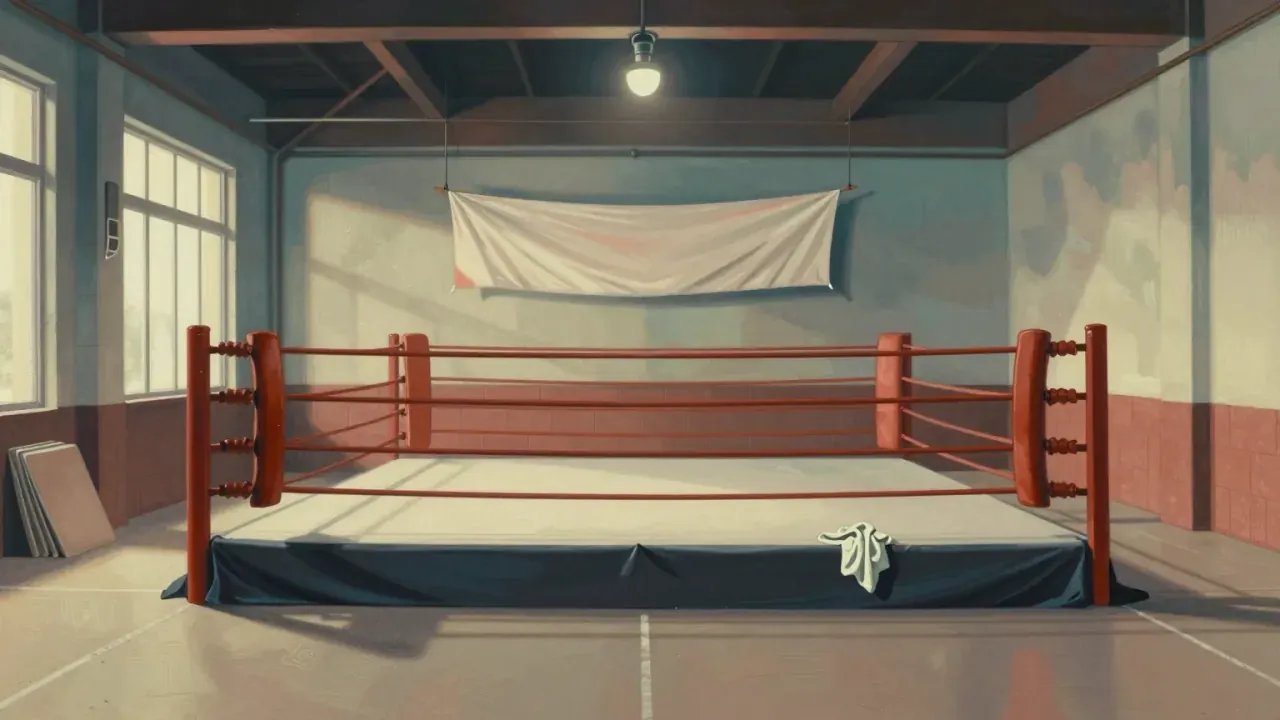
The story follows Goro Hanada, third-ranked killer, through a sequence of contracts, failures and chases that refuse resolution or consequence. Joe Shishido plays Hanada with physical precision and deadpan vacancy — his performance is less interpretation than calibration, holding still while the world around him unravels. Annu Mari’s Misako is equally unmoored: her motivations shift without explanation, her presence more atmospheric than psychological. Kōji Nanbara’s Yabuhara is all surface authority, undercut by sudden absurdity. Naozumi Yamamoto’s score alternates between lounge jazz, theremin drones and abrupt silence, never underscoring emotion but punctuating disjunction. Mutsuo Tanji’s editing compresses time and discards continuity — scenes begin mid-action, cut away before closure, return without context. Takeo Kimura’s production design treats Tokyo as a collage: neon signs bleed into concrete stairwells, a boxing ring appears in an empty gymnasium, projected film loops inside a living room. Suzuki’s camera moves with erratic purpose: tight close-ups on rice steam, wide shots that isolate figures in empty lots, tracking shots that stop mid-frame. Nothing is established then sustained; everything is introduced then undermined.
What sticks in the mind
What lands is the film’s relentless tonal friction — the way banality and menace occupy the same frame, the way eroticism and violence are rendered with identical flatness. Hanada’s rice-sniffing fetish, for instance, is neither mocked nor pathologised; it simply exists as a fact, treated with the same visual weight as a bullet entering a forehead. The film’s visual wit lands precisely because it is unexplained: a butterfly on a rifle barrel, a headband stopping a bullet, a man walking arm-in-arm with his executioner — these are not gags but structural pivots, moments where logic gives way to pure cinematic reflex. Shishido’s physical command anchors the chaos: his stance, his timing, the way he holds a cigarette or adjusts a coat lapel, all signal competence amid collapse. The sound design works similarly — gunshots are dry and abrupt, footsteps echo too long, dialogue often arrives muffled or delayed. Even the film’s famous ‘nudity’ feels functional rather than sensational: bodies appear matter-of-factly, obscured only by the era’s required maebari strips, their exposure part of the film’s broader refusal to conceal or soften. This is not realism, but a kind of anti-idealism — a cinema that insists on the awkward, the unresolved, the physically present.
Where it lets go
What does not land is any sustained emotional investment in outcome or character. Hanada’s arc — if it can be called that — has no interior logic; his shifts from lethargy to frenzy, attraction to revulsion, confidence to collapse, are not dramatised but imposed. The film offers no psychological scaffolding for Misako’s deathwish, no social context for the yakuza hierarchy, no explanation for why Number One chooses exhaustion over efficiency. Viewers expecting narrative propulsion will find themselves stranded at every turn: the customs officer assassination is played as slapstick, the Sagami Beach ambush resolves off-screen, the final gymnasium confrontation arrives without buildup. Suzuki’s aversion to pre-planning shows in places where rhythm stutters — a scene lingers too long on a static shot, a line of dialogue repeats without variation, a transition relies on a jarring cut that feels less intentional than expedient. The satire is sharp but narrow: it mocks genre tropes without engaging the human stakes those tropes usually carry. There is no moral weight, no political critique, no social texture — just a series of elegant, exhausting refusals. For some, this is liberation; for others, it is vacancy dressed as provocation.
What it says about order
The themes that matter are not stated but enacted: the erosion of agency under systems that demand performance without meaning, the absurdity of ranking human violence, the instability of identity when stripped of narrative function. Hanada’s ‘third place’ is not a position but a condition — he is defined only by comparison, and when the system collapses, he has no self left to fall back on. The film treats desire — for sex, for rank, for recognition — as a mechanical impulse, divorced from feeling: Hanada sniffs rice, Misako invites death, Yabuhara seduces Mami not out of lust but habit. Time itself is unmoored: flashbacks arrive without warning, projected films loop endlessly, phone calls interrupt sleep with no regard for chronology. This is not existentialism as philosophy but as practice — a world where meaning is not lost but never installed. The film’s repeated motifs — rice, butterflies, film projectors — do not signify but accumulate, like symptoms of a logic that has ceased to operate. Its critique is not of crime or capitalism per se, but of the cinematic and cultural machinery that insists on coherence, causality and closure as natural states.
Who it speaks to
This film is for viewers who treat narrative as material rather than mandate — those who find pleasure in formal rupture, who value texture over exposition, who prefer questions that dissolve rather than resolve. It rewards attention to composition, timing, sonic contrast and the physical presence of actors. It is not for viewers who require psychological plausibility, causal clarity or emotional payoff — those who expect a hitman film to deliver tension, catharsis or moral reckoning will find Branded to Kill withholding, even hostile. Some critics argue its influence on Tarantino or Refn proves its accessibility; others counter that those directors absorbed its surface energy while restoring narrative scaffolding it deliberately removed. A viewer who values craft over story, or who finds meaning in disjunction, will engage deeply. Someone seeking immersion, empathy or conventional suspense will leave frustrated. The verdict does not change with familiarity — repeated viewings reveal more pattern, not more sense.
Whether it earns your time
Yes, it is worth your evening — but only if you approach it as an event in film history, not as entertainment. Its ninety-seven minutes pass with a peculiar velocity: disorienting, then exhilarating, then exhausting, then strangely calming in their refusal to settle. It demands nothing but attention to what is on screen — not why it is there, but how it sits, sounds, moves. Those who watch it expecting a thriller will misread every frame; those who accept it as a controlled detonation of genre will find its rigour rewarding. It is not ‘difficult’ in the sense of obscurity, but in its insistence on operating outside expected grammar. Students of editing, sound, or performance will see techniques that remain startling fifty years on. Casual viewers may dismiss it as nonsense — and they would not be wrong, if nonsense is defined as the absence of prescribed meaning. But the film’s power lies precisely there: in making nonsense feel like the only honest response to the world it depicts.