filmbriefs
Topic

Memory

What is kept, what is edited, and what is agreed to be forgotten.

62
in film
13:00
average
806 min
in total
82
across the network
Memory across the network →
All briefs62
13:00

45 Years

Andrew Haigh · 2015

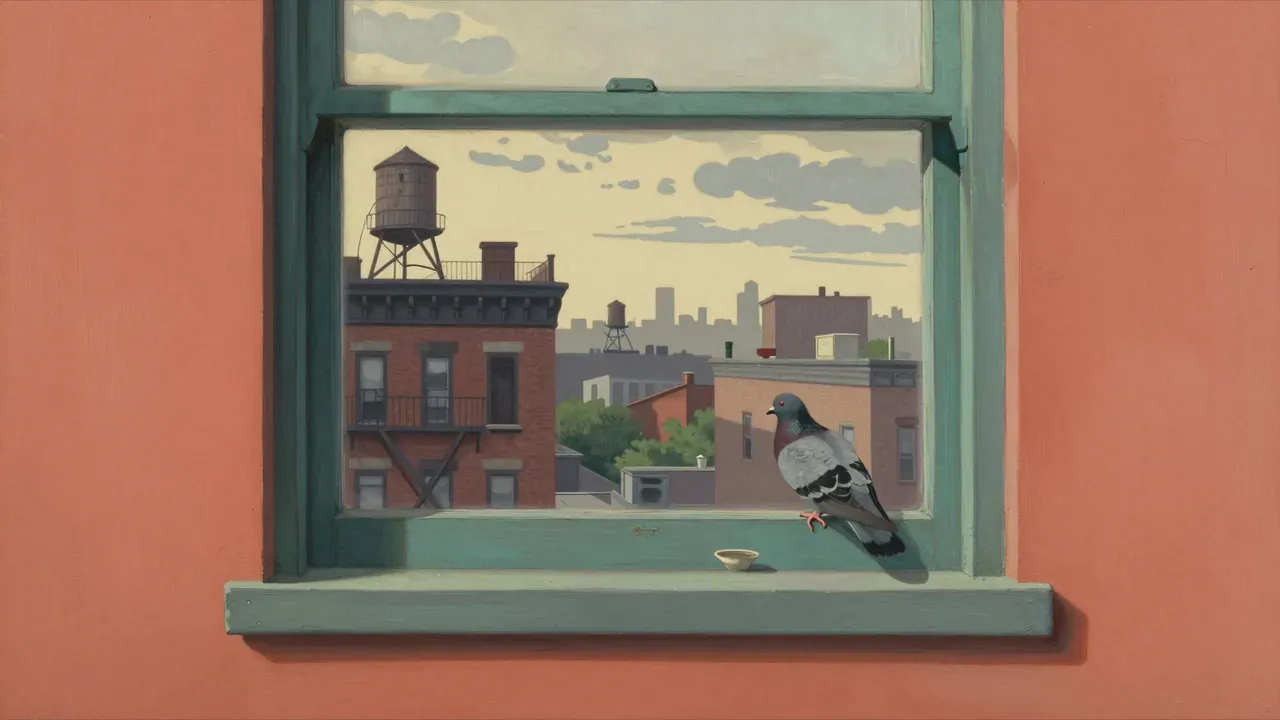
A retired Norfolk couple prepare for their 45th wedding anniversary when news arrives that the body of Geoff’s long-dead lover has emerged from a Swiss glacier. Over six days, Kate observes his growing distance, uncovers buried evidence of Katya’s pregnancy, and begins to question the foundations of their marriage — not through confrontation, but through quiet, accumulating realisations. Directed by Andrew Haigh and adapted from David Constantine’s short story, the film relies on Charlotte Rampling and Tom Courtenay’s restrained performances, Lol Crawley’s naturalistic cinematography, and a script that trusts silence over exposition.
13:00

A Dedicated Life

Kazuo Hara · 1994

Kazuo Hara’s 1994 documentary follows Japanese writer Mitsuharu Inoue during his final four years with terminal cancer. Filmed in real time, it interweaves public appearances, private moments, interviews with peers and former students, and re-enactments of Inoue’s childhood — some later challenged by relatives. The film avoids narration or score, trusting juxtaposition and duration to build a portrait defined by contradiction, not coherence.

13:00

A Safe Place

Henry Jaglom · 1971

Henry Jaglom’s 1971 drama follows Noah, a young woman drifting between present loneliness and childhood memory in New York City. Starring Tuesday Weld, Orson Welles, and Jack Nicholson, it uses fragmented editing, recurring motifs, and nostalgic music to evoke mental fragility without diagnosis. Culled from fifty hours of footage, it is a formally ambitious but divisive experiment in psychological portraiture — intimate, unresolved, and demanding of its viewer.

13:00

After Life

Hirokazu Koreeda · 1998

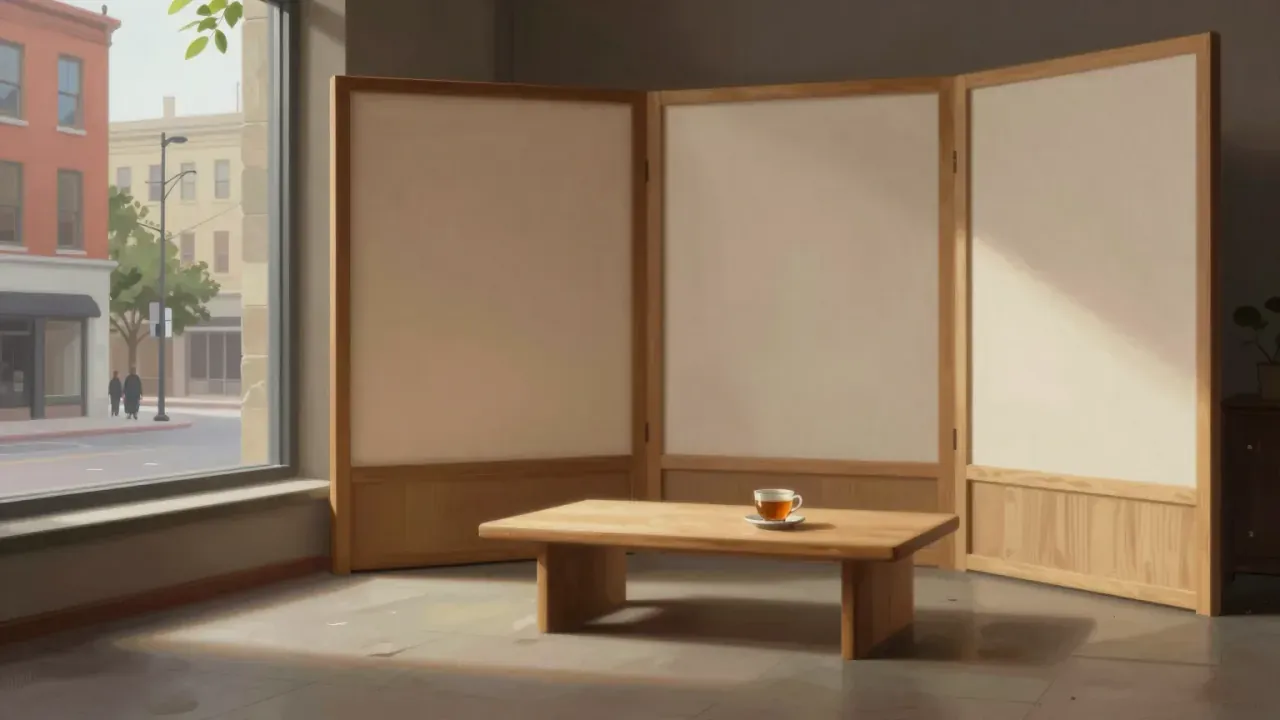
After Life (1998) is Hirokazu Koreeda’s gently speculative film set in a way station between life and death, where the newly deceased must choose one memory to carry into eternity. Shot on grainy 16 mm and 8 mm film, it blends scripted scenes with real interviews, treating memory not as fixed truth but as subjective, evolving reconstruction. With understated performances and deliberate pacing, it explores how identity forms through fragments — a dress, a breeze, a letter — and how meaning accrues in quiet, relational moments rather than grand events.
13:00

Alice in the Cities

Wim Wenders · 1974

Wim Wenders’ 1974 road film follows a stalled writer and a nine-year-old girl as they search across Germany for her estranged grandmother. Shot in black-and-white 16 mm by Robby Müller, it favours duration over exposition, silence over speech, and observation over explanation. Its power lies in restraint: in the weight of a glance, the rhythm of a bus ride, the quiet persistence of mutual attention.
13:00

And Everything Is Going Fine

Steven Soderbergh · 2010

Steven Soderbergh’s 2010 documentary And Everything Is Going Fine assembles archival monologues, interviews and home movies of Spalding Gray into a portrait built entirely from his own words and presence. Edited by Susan Littenberg and scored by Gray’s son Forrest, it avoids biography-by-explanation in favour of temporal layering and verbal recurrence. The film premiered at Slamdance in January 2010 and was released on Criterion Collection Blu-ray and DVD in 2012.

13:00

Blue Heron

Sophy Romvari · 2025

Blue Heron is Sophy Romvari’s semi-autobiographical debut feature, following a Hungarian immigrant family’s move to Vancouver Island in the late 1990s amid their eldest son’s escalating behavioural crisis. Told through overlapping timelines and anchored by Eylul Guven and Amy Zimmer as young and adult Sasha, it uses restrained performances, Maya Bankovic’s hushed cinematography, and a layered soundscape to explore how childhood perception absorbs trauma without comprehension. Released in 2025 after festival acclaim, it prioritises sensory fidelity over exposition, rendering memory as atmosphere rather than narrative.
13:00

Brand upon the Brain!

Guy Maddin · 2006

Guy Maddin’s 2006 silent-film pastiche follows a man revisiting his childhood home — a lighthouse-orphanage — triggering twelve chapters of repressed memory. Filled with Freudian horror, surreal ritual, and maternal vampirism, it uses stylised performance, intertitles, and Jason Staczek’s score to build a world where trauma repeats like a scratched record. Narrated on screen by Isabella Rossellini, it is arthouse cinema at its most formally committed and emotionally raw.

13:00

Celine and Julie Go Boating

Jacques Rivette · 1974

Jacques Rivette’s 1974 film follows two women who enter a looping, magical-realist narrative housed in a Paris mansion, gradually learning its rhythms and rewriting its ending. Built on repetition, collaboration and patient observation, it models fiction as a space to inhabit rather than interpret.

13:00

Cure

Kiyoshi Kurosawa · 1997

A Tokyo detective investigates a string of motiveless murders linked by an 'X' carved into victims and a mysterious man with apparent amnesia. As he traces each killer to the same enigmatic figure, his own grip on memory, motive, and agency begins to fray. Kiyoshi Kurosawa’s 1997 film treats hypnosis as ambient infection, building dread through repetition, restraint, and the slow erosion of certainty — not through gore or jump-scares, but through the unnerving plausibility of suggestion.

13:00

Days of Being Wild

Wong Kar-wai · 1990

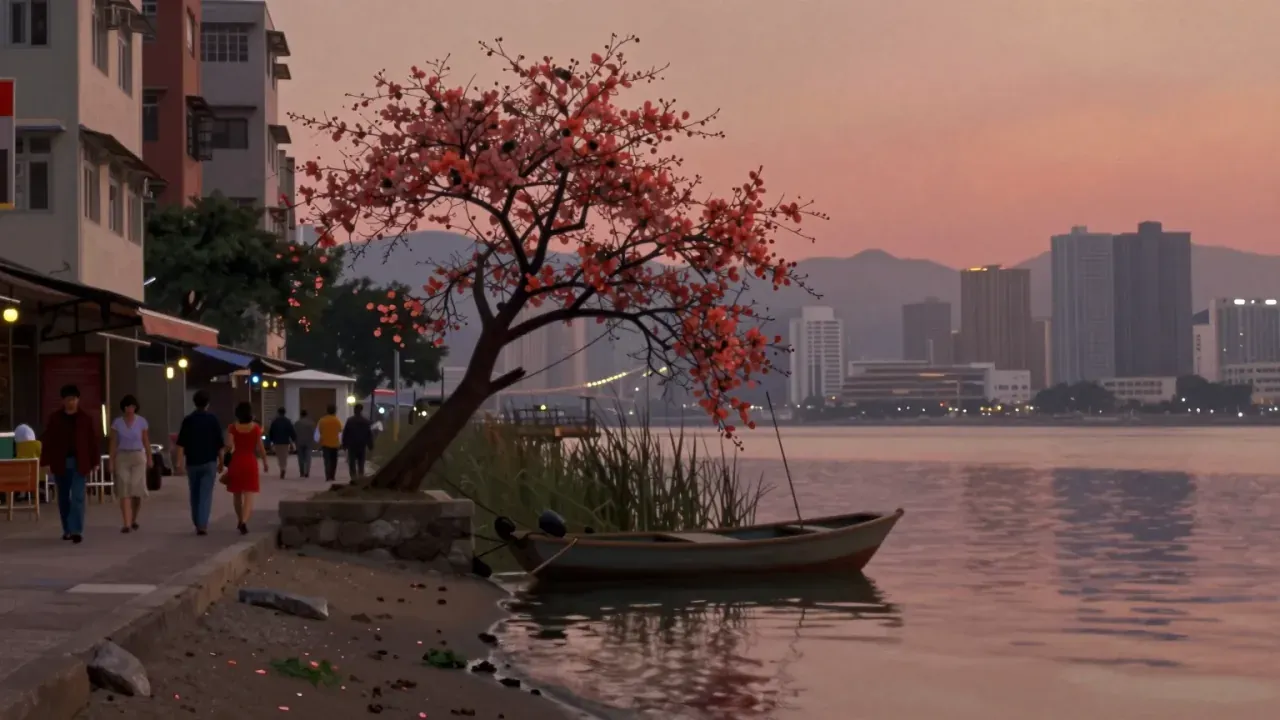
Wong Kar-wai’s 1990 romantic drama follows drifting young people in 1960 Hong Kong — a playboy searching for his birth mother, a ticket seller holding onto a lost moment, a policeman turning to the sea — bound not by plot but by shared unease. Christopher Doyle’s cinematography, Chan Ming-Diy’s score, and a cast including Leslie Cheung and Maggie Cheung build a world of suspended time and unfulfilled desire. It is the first in an informal trilogy, and the foundation of Wong’s singular style.

13:00

Eve's Bayou

Kasi Lemmons · 1997

Set in 1962 Louisiana, Eve’s Bayou follows ten-year-old Eve Batiste as she witnesses fractures in her prosperous Creole-American family — infidelity, silence, spiritual inheritance — without the language or authority to name them. Kasi Lemmons’ debut sustains a mood of suspended dread and quiet revelation, anchored by Jurnee Smollett’s restrained performance and Amy Vincent’s humid, intimate cinematography. It treats memory, mysticism, and moral ambiguity not as devices but as conditions of being.

13:00

Heart of a Dog

Laurie Anderson · 2015

Laurie Anderson’s 2015 essay-film Heart of a Dog reflects on the death of her dog Lolabelle, weaving personal memory, Buddhist bardo teachings, and reflections on post-9/11 New York into a meditative, non-linear structure. Composed, scored, and narrated by Anderson, it favours restraint over exposition, silence over score, and association over argument — offering not answers but a sustained mode of attention.

13:00

La Jetée

Chris Marker · 1962

A 28-minute French photomontage from 1962, La Jetée tells a post-nuclear time-travel story almost entirely through still black-and-white photographs, linked by voice-over narration and a sparse orchestral score. Its protagonist is sent from a ruined Paris to the past and future, bound by a childhood memory of a woman on an airport jetty — a memory that proves to be his own death. Built as a photo novel, not a film, it treats time as recursive, memory as architectural, and perception as the only continuous medium across stillness.

13:00

Memories of Underdevelopment

Tomás Gutiérrez Alea · 1968

Tomás Gutiérrez Alea’s 1968 drama follows Sergio, a Havana intellectual who stays behind after the Revolution while his family flees. Narrated by Sergio himself, the film interweaves his relationships, memories, and political observations with documentary footage from the era. Shot economically and with formal rigour, it presents alienation not as existential angst but as the quiet persistence of privilege amid upheaval.

13:00

Memory for Max, Claire, Ida and Company

Allan King · 2005

Memory for Max, Claire, Ida and Company (2005) is a Canadian documentary by Allan King observing residents with dementia at Toronto’s Baycrest Health Sciences. Eschewing narration, interviews, or medical context, it relies on sustained observation, ambient sound, and unhurried editing to portray daily life with quiet rigour. The film premiered at TIFF 2005, was broadcast by TVOntario, and shortlisted for multiple Gemini Awards. It functions less as advocacy or education than as an ethical act of attention — one that asks viewers to recalibrate how they perceive continuity, agency, and personhood when memory changes shape.

13:00

Muriel

Alain Resnais · 1963

Alain Resnais’s 1963 film Muriel follows a widow, her traumatised stepson, and two visitors over fifteen fragmented days in Boulogne-sur-Mer. Shot in static colour with rigorous editing and sparse dialogue, it explores memory, guilt, and the unspoken legacy of the Algerian War — not through exposition, but through architectural detail, temporal disjunction, and withheld emotion.

13:00

My Winnipeg

Guy Maddin · 2007

Guy Maddin’s My Winnipeg (2007) is a self-narrated ‘docu-fantasia’ that uses staged re-enactments, archival fragments and invented history to explore his lifelong entanglement with his hometown. Framed as an attempt to ‘film his way out’, the film treats Winnipeg as a psychic landscape — where sleepwalking is epidemic, rivers run double beneath the streets, and demolition sites hold sacred residue. It is less about the city’s facts than its emotional architecture.

13:00

News from Home

Chantal Akerman · 1976

News from Home (1976) is a French-language documentary by Chantal Akerman, composed of extended static shots of New York City locations — subway platforms, ferry decks, city streets — accompanied by Akerman’s voice reading letters from her mother written between 1971 and 1973. Shot by Babette Mangolte and edited by Francine Sandberg, it is a study in duration, alienation, and the quiet labour of correspondence across distance.

13:00

Peter Hujar’s Day

Ira Sachs · 2025

Set in a SoHo apartment in 1974, Peter Hujar’s Day reconstructs a single day in the photographer’s life through his real-time recollection for writer Linda Rosenkrantz. Directed by Ira Sachs and starring Ben Whishaw and Rebecca Hall, it unfolds almost entirely in one room, trusting the rhythms of speech, silence, and memory over conventional narrative. Shot by Alex Ashe and edited by Affonso Gonçalves, the film honours the granularity of artistic labour — developing film, negotiating commissions, navigating fame — without embellishment or explanation.

13:00

Roma

Federico Fellini · 1972

Federico Fellini’s 1972 Roma is a semi-autobiographical, episodic portrait of the city as living archive. Alternating between the director’s youth in Fascist-era Rome and his present-day filming in the early 1970s, it builds meaning through texture, juxtaposition, and sustained observation rather than narrative. Giuseppe Rotunno’s cinematography, Nino Rota’s score, and Danilo Donati’s production design render Rome tactile and layered — ancient, sacred, vulgar, and resilient. Though uneven in pacing and occasionally opaque in intent, it remains a singular achievement in cinematic essay-making: a city remembered not as fact, but as feeling.

13:00

Sans Soleil

Chris Marker · 1983

Sans Soleil (1983) is Chris Marker’s 100-minute French essay-film, structured around letters from a fictional cameraman and narrated by Florence Delay. Shot on silent 16mm and edited with found footage from Japan, Guinea-Bissau, Iceland and Paris, it explores memory’s fragility through juxtaposition, colourisation and Moog-scored stillness — not as documentary exposition but as a sustained, self-aware meditation on what images remember and forget.

13:00

Shoah

Claude Lanzmann · 1985

A nine-hour French documentary directed by Claude Lanzmann, released in 1985. Made over eleven years, it contains no archival footage, no narration, no music — only interviews with survivors, perpetrators and bystanders, filmed on location at former death camps in Poland. Its method is durational, forensic and ethically uncompromising: testimony is left untranslated where necessary, interpreters’ voices remain audible, silence is preserved, and geography is matched to memory. It does not explain the Holocaust but locates it in speech, space and procedure.

13:00

Summer Interlude

Ingmar Bergman · 1951

Ingmar Bergman’s 1951 drama follows a ballerina who, during a tense rehearsal day, receives the diary of her first love — a young man who died thirteen years earlier after a diving accident. Returning to the island where they met, she revisits that summer not to grieve anew, but to rediscover the physical ease and emotional openness she buried beneath professional discipline and adult reserve. Shot on location at Dalarö with restrained cinematography by Gunnar Fischer, the film balances memory and immediacy, loss and renewal, without recourse to exposition or sentiment. It marks Bergman’s turn toward psychological intimacy and formal precision — not as intellectual exercise, but as embodied experience.

13:00

The Irishman

Martin Scorsese · 2019

Martin Scorsese’s 2019 crime drama follows Frank Sheeran (Robert De Niro), a truck driver turned alleged hitman, across five decades of mob and union entanglement. Adapted from Charles Brandt’s contested book, it uses de-ageing effects and deliberate pacing to explore memory, complicity, and the quiet dissolution of identity. With Al Pacino as Jimmy Hoffa and Joe Pesci as Russell Bufalino, it prioritises restraint over revelation—and duration over drama.

13:00

The Long Day Closes

Terence Davies · 1992

Terence Davies’ 1992 film is a lyrical, formally rigorous evocation of childhood in 1950s Liverpool. Built from fragments — light, music, silence, gesture — it avoids plot in favour of sustained mood, using Michael Coulter’s restrained cinematography and a carefully curated soundtrack to render memory as sensory experience rather than narrative.

13:00

The South

Víctor Erice · 1983

Set in northern Spain in the late 1950s, Víctor Erice’s The South traces a young girl’s quiet, persistent attempt to understand her father’s hidden past — his childhood in the south, his Republican past, his estrangement from his family, and his enduring attachment to an actress named Irene Ríos. Adapted from Adelaida García Morales’ novella and shot by José Luis Alcaine Escaño, the film proceeds through restrained, image-led episodes, treating memory as physical trace and silence as narrative agent. It was produced by Elías Querejeta and entered the 1983 Cannes Film Festival.

13:00

The Tree of Life

Terrence Malick · 2011

Terrence Malick’s 2011 film interweaves cosmic origins, prehistoric evolution, and a 1950s Texas childhood into a single sensory continuum. Shot by Emmanuel Lubezki and edited from hundreds of hours of footage, it replaces plot with rhythm, dialogue with light, and psychology with presence. Its ambition is ontological: to treat human experience and natural process as variations on the same physical law.

13:00

Two Monks

Juan Bustillo Oro · 1934

Two Monks (1934) is a Mexican expressionist drama set in a Gothic monastery, where two monks — one dying, one newly arrived — confront a shared past through contradictory flashbacks. Directed by Juan Bustillo Oro and shot by Agustín Jiménez, it uses stark black-and-white cinematography and claustrophobic production design to explore memory, guilt, and the impossibility of objective truth. Its structural innovation — presenting two mutually exclusive accounts of a fatal love triangle — predates Rashomon by sixteen years. Though austere and demanding, it remains a landmark of early Latin American modernist cinema.

13:00

Un carnet de bal

Julien Duvivier · 1937

Un carnet de bal (1937), directed by Julien Duvivier, follows Christine, a recently widowed woman who revisits the men who signed her debut ball dance card twenty years earlier. Through a series of vignettes, the film traces how youthful promise dissolved into varied, often diminished, adult lives—without judgement or hierarchy. Shot in France with Philippe Agostini’s restrained cinematography and Maurice Jaubert’s subtle score, it prioritises observation over exposition, stillness over motion, and moral neutrality over moralising. Its power lies in cumulative effect, not plot, and its endurance rests on its refusal to simplify time, regret, or human consequence.

13:00

Wings

Larisa Shepitko · 1966

Larisa Shepitko’s 1966 debut Wings follows Nadezhda Petrukhina, a former WWII fighter pilot now working as a trade-school principal in the Soviet Union. Haunted by memories of combat and lost love, she struggles to connect with her adopted daughter, her students, and her own sense of purpose. Shot in black and white by Igor Slabnevich, with a restrained performance by Maya Bulgakova, the film traces the quiet erosion of identity when public myth outlives private meaning.

13:00

Last Year at Marienbad

Alain Resnais · 1961

Last Year at Marienbad (1961) is a French avant-garde drama directed by Alain Resnais from a screenplay by Alain Robbe-Grillet. Set in an ornate, unnamed hotel, it follows a man’s insistent claim that he and a woman met there the previous year — a claim she denies. With no named characters, nonlinear editing, repetitive dialogue and meticulously composed black-and-white imagery, it explores memory, persuasion and the instability of time. Shot in Munich palaces using Dyaliscope widescreen, it won the Golden Lion at Venice and remains a landmark of modernist cinema.

13:00

2046

Wong Kar-wai · 2004

Wong Kar-wai’s 2004 romantic drama follows writer Chow Mo-wan as he drifts through 1960s Hong Kong, entangled with several women while haunted by an unconsummated past. Structured non-chronologically and interwoven with sci-fi fragments, it uses repetition, texture and sound to explore memory, longing and emotional stasis — not as narrative problems to solve, but as perceptual conditions to inhabit.

13:00

A City of Sadness

Hou Hsiao-Hsien · 1989

Hou Hsiao-hsien’s 1989 Golden Lion winner follows a Taiwanese family in Jiufen during the turbulent years after Japan’s surrender, the February 28 Incident, and the onset of the White Terror. Using long takes, multilingual dialogue, and a muted, observational style, it renders political trauma through domestic detail — photographs, trains, staircases, silences — rather than exposition or polemic. Starring Tony Leung, Li Tian-lu, and Jack Kao, it is the first Taiwanese film to confront state violence openly, and remains a landmark of the New Taiwanese Cinema movement.

13:00

A Very Long Engagement

Jean-Pierre Jeunet · 2004

Jean-Pierre Jeunet’s 2004 film follows Mathilde, a young Breton woman who refuses to accept her fiancé’s death in the First World War. Using letters, archives, and dogged interviews, she reconstructs the fate of five soldiers condemned to no man’s land. Shot by Bruno Delbonnel and scored by Angelo Badalamenti, it balances tactile realism with poetic restraint, anchoring its wartime narrative in the quiet persistence of civilian life in 1920s France.

13:00

After Yang

Kogonada · 2021

A quietly devastating science fiction drama in which a family attempts to repair their malfunctioning android son, uncovering layers of memory, loss, and care. Set in a calm, unspecified future, it avoids genre spectacle in favour of domestic intimacy, using restraint as both aesthetic and ethical principle.

13:00

Amarcord

Federico Fellini · 1973

Federico Fellini’s 1973 Amarcord is a semi-autobiographical art film set in a fictionalised 1930s Rimini, structured as a year-long seasonal cycle through the life of a coastal village under Fascism. Starring Bruno Zanin and featuring a large ensemble of professional and non-professional actors, it uses exaggerated, theatrical imagery and episodic storytelling to evoke memory as associative, contradictory, and deeply sensual. Giuseppe Rotunno’s cinematography, Nino Rota’s score, and Ruggero Mastroianni’s editing cohere around a central irony: that collective remembrance often obscures moral accountability. Winner of the 1975 Academy Award for Best International Feature Film, it remains a defining work of Italian arthouse cinema.

13:00

Ashes of Time

Wong Kar-wai · 1994

Wong Kar-wai’s 1994 Ashes of Time reimagines Jin Yong’s wuxia universe as a landscape of regret and deferred feeling. Starring Leslie Cheung as the brooding Ouyang Feng, it follows fragmented encounters across a bleached desert, where martial skill matters less than the weight of unspoken words. Shot by Christopher Doyle and Kwan Pun Leung in muted, atmospheric tones, and scored with sparse, resonant instrumentation, the film privileges mood over momentum. Though its elliptical structure divides opinion, its central performances and visual discipline make it a defining arthouse wuxia — less about heroes and villains, more about the quiet violence of remembering.

13:00

Hiroshima mon amour

Alain Resnais · 1959

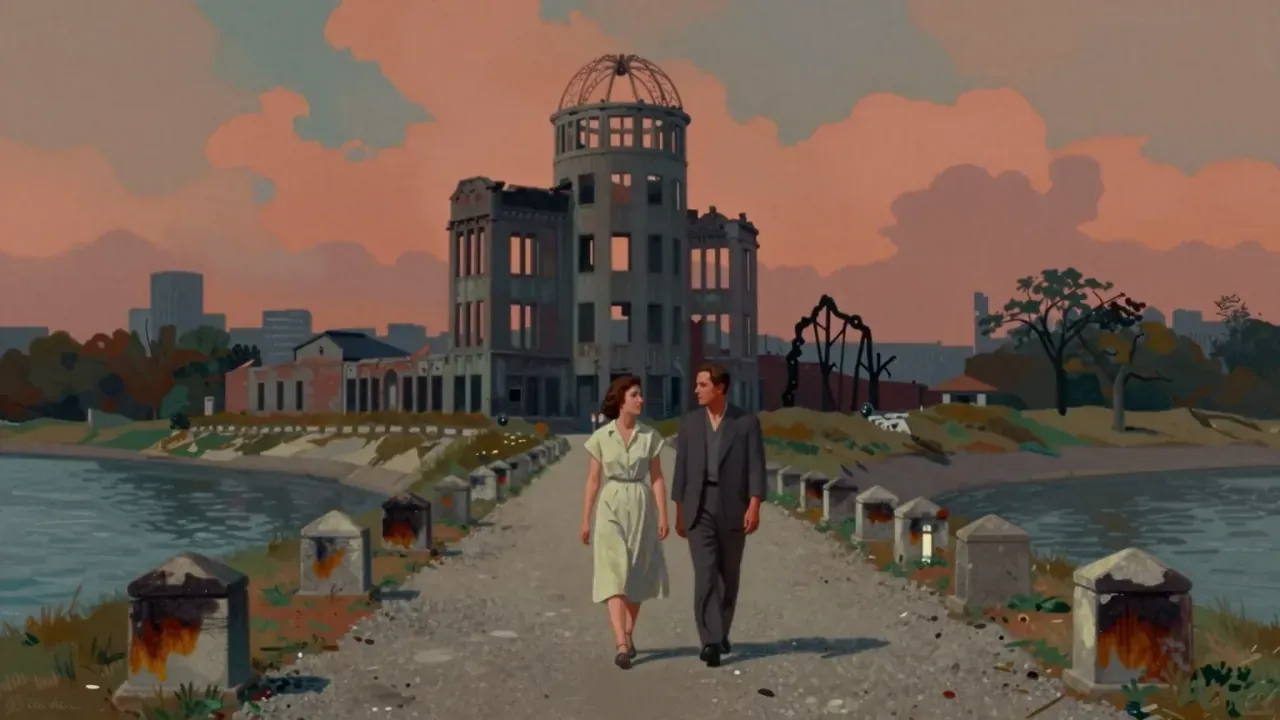
Alain Resnais’ 1959 debut, written by Marguerite Duras, traces a fleeting encounter between a French actress and a Japanese architect in Hiroshima. Through tightly composed images, fragmented flashbacks, and restrained performances, it explores how personal and historical trauma intertwine — not as metaphor, but as embodied experience. Shot in France and Japan, edited with surgical precision, and scored with near-silence, it treats love, memory, and forgetting as inseparable forces.

13:00

I'm Thinking of Ending Things

Charlie Kaufman · 2020

Charlie Kaufman’s 2020 adaptation of Iain Reid’s novel follows a woman whose identity unravels during a visit to her boyfriend’s parents’ remote farm. Intercut with scenes of a school janitor’s routine, the film builds a recursive, psychologically dense world where time bends, memory mutates, and reality frays. Shot in tight 4:3 by Łukasz Żal and anchored by restrained performances from Jessie Buckley and Jesse Plemons, it sustains a tone of quiet dread and existential fatigue across 134 minutes. Its final moments offer not answers but a saturated blue field—and the sound of an approaching snowplough.

13:00

The Mirror

Andrei Tarkovsky · 1975

Andrei Tarkovsky’s 1975 film The Mirror is a non-linear, autobiographical essay in image and sound. Shot by Georgy Rerberg and scored by Eduard Artemyev, it weaves childhood recollection, wartime newsreel, poetic voiceover, and maternal presence into a single, flowing meditation on time, inheritance, and perception. Margarita Terekhova plays dual roles; Oleg Yankovsky appears only in voiceover. With around 200 shots across 108 minutes, its rhythm is durational, not dramatic. Released under constraint by Mosfilm, it polarised Soviet critics before becoming widely regarded as Tarkovsky’s most intimate work.

13:00

The Virgin Suicides

Sofia Coppola · 1999

Sofia Coppola’s 1999 debut adapts Jeffrey Eugenides’ novel into a hushed, amber-toned portrait of five teenage sisters in 1970s Detroit, observed from afar by neighbourhood boys. Shot by Edward Lachman and scored by Air, it builds mood through stillness, soft focus, and restrained performance — especially Kirsten Dunst’s Lux — avoiding psychology, exposition, or catharsis. Its power lies in what it withholds.

13:00

8½

Federico Fellini · 1963

Federico Fellini's 1963 film follows Guido Anselmi, a film director retreating to a spa town while his crew waits for a script he cannot write, sliding between the demands of producers, mistresses, his wife and memories of his Catholic childhood without marking the boundary between what is happening and what he is imagining. Shot by Gianni Di Venanzo in high-contrast black and white, scored by Nino Rota, and led by Marcello Mastroianni, the film won two Oscars, for costume design and international feature, and has stood since as one of the most direct portraits of creative paralysis committed to film.

13:00

Blade Runner 2049

Denis Villeneuve · 2017

Thirty-five years after Ridley Scott's original, Denis Villeneuve's sequel sends replicant blade runner K into a discovery that threatens the order between humans and the synthetics who serve them, with Harrison Ford's Deckard drawn back into the search. Visually enormous and emotionally patient, it won over critics but not, relative to its cost, box offices.

13:00

Coco

Lee Unkrich, Adrian Molina · 2017

Twelve-year-old Miguel, banned from music by his shoemaking family, is pulled into the Land of the Dead on the Day of the Dead and has to win his deceased great-great-grandfather's blessing before sunrise or be trapped there. Lee Unkrich and Adrian Molina's Pixar feature, developed over years of research trips to Mexico and a cultural consultant group formed after a trademark controversy, builds its fantasy rules around a specific, sourced idea: that the dead persist only as long as someone living remembers them.

13:00

Eternal Sunshine of the Spotless Mind

Michel Gondry · 2004

Jim Carrey and Kate Winslet play exes who each have their relationship erased from memory, in a film that plays their romance in reverse and ends with them choosing it again anyway.

13:00

In the Mood for Love

Wong Kar-wai · 2000

In 1962 Hong Kong, a newspaper editor and a secretary living next door to each other realise their spouses are having an affair, and grow close while insisting they will not repeat it. Wong Kar-wai shot for fifteen months without a finished script, switching cinematographers mid-production, and built the film around Maggie Cheung's cheongsams and Tony Leung's restraint rather than plot incident. It won Leung the Cannes best actor award and has since been ranked among the major works of Asian cinema.

13:00

Inside Out

Pete Docter, Ronnie del Carmen · 2015

Riley Andersen's move from Minnesota to San Francisco throws her mental control room into crisis when Joy and Sadness are accidentally flung from headquarters, forcing them to find their way back through the wreckage of her long-term memory. Pete Docter and Ronnie del Carmen's Pixar feature spends five personified emotions and a five-and-a-half-year production trying to dramatise, rather than explain, why a child needs to be allowed to feel bad.

13:00

Kubo and the Two Strings

Travis Knight · 2016

In a fictionalised feudal Japan, a one-eyed boy named Kubo earns a living by animating paper figures with music, until his grandfather's ghostly aunts arrive to finish what took his eye in infancy. Travis Knight's directorial debut for Laika pairs handmade stop-motion craft, inspired by ukiyo-e woodblock printing, with a quest plot that leans harder on grief and loss than most animated adventures aimed at children.

13:00

Memories of Murder

Bong Joon-ho · 2003

Bong Joon-ho's 2003 film follows two mismatched detectives investigating a string of rapes and murders in a small South Korean town in the late 1980s, one relying on coerced confessions and superstition, the other on procedure imported from Seoul that proves no more effective. Loosely based on Korea's real, then-unsolved hunt for a serial killer later identified in 2019 as Lee Choon-jae, and shot on a $2.8 million budget with Song Kang-ho in the lead, the film built a cult following before becoming regarded internationally as one of the finest crime films of the century.

13:00

Millennium Actress

Satoshi Kon · 2001

Millennium Actress frames a documentary crew's interview with a reclusive retired film star as the occasion for her life story, then dissolves the line between her memories and the film roles she played until the two run as one continuous narrative. Satoshi Kon's first original film after Perfect Blue, made at Madhouse on one of the lowest budgets recorded for a Japanese animated feature, it won the Animation Kobe award and holds a 93% critical score despite a tiny US theatrical release.

13:00

Mirai of the Future

Mamoru Hosoda · 2018

Kun, four years old and furious at the attention his newborn sister Mirai is getting, starts slipping into the family garden and meeting relatives out of chronological order: a teenage future version of Mirai, his mother as a scolded little girl, his great-grandfather as a young man. Mamoru Hosoda, drawing directly on watching his own son react to a new sibling, builds the film's fantasy elements not as escape from Kun's anger but as a way of walking him back through it.

13:00

Mulholland Drive

David Lynch · 2001

Rejected by ABC as a television pilot, Mulholland Drive was rebuilt by David Lynch into a feature with new financing, new footage, and an ending that recontextualises everything before it. Naomi Watts's performance carries the film from bright optimism to something far darker, across a Los Angeles built out of borrowed names and unresolved threads.

13:00

Oldboy

Park Chan-wook · 2003

Park Chan-wook's 2003 thriller, the middle film of his Vengeance Trilogy, follows Oh Dae-su as he hunts the man who imprisoned him for fifteen years with no explanation. Built around Choi Min-sik's ferocious lead performance and a single-take corridor fight shot over three days, it won the Grand Prix at Cannes and remains one of the most-cited South Korean films abroad, for reasons that are as uncomfortable as they are precise.

13:00

Once Upon a Time in the West

Sergio Leone · 1968

Sergio Leone's 1968 Western, funded by Paramount specifically to secure Henry Fonda, casts the actor against type as a hired killer clearing land for the railroad while a harmonica-playing stranger, played by Charles Bronson, pursues him for reasons the film withholds until its final scenes. Composed with Ennio Morricone's score written and recorded before filming began, and shot across Spain, Utah and Cinecittà, the film ran 165 minutes in Europe to strong box office, but Paramount's 140-minute US cut flopped on release in 1969, a fate the film's reputation has long since reversed.

13:00

Only Yesterday

Isao Takahata · 1991

Isao Takahata's 1991 film follows Taeko, twenty-seven, on a countryside holiday where memories of herself at age ten resurface alongside a present-day romance with a young farmer. Adapted from an episodic manga that covered only the childhood material, with the adult framing story invented by Takahata himself, it became the highest-grossing Japanese film of 1991 despite total absence of fantasy or spectacle.

13:00

Paris, Texas

Wim Wenders · 1984

A man wanders out of the Texas desert after four unexplained years, and Wim Wenders spends 147 patient minutes on what it costs him to reclaim a son and finally speak to the wife he left behind.

13:00

Robot Dreams

Pablo Berger · 2023

In 1985 Manhattan, a lonely dog orders a robot companion by mail, and the two become inseparable until a day at the beach leaves the robot rusted, stranded and eventually lost to a junkyard. Pablo Berger adapts Sara Varon's 2007 graphic novel entirely without dialogue, built around the recurring pull of Earth, Wind and Fire's September.

13:00

Solaris

Andrei Tarkovsky · 1972

Andrei Tarkovsky's 1972 adaptation of Stanislaw Lem's novel sends psychologist Kris Kelvin to a station orbiting the ocean planet Solaris, where the surviving crew have fallen into crisis after the planet's ocean began materialising physical visitors drawn from their memories, and Kelvin's own dead wife Hari soon appears to him in the same way. Shot by Vadim Yusov with a score by Eduard Artemyev built around a Bach chorale, and made partly as a rebuttal to what Tarkovsky saw as the coldness of 2001: A Space Odyssey, it won the Grand Prix at Cannes and has stood since as one of Soviet cinema's most significant contributions to science fiction.

13:00

Suzume

Makoto Shinkai · 2022

Seventeen-year-old Suzume Iwato joins a young door-closer named Souta, who is turned into a three-legged chair partway through their journey, on a trip across Japan sealing doors that release a giant, earthquake-triggering worm. The third film in Makoto Shinkai's disaster trilogy, following Your Name and Weathering with You, draws directly on the 2011 Tohoku earthquake and tsunami.

13:00

Wild Strawberries

Ingmar Bergman · 1957

Victor Sjöström, in his last screen role, plays an elderly professor driving to collect an honorary degree while dreams and hitchhikers force him to confront the coldness he built his life on. Ingmar Bergman wrote it from a hospital bed the same year as The Seventh Seal, and it won the Golden Bear in Berlin, becoming one of the clearest statements of his recurring interest in memory, guilt, and old age.

13:00

Your Name

Makoto Shinkai · 2016

A Tokyo boy and a rural girl who have never met begin waking up in each other's bodies, building a friendship across the swap before a hidden twist reveals the stakes are far higher than a shared inconvenience. Makoto Shinkai wrote, directed, shot and edited the film after visiting a village destroyed by the 2011 tsunami, and Your Name became the first entry in what critics now call his disaster trilogy, and briefly the highest-grossing Japanese film ever made.