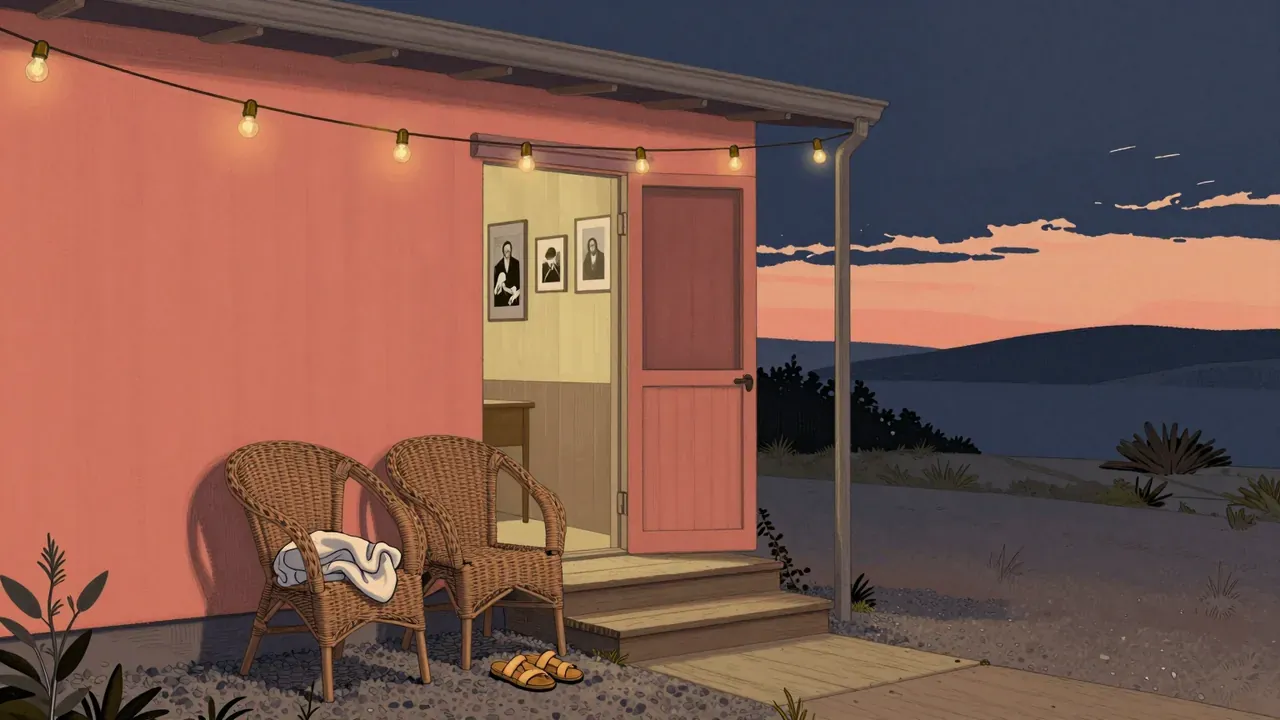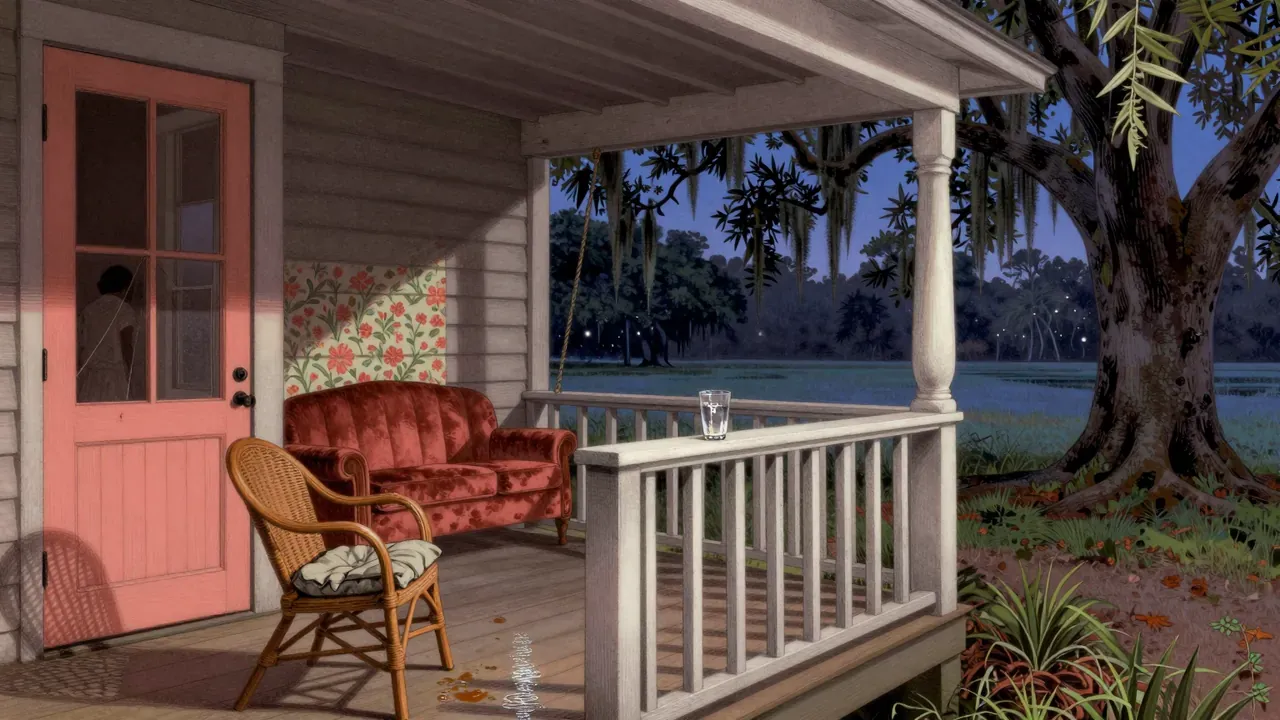
The look of it
Eve’s Bayou is a Southern Gothic drama set in 1962 Louisiana, centred on ten-year-old Eve Batiste’s slow, painful unravelling of her family’s moral architecture. It is not a mystery to be solved but a memory to be endured — one shaped by a child’s limited vantage, unreliable perception, and the weight of adult silence. Kasi Lemmons writes and directs with deliberate restraint, refusing exposition or psychological explanation in favour of atmosphere, gesture, and omission. The film treats childhood not as innocence but as acute, unmediated witness: Eve sees too much, understands too little, and remembers everything unevenly. Its ambition lies in sustaining that dissonance — between what is seen and what is known, between what is spoken and what is buried — across an entire narrative arc. It does not seek to diagnose trauma so much as inhabit its rhythms: the lull before confrontation, the pause after betrayal, the long quiet after violence has passed. This is a film built around withheld information, not because it wants to mislead, but because it trusts the viewer to sit inside uncertainty as Eve does.
How it holds you
The story unfolds through Eve’s perspective, anchored by Jurnee Smollett’s performance — precise, watchful, never precocious. Debbi Morgan gives Mozelle a grounded warmth and quiet sorrow; Lynn Whitfield shapes Roz with controlled exhaustion, her composure fraying like thread pulled from a hem. Samuel L. Jackson’s Louis is charismatic but opaque — his charm feels earned, his cruelty unexplained, which is precisely the point. Amy Vincent’s cinematography avoids Southern postcard cliché: she uses shallow focus and muted greens, keeps interiors dim and humid, lets light pool only where characters gather — in parlours, porches, kitchens — never in hallways or bedrooms. Terence Blanchard’s score is sparse, mostly piano and strings, swelling only at moments of rupture. Terilyn A. Shropshire’s editing favours duration over cut: scenes linger past comfort, especially when tension builds without release. There are no flashbacks, no voiceover justification — just a child’s present-tense reckoning, edited with the patience of someone who knows memory does not obey chronology.
Where it settles
What lands most firmly is the film’s emotional texture: the thick air of a Louisiana summer, the hush before a storm, the way grief settles into furniture and floorboards. Eve’s second sight is never sensationalised — it arrives as flicker, echo, dream logic — and the film trusts the audience to accept it as part of the world’s grammar, not a plot device. The Batiste household feels lived-in: the clink of ice in glasses, the rustle of taffeta, the way adults speak just above children’s heads. The performances avoid melodrama even at their most charged — particularly in the confrontation between Eve and Cisely near the end, where neither girl shouts, yet every silence carries accusation and exhaustion. The film’s refusal to resolve the central ambiguity — what exactly happened between Cisely and Louis — lands with cumulative force. It does not ask us to choose sides, but to hold the discomfort of unknowing, just as Eve must. That restraint, sustained over 109 minutes, is rare and rigorously maintained.
Where it thins
What does not land is the framing device of Elzora’s mysticism, which remains underdeveloped and tonally inconsistent. Her role shifts between folkloric guide, pragmatic counsellor, and spectral presence without settling into any one function. The voodoo elements feel more atmospheric than structural — evocative but not integrated into the film’s moral or narrative logic. Similarly, the subplot involving Mozelle’s third husband’s death serves mood rather than momentum, arriving and departing without consequence for Eve’s arc. Some supporting characters — Lenny Mereaux, Matty — exist primarily as catalysts, their inner lives left unexamined. The film’s commitment to ambiguity works against clarity in these instances, leaving gaps that feel less like invitation and more like omission. A tighter focus on the immediate family unit would have sharpened the film’s psychological precision without sacrificing its sense of communal gravity.
What it carries
The themes that matter are memory’s unreliability, the burden of witnessing, and the asymmetry of power within families — especially across age, gender, and generation. The film treats childhood not as a stage to be outgrown but as a position of acute vulnerability and unacknowledged authority: Eve sees, names, and interprets, yet her testimony is routinely dismissed or reinterpreted by adults. It explores how secrets calcify into silence, how infidelity corrodes not just marriage but the architecture of trust for everyone downstream. The Creole-American setting is not backdrop but condition: history is inherited, not chosen — the Batiste name carries both privilege and erasure, French lineage and enslaved ancestry, medical respectability and spiritual marginalisation. The film’s engagement with hoodoo is neither exotic nor anthropological; it is practical, intergenerational, and embedded in daily life — a counterpoint to Western medicine, not its opposite. Forgiveness here is not resolution but endurance — a choice made quietly, without fanfare or catharsis.
Who it meets
This film is for viewers who value atmosphere over exposition, who can sit with unresolved tension and resist the urge to assign motive or blame. It rewards attention to gesture, silence, and composition — not plot mechanics. It is not for those who require clear moral binaries, narrative closure, or psychological explanation. Anyone expecting a conventional coming-of-age arc or a thriller-like unveiling of truth will find the pacing glacial and the ending unsatisfying. Those who associate Southern Gothic with overt horror or grotesquerie may misread its subtlety. A viewer who needs cause-and-effect causality, or who finds ambiguity emotionally exhausting, would likely leave frustrated. The film assumes patience as a prerequisite — not as a virtue, but as a necessary condition for its world to register. Without that, the heat, the stillness, the weight of what goes unsaid, simply evaporates.
What it gives back
Yes, it is worth your evening — provided you approach it as a sensory and emotional experience rather than a puzzle to solve. Its 109 minutes unfold with the unhurried certainty of a summer afternoon, and its rewards accrue slowly: in the way light falls across a porch swing, in the tremor in a mother’s hand as she pours tea, in the quiet solidarity of two sisters holding hands at dusk. It asks nothing more than that you attend — and in return, offers a portrait of black interiority, familial fracture, and childhood consciousness that remains uncommon in American cinema. Those who dismiss it as ‘slow’ mistake stillness for emptiness; those who call it ‘ambiguous’ confuse complexity with evasion. It is neither. It is specific, deliberate, and deeply felt — a film that earns its quiet by refusing to shout. To miss it is not to miss a story, but a sensibility — one that treats memory, magic, and morality as inseparable, and childhood as terrain worthy of serious, unflinching attention.