A dog, a mail-order robot, one perfect summer
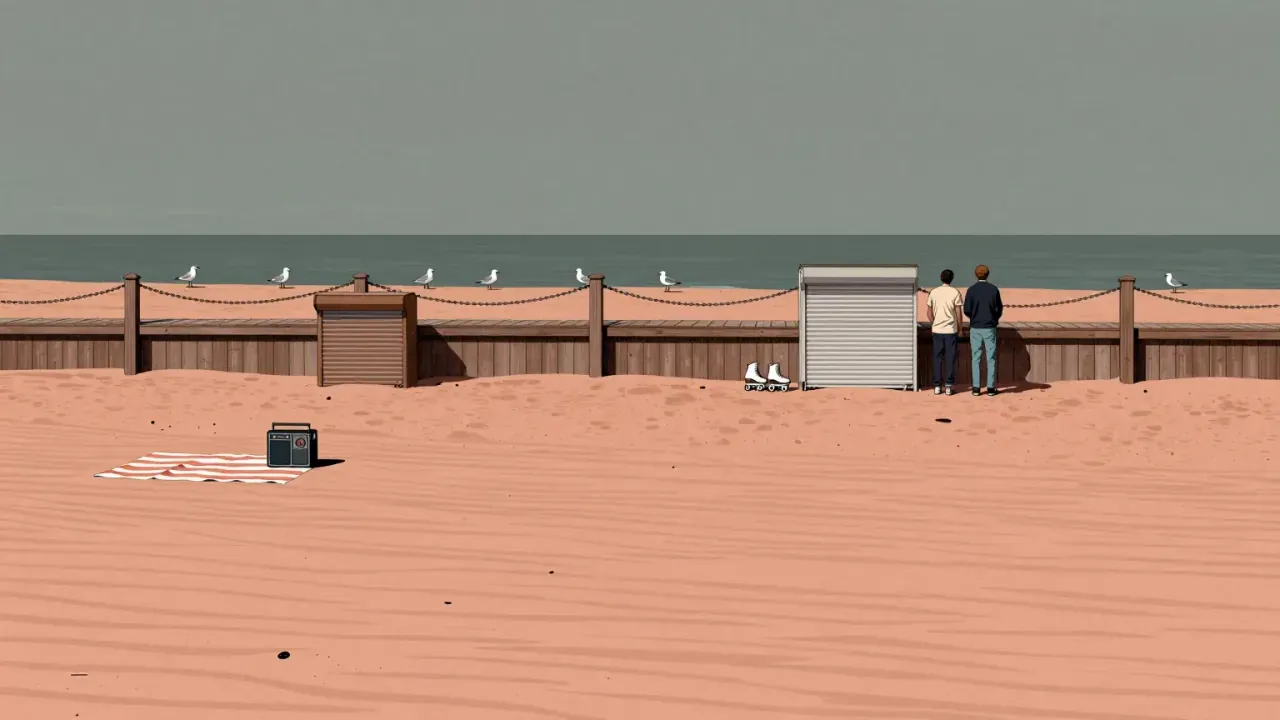
Robot Dreams is set in 1985 Manhattan, where an anthropomorphic dog, lonely enough to order a robot companion through the mail, assembles his new friend and spends a summer showing him the city, most memorably roller-skating together through Central Park. Pablo Berger adapted the film from Sara Varon’s 2007 graphic novel of the same name, a project he first read around 2010 and later described as his love letter to that era of New York. The film carries no dialogue whatsoever, a choice that lets Dog and Robot’s friendship play out entirely through gesture, timing and Alfonso Vilallonga’s score, before a day at the beach leaves Robot rusted solid and unable to move, forcing Dog to leave him behind until the beach reopens the following summer.
Told without a single word
With no spoken lines to lean on, the film relies on Vilallonga’s music and a recurring use of Earth, Wind and Fire’s September, first heard during Dog and Robot’s happiest afternoon together, to carry the story’s emotional register from joy through separation and eventual, complicated reconciliation. Ivan Labanda voices both Dog and Robot on the soundtrack without any actual dialogue for either, a credit that reflects the film’s commitment to physical performance over speech. Berger built various Spanish animation studios specifically to get the film made after his original plan to work with Cartoon Saloon fell through during the pandemic, and the production’s five and a half years of work show in the specificity of its 1985 New York setting.
Where the silence pays for itself
The absence of dialogue is most effective exactly where words would flatten the feeling: Robot’s recurring dreams of escaping the beach and returning to Dog, each one interrupted by the reality of his rusted, stranded body, communicate longing without a single line of narration explaining it, and Dog’s string of failed attempts to make new friends during the year apart reads as grief precisely because nothing announces it as such. When Robot is eventually dismantled, sold to a junkyard, and slowly rebuilt by a raccoon named Rascal using a boombox as his new torso, the film treats that transformation matter-of-factly rather than as tragedy, which sets up its unusually generous ending.
A plot that takes its time getting there
The middle stretch, covering Robot’s time stranded at the beach and then in the junkyard, unfolds at a patient pace that asks real attention from an audience used to children’s animation moving briskly from incident to incident. Some detours, including a subplot involving rabbits who strip one of Robot’s legs to patch their sinking boat, add texture and dark comedy without doing much to advance the central relationship, and viewers expecting a quicker route to reunion may find the extended separation section tests their patience more than it needs to.
Moving on without erasing what came before
The film’s ending, in which Dog and the rebuilt Robot glimpse each other from a distance but choose not to reunite, each now settled with a new companion, argues something unusual for a friendship story: that finding someone new doesn’t require erasing or resenting who came before. Both former friends end the film dancing to September with their new partners, a closing image that treats moving on and honouring the past as compatible rather than opposed. Set specifically in a mid-1980s New York rendered with real period affection, the film’s loneliness theme is grounded in a very particular time and place rather than left generic.
Who this suits
This suits viewers comfortable with a slow-building, largely wordless film, and anyone drawn to a specific, lovingly rendered vision of 1980s New York City. It rewards patience with an ending that resists easy sentimentality without tipping into cruelty. It is a harder recommendation for children expecting a conventional happy reunion, since the film’s actual resolution is more bittersweet and thematically complex than that, and for viewers who rely on dialogue to track what characters are feeling scene to scene. Anyone put off by the idea of a full-length animated feature with no spoken lines at all should know the film never feels like a gimmick once the story is under way.
Worth the ninety minutes
Yes. On a budget under six million euros, Robot Dreams achieved something genuinely rare for family-adjacent animation: a wordless story willing to let its central friendship end without either erasing it or forcing an artificial reunion, backed by widespread critical acclaim and a trophy case that includes Spain’s Goya prize and the European Film Awards’ own animated-feature honour. Its ninety minutes ask for patience during the separation stretch, but the payoff, a genuinely mature statement about grief and moving on, is rare enough in animation to be worth that patience.