The shape of absence
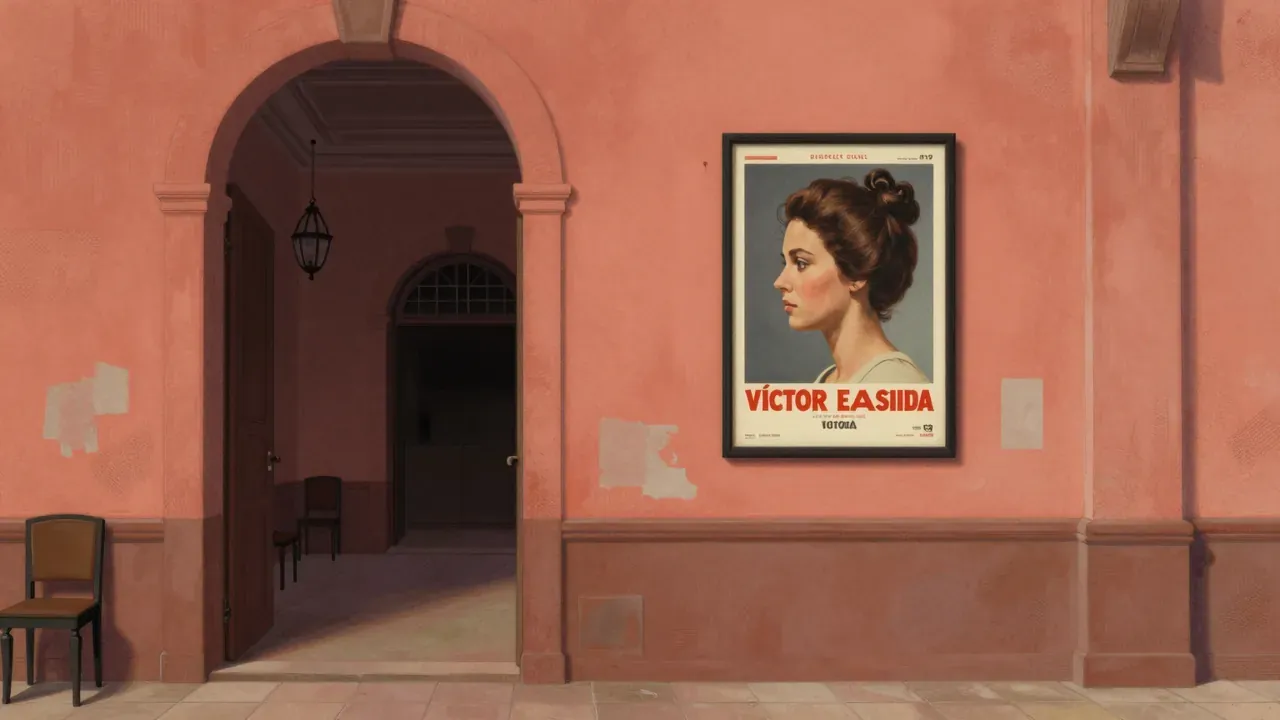
The South is a Spanish drama set in northern Spain in the late 1950s, adapted from Adelaida García Morales’ short novel. It follows Estrella across two ages — eight and fifteen — as she pieces together her father Agustín’s withheld past: his childhood in the south, his Republican stance during the Civil War, his estrangement from his father, and his enduring attachment to an actress named Irene Ríos. Víctor Erice does not aim for exposition or resolution. Instead, he constructs a film about withheld knowledge, where memory functions not as recall but as slow, tactile accumulation — through letters, drawings, film posters, architectural spaces, and silences. The film treats biography as something that leaks, rather than declares; its method is associative, not chronological. It seeks no psychological diagnosis of Agustín’s withdrawal or suicide, nor does it dramatise the south as a place of arrival. Rather, it holds the south as a grammatical object — a direction, a condition, a name for what cannot be entered. Its ambition is structural and atmospheric: to make absence palpable, and longing legible as rhythm and light. (158 words)
The grammar of fragments
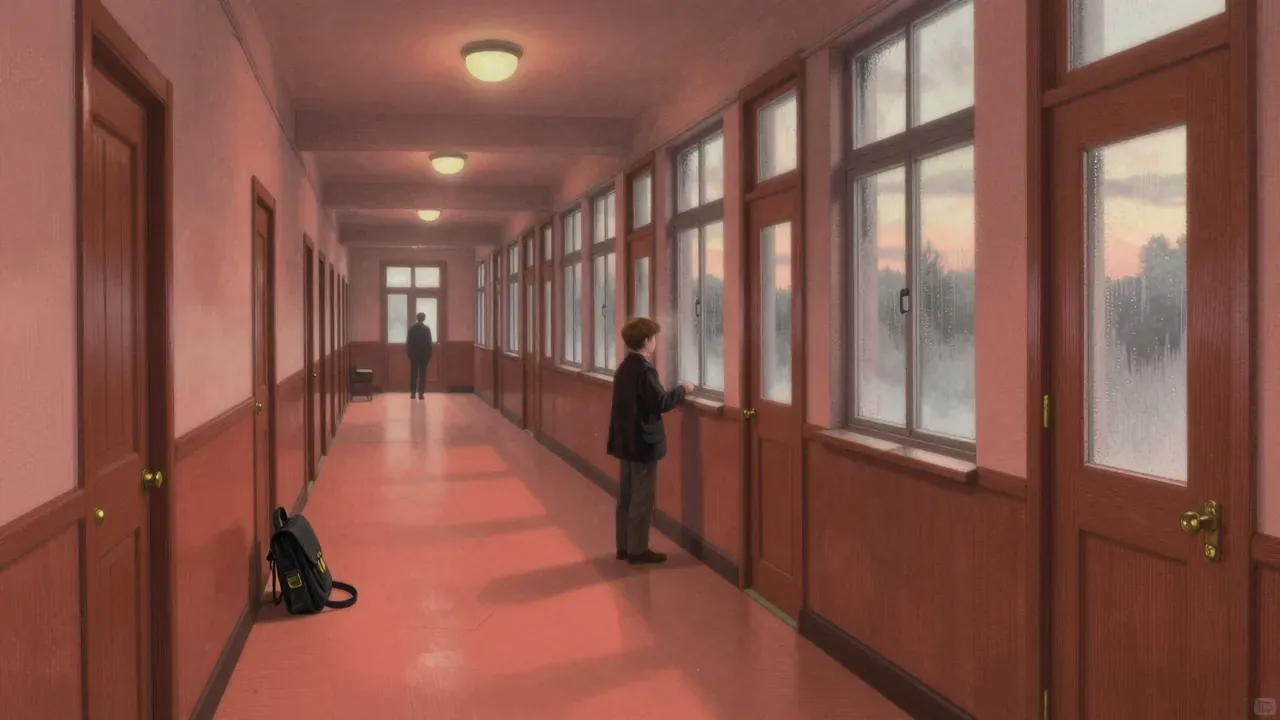
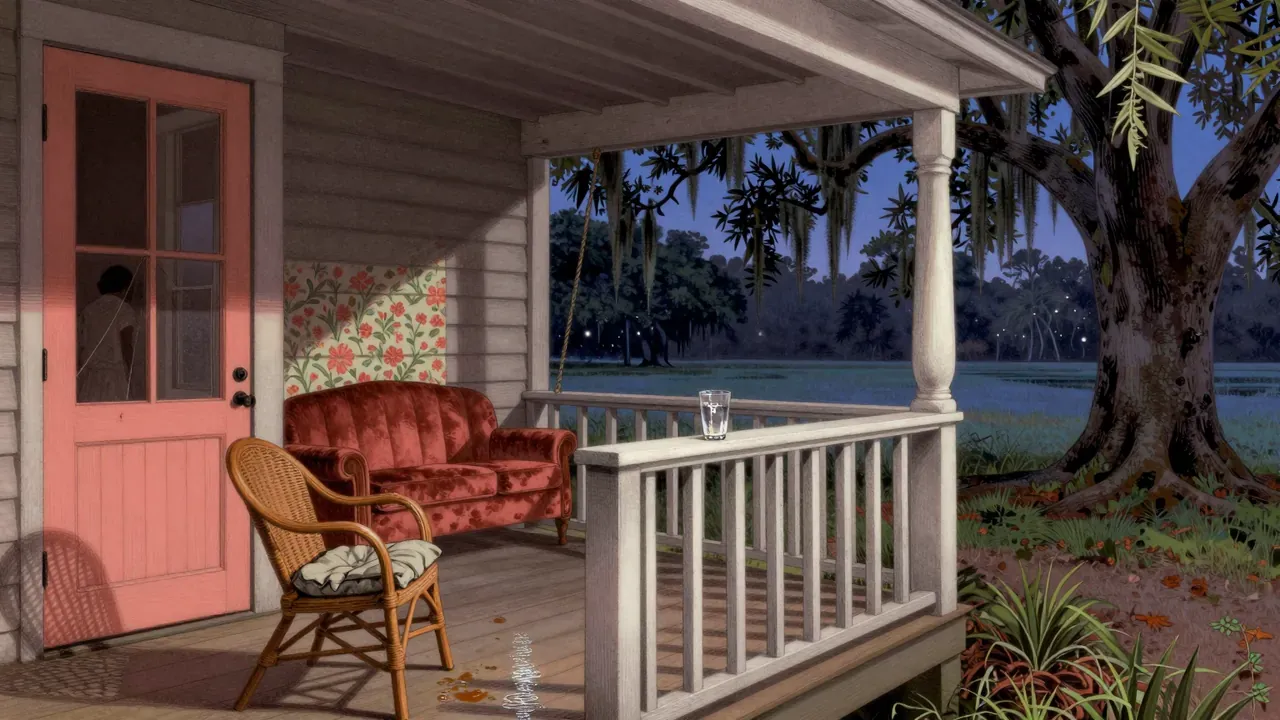
The story unfolds in restrained, episodic increments — First Communion, a cinema visit, a hotel conversation — each weighted by duration and framing rather than dialogue or incident. Omero Antonutti’s Agustín speaks little, moves slowly, and occupies space like a figure in a Vermeer interior: present but recessed. Icíar Bollaín, as teenage Estrella, conveys inquiry and quiet grief through posture and glance, not monologue. José Luis Alcaine Escaño’s cinematography avoids contrast extremes; instead, he modulates light with precision — diffusing it through lace curtains, holding it in the grain of wood panelling, letting it pool on tiled floors. Pablo González del Amo’s editing sustains long takes without emphasis, trusting duration to build unease. Enrique Granados’ music is used sparingly, mostly as diegetic piano — heard through walls or over café chatter — never underscoring emotion. The production design anchors the film in specific, unembellished locations: the Beneficencia building in Logroño, Café Barbieri in Madrid, the former Cinema Vesa in Vitoria. There are no establishing shots that explain geography; the north remains a series of thresholds, not vistas. (159 words)
The weight of what is not said
What lands is the film’s fidelity to a child’s logic of inference — how Estrella reads meaning into fragments: a receipt, a drawing, a film poster, a man’s silence. Her search is never framed as naïve; it is treated as the only available mode of understanding a life deliberately obscured. The performances avoid theatricality: Antonutti’s stillness reads as containment, not vacancy; Bollaín’s watchfulness registers as agency, not passivity. The film’s visual grammar reinforces this — shallow focus isolates objects (a pendulum, a letter, a pair of shoes), while deep-focus interiors allow multiple planes of action to coexist without hierarchy. The use of real, repurposed locations — a government office standing in for a hospital, a shopping arcade for a cinema — adds a layer of historical sedimentation, suggesting that institutions change function but retain their weight. Even the decision not to film the south becomes legible not as omission but as principle: the south remains off-screen because it is structurally inaccessible, not geographically distant. The film’s restraint does not flatten feeling — it concentrates it. (157 words)
The politics of silence
What does not land is any sense of Agustín’s inner life beyond gesture and absence. His Republican past, his relationship with Irene, his break with his father — all remain factual scaffolding, never dramatised. The film declines to show him speaking to Irene, arguing with his father, or choosing exile; we see only aftermath and echo. This is deliberate, but it risks flattening political history into mood. Some viewers may find the pacing too attenuated — scenes hold longer than narrative necessity demands, and the lack of overt conflict or turning points can read as stasis rather than suspension. The adult Estrella’s romantic subplot with ‘El Carioco’ is introduced then dropped without resonance, serving neither character nor theme. The film’s refusal to resolve — its status as an ‘unfinished drama’, per Erice — may frustrate those seeking closure or causal clarity. The southern journey promised by the novella’s second half is absent not just in plot but in emotional architecture: there is no counterpoint to the north’s claustrophobia, no release, no dialectic. That choice is coherent, but it leaves certain questions — about trauma, ideology, inheritance — hovering, untested. (156 words)
The child’s archive
The themes that matter are memory as physical trace, silence as narrative agent, and geography as inherited condition. The film treats childhood not as innocence but as acute perception — Estrella notices what adults omit, and her education in calligraphy and literature becomes a training in attention to form and surface, not meaning. Loss here is not event-based but ambient: it lives in the attic door Julia locks, the unanswered letters, the film reel that ends before the credits. The Spanish Civil War is not depicted but absorbed — in Milagros’s offhand remark, in Agustín’s withdrawal, in the generational fracture between Rosario and her son. The south is less a place than a grammatical pivot: a preposition that governs desire, distance, and prohibition. The film also engages with mediation — how stories travel through film, writing, drawing, and oral retelling — and how each medium distorts or preserves. There is no authoritative version of Agustín’s past; only competing fragments, none verified, all held with equal weight. The theme of incompleteness is structural, ethical, and aesthetic: the film refuses mastery over its subject, and in doing so, honours the opacity of other people’s lives. (159 words)
The discipline of withholding
This film is for viewers who attend to composition as meaning — who notice how light falls on a staircase, how a doorframe crops a face, how silence lengthens after a line is spoken. It rewards patience, familiarity with mid-century European art cinema, and tolerance for unresolved endings. It is not for those who require plot propulsion, psychological exposition, or moral clarity. Viewers expecting a coming-of-age arc with growth or revelation will find Estrella’s trajectory elliptical, not linear. Those who rely on performance as emotional shorthand may struggle with Antonutti’s minimalism or Bollaín’s reserve. The film assumes its audience understands that a receipt, a film poster, and a locked attic are not MacGuffins but equivalents — all equally charged, equally incomplete. Anyone needing the south to appear on screen, or Agustín’s politics to be argued, will leave unsatisfied. A viewer who values narrative economy over dramatic payoff, or who finds tension in stillness, will find it rich. Those who do not — and many do not — will find it inert. Nothing changes that verdict except a shift in expectation: this is not a story about answers, but about the texture of not knowing. (158 words)
The evening’s quiet return
Yes, it is worth your evening — if you accept that time in cinema need not be spent advancing plot, but can be spent attending to how light moves across a wall, how a hand hesitates before opening a drawer, how a silence thickens after a question goes unanswered. Its ninety-five minutes accumulate weight not through incident but through repetition of motif — pendulums, letters, thresholds, film reels — each recurrence tightening the film’s quiet insistence on the gravity of the unsaid. It is not entertainment in the transactional sense, but it is deeply felt, rigorously made, and formally exact. Those who find value in slowness, in ambiguity, in the dignity of withheld information, will carry its images long after the credits. Others may feel it recedes rather than resolves — and they would not be wrong. But its power lies precisely in that refusal: to give the south, to explain Agustín, to let Estrella arrive. It asks not for agreement, but for attention. And it repays attention with precision, sorrow, and a rare kind of calm certainty about what it will not do. (159 words)