filmbriefs
Topic

France

The country that decided taste was a matter of national policy.

69
in film
13:00
average
897 min
in total
163
across the network
France across the network →
All briefs69
13:00

A Room in Town

Jacques Demy · 1982

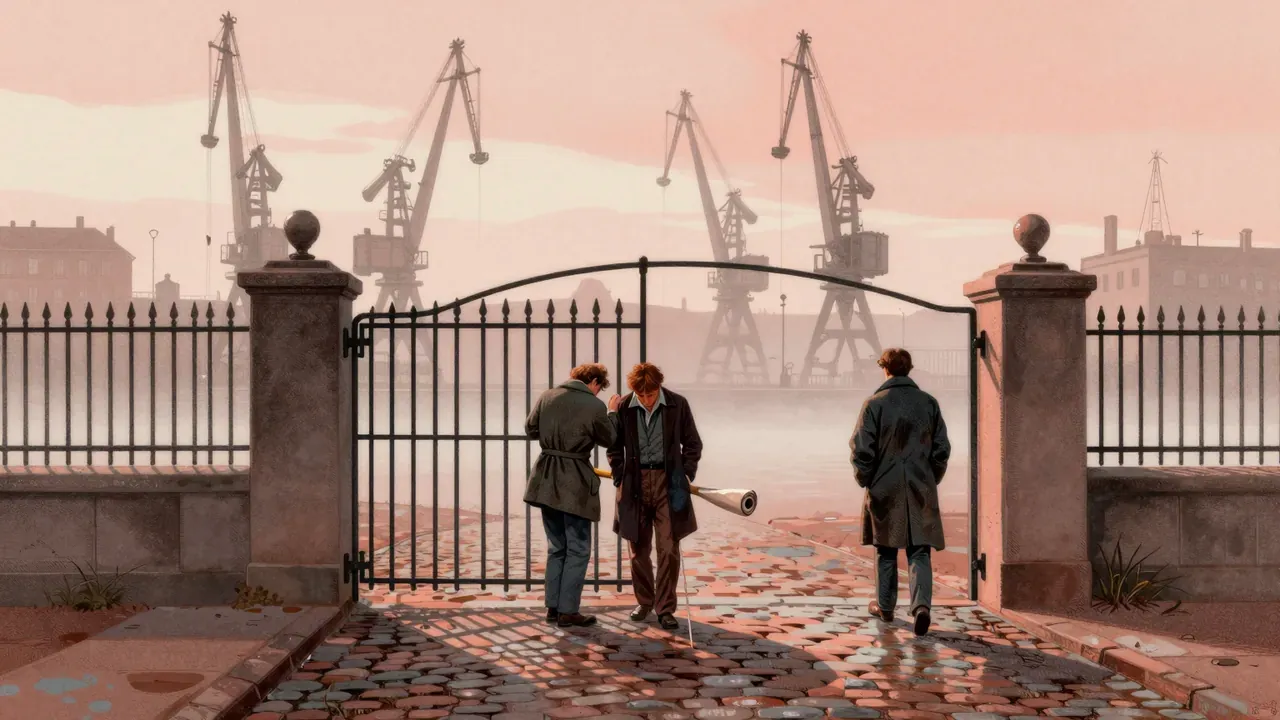
Jacques Demy’s 1982 sung-through musical, set during the 1955 Nantes shipyard strike, follows a young striker torn between two women as political tension escalates. Every line is sung to Michel Colombier’s austere score; Jean Penzer’s cinematography is precise and unflashy. Though less buoyant than The Umbrellas of Cherbourg, it pursues a graver, more politically explicit vision of musical storytelling — one where melody carries ideology, and tragedy arrives in perfect time.
13:00

A Tale of Springtime

Éric Rohmer · 1990

Éric Rohmer’s 1990 film follows Jeanne, a philosophy teacher, as she navigates a weekend at a country house orchestrated by her student Natacha. Through precise dialogue, restrained performances, and unhurried pacing, the film charts Jeanne’s gradual realisation that she is being slotted into an existing relational pattern—and her decision to step out of it. Shot by Luc Pagès and scored sparingly with Beethoven, it is the first of Rohmer’s ‘Tales of the Four Seasons’.

13:00

A Tale of Winter

Éric Rohmer · 1992

Éric Rohmer’s 1992 film follows Félicie, a Parisian hairdresser raising her daughter alone, as she navigates two unsatisfying relationships while holding onto the memory of a summer romance. Five years after losing contact with Charles, she sees him by chance on a New Year’s Eve bus — a reunion made possible not by fate, but by her unwavering, quiet fidelity to possibility. Shot by Luc Pagès and written and directed by Rohmer, it is the second in his ‘Tales of the Four Seasons’ series.

13:00

As Long as You've Got Your Health

Pierre Étaix · 1966

Pierre Étaix’s 1966 anthology comedy As Long as You’ve Got Your Health presents four self-contained sketches—on insomnia, cinema queues, psychiatric consultation, and forest visits—unified by deadpan timing, restrained performances, and Jean Boffety’s unobtrusive cinematography. Written by Jean-Claude Carrière and edited with surgical calm, it observes urban alienation and bureaucratic fatigue not through satire but through repetition and pause. Its humour is physical, its themes implicit, its pace deliberate.

13:00

Bed and Board

François Truffaut · 1970

François Truffaut’s 1970 film follows Antoine Doinel and Christine as newlyweds navigating Parisian domestic life: a cramped apartment, a faltering job, the birth of their son, and Antoine’s brief, hollow affair with a Japanese woman. Shot by Néstor Almendros with restrained naturalism, it avoids moralising or climax, instead observing the textures of habit, compromise, and quiet endurance. It is the fourth in Truffaut’s Doinel cycle and stands apart for its unblinking, unsentimental portrayal of marriage as daily practice rather than emotional event.

13:00

Betty Blue

Jean-Jacques Beineix · 1986

A 1986 French psychological drama directed by Jean-Jacques Beineix, Betty Blue follows Zorg, a handyman and aspiring writer, and Betty, a volatile 19-year-old, as their passionate relationship unravels across coastal, urban and provincial France. Shot by Jean-François Robin and scored by Gabriel Yared, it renders emotional extremity through saturated visuals, rhythmic editing and physical performance — prioritising mood and texture over exposition or diagnosis.

13:00

Bim

Albert Lamorisse · 1950

A forty-five-minute French drama from 1950, written by Jacques Prévert and Albert Lamorisse and directed by Lamorisse. It follows a boy in rural France whose life is structured around his dog — until the dog disappears. With no score, minimal dialogue, and deliberate pacing, the film traces grief through gesture, silence, and the persistence of routine.

13:00

Boy Meets Girl

Leos Carax · 1984

Leos Carax’s 1984 debut is a black-and-white French drama following Alex, a jaded aspiring filmmaker, and Mireille, a woman teetering on self-erasure, as their paths intersect in a heat-struck Paris. Built on eavesdropping, misdirection, and withheld emotion, it privileges texture over trajectory—using tight framing, sparse sound, and restrained performances to evoke post-adolescent stasis. Though structurally reliant on coincidence and stylistically indebted to the French New Wave, its emotional precision and formal control mark an unmistakable arrival.

13:00

César

Marcel Pagnol · 1936

Marcel Pagnol’s 1936 César closes his Marseille Trilogy with Raimu, Pierre Fresnay, and Orane Demazis returning as César, Marius, and Fanny. Twenty years after Marius sailed away, his son Césariot learns the truth of his paternity — and sets in motion a slow, socially intricate reckoning. Set entirely in and around Marseille, the film favours conversational rhythm over plot mechanics, regional texture over spectacle, and moral ambiguity over resolution. Its 168-minute runtime demands patience, but repays it with layered performances and a deeply felt sense of place and consequence.

13:00

Circus Angel

Albert Lamorisse · 1965

Albert Lamorisse’s 1965 Circus Angel follows a burglar who joins a travelling circus to evade arrest but continues stealing in his spare time, all while navigating its fragile community and tentative romance. Shot in France with a restrained, observational style, it uses fantasy not as spectacle but as a lens for ethical ambiguity and transient belonging. Though its loose structure and muted romance divide opinion, its visual cohesion and tonal discipline make it a distinctive, unhurried work of mid-century arthouse cinema.

13:00

Claire's Knee

Éric Rohmer · 1970

Éric Rohmer’s 1970 film follows diplomat Jérôme during a summer stay at Lake Annecy, where his interactions with two teenage girls — Laura and Claire — expose the gap between his stated principles and his unspoken desires. Shot in luminous colour by Néstor Almendros, the film unfolds through measured dialogue and subtle physical detail, treating moral life as a series of minor, reversible decisions. It is the fifth of Rohmer’s Six Moral Tales, and won the Louis Delluc Prize, the National Board of Review Award for Best Foreign Language Film, and the National Society of Film Critics Award for Best Film.

13:00

Désiré

Sacha Guitry · 1937

Sacha Guitry’s 1937 Désiré is a tightly wound Parisian comedy in which an actress’s growing fixation on her valet destabilises her relationship with a government minister. Set almost entirely in three interior spaces, it relies on precise dialogue, restrained performances — especially by Arletty and Jacqueline Delubac — and a still, observational camera. It explores class, service, and the erotic charge of being truly seen, without recourse to plot twists or moralising.

13:00

Faces Places

Agnès Varda, JR · 2017

Faces Places is a 2017 French documentary in which filmmaker Agnès Varda and artist JR travel rural France photographing local residents and pasting their enlarged portraits onto buildings and structures. The film documents their collaboration, their conversations, and the quiet impact of making people visible on their own terms — all while Varda confronts her failing eyesight and JR maintains his enigmatic presence behind dark glasses.

13:00

Fanfan la Tulipe

Christian-Jaque · 1952

Fanfan la Tulipe (1952) is a French black-and-white comedy-adventure starring Gérard Philipe as a charming rogue who joins the army on false pretences during the Seven Years’ War. Directed by Christian-Jaque, it balances swordplay, romance and gentle irony without moralising or historicising. Its strengths lie in physical performance, rhythmic editing and Christian Matras’s lucid cinematography — not in plot complexity or thematic weight.

13:00

Fanny

Marc Allégret · 1932

A 1932 French drama directed by Marc Allégret from Marcel Pagnol’s play, Fanny is the second part of the Marseille Trilogy. Set in the port city, it follows Fanny’s pragmatic marriage to the kindly widower Panisse after becoming pregnant by her childhood love Marius — and the quiet, collective decision to raise their son as Panisse’s heir. Anchored by Raimu’s commanding presence and Orane Demazis’s restrained performance, the film favours moral ambiguity over resolution, and lived-in realism over theatrical flourish.

13:00

Gervaise

René Clément · 1956

René Clément’s 1956 Gervaise adapts Émile Zola’s L’Assommoir with forensic restraint, following Maria Schell’s laundress through a decade of incremental collapse in mid-nineteenth-century Paris. Shot by Robert Juillard and scored sparingly by Georges Auric, it locates tragedy not in grand gestures but in the weight of wet linen, the silence after a slammed door, the slow emptying of a shopfront. Its power lies in accumulation, not revelation.

13:00

Grisbi

Jacques Becker · 1954

Jacques Becker’s 1954 heist film follows ageing Parisian gangster Max le Menteur as his control over his crew, his lover, and his own stamina begins to slip. Shot in muted tones by Pierre Montazel and edited with deliberate calm by Marguerite Renoir, it treats crime as backdrop to a study in endurance, habit, and quiet decline. Jean Gabin’s performance is restrained, anchored in physical detail rather than declaration.

13:00

Hôtel du Nord

Marcel Carné · 1938

Marcel Carné’s 1938 Hôtel du Nord is a cornerstone of poetic realism: a slow-burning drama set in a working-class Paris hotel, where suicide, romance, and criminal threat unfold amid Bastille Day revelry. Anchored by Arletty and Louis Jouvet, and shaped by Jean Aurenche and Henri Jeanson’s dialogue, it privileges mood, texture, and moral ambiguity over exposition or resolution.

13:00

Humain, trop humain

Louis Malle, René Vautier · 1973

Humain, trop humain (1973) is a French observational documentary co-directed by Louis Malle and René Vautier, filmed inside a Citroën car plant. With no narration, interviews, or music, it records the rhythms of assembly-line work — shifts, tools, gestures, pauses — over 73 minutes. Its power lies in sustained attention, not argument.

13:00

Jean de Florette

Claude Berri · 1986

Jean de Florette is a 1986 French drama directed by Claude Berri, adapted from Marcel Pagnol’s novel. Set in rural Provence in the 1920s, it follows two farmers who sabotage a newcomer’s attempt to farm by concealing a vital spring. Shot back-to-back with its sequel Manon of the Spring, it relies on precise period detail, restrained performances, and a landscape that functions as both setting and moral arbiter.

13:00

Jour de Fête

Jacques Tati · 1949

Jacques Tati’s 1949 debut follows François, a bumbling rural postman inspired by a spoof US postal documentary to overhaul his delivery round. Shot in Sainte-Sévère-sur-Indre with villagers as extras, the film uses minimal dialogue, precise sound design, and unhurried visuals to explore the friction between embodied, local time and imported, mechanised efficiency. Three versions exist — original black-and-white (1949), re-edited (1964), and colour-restored (1995) — each offering a different relationship to the film’s central tension: how people move when no one is timing them.

13:00

La Pointe Courte

Agnès Varda · 1955

Agnès Varda’s 1955 debut interweaves a Parisian couple’s marital crisis with the daily resistance of Sète’s fishing quarter against a shellfish ban. Shot on location with locals and two professional actors, it blends fiction and documentary without hierarchy, trusting observation over exposition. Its quiet power lies in duration, texture, and the unforced coexistence of private and collective life.

13:00

Land of Milk and Honey

Pierre Étaix · 1970

Land of Milk and Honey (1971) is Pierre Étaix’s documentary portrait of French society after May 1968. Shot in contrasting colour and black-and-white, it observes summer holidays, amateur song contests, and street interviews to trace anxieties around advertising, gender, media, and identity. Étaix appears both as filmmaker and subject in a reflexive closing sequence. Though poorly received on release and withdrawn quickly, it has since been reassessed as a subtle, structurally daring essay-film.

13:00

Last Summer

Catherine Breillat · 2023

Catherine Breillat’s 2023 drama Last Summer, a French remake of Queen of Hearts, follows a Parisian lawyer who enters a destructive relationship with her teenage stepson. Shot by Jeanne Lapoirie and starring Léa Drucker and debutant Samuel Kircher, it unfolds with clinical restraint, avoiding moral framing in favour of behavioural observation. Premiered at Cannes, it divides critics — some praising its formal control and thematic rigour, others finding it emotionally muted and narratively unconvincing in its final stretch.

13:00

Le Corbeau

Henri-Georges Clouzot · 1943

Henri-Georges Clouzot’s 1943 thriller Le Corbeau follows the disintegration of a provincial French town under a campaign of anonymous poison-pen letters. Produced by German-owned Continental Films during the Occupation, it was banned by both Vichy and post-war authorities for its unflinching portrayal of collective malice. With Pierre Fresnay and Ginette Leclerc, it uses stark cinematography and procedural pacing to examine how rumour corrodes trust — less a whodunnit than a study in moral contagion.

13:00

Le deuxième souffle

Jean-Pierre Melville · 1966

Jean-Pierre Melville’s 1966 crime film follows Gustave Minda, a respected gangster who escapes prison only to find his code of silence and loyalty increasingly incompatible with a world that no longer observes the same rules. Adapted from José Giovanni’s novel, it charts Gu’s final days with austere precision — from a botched extortion to a platinum heist, a police trap, and a fatal confrontation in a Paris stairwell. Lino Ventura anchors the film with restrained physicality; Marcel Combes’ flat, naturalistic cinematography and Bernard Gérard’s sparse score reinforce its unblinking tone.

13:00

Le mariage de Chiffon

Claude Autant-Lara · 1942

Le mariage de Chiffon (1942), directed by Claude Autant-Lara and adapted by Jean Aurenche from Sibylle Riqueti de Mirabeau’s 1894 novel, is a restrained historical comedy set in the Bourbon Restoration. Odette Joyeux stars as Chiffon, a young woman navigating an arranged marriage to the ageing Duc d’Aubières (André Luguet) while drawn to the more compatible Marc de Bray (Jacques Dumesnil). Shot in occupied Paris, the film avoids overt politics, instead focusing on social nuance, verbal precision, and the quiet assertion of self within rigid convention. Jacques Krauss designed the deliberately theatrical sets. With no credited score and a measured 103-minute runtime, it relies on performance, timing, and textual fidelity rather than spectacle or sentiment.

13:00

Léon Morin, Priest

Jean-Pierre Melville · 1961

Set in German-occupied France, Léon Morin, Priest follows Barny, a widowed atheist and communist, as she enters a theological dialogue with a young priest. Their conversations—calm, rigorous, unresolved—unfold against a backdrop of scarcity and danger. Directed by Jean-Pierre Melville and adapted from Béatrix Beck’s novel, the film resists melodrama, preferring quiet precision in performance, cinematography, and structure. It is less about conversion than continuity: how people maintain moral shape when the world collapses around them.

13:00

Love in the Afternoon

Éric Rohmer · 1972

Éric Rohmer’s 1972 film closes his Six Moral Tales series with a study of marital fidelity tested not by betrayal but by imagination. Frédéric, a contented Parisian husband and father, begins spending afternoons with Chloé, a woman from his past — a relationship built on talk, not sex, until a single moment of near-surrender forces him home. Shot by Néstor Almendros and written and directed by Rohmer, it is a film of restraint, quiet tension, and precise observation.

13:00

Love Letters

Claude Autant-Lara · 1942

Made in occupied Paris in 1942, Love Letters is a comedy-drama set in Napoleon III’s France, centring on romantic confusion caused by intercepted correspondence. Directed by Claude Autant-Lara and scripted by Jean Aurenche, it features Odette Joyeux, François Périer, and Julien Carette in performances calibrated to polite farce. Shot at Boulogne Studios, its art direction (Robert Dumesnil, Jacques Krauss) and costumes (Christian Dior) reinforce its theatrical, surface-conscious world. The film avoids historical engagement or emotional extremity, sustaining instead a steady, wry tone rooted in manners and miscommunication.

13:00

Lumière d'été

Jean Grémillon · 1943

Made in 1943 under German occupation, Jean Grémillon’s Lumière d’été is a restrained French drama set in a rural Limousin house over a summer. Written by Jacques Prévert and starring Madeleine Renaud, Pierre Brasseur and Madeleine Robinson, it observes quiet tensions among a group of relatives and guests. Shot at Victorine Studios and on location in Soursac, with sets by André Barsacq and cinematography by Louis Page, the film relies on subtlety of gesture, layered sound design and deliberate pacing to explore inheritance, memory and unspoken desire.

13:00

Marius

Alexander Korda · 1931

Marius (1931), directed by Alexander Korda from Marcel Pagnol’s play, is the first film of the Marseille Trilogy. Set in a waterfront bar in pre-war Marseille, it traces Marius’s conflict between love for Fanny and longing for the sea. With restrained performances, naturalistic lighting by Theodore J. Pahle, and dialogue rooted in subtext, it prioritises emotional authenticity over plot mechanics. Though structurally dependent on coincidence, its power lies in specificity: gesture, silence, and the quiet gravity of ordinary choice.

13:00

Masculin Féminin

Jean-Luc Godard · 1966

Jean-Luc Godard’s 1966 Masculin Féminin follows Paul—a young idealist navigating love, work, and politics in Paris—as a loose sequence of interviews, encounters, and interruptions. Shot in black-and-white with natural light and minimal crew, it treats youth culture as a field of study, not a story. Its structure mimics opinion polling: questions posed, answers recorded, conclusions withheld. Starring Jean-Pierre Léaud, Chantal Goya, Marlène Jobert, and Catherine-Isabelle Duport, it remains one of Godard’s most formally rigorous and thematically restless works.

13:00

Misericordia

Alain Guiraudie · 2024

Alain Guiraudie’s Misericordia is a 2024 French arthouse crime drama set in rural Aveyron, where a man’s impulsive killing unravels into a web of quiet complicity, false alibis and unspoken bargains. Shot by Claire Mathon and starring Jacques Develay, Catherine Frot and Félix Kysyl, it treats violence, desire and concealment with unblinking restraint — no score, no close-ups, no moral punctuation. Premiered at Cannes, it won the Louis Delluc Prize and drew acclaim for its tonal control and understated dread.

13:00

Naked Childhood

Maurice Pialat · 1968

Maurice Pialat’s 1968 debut Naked Childhood follows ten-year-old François as he moves between foster families in working-class France. Shot with unadorned naturalism by Claude Beausoleil and written by Pialat and Arlette Langmann, the film avoids psychology, politics, and exposition — observing instead the quiet contradictions of a child shaped by abandonment and care alike.

13:00

Nouvelle Vague

Richard Linklater · 2025

Richard Linklater’s Nouvelle Vague dramatises the 23-day production of Jean-Luc Godard’s Breathless in 1959, using black-and-white 35 mm film, the Academy ratio, and a script by Laetitia Masson. Starring Zoey Deutch as Jean Seberg and Guillaume Marbeck as Godard, it focuses on logistical friction, creative disagreement, and the material conditions of a film that would redefine cinema — not as myth, but as work.

13:00

One Sings, the Other Doesn't

Agnès Varda · 1977

One Sings, the Other Doesn’t (1977) follows Pomme and Suzanne across fourteen years of personal and political change in France. Directed and written by Agnès Varda, it charts their friendship through illegal abortion, protest, motherhood, clinic work, and reunion — all rendered with quiet precision, natural light, and minimal score. Charles Van Damme’s cinematography and Varda’s narration structure the story around letters, songs, and real-life activism, including a recreation of the 1972 Bobigny abortion trial demonstration. The film avoids didacticism, treating feminism as daily practice rather than theory.

13:00

Pearls of the Crown

Sacha Guitry, Christian-Jaque · 1937

Pearls of the Crown (1937) is a French historical comedy co-directed by Sacha Guitry and Christian-Jaque, tracing the fictional journey of seven pearls across four centuries and three languages. Guitry plays four roles, and much of the cast doubles or triples up, reinforcing the film’s theme of history as repetition. Shot at Billancourt Studios and on location—including Royaumont Abbey and the S.S. Normandie—it balances theatrical artifice with tangible settings. Jean Françaix’s score and Jules Kruger’s cinematography support a light, neoclassical tone. Though structurally inventive and intellectually agile, its pacing and linguistic layering may alienate some viewers. It is arthouse comedy with scholarly poise, not populist appeal.

13:00

Place de la République

Louis Malle · 1974

Louis Malle’s 1974 documentary Place de la République observes daily life at its namesake Paris square with fixed cameras, natural sound, and no narration. Eschewing context or commentary, it treats duration and routine as primary subjects — a rigorous, unsentimental study of public space as lived, uninterpreted time.
13:00

Port of Shadows

Marcel Carné · 1938

Marcel Carné’s 1938 French drama Port of Shadows follows a deserter and a runaway girl in Le Havre, where love and escape are undermined by circumstance, jealousy, and inevitability. With Jean Gabin, Michèle Morgan, and Michel Simon, and written by Jacques Prévert, it exemplifies poetic realism through restrained performances, Schüfftan’s low-lit cinematography, and a fatalistic structure that privileges mood over momentum.

13:00

Quadrille

Sacha Guitry · 1938

A 1938 French comedy written and directed by Sacha Guitry, Quadrille follows a Paris newspaper editor whose carefully balanced domestic life unravels when an American film star arrives at his hotel. Staged with clockwork timing and performed with understated wit, it treats romance and professional life as interchangeable roles in a refined, self-contained dance.

13:00

Quai des Orfèvres

Henri-Georges Clouzot · 1947

Henri-Georges Clouzot’s 1947 Quai des Orfèvres follows Inspector Antoine’s investigation into the murder of a lecherous businessman, against the backdrop of a rationed, anxious Paris. Built on memory rather than fidelity to its source novel, it centres Jenny Lamour — an ambitious performer — and her jealous husband, weaving class, gender and institutional procedure into its procedural spine. With Louis Jouvet, Suzy Delair and Bernard Blier, it avoids noir theatrics in favour of psychological precision and social texture.
13:00

Stolen Kisses

François Truffaut · 1968

François Truffaut’s 1968 romantic comedy returns to Jean-Pierre Léaud’s Antoine Doinel as a young man navigating love, work, and self-deception in Paris. Discharged from the army, he cycles through jobs — night clerk, private detective, TV repairman — while drifting between Christine Darbon and Fabienne Tabard. With Denys Clerval’s unshowy cinematography and Antoine Duhamel’s wistful score, the film traces how intimacy forms not through grand gestures but accumulated small returns: unanswered letters, staged breakdowns, silent proposals. It is the third in Truffaut’s five-film Doinel cycle, rooted in behavioural realism and quiet persistence.

13:00

Stowaway in the Sky

Albert Lamorisse · 1960

Albert Lamorisse’s 1960 film Stowaway in the Sky blends documentary footage and staged flight to follow a ten-year-old boy drifting over France in his grandfather’s balloon. Shot in Eastman Color and Dyaliscope, it privileges observation over narrative, using silence, wide shots and unhurried editing to recast landscape as texture and altitude as perspective. Maurice Fellous’s cinematography and Jean Prodromidès’s score sustain its gentle, airborne logic — one that values wonder without condescension, and drift without destination.

13:00

Sylvie et le fantôme

Claude Autant-Lara · 1946

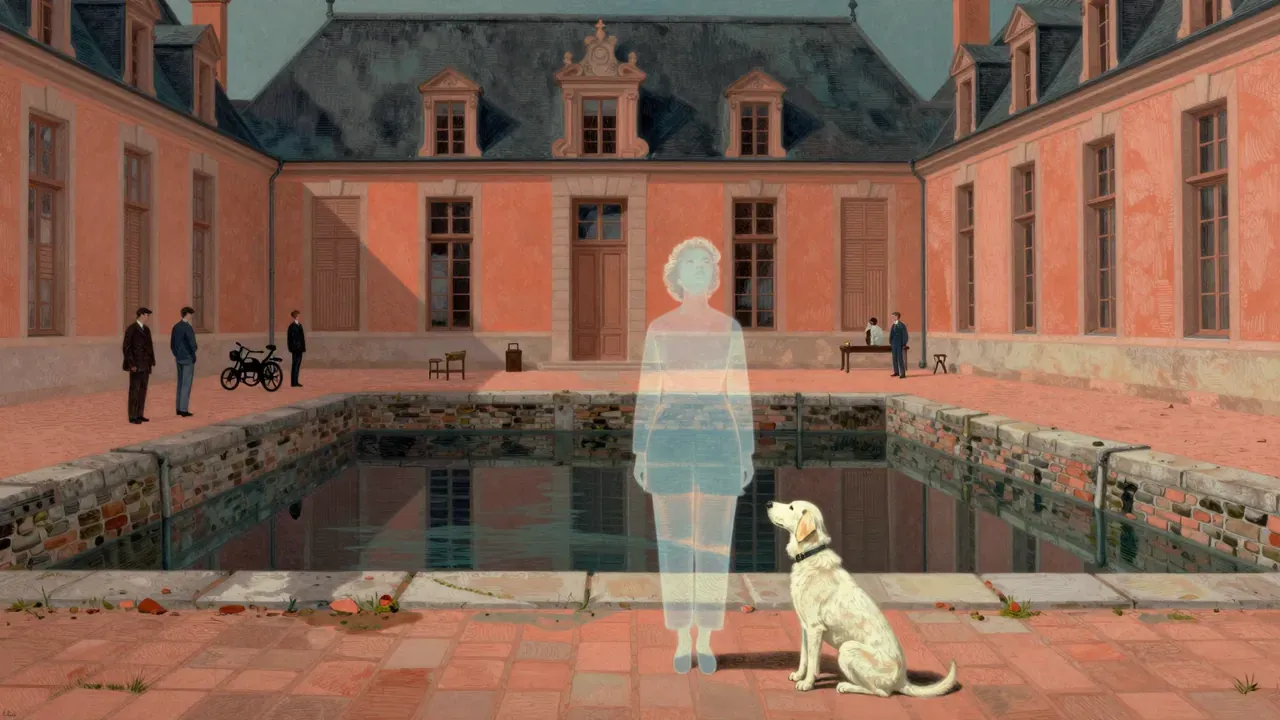
Sylvie et le fantôme (1946), directed by Claude Autant-Lara, follows a sixteen-year-old girl in a decaying château who believes in the ghost of a long-dead lover concealed behind a portrait. When the painting is sold, the ghost emerges — played by Jacques Tati — and becomes entangled in a tender, comedic web of mistaken identities, amateur hauntings, and adolescent longing. Shot with optical ingenuity at Saint-Maurice Studios, the film balances fantasy and realism through understated performances, elegant set design, and a script that treats belief as a collaborative act rather than a metaphysical claim.

13:00

The Baker's Wife

Marcel Pagnol · 1938

Marcel Pagnol’s 1938 film follows a Provençal baker whose wife runs off with a shepherd, halting bread production and forcing feuding villagers to cooperate in her retrieval. Adapted from Jean Giono, it foregrounds communal pragmatism over individual psychology, using Raimu’s grounded performance and Vincent Scotto’s restrained music to explore forgiveness as daily practice, not spiritual breakthrough.

13:00

The End of Summer

Hélène Angel · 2019

Hélène Angel’s 2019 French drama The End of Summer observes a small group across a few days in a provincial house. With no score, minimal dialogue, and restrained performances from Talid Ariss, Christiane Millet, Bernard Le Coq and Maël Rouin Berrandou, it builds meaning through duration, silence and physical detail — not plot or revelation.

13:00

The Last Metro

François Truffaut · 1980

François Truffaut’s 1980 drama The Last Metro follows a Paris theatre company in 1942, where Marion Steiner (Catherine Deneuve) runs performances while hiding her Jewish husband Lucas (Heinz Bennent) in the cellar. Young actor Bernard Granger (Gérard Depardieu) becomes entangled in both the production and the Resistance. Shot by Néstor Almendros and scored by Georges Delerue, the film treats occupation not as backdrop but as condition — shaping light, dialogue, timing and moral choice. It won ten César Awards, including Best Film, Director and Actor/Actress.

13:00

The Lovers

Louis Malle · 1958

Louis Malle’s 1958 drama follows Jeanne Tournier, a woman adrift in bourgeois marriage near Dijon, whose life pivots during one night spent with a younger man. Adapted from an 1876 short story, the film avoids moral framing or psychological exposition, relying instead on Jeanne Moreau’s restrained performance, Henri Decaë’s naturalistic cinematography, and a tightly contained structure. It won the Grand Jury Prize at Venice and later played a pivotal role in US obscenity law. Its strength lies in its tactful realism and unwavering focus on the physical and temporal texture of choice.

13:00

The Mother and the Whore

Jean Eustache · 1973

Jean Eustache’s 1973 debut is a 217-minute French arthouse drama following three Parisians — an unemployed intellectual, his partner and her rival — through conversations, silences and small betrayals. Shot in real locations with no musical score, it builds meaning through accumulation of speech and gesture rather than plot. Though labelled a comedy, its tone is unsparing and its structure anti-dramatic. It won the Grand Prix at Cannes and has since been canonised as a pinnacle of post-New Wave realism.

13:00

The Soft Skin

François Truffaut · 1964

François Truffaut’s 1964 drama follows Pierre Lachenay, a married writer and lecturer, as he begins an affair with a young flight attendant. Shot on location in Paris, Reims and Lisbon by Raoul Coutard, the film observes the slow, unceremonious collapse of Pierre’s double life — not through melodrama, but through accumulated silences, evasions and logistical missteps. Its power lies in its restraint: no voiceover, no score-driven emotion, no moral framing. The ending arrives with shocking abruptness, underscoring the film’s central concern — not why people fall apart, but how quietly they do so.

13:00

The Suitor

Pierre Étaix · 1963

Pierre Étaix’s 1962 debut The Suitor is a meticulously timed comedy about a man racing to marry before a deadline, modelled on Buster Keaton’s Seven Chances but filtered through Gallic irony and silent-era physical logic. With minimal dialogue, clean framing, and relentless cause-and-effect plotting, it turns courtship into bureaucratic theatre. Though its final act falters and some gags rely on period-specific codes, its control of rhythm and commitment to form make it a distinctive, demanding, and rewarding work of mid-century French comedy.

13:00

The Taking of Power by Louis XIV

Roberto Rossellini · 1966

Roberto Rossellini’s 1966 television film charts Louis XIV’s consolidation of power not through battle or charisma, but through administrative rigour, spatial control, and ceremonial discipline. Shot in 23 days with non-professional actors and restrained cinematography, it presents the birth of the modern French state as a slow, procedural accumulation — where tax reform, Versailles’ construction, and the arrest of Fouquet are all moments in the same system. Its power lies in its austerity: no score, no close-ups, no moralising — just the steady, unsettling logic of institutional control.

13:00

Vive le Tour

Louis Malle · 1962

Louis Malle’s 1962 documentary Vive le Tour observes the 1962 Tour de France with clinical intimacy: mechanics adjusting bikes roadside, riders eating cold sandwiches, journalists shouting questions, medical staff administering injections. Shot on location by Malle alongside Ghislain Cloquet and Jacques Ertaud, and narrated by cyclist Jean Bobet, it avoids heroics and exposition in favour of accumulated detail — food, fatigue, doping, injury — treated as routine elements of a vast, mobile operation. Georges Delerue’s restrained score underscores transitions, not emotions. At 18 minutes, it is brief but densely observed, offering no answers, only a clear-eyed look at endurance as collective, unglamorous work.

13:00

White Mane

Albert Lamorisse · 1953

White Mane (1953) is a 47-minute French short directed by Albert Lamorisse, filmed on location in the Camargue marshes. It follows a boy’s wordless pursuit of a wild white stallion, using minimal narration, natural light, and real landscapes to build a fable about endurance, reciprocity, and the limits of human control. Not a conventional children’s story, it resists explanation, favouring atmosphere and physical presence over plot or psychology.

13:00

Yoyo

Pierre Étaix · 1965

Pierre Étaix’s 1965 comedy Yoyo follows a French millionaire’s fall from wealth into circus life, and his son’s parallel rise from clown to film star. Structured as a series of precisely timed visual gags and period tableaux, it uses physical comedy to explore inheritance, class, and performance across the 1920s to the 1960s. Shot by Jean Boffety with restrained elegance, it favours rhythm over exposition and texture over psychology.

13:00

An American in Paris

Vincente Minnelli · 1951

An American in Paris (1951) is a Metro-Goldwyn-Mayer musical directed by Vincente Minnelli, starring Gene Kelly and Leslie Caron. Built around George Gershwin’s music and Alan Jay Lerner’s screenplay, it follows an American painter in post-war Paris caught between two women — a ballerina and a patron — culminating in a seventeen-minute ballet sequence designed in homage to French painters. Its achievement lies in the integration of dance, design, and score into a single aesthetic statement, rather than in psychological depth or narrative innovation.

13:00

A Very Long Engagement

Jean-Pierre Jeunet · 2004

Jean-Pierre Jeunet’s 2004 film follows Mathilde, a young Breton woman who refuses to accept her fiancé’s death in the First World War. Using letters, archives, and dogged interviews, she reconstructs the fate of five soldiers condemned to no man’s land. Shot by Bruno Delbonnel and scored by Angelo Badalamenti, it balances tactile realism with poetic restraint, anchoring its wartime narrative in the quiet persistence of civilian life in 1920s France.

13:00

Midnight in Paris

Woody Allen · 2011

Woody Allen’s 2011 romantic comedy follows a screenwriter who, while visiting Paris, begins nightly journeys to the 1920s — not to change history, but to confront his own dissatisfaction with the present. Shot on location with Darius Khondji’s amber-toned cinematography and anchored by Owen Wilson’s understated performance, it uses time travel as emotional shorthand rather than speculative premise. It won the Academy Award for Best Original Screenplay.

13:00

Pickpocket

Robert Bresson · 1959

Robert Bresson’s 1959 drama follows Michel, a Parisian who turns to pickpocketing not out of need but as an assertion of will. Shot with austere precision by Léonce-Henri Burel and performed with deliberate restraint by Martin LaSalle, the film treats theft as ritual, silence as substance, and moral choice as physical habit. Influenced by Dostoyevsky and shaped by real pickpocket Henri Kassagi, it builds tension through gesture and repetition rather than exposition or score. Its power lies in what it omits — psychology, motive, catharsis — and what it insists upon: attention, consequence, and the quiet persistence of human connection.

13:00

The Young Girls of Rochefort

Jacques Demy · 1967

Jacques Demy’s 1967 musical follows twin sisters in the French port town of Rochefort over three days as a fair arrives, lovers circle, and artistic ambitions converge. With Ghislain Cloquet’s luminous cinematography and Michel Legrand’s intricate score, it builds emotion through repetition, colour, and quiet intention rather than plot turns — a formally rigorous, emotionally resonant portrait of longing held in balance.

13:00

Beauty and the Beast

Gary Trousdale, Kirk Wise · 1991

Gary Trousdale and Kirk Wise's 1991 musical retelling of the French fairy tale follows Belle as she trades her freedom for her father's release and slowly reconsiders the beast holding her captive. Written from a completed script by Linda Woolverton and scored by Howard Ashman and Alan Menken, it became the first animated film nominated for the Academy Award for Best Picture.

13:00

Breathless

Jean-Luc Godard · 1960

Jean-Luc Godard's 1960 debut sends a car thief who idolises American gangsters, played by Jean-Paul Belmondo, on the run through Paris after he shoots a policeman, hiding out with an American girlfriend played by Jean Seberg who is unsure whether to protect him or turn him in. Shot handheld on repurposed still-camera film stock with almost no lighting, and cut with jump cuts that were reportedly not planned during filming, it became one of the founding statements of the French New Wave.

13:00

La Haine

Mathieu Kassovitz · 1995

Mathieu Kassovitz's 1995 film tracks three friends from a Paris housing estate — Vinz, Hubert and Saïd — through roughly twenty hours after a riot leaves one of their friends in a coma and a police revolver missing, one of them now carrying it and threatening to use it if the friend dies. Shot in black and white on location in Chanteloup-les-Vignes, the film became a lightning rod in France for its account of police violence and banlieue life, prompting a special screening for the French cabinet.

13:00

Le Samouraï

Jean-Pierre Melville · 1967

Alain Delon plays Jef Costello, a Parisian hitman whose meticulous alibi unravels after witnesses fail to identify him for a killing they saw him commit, forcing him to work out who hired him and who now wants him dead. Jean-Pierre Melville directs with almost no music and long stretches of silence, and the 1967 film's spare, controlled style went on to shape a generation of American and European crime cinema.

13:00

Loving Vincent

Dorota Kobiela, Hugh Welchman · 2017

A postman's reluctant son delivers Vincent van Gogh's last letter a year after the painter's suicide and, meeting the people who knew him in his final weeks, starts doubting the official account of how he died. Dorota Kobiela and Hugh Welchman's Loving Vincent is the first fully painted animated feature, built from oil paintings made in Van Gogh's own technique over sixty-five thousand hand-shot frames, a six-year production that treats the investigation plot mainly as scaffolding for its visual project.

13:00

Ratatouille

Brad Bird, Jan Pinkava · 2007

Remy, a rat with a chef's palate, teams up with a hapless kitchen boy to cook at a Paris restaurant neither of them is supposed to be running. Brad Bird's 2007 film pairs slapstick with unusually sincere arguments about taste, talent and where either one is allowed to come from.

13:00

The 400 Blows

François Truffaut · 1959

François Truffaut's 1959 debut follows Antoine Doinel, a twelve-year-old in Paris who lies, skips school and steals rather than be caught in either his parents' indifference or his teacher's contempt. Shot with Jean-Pierre Léaud in the role he would return to four more times, it became a founding film of the French New Wave and ends on one of cinema's most quoted images: a boy running toward the sea, then held there, mid-stride, looking back at the camera.

13:00

The Triplets of Belleville

Sylvain Chomet · 2003

The Triplets of Belleville follows an elderly Frenchwoman who reshapes her life around her grandson's obsessive cycling career, then pursues him across an invented city, an amalgam of New York, Montreal and Quebec City, after gangsters kidnap him mid-Tour de France. Sylvain Chomet's first feature, told almost entirely through pantomime, sound and song, cost $8 million, took $14.8 million worldwide, and earned two Academy Award nominations, including the first for a PG-13 animated feature.