A car thief with a script he can’t see
Breathless was Jean-Luc Godard’s first feature and, with François Truffaut’s The 400 Blows the year before, one of the two films that announced the French New Wave to the world. Loosely based on a real 1952 case of a car thief who killed a policeman, it was developed from a treatment by Truffaut and Claude Chabrol before Godard took over as director and rewrote it as he shot, reportedly composing dialogue the morning of filming in a notebook no one else could see. The film follows Michel, a small-time thief who models himself on American screen gangsters, as he flees Marseille for Paris and holes up with Patricia, an American exchange student he is trying to persuade to run away with him to Rome.
Coutard’s handheld camera and no lights
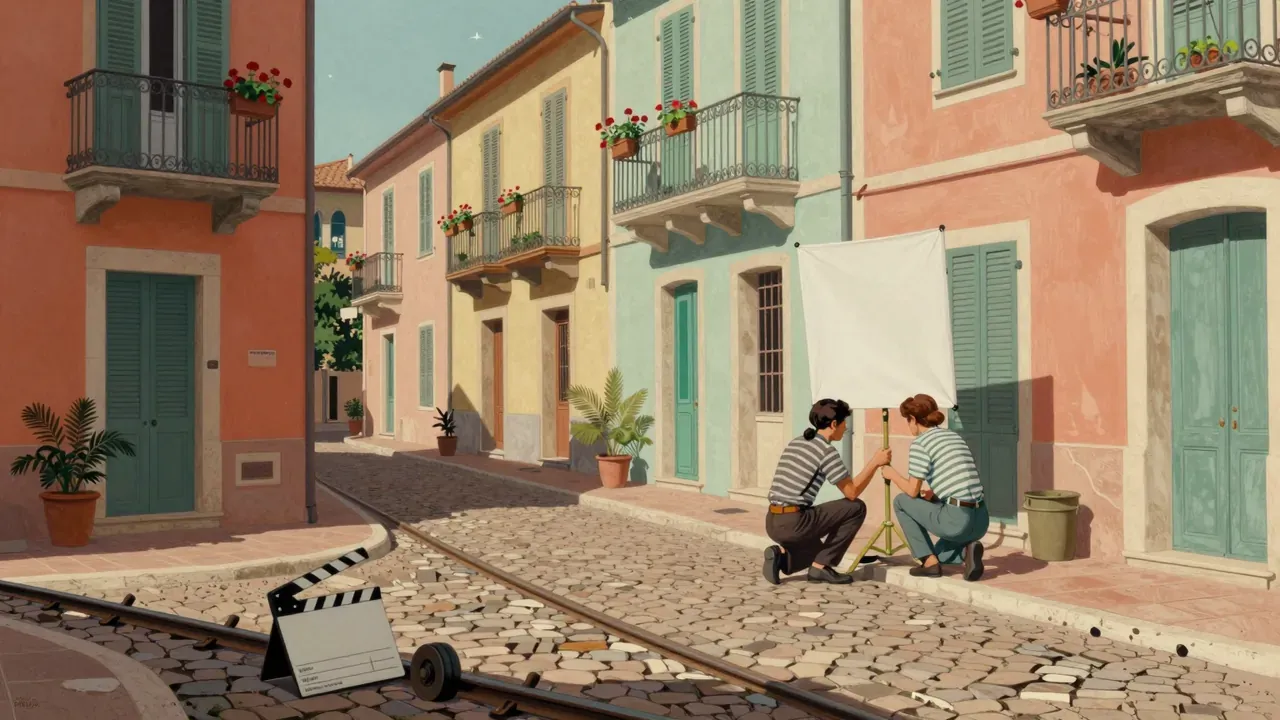
Jean-Paul Belmondo plays Michel with a swagger built on cribbed mannerisms — he rubs his thumb across his lip in imitation of Humphrey Bogart — while Jean Seberg’s Patricia keeps her intentions genuinely unclear, wavering between attraction, self-interest and something closer to detachment. Raoul Coutard shot the film handheld on Ilford stock intended for still cameras, pushed to 800 ASA so the crew could avoid heavy lighting, using a wheelchair in place of a dolly and hiding in a postal cart for some street footage; nearly the whole soundtrack had to be dubbed afterward because the camera used, an Eclair Cameflex, was too noisy to record synchronized sound. Cécile Decugis’s editing famously trims mid-shot rather than between scenes, producing the jump cuts that gave the film its jittery signature.
The jump cuts nobody planned
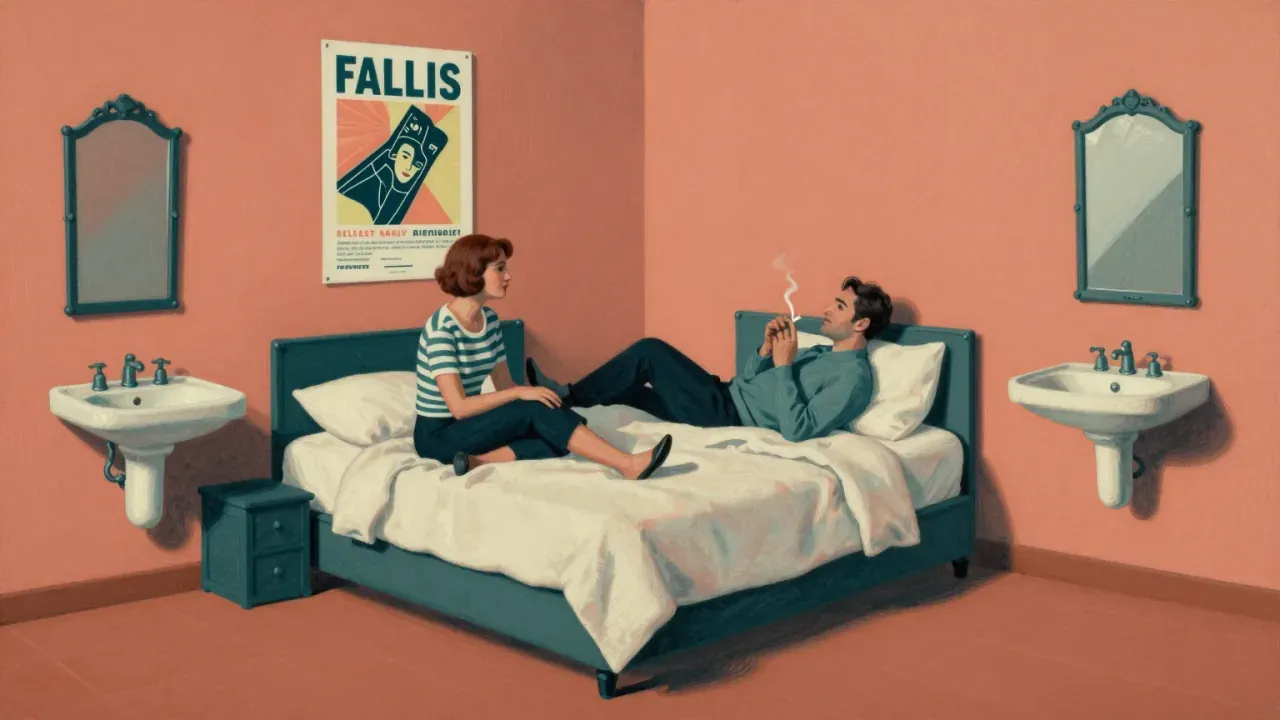
The film’s nervous energy is its strongest asset: Coutard’s restless camera and the accidental-seeming cuts create a sense of a story being told in real time, with no cushion of polish between the audience and Michel’s flight. Belmondo’s performance carries the film’s charisma almost entirely on posture and delivery rather than dialogue that explains him, and Seberg gives Patricia an ambivalence that keeps the central relationship from settling into anything as simple as romance, which is a truer register for two people who barely know each other. The extended bedroom scene, added to Truffaut’s original treatment at Godard’s insistence, gives that ambivalence room to breathe, letting two people talk past each other for long stretches without the film forcing a resolution onto their mismatched intentions.
A relationship without a shared plan
Because so much of the film was worked out during shooting rather than scripted in advance, some scenes drift without clearly advancing character or plot, and the improvisational method occasionally shows in exchanges that go nowhere in particular. Michel’s amorality is presented flatly rather than interrogated, which keeps the film’s tone cool but can also make long stretches feel emotionally weightless, more interested in gesture than in consequence. The in-jokes Godard folds in, from a Cahiers du Cinéma seller to Michel’s alias borrowed from a Chabrol film, reward viewers already steeped in French cinema of the period but add little for anyone approaching the film cold, and can read as insular rather than playful on a first watch.
Idolatry and its cost
Breathless is preoccupied with the gap between the movies Michel has absorbed and the reality he is actually living, and with what happens to a person who tries to inhabit a role that was never built for the world he is in. It is also, structurally, a film about editing as a way of thinking — about how removing time from a scene changes what a scene means, which the jump cuts demonstrate more directly than any line of dialogue does. Critic Andrew Sarris read the technique as dramatising the meaninglessness of the gap between one moral decision and the next, and the film’s own final act, in which Michel’s fate arrives almost too quickly to register, plays like a demonstration of exactly that argument.
Who should watch it
It suits viewers curious about the origins of an editing technique that has since become common practice, anyone drawn to a film that seems to invent its own rules scene by scene, and fans of Belmondo’s early screen persona before he became a star. It is a poor match for anyone wanting a plotted crime thriller with a clean sense of stakes, since the film treats plot as secondary to mood and moment, and it will frustrate viewers who need to understand exactly why Michel or Patricia behaves the way they do at any given point in the story.
Is 87 minutes worth it
At 87 minutes, Breathless costs little of an evening and delivers a film whose technique still feels unsettled and alive more than six decades on. Its pleasures are more formal than emotional, so it rewards a viewer paying attention to how it is made as much as what happens in it, but for that kind of attention it is worth the time without qualification. Its influence on how films are cut, referenced constantly by directors who came after Godard, means watching it now functions almost as background reading for a great deal of subsequent cinema, not merely a period curiosity.