filmbriefs
Topic

Comedy

The hardest thing to do and the least respected when it works.

82
in film
13:00
average
1066 min
in total
89
across the network
Comedy across the network →
All briefs82
13:00

A Hard Day's Night

Richard Lester · 1964

Richard Lester’s 1964 musical comedy captures the Beatles during Beatlemania’s peak, using a fictional 36-hour sprint to concert performance as scaffolding for their music, wit, and chemistry. Shot in black-and-white with vérité energy, it prioritises rhythm over narrative, performance over psychology, and spontaneity over polish. Though thin on character depth and social critique, its influence on music video and ensemble comedy remains profound. It remains watchable not as nostalgia, but as a masterclass in tonal discipline.
13:00

A Lesson in Love

Ingmar Bergman · 1954

A Lesson in Love (1954) is Ingmar Bergman’s gently ironic study of a Stockholm marriage tested by professional pride, quiet restlessness, and a charming patient. Starring Eva Dahlbeck and Gunnar Björnstrand, it trades existential gravity for domestic nuance, using light comedy and unhurried observation to explore love as daily practice rather than grand declaration. Shot by Martin Bodin and scored by Dag Wirén, it remains a subtle, underseen pivot in Bergman’s career — modest in scope, exact in execution.

13:00

All These Women

Ingmar Bergman · 1964

Ingmar Bergman’s 1964 comedy All These Women is a stylised, colour-saturated parody of artistic biography and authorial myth-making. Set over four days at a summer villa, it follows a biographer unable to meet his subject — a cellist surrounded by lovers, each performing a version of devotion. With Sven Nykvist’s precise cinematography and Erik Nordgren’s waltz-and-dissonance score, the film sustains a tone of elegant, unrelenting artifice. It is among Bergman’s few comedies, and his first in colour — a formal departure that underscores its thematic preoccupation with surface, performance, and the unreliability of memory.

13:00

Arsenic and Old Lace

Frank Capra · 1944

Frank Capra’s 1944 adaptation of Joseph Kesselring’s play is a tightly wound black comedy set over one Halloween day in a Brooklyn house where two elderly sisters poison lonely bachelors, their delusional nephew buries the bodies, and their theatre-critic nephew tries to contain the chaos. Starring Cary Grant, Josephine Hull and Raymond Massey, it prioritises rhythmic precision over emotional depth, using studio-era craft to sustain a high-wire act of escalating absurdity.

13:00

As Long as You've Got Your Health

Pierre Étaix · 1966

Pierre Étaix’s 1966 anthology comedy As Long as You’ve Got Your Health presents four self-contained sketches—on insomnia, cinema queues, psychiatric consultation, and forest visits—unified by deadpan timing, restrained performances, and Jean Boffety’s unobtrusive cinematography. Written by Jean-Claude Carrière and edited with surgical calm, it observes urban alienation and bureaucratic fatigue not through satire but through repetition and pause. Its humour is physical, its themes implicit, its pace deliberate.

13:00

Big Deal on Madonna Street

Mario Monicelli · 1958

Big Deal on Madonna Street (1958) is an Italian heist comedy directed by Mario Monicelli, following a group of Rome-based petty criminals attempting—unsuccessfully—to burgle a pawn shop through a shared wall. Shot on location with harsh, naturalistic lighting by Gianni Di Venanzo and scored with restrained jazz by Piero Umiliani, it parodies both neorealist gravity and crime-thriller solemnity by applying their formal rigour to characters who lack the means to succeed. The film’s humour arises from procedural fidelity, not absurdity: every setback follows logically from material constraint, linguistic mismatch or spatial miscalculation. Though nominated for an Academy Award and listed among Italy’s 100 essential films, its appeal lies in its precision, not its polish.

13:00

Blithe Spirit

David Lean · 1945

David Lean’s 1945 Blithe Spirit adapts Noël Coward’s stage comedy with formal care and muted energy. Shot in Technicolor by Ronald Neame, it preserves the play’s wit and structure while adding exterior scenes and a controversial new ending. Margaret Rutherford’s Madame Arcati anchors the film, but Rex Harrison and Kay Hammond struggle to translate their stage roles to screen. The film’s strength lies in its textures — domestic detail, vocal rhythm, restrained visual effects — not in narrative drive or emotional revelation. Though commercially disappointing in 1945, it endures as a document of mid-century British craft and constraint.

13:00

Bringing Up Baby

Howard Hawks · 1938

Bringing Up Baby (1938), directed by Howard Hawks, pairs Katharine Hepburn and Cary Grant in a relentless romantic comedy about a paleontologist undone by a scatterbrained heiress and her leopard. Written by Dudley Nichols and Hagar Wilde, it trades emotional exposition for escalating absurdity, using precise performance, tight editing and rhythmic dialogue to sustain a world where logic collapses on cue. Though commercially modest on release, it is now regarded as a pinnacle of screwball form.

13:00

Capricious Summer

Jiří Menzel · 1968

Jiří Menzel’s 1968 Czechoslovak comedy follows three middle-aged men — a bathhouse owner, a retired artillery major and a local canon — over three rainy summer days at an abandoned resort. Their routines are disrupted by the arrival of a touring tightrope walker and his assistant, prompting a series of small, overlapping seductions, humiliations and quiet reconciliations. Shot in soft colour by Jaromír Šofr and performed with understated precision, the film treats desire, ageing and social ritual as weather systems — persistent, unpredictable, ultimately indifferent to individual will.

13:00

Charade

Stanley Donen · 1963

Stanley Donen’s 1963 Charade pairs Cary Grant and Audrey Hepburn in a Paris-set romantic thriller about stolen wartime gold, shifting identities and a widow who inherits confusion. Written by Peter Stone and shot by Charles Lang, it balances suspense, banter and visual clarity without overreaching. Its strengths lie in structure, performance and tone; its limits in psychological depth and thematic ambition. It remains a masterclass in mid-century studio craft.

13:00

Désiré

Sacha Guitry · 1937

Sacha Guitry’s 1937 Désiré is a tightly wound Parisian comedy in which an actress’s growing fixation on her valet destabilises her relationship with a government minister. Set almost entirely in three interior spaces, it relies on precise dialogue, restrained performances — especially by Arletty and Jacqueline Delubac — and a still, observational camera. It explores class, service, and the erotic charge of being truly seen, without recourse to plot twists or moralising.

13:00

Destry Rides Again

George Marshall · 1939

Destry Rides Again (1939) is a Universal Pictures Western comedy directed by George Marshall, starring James Stewart and Marlene Dietrich. It follows a gunless sheriff who restores order in the corrupt town of Bottleneck not through force but through patience, wit, and carefully orchestrated social pressure. Written by Henry Myers and Gertrude Purcell, it subverts genre expectations with dry humour, deliberate pacing, and character-driven irony—most notably in Dietrich’s iconic turn as the saloon singer Frenchy. Though loosely based on Max Brand’s novel, the film bears little resemblance to earlier adaptations and stands as a singular blend of Western structure and comedic timing.

13:00

Divorce, Italian Style

Pietro Germi, Renzo Marignano · 1961

Divorce, Italian Style (1961) is a Sicilian black comedy in which an impoverished nobleman plots to murder his wife in order to claim leniency under Italy’s honour-killing statutes. Directed by Pietro Germi and written by Germi, Ennio de Concini, Alfredo Giannetti and Agenore Incrocci, it stars Marcello Mastroianni as Ferdinando Cefalù, whose elaborate scheme exposes the contradictions between law, religion and social expectation in pre-divorce Italy. The film won the Academy Award for Best Original Screenplay and remains a benchmark of satirical precision.

13:00

Dollar

Gustaf Molander · 1938

Dollar is a tightly constructed 1938 Swedish comedy directed by Gustaf Molander, starring Ingrid Bergman as Julia Balzar. When compulsive gambler Louis Brenner incurs a large debt, a cheque is written to cover it — but its true origin sparks misunderstandings among three affluent couples holidaying at a ski resort. Misattributed generosity, psychosomatic paralysis, and a high-stakes psychoanalytic wager unfold with quiet precision, culminating in a late revelation about whose money was really spent. Shot by Åke Dahlqvist and edited by Oscar Rosander, it prioritises structural clarity over emotional exposition.

13:00

Eating Raoul

Paul Bartel · 1982

Eating Raoul (1982) is a low-budget black comedy about a prudish Los Angeles couple who kill affluent swingers to fund their dream restaurant. Directed by Paul Bartel and written with Richard Blackburn, it sustains a flat, deadpan tone throughout, treating homicide as routine logistics. Gary Thieltges’ unshowy cinematography and the cast’s understated performances reinforce its central irony: evil, here, is bureaucratic, not theatrical. Though its final act veers into broader farce, the film remains a precise, unsentimental study of aspiration, class, and the quiet erosion of principle.

13:00

Fanfan la Tulipe

Christian-Jaque · 1952

Fanfan la Tulipe (1952) is a French black-and-white comedy-adventure starring Gérard Philipe as a charming rogue who joins the army on false pretences during the Seven Years’ War. Directed by Christian-Jaque, it balances swordplay, romance and gentle irony without moralising or historicising. Its strengths lie in physical performance, rhythmic editing and Christian Matras’s lucid cinematography — not in plot complexity or thematic weight.

13:00

Good Morning

Yasujirō Ozu · 1959

Yasujirō Ozu’s 1959 colour comedy follows two brothers who stop speaking to protest their parents’ refusal to buy a television. Set in a Tokyo suburb, the film traces how their silence ripples through the neighbourhood, exposing the fragility of gossip, the labour of politeness, and the quiet absurdity of adult consensus — all observed with Ozu’s characteristic stillness and dry precision.

13:00

Half a Loaf of Kung Fu

Chi-Hwa Chen · 1978

Half a Loaf of Kung Fu (1978) is Jackie Chan’s early experiment in kung fu slapstick: a bumbling acrobat named Jiang stumbles through a series of misadventures — spying on a witch, collecting bounties on corpses, apprenticing to a beggar — all while trying, and mostly failing, to learn kung fu. Directed by Chi-Hwa Chen and written by Chan, it parodies the genre’s gravitas with physical comedy, episodic plotting, and a refusal to treat mastery as earned rather than stumbled upon.

13:00

His Girl Friday

Howard Hawks · 1940

Howard Hawks’s 1940 comedy His Girl Friday recasts The Front Page as a battle of wits between ex-spouses Walter Burns and Hildy Johnson, a newspaper editor and reporter whose professional rivalry reignites as a romantic one. Shot at breakneck speed with overlapping dialogue, it privileges competence over sentiment and friction over harmony. Though formally dazzling and historically influential, it sidesteps the racial and ethical weight of its source material, treating injustice as backdrop rather than subject.

13:00

Hopscotch

Ronald Neame · 1980

Hopscotch (1980) is a low-key, Mozart-scored spy comedy starring Walter Matthau as Miles Kendig, a CIA veteran who retaliates against forced retirement by writing and publishing an explosive memoir — mailing chapters to rival intelligence agencies across Europe and the US. Directed by Ronald Neame and adapted by Bryan Forbes and Brian Garfield, it trades thrills for procedural wit, treating espionage as bureaucratic farce rather than mortal peril. Its pleasures lie in Matthau’s dry authority, Arthur Ibbetson’s unshowy camerawork, and Ian Fraser’s precisely deployed classical score.

13:00

I Married a Witch

René Clair · 1942

René Clair’s 1942 I Married a Witch is a tightly wound romantic fantasy starring Veronica Lake as a resurrected witch who disrupts the engagement of politician Wallace Wooley (Fredric March). Adapted from Thorne Smith’s unfinished novel, it uses magic not for wonder but as a scalpel to dissect marriage, politics, and gender. Ted Tetzlaff’s cinematography, Roy Webb’s score, and Clair’s economical staging sustain a tone of wry, unhurried absurdity — one that rewards attention to rhythm and restraint over plot or sentiment.

13:00

It's a Mad, Mad, Mad, Mad World

Stanley Kramer · 1963

Stanley Kramer’s 1963 epic comedy deploys Ultra Panavision 70 and an all-star cast to stage a non-stop, 161-minute chase for buried cash across Southern California. Built on stunts, not story, it privileges physical precision and wide-screen choreography over character or theme — succeeding as industrial spectacle, not narrative comedy.

13:00

Jabberwocky

Terry Gilliam · 1977

Terry Gilliam’s 1977 solo debut is a medieval comedy built on systemic absurdity: a cooper’s apprentice stumbles into legend not through courage but incompetence, while merchants profit, priests shrug, and kings repeat rituals they no longer understand. Shot in Welsh castles and Shepperton Studios, it trades spectacle for texture — visible wires, muddy light, mumbled proclamations — and finds comedy not in jokes but in the slow collapse of meaning.

13:00

Jour de Fête

Jacques Tati · 1949

Jacques Tati’s 1949 debut follows François, a bumbling rural postman inspired by a spoof US postal documentary to overhaul his delivery round. Shot in Sainte-Sévère-sur-Indre with villagers as extras, the film uses minimal dialogue, precise sound design, and unhurried visuals to explore the friction between embodied, local time and imported, mechanised efficiency. Three versions exist — original black-and-white (1949), re-edited (1964), and colour-restored (1995) — each offering a different relationship to the film’s central tension: how people move when no one is timing them.

13:00

La Cage aux Folles

Édouard Molinaro · 1978

La Cage aux Folles (1978) is a French-Italian comedy directed by Édouard Molinaro, adapted from Jean Poiret’s play. Ugo Tognazzi and Michel Serrault star as Renato and Albin, a gay couple running a Saint-Tropez drag club, who must impersonate straight respectability when their son brings home ultraconservative in-laws. Shot on location and in Rome studios, with music by Ennio Morricone, it balances farcical escalation with quiet emotional precision. Though some gags and politics feel dated, its performances, timing and commitment to its own logic remain compelling.

13:00

La Poison

Sacha Guitry · 1951

Sacha Guitry’s 1951 French film follows a married couple in provincial France who independently decide to kill each other. Using black-and-white cinematography on colour-built sets, tight framing and uninflected performances — especially from Michel Simon and Germaine Reuver — the film treats homicide as a procedural puzzle, not a moral crisis. Written and directed by Guitry, with music by Louiguy and editing by Raymond Lamy, it unfolds with clockwork symmetry, offering irony without sentiment and structure without spectacle.

13:00

Le mariage de Chiffon

Claude Autant-Lara · 1942

Le mariage de Chiffon (1942), directed by Claude Autant-Lara and adapted by Jean Aurenche from Sibylle Riqueti de Mirabeau’s 1894 novel, is a restrained historical comedy set in the Bourbon Restoration. Odette Joyeux stars as Chiffon, a young woman navigating an arranged marriage to the ageing Duc d’Aubières (André Luguet) while drawn to the more compatible Marc de Bray (Jacques Dumesnil). Shot in occupied Paris, the film avoids overt politics, instead focusing on social nuance, verbal precision, and the quiet assertion of self within rigid convention. Jacques Krauss designed the deliberately theatrical sets. With no credited score and a measured 103-minute runtime, it relies on performance, timing, and textual fidelity rather than spectacle or sentiment.

13:00

Le Million

René Clair · 1931

René Clair’s 1931 French musical comedy Le Million follows an artist racing to recover a lottery ticket sewn into a jacket that has passed through criminals, opera singers and dancers. With Georges Périnal’s crisp cinematography, Armand Bernard’s recurring score and René Le Hénaff’s precise editing, it treats sound, movement and narrative as interlocking rhythms — not as storytelling tools, but as the film’s governing logic.

13:00

Leningrad Cowboys Go America

Aki Kaurismäki · 1989

Leningrad Cowboys Go America (1989) is a 78-minute Finnish comedy directed by Aki Kaurismäki, following a fictional Soviet band’s deadpan journey from the tundra to a Mexican wedding via New York and the American South. Starring Matti Pellonpää and Kari Väänänen, with cameos by Jim Jarmusch and Duke Robillard, it deploys rigid framing, monotone delivery and metronomic editing to sustain a tone of bureaucratic absurdity. There are no arcs, no explanations, no emotional payoffs — only forward motion, repeated gestures, and the quiet insistence that this is all perfectly reasonable.

13:00

Lenny

Bob Fosse · 1974

Bob Fosse’s 1974 biographical drama follows Lenny Bruce across fractured timelines — nightclub triumphs, obscenity trials, domestic fraying — using tight framing, jarring edits, and Dustin Hoffman’s physically exacting performance to render comedy as forensic speech. Adapted from Julian Barry’s play, it avoids explanation in favour of accumulation: of legal pressure, vocal fatigue, and linguistic risk. Its black-and-white austerity refuses nostalgia, its structure refuses closure.

13:00

Les Vacances de Monsieur Hulot

Jacques Tati · 1953

Jacques Tati’s 1953 comedy observes a French seaside resort through the quiet chaos introduced by Monsieur Hulot — a tall, pipe-smoking man whose well-meaning clumsiness exposes the fragility of middle-class ritual. Shot in black and white in Saint-Marc-sur-Mer, it builds humour from choreographed movement, layered sound, and precise framing rather than dialogue or plot. With minimal spoken words and a jazz score by Alain Romans, the film treats human behaviour as pattern, not psychology — finding comedy in repetition, timing, and the gap between intention and outcome.

13:00

Lions Love

Agnès Varda · 1969

Lions Love (1969), directed by Agnès Varda, is an English-language French arthouse comedy filmed in Los Angeles. It follows a fictional throuple — played by Viva, Gerome Ragni, and James Rado — hosting filmmaker Shirley Clarke in their Beverly Hills home. Blending scripted scenes, documentary insertions, and meta-cinematic interventions, the film interrogates authorship, countercultural commodification, and the gendered labour of collaboration. With a score by Joseph Byrd and editing by Robert Dalva, it sustains a deliberate tonal ambiguity, refusing satire or nostalgia in favour of structural scrutiny. Though demanding and referential, it rewards attentive viewing as a precise, unsentimental portrait of a pivotal cultural moment.

13:00

Love Letters

Claude Autant-Lara · 1942

Made in occupied Paris in 1942, Love Letters is a comedy-drama set in Napoleon III’s France, centring on romantic confusion caused by intercepted correspondence. Directed by Claude Autant-Lara and scripted by Jean Aurenche, it features Odette Joyeux, François Périer, and Julien Carette in performances calibrated to polite farce. Shot at Boulogne Studios, its art direction (Robert Dumesnil, Jacques Krauss) and costumes (Christian Dior) reinforce its theatrical, surface-conscious world. The film avoids historical engagement or emotional extremity, sustaining instead a steady, wry tone rooted in manners and miscommunication.

13:00

Midnight

Mitchell Leisen · 1939

Midnight (1939), directed by Mitchell Leisen and written by Charles Brackett and Billy Wilder, follows American showgirl Eve Peabody as she impersonates a baroness in Paris to escape poverty — only to become entangled in a wealthy couple’s marital crisis. Anchored by Claudette Colbert’s precise physical comedy and Charles Lang’s softly lit cinematography, the film balances screwball energy with studio-era sophistication. Though its final act retreats from its sharpest ideas into convention, its craftsmanship, timing, and thematic clarity make it a durable, pleasurable artefact of Golden Age Hollywood.

13:00

Moment to Moment

Robert Downey Sr. · 1975

Robert Downey Sr.’s 1975 comedy Moment to Moment is an 85-minute exercise in narrative abstinence: deadpan performances, uninflected dialogue, and Jack Nitzsche’s sparse score coalesce into a dry, unblinking portrait of routine and disconnection. It offers no plot, no punchlines, no character arcs — only sustained tonal restraint. Its value lies in its consistency, not its insight.

13:00

My Man Godfrey

Gregory La Cava · 1936

My Man Godfrey (1936), directed by Gregory La Cava, follows a homeless man hired as butler by a Manhattan socialite during the Great Depression. William Powell and Carole Lombard anchor a sharp, fast-paced romantic comedy that skewers wealth while relying on inherited status to resolve its tensions. Ted Tetzlaff’s cinematography and tight editing sustain its screwball energy, though the finale retreats from its earlier bite. Critically lauded then and now, it remains a masterclass in studio-era comic construction — elegant, economical, and knowingly incomplete.

13:00

Not on Your Life

Luis García Berlanga · 1963

The Executioner (1963), directed by Luis García Berlanga, follows an undertaker who marries the daughter of a state executioner, then reluctantly assumes the role himself to secure housing. Shot in black and white, it uses deadpan comedy and precise, unadorned craft to examine moral compromise under Francoist bureaucracy — not as ideology, but as paperwork, pension rules, and quiet family negotiations.

13:00

One Hour with You

Ernst Lubitsch, George Cukor · 1932

One Hour with You (1932) is a Paramount romantic musical comedy directed by Ernst Lubitsch with George Cukor, starring Maurice Chevalier and Jeanette MacDonald. Adapted from Lothar Schmidt’s play and Lubitsch’s own 1924 film, it follows a Parisian doctor whose marital calm is gently disrupted by his wife’s flirtatious friend. With Oscar Straus’s score and Samson Raphaelson’s script, it prioritises wit, timing, and surface elegance over psychological depth — a polished, pre-Code exercise in controlled charm.

13:00

Parade

Jacques Tati · 1974

Made for Swedish television in 1974, Parade is Jacques Tati’s final film — a low-budget, studio-bound circus revue starring Tati as Monsieur Loyal. Filmed at Stockholm Cirkus using mixed video and film stocks, it abandons narrative for a sequence of gags, mime, juggling, music and audience interaction. Gunnar Fischer’s unshowy cinematography and Charles Dumont’s light score support Tati’s precise physical comedy. Though slender in scope compared to PlayTime or Trafic, it is a deliberate return to fundamentals: gesture, timing, shared attention.

13:00

Pearls of the Crown

Sacha Guitry, Christian-Jaque · 1937

Pearls of the Crown (1937) is a French historical comedy co-directed by Sacha Guitry and Christian-Jaque, tracing the fictional journey of seven pearls across four centuries and three languages. Guitry plays four roles, and much of the cast doubles or triples up, reinforcing the film’s theme of history as repetition. Shot at Billancourt Studios and on location—including Royaumont Abbey and the S.S. Normandie—it balances theatrical artifice with tangible settings. Jean Françaix’s score and Jules Kruger’s cinematography support a light, neoclassical tone. Though structurally inventive and intellectually agile, its pacing and linguistic layering may alienate some viewers. It is arthouse comedy with scholarly poise, not populist appeal.

13:00

Quadrille

Sacha Guitry · 1938

A 1938 French comedy written and directed by Sacha Guitry, Quadrille follows a Paris newspaper editor whose carefully balanced domestic life unravels when an American film star arrives at his hotel. Staged with clockwork timing and performed with understated wit, it treats romance and professional life as interchangeable roles in a refined, self-contained dance.

13:00

Smiles of a Summer Night

Ingmar Bergman · 1955

Set over one Midsummer Night in early-twentieth-century Sweden, Ingmar Bergman’s Smiles of a Summer Night traces shifting affections among lawyers, actresses, counts and servants. Shot by Gunnar Fischer and scored by Erik Nordgren, it balances theatrical structure with emotional nuance, using wit and restraint rather than exposition or psychology to resolve its tangles. It is a film about how love negotiates time, class and habit — not revelation, but recalibration.

13:00

Some Like It Hot

Billy Wilder · 1959

Some Like It Hot is a 1959 Prohibition-era romantic comedy about two musicians who dress as women to escape gangsters, join an all-female band, and fall for its lead singer. Directed by Billy Wilder and starring Marilyn Monroe, Tony Curtis and Jack Lemmon, it uses disguise as both plot device and thematic lens, sustaining laughter through precise timing, physical performance and escalating absurdity. Shot in black and white after colour tests failed, it balances crime, romance and farce without resolving their tensions — and remains effective not as nostalgia, but as engineered comedy.

13:00

Speedy

Ted Wilde · 1928

Harold Lloyd’s 1928 silent comedy Speedy follows a quick-witted New Yorker who defends his girlfriend’s grandfather’s horse-drawn streetcar line from corporate takeover. Shot on location in New York City and Coney Island, it combines romantic comedy, civic satire, and elaborate stunts — including a cross-Manhattan chase — all anchored by Lloyd’s energetic, grounded performance. It was Lloyd’s last silent film and survives in both silent and sound-on-film versions.

13:00

Spiritual Kung Fu

Lo Wei · 1978

Spiritual Kung Fu (1978) is a Lo Wei-directed Hong Kong martial arts comedy starring Jackie Chan as Yi-lang, a quick-witted Shaolin student who learns the Five Style Fists from five spectral masters. Made early in 1978 but shelved due to budget constraints, it was released late that year after Chan’s breakout success in Snake in the Eagle’s Shadow. The film blends slapstick, modest special effects, and clear, varied fight choreography — with Yuen Biao uncredited as one of the ghostly instructors. Its strengths lie in Chan’s timing and the functional integration of animal-style kung fu; its weaknesses are thin motivation and underdeveloped lore. It is a transitional work — technically assured, thematically light, and structurally coherent.

13:00

The Awful Truth

Leo McCarey · 1937

Leo McCarey’s 1937 screwball comedy stars Cary Grant and Irene Dunne as a divorcing couple whose competitive courtship reveals they still love each other. Built on Viña Delmar and Sidney Buchman’s script, it replaces moralising with behavioural precision, using dog custody hearings, nightclub sabotage and society-party sabotage to expose the gap between social performance and private feeling. Joseph Walker’s cinematography and Al Clark’s editing sustain its tight, unhurried rhythm. Though some supporting elements feel thin and its class framework dated, its central performances and structural clarity remain benchmarks of studio-era comedy.

13:00

The Bank Dick

Edward F. Cline · 1940

Directed by Edward F. Cline and written by W. C. Fields under a pseudonym, The Bank Dick (1940) follows Egbert Sousé, a chronically intoxicated Lompoc resident who stumbles into bank security work after foiling a robbery by accident. Built around Fields’s signature blend of verbal evasion, physical timing and moral indifference, the film favours set-piece gags over narrative cohesion. Milton Krasner’s straightforward cinematography and Arthur Hilton’s clean editing serve the performance without embellishment. Though its plot contrivances and thin supporting roles show strain, its endurance lies in Fields’s unyielding command of comic causality — a masterclass in how to be funny without ever trying to be liked.

13:00

The Cameraman

Edward Sedgwick, Buster Keaton · 1928

Buster Keaton’s 1928 MGM debut follows a tintype photographer who buys a film camera to impress a newsreel secretary, then stumbles into real danger filming a Tong War in Chinatown. With Elgin Lessley’s crisp cinematography and Hugh Wynn’s taut editing, it builds comedy from spatial logic and cumulative consequence — not quips or sentiment. Though made under tightening studio control, it remains one of Keaton’s most lucid, tightly constructed films.

13:00

The Circus

Charlie Chaplin · 1928

Charlie Chaplin’s 1928 silent comedy follows the Little Tramp’s accidental rise and quiet fall within a struggling circus. Hired for his unintentional chaos, he becomes indispensable — then obsolete — in a film that treats performance as labour, laughter as accident, and solitude as structural inevitability. Shot and edited by Chaplin, with music he composed, it is both a technical masterclass and a quiet self-portrait made at the dawn of sound.

13:00

The Count of the Old Town

Sigurd Wallén, Edvin Adolphson · 1935

The Count of the Old Town (1935) is a Swedish studio comedy directed by Sigurd Wallén and Edvin Adolphson, adapted by Arthur Natorp from his stage play. Starring Valdemar Dalquist as a penniless artist mistaken for nobility, it unfolds in Stockholm’s Gamla Stan with light farce, ensemble timing, and Jules Sylvain’s waltz-led score. Ingrid Bergman appears in her first speaking film role, though her part is brief and underdeveloped. The film prioritises rhythm and social observation over plot or psychology.

13:00

The Fearless Hyena

Jackie Chan · 1979

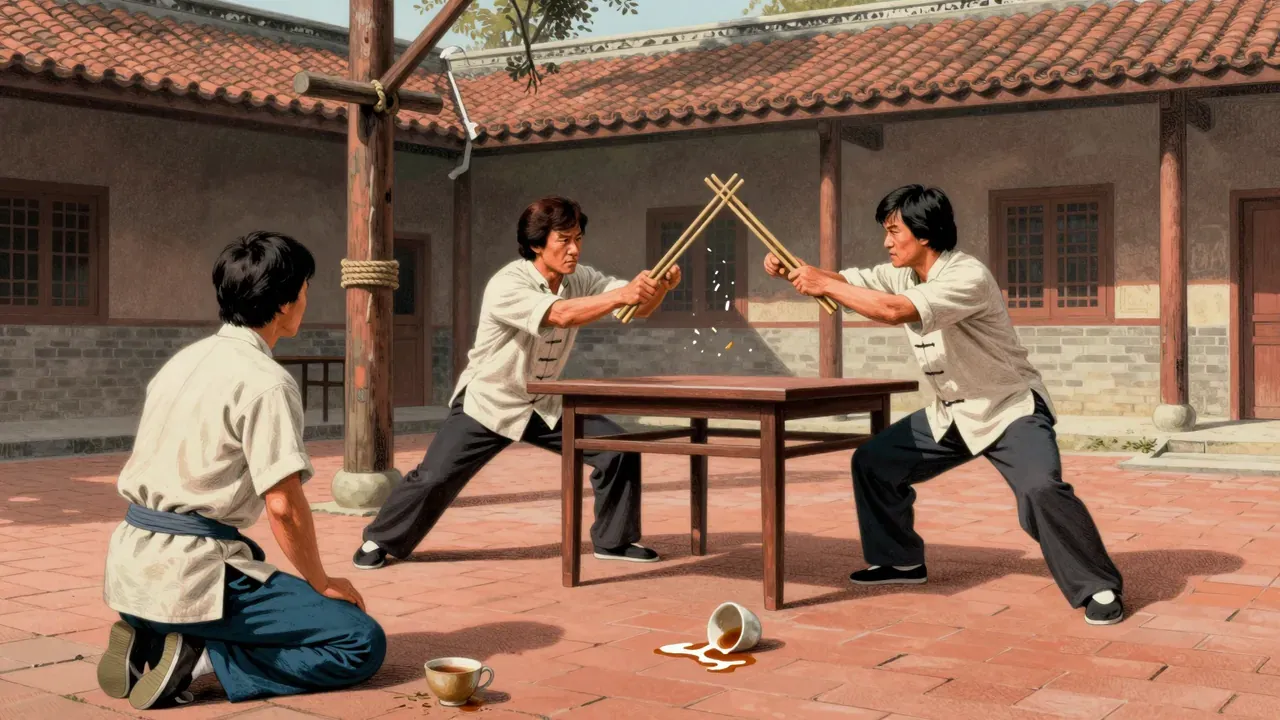
Jackie Chan’s 1979 directorial debut is a Hong Kong action comedy built around his own body as instrument, prop, and punchline. It follows a reckless martial arts student whose flaws drive both plot and fight design — gambling, disobedience, and emotional volatility become narrative engines. Though its revenge arc feels tacked-on and its supporting characters thinly drawn, its slapstick-infused choreography (chopsticks duels, cross-dressing, ‘Emotional Kung-Fu’) remains inventive and influential. Shot with functional clarity by Jung-Shu Chen and scored with brassy levity by Frankie Chan, it is a pragmatic, performer-first film — uneven, urgent, and foundational.
13:00

The Freshman

Fred C. Newmeyer, Sam Taylor · 1925

Harold Lloyd stars in this 1925 Pathé silent comedy as a freshman who tries to win popularity by imitating a movie hero, only to become the campus joke. His journey from delusion to self-acceptance unfolds through tightly constructed set-pieces — a falling-apart suit, a disastrous dance, and a climactic football game shot on real stadium fields — all anchored by Lloyd’s precise physical performance and Walter Lundin’s unshowy cinematography.

13:00

The Importance of Being Earnest

Anthony Asquith · 1952

Anthony Asquith’s 1952 adaptation of The Importance of Being Earnest is a faithful, studio-bound rendering of Wilde’s comedy, anchored by Edith Evans’s legendary Lady Bracknell and performed with linguistic rigour. It privileges dialogue, timing and textual fidelity over cinematic expansion, making it a benchmark for literary adaptation — austere, intelligent, and increasingly rewarding on repeat viewings.

13:00

The In-Laws

Arthur Hiller · 1979

The In-Laws (1979) pairs Alan Arkin and Peter Falk as fathers-in-law drawn into international intrigue when a mild-mannered dentist is swept up by his future son-in-law’s seemingly unhinged CIA operative father. Written by Andrew Bergman and directed by Arthur Hiller, it sustains a high-wire act of farcical escalation grounded entirely in character logic — not plot mechanics — and remains a benchmark for odd-couple comedy built on timing, contrast, and unwavering commitment to its central conceit.

13:00

The Innocent

Louis Garrel · 2022

Louis Garrel’s 2022 comedy follows Abel, a timid aquarium guide whose mother Sylvie marries an ex-con, Michel. Suspicious and guilt-ridden, Abel agrees to help Michel steal caviar — not out of greed, but as a way to re-enter his mother’s orbit. What begins as surveillance becomes participation, then genuine connection, then consequence. Shot in Lyon with quiet precision, the film avoids moralising, favouring rhythm and restraint over revelation.

13:00

The Kid Brother

Harold Lloyd, Lewis Milestone, Ted Wilde · 1927

The Kid Brother (1927) is Harold Lloyd’s deliberate departure from urban thrills into rural character comedy. As Harold Hickory — the bookish, overlooked son of a respected sheriff — he must prove himself not through strength but wit, navigating a travelling medicine show, a stolen dam fund, and a beached ship full of thieves. Directed partly by Lewis Milestone and shot by Walter Lundin, it balances dense physical gags with emotional continuity and thematic weight. Restored in 4K for Criterion, it remains a masterclass in silent-era storytelling where every laugh serves the man behind the glasses.

13:00

The Lady Eve

Preston Sturges · 1941

Preston Sturges’ 1941 screwball comedy follows con artist Jean Harrington as she targets naive ale heir Charles Pike aboard an ocean liner, falls for him, is rejected, then returns disguised as English aristocrat ‘Lady Eve’ to exact revenge — only to fall again. With Barbara Stanwyck and Henry Fonda delivering career-defining performances, the film uses repetition, linguistic precision, and structural symmetry to explore identity, performance, and the porous line between deception and devotion.

13:00

The Mikado

Victor Schertzinger · 1939

The Mikado (1939) is a British Technicolor film adaptation of Gilbert and Sullivan’s 1885 comic opera, starring Martyn Green and members of the D’Oyly Carte Opera Company. Directed by Victor Schertzinger and produced by Geoffrey Toye, it preserves the original music and libretto with minimal alteration, using the London Symphony Orchestra and Marcel Vertès’s vivid art direction. Its strength lies in vocal precision and ensemble discipline; its limitation is its adherence to stage convention over cinematic language. It offers no cultural critique of its Japanese setting, treating it as decorative backdrop. A document of a performing tradition, not a reinterpretation.

13:00

The Palm Beach Story

Preston Sturges · 1942

Preston Sturges’ 1942 romantic comedy follows a woman who leaves her broke husband to seek fortune, only to become entangled with a millionaire and his eccentric club. Written, directed, and produced under the studio system, it sustains a high-wire tone of social satire through rapid dialogue, precise editing, and unwavering commitment to its own absurd rules.

13:00

The Philadelphia Story

George Cukor · 1940

George Cukor’s 1940 romantic comedy adapts Philip Barry’s play with surgical fidelity, following Katharine Hepburn’s Tracy Lord as she navigates remarriage, journalism, and self-reckoning within Philadelphia high society. Written by Donald Ogden Stewart, shot by Joseph Ruttenberg, and performed with precise wit by Hepburn, Cary Grant, and James Stewart, it exemplifies the ‘comedy of remarriage’ genre — elegant, verbally dense, and emotionally contained. Though insulated from broader social forces, its focus on performance, privilege, and self-knowledge remains quietly radical in its restraint.

13:00

The Smiling Lieutenant

Ernst Lubitsch · 1931

Ernst Lubitsch’s 1931 musical comedy follows an Austrian lieutenant whose ill-timed wink sparks a royal marriage, a broken engagement, and a surprisingly tender act of sabotage. Built on Oscar Straus’s operetta and sharpened by Samson Raphaelson’s script, it balances Chevalier’s charm, Colbert’s poise, and Hopkins’s vulnerability within tightly controlled studio spaces. Technically assured for its time, it privileges tonal precision over psychological realism — and ends not with reconciliation, but with a satin-clad, cigarette-puffing princess and a wink that closes the door on easy answers.

13:00

The Suitor

Pierre Étaix · 1963

Pierre Étaix’s 1962 debut The Suitor is a meticulously timed comedy about a man racing to marry before a deadline, modelled on Buster Keaton’s Seven Chances but filtered through Gallic irony and silent-era physical logic. With minimal dialogue, clean framing, and relentless cause-and-effect plotting, it turns courtship into bureaucratic theatre. Though its final act falters and some gags rely on period-specific codes, its control of rhythm and commitment to form make it a distinctive, demanding, and rewarding work of mid-century French comedy.

13:00

This Is Spinal Tap

Rob Reiner · 1984

This Is Spinal Tap (1984) is a mockumentary following the faltering US tour of a fictional British heavy metal band. Directed by Rob Reiner and improvised by Christopher Guest, Michael McKean and Harry Shearer, it satirises rock pretension, documentary hagiography and institutional incompetence — not through parody, but through sustained, deadpan observation. Shot on 16mm in vérité style, it builds comedy from logistical failure, miscommunication and unshaken self-belief. Its influence on the mockumentary form is foundational; its cultural longevity rests on its precision, not its punchlines.

13:00

To Be or Not to Be

Ernst Lubitsch · 1942

Ernst Lubitsch’s 1942 To Be or Not to Be follows a Warsaw theatre troupe who use disguise, timing, and theatrical cunning to deceive the Gestapo. Starring Carole Lombard and Jack Benny, it balances farce with peril, treating performance as both profession and resistance. Rudolph Maté’s cinematography and Dorothy Spencer’s editing sustain its breakneck logic, while its themes—identity as costume, authority as mimicry—remain sharply relevant. Though some tonal shifts now feel abrupt, its rigour and restraint make it a landmark of satirical craft.

13:00

Tom Jones

Tony Richardson · 1963

Tony Richardson’s 1963 adaptation of Henry Fielding’s novel stars Albert Finney as the roguish, good-hearted Tom, whose journey from foundling to accepted heir unfolds through slapstick, satire and fourth-wall breaks. Written by John Osborne and shot by Walter Lassally, it balances period detail with formal audacity — intertitles, a wry narrator, and abrupt edits — to embody Fielding’s moral ambiguity. Though some emotional arcs falter and its satire occasionally overshadows character, its energy, performances and stylistic confidence remain distinctive. It won four Academy Awards, including Best Picture and Best Director.

13:00

Tootsie

Sydney Pollack · 1982

A struggling New York actor disguises himself as a woman to land a soap opera role, then finds his assumptions about gender, work, and relationships upended by the sheer effort of sustaining the performance. Directed by Sydney Pollack and starring Dustin Hoffman, Jessica Lange, and Teri Garr, it balances sharp social observation with grounded comic timing and emotional honesty.

13:00

Unfaithfully Yours

Preston Sturges · 1948

Preston Sturges’ 1948 comedy follows Sir Alfred de Carter, a world-renowned conductor who, suspecting his wife of infidelity, imagines three elaborate responses — murder, magnanimous forgiveness, and Russian roulette — each triggered by a piece of classical music he conducts in concert. Back home, his attempts to enact any of them unravel in farcical detail. With Rex Harrison, Linda Darnell and Alfred Newman, it is a formally inventive, musically anchored satire of ego, creativity and self-deception.

13:00

Yoyo

Pierre Étaix · 1965

Pierre Étaix’s 1965 comedy Yoyo follows a French millionaire’s fall from wealth into circus life, and his son’s parallel rise from clown to film star. Structured as a series of precisely timed visual gags and period tableaux, it uses physical comedy to explore inheritance, class, and performance across the 1920s to the 1960s. Shot by Jean Boffety with restrained elegance, it favours rhythm over exposition and texture over psychology.

13:00

Shakespeare in Love

John Madden · 1998

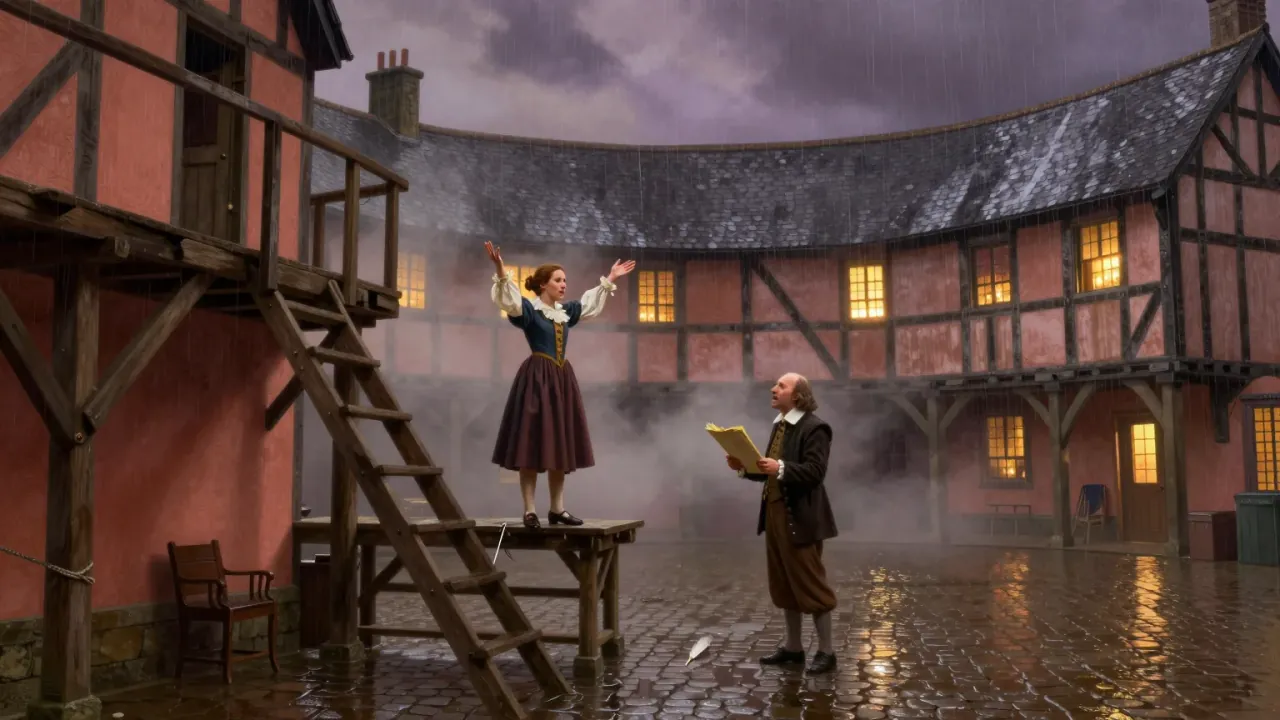
Shakespeare in Love (1998) imagines a love affair between a blocked William Shakespeare and the noblewoman Viola de Lesseps, whose secret presence in his company inspires Romeo and Juliet. Directed by John Madden and written by Marc Norman and Tom Stoppard, it blends period detail with theatrical wit, winning seven Academy Awards including Best Picture and Best Actress. Its strength lies in craft and chemistry; its limitation, in narrative convenience that softens moral and emotional stakes.

13:00

Bianca

Nanni Moretti · 1984

Nanni Moretti’s 1984 comedy Bianca follows Michele Apicella, a Rome-based maths teacher whose obsessive need for rationality collapses as neighbours die, relationships falter, and a new lover enters his life. Shot with clinical precision by Luciano Tovoli and scored with restrained repetition by Franco Piersanti, the film treats emotional breakdown as a slow arithmetic error — accumulating, irreversible, and quietly devastating.

13:00

Charlie Chaplin

Sakthi Chidambaram · 2002

Charlie Chaplin (2002) is a Tamil-language comedy directed by Sakthi Chidambaram, starring Prabhu Ganesan and Prabhu Deva as a wealthy businessman and his loyal photographer assistant in Ooty. When the husband briefly hires a call girl to appease his suspicious wife, the assistant covers for him by pretending the woman is his own lover — triggering a chain of deceptions that tests loyalty, reputation, and truth itself. Shot by Siva with functional clarity and scored by Bharani, the film balances farcical escalation with grounded performances. Though commercially successful and widely remade, it avoids moral scrutiny of its central transaction, resolving instead through courtroom confession and collective forgiveness.

13:00

Raising Arizona

Joel Coen, Ethan Coen · 1987

A 1987 Coen brothers comedy starring Nicolas Cage and Holly Hunter as an ex-con and ex-cop who kidnap a baby to start a family. Shot in Arizona with Barry Sonnenfeld’s vivid cinematography and Carter Burwell’s folk-inflected score, it balances surreal farce with emotional sincerity. Though divisive on release, it has since become a cult classic praised for its originality, dialogue, and tonal audacity.

13:00

The Big Lebowski

Joel Coen, Ethan Coen · 1998

The Big Lebowski (1998) follows Jeffrey 'The Dude' Lebowski, a laid-back Los Angeles slacker drawn into a convoluted kidnapping plot after being mistaken for a millionaire with the same name. Directed by Joel and Ethan Coen, it leans into Raymond Chandler’s episodic structure while discarding his moral urgency. With Jeff Bridges, John Goodman, Julianne Moore, Steve Buscemi and John Turturro, and cinematography by Roger Deakins, it builds its world through precise dialogue, physical performance and sun-bleached Los Angeles atmospherics — less a crime story than a study in inertia, ritual and linguistic idiosyncrasy.

13:00

The General

Buster Keaton, Clyde Bruckman · 1926

Buster Keaton’s 1926 film The General is a romantic comedy-war film set during the American Civil War, co-directed with Clyde Bruckman. Starring Keaton as a Southern railroad engineer, it follows his pursuit of a stolen locomotive and his estranged sweetheart across Oregon landscapes shot with period-accurate trains and practical stunts. Though poorly received on release, it is now widely regarded as a landmark of cinematic craft — precise, physically coherent, and emotionally restrained.

13:00

The Gold Rush

Charlie Chaplin · 1925

Charlie Chaplin’s 1925 silent feature The Gold Rush transplants his Little Tramp into the Klondike Gold Rush, using starvation, cold, and isolation as structural principles rather than setting. Its most enduring sequences — shoe-eating, roll-dancing, cabin-on-a-cliff — succeed through unwavering tonal control and physical precision. While the romantic second half lacks the psychological density of the survival sections, the film remains a masterclass in expressive economy: every frame, gesture, and pause serves its dual commitment to laughter and pathos.

13:00

The Thin Man

W. S. Van Dyke, Lesley Selander · 1934

The Thin Man (1934) is a Metro-Goldwyn-Mayer comedy-mystery starring William Powell and Myrna Loy as Nick and Nora Charles, a witty, well-heeled couple who stumble into a murder investigation during a Christmas trip to New York. Based on Dashiell Hammett’s novel and directed by W.S. Van Dyke, the film prioritises their effortless rapport over plot intricacy, using the detective framework to sustain banter, charm, and domestic ease. James Wong Howe’s cinematography and Van Dyke’s spontaneous direction reinforce its light, confident tone.
13:00

What We Do in the Shadows

Taika Waititi, Jemaine Clement · 2014

What We Do in the Shadows is a 2014 New Zealand mockumentary co-written and co-directed by Taika Waititi and Jemaine Clement. It follows four centuries-old vampires sharing a flat in Wellington, navigating mundane cohabitation — rent, chores, dating, tech support — while trying to maintain their supernatural identities. Shot on a $1.6m budget, it premiered at Sundance and earned $5.9m globally. Its comedy emerges from rigorous adherence to documentary realism and the quiet absurdity of immortal beings negotiating modern life.
13:00

Back to the Future

Robert Zemeckis · 1985

Robert Zemeckis's 1985 comedy sends Marty McFly thirty years into his parents' past, where undoing his own accidental sabotage of their romance becomes a race against his own existence. Recast five weeks into shooting, rewritten forty times before a studio would touch it, it turned into the biggest hit of its year on a modest budget, and the mechanics still hold.
13:00

Shaun the Sheep Movie

Richard Starzak, Mark Burton · 2015

When a scheme to win the flock a day off sends their amnesiac farmer rolling into the city inside his own caravan, Shaun and Bitzer follow him into a world built for humans, disguised as people, while an animal control officer closes in. Richard Starzak and Mark Burton's stop-motion feature keeps the television series' silence intact across eighty-five minutes, betting the visual gag can hold a full plot rather than just a sketch.

13:00

South Park: Bigger, Longer & Uncut

Trey Parker · 1999

Trey Parker and Matt Stone expand their Comedy Central series into a full musical: four boys learn a stream of profanity from an R-rated movie, a parental panic follows, and the United States ends up declaring war on Canada. Made for $21 million and released by Paramount, it took $83 million worldwide and became the highest-grossing R-rated animated film at the time, earning an Academy Award nomination for the song Blame Canada.

13:00

Wallace & Gromit: The Curse of the Were-Rabbit

Nick Park, Steve Box · 2005

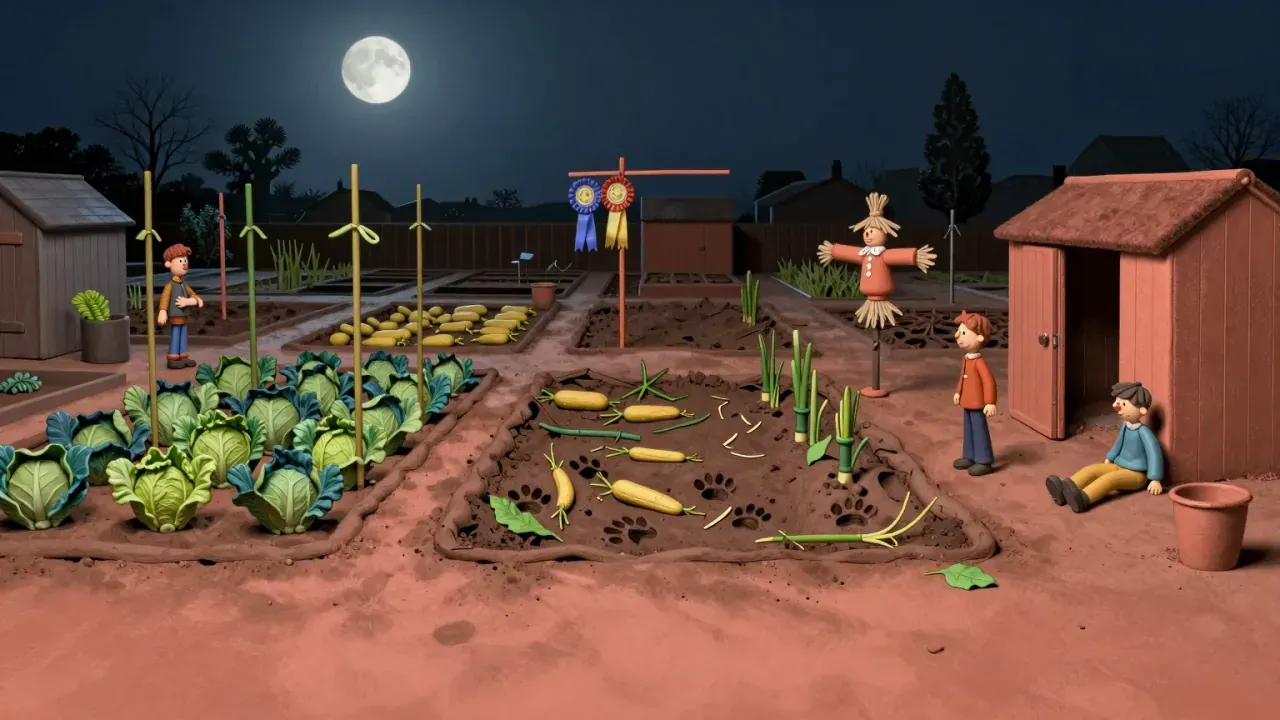
Wallace & Gromit: The Curse of the Were-Rabbit expands the stop-motion duo into a monster-movie parody, following the pair's pest-control business as a mysterious Were-Rabbit starts terrorizing a town's giant-vegetable competition. Directed by Nick Park and Steve Box for Aardman and DreamWorks Animation on a $30 million budget, it grossed $194 million and became the first stop-motion film to win the Academy Award for Best Animated Feature.

13:00

Wallace & Gromit: Vengeance Most Fowl

Nick Park, Merlin Crossingham · 2024

Vengeance Most Fowl brings back Feathers McGraw, the silent penguin villain from The Wrong Trousers, who hijacks Wallace's new robotic garden gnome to rebuild his criminal operation and settle an old score. Nick Park and Merlin Crossingham direct from Mark Burton's screenplay, with Ben Whitehead voicing Wallace in his first feature appearance following Peter Sallis's death. Made by Aardman Animations, the film holds a 100% Tomatometer score, won the inaugural BAFTA for Best Children's and Family Film, and became the BBC's most-watched scripted broadcast since 2002 after its Christmas Day airing.