filmbriefs
Topic

Trauma

What the body keeps after the event, and how the concept spread.

67
in film
13:00
average
871 min
in total
85
across the network
Trauma across the network →
All briefs67
13:00

Bad Timing

Nicolas Roeg · 1980

Nicolas Roeg’s 1980 psychological thriller Bad Timing follows an inspector’s investigation into a woman’s suicide attempt, using non-linear editing and restrained cinematography to dissect the obsessive, destructive relationship between a psychoanalyst and his lover. Set in Vienna and shot by Anthony B. Richmond, it stars Art Garfunkel and Theresa Russell, with Harvey Keitel as the investigator. Adapted by Yale Udoff from an Italian story, the film was controversial on release — rejected by its UK distributor and X-rated in the US — yet won the Toronto International Film Festival People’s Choice Award. Its formal rigour and emotional austerity have secured its status as an arthouse landmark.
13:00

Beasts of No Nation

Cary Joji Fukunaga · 2015

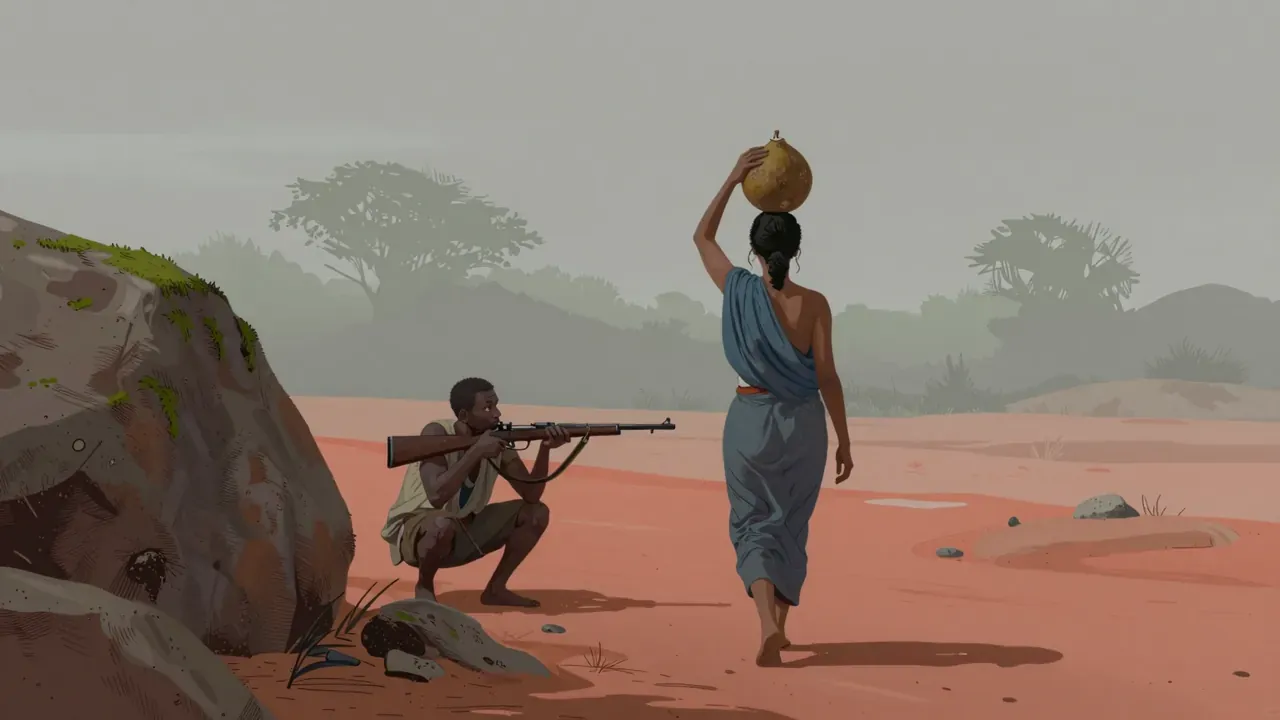
Beasts of No Nation (2015) follows Agu, a West African boy forced into a rebel militia during civil war. Directed and written by Cary Joji Fukunaga, it adapts Uzodinma Iweala’s novel with fidelity to its Krio-inflected voice and narrow psychological focus. Abraham Attah stars alongside Idris Elba as the charismatic, violent Commandant. Shot in Ghana, edited with deliberate duration, and scored with restrained unease, the film avoids spectacle in favour of sustained, intimate horror. It premiered at Venice, where Attah won the Marcello Mastroianni Award, and marked Netflix’s first global feature release.

13:00

Blast of Silence

Allen Baron · 1961

Blast of Silence is a 1961 American neo-noir crime film written, directed by, and starring Allen Baron. Set over Christmas week in New York City, it follows Frankie Bono, a hitman returning to his hometown to carry out a contract killing. Shot on location without permits and scored with stark minimalism, the film leans on atmosphere, silence, and moral ambiguity rather than plot mechanics. Its narration — written by blacklisted Waldo Salt and voiced uncredited by Lionel Stander — adds a layer of literary distance. Though modest in budget and scope, it endures as a precise, unsparing study of alienation and consequence.

13:00

Coup de Grâce

Volker Schlöndorff · 1976

Volker Schlöndorff’s 1976 Coup de Grâce, adapted from Marguerite Yourcenar’s novel and co-written by Margarethe von Trotta, relocates the story from Erich von Lhomond’s first-person account to Sophie von Reval’s silent, searching presence. Set in a Latvian chateau during the 1919 Freikorps campaign, it uses black-and-white cinematography, elliptical editing and muted performances to examine desire, trauma and ideological vacancy amid collapsing empires. Not a conventional war film, it holds violence at a distance and finds its force in omission, restraint and unresolved tension.

13:00

Crash

David Cronenberg · 1996

David Cronenberg’s 1996 adaptation of J.G. Ballard’s novel follows a television producer drawn into a subculture obsessed with the erotic potential of car crashes. Shot with clinical precision by Peter Suschitzky and scored with mechanical restraint by Howard Shore, the film treats trauma, technology and desire as interlocking systems — not metaphors, but conditions. Its performances are muted, its pacing deliberate, its conclusions withheld. It remains a polarising, formally exacting work of arthouse cinema.

13:00

Cría Cuervos

Carlos Saura · 1976

Cría Cuervos (1976), directed by Carlos Saura, follows eight-year-old Ana in the months after her father’s death and her mother’s earlier passing. Set in Madrid during the final days of Franco’s rule, the film moves through memory, fantasy and present-tense reality without clear demarcation. Ana Torrent’s performance anchors a study of childhood consciousness under pressure: guilt, care, silence and imagined agency all coexist in a large, quiet house. Teodoro Escamilla’s restrained cinematography and Federico Mompou’s sparse piano score deepen its atmosphere of suspended time. Though it won the Grand Prix at Cannes, its power lies not in pronouncement but in persistence — in what it refuses to name.

13:00

Dheepan

Jacques Audiard · 2015

A former Tamil Tiger soldier assumes a dead man’s identity to claim asylum in France, posing as husband and father to two strangers. As caretaker of a troubled Paris banlieue, he finds himself drawn back into combat — not on a battlefield, but in stairwells and flats. Jacques Audiard’s Palme d’Or winner treats migration as embodied habit, not political argument.

13:00

Diamonds of the Night

Jan Němec · 1964

Jan Němec’s 1964 debut Diamonds of the Night follows two teenage boys fleeing a train to a concentration camp. With minimal dialogue and radical editing, it immerses the viewer in their physical and psychological disintegration—hunger, memory, hallucination and exhaustion rendered through stark cinematography, tactile sound design and restrained performances. Adapted from Arnošt Lustig’s autobiographical story, it avoids exposition in favour of embodied realism and surreal rupture. Its power lies in what it withholds as much as what it shows.

13:00

Dogfight

Nancy Savoca · 1991

Set over twenty-four hours in San Francisco in November 1963, Dogfight follows Marine Eddie Birdlace (River Phoenix) and waitress Rose Fenny (Lili Taylor) as their tentative connection forms against the backdrop of a cruel 'dogfight' party and his imminent deployment to Vietnam. Directed by Nancy Savoca with naturalistic craft and understated performances, the film locates its power in hesitation, silence, and small, unshowy gestures — not in grand statements or historical exposition.

13:00

Exotica

Atom Egoyan · 1994

Atom Egoyan’s 1994 Canadian drama Exotica unfolds in and around a Toronto strip club, tracing the restrained, overlapping lives of a grieving tax auditor, a dancer, a club owner, and a bird smuggler. Structured like a striptease — withholding, then revealing — it treats the club as ritual space rather than spectacle, using Paul Sarossy’s precise cinematography, Mychael Danna’s layered score, and Susan Shipton’s deliberate editing to explore how trauma reshapes memory, time, and connection. It won Best Canadian Film at TIFF and the Genie for Best Picture.

13:00

Fires on the Plain

Kon Ichikawa · 1959

Kon Ichikawa’s 1959 adaptation of Shōhei Ōoka’s novel follows a tubercular Japanese private abandoned on Leyte in late 1944. Shot in stark black-and-white, it traces his physical and moral dissolution amid starvation, disease and escalating atrocity—not as drama, but as inexorable attrition. With minimal dialogue, sparse music and unflinching realism, it asks what remains of personhood when every boundary—bodily, ethical, linguistic—has been breached.

13:00

Forbidden Games

René Clément · 1952

Set in June 1940 during the fall of France, Forbidden Games follows orphaned five-year-old Paulette as she is taken in by a peasant family and forms a quiet bond with their son Michel. Together they build a secret cemetery for dead animals using stolen crosses, enacting grief through ritual rather than speech. Directed by René Clément with restrained precision, the film observes childhood trauma without sentimentality, relying on Brigitte Fossey’s extraordinary performance and Robert Juillard’s understated cinematography. It won the Golden Lion at Venice, a BAFTA, and an Academy Honorary Award.

13:00

Goke, Body Snatcher from Hell

Hajime Satō · 1968

Goke, Body Snatcher from Hell (1968), directed by Hajime Satō, follows survivors of a plane crash on a deserted island who are hunted by a vampiric alien entity. With minimal exposition and stark visuals, it charts their rapid moral collapse under pressure — betrayals, sacrifices and self-preservation escalate until only two remain, walking across a dead world beneath an orbital fleet. Shunsuke Kikuchi’s score and practical effects reinforce its clinical, allegorical tone.

13:00

Inland Empire

David Lynch · 2006

David Lynch’s 2006 film Inland Empire is a digitally shot, scriptless, three-hour descent into fractured identity, filmed largely by Lynch himself on a handheld Sony camcorder. Laura Dern stars as an actress whose immersion in a cursed film role unravels her sense of self, time, and reality. Shot across Los Angeles and Łódź, Poland, it rejects conventional storytelling in favour of sensory accumulation, repetition, and ontological unease. Though labelled a horror film, its terror is structural — rooted in the instability of perception, memory, and representation. It premiered at Venice, where Lynch received the Golden Lion for Lifetime Achievement, and remains his final feature.

13:00

Insiang

Lino Brocka · 1976

Lino Brocka’s 1976 Insiang, set in Manila’s Tondo slums, follows a young woman’s quiet hardening after rape and betrayal. With Hilda Koronel in her breakthrough role, it uses unadorned realism, tight framing and restrained performance to depict how poverty reshapes morality and kinship. Restored in 2015 and now in the Criterion Collection, it remains a landmark of Philippine arthouse cinema — unsentimental, uncompromising, and structurally precise.

13:00

It Was Just an Accident

Jafar Panahi · 2025

Jafar Panahi’s 2025 Palme d’Or winner follows a group of former Iranian political prisoners who abduct a man they believe is their former torturer — only to find themselves paralysed by doubt, memory, and the sheer, stubborn reality of his humanity. Shot in secret in Iran without official permission, it unfolds across a single night and day, using minimal means to probe profound questions of identity, justice, and the cost of non-vengeance.

13:00

Jo Jo Dancer, Your Life Is Calling

Richard Pryor · 1986

Richard Pryor’s 1986 directorial debut is a biographical drama structured around his near-fatal 1980 freebasing accident. As Jo Jo Dancer lies in a coma, his spirit revisits key episodes — Peoria childhood, early comedy struggles, fame, addiction, and collapse — without offering resolution or redemption. Shot with restrained naturalism by John A. Alonzo and scored sparsely by Herbie Hancock, the film prioritises behavioural realism over dramatic catharsis. Its strengths lie in accumulated detail and psychological consistency; its weaknesses include underdeveloped symbolism and muted engagement with race and systemic constraint. It is a demanding, unresolved, and unmistakably personal work.

13:00

Kapò

Gillo Pontecorvo · 1959

Gillo Pontecorvo’s 1960 war film Kapò follows a teenage Jewish girl’s descent into moral compromise as a kapo in a Nazi concentration camp. Shot in Yugoslavia with an Italian-French-Yugoslav co-production team, it was among the first narrative films to depict camp life with graphic realism. Though criticised for melodrama, miscasting, and aesthetic missteps, its ambition — to chart how survival reshapes conscience — remains ethically urgent. Susan Strasberg stars, with Emmanuelle Riva, Laurent Terzieff, and Didi Perego in supporting roles.

13:00

Life During Wartime

Todd Solondz · 2009

Todd Solondz’s 2009 film revisits the Jordan family from Happiness and Welcome to the Dollhouse with new actors and a bleaker, more metaphysical tone. Trish raises her children while hiding her imprisoned ex-husband Bill’s crime; Bill returns seeking absolution he won’t receive; Joy drifts between visions of dead men. Edward Lachman’s restrained cinematography and Solondz’s unsparing script refuse catharsis, treating trauma, accountability, and time as layered, unresolved conditions rather than narrative problems to solve.

13:00

Madonna of the Seven Moons

Arthur Crabtree, Roland Pertwee, Margery Lawrence · 1945

Madonna of the Seven Moons (1945) is a Gainsborough Pictures drama starring Phyllis Calvert as Maddalena Labardi, a woman whose childhood trauma manifests as a second personality. Set across three decades in Italy, it uses stark visual contrasts, controlled performances, and a tightly wound script to enact — not explain — dissociation. Jack E. Cox’s cinematography and Hans May’s score reinforce its rhythmic, ceremonial structure. Though dated in its psychology and reductive in its portrayal of marginal figures, it remains a lucid, self-contained example of British studio melodrama at its most assured.

13:00

Meghe Dhaka Tara

Ritwik Ghatak · 1960

Ritwik Ghatak’s 1960 Bengali drama Meghe Dhaka Tara follows Nita, a young refugee woman in Calcutta whose relentless self-sacrifice sustains her displaced family until her body gives way. Shot in muted tones by Dinen Gupta, scored by Jyotirindra Moitra, and anchored by Supriya Devi’s restrained performance, it frames Partition not as history but as lived syntax — one that assigns value, defers futures, and naturalises extraction. Its power lies in accumulation, not climax.

13:00

Monsoon Wedding

Mira Nair · 2001

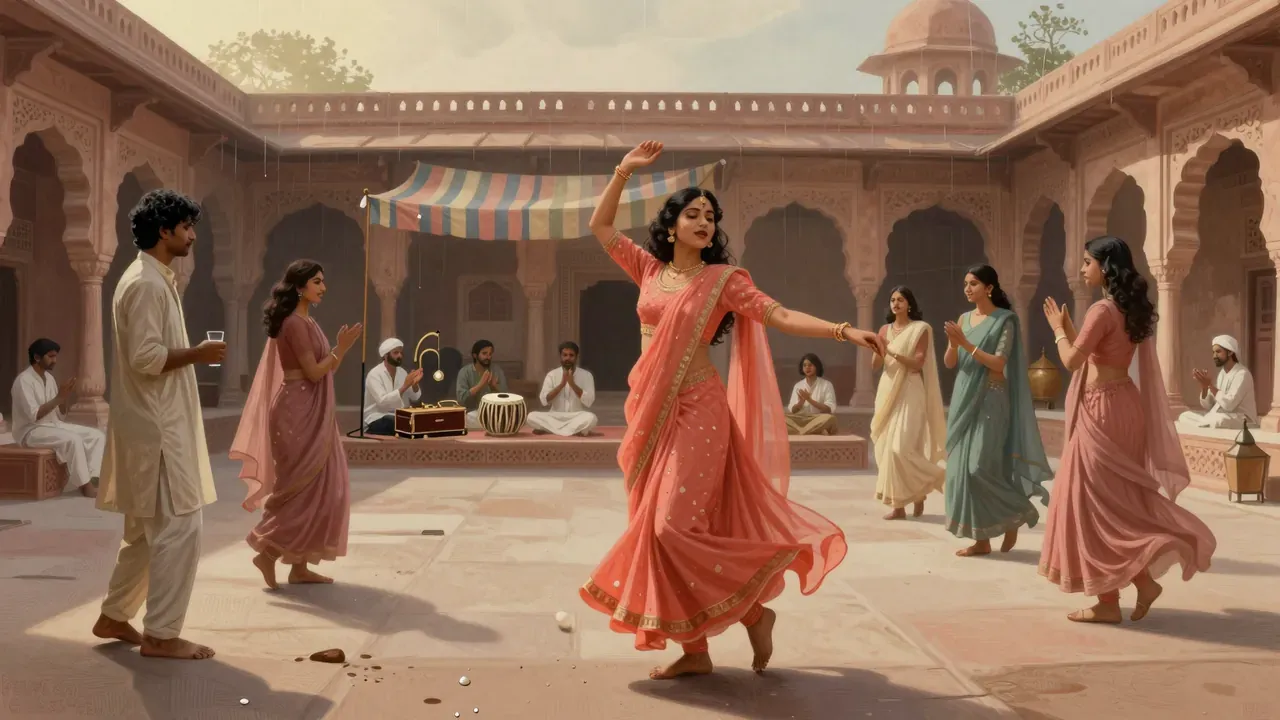
Set over four days in Delhi, Monsoon Wedding follows the Verma family as they prepare for their daughter Aditi’s arranged marriage. Amidst the chaos of planning, buried tensions surface — financial strain, generational rifts, unspoken abuse, and quiet acts of love. Directed by Mira Nair and written by Sabrina Dhawan, the film balances Bollywood energy with arthouse restraint, using ensemble storytelling, naturalistic performances, and layered sound design to explore how family, tradition, and healing operate in real time.

13:00

Mouchette

Robert Bresson · 1967

Robert Bresson’s 1967 adaptation of Georges Bernanos’s novel follows a teenage girl’s silent, unrelenting attrition in a rural French village. Using non-professional actors, sparse dialogue, and Ghislain Cloquet’s restrained cinematography, the film renders suffering as routine, not event — culminating in a final act of physical surrender that feels less like despair than exhaustion made visible.

13:00

Mudbound

Dee Rees · 2017

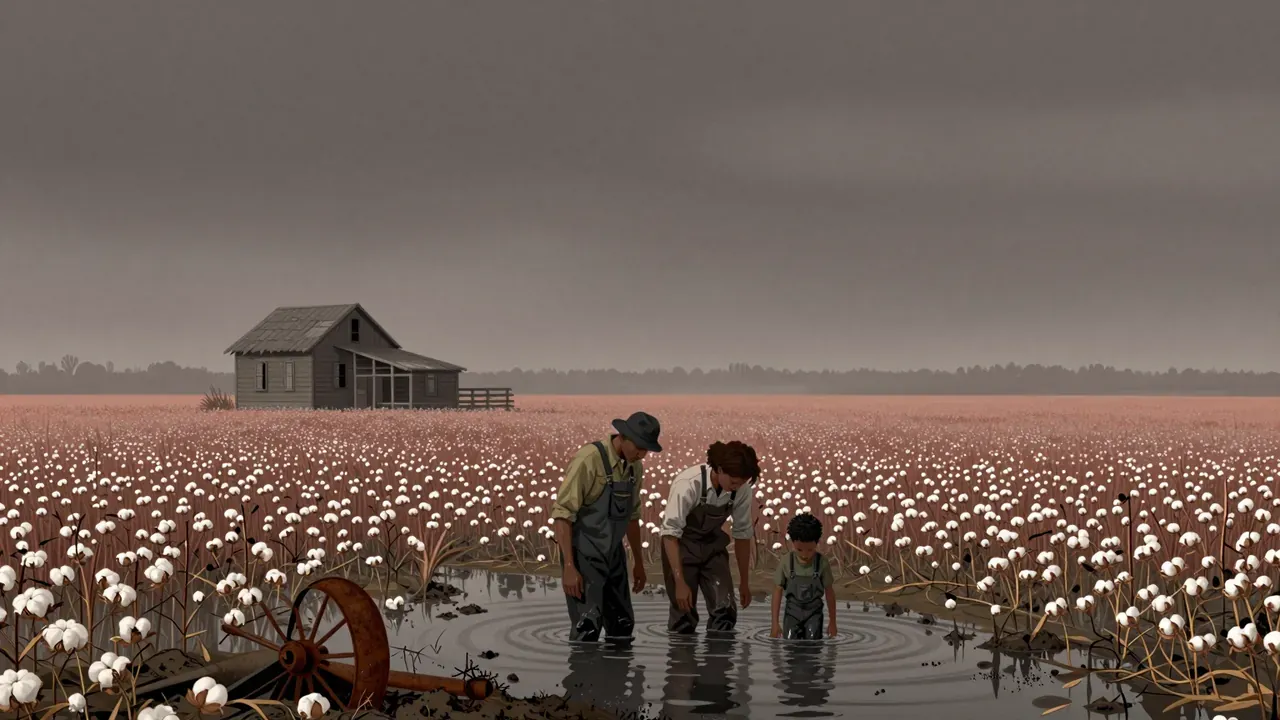
Mudbound is a 2017 historical drama directed by Dee Rees, adapted from Hillary Jordan’s novel. Set in post-war rural Mississippi, it follows two families — white landowners and Black tenant farmers — whose lives intersect amid poverty, racism and shared war trauma. With Rachel Morrison’s grounded cinematography and restrained performances, it renders systemic injustice as environmental fact rather than moral allegory.

13:00

Muriel

Alain Resnais · 1963

Alain Resnais’s 1963 film Muriel follows a widow, her traumatised stepson, and two visitors over fifteen fragmented days in Boulogne-sur-Mer. Shot in static colour with rigorous editing and sparse dialogue, it explores memory, guilt, and the unspoken legacy of the Algerian War — not through exposition, but through architectural detail, temporal disjunction, and withheld emotion.

13:00

Night Games

Mai Zetterling · 1966

A 1966 Swedish drama directed by Mai Zetterling, Night Games traces a man’s return to his childhood home and the memories it unleashes — particularly of his charismatic, neglectful mother and the sexual and emotional confusions of adolescence. Shot by Rune Ericson and scored by Georg Riedel and Jan Johansson, it uses restrained visuals and elliptical editing to render memory as sensory residue rather than narrative. Starring Ingrid Thulin and Jörgen Lindström, it avoids moral framing, opting instead for psychological fidelity. Controversial on release, it remains a tightly controlled study of inherited trauma.

13:00

Not a Pretty Picture

Martha Coolidge · 1976

Martha Coolidge’s 1976 debut is a rigorously constructed docudrama that reconstructs her teenage rape through dramatisation, direct address, and interviews. Shot on 16mm, edited by Coolidge herself, and scored with restraint, it treats memory as contested and testimony as relational—not cathartic, but constitutive.

13:00

Onibaba

Kaneto Shindō · 1964

Set in 14th-century Japan amid civil war, Onibaba follows two unnamed women who kill stray soldiers in a vast reed field to trade armour for food. When a masked samurai dies in their pit, the older woman takes his hannya mask — and finds it will not come off. Kaneto Shindō’s 1964 film uses stark black-and-white cinematography, minimal dialogue, and physical performance to explore moral erosion, interdependence, and the bodily cost of fear.

13:00

Port of Call

Ingmar Bergman · 1948

Set in postwar Gothenburg, Port of Call follows Berit, a young woman recovering from a suicide attempt, and Gösta, a sailor choosing to stay on land. Their relationship unfolds without melodrama, anchored in small gestures, unspoken histories, and the quiet persistence of daily life. Shot by Gunnar Fischer and scored sparingly by Erland von Koch, it is Bergman’s first sustained engagement with psychological realism—grounded, restrained, and resolutely unmetaphorical.

13:00

Ratcatcher

Lynne Ramsay · 1999

Lynne Ramsay’s 1999 debut follows James Gillespie, a Glaswegian boy haunted by an accidental death amid the grime and quiet desperation of a 1970s council estate. Shot with tactile precision and edited with deliberate slowness, the film privileges sensory experience over exposition, rendering poverty, grief, and nascent tenderness through image, sound, and restrained performance — not psychology or plot.

13:00

Rusty Knife

Toshio Masuda · 1958

A 1958 Nikkatsu crime drama starring Yūjirō Ishihara as an ex-convict resisting vengeance while a district attorney pursues the same syndicate. Directed by Toshio Masuda with tight, low-key noir aesthetics and a script by Shintarō Ishihara, it foregrounds moral exhaustion over action, ambiguity over catharsis.

13:00

Sentimental Value

Joachim Trier · 2025

Joachim Trier’s 2025 drama Sentimental Value follows sisters Nora and Agnes as their estranged father Gustav returns to Oslo to film a project rooted in their grandmother’s wartime trauma. With Renate Reinsve, Stellan Skarsgård and Inga Ibsdotter Lilleaas, it traces how grief, ambition and memory circulate through performance, architecture and silence—without offering catharsis or easy resolution.

13:00

Shame

Ingmar Bergman · 1968

Ingmar Bergman’s 1968 Shame follows violinist-turned-farmer couple Jan and Eva Rosenberg as civil war invades their isolated Swedish island life. With no named factions or ideologies, the film traces how violence corrodes language, intimacy, and moral coherence — not through spectacle, but through withheld gestures, miniature war effects, and Sven Nykvist’s bleached, claustrophobic cinematography. Liv Ullmann and Max von Sydow perform with devastating restraint, embodying shame not as emotion but as structural failure.

13:00

Sundays and Cybele

Serge Bourguignon · 1962

Sundays and Cybele (1962), directed by Serge Bourguignon, follows Pierre, a psychologically wounded French Indochina War veteran, and Cybèle, an eleven-year-old girl abandoned by her family and confined to a Parisian boarding school. Their Sunday meetings in Ville-d’Avray form a fragile, wordless bond — tender, unorthodox, and ultimately unsustainable. Shot by Henri Decaë and scored by Maurice Jarre, the film avoids exposition and moral framing, trusting gesture, rhythm and absence to convey grief, legibility and the limits of care. It won the 1963 Academy Award for Best International Feature Film.

13:00

The Bridge

Bernhard Wicki · 1959

A 1959 West German war drama following seven teenage boys drafted into the Volkssturm during the final days of World War II. Assigned to defend a strategically irrelevant bridge near their hometown, they hold their position without orders, without support, and ultimately without survival. Directed by Bernhard Wicki from a novel by Gregor Dorfmeister, the film avoids rhetoric in favour of stark cause-and-effect, using restrained performances, muted cinematography, and deliberate pacing to convey the futility and horror of ideological surrender to youth.

13:00

The Celebration

Thomas Vinterberg · 1998

Thomas Vinterberg’s 1998 debut, the first Dogme 95 film, follows a Danish family’s birthday gathering where a son publicly accuses his father of childhood sexual abuse. Shot on Mini-DV with no artificial lighting or post-sync sound, it uses radical formal restraint to focus on performance, gesture and the banality of complicity. The film won the Cannes Jury Prize and numerous Nordic and European awards.

13:00

The Emperor's Naked Army Marches On

Kazuo Hara · 1987

Kazuo Hara’s 1987 documentary follows Kenzō Okuzaki, a 62-year-old Japanese veteran, as he confronts former comrades over the unexplained deaths of two soldiers in New Guinea during the Second World War. Using unobtrusive, long-take observation, the film records Okuzaki’s aggressive, often physically coercive interviews, his indictment of the Shōwa Emperor, and fragmented, contradictory testimonies about starvation, execution, and cannibalism. It ends with an epilogue detailing Okuzaki’s imprisonment for attempted murder—a stark contrast to the impunity of those he pursued.

13:00

The Face of Another

Hiroshi Teshigahara · 1966

Hiroshi Teshigahara’s 1966 adaptation of Kōbō Abe’s novel follows an engineer who, disfigured by industrial accident, receives a lifelike prosthetic mask. As he lives a double life — one masked, one bandaged — his sense of self fractures. Interwoven is a parallel story of a woman scarred by war. With Tōru Takemitsu’s sparse score, Hiroshi Segawa’s austere cinematography, and Arata Isozaki’s glass-walled sets, the film explores identity as social contract, not essence. It is a rigorous, unsettling inquiry into visibility, recognition, and the violence of normalcy.

13:00

The Fisher King

Terry Gilliam · 1991

Terry Gilliam’s 1991 film follows a disgraced radio host who seeks redemption by helping a delusional homeless man haunted by visions of the Red Knight. Built around Robin Williams’s layered performance as Parry and Jeff Bridges’s restrained turn as Jack, it blends New York realism with Arthurian myth to explore grief, class, and the slow, non-linear work of healing. Though uneven in its framing devices, its emotional honesty and commitment to psychological fidelity make it a singular, unsentimental portrait of care.

13:00

The Idiot

Akira Kurosawa · 1951

Akira Kurosawa’s 1951 The Idiot transposes Dostoevsky’s novel to post-war Hokkaido, following Kameda — a gentle, epileptic man returning home — as he becomes entangled with Taeko, a woman discarded by her wealthy patron, and Akama, a volatile heir. Shot in stark black-and-white and severely cut by Shochiku from its original 265-minute form, the film relies on restraint: minimal music, extended silences, performances built on micro-gestures. Its moral force lies in what it refuses — explanation, catharsis, resolution — making it a demanding but deeply resonant portrait of integrity in a compromised world.

13:00

The Night Porter

Liliana Cavani · 1974

Liliana Cavani’s 1974 art film stars Dirk Bogarde and Charlotte Rampling as a former SS officer and a concentration camp survivor who reunite in postwar Vienna. Set almost entirely in a grand but decaying hotel, it explores power, memory, and eroticised dependency through restrained performances, Alfio Contini’s underlit cinematography, and Franco Arcalli’s elliptical editing. It avoids exposition and historical context, focusing instead on behavioural recurrence and moral ambiguity.

13:00

The Passion of Anna

Ingmar Bergman · 1969

Set on Fårö in 1969, Ingmar Bergman’s The Passion of Anna traces the slow collapse of four isolated people — Andreas, Anna, Eva, and Elis — bound by grief, deception, and unspoken violence. Shot by Sven Nykvist and performed with austere precision by Max von Sydow and Liv Ullmann, it uses fractured chronology, direct-to-camera interviews, and recurring images of cruelty to examine how moral failure migrates through relationships. Not a sequel but a companion to Shame, it offers no catharsis — only stark articulation.

13:00

The Piano Teacher

Michael Haneke · 2001

Michael Haneke’s 2001 adaptation of Elfriede Jelinek’s novel follows Erika Kohut, a repressed piano professor in Vienna whose rigid control over herself and others unravels when she fixates on a younger student. Starring Isabelle Huppert and shot by Christian Berger, it is a formally austere, emotionally unsparing study of power, class and the body as archive of constraint.

13:00

The Prince of Tides

Barbra Streisand · 1991

Barbra Streisand’s 1991 adaptation of Pat Conroy’s novel follows South Carolina teacher Tom Wingo (Nick Nolte) as he travels to New York to help his suicidal twin sister, guided by psychiatrist Susan Lowenstein (Streisand). Through therapy sessions and flashbacks, buried family trauma surfaces — violence, repression, and the long shadow of the Lowcountry. Though the film foregrounds romance over the novel’s sibling-centred depth, its power lies in restrained performances, Stephen Goldblatt’s naturalistic cinematography, and its unwavering focus on how silence shapes identity.

13:00

The Spirit of the Beehive

Víctor Erice · 1973

Víctor Erice’s 1973 debut is a quietly devastating portrait of six-year-old Ana in a remote Castilian village in 1940. With minimal dialogue and luminous, restrained cinematography by Luis Cuadrado, it traces her inner life as she navigates familial distance, the lingering trauma of civil war, and a growing fascination with Frankenstein’s monster — a figure she comes to see as a spirit she might summon. Set against barren landscapes and honey-coloured light, the film uses childhood perception to evoke repression, memory, and resilience without stating them outright.

13:00

The Tin Drum

Volker Schlöndorff · 1979

Volker Schlöndorff’s 1979 adaptation of Günter Grass’s novel follows Oskar Matzerath, a boy who stops growing at age three and uses his tin drum and glass-shattering scream to navigate Danzig through Nazism and war. Shot in Italian by Jadran Film, with cinematography by Igor Luther and music by Maurice Jarre, it won the Palme d’Or and the Academy Award for Best International Feature Film. Its power lies in sustained allegory, not exposition — a rigorous, unsentimental reckoning with complicity, memory and the body as historical archive.

13:00

The Unknown

Tod Browning · 1927

Tod Browning’s 1927 silent horror stars Lon Chaney as Alonzo, a carnival performer who hides his arms to win the affection of Nanon (Joan Crawford). When she develops a phobia of hands, his deception becomes essential — then unsustainable. He chooses amputation to preserve the illusion, only to discover too late that she has moved on. With stark cinematography by Merritt B. Gerstad and ruthless narrative economy, the film charts obsession as a series of irrevocable choices, not a spiral of madness.

13:00

TINY: The Life of Erin Blackwell

Martin Bell · 2016

TINY: The Life of Erin Blackwell is a 2016 documentary directed by Martin Bell, following Erin from age eleven into her thirties across twenty-five years of intermittent filming in Seattle. Shot and edited by Bell with producer Mary Ellen Mark, it uses no voiceover, no score, and no external commentary — relying solely on accumulated footage to trace a life shaped by poverty, resilience, and time itself.

13:00

Twin Peaks: Fire Walk with Me

David Lynch · 1992

David Lynch’s 1992 prequel to Twin Peaks focuses on Laura Palmer’s final days, stripping away the TV series’ whimsy to confront trauma, abuse, and institutional failure with unflinching rigour. Sheryl Lee’s performance anchors a film defined by dissonant sound, claustrophobic framing, and narrative austerity. Though polarising on release, it has been re-evaluated as a major work of psychological horror and arthouse cinema.

13:00

Violence at Noon

Nagisa Ōshima · 1966

Violence at Noon (1966), directed by Nagisa Ōshima, follows Shino, a housemaid who survives a rape-murder only to confront the perpetrator — Eisuke — years later, alongside his wife Kura, a former schoolteacher who married him knowing his crimes. Through fractured flashbacks and over two thousand single shots, the film traces how violence reverberates across time, memory, and social silence. It refuses psychological explanation or legal closure, instead insisting on the entanglement of survival, testimony, and complicity in a rigidly hierarchical postwar Japan.

13:00

Antichrist

Lars von Trier · 2009

Lars von Trier’s 2009 film Antichrist stars Willem Dafoe and Charlotte Gainsbourg as a grieving couple who retreat to a forest cabin, only to confront psychological disintegration, theological dread, and nature’s indifference. Shot digitally in Germany with precise, unrelenting craft, it divides itself into symbolic chapters and refuses narrative or emotional release. Though polarising and widely debated for its imagery and themes, it remains a benchmark of arthouse extremity — technically controlled, thematically uncompromising, and ethically demanding.

13:00

A Tale of Two Sisters

Kim Ji-woon · 2003

A teenage girl returns home from a mental institution to her father’s secluded country house, where her younger sister and new stepmother await. As tensions mount and strange events unfold, the line between haunting and hallucination blurs — until the film reveals that the horror resides not in the house, but in the mind’s desperate, self-preserving fictions.

13:00

Bombay

Mani Ratnam · 1995

Mani Ratnam’s 1995 Tamil drama Bombay follows a Hindu journalist and a Muslim schoolteacher who marry, raise twin sons, and build a life in Bombay — until the 1992–93 communal riots tear their world apart. Shot by Rajiv Menon and scored by A. R. Rahman, it anchors large-scale tragedy in small, tactile details: shared meals, childhood routines, the weight of names. Though criticised for narrative simplifications and political abstraction, its enduring power lies in its unwavering focus on love as labour, harmony as habit, and survival as quiet persistence.

13:00

Happiness

Todd Solondz · 1998

Todd Solondz’s 1998 ensemble film follows three sisters and their circle across intersecting stories of loneliness, repression and violation. Shot by Maryse Alberti and scored by Robbie Kondor, it treats pedophilia, obscene phone calls, marital drift and suicidal despair with unblinking, tonally level observation. Its power lies in accumulation, not climax — in the weight of unspoken things, the silence after a confession, the banality of moral collapse. It won the FIPRESCI Prize at Cannes and the National Board of Review’s Top Ten Films award, and was released unrated after surrendering its NC-17 classification.

13:00

Hiroshima mon amour

Alain Resnais · 1959

Alain Resnais’ 1959 debut, written by Marguerite Duras, traces a fleeting encounter between a French actress and a Japanese architect in Hiroshima. Through tightly composed images, fragmented flashbacks, and restrained performances, it explores how personal and historical trauma intertwine — not as metaphor, but as embodied experience. Shot in France and Japan, edited with surgical precision, and scored with near-silence, it treats love, memory, and forgetting as inseparable forces.

13:00

I Saw the Devil

Kim Ji-woon · 2010

Kim Ji-woon’s 2010 South Korean psychological thriller follows an NIS agent who hunts his fiancée’s murderer not to kill him, but to prolong his suffering. With surgical precision in writing, performance, and cinematography, it charts a descent where revenge becomes indistinguishable from dependency. Its power lies in restraint, not excess—and its conclusion offers no absolution, only exhaustion.

13:00

Peeping Tom

Michael Powell · 1960

Michael Powell’s 1960 Peeping Tom follows Mark Lewis, a shy focus puller and amateur filmmaker who murders women while recording their final expressions of terror. Written by cryptographer Leo Marks and shot by Otto Heller, it treats voyeurism as method, not motive — embedding the camera in the narrative as limb, lens, and legacy. Its clinical precision, psychological rigour, and formal restraint shocked contemporary critics but now mark it as a foundational work of British arthouse horror.

13:00

Sweeney Todd: The Demon Barber of Fleet Street

Tim Burton · 2007

Tim Burton’s 2007 adaptation of Sweeney Todd condenses Stephen Sondheim’s stage musical into a tightly wound Gothic drama. Starring Johnny Depp and Helena Bonham Carter, it follows a vengeful barber and his pie-making accomplice in a blood-soaked, desaturated Victorian London. With Dariusz Wolski’s cinematography, Dante Ferretti’s production design, and a ruthlessly edited score, it sustains a tone of operatic despair — prioritising psychological intensity over narrative breadth or musical spectacle.

13:00

The Cranes Are Flying

Mikhail Kalatozov · 1957

Released in 1957 by Mosfilm, Mikhail Kalatozov’s The Cranes Are Flying follows Veronika, a young Moscow woman whose life fractures after the Nazi invasion. Her lover Boris goes to war, her parents die in an air raid, and she is pressured into marriage with his predatory cousin Mark. Through trauma, silence, and small acts of remembrance—the squirrel toy, Boris’s hidden note—the film charts her slow, unheroic return to life. It won the Palme d’Or in 1958 and remains a landmark of Soviet cinematic humanism.
13:00

The Hurt Locker

Kathryn Bigelow · 2008

Kathryn Bigelow’s 2008 war thriller follows a U.S. Army bomb disposal team in Iraq, using procedural fidelity and sensory intensity to convey the physical and psychological toll of sustained combat. Written by Mark Boal from embedded experience, it prioritises immediacy over explanation, with Barry Ackroyd’s cinematography and Chris Innis’s editing sustaining relentless, close-quarters tension. Though acclaimed for its craft and awarded six Oscars including Best Picture and Best Director, its narrow focus has drawn criticism from veterans for omitting political and cultural dimensions of the conflict.

13:00

Come and See

Elem Klimov · 1985

Elem Klimov's 1985 account of the Nazi destruction of Belarusian villages follows a teenage partisan recruit, played by Aleksei Kravchenko, through a descent that the director shot in sequence and largely with non-actors. Built from survivor testimony and a Belarusian novel, and delayed for years by Soviet censors who found the script too raw, it remains one of the starkest war films made anywhere.

13:00

Flee

Jonas Poher Rasmussen · 2021

Jonas Poher Rasmussen interviews a friend given the alias Amin Nawabi about fleeing Afghanistan as a child, animating every session so Amin can finally correct the official story he told Danish authorities for decades. Archival footage of the Soviet-Afghan war anchors the drawn reconstructions in verifiable history.

13:00

Grave of the Fireflies

Isao Takahata · 1988

Isao Takahata's 1988 adaptation of Akiyuki Nosaka's semi-autobiographical story follows siblings Seita and Setsuko trying to survive the final months of the Pacific War after the firebombing of Kobe and their mother's death. Takahata's first film for Studio Ghibli, it opens by revealing Seita is already dead and builds the rest of its account around a specific, unheroic failure rather than a rescue.

13:00

Raging Bull

Martin Scorsese · 1980

Martin Scorsese's 1980 film adapts former middleweight champion Jake LaMotta's own memoir into a study of a man whose jealousy and temper wreck his marriage and his relationship with his brother and manager Joey at the same rate his boxing career rises and falls. Shot in black and white, partly because research showed period boxing gloves came in too narrow a range of colours to justify colour film, and built around a physical transformation in which Robert De Niro gained roughly 60 pounds to play LaMotta's later years, the film returned only a modest $23.4 million against its $18 million budget on release but later won Oscars for De Niro's performance and Thelma Schoonmaker's editing.

13:00

The Deer Hunter

Michael Cimino · 1978

The Deer Hunter follows three steelworkers from a Russian-American mill town through a wedding, a hunting trip, the Vietnam War, and its long aftermath. Michael Cimino's film, shot partly in Thailand and built around Robert De Niro, Christopher Walken and John Savage, uses an unusually long, unhurried domestic opening to set up a war sequence built on captivity and Russian roulette, then spends its final third on men who came home changed in different, irreversible ways.

13:00

The Shawshank Redemption

Frank Darabont · 1994

Frank Darabont's 1994 adaptation of Stephen King's novella follows banker Andy Dufresne through nearly two decades in a corrupt Maine prison, and his friendship with fellow inmate Red. A commercial disappointment on release, it became one of the most rewatched and highly rated American films through home video, television and word of mouth.

13:00

Vertigo

Alfred Hitchcock · 1958

Alfred Hitchcock's 1958 film follows Scottie Ferguson, a retired police detective with a crippling fear of heights, hired to trail a friend's wife who believes she is possessed by a dead ancestor. What begins as surveillance turns into obsession, and after a death he could not prevent, Scottie tries to remake a second woman into the image of the first. Shot by Robert Burks with a spiralling title-sequence effect and scored by Bernard Herrmann, it earned back roughly three times its $2.5 million budget on release and has since climbed steadily in critical standing, unseating Citizen Kane at the top of one long-running critics' poll.