The shape of the story
Bombay is a Tamil-language drama set in Bombay before and during the 1992–93 communal riots, centring on a Hindu man and a Muslim woman whose marriage and family life are ruptured by sectarian violence. Mani Ratnam frames it not as a political tract but as a domestic story — one about love, parenthood, and quiet coexistence — that becomes inseparable from its historical moment. The film attempts to hold two things at once: the ordinary texture of daily life across religious lines, and the sudden, brutal collapse of that ordinariness when ideology floods the streets. It treats interfaith marriage not as an abstract ideal but as a lived, fragile practice — raising twin sons with both Hindu and Muslim names, celebrating Eid and Diwali in the same flat, relying on shared language and routine rather than doctrine. Ratnam’s stated aim was ‘communal harmony’ not as slogan but as habit — something built in kitchens and school runs, then tested in fire and smoke. The film does not ask whether harmony is possible, but how it unravels, and what remains after the rubble settles.
The look of it
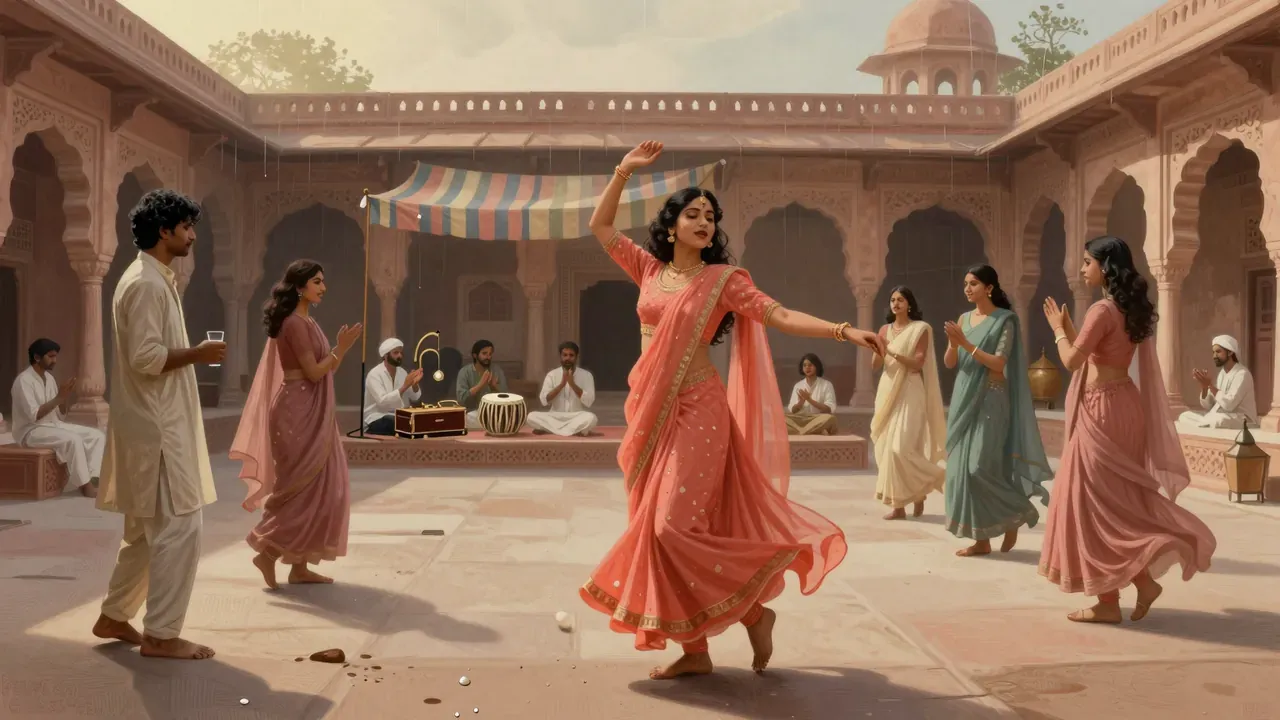
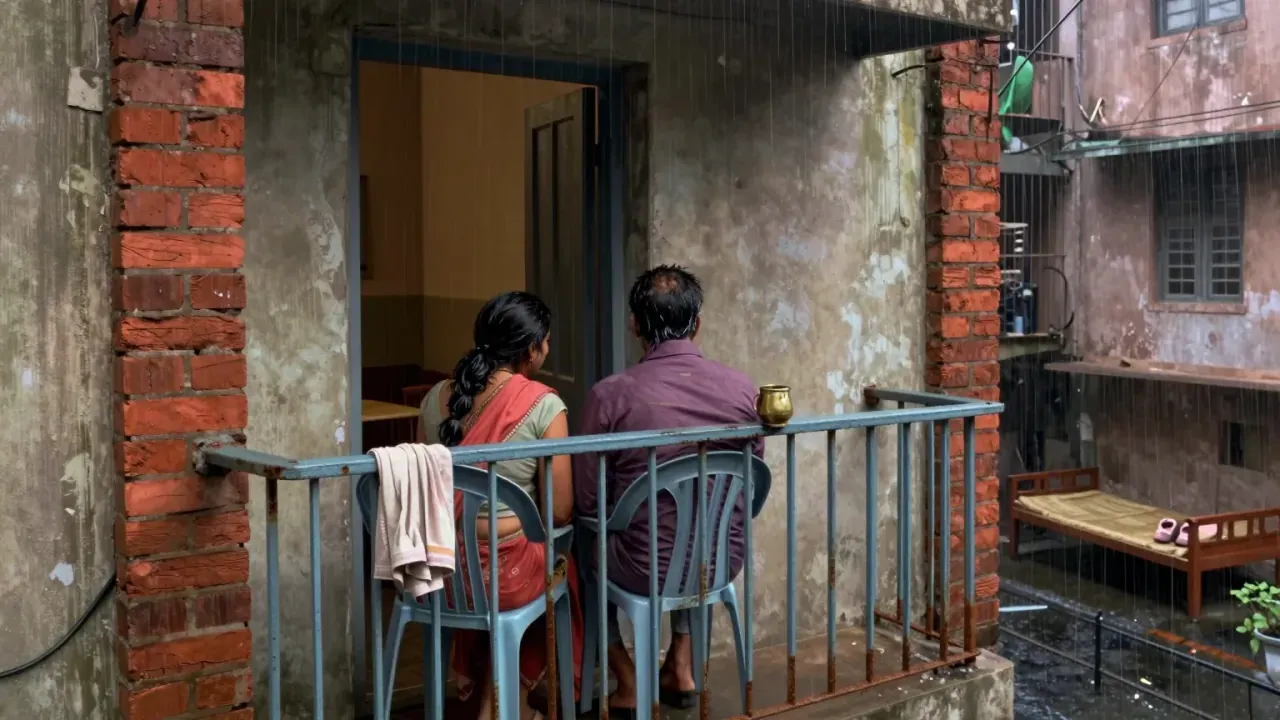
The story follows Shekhar Pillai and Shaila Banu from courtship through marriage, parenthood, and catastrophe, structured in three clear phases: pre-riot domesticity, the first wave of unrest in December 1992, and the deadlier January 1993 escalation. Arvind Swamy and Manisha Koirala carry the emotional weight with restraint — Swamy’s quiet intensity, Koirala’s watchful tenderness — while Nassar and Kitty, cast against their own faiths as the fathers, lend moral gravity without declamation. Rajiv Menon’s cinematography sustains a luminous, rain-slicked realism: interiors glow with warm lamplight, exteriors shimmer under monsoon skies, and the riots themselves are rendered in tight, disorienting close-ups — not spectacle but suffocation. Suresh Urs’s editing avoids montage; instead, it holds on faces mid-collapse, on hands gripping doorframes, on children’s shoes abandoned mid-street. A. R. Rahman’s score weaves qawwali, Carnatic motifs, and synth textures into a soundscape that feels both rooted and urgent — never illustrative, always atmospheric.
What sticks
What lands most firmly is the film’s domestic architecture — the way it builds intimacy through small, unremarkable acts: Shekhar folding laundry while Shaila braids her hair, the twins learning to say ‘Amma’ and ‘Appa’ in both languages, Narayana Pillai tentatively offering tea to Basheer in the apartment kitchen. These moments do not argue for tolerance; they assume it, then show how easily it can be revoked. The riot sequences land not through scale but through proximity: a neighbour’s voice turning hostile mid-sentence, a child’s toy left burning in a doorway, the sound of glass shattering behind a locked door. The final human chain across the street works because it emerges from exhaustion, not triumph — a collective intake of breath after prolonged holding. Rahman’s soundtrack lands with equal force: ‘Kannalane’ is not a love song but a lullaby made cinematic, its melody returning like memory; ‘Uyire’ functions less as theme music than as sonic scaffolding for grief. These elements cohere because they refuse abstraction — every note, cut, and glance stays anchored in the body, the home, the street.
Where it slips
What does not land is the film’s attempt to resolve its central trauma through narrative closure. The reunion of Kabir and Kamal feels structurally necessary but emotionally thin — the boys reappear without bearing visible marks of what they endured, their separation and recovery sketched rather than inhabited. The political framing also falters in places: the demolition of the Babri Masjid appears only in newspaper clippings, a choice dictated by censorship but one that flattens cause into caption. Some supporting characters — particularly the extremist mob leaders — remain functionally anonymous, their motives unexamined beyond caricatured rage. The film’s insistence on ‘positive harmony’ occasionally strains against its own material: the deaths of Narayana, Basheer, and his wife happen off-screen in a single explosion, their absence registered more as plot pivot than emotional rupture. And while the casting of Nassar and Kitty as opposing patriarchs is conceptually bold, their performances lean toward solemnity over specificity — their reconciliation feels earned by narrative need rather than dramatic logic.
What it’s really about
The themes that matter are inheritance and erasure — not just of religion or name, but of habit, gesture, and silence. The film treats identity as cumulative: Kabir Narayan and Kamal Basheer are not hybrids but whole persons shaped by two lineages, their names a daily act of remembrance. It treats secularism not as neutrality but as active maintenance — the work of choosing which festivals to mark, which prayers to whisper, which stories to tell at bedtime. The riots expose how quickly public space can become hostile terrain, but the film’s deeper concern is how private space — the flat, the schoolroom, the train platform — becomes a site of quiet resistance. It also interrogates journalistic responsibility: Shekhar does not report the riots as observer but intervenes as citizen, organising peace marches not from principle alone but from paternal terror. The film’s most persistent theme is time — the six years of ordinary life before violence, the minutes of chaos during it, and the long, uncinematic aftermath of rebuilding. That duration is where the film’s politics reside: not in slogans, but in the stubborn repetition of normalcy.
Who it’s for
This film is for viewers who value sustained emotional realism over narrative efficiency, who attend to how light falls on a wall or how a silence thickens before speech. It rewards patience with detail — the texture of a sari fold, the rhythm of Tamil and Urdu syllables overlapping in domestic argument, the way Rahman’s strings swell beneath a child’s cry. It is not for those who require clear moral binaries or cathartic justice: the perpetrators go unnamed, the institutions unchallenged, the grief unresolved beyond mutual embrace. Those seeking historical analysis of the Bombay riots will find only implication, not exposition. Viewers uncomfortable with extended scenes of parental anguish or with children placed in direct peril may find the second half difficult. The film assumes familiarity with South Asian urban life — its rhythms, hierarchies, and unspoken codes — and does not pause to translate. Its power lies in accumulation, not explanation; its audience must be willing to sit inside its silences.
Is it worth your time?
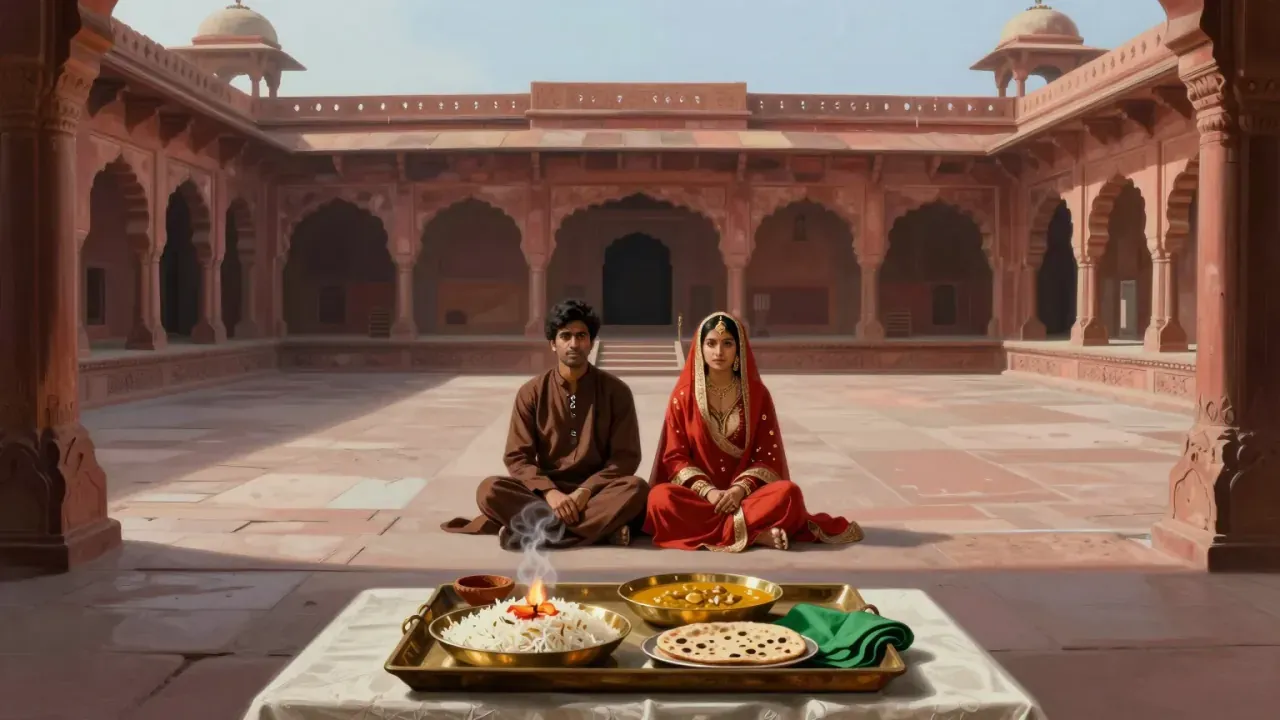
Yes, it is worth your evening — not as diversion, but as immersion. Its 141 minutes pass with the weight and pace of lived time: slow where it needs to be, abrupt where violence intrudes. You leave with the sensory imprint of rain on concrete, the echo of a lullaby, the image of two grandfathers feeding twins from the same plate. Those who object will say it is too earnest, too didactic, too tied to a specific political moment — but its strength is precisely that anchoring, not despite it. Change the verdict? Only if you reject the premise that domestic life is political, or if you demand that films about trauma offer solutions rather than witness. It does not persuade; it remembers. And in doing so, it insists that remembering — precisely, tenderly, without ornament — is itself an act of resistance.