The coat they shed
Diamonds of the Night is Jan Němec’s first feature film, a Czechoslovak drama released in 1964, adapted from Arnošt Lustig’s semi-autobiographical story ‘Darkness Has No Shadow’. It attempts to render the interior life of two teenage boys escaping a train bound for a concentration camp—not as historical reconstruction, but as a sustained sensory and psychological immersion. The film does not narrate survival; it enacts disorientation, hunger, time distortion, and the collapse of memory into hallucination. Its ambition is structural and physiological: to make the viewer feel the weight of the coat marked ‘KL’, the sting of ill-fitting shoes, the lag between thought and action under extremity. It avoids exposition, moral framing or character exposition. There are no names, no backstories beyond what surfaces in fragmented recollection—only bodies moving through forest, mud and silence. The film treats trauma not as a subject to be explained, but as a condition of perception itself, one that fractures chronology and blurs the line between waking, remembering and imagining. It is less about what happens than how consciousness holds on, frays, and reassembles under duress.
The look of it
The story unfolds across 67 minutes with minimal dialogue, relying instead on rhythm, gesture, sound design and editing to sustain momentum. Ladislav Jánský and Antonín Kumbera perform with physical restraint—Jánský’s taller frame carrying exhaustion like gravity, Kumbera’s smaller body registering panic as tremor and hesitation. Jaroslav Kučera and Miroslav Ondříček’s cinematography shifts between handheld urgency and static, almost ritualised compositions: the opening tracking shot—a single take following the boys’ flight—sets a precedent for embodied realism, while later sequences use shallow focus, extreme close-ups and abrupt cuts to evoke mental fragmentation. Jan Rychlík’s sparse score avoids sentiment, favouring percussive pulses and hollow resonance. Miroslav Hájek and Jitka Sulcová’s editing interweaves present action with non-sequential reveries—not as flashbacks but as intrusions, each dream sequence obeying its own logic of recurrence and distortion. The voice of Vladimír Pucholt, heard only for the younger boy’s interior monologue, adds a layer of dissociation rather than clarification.
What sticks
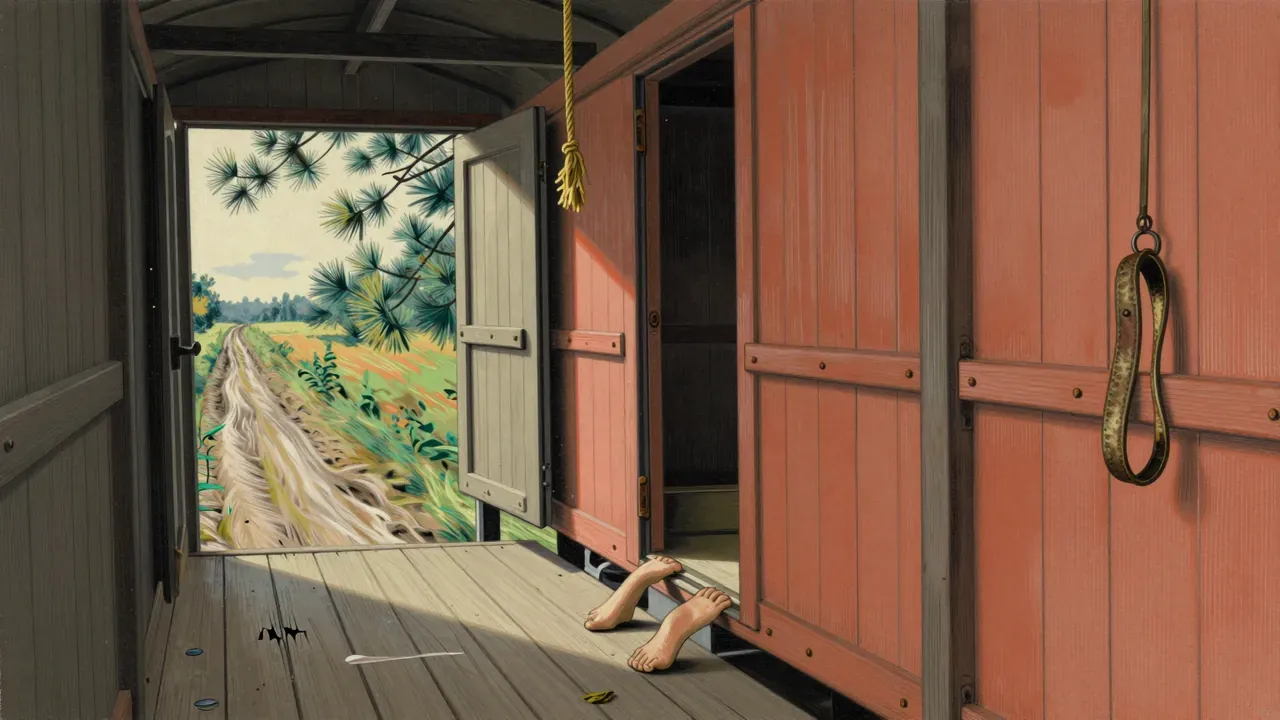
What lands most firmly is the film’s tactile authenticity—the way fatigue registers in the boys’ gait, the texture of mud clinging to bare feet, the visceral discomfort of swallowing dry bread. The opening sequence achieves something rare: a sustained sense of immediate, unmediated peril, where the camera stays close without editorialising. The recurring motifs—shoes, doorbells, ants crawling over skin—gain weight through repetition and variation, not explanation. The beer hall sequence works precisely because it refuses catharsis: the old men’s laughter is neither cruel nor kind, just bafflingly human, and the ambiguity of the ending feels earned, not evasive. The film’s refusal to assign motive or meaning to the boys’ captors, or even to clarify whether certain images are memory or fantasy, creates a space where interpretation remains open but never arbitrary. This is not abstraction for its own sake; every stylistic choice serves the central task of rendering subjective endurance—how time thickens, how hunger narrows attention, how identity dissolves into sensation.
Where it stumbles
What does not land is the film’s occasional drift into opacity without sufficient grounding. Some hallucinatory passages—particularly those involving the Prague street and the girl at the door—repeat without enough variation in tone or detail to deepen their resonance, risking monotony rather than accumulation. The lack of context for the older boy’s apathy, beyond physical injury, leaves his passivity under-explored; he becomes more vessel than counterpart. A viewer unfamiliar with Lustig’s biography or the historical conditions of transport trains to Dachau may find the opening’s abruptness alienating rather than immersive. The film assumes a degree of cultural and historical literacy that it does not scaffold. Its resistance to exposition is a strength until it borders on withholding—there are moments when emotional connection stalls not from intensity, but from insufficient purchase on the characters’ inner logic beyond shared suffering. Some critics have found this austerity emotionally distancing, mistaking restraint for absence.
What it’s really about
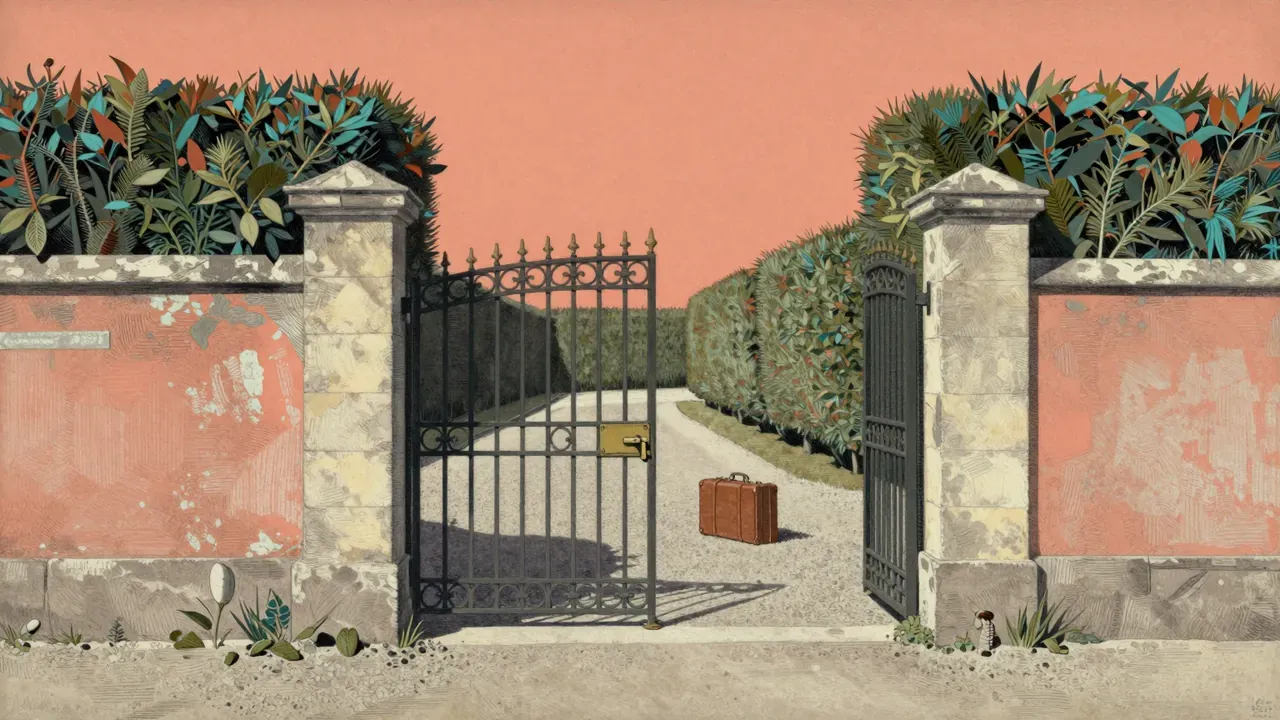
The themes that matter are not Holocaust representation per se, but the erosion and persistence of self under systemic dehumanisation. Memory here is not archival but somatic—recurring gestures, phantom sensations, involuntary associations. The film treats adolescence not as a stage but as a condition of instability already amplified by terror: the boys are neither children nor adults, and their liminality mirrors the film’s formal uncertainty between reality and dream. Hunger operates as both literal need and metaphor for unresolved desire—for safety, for return, for agency. The coat marked ‘KL’ is not just a symbol of captivity but a second skin, its removal an act of shedding identity before the body can reclaim itself. Time is not linear but tidal: past and future surge into the present without warning, suggesting trauma not as event but as ongoing weather. The film’s quietest theme is endurance without purpose—running not toward survival but away from annihilation, with no guarantee that either state is distinguishable in the moment.
Who it’s for
This film is for viewers who value formal rigour over narrative clarity, who find emotional power in restraint and who accept ambiguity as a mode of truth rather than evasion. It suits those familiar with mid-century European art cinema—Bresson, Resnais, early Buñuel—or with literary modernism, where syntax fractures to mirror consciousness. It is not for viewers seeking historical exposition, psychological exposition or moral resolution. Those who require character motivation spelled out, or who find prolonged silence and physical discomfort alienating, will likely disengage. Some critics—including Renata Adler in 1968—found its unrelenting bleakness emotionally inert rather than affecting. That verdict would change if the film offered more relational texture between the boys, or if its hallucinations anchored themselves more firmly in character-specific detail rather than shared archetype. As it stands, its demands are precise and unwavering.
Is it worth your evening
Yes, it is worth your evening—but only if you approach it as an experience in duration and attention, not as a story to be followed. Its 67 minutes ask for sustained presence: watching it is less like reading a plot and more like holding a breath underwater, feeling pressure build and release in unpredictable intervals. It rewards patience with cumulative physical and psychological impact, not revelation. Those who watch expecting narrative payoff or catharsis will leave unsatisfied; those who accept its terms—its silences, its repetitions, its refusal to name what it shows—will find it unforgettable. It is not a film to consume, but one to inhabit for its length, then carry quietly after. Its value lies not in what it says, but in how thoroughly it recalibrates how you feel time, space and embodiment. To dismiss it as ‘depressing and real’ misses that its realism is entirely subjective, its despair laced with stubborn, wordless vitality. Worth it, yes—but on its own uncompromising terms.