filmbriefs
Topic

Editing

Where the film is actually made.

58
in film
13:00
average
754 min
in total
72
across the network
Editing across the network →
All briefs58
13:00

A Colt Is My Passport

Takashi Nomura · 1967

Takashi Nomura’s 1967 yakuza noir follows contract killer Shuji Kamimura as he navigates a collapsing web of yakuza betrayals after a botched hit. With precise, unhurried direction and Joe Shishido’s stoic performance, the film treats survival as a series of calibrated actions — installing a second brake, digging a ditch, building a bomb — rather than a psychological journey. Its power lies in functional coherence, not thematic elaboration.
13:00

A Story of Floating Weeds

Yasujirō Ozu · 1934

A Story of Floating Weeds (1934) is Yasujirō Ozu’s silent drama about an ageing kabuki actor who revisits a provincial town to see the son he abandoned years earlier. With minimal intertitles and a restrained visual style, the film traces quiet tensions between duty and desire, permanence and transience, across a travelling troupe and a rooted family. Shot by Hideo Shigehara and edited by him, it relies on composition, rhythm, and understated performance rather than exposition or climax.

13:00

All That Jazz

Bob Fosse · 1979

Bob Fosse’s 1979 semi-autobiographical musical follows Joe Gideon—a director and editor burning himself out across Broadway and Hollywood—as his body fails. Using dance, dream logic, and clinical realism, it maps the collision of creative obsession and physical collapse. Roy Scheider stars; Giuseppe Rotunno shoots; Alan Heim edits; Ralph Burns scores. It won four Oscars and the Palme d’Or, and remains a benchmark for formal audacity in American cinema.

13:00

Blow Out

Brian De Palma · 1981

Brian De Palma’s 1981 crime thriller follows a Philadelphia sound technician who records a fatal car crash, then uncovers evidence of assassination in the audio. With John Travolta, Nancy Allen, and John Lithgow, it uses split screens, long takes, and meticulous sound design to explore how truth is assembled from fragments—and why it so often goes unheard.

13:00

Cameraperson

Kirsten Johnson · 2016

Cameraperson is a 2016 documentary assembled by cinematographer Kirsten Johnson from unused footage shot over twenty-five years on assignments across fifteen countries. Without narration or score, it constructs a self-portrait through lingering, unvarnished moments — births, courtrooms, landscapes, faces — revealing the ethics, labour and quiet persistence of looking. Directed and shot by Johnson, edited by Nels Bangerter, and produced by Abigail Disney, Johnson and Gini Reticker, it premiered at Sundance and won Sheffield Doc/Fest’s top prize.

13:00

Cat People

Jacques Tourneur · 1942

Cat People (1942) is a low-budget RKO horror film directed by Jacques Tourneur and produced by Val Lewton. It follows Irena Dubrovna, a Serbian woman who fears she is descended from a tribe of cat-worshipping people who transform into panthers when aroused. Shot in stark black-and-white by Nicholas Musuraca, with a sparse, unsettling score by Roy Webb, the film builds dread through suggestion rather than spectacle. Its psychological depth, formal restraint and thematic rigour have secured its place as a landmark of atmospheric horror.

13:00

Cruel Gun Story

Takumi Furukawa · 1964

Takumi Furukawa’s 1964 Cruel Gun Story follows ex-convict Joji Togawa as he leads a heist for a yakuza boss, only to be betrayed and drawn into escalating violence. Starring Joe Shishido and Chieko Matsubara, it is a tightly wound crime film grounded in moral exhaustion rather than glamour or catharsis — its power lies in its restraint, its downfall in its late departure from that discipline.

13:00

Day for Night

François Truffaut · 1973

François Truffaut’s 1973 film Day for Night chronicles the chaotic, tender, and stubbornly ordinary making of a forgettable melodrama. Shot in Nice on a repurposed Paris street set, it follows director Ferrand (Truffaut) and his international cast and crew through accidents, affairs, and technical hiccups. With Pierre-William Glenn’s unshowy cinematography and Georges Delerue’s restrained score, it privileges process over personality and collective resilience over individual revelation. It won the 1974 Academy Award for Best International Feature Film.

13:00

Dont Look Back

D. A. Pennebaker · 1967

Dont Look Back is a 1967 vérité documentary by D. A. Pennebaker capturing Bob Dylan’s 1965 UK tour. Shot on handheld 16mm black-and-white film with direct sound, it avoids narration, exposition or chronological framing. Instead, it observes Dylan’s interactions with Joan Baez, Albert Grossman, Allen Ginsberg and others, alongside performances and unscripted encounters. Its power lies in sustained observation, rhythmic editing and deliberate ambiguity — not in decoding its subject, but in recording the conditions of his visibility.

13:00

Don't Look Now

Nicolas Roeg · 1973

Don’t Look Now (1973), directed by Nicolas Roeg, follows a British couple in Venice after their daughter’s death. As John restores a church and Laura encounters clairvoyants, reality blurs: red coats recur, water rises, time folds. Shot by Roeg and Anthony B. Richmond, edited by Graeme Clifford, and scored by Pino Donaggio, it treats mourning as a perceptual disorder — not a story to resolve, but a condition to inhabit.

13:00

Dragon Gate Inn

King Hu · 1967

King Hu’s 1967 Dragon Gate Inn is a foundational wuxia film set in 15th-century Ming China, centred on a group of martial artists defending an exiled official’s family at a remote desert inn. Shot in Taiwan with Hua Hui-ying’s austere cinematography and edited by Chen Hung-min for rhythmic precision, it treats action as structural logic rather than flourish. Its themes—fidelity, jurisdiction, restraint—are enacted, not explained. Though lean in character depth and historical context, its formal control and spatial intelligence make it a benchmark of genre discipline.

13:00

Dressed to Kill

Brian De Palma · 1980

Brian De Palma’s 1980 neo-noir thriller follows a housewife’s murder and a call girl’s investigation, using Hitchcockian suspense to dissect gender, repression, and perception. Michael Caine, Angie Dickinson, and Nancy Allen anchor a tightly constructed plot shot by Ralf D. Bode and scored by Pino Donaggio. While lauded for its craft and box-office success, its portrayal of trans identity remains its most enduring point of contention.

13:00

For All Mankind

Al Reinert · 1989

Al Reinert’s 1989 documentary For All Mankind assembles six million feet of NASA film into a single, continuous lunar mission, using astronauts’ interview voices and Brian Eno’s ambient score to evoke the physical and psychological experience of spaceflight — prioritising sensation over explanation, silence over speech, and scale over story.

13:00

Gods of the Plague

Rainer Werner Fassbinder, Michael Fengler · 1969

Gods of the Plague is Rainer Werner Fassbinder’s 1970 black-and-white drama, co-directed with Michael Fengler and shot in Munich and Dingolfing. It follows ex-convict Franz Walsch as he re-enters Munich’s criminal underworld, navigating ambiguous relationships with two women and a friend implicated in his brother’s death. Stylised through static compositions, minimal dialogue, and high-contrast monochrome cinematography by Dietrich Lohmann, the film treats noir not as genre but as structure to be exposed and exhausted. Its themes centre on mediated identity, erotic ambiguity, and the futility of narrative resolution. Though critically respected for its formal control and ensemble discipline, its austerity makes it demanding — rewarding for those attuned to Fassbinder’s early methods, less so for viewers seeking emotional or narrative engagement.

13:00

Irma Vep

Olivier Assayas · 1996

Irma Vep (1996) follows Hong Kong actress Maggie Cheung as she joins a chaotic French production attempting to remake Louis Feuillade’s silent serial Les Vampires. Directed by Olivier Assayas, it observes the collapse of creative consensus through Cheung’s quiet, outsider perspective — less a satire of cinema than a forensic account of its daily attrition. Shot in thirty days with no retakes, it privileges texture over exposition, procedural realism over plot, and ambiguity over resolution.

13:00

La Jetée

Chris Marker · 1962

A 28-minute French photomontage from 1962, La Jetée tells a post-nuclear time-travel story almost entirely through still black-and-white photographs, linked by voice-over narration and a sparse orchestral score. Its protagonist is sent from a ruined Paris to the past and future, bound by a childhood memory of a woman on an airport jetty — a memory that proves to be his own death. Built as a photo novel, not a film, it treats time as recursive, memory as architectural, and perception as the only continuous medium across stillness.

13:00

Lone Wolf and Cub: Baby Cart at the River Styx

Kenji Misumi · 1972

The second Lone Wolf and Cub film follows disgraced executioner Ogami Ittō and his young son Daigoro as they travel Japan in a weaponised baby cart, taking assassination contracts while evading rival clans. Directed by Kenji Misumi and adapted from Kazuo Koike’s manga, it prioritises formal rigour over exposition: violence is ritual, parenthood is discipline, and silence carries more weight than dialogue. Its eighty-one minutes unfold through stylised encounters — acrobats, river-washers, sand-dune duels — building a mythic logic rather than a psychological narrative.

13:00

Lone Wolf and Cub: Baby Cart in the Land of Demons

Kenji Misumi · 1973

The fifth Lone Wolf and Cub film follows Ogami Ittō as he completes five duels to uncover a conspiracy threatening a daimyō’s succession, while his son Daigoro endures a brief, brutal episode of his own. Directed by Kenji Misumi and starring Tomisaburō Wakayama, it sustains the series’ austere tone and procedural rigour, prioritising moral geometry over emotional exposition.

13:00

Love on the Run

François Truffaut · 1979

François Truffaut’s 1979 drama Love on the Run concludes the Antoine Doinel cycle with quiet rigour. Mid-divorce and mid-romance, Antoine (Jean-Pierre Léaud) boards a train with ex-girlfriend Colette (Marie-France Pisier), revisiting his past self-mythologising while navigating present entanglements with wife Christine (Claude Jade) and new partner Sabine (Dani). Néstor Almendros’s cinematography and Martine Barraqué’s editing sustain a delicate balance between memory and immediacy. The film resists catharsis, favouring precision over propulsion — a restrained, intelligent farewell to a character who never quite grows up, but learns, faintly, to stop lying to himself.

13:00

Man Bites Dog

Rémy Belvaux, Benoît Poelvoorde, André Bonzel · 1992

Man Bites Dog (1992) is a Belgian black-and-white mockumentary in which filmmakers follow a charismatic serial killer, recording his crimes and monologues. Directed, written and performed by Rémy Belvaux, André Bonzel and Benoît Poelvoorde, it uses fly-on-the-wall conventions to trace the crew’s descent from observers to accomplices. Shot on 16 mm with no score, it refuses catharsis or explanation, instead exposing how documentary aesthetics naturalise atrocity. It won the Sitges Best Feature award and faced bans in multiple countries for its unflinching depiction of sexual and physical violence.

13:00

McCabe & Mrs. Miller

Robert Altman · 1971

Robert Altman’s 1971 film follows a gambler and a madam building a brothel in a rain-lashed Pacific Northwest boomtown—only to face absorption by corporate interests. Shot in British Columbia with Vilmos Zsigmond’s muted cinematography and scored with Leonard Cohen’s songs, it rejects Western conventions in favour of ambient realism, overlapping sound, and structural patience. Its power lies in accumulation, not climax.

13:00

My Darling Clementine

John Ford · 1946

John Ford’s 1946 Western My Darling Clementine reshapes the O.K. Corral legend into a solemn, visually restrained parable about civic order. Henry Fonda’s Wyatt Earp is less a man than a principle — calm, enduring, taciturn — and the film’s power lies in its long takes, muted palette, and refusal to explain. Though heavily edited by the studio and loosely based on fact, it endures as a masterclass in cinematic gravitas: not a story about violence, but about what remains after it.

13:00

Naqoyqatsi

Godfrey Reggio · 2002

Naqoyqatsi (2002), the final film in Godfrey Reggio’s Qatsi trilogy, uses digitally manipulated archive footage and Philip Glass’s cello-led score to argue that modern life operates under a regime of ‘civilized violence’: abstraction, competition, and technological acceleration displacing embodied reality. Edited by Jon Kane and produced by Reggio, it abandons the observational style of its predecessors for a collage of stock, surveillance, and CGI imagery. Its reception was divided — critics called it the trilogy’s weakest — yet its formal rigour and thematic persistence make it a singular, unsettling document of early-digital consciousness.

13:00

Pat Garrett and Billy the Kid

Sam Peckinpah · 1973

Sam Peckinpah’s 1973 revisionist Western follows Pat Garrett’s reluctant pursuit of Billy the Kid, framed by Garrett’s own assassination. Shot in Durango with John Coquillon, scored by Bob Dylan, and written by Rudy Wurlitzer, it rejects heroic narrative in favour of cyclical fatalism—where lawmen are hired hands, outlaws are inconveniences, and violence serves capital, not justice.

13:00

Point Blank

John Boorman · 1967

Point Blank (1967), directed by John Boorman and starring Lee Marvin, is a formally radical crime film adapted from Donald E. Westlake’s novel The Hunter. It follows Walker’s relentless, non-linear quest to reclaim $93,000 after being betrayed and left for dead on Alcatraz. Rejecting exposition and psychology, it builds tension through spatial rigour, elliptical editing, and Marvin’s physically commanding stillness. Shot in stark black-and-white with Johnny Mandel’s atonal score, it privileges structure over sentiment — a cold, coherent system of cause and effect. Preserved in the US National Film Registry, it remains a benchmark of arthouse crime cinema.

13:00

Roman Polanski: Odd Man Out

Carol Reed · 1947

Odd Man Out (1947), directed by Carol Reed and starring James Mason, follows a wounded Irish nationalist as he staggers through Belfast over a single night, pursued by police and abandoned by comrades. Adapted from F. L. Green’s novel, it avoids naming the IRA or debating ideology, focusing instead on Johnny McQueen’s physical and moral dissolution. Robert Krasker’s chiaroscuro cinematography, William Alwyn’s restrained score, and R. C. Sherriff’s lean script build tension through proximity and silence. Though lauded on release and awarded BAFTA’s first Best British Film prize, its political reticence and slow pacing divide modern viewers. It remains a masterclass in atmospheric realism and embodied performance.

13:00

Sans Soleil

Chris Marker · 1983

Sans Soleil (1983) is Chris Marker’s 100-minute French essay-film, structured around letters from a fictional cameraman and narrated by Florence Delay. Shot on silent 16mm and edited with found footage from Japan, Guinea-Bissau, Iceland and Paris, it explores memory’s fragility through juxtaposition, colourisation and Moog-scored stillness — not as documentary exposition but as a sustained, self-aware meditation on what images remember and forget.

13:00

Sisters

Brian De Palma · 1972

Brian De Palma’s 1972 Sisters is a psychological horror film about a reporter who witnesses a murder committed by a woman with a hidden, violent twin. Shot on location in Staten Island and scored by Bernard Herrmann, it uses split screens, long takes and clinical framing to explore perception, media saturation and the erasure of women’s testimony. Margot Kidder plays dual roles with unsettling restraint; Jennifer Salt anchors the film as the increasingly isolated witness. Though low-budget, it is tightly constructed and thematically precise.

13:00

The Blade

Tsui Hark · 1995

Tsui Hark’s 1995 The Blade is a deliberately abrasive, tactile reworking of the one-armed swordsman trope. Vincent Zhao plays a blacksmith who loses his arm seeking vengeance, then remakes himself — and his broken sword — through embodied trial rather than tradition. Shot with frenetic close-ups and saturated gels, edited with jagged urgency, and scored with percussive austerity, it prioritises physical truth over narrative clarity. Though structurally loose in places and narratively opaque at times, its power lies in its insistence on weight, friction, and the quiet dignity of walking away.

13:00

The Cameraman

Edward Sedgwick, Buster Keaton · 1928

Buster Keaton’s 1928 MGM debut follows a tintype photographer who buys a film camera to impress a newsreel secretary, then stumbles into real danger filming a Tong War in Chinatown. With Elgin Lessley’s crisp cinematography and Hugh Wynn’s taut editing, it builds comedy from spatial logic and cumulative consequence — not quips or sentiment. Though made under tightening studio control, it remains one of Keaton’s most lucid, tightly constructed films.

13:00

The Haunted Strangler

Robert Day · 1958

The Haunted Strangler (1958) is a British horror film directed by Robert Day and starring Boris Karloff. Set in Victorian London, it follows novelist James Rankin as he re-examines the conviction of Edward Styles, the so-called Haymarket Strangler. His investigation leads him to uncover his own forgotten identity as Dr. Tennant, the real murderer — a revelation triggered by handling the Strangler’s knife. Shot at Walton Studios, with music by Buxton Orr and editing by Peter Mayhew, the film blends procedural detail with psychological horror, prioritising atmosphere and physical transformation over shock or gore.

13:00

The Living Skeleton

Kōki Matsuno · 1968

The Living Skeleton (1968), directed by Kōki Matsuno for Shochiku, follows a woman haunted by her vanished twin and a submerged wreck off a coastal village. Shot in stark monochrome, it builds unease through underwater skeletons, fog-bound ships, and Catholic ritual — not gore or exposition. Its power lies in texture, repetition, and the sea as keeper of buried history.

13:00

The Making of Fanny and Alexander

Ingmar Bergman · 1986

Ingmar Bergman’s 1984 documentary records the making of his 1982 film Fanny and Alexander with clinical precision: no narration, no interviews, no context — just rehearsals, fittings, lighting tests and editorial decisions as they happened. Photographed by Arne Carlsson and edited by Lena Åberg, it treats filmmaking as iterative craft, not artistic revelation.

13:00

Through the Olive Trees

Abbas Kiarostami · 1994

Through the Olive Trees (1994), Abbas Kiarostami’s final Koker trilogy film, observes the making of a film in post-earthquake northern Iran. A stonemason courts his co-star amid rehearsals, blurring fiction and reality. Shot in natural light with non-professional actors, it sustains ambiguity — especially in its iconic final scene — as a formal and moral choice. Neither documentary nor drama, it asks what it means to witness, represent, and persist without certainty.

13:00

Under the Roofs of Paris

René Clair · 1930

René Clair’s 1930 French sound debut is a formally inventive romance set in a stylised Paris tenement. Built around street singer Albert Préjean and Romanian immigrant Pola Illéry, it uses song, silence and stylised sound design not to replicate reality but to explore proximity, precariousness and the quiet dignity of ordinary life. Shot by Georges Périnal and designed by Lazare Meerson, it balances warmth and melancholy without sentimentality — a foundational work of poetic realism and a sustained argument for cinema’s autonomy from theatre.

13:00

Violence at Noon

Nagisa Ōshima · 1966

Violence at Noon (1966), directed by Nagisa Ōshima, follows Shino, a housemaid who survives a rape-murder only to confront the perpetrator — Eisuke — years later, alongside his wife Kura, a former schoolteacher who married him knowing his crimes. Through fractured flashbacks and over two thousand single shots, the film traces how violence reverberates across time, memory, and social silence. It refuses psychological explanation or legal closure, instead insisting on the entanglement of survival, testimony, and complicity in a rigidly hierarchical postwar Japan.

13:00

Detour

Edgar G. Ulmer · 1945

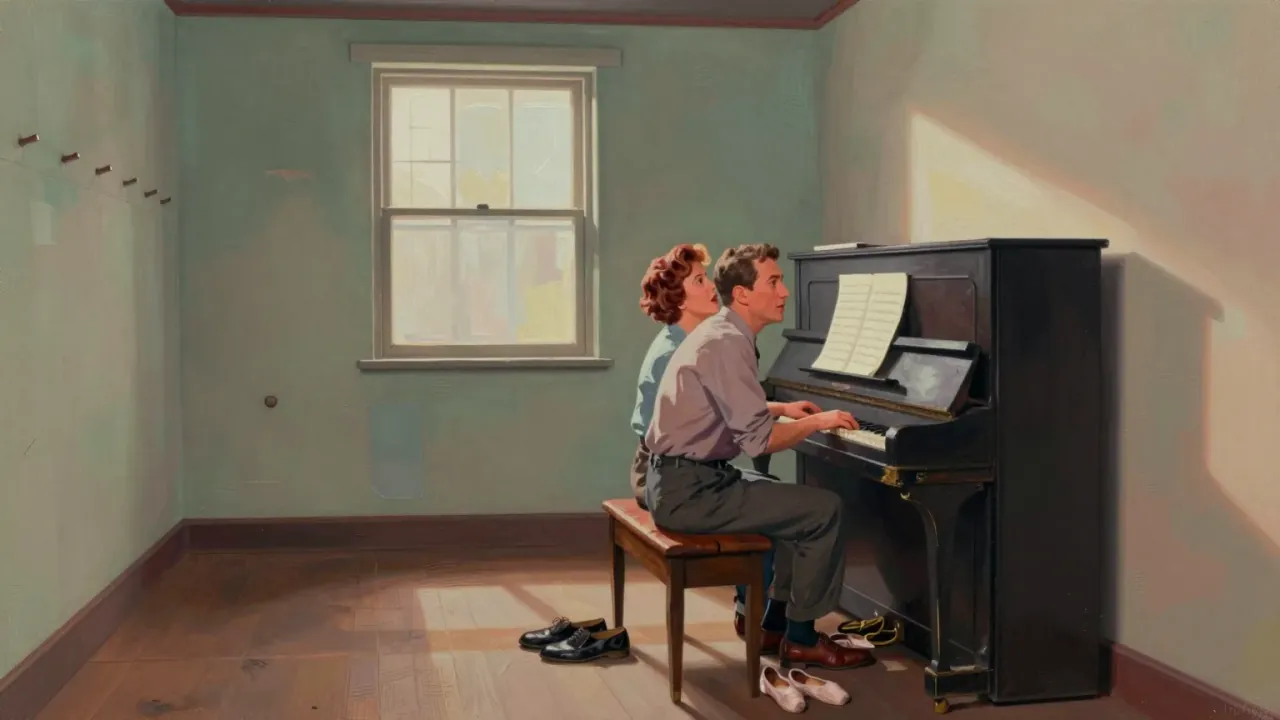
A broke pianist hitchhikes west, accidentally kills a stranger, assumes his identity, and is then blackmailed by a woman who knew the dead man — all narrated in weary voiceover as if the outcome were settled before the first frame. Made in 1945 on a tight budget by Edgar G. Ulmer for PRC, it distils noir fatalism into stark, economical form: minimal sets, precise sound design, and performances that refuse empathy. Its power lies in repetition, inevitability, and the quiet horror of consequences that arrive not with fanfare but with the hum of a police siren.

13:00

Intolerance

D. W. Griffith · 1916

D. W. Griffith’s 1916 Intolerance intercuts four historical stories — Babylonian, Judean, French, and American — to argue that intolerance is a persistent, transhistorical mechanism of power. Shot by Billy Bitzer and Karl Brown, edited by Griffith and the Smiths, and scored by Joseph Carl Breil, it uses colour-tinting, symbolic naming, and accelerating cross-cutting to bind eras through visual and rhythmic repetition. Though uneven in dramatic weight and demanding in pace, its formal ambition and influence on global cinema remain unmatched in the silent era.

13:00

Police Story

Jackie Chan · 1985

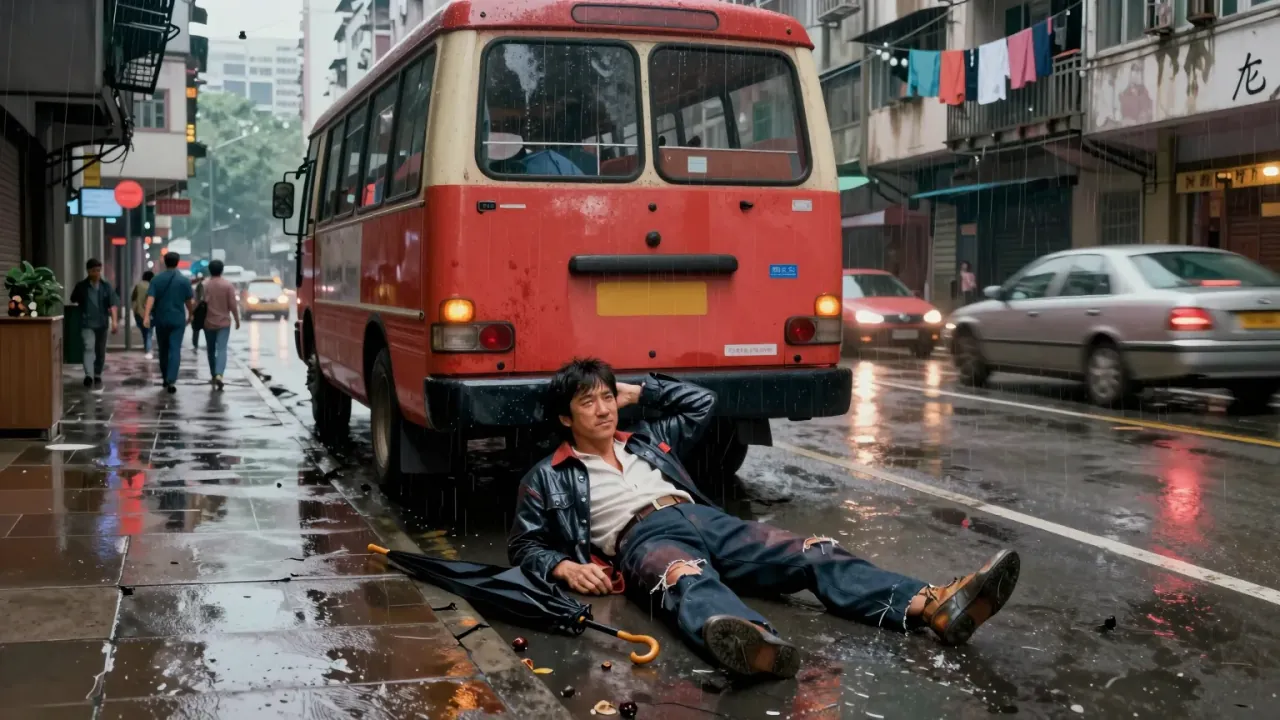
Jackie Chan’s 1985 Police Story is a Hong Kong action comedy structured around large-scale, practical stunts — a shantytown chase, a bus stop, and a shopping mall fight culminating in a pole slide through exploding lights. Written by Chan and Edward Tang, it follows Sergeant Chan Ka-Kui as he clears his name after being framed, using physical endurance rather than procedural logic. Yiu-Tsou Cheung’s cinematography and Peter Cheung’s editing prioritise legibility over flair, grounding each stunt in cause and consequence. It won Best Film at the 1986 Hong Kong Film Awards and remains influential for its commitment to tangible risk.

13:00

Singin' in the Rain

Gene Kelly, Stanley Donen · 1952

Singin’ in the Rain (1952) is a Metro-Goldwyn-Mayer musical directed by Gene Kelly and Stanley Donen, set during Hollywood’s transition from silent films to sound. With a script by Betty Comden and Adolph Green, it follows a leading man, his vaudevillian friend and a rising actress as they salvage a failing production by turning it into a musical. Built around pre-existing songs by Nacio Herb Brown and Arthur Freed, the film treats song-and-dance as narrative logic, not decoration. Its enduring reputation rests on choreographic precision, structural wit and an unironic belief in collective skill — not nostalgia.
13:00

A Touch of Zen

King Hu · 1971

King Hu’s 1971 wuxia epic, adapted from Pu Songling’s 'Xia Nü', uses Ming-dynasty politics, Chan Buddhist philosophy, and classical Chinese aesthetics to reimagine action cinema as meditative discipline. Shot over three years in Taiwan, its fragmented editing, operatic sound design, and painterly compositions construct a world where scholarship and swordplay, silence and percussion, ghost stories and state terror coexist as interdependent forces. Though structurally demanding and thematically dense, its formal rigour and ethical precision make it a landmark of arthouse fantasy.

13:00

Ain't Them Bodies Saints

David Lowery · 2013

David Lowery’s 2013 drama follows a convict’s slow return to the woman and child he left behind, using restrained performances, atmospheric cinematography by Bradford Young, and a hushed score by Daniel Hart to evoke longing as a physical condition. Set against a mythic Texas landscape, it trades genre mechanics for emotional resonance, prioritising mood over momentum and silence over exposition.

13:00

Blood Simple

Joel Coen, Ethan Coen · 1984

Blood Simple is the Coen brothers’ 1984 crime debut: a Texas bartender and his boss’s wife conspire, then unravel, under the scrutiny of a corrupt private detective. Shot in Austin on a $1.5 million budget, it uses precise cinematography, sparse music, and rigorous editing to trace how small mistakes compound into irreversible consequences. It won Sundance’s Grand Jury Prize and remains a landmark of neo-noir austerity.

13:00

Europa

Lars von Trier · 1991

Lars von Trier’s 1991 arthouse drama Europa uses stark black-and-white cinematography, surreal superimpositions, and second-person narration to tell the story of an American railway conductor drawn into the moral quicksand of occupied Germany. Set against a fictional railway network named Zentropa, the film explores complicity, betrayal, and the impossibility of neutrality in a compromised world. Its formal rigour is uncompromising; its emotional register, deliberately austere.

13:00

Good Men, Good Women

Hou Hsiao-Hsien · 1995

Hou Hsiao-hsien’s 1995 drama interweaves the true story of resistance activist Chiang Bi-yu with the contemporary rehearsal process of an actress playing her. Shot in Taiwanese Hokkien with restrained cinematography and elliptical editing, it explores memory, gender, and political erasure across three temporal layers — not to resolve history, but to inhabit its lingering weight.

13:00

Hail, Caesar!

Ethan Coen, Joel Coen · 2016

Hail, Caesar! (2016) is a Coen brothers comedy set in 1951 Hollywood, following studio fixer Eddie Mannix (Josh Brolin) as he manages crises across five concurrent film productions. Shot on film by Roger Deakins and costumed with meticulous period detail, it treats the studio system as a functioning bureaucracy — not a golden age to mourn, but a machine to map. Its strength lies in structural fidelity, not character depth.

13:00

Kagemusha

Akira Kurosawa · 1980

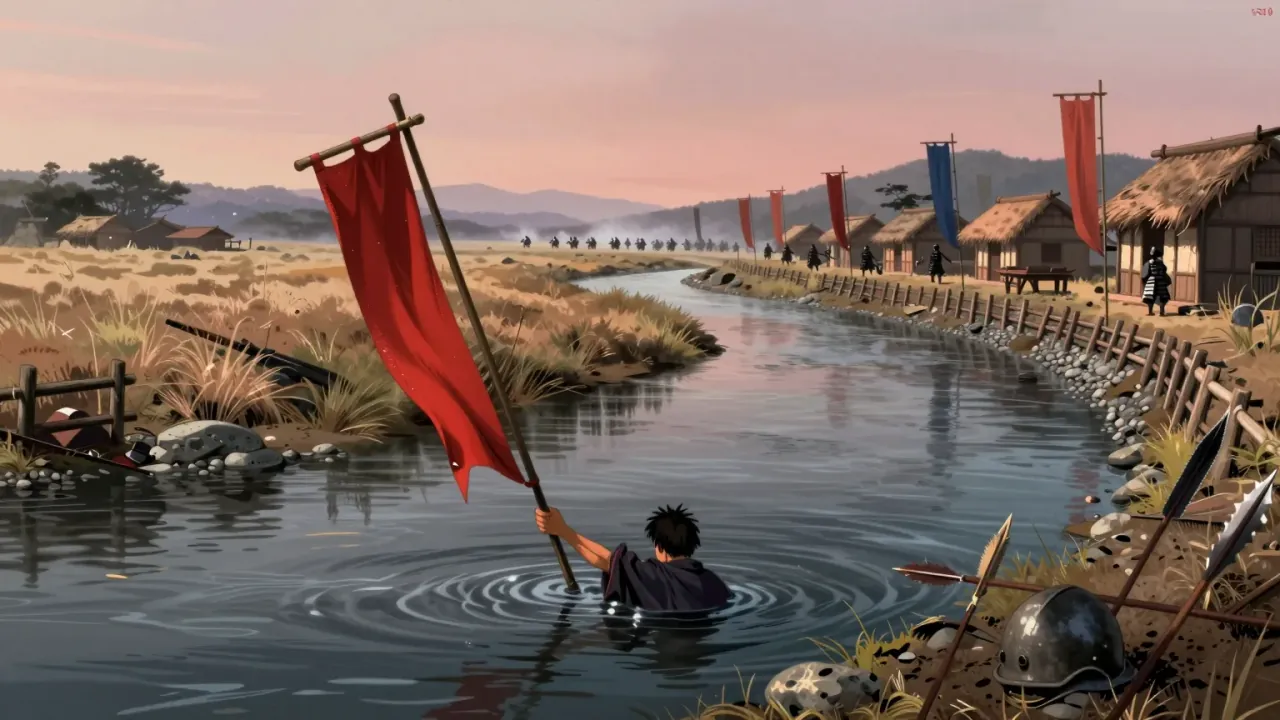
Akira Kurosawa’s 1980 epic follows a thief forced to impersonate the dying warlord Takeda Shingen to preserve clan stability. Shot in vivid colour and composed with rigorous symmetry, it traces the slow, fragile construction — and inevitable collapse — of political belief through gesture, silence, and shared illusion. Tatsuya Nakadai plays both men, distinguishing them not by voice or mannerism but by weight, stillness, and the space he occupies. The film ends at the Battle of Nagashino, where symbolism gives way to slaughter, and the kagemusha dies trying to retrieve a fallen banner.

13:00

Man of Aran

Robert J. Flaherty · 1934

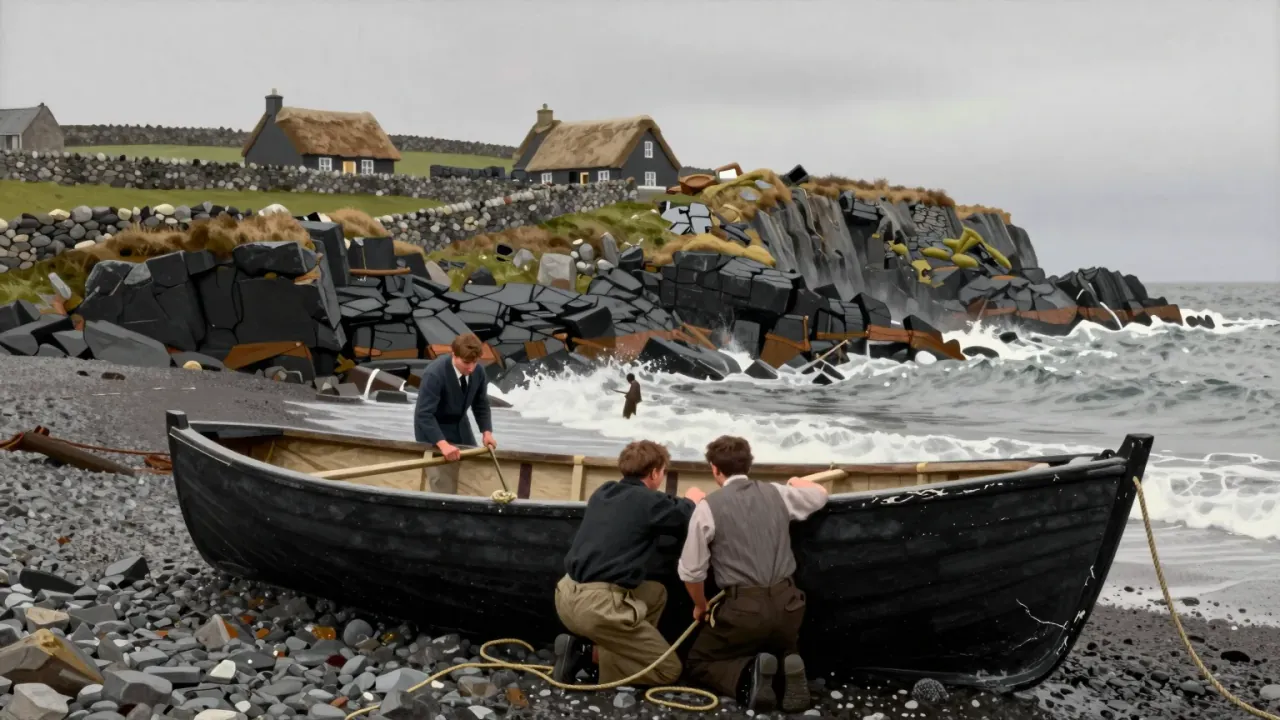
Robert J. Flaherty’s 1934 documentary Man of Aran stages life on Ireland’s Aran Islands as a timeless struggle against sea and stone. Though marketed as ethnography, it fabricates customs — notably basking shark hunting — and assembles non-related islanders as a symbolic family. Shot silently with radical long-lens cinematography and edited for rhythmic intensity, it prioritises visual myth over social reality. Its enduring power lies in formal discipline, not fidelity.

13:00

Requiem for a Dream

Darren Aronofsky · 2000

Requiem for a Dream (2000), directed by Darren Aronofsky and adapted from Hubert Selby Jr.’s novel, traces four Brooklyn lives unravelling under addiction — to drugs, television, validation, and fantasy. Shot by Matthew Libatique and edited by Jay Rabinowitz with over 2,000 cuts, its visual and rhythmic intensity mirrors psychological disintegration. Ellen Burstyn, Jared Leto, Jennifer Connelly, and Marlon Wayans perform with physical and emotional extremity. Clint Mansell’s score reinforces the film’s oppressive momentum. Though lauded for its craft and emotional force, its schematic structure limits sociological depth. It remains a landmark of arthouse intensity — demanding, unrelenting, and formally singular.

13:00

Rope

Alfred Hitchcock · 1948

Alfred Hitchcock’s 1948 thriller Rope presents a murder and its aftermath in a single Manhattan apartment, shot to appear as four unbroken takes. Starring James Stewart, John Dall, and Farley Granger, it adapts Patrick Hamilton’s play about two men who kill to prove intellectual superiority — and then host a dinner party atop the corpse. Its formal rigour — movable sets, concealed cuts, shifting Technicolor light — makes it a landmark of studio-era experimentation, though its emotional reserve and constrained subtext remain divisive.

13:00

Sanjuro

Akira Kurosawa · 1962

Akira Kurosawa’s 1962 jidaigeki Sanjuro reunites Toshirō Mifune’s ronin in a tightly coiled feudal intrigue, where tactical wit outweighs swordplay and social comedy emerges from the chasm between idealism and perception. Less violent and more structurally austere than its predecessor Yojimbo, it traces a masterless samurai’s reluctant intervention among nine inept young retainers, culminating not in triumph but in a disillusioned walk away. Shot by Takao Saitō, edited by Kurosawa, and scored by Masaru Sato, it is a film of precision, restraint, and dry, cumulative irony.
13:00

Sherlock, Jr.

Buster Keaton, Roscoe Arbuckle · 1924

A 1924 silent comedy starring Buster Keaton as a projectionist who dreams himself into the film he is screening. Directed by Keaton and Roscoe Arbuckle (under pseudonym), it uses in-camera tricks, exact camera positioning, and structural repetition to explore cinema’s grammar — not as metaphor, but as physical system. Its dream sequence remains a landmark of formal invention, prioritising spatial logic and editorial precision over character or emotion.
13:00

The Bridge on the River Kwai

David Lean · 1957

David Lean’s 1957 war drama follows British POWs forced to build a railway bridge for their Japanese captors in Thailand. At its centre is Colonel Nicholson, whose obsession with discipline and engineering excellence leads him to collaborate with the enemy — not out of weakness, but conviction. With Alec Guinness, William Holden and Sessue Hayakawa, it is a tightly wound study of pride, obedience and the porous line between order and complicity.

13:00

The Killing

Stanley Kubrick · 1956

Stanley Kubrick’s 1956 heist film follows Johnny Clay’s meticulously planned racetrack robbery, told in fractured chronology and executed with clinical precision. Built on Jim Thompson’s dialogue and Lionel White’s novel, it privileges structure over psychology, showing how small, unscripted human actions — a drunken appearance, a dropped horseshoe, a burst suitcase — derail even the most rigorous plan. With Sterling Hayden, Marie Windsor, and Elisha Cook Jr., it delivers lean, unsentimental noir grounded in craft, not catharsis.
13:00

The Lady from Shanghai

Orson Welles · 1947

Orson Welles’s 1947 noir, shot on location in San Francisco and Acapulco, uses a tangled murder plot to interrogate perception, law, and performance. Though heavily cut by Columbia Pictures, its surviving fragments—including the legendary hall-of-mirrors finale—retain a stark, unsettling power rooted in visual and ethical ambiguity.

13:00

The Lodger: A Story of the London Fog

Alfred Hitchcock · 1927

Alfred Hitchcock’s 1927 silent thriller *The Lodger* follows a London family renting a room to a mysterious man amid a string of blonde-victim murders. Using expressionist lighting, inventive camera angles, and minimal intertitles, it constructs suspense through space, sound (implied), and collective anxiety — establishing Hitchcock’s lifelong preoccupations with guilt, perception, and mob logic.

13:00

Breathless

Jean-Luc Godard · 1960

Jean-Luc Godard's 1960 debut sends a car thief who idolises American gangsters, played by Jean-Paul Belmondo, on the run through Paris after he shoots a policeman, hiding out with an American girlfriend played by Jean Seberg who is unsure whether to protect him or turn him in. Shot handheld on repurposed still-camera film stock with almost no lighting, and cut with jump cuts that were reportedly not planned during filming, it became one of the founding statements of the French New Wave.

13:00

Run Lola Run

Tom Tykwer · 1998

Franka Potente plays Lola, who has twenty minutes to find 100,000 marks and save her boyfriend Manni from a violent debt collector, and Tom Tykwer's 1998 film runs the same twenty minutes three times, letting split-second differences in Lola's path — a man with a dog, a delay on the stairs — cascade into wildly different outcomes for everyone she passes. Told through a mix of live action, animation and still-photo flash-forwards, it became the highest-grossing German film of its year.