The length of it
Dont Look Back is a vérité documentary that records Bob Dylan’s 1965 concert tour of England, shot over fifteen days from late April to early May. It makes no claim to explain Dylan, nor to narrate his development: there is no voiceover, no intertitles identifying locations or dates beyond what appears on screen, no archival footage, no interviews conducted for exposition. Pennebaker’s aim is observational fidelity — to place the camera close, keep it running, and let behaviour accumulate meaning. The film does not seek consensus about Dylan; it refuses to resolve him. It treats fame not as a condition to be decoded but as a force field in which language frays, intentions blur, and relationships strain under the weight of expectation. Its method is structural as much as stylistic: the opening cue-card sequence functions less as an introduction than as a threshold — a deliberate, silent punctuation before the unspooling of real time. This is not biography. It is duration made visible.
The look of it
The film works through sustained proximity and unbroken takes. Pennebaker shoots on handheld 16mm black-and-white film, using direct sound without post-synchronisation, so dialogue overlaps, fades, or cuts off mid-sentence. Editing is rhythmic rather than expository: scenes hold until tension peaks or collapses — Dylan’s protracted interview with Horace Freeland Judson, for instance, runs nearly six uninterrupted minutes, its power lying in the refusal to cut away from discomfort. Performances are captured mid-flow: Baez singing in a hotel room, Dylan interrupting Alan Price backstage, the Royal Albert Hall concerts recorded with minimal coverage, favouring wide shots that include audience reaction and stage clutter. There are no re-enactments, no staged moments — even the ‘Subterranean Homesick Blues’ sequence was filmed separately but integrated without explanation. The craft is austere: lighting is available, framing often off-centre, focus occasionally soft. What emerges is not polish but pressure — the physical texture of touring, the grain of voices tired from repetition, the weight of silence between answers.
The weight of it
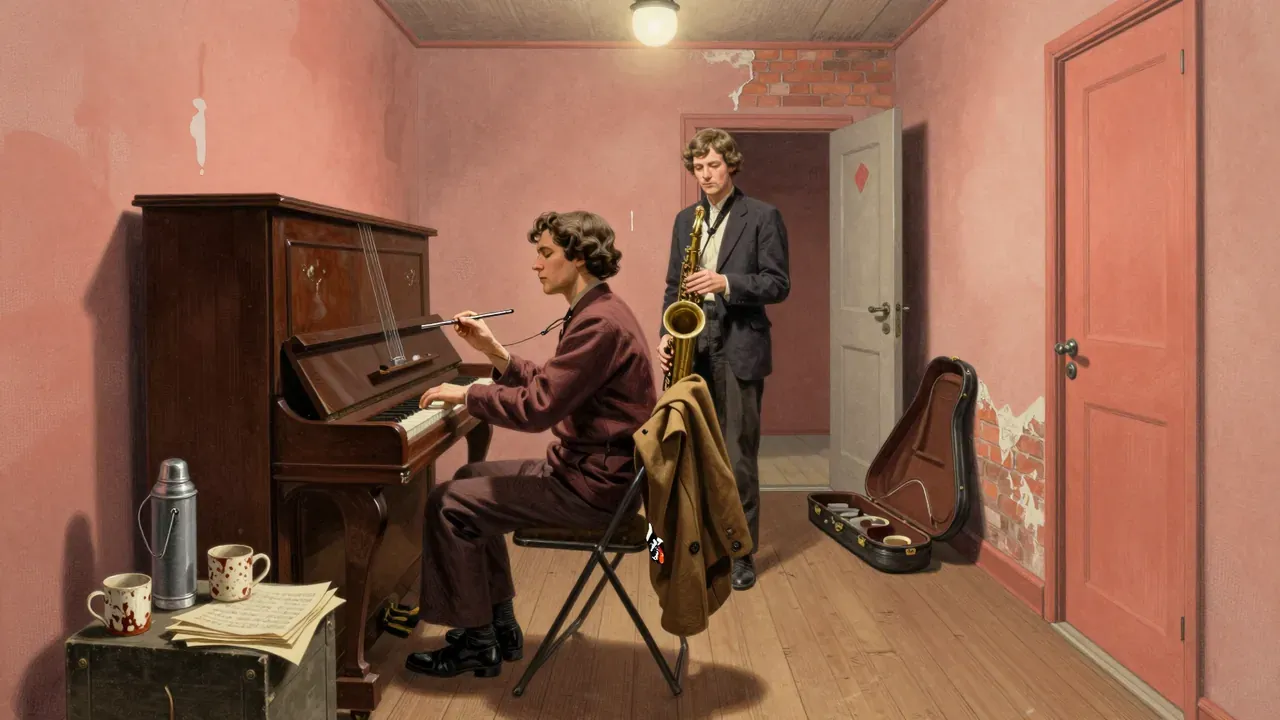
What lands is the quiet erosion of certainty. Dylan’s wit lands not as charm but as deflection — his banter with Donovan, his impatience with journalists, his teasing of Neuwirth all carry the same low hum of resistance to being known. Joan Baez’s presence lands with particular gravity: her singing of unfinished songs, her calm insistence on emotional honesty amid Dylan’s evasions, her visible fatigue when he withdraws — these moments register without commentary because the camera stays put. The film’s most resonant scenes are those where nothing is resolved: Dylan and Baez harmonising Hank Williams in a cramped room, then falling into silence; Grossman negotiating with Tito Burns over fees while Dylan watches from a doorway, unreadable; the final Albert Hall performance, where applause swells and the camera holds on Dylan’s face as he blinks slowly, detached. These are not revelations. They are accumulations — small, unemphatic truths that settle only after the frame has held long enough for the viewer to stop waiting for meaning and begin noticing it.
The gaps in it
What does not land is any attempt to read Dylan as coherent personality or cultural symbol. The film resists interpretation so thoroughly that viewers seeking narrative arc, psychological insight or historical context will find themselves stranded. There is no chronology beyond the rough order of events; no explanation of why certain people appear or vanish; no clarification of who Terry Ellis is beyond his role in the argument before the Sheffield concert. The editing omits connective tissue deliberately — we see Dylan dismiss a question, then cut to him walking down a corridor, then to a shot of rain on a window — and this discontinuity frustrates if mistaken for omission rather than design. The film also assumes familiarity with its subjects: without prior knowledge of Alan Price’s departure from the Animals or the significance of ‘Only a Pawn in Their Game’, some scenes lose their friction. Its refusal to orient leaves gaps that feel like absences, not ellipses — a limitation for viewers unprepared to meet the film on its own terms.
The friction in it
The themes that matter are not announced but embedded in repetition and contrast: the asymmetry of access (Dylan surrounded by handlers while Ginsberg lingers at the periphery), the commodification of authenticity (Grossman haggling over contracts while Dylan performs ‘It’s All Over Now, Baby Blue’ for Donovan), and the exhaustion of being perpetually legible. Language itself is a recurring site of friction — Dylan misreads cue cards, mocks journalistic clichés, interrupts interviews with non-sequiturs, yet sings lyrics of startling precision. The film treats music not as ornament but as counterpoint: Dylan’s songs punctuate scenes like interruptions of reality, their internal logic refusing to align with the chaos around them. Even the title — spelled without an apostrophe — functions thematically: it is a grammatical simplification that insists on ambiguity, a refusal of the possessive, the explanatory, the definitive. This is not a film about Dylan’s art. It is about the conditions under which art persists — or fails — amid noise, demand and misrecognition.
The patience it asks
This film is for viewers who value observation over explanation, duration over exposition, and ambiguity over resolution. It rewards patience, familiarity with mid-sixties folk-rock culture, and tolerance for long takes where little seems to happen until something does. It is not for those who require narrative scaffolding, biographical clarity or thematic signposting — students seeking a primer on Dylan, casual music fans expecting concert highlights, or viewers accustomed to documentary conventions like voiceover or chronological framing will likely find it withholding or opaque. Those who disagree tend to cite its narrow focus — that it captures a moment but not a man — and argue that its vérité rigour borders on evasion. A different verdict would follow if the film offered contextual framing, or if its subject were less culturally saturated: had Dylan been unknown in 1965, the film might read as discovery rather than deflection.
The time it gives
Yes, it is worth your evening — but only if you approach it as a study in restraint, not revelation. Its ninety-six minutes unfold with the unhurried weight of lived time, and its power lies in what it refuses to say. It repays attention not through insight but through accumulation: repeated gestures, overlapping voices, the slow dawning that Dylan’s elusiveness is not a barrier to understanding but the very subject. It is not entertainment in the conventional sense, nor is it exhaustive scholarship — it occupies a third space, one where presence matters more than explanation. Those who leave disappointed have likely expected either a portrait or a performance film; those who stay find something rarer: a record of how art survives contact with the world. Its endurance — preserved in the National Film Registry, ranked among the greatest documentaries by Sight & Sound — rests not on comprehensiveness but on its unwavering commitment to a single, difficult principle: that looking closely is not the same as looking away.