The final Doinel film
Love on the Run is François Truffaut’s fifth and final film in the Antoine Doinel cycle, a drama structured as a late-life reckoning with love, memory, and narrative self-deception. It does not aim to resolve Antoine’s character but to place him at a hinge: mid-divorce, mid-fatherhood, mid-romance, mid-authorship. The film treats autobiography as unstable material — Antoine’s published novel edits his past relationships into coherence, while the present unravels that editing. Truffaut and co-writers Marie-France Pisier, Jean Aurel and Suzanne Schiffman build the script around layered temporalities: flashbacks to earlier Doinel films are not exposition but counterpoint, showing how memory serves ego before it serves truth. The film’s ambition lies in its restraint: it refuses catharsis, avoids moralising, and declines to let Antoine grow wiser just because he is older. Instead, it asks whether sincerity is possible when every version of oneself — on the page, in conversation, in court, on a train — is already a performance. It is a film about the grammar of intimacy, not its resolution. (158 words)
The shape of memory
The story moves across Paris stations, bookshops, courthouses and sleeping cars, held together by Néstor Almendros’s precise, sun-bleached cinematography — soft focus on faces, clean framing on doorways and phone booths, light falling like afternoon dust. Martine Barraqué’s editing stitches past and present without fanfare: a cut from Antoine’s hand dropping a photograph to a flashback of that same hand taping it together. Jean-Pierre Léaud carries the role with weary physicality — less boyish charm than habitual evasion, shoulders hunched, eyes darting before speaking. Marie-France Pisier as Colette gives the film its quiet gravity: her pauses land like verdicts. Claude Jade, returning as Christine, speaks with unadorned clarity; Dani and Dorothée bring grounded warmth as Sabine and her sister. Georges Delerue’s score avoids sentimentality, using piano motifs that recur like half-remembered lines. There are no set pieces, no monologues, no revelations disguised as dialogue — just people trying, and failing, to say what they mean. (159 words)
What lands
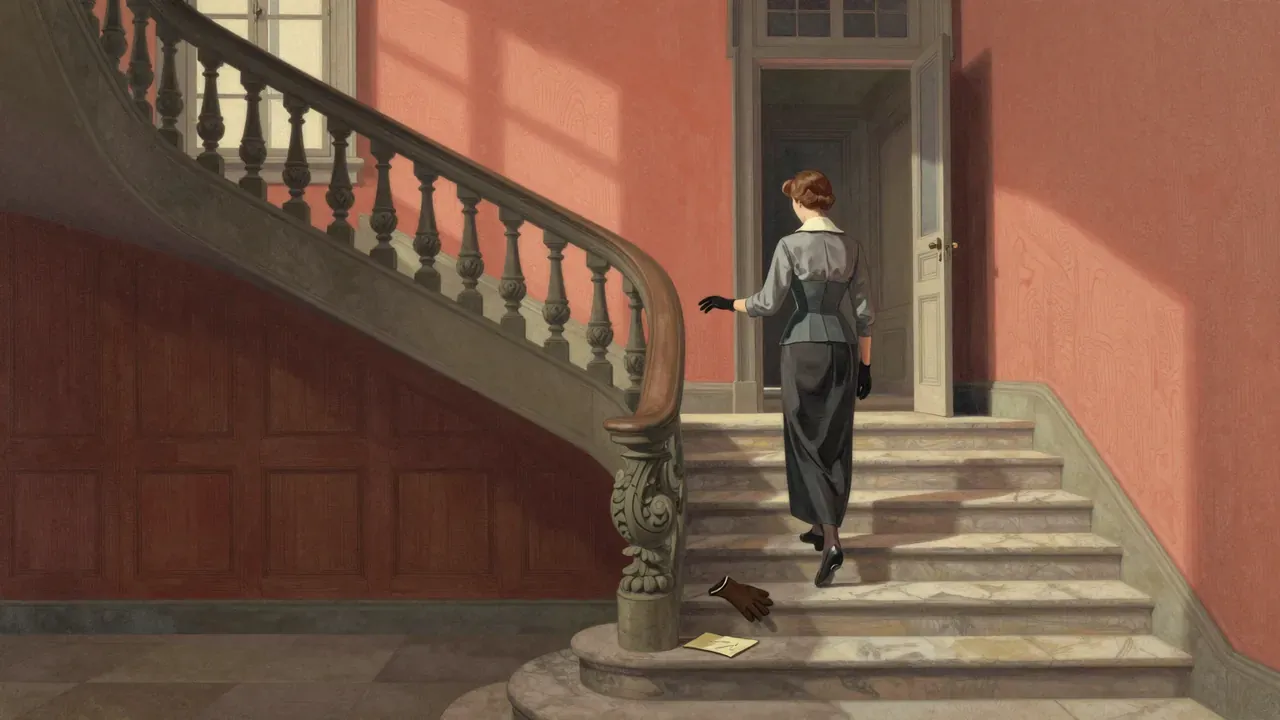
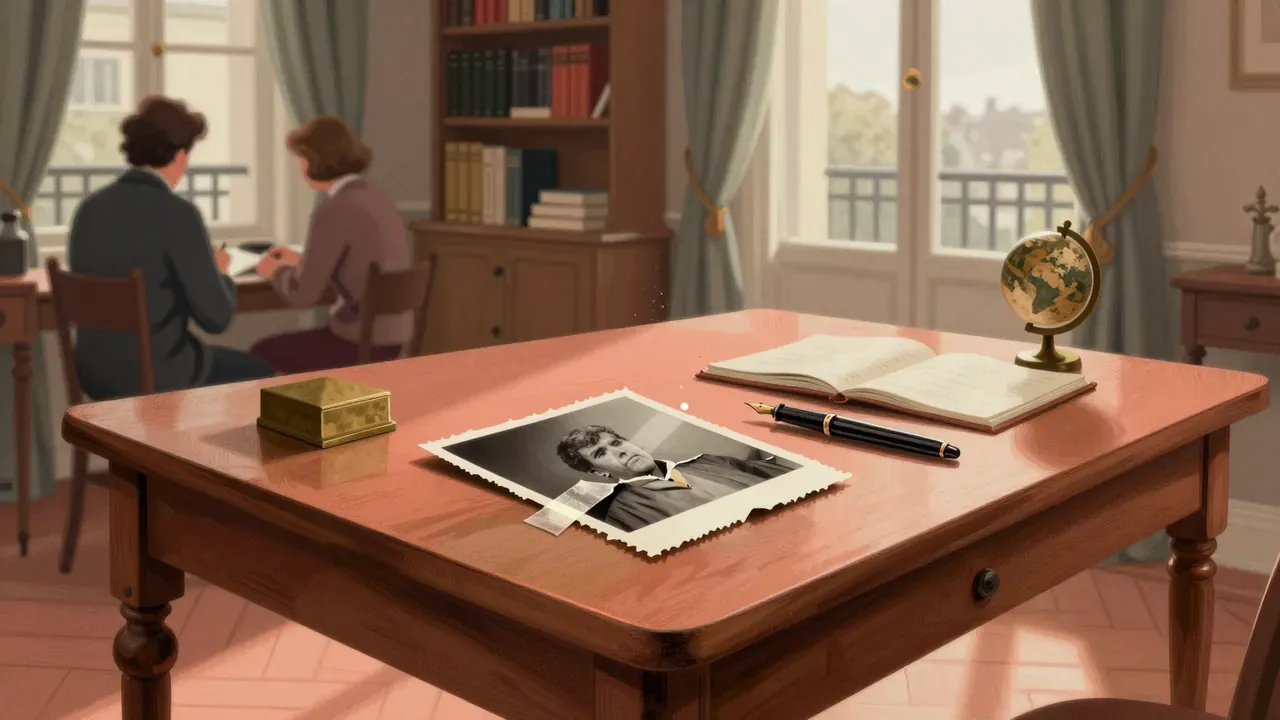
What lands is the film’s refusal to flatter its protagonist or its audience. Antoine’s self-mythologising — the reconstructed photo, the novelised past — is never mocked, but neither is it excused. The moment Colette reads the inscription on the back of Sabine’s photograph and realises she misread the relationship is quietly devastating: it’s not the error that matters, but how quickly she assumes hierarchy, secrecy, betrayal. The exchange between Christine and Colette on the stairwell feels earned because neither woman offers comfort or insight — they simply name facts, one after another, until the weight of lived experience settles in silence. The final kiss between Antoine and Sabine works not because it resolves anything, but because it follows a choice — to show, not tell — and because Sabine’s acceptance comes only after Antoine has stopped performing for her. The film trusts small gestures: a handed-over photograph, a mailed envelope, a train platform seen from the opposite side. These carry more emotional charge than any declaration. (157 words)
Where the structure slips
What does not land is the structural conceit of the Doinel cycle as cumulative testimony. Viewers unfamiliar with the earlier films will miss the resonance of certain glances, silences and repetitions — but the film does little to compensate. It assumes familiarity, not as homage, but as scaffolding. Some supporting characters remain underwritten: Xavier exists only as a plot hinge, his relationship with Colette sketched in broad strokes, and Lucien’s appearance at Antoine’s mother’s grave feels abrupt, emotionally unprepared. The nonlinear editing, while elegant, occasionally obscures cause and effect — particularly in the sequence where Antoine loses the photo, then later learns its significance, without clarifying the gap between those moments. A few scenes lean too heavily on coincidence: Colette finding Sabine’s photo, then identifying her via surname, then locating her apartment — these function narratively but lack psychological texture. The film’s faith in economy sometimes tips into omission: we never see Sabine’s reaction to Antoine’s letters being returned, nor hear why she kept them so long. That silence is deliberate, but it leaves a hollow where character might deepen. (159 words)
The grammar of intimacy
The themes that matter are authorship as self-protection, love as iterative failure, and memory as editorial practice. The film treats writing not as revelation but as redaction — Antoine’s novel smooths jagged truths into palatable arcs, and his storytelling to Colette repeats the same gesture: he shapes Sabine’s origin into romance, omitting the awkwardness of pursuit, the uncertainty of response. Divorce here is not an end but a grammatical shift — from ‘we’ to ‘I’, from shared syntax to separate clauses. Parenting appears as quiet stewardship: Christine and Antoine pass Alphonse between platforms like a fragile object, their competence intact even as their union dissolves. Colette’s grief over her daughter is named but not dramatised; Christine’s detachment from Antoine’s infidelity is stated, not performed. The film insists that emotional maturity is not the absence of selfishness, but the capacity to witness it — in oneself, in others — without needing to fix or forgive it immediately. Love, in this frame, is less a bond than a series of calibrated disclosures, each one risking exposure, each one contingent on timing, trust and the willingness to be misread. (156 words)
Who it is for
This film is for viewers who value precision over propulsion, who find tension in hesitation rather than conflict, and who accept that some relationships end not with rupture but with mutual exhaustion. It rewards attention to gesture, tone, and the space between lines — readers of Modiano or early Rohmer will feel at home. It is not for those who require narrative closure, moral clarity or emotional payoff within a scene. Anyone expecting the buoyancy of Jules et Jim or the comic velocity of Stolen Kisses will find Love on the Run withholding, even austere. Those who dislike films where characters speak in fragments, where plot advances via postal delivery and train timetables, or where the central romance is less about connection than calibration, will leave impatient. A viewer who values strong female perspective may still object that Colette and Christine, though vivid, exist largely in relation to Antoine’s arc — a limitation some argue is structural to the cycle, others see as Truffaut’s unresolved blind spot. Change the framing device — make Colette the anchor, not Antoine — and the film becomes a different proposition entirely. (158 words)
Why it holds
Yes, it is worth your evening — provided you watch it without expectation of momentum or resolution. Its ninety minutes unfold like a conversation over coffee that starts with logistics and ends with something quieter: recognition. The film earns its slowness not through pretension but through accumulated detail — the way Almendros lights a train window at dusk, the rhythm of Barraqué’s cuts between silence and speech, the specificity of Delerue’s piano phrases echoing like half-recalled thoughts. It repays rewatching not for hidden clues but for shifts in emphasis: a line that seemed throwaway on first viewing acquires weight once you know what follows. Those who dismiss it as minor Truffaut mistake its modesty for thinness. It is minor only in scale, not in intelligence. Anyone who has ever edited their own past — softened a rejection, sharpened a grievance, omitted a humiliation — will recognise its terrain. It is not a film to be loved at once, but one that settles, slowly, like dust on a shelf you thought was empty. (159 words)