filmbriefs
Topic

Sexuality

Desire, and the law and custom built around it.

78
in film
13:00
average
1014 min
in total
102
across the network
Sexuality across the network →
All briefs78
13:00

À Nos Amours

Maurice Pialat · 1983

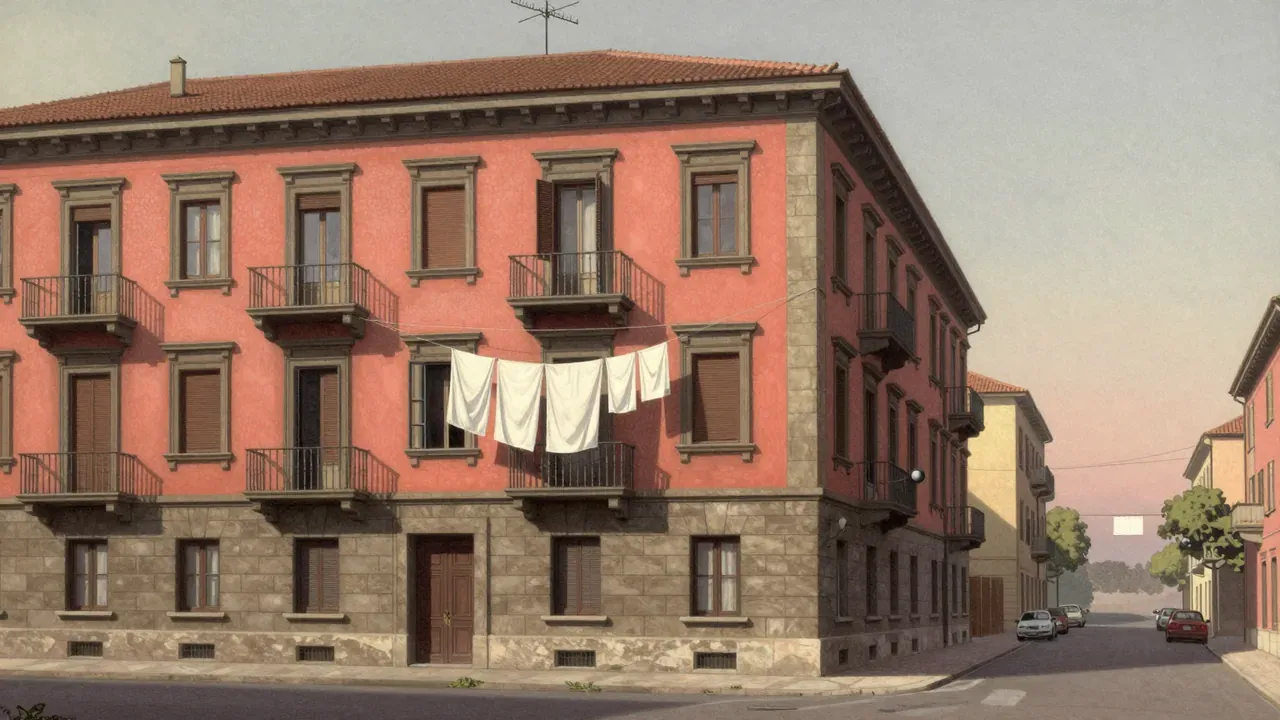
Maurice Pialat’s 1983 drama follows sixteen-year-old Suzanne (Sandrine Bonnaire) as she navigates sexual experience, family fracture and emotional drift in early-1980s Paris. Shot with observational restraint by Jacques Loiseleux and written by Pialat and Arlette Langmann, it avoids exposition, score-driven emotion or narrative resolution, holding Suzanne’s contradictions — her hunger for connection and her inability to sustain it — without judgment or explanation.
13:00

A Special Day

Ettore Scola · 1977

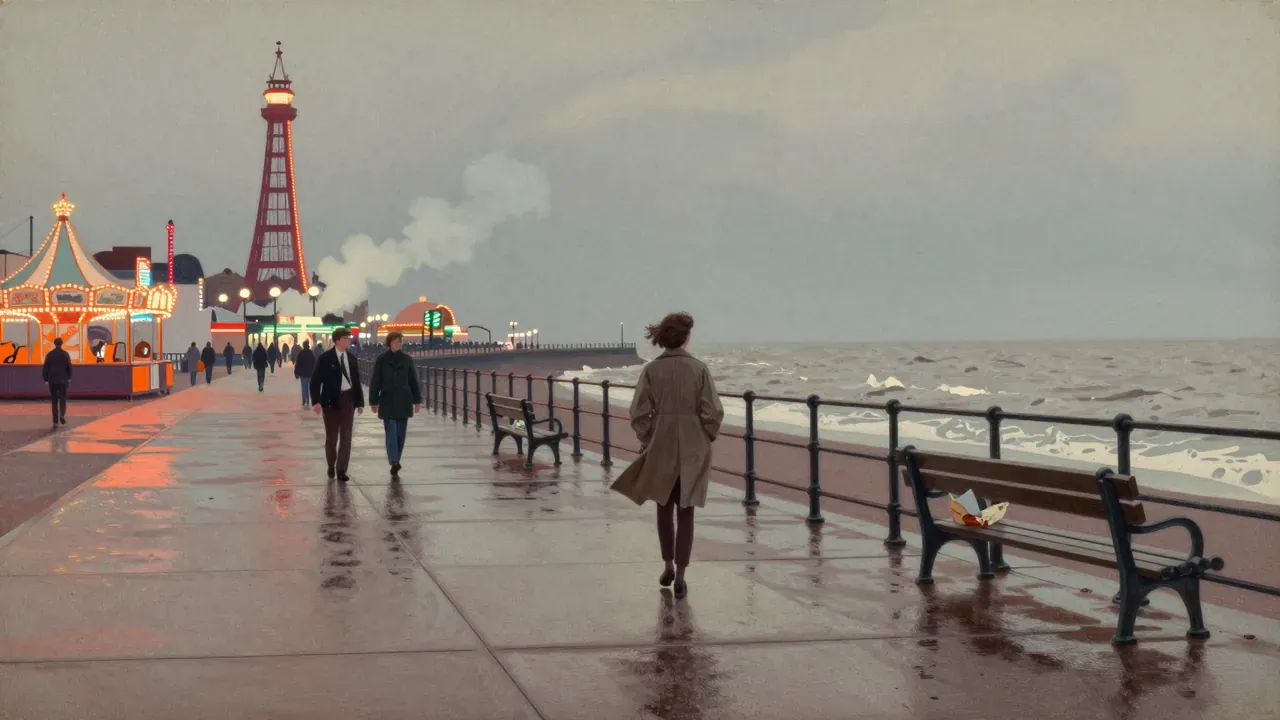
Set in Rome on 4 May 1938 — the day Hitler visits Mussolini — A Special Day confines itself to a single apartment building where a housewife and a dismissed gay radio broadcaster spend an afternoon together. Directed by Ettore Scola and starring Sophia Loren and Marcello Mastroianni, it uses muted colour, deep focus, and restrained performances to explore gender, sexuality, and quiet dissent under fascism.

13:00

A Taste of Honey

Tony Richardson · 1961

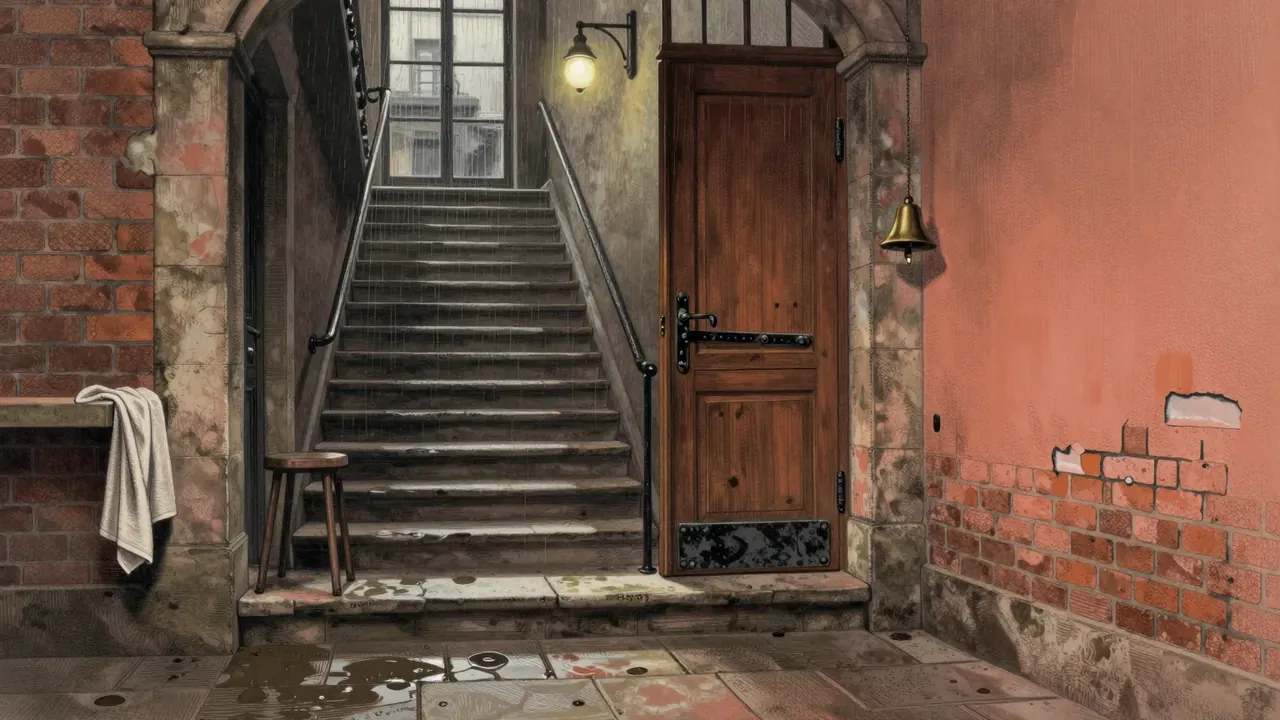
Tony Richardson and Shelagh Delaney’s 1961 adaptation of her own play follows Jo, a teenage girl in Salford, as she navigates abandonment, pregnancy, and makeshift kinship amid post-war austerity. Shot on location in Manchester and Blackpool, with Walter Lassally’s naturalistic cinematography and Rita Tushingham’s breakthrough performance, it is a cornerstone of British kitchen-sink realism — unsentimental, formally restrained, and politically precise in its depiction of class, race, and sexuality.

13:00

Affirmations

Marlon Riggs · 1990

Marlon Riggs’s 1990 ten-minute short Affirmations places Black gay men visibly within Harlem’s African American Freedom Day parade, intercutting Reginald T. Jackson’s quiet recollection of intimacy with footage of protest, portraiture and public speech. Using minimal craft and maximal assertion, it treats queerness not as deviation from Black tradition but as its living, contested continuation.
13:00

All of Us Strangers

Andrew Haigh · 2023

Andrew Haigh’s All of Us Strangers follows a lonely screenwriter who reconnects with his deceased parents and begins a relationship with a mysterious neighbour. Set in contemporary London and rooted in the emotional textures of 1980s Britain, the film uses fantasy not as escape but as a means to examine unresolved grief, queer identity, and the quiet violence of familial silence. With restrained performances, precise cinematography, and a carefully curated soundtrack, it builds its power through stillness and repetition rather than revelation.
13:00

And God Created Woman

Roger Vadim · 1956

Roger Vadim’s 1956 debut stars Brigitte Bardot as Juliette, an orphaned teenager whose unselfconscious sensuality disrupts the social order of Saint-Tropez. Built around Bardot’s physical presence rather than psychological depth, it uses repetition, framing and coastal light to stage a quiet rebellion against convention. Though commercially explosive and culturally seismic — especially in its censored US release — it resists narrative resolution or moral commentary. Its power lies in what it enacted, not what it explained.
13:00

Anna's Meetings

Chantal Akerman · 1978

Chantal Akerman’s 1978 film follows Anne Silver, a Belgian filmmaker travelling across Western Europe to promote her work. She meets lovers, friends, family and strangers, but remains emotionally detached. Shot in restrained, observational style by Jean Penzer and edited by Francine Sandberg, the film builds its power through duration, repetition and unspoken tension — culminating in Anne alone, listening to unanswered messages. It is a study in autonomy, exhaustion and the quiet persistence of loneliness.

13:00

Anora

Sean Baker · 2024

Sean Baker’s Anora follows Mikey Madison as Ani Mikheeva, a Russian-American lap dancer in Brooklyn who impulsively marries the son of a Russian oligarch in Las Vegas — then faces the consequences when his family intervenes. Shot on 35 mm anamorphic film, the film grounds its high-stakes premise in precise, unsentimental observation of language, labour, and class. It won the Palme d'Or and five Academy Awards, including Best Picture and Best Actress.

13:00

Anthem

Marlon Riggs · 1991

Marlon Riggs’s 1991 eight-minute music video Anthem fuses poetry, hip-hop rhythm, and political iconography to assert Black gay identity as inseparable from African heritage and American citizenship. Featuring Essex Hemphill, Colin Robinson, and others, it overlays ACT UP slogans with Pan-African symbols, memorial candles with erotic intimacy, and spoken word with drum patterns — building a declarative, non-narrative montage that refuses assimilation and rejects erasure.

13:00

Bad Timing

Nicolas Roeg · 1980

Nicolas Roeg’s 1980 psychological thriller Bad Timing follows an inspector’s investigation into a woman’s suicide attempt, using non-linear editing and restrained cinematography to dissect the obsessive, destructive relationship between a psychoanalyst and his lover. Set in Vienna and shot by Anthony B. Richmond, it stars Art Garfunkel and Theresa Russell, with Harvey Keitel as the investigator. Adapted by Yale Udoff from an Italian story, the film was controversial on release — rejected by its UK distributor and X-rated in the US — yet won the Toronto International Film Festival People’s Choice Award. Its formal rigour and emotional austerity have secured its status as an arthouse landmark.

13:00

Beware of a Holy Whore

Rainer Werner Fassbinder · 1971

Rainer Werner Fassbinder’s 1971 drama Beware of a Holy Whore stages the slow disintegration of a film crew stranded in a Spanish hotel, awaiting production that never begins in earnest. Shot by Michael Ballhaus and edited by Fassbinder and Thea Eymèsz, it uses repetition, confinement and unresolved tension to explore self-deception, dependency and the violence of creative collaboration.
13:00

Black is... Black Ain't

Marlon Riggs · 1994

Marlon Riggs’s final film is a sprawling, urgent essay on Black identity in America, built from hundreds of unmediated testimonies, performances by Bill T. Jones and Essex Hemphill, and commentary from Angela Davis, bell hooks, and Cornel West. Framed by Riggs’s own illness and unfinished work, it treats Blackness not as a fixed category but as a contested, embodied, intersectional practice—resisting homogenisation, patriarchy, homophobia, and colourism while insisting on solidarity without uniformity.

13:00

Blood for Dracula

Paul Morrissey, Antonio Margheriti · 1974

Blood for Dracula (1974) is a co-credited Paul Morrissey–Antonio Margheriti splatter film starring Udo Kier as a dying Count Dracula who travels to pre-Fascist Italy seeking virgin blood, only to find sexual candour, Marxist rhetoric, and aristocratic bankruptcy instead. Shot in France with an English-speaking cast, it uses gothic tropes to dissect legitimacy, scarcity, and ideological exhaustion. Luigi Kuveiller’s underlit cinematography and Claudio Gizzi’s sparse score reinforce its clinical tone. Though released as Andy Warhol’s Dracula, Warhol’s involvement was nominal. The film opened to mixed reviews and remains a singular artefact of 1970s arthouse-horror hybridity.
13:00

Blue Is the Warmest Colour

Abdellatif Kechiche · 2013

Abdellatif Kechiche’s 2013 drama follows Adèle Exarchopoulos as a young woman navigating desire, class, and vocation across a decade. Adapted from Jul Maroh’s graphic novel, it uses extreme length, close-up cinematography, and unvarnished performance to chart intimacy as physical labour and identity as accumulated habit — though its focus remains resolutely, sometimes problematically, on Adèle’s perspective.

13:00

Body Heat

Lawrence Kasdan · 1981

A 1981 neo-noir thriller set in sweltering south Florida, Body Heat follows a small-time lawyer drawn into a lethal affair with a wealthy man’s wife. Written and directed by Lawrence Kasdan, it updates classic noir fatalism with 1980s sexual frankness and structural rigour. Its power lies in atmosphere, implication, and the slow, inevitable collapse of illusion — forged wills, assumed identities, and withheld truths all converge in a climax that reframes everything that came before.

13:00

Bound

Lilly Wachowski · 1996

A 1996 neo-noir crime thriller directed by Lilly Wachowski, Bound follows two women — a gun moll and an ex-convict — who conspire to steal Mafia money from the man who controls them. Shot on a tight budget, it uses confined spaces, deliberate pacing and tactile visual motifs to anchor a story about agency, enclosure and erotic autonomy. Its craft is precise, its politics implicit, its impact cumulative.

13:00

Breaking the Waves

Lars von Trier · 1996

Breaking the Waves (1996), directed by Lars von Trier, follows Bess McNeill, a devout young woman in the Scottish Highlands, whose literal interpretation of love and faith leads her to increasingly harrowing acts of self-sacrifice after her husband is paralysed. Shot on location in Scotland and in Danish studios, with Robby Müller’s handheld cinematography and Emily Watson’s breakthrough performance, it is a morally uncompromising drama about belief, gender, and communal judgment—neither a Dogme 95 film nor a conventional religious parable, but something starker and more enduring.

13:00

Chasing Amy

Kevin Smith · 1997

Kevin Smith’s third feature follows comic artist Holden McNeil as he falls for lesbian writer Alyssa Jones, fracturing his lifelong friendship with Banky Edwards. Shot on a $250,000 budget in New York, the film uses talk, not spectacle, to explore jealousy, sexual history, and the limits of empathy. It won Independent Spirit Awards for Best Screenplay and Best Supporting Male (Jason Lee), and remains a defining — if contested — entry in 90s American indie cinema.

13:00

Crash

David Cronenberg · 1996

David Cronenberg’s 1996 adaptation of J.G. Ballard’s novel follows a television producer drawn into a subculture obsessed with the erotic potential of car crashes. Shot with clinical precision by Peter Suschitzky and scored with mechanical restraint by Howard Shore, the film treats trauma, technology and desire as interlocking systems — not metaphors, but conditions. Its performances are muted, its pacing deliberate, its conclusions withheld. It remains a polarising, formally exacting work of arthouse cinema.

13:00

Desert Hearts

Donna Deitch · 1985

A 1985 romance set in 1959 Reno, Desert Hearts follows a reserved English professor who, while awaiting a divorce, falls in love with a free-spirited sculptor. Directed by Donna Deitch and adapted from Jane Rule’s novel, it treats lesbian desire with narrative gravity, visual restraint, and emotional authenticity — avoiding both sensationalism and didacticism. Its power lies in quiet accumulation: glances, silences, gestures — all anchored by Helen Shaver and Patricia Charbonneau’s restrained, deeply felt performances.

13:00

Elena and Her Men

Jean Renoir · 1956

Jean Renoir’s 1956 film follows a Polish princess in fin de siècle Paris whose romantic entanglements intersect with a general’s wavering ambition and a shoe magnate’s calculations. Shot in Paris studios and locations, with design by Jean André and music by Joseph Kosma, it treats politics as theatre and desire as strategy — light in tone, precise in execution, and deliberately unmoored from psychological realism.

13:00

Fast Times at Ridgemont High

Amy Heckerling · 1982

Fast Times at Ridgemont High (1982) is Amy Heckerling’s feature debut, adapted by Cameron Crowe from his immersive non-fiction study of Clairemont High. Set over one school year in the San Fernando Valley, it tracks Stacy Hamilton’s freshman year, Brad’s senior drift, Spicoli’s stoner defiance, and Rat’s nervous courtship — all without narrative hierarchy or moral framing. Shot with documentary restraint by Matthew F. Leonetti and edited for rhythm not revelation, it treats adolescence as a series of low-stakes rehearsals, not a crucible. Its authenticity lies in patience, not accuracy.

13:00

Flesh for Frankenstein

Paul Morrissey, Antonio Margheriti, Andy Warhol · 1973

Flesh for Frankenstein (1973) is a Paul Morrissey-directed body horror film shot in Rome, starring Udo Kier as a Serbian-obsessed Baron who constructs living specimens from corpses. Its deadpan satire targets eugenics, authoritarianism and sexual repression through grotesque, tactile set-pieces and stilted dialogue. Though credited to Warhol and Margheriti, Morrissey shaped its vision, aided by Luigi Kuveiller’s flat, theatrical cinematography and Claudio Gizzi’s jagged score. It is neither pure parody nor sincere horror, but a conceptual object that demands attention to texture, logic and failure.

13:00

Fox and His Friends

Rainer Werner Fassbinder · 1975

Rainer Werner Fassbinder’s 1975 drama follows Franz ‘Fox’ Bieberkopf, a working-class gay man who wins the lottery and enters the orbit of Eugen, the elegant, calculating son of an industrialist. As Fox funds Eugen’s failing business and lifestyle, his generosity is absorbed, his manners corrected, his autonomy erased — until he is discarded, penniless and alone. Shot by Michael Ballhaus and scored by Peer Raben, the film treats affection as a commodity with expiry dates, and class as a grammar no amount of love can rewrite.

13:00

From the Life of the Marionettes

Ingmar Bergman · 1980

Ingmar Bergman’s 1980 German-language television film reimagines the troubled couple from Scenes from a Marriage as Peter and Katarina Egermann, a Munich-based pair whose emotional disintegration culminates in Peter’s murder of a prostitute. Shot in black and white by Sven Nykvist, with a dissonant score by Rolf Alexander Wilhelm, the film unfolds through clinical interrogations and restrained performances. It is less a crime drama than a psychological case study — austere, unsentimental, and formally exacting.

13:00

I Am Curious (Blue)

Vilgot Sjöman · 1968

I Am Curious (Blue) is Vilgot Sjöman’s 1968 companion to Yellow, recutting and retoning the same material into a colder, more fragmented inquiry. Starring Lena Nyman as a version of herself, it follows her sexual and political reckoning across Stockholm and rural Sweden, using documentary interludes, staged debates and bodily realism — notably a scabies outbreak — to test the limits of nonviolence, meritocracy and personal authenticity. Peter Wester’s underlit cinematography and Bengt Ernryd’s sparse score reinforce its sombre, unsentimental tone.

13:00

In the Realm of the Senses

Nagisa Ōshima · 1976

Nagisa Ōshima’s 1976 In the Realm of the Senses is a rigorously controlled, historically grounded dramatisation of the Sada Abe case. Shot in Japan but produced as a French enterprise to bypass censorship, it depicts escalating sexual obsession between two lovers in 1936 Tokyo with unsimulated acts, minimal dialogue, and unbroken duration. Its power lies in formal austerity, not sensationalism — it refuses psychological exposition, moral framing, or aesthetic relief. Controversial on release, it remains a benchmark for films that treat the body as both subject and site of meaning.

13:00

Je Tu Il Elle

Chantal Akerman · 1974

Chantal Akerman’s 1974 debut is a rigorously minimal French drama following Julie — played by Akerman — through three phases: solitary withdrawal, a silent hitchhike with a talkative truck driver, and a quiet reunion with her ex-lover. Shot in long takes with no score or expressive lighting, it treats duration, gesture and silence as primary materials. Its historical significance lies in its unadorned depiction of lesbian intimacy and its foundational role in slow cinema and feminist film practice.

13:00

Kiss of the Spider Woman

Héctor Babenco · 1985

Héctor Babenco’s 1985 adaptation of Manuel Puig’s novel confines itself almost entirely to a Brazilian prison cell, where gay window-dresser Luis Molina (William Hurt) and revolutionary Valentin Arregui (Raul Julia) negotiate politics, desire, and survival through conversation and shared fantasy. Shot in São Paulo by Rodolfo Sánchez, with a tightly focused script by Leonard Schrader, it uses narrative as both shield and probe — Molina’s retelling of a Nazi-era melodrama mirroring the tensions between illusion and coercion, intimacy and control. Hurt won the Academy Award for Best Actor; the film remains a benchmark of restrained, actor-led drama.

13:00

La Cage aux Folles

Édouard Molinaro · 1978

La Cage aux Folles (1978) is a French-Italian comedy directed by Édouard Molinaro, adapted from Jean Poiret’s play. Ugo Tognazzi and Michel Serrault star as Renato and Albin, a gay couple running a Saint-Tropez drag club, who must impersonate straight respectability when their son brings home ultraconservative in-laws. Shot on location and in Rome studios, with music by Ennio Morricone, it balances farcical escalation with quiet emotional precision. Though some gags and politics feel dated, its performances, timing and commitment to its own logic remain compelling.

13:00

La Piscine

Jacques Deray · 1969

La Piscine (1969), directed by Jacques Deray, follows a couple’s holiday on the French Riviera that unravels when an old lover and his teenage daughter arrive. What begins as languid erotic tension escalates into jealousy, violence, and concealment. With Alain Delon, Romy Schneider, Maurice Ronet and Jane Birkin, it uses restrained performances, deliberate pacing and Jean-Jacques Tarbès’ cool, sun-drenched cinematography to explore possession, memory and the fragility of control. Not a thriller in the conventional sense, it is a slow-burn study in psychological erosion, anchored by real-life tensions between its stars.

13:00

Last Summer

Catherine Breillat · 2023

Catherine Breillat’s 2023 drama Last Summer, a French remake of Queen of Hearts, follows a Parisian lawyer who enters a destructive relationship with her teenage stepson. Shot by Jeanne Lapoirie and starring Léa Drucker and debutant Samuel Kircher, it unfolds with clinical restraint, avoiding moral framing in favour of behavioural observation. Premiered at Cannes, it divides critics — some praising its formal control and thematic rigour, others finding it emotionally muted and narratively unconvincing in its final stretch.

13:00

Love Affair, or the Case of the Missing Switchboard Operator

Dušan Makavejev · 1967

Dušan Makavejev’s 1967 Yugoslav film uses the relationship between a Hungarian switchboard operator and a Sandžak Muslim sanitation inspector to examine how desire, ethnicity, and state authority operate in everyday life. Shot in Belgrade by Avala Film, it intercuts domestic scenes with clinical monologues and a parallel murder investigation, refusing psychological explanation in favour of structural observation. Its power lies in restraint: flat cinematography, sparse sound, and an ending that repeats rather than resolves.

13:00

Love Meetings

Pier Paolo Pasolini, Vincenzo Cerami · 1964

A 1964 Italian documentary in which Pier Paolo Pasolini interviews citizens across the country on virginity, prostitution, homosexuality and sex education. Shot in black and white by Tonino Delli Colli and edited by Nino Baragli, it presents unvarnished, often contradictory testimony without commentary or resolution — treating speech itself as historical evidence.

13:00

Maîtresse

Barbet Schroeder · 1975

Barbet Schroeder’s 1975 French film Maîtresse follows Olivier, a young man drawn into the life of Ariane, a professional dominatrix. Shot by Néstor Almendros with clinical precision and performed with deliberate reserve by Gérard Depardieu and Bulle Ogier, it treats BDSM not as spectacle but as vocation — a world of appointments, plumbing repairs, bank deposits, and unspoken dependencies. Its power lies in restraint: no moral framing, no psychological exposition, no tonal escalation. Controversial on release for its unsimulated acts and unflinching gaze, it remains a singular exercise in cinematic neutrality.

13:00

Mala Noche

Gus Van Sant · 1985

Gus Van Sant’s 1985 debut, shot in black-and-white 16 mm in Portland, follows Walt, a gay shop clerk, as he pursues an unreciprocated relationship with two young Mexican men. Built on asymmetry — of age, language, money, and immigration status — the film avoids exposition and resolution, favouring quiet observation and emotional restraint. Its power lies in what it withholds: explanation, translation, catharsis.

13:00

Mauvais sang

Leos Carax · 1986

Leos Carax’s 1986 film sets a near-future Paris where a mysterious illness kills those who have sex without emotional connection. A teenage boy is drawn into a heist for a forbidden serum, falling for his employer’s lover and confronting the cost of feeling—or refusing to. Stylised, sombre and physically intense, it privileges mood, gesture and musical counterpoint over exposition or worldbuilding.

13:00

Midnight Cowboy

John Schlesinger · 1969

Midnight Cowboy follows Joe Buck, a Texan who arrives in New York dressed as a cowboy to become a male prostitute, and Ratso Rizzo, a sickly con man who becomes his reluctant partner in survival. Set against the grimy, unglamorous backdrop of late-1960s Manhattan, the film charts their slow descent into mutual dependence, not friendship. With restrained performances, unsentimental cinematography, and a script that trusts silence over exposition, it renders marginality as lived reality rather than social commentary. It won Best Picture despite its X rating — the only film to do so — and remains a benchmark of American dramatic realism.

13:00

Misericordia

Alain Guiraudie · 2024

Alain Guiraudie’s Misericordia is a 2024 French arthouse crime drama set in rural Aveyron, where a man’s impulsive killing unravels into a web of quiet complicity, false alibis and unspoken bargains. Shot by Claire Mathon and starring Jacques Develay, Catherine Frot and Félix Kysyl, it treats violence, desire and concealment with unblinking restraint — no score, no close-ups, no moral punctuation. Premiered at Cannes, it won the Louis Delluc Prize and drew acclaim for its tonal control and understated dread.

13:00

Murmur of the Heart

Louis Malle · 1971

Louis Malle’s 1971 coming-of-age film follows 14-year-old Laurent Chevalier in 1954 Dijon, navigating adolescence, jazz, and a complex bond with his Italian-born mother Clara. Set against bourgeois domesticity and post-war France, it centres on a single ambiguous night between them—not as climax, but as a quiet, unexplained convergence of affection and vulnerability. Shot by Ricardo Aronovich and edited by Suzanne Baron, it favours naturalism over exposition, humour over judgement, and atmosphere over argument.

13:00

My Own Private Idaho

Gus Van Sant · 1991

Gus Van Sant’s 1991 arthouse drama follows two young male hustlers — Mike, who suffers narcoleptic blackouts, and Scott, the mayor’s son — as they travel from Portland to Idaho and Rome in search of Mike’s absent mother. Loosely modelled on Shakespeare’s Henry IV plays, it blends documentary realism with poetic fragmentation, anchored by River Phoenix’s understated performance and Eric Alan Edwards’ naturalistic cinematography. Though uneven in execution, its cultural impact and formal daring have secured its place as a landmark of new queer cinema.

13:00

Night Games

Mai Zetterling · 1966

A 1966 Swedish drama directed by Mai Zetterling, Night Games traces a man’s return to his childhood home and the memories it unleashes — particularly of his charismatic, neglectful mother and the sexual and emotional confusions of adolescence. Shot by Rune Ericson and scored by Georg Riedel and Jan Johansson, it uses restrained visuals and elliptical editing to render memory as sensory residue rather than narrative. Starring Ingrid Thulin and Jörgen Lindström, it avoids moral framing, opting instead for psychological fidelity. Controversial on release, it remains a tightly controlled study of inherited trauma.

13:00

Pariah

Dee Rees · 2011

Dee Rees’s 2011 debut feature follows Alike, a 17-year-old Black lesbian in Brooklyn, as she navigates family tension, friendship, first intimacy and self-assertion. Shot by Bradford Young and anchored by Adepero Oduye’s restrained, luminous performance, the film treats identity as embodied practice—not crisis or climax—but as accumulation of small, consequential choices. It premiered at Sundance, won the John Cassavetes and NAACP Image Awards, and was added to the National Film Registry in 2022.

13:00

Querelle

Rainer Werner Fassbinder · 1982

Rainer Werner Fassbinder’s 1982 Querelle is a highly stylised, studio-bound adaptation of Jean Genet’s novel, starring Brad Davis as a murderous sailor navigating a closed world of erotic power games. Shot in lurid expressionist colour, it privileges symbolic repetition and artificial lighting over narrative logic or psychological realism. Though divisive, it stands as Fassbinder’s most uncompromising formal statement — a film less about story than about the weight of gesture, colour, and silence.

13:00

Saving Face

Alice Wu · 2004

Alice Wu’s 2004 debut follows Wilhelmina Pang, a Chinese American surgeon in New York, as she navigates her closeted relationship with dancer Vivian Shing and her mother Hwei-Lan’s unexpected pregnancy. Filmed on location in Flushing, Queens, and performed in English and Mandarin, it treats intergenerational tension, queer identity, and cultural expectation with lightness and precision. Though criticised for underdeveloped professional detail and predictable structure, its strength lies in understated performances, authentic bilingualism, and a vision of change that accumulates in glances, pauses, and small, unheralded choices.

13:00

Sex, Lies, and Videotape

Steven Soderbergh · 1989

Steven Soderbergh’s 1989 debut is a tightly controlled drama set in Baton Rouge, following a married couple, the wife’s sister, and a visiting friend whose videotaped interviews about female sexuality unsettle their relationships. Shot on a $1.2m budget, with deliberate pacing, flat natural lighting by Walt Lloyd, and a sparse Cliff Martinez score, it builds tension through understatement. It won the Palme d’Or, launched the 1990s US indie wave, and remains a benchmark for psychological realism — not as catharsis, but as sustained, uncomfortable attention.

13:00

Shampoo

Hal Ashby · 1975

Shampoo (1975), directed by Hal Ashby and co-written by Warren Beatty and Robert Towne, follows a Beverly Hills hairdresser across Election Day 1968 as he navigates overlapping affairs, professional frustration, and the quiet hypocrisies of his social circle. Shot by László Kovács and scored with period-appropriate music by Paul Simon and others, it uses romantic comedy structure to dissect sexual politics, class, and the erosion of public attention. Though commercially successful and awarded an Oscar for Lee Grant’s supporting performance, its satire remains understated, its pacing deliberate, its conclusions ambiguous.

13:00

Smooth Talk

Joyce Chopra · 1985

Smooth Talk (1985), directed by Joyce Chopra and adapted by Tom Cole from Joyce Carol Oates’s short story, follows fifteen-year-old Connie Wyatt over a single summer week in northern California. Laura Dern stars as Connie, whose restless self-discovery collides with the predatory attention of Arnold Friend (Treat Williams). Shot by James Glennon and scored by Russ Kunkel, the film avoids melodrama in favour of psychological precision, building tension through proximity, tone, and withheld reaction. It won the Sundance Grand Jury Prize in 1986 and was restored by Criterion in 2020.

13:00

Summer with Monika

Ingmar Bergman · 1953

Ingmar Bergman’s 1953 drama follows Harry and Monika, two working-class Swedes who flee Stockholm for a summer in the archipelago, only to return changed. Harriet Andersson’s breakout performance anchors a film that observes desire, disillusionment, and the quiet violence of ordinary time — without explanation, without judgment, and without recourse to myth.

13:00

Sunday, Bloody Sunday

John Schlesinger · 1971

Sunday, Bloody Sunday (1971) follows a love triangle in London between a gay Jewish doctor, a divorced recruitment consultant, and a younger bisexual sculptor. Directed by John Schlesinger and written by Penelope Gilliatt and David Sherwin, it avoids moralising or melodrama, instead holding its characters’ contradictions in steady, unsentimental focus. Glenda Jackson and Peter Finch deliver restrained, deeply felt performances; Billy Williams and David Harcourt’s cinematography grounds the story in quiet realism. Though structurally austere and emotionally reserved, the film remains a landmark for its mature treatment of sexuality, identity, and the quiet costs of openness.

13:00

Teorema

Pier Paolo Pasolini · 1968

Pier Paolo Pasolini’s 1968 Teorema is a rigorously structured allegory in which a mysterious visitor disrupts an upper-class Milanese family, triggering identical psychological ruptures in each member. Shot by Giuseppe Ruzzolini and scored by Ennio Morricone, it proceeds like a mathematical theorem — with premises, operations, and irreversible conclusions — rather than a conventional drama. Its power lies in formal discipline, not emotional appeal.

13:00

The Canterbury Tales

Pier Paolo Pasolini · 1972

Pier Paolo Pasolini’s 1972 film adapts eight of Chaucer’s tales as a vibrant, painterly, and deliberately anachronistic re-creation of medieval England. Shot in England with English dialogue later dubbed into Italian, it features a mix of British actors and non-professionals, and draws visual inspiration from Bosch, Bruegel, and Antonello da Messina. The film foregrounds bodily experience, class conflict, and clerical hypocrisy, rejecting literary fidelity in favour of ideological and sensual immediacy.

13:00

The Claws of Light

Lino Brocka · 1975

Lino Brocka’s 1975 drama follows Julio Madiaga, a young man from Marinduque, as he searches Manila for his missing lover Ligaya — only to uncover her entrapment in sexual slavery. Shot on location with non-professional and stage actors, the film avoids exposition and musical scoring, relying instead on duration, texture, and precise spatial composition to convey systemic violence under the Marcos dictatorship.

13:00

The Comfort of Strangers

Paul Schrader · 1990

Paul Schrader’s 1990 adaptation of Ian McEwan’s novel, scripted by Harold Pinter, follows an English couple drawn into the unsettling hospitality of a Venetian couple. With Natasha Richardson, Christopher Walken, and Rupert Everett, it builds dread through restraint: sparse dialogue, controlled framing, and the gradual erosion of autonomy. Not a thriller of action but of atmosphere, it asks the viewer to sit with ambiguity, not solve a mystery.

13:00

The Delta

Ira Sachs · 1996

Ira Sachs’s 1996 debut The Delta follows 18-year-old Lincoln Bloom as he drifts from his straight-laced life in Memphis into queer spaces and a relationship with Vietnamese immigrant Minh Nguyen. Shot on grainy 16 mm, the film avoids exposition and psychology in favour of texture, silence, and place. Its strengths lie in atmosphere and restraint; its weaknesses in underdeveloped relationships and structural thinness after the river journey begins. A quiet, unsentimental portrait of emergent desire — not as revelation, but as recalibration.

13:00

The Lovers

Louis Malle · 1958

Louis Malle’s 1958 drama follows Jeanne Tournier, a woman adrift in bourgeois marriage near Dijon, whose life pivots during one night spent with a younger man. Adapted from an 1876 short story, the film avoids moral framing or psychological exposition, relying instead on Jeanne Moreau’s restrained performance, Henri Decaë’s naturalistic cinematography, and a tightly contained structure. It won the Grand Jury Prize at Venice and later played a pivotal role in US obscenity law. Its strength lies in its tactful realism and unwavering focus on the physical and temporal texture of choice.

13:00

The Mother and the Whore

Jean Eustache · 1973

Jean Eustache’s 1973 debut is a 217-minute French arthouse drama following three Parisians — an unemployed intellectual, his partner and her rival — through conversations, silences and small betrayals. Shot in real locations with no musical score, it builds meaning through accumulation of speech and gesture rather than plot. Though labelled a comedy, its tone is unsparing and its structure anti-dramatic. It won the Grand Prix at Cannes and has since been canonised as a pinnacle of post-New Wave realism.

13:00

The Naked Kiss

Samuel Fuller · 1964

Samuel Fuller’s 1964 film follows Kelly, a former prostitute who seeks refuge in a small American town, becomes a nurse, and falls in love with its wealthiest man — only to discover his predatory abuse of children. When she kills him, she must fight to prove her account in a system that prefers silence to scandal. Shot by Stanley Cortez and starring Constance Towers, it is a lean, unsentimental examination of power, exposure, and the limits of social forgiveness.

13:00

The Silence

Ingmar Bergman · 1963

Ingmar Bergman’s 1963 drama follows two estranged sisters and a child stranded in a nameless, linguistically impenetrable city on the edge of war. With sparse dialogue, deliberate pacing and Sven Nykvist’s muted cinematography, it renders the collapse of communication — between people, languages, selves. Not a puzzle to solve but a space to inhabit, its power lies in what it withholds.

13:00

The Unknown

Tod Browning · 1927

Tod Browning’s 1927 silent horror stars Lon Chaney as Alonzo, a carnival performer who hides his arms to win the affection of Nanon (Joan Crawford). When she develops a phobia of hands, his deception becomes essential — then unsustainable. He chooses amputation to preserve the illusion, only to discover too late that she has moved on. With stark cinematography by Merritt B. Gerstad and ruthless narrative economy, the film charts obsession as a series of irrevocable choices, not a spiral of madness.

13:00

The Watermelon Woman

Cheryl Dunye · 1996

Cheryl Dunye’s 1996 debut is a mockumentary about a Black lesbian filmmaker researching a fictional 1930s Black actress — ‘The Watermelon Woman’ — erased from film history. Blending interviews, staged archive photos by Zoe Leonard, and autobiographical elements, it exposes how race, sexuality and institutional power shape what gets preserved — and what must be invented to survive.

13:00

Tongues Untied

Marlon Riggs · 1989

Marlon Riggs’s 1989 experimental documentary Tongues Untied uses poetry, archive, personal testimony and radical editing to articulate the intersecting realities of Black gay life in America. Funded in part by the NEA, it provoked national controversy upon PBS broadcast for its frank depiction of Black gay desire and critique of institutional exclusion — a backlash Riggs framed as confirmation of the film’s central thesis: that silence on sexual and racial difference is systemic, not incidental.

13:00

Totally F***ed Up

Gregg Araki · 1993

Totally F***ed Up (1993) is Gregg Araki’s debut in his Teenage Apocalypse trilogy: a 78-minute, 16 mm arthouse drama following six queer teenagers in Los Angeles. Made with no crew beyond Araki himself, a sound person, and the cast, it uses handheld camerawork, episodic structure, and documentary-style interviews to portray love, violence, grief, and daily life without moralising or exposition. Its power lies in its restraint, authenticity, and refusal to render queerness as either problem or spectacle.

13:00

Nymphomaniac

Lars von Trier · 2013

Lars von Trier’s Nymphomaniac is a two-part, four-hour English-language drama in which a woman recounts her sexual history to a celibate man who interprets it through analogies drawn from mathematics, music, and natural history. Starring Charlotte Gainsbourg and Stacy Martin as different ages of the same woman, it is structured as a series of titled chapters, filmed by Manuel Alberto Claro and edited by Molly Malene Stensgaard. Produced by Zentropa in France, it asks not whether desire can be understood, but how interpretation inevitably distorts it.

13:00

The Graduate

Mike Nichols · 1967

Mike Nichols’ 1967 comedy-drama follows Benjamin Braddock, a recent graduate adrift in his parents’ Pasadena home, as he navigates seduction by Mrs. Robinson and infatuation with her daughter Elaine. Built on Dustin Hoffman’s restrained performance, Robert L. Surtees’ unadorned cinematography, and a Simon & Garfunkel–scored soundscape, it treats transition not as progress but as suspension — holding still long enough to see how social scripts smother agency.

13:00

Bed and Sofa

Abram Room · 1927

A 1927 Soviet silent film set in cramped Moscow housing during the NEP, Bed and Sofa follows three people — two men and a woman — sharing one room, one bed, and one sofa. Directed by Abram Room with script by Viktor Shklovsky, it observes, without comment, how scarcity, gendered labour, and unspoken desire reshape intimacy. Its realism is architectural, psychological, and unsentimental.

13:00

Belle de Jour

Luis Buñuel · 1967

Luis Buñuel’s 1967 film follows Séverine Serizy, a Parisian housewife who spends weekday afternoons working as a high-class prostitute. Catherine Deneuve’s performance anchors a film defined by restraint: Sacha Vierny’s cool cinematography, Michel Magne’s sparse score, and a script that refuses psychological exposition. It treats fantasy not as illusion but as a parallel system of order — one that structures time, desire, and selfhood. The ending is deliberately ambiguous, looping back into uncertainty rather than resolution.

13:00

Brokeback Mountain

Ang Lee · 2005

Ang Lee’s 2005 film adapts Annie Proulx’s short story into a restrained, deeply felt portrait of two cowboys whose secret relationship spans twenty years. Heath Ledger and Jake Gyllenhaal anchor a film that finds emotional power in what is unsaid, unseen, and unkept — using landscape, gesture, and silence to convey longing, repression, and endurance. Shot in Alberta and scored by Gustavo Santaolalla, it avoids sentimentality while sustaining profound melancholy.

13:00

Carnal Knowledge

Mike Nichols · 1971

Mike Nichols’ 1971 Carnal Knowledge follows two men across twenty-five years as their relationships with women deteriorate not through crisis but through repetition, habit, and emotional default. Adapted from Jules Feiffer’s play, it uses flat lighting, restrained performances, and unadorned editing to chart how language, routine and performance replace intimacy. Starring Jack Nicholson, Art Garfunkel, Ann-Margret and Candice Bergen, it remains a cold, structurally rigorous study of masculinity and desire — admired for its honesty, challenged for its austerity.

13:00

In the Cut

Jane Campion · 2003

Jane Campion’s 2003 adaptation of Susanna Moore’s novel is a psychologically dense, formally restless thriller set in Manhattan. Meg Ryan plays Frannie, an English professor drawn into a murder investigation—and into a volatile relationship with detective Mark Ruffalo. Shot by Dion Beebe and scored by Hilmar Örn Hilmarsson, the film prioritises sensory disorientation over narrative clarity, building tension through gaze, gesture, and urban texture. Though divisive on release, it has since been reassessed as a landmark feminist deconstruction of the erotic thriller.

13:00

Laurence Anyways

Xavier Dolan · 2012

Laurence Anyways (2012) is Xavier Dolan’s 168-minute French-language drama following Laurence Alia’s gender transition and her enduring, turbulent bond with Fred Bellair across twelve years in Montreal. Shot by Yves Bélanger and edited by Dolan, it balances intimate performance — Melvil Poupaud and Suzanne Clément anchor the film — with formal rigour and emotional restraint. It won Best Canadian Film at TIFF and the Queer Palm at Cannes.

13:00

Lust, Caution

Ang Lee · 2007

Ang Lee’s 2007 adaptation of Eileen Chang’s novella follows a Chinese student who infiltrates the inner circle of a collaborator in Japanese-occupied Shanghai. Her mission blurs into intimacy, culminating in a choice that fractures loyalty, desire and selfhood. Shot by Rodrigo Prieto and scored by Alexandre Desplat, it is a slow, tactile study in moral erosion — less thriller than forensic portrait of how power reshapes the body and mind.

13:00

That Obscure Object of Desire

Luis Buñuel · 1977

Luis Buñuel’s 1977 swan song adapts Pierre Louÿs’s novel into a stark, absurdist study of erotic fixation. Fernando Rey plays Mathieu, a wealthy Frenchman obsessed with Conchita — portrayed interchangeably by Carole Bouquet and Ángela Molina. Framed as a train confession and punctuated by unexplained terrorist violence, the film refuses psychological coherence, using repetition, structural disjunction, and deadpan tone to embody desire as irrational, inescapable, and faintly ridiculous.

13:00

The Wedding Banquet

Ang Lee · 1993

Ang Lee’s 1993 film follows a gay Taiwanese man in Manhattan who marries a mainland Chinese woman to satisfy his parents and secure her US residency. When his parents arrive for the wedding banquet, the deception deepens — and so do the bonds between the three adults. Shot on location in New York with bilingual dialogue and understated performances, it balances comedy and pathos without resorting to caricature or easy resolution.

13:00

Blue Velvet

David Lynch · 1986

David Lynch followed the disaster of Dune with a $6m film he was left almost entirely alone to make, trading a pay cut for final cut. Kyle MacLachlan's amateur sleuth spies on Isabella Rossellini's abused nightclub singer and runs into Dennis Hopper's Frank Booth, and the American town around them turns out to hide as much as either of them.

13:00

Dog Day Afternoon

Sidney Lumet · 1975

In August 1972, an amateur robbery of a Brooklyn bank branch turns into a fourteen-hour hostage standoff broadcast live to a crowd outside. Sidney Lumet's film, built from Frank Pierson's Oscar-winning script and Al Pacino's live-wire performance as Sonny Wortzik, treats the robbery as already lost from its first minute, following what happens to a small, desperate plan once it becomes public spectacle.

13:00

Flee

Jonas Poher Rasmussen · 2021

Jonas Poher Rasmussen interviews a friend given the alias Amin Nawabi about fleeing Afghanistan as a child, animating every session so Amin can finally correct the official story he told Danish authorities for decades. Archival footage of the Soviet-Afghan war anchors the drawn reconstructions in verifiable history.

13:00

Nimona

Nick Bruno, Troy Quane · 2023

Framed for the Queen's murder, disgraced knight Ballister teams up with Nimona, a shapeshifter with no interest in explaining herself, to clear his name in a medieval-futuristic kingdom. Originally a Blue Sky Studios production cancelled when Disney shut the studio down in 2021, the film was revived by Annapurna and Netflix and completed by a new creative team.