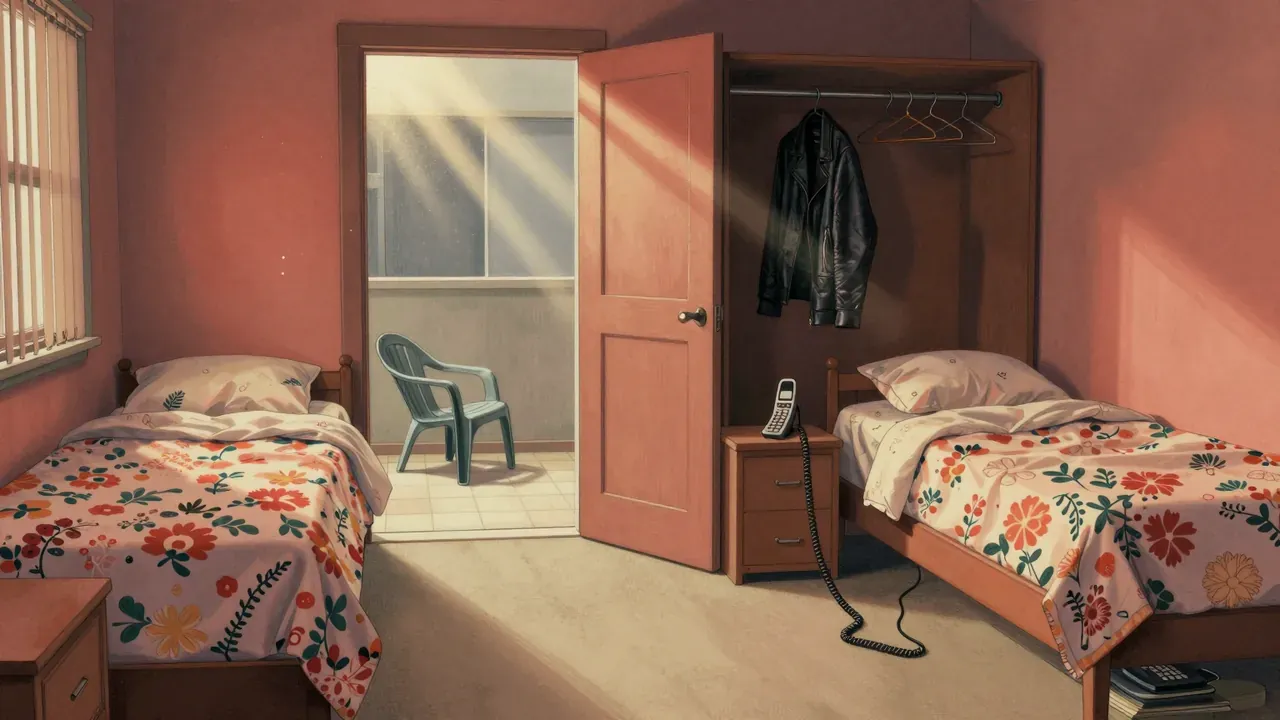
What it is
Totally F***ed Up is Gregg Araki’s first feature in his Teenage Apocalypse trilogy, a self-produced, 16 mm film made with no crew beyond a sound person and the cast. It sets out to portray six queer teenagers in Los Angeles as they form an informal family unit — not as symbols or case studies, but as people negotiating love, betrayal, violence, reproduction, and suicide while living outside mainstream norms. Araki rejects polished narrative continuity in favour of a fifteen-part structure that borrows from documentary interview formats and Godardian fragmentation. The film’s stated ambition is to sit between avant-garde experiment and teen drama, to be both politically engaged and emotionally unguarded, and to treat queer adolescence not as a problem to be solved but as a lived reality with its own rhythms, contradictions, and humour. It does not seek assimilationist validation; it assumes the audience will meet its characters on their own terms. (142 words)
How it is made
The story unfolds episodically, anchored by Steven’s camcorder footage and punctuated by direct-to-camera interviews. Performances are untrained but precise: James Duval, Roko Belic, Clay Walker, Robert McHenry, Craig Gilmore, and the two actresses playing Michele and Patricia all appear as real teenagers rather than actors performing roles. Araki handles cinematography, editing, and writing himself, using handheld 16 mm for interiors and found locations with ‘a weird surreal quality’. There is no score beyond diegetic music; sound design is sparse and unvarnished. Lighting is naturalistic, often underexposed. Editing avoids conventional continuity, favouring abrupt cuts and repetitions that mirror adolescent thought patterns — looping anxieties, sudden shifts in tone, unresolved endings. The craft is deliberately unpolished, not as a limitation but as a method: the roughness signals refusal of commercial grammar, not absence of intention. Every technical choice serves the film’s insistence on authenticity over polish. (158 words)
What holds up
What lands is the quiet conviction of its central premise: that queer teens can be ordinary without being generic. Their arguments about fidelity, their attempts at conception, their reactions to assault and suicide feel grounded because the film refuses to moralise or explain. The lack of angst about sexual identity — noted by several reviewers — is not avoidance but a deliberate foregrounding of other emotional textures: boredom, tenderness, irritation, loyalty. The camcorder interviews work not as gimmicks but as structural breathing space, letting characters speak without narrative pressure. The LA backdrop registers not as backdrop but as active presence: malls, parking lots, bedrooms, and sun-bleached streets become sites of intimacy and alienation in equal measure. The film’s restraint — its refusal to dramatise what it already knows to be true — gives its moments of vulnerability weight. When Deric sits silently after the bashing, or when Andy’s death arrives without fanfare, the impact comes from accumulation, not exposition. (150 words)
Where it slips
What does not land is the structural arbitrariness some critics identified — not as a flaw in itself, but as a barrier for viewers expecting coherence across the fifteen parts. The episodic rhythm occasionally dissolves into repetition without clear escalation, and certain tangents — like extended shots of empty rooms or ambient street noise — test patience without always earning their duration. The lack of production design means some scenes flatten visually, especially indoors where lighting and framing offer little variation. While the performances avoid caricature, they also avoid deep interiority: these are characters defined by gesture and speech more than psychology, which works for the film’s aims but may frustrate those seeking conventional character arcs. The film’s resistance to exposition leaves some motivations opaque — not ambiguously, but blankly — and its refusal to contextualise the AIDS crisis or broader political currents risks making its world feel hermetic. That is a choice, not a failure, but it narrows the film’s reach. (157 words)
What it says about growing up
The themes that matter are adolescence as a condition of provisional belonging, and queer identity as a lived practice rather than a fixed label. The film treats sexuality as settled, not contested — the friction comes from how love operates under precarity, not from coming out. It explores safety not as physical security alone but as the ability to grieve, argue, conceive, or withdraw without explanation. LA functions not as setting but as ideological pressure: consumerism, sprawl, and surface glamour press in even as the group builds private rituals. The film’s rejection of stereotype extends to its visual language — no coded costuming, no performative camp, no trauma-as-spectacle. Instead, it locates politics in the mundane: in who shares a bed, who answers the phone, who stays silent after a suicide. Its most urgent theme is the tension between chosen family and social abandonment — not as tragedy, but as daily fact. (149 words)
Who it is for
This film is for viewers who value formal risk as meaning, who respond to raw texture over narrative efficiency, and who want to see queer adolescence treated without condescension or uplift. It suits those familiar with avant-garde or DIY cinema, or those willing to meet its rhythms on their own terms. It is not for viewers who require psychological exposition, cause-and-effect plotting, or polished aesthetics — nor for those who expect queer stories to serve as education or advocacy. Some will find its detachment alienating; others, its honesty bracing. A viewer who values clarity over ambiguity, or who needs resolution to feel satisfied, will leave frustrated. That is not a flaw in the film but a mismatch of expectation. The verdict changes only if one accepts that its minimalism is its argument — not a placeholder for something more developed. (152 words)
Is it worth your evening
Yes, it is worth your evening — but only if you arrive prepared to sit with its stillness, its repetitions, its refusal to translate. It is seventy-eight minutes long and demands attention without offering comfort. Its power lies in accumulation, not climax: small gestures gain weight over time, silences deepen, and the final image lingers not because it resolves but because it refuses to. Those who dismiss it as ‘murky’ or ‘arbitrary’ are not wrong about its texture — they simply disagree with its premise that teenage life, especially queer teenage life, need not be legible to be valid. It rewards patience, not passive viewing. If you have ninety minutes and want to see a film that treats its characters as complex, unexplained, and worthy of attention exactly as they are — then yes, it is worth your evening. If you need narrative propulsion or emotional catharsis, it will disappoint. (154 words)